

Phase 1: 공감 (Story-driven Opening)
안녕하세요! 매일한글 에디터입니다.
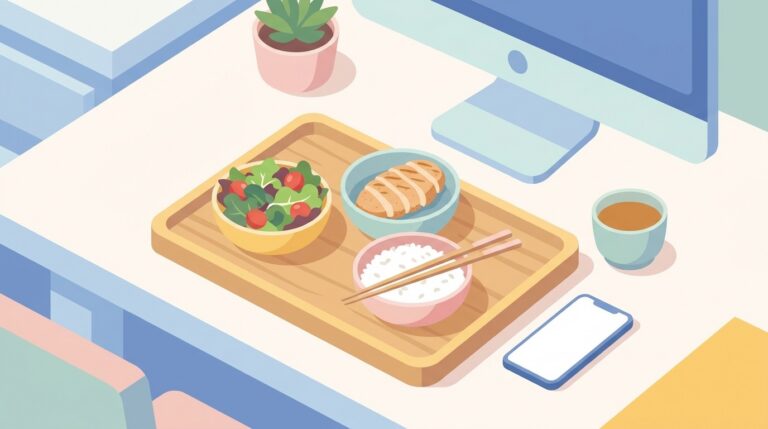
Picture this: It is 1:15 PM in a bustling office building in Yeouido, Seoul. You just enjoyed a comforting, piping-hot bowl of stone-pot bibimbap (돌솥비빔밥) or sweet-and-savory jajangmyeon (짜장면) with your coworkers. Ten minutes later, back at your desk, it hits you like a truck. Your eyelids feel like lead weights, your monitor screen blurs, and you find yourself doing the dreaded “bobbing head dance” in front of your manager.
You whisper sheepishly to your Korean teammate, assuming you just lacked sleep: “I have severe food coma today.” But instead of nodding in sympathetic fatigue, your coworker looks at your empty drink cup and says knowingly, “That’s not just normal tiredness—that’s a classic 혈당 스파이크 (blood sugar spike)! Did you eat your rice before your veggies?”
In recent years across South Korea, the national conversation around food has dramatically shifted. Koreans are no longer just asking “Did you eat well?” (밥 먹었어요?); they are obsessed with how glucose affects their energy, productivity, and aging. From trendy zero-sugar desserts to the viral “veggie-first” dining hack, health-conscious millennials and Gen Z have coined witty slang to describe their wellness journeys.
Mastering these contemporary food-trend terms will instantly unlock natural, empathetic lunchtime banter with Korean colleagues and friends. In this guide, backed by real feedback from intermediate learners navigating Korean work environments, you will learn how to discuss post-lunch sluggishness, order smarter, and sound like an authentic insider.
Phase 2: 핵심 표현 3선 심층 분석 (Top 3 Key Expressions)
1. 식곤증 (Sik-gon-jeung)
- Pronunciation: [Sik-gon-jeung] (Sound analogy: Think of “Seek-gone-jung” spoken with a crisp final -ng)
- Meaning: Literal: “Post-meal fatigue symptom” | Nuanced: The inevitable, heavy post-lunch food coma that knocks you out during the workday.
- K-Culture Moment: Seen in almost every office K-drama (like Misaeng or King the Land), where junior employees huddle around the pantry espresso machine around 2:00 PM desperately downing shots of iced Americano to survive the afternoon slump.
- Editor’s Insight: While English speakers casually say “food coma,” 식곤증 sounds slightly more physiological yet remains everyday casual. You can describe it as “dropping” on you using the verb 쏟아지다 (ssod-a-ji-da), as in 식곤증이 쏟아져요 (Food coma is pouring down on me).
- Situation Spectrum: Casual: ✅ | Semi-formal: ✅ | Formal: ⚠️
- 🤔 Think About It: In English, “food coma” sounds humorous and exaggerated. In Korean, adding the medical suffix -증 (symptom) normalizes it as a universal human condition that everyone in the office mutually forgives.
2. 혈당 스파이크 (Hyeol-dang seu-pa-i-keu)
- Pronunciation: [Hyeol-dang seu-pa-i-keu] (Sound analogy: “Hyul-dahng” + the English loanword “spike”)
- Meaning: Literal: “Blood sugar spike” | Nuanced: Sudden glucose surge after high-carb meals causing rapid drowsiness, brain fog, and intense cravings.
- K-Culture Moment: Korean health YouTubers and office vloggers testing continuous glucose monitors (CGM) while eating tteokbokki vs. salad bowls, gasping when the graph shoots straight up.
- Editor’s Insight: Koreans love pairing this with the verb 치다 (to hit) or 오다 (to come). Saying 혈당 스파이크가 세게 왔어요 (A blood sugar spike hit me hard) marks you as someone who knows modern Seoul wellness slang.
- Situation Spectrum: Casual: ✅ | Semi-formal: ✅ | Formal: ✅
- 🤔 Think About It: Notice how quickly Korean society adopts English medical terms and morphs them into punchy lifestyle slang. Why do you think modern Korean culture embraces trend-driven medical vocabulary so enthusiastically?
3. 채·단·탄 (Chae-dan-tan) / 거꾸로 식사법 (Geo-kku-ro sik-sa-beop)
- Pronunciation: [Chae-dan-tan] (Rhymes with “Che-Dahn-Tahn”)
- Meaning: Literal: Vegetables (채소) → Protein (단백질) → Carbohydrates (탄수화물) | Nuanced: The “Reverse Eating Method” popularized to prevent sugar surges by finishing fiber and meat before touching rice or noodles.
- K-Culture Moment: Eating out at a Korean BBQ restaurant where your friend deliberately demolishes two baskets of perilla leaves (깻잎) and lettuce before even picking up a single piece of garlic rice.
- Editor’s Insight: This is a classic Korean portmanteau (줄임말). Whenever a health trend emerges in Korea, netizens immediately compress it into three or four memorable syllables.
- Situation Spectrum: Casual: ✅ | Semi-formal: ✅ | Formal: ⚠️
- 🤔 Think About It: Traditional Korean dining (한정식) serves all side dishes and rice simultaneously. How does intentionally segmenting your meal into 채-단-탄 challenge traditional communal meal customs?
Phase 3: 교과서 한국어 vs 진짜 한국어 (Textbook vs. Real-world Korean)
Situation 1: Explaining severe sleepiness right after lunch
- 📖 교과서 한국어: 점심을 먹어서 지금 몹시 졸립니다. (Jeomsimeul meogeoseo jigeum mopsi jollimnida. – Because I ate lunch, I am currently very drowsy.)
- 🗣️ 진짜 한국어: 점심 먹자마자 식곤증이 제대로 터졌어요. (Jeomsim meokjamaja sikgonjeungi jedaero teojyeosseoyo. – Right after lunch, my food coma exploded full-force.)
- 💡 왜 다를까? Textbook Korean relies on rigid cause-and-effect connectors like -아서/어서 and formal adjectives like 몹시. Real-world native speech employs punchy slang verbs like 터지다 (to explode/burst out) with adverbs like 제대로 (properly/intensely) to vividly convey the sudden crash.
Situation 2: Explaining your new eating order habit
- 📖 교과서 한국어: 저는 건강을 위해 채소를 밥보다 먼저 먹는 습관이 있습니다. (Jeoneun geongangeul wihae chaesoreul bapboda meonjeo meongneun seupgwani itseumnida. – For my health, I have a habit of eating vegetables before rice.)
- 🗣️ 진짜 한국어: 혈당 스파이크 방지용으로 채단탄 순서 지키고 있어요. (Hyeoldang seupaikeu bangjiyongeuro chaedantan sunseo jikigo isseoyo. – I’m keeping to the ‘veggie-protein-carb’ order to prevent blood sugar spikes.)
- 💡 왜 다를까? Native speakers compact functional phrases using suffix compounds like -용으로 (for the purpose of) and abbreviations like 채단탄, sounding far more natural and culturally updated.
Phase 4: K-Culture 딥다이브 & 비언어적 매너 (Deep Dive & Body Language)
4-1. 눈치 (Nunchi) & Body Language at the Korean Lunch Table
When eating lunch with Korean coworkers or seniors (선배/상사), food coma management is an art form. If you start nodding off in a meeting room right after lunch, slapping your cheeks or aggressively stretching can look disruptive.
* The Discreet Temple Massage: Instead, subtly massage your temples or the webbing between your thumb and index finger (the 합곡혈 acupressure point) while maintaining attentive eye contact.
* The Polite Beverage Shift: If the group heads to a café after lunch, ordering a high-sugar beverage like a sweet caramel macchiato after complaining of fatigue will raise eyebrows. Opting for iced Americano (아이스 아메리카노 / 아아) or “Zero-sugar tea” signals that you are actively managing your afternoon productivity.
4-2. Cultural Code: The Rise of “Healthy Pleasure” (헬시플레저)
Korea has undergone a massive lifestyle pivot called 헬시플레저 (Healthy Pleasure)—the philosophy that health management should be enjoyable rather than restrictive. Convenience store shelves (CU, GS25, 7-Eleven) are now lined with zero-sugar soju, zero-calorie ciders, and protein bars. Simultaneously, modern office hubs like Gangnam, Pangyo, and Gwanghwamun have seen traditional noodle stalls replaced by customized salad bowl and poke joints. Discussing your “blood sugar curve” is no longer reserved for elderly medical clinics; it is chic, self-disciplined, and celebrated among young working professionals.
Phase 5: 실전 롤플레이 시나리오 (Real-Life Roleplay)
Setting: A company breakroom in Gangnam at 1:40 PM. You and your teammate Minho (민호), who loves white rice and spicy stew, are grabbing water after lunch.
- 민호: 아, 배부르다! 오늘 찌개 진짜 맛있었죠? (A, baebureuda! Oneul jjigae jinjja masisseotjyo? – Ah, I’m so full! That stew was amazing today, wasn’t it?) 🎭 배를 두드리며 만족스럽게 웃는다 (Pats his belly and smiles with satisfaction)
- 나: 네, 정말 맛있었어요! 그런데 벌써 눈이 막 감기네요. (Ne, jeongmal masisseosseoyo! Geureonde beolsseo nuni mak gamgineyo. – Yes, it was delicious! But my eyes are already closing shut.) 🎭 눈을 깜빡이며 가볍게 하품한다 (Blinks repeatedly and yawns lightly)
- 민호: 맞아요, 점심만 먹으면 식곤증 때문에 미치겠어요. 오후 회의 어떡하죠? (Maj-ayo, jeomsimman meogeumyeon sikgonjeung ttaemune michigesseoyo. Ohu hoeui eotteokhajyo? – Totally, whenever I eat lunch, this food coma drives me crazy. How will we survive the afternoon meeting?) 🎭 목 뒤를 주무르며 한숨을 쉰다 (Rubs the back of his neck with a sigh)
- 나: 혹시 그거 혈당 스파이크 때문이라는 생각 안 해보셨어요? (Hoksi geugeo hyeoldang seupaikeu ttaemun-iraneun saenggak an haebosyeosseoyo? – Have you ever considered that it might be due to a blood sugar spike?) 🎭 생각난 듯 눈을 반짝인다 (Eyes sparkle as if struck by a realization)
- 민호: 혈당 스파이크요? 그게 식곤증이랑 상관있어요? (Hyeoldang seupaikeuyo? Geuge sikgonjeung-irang sanggwan-isseoyo? – Blood sugar spike? Does that have anything to do with food coma?) 🎭 호기심 어린 표정으로 되묻는다 (Asks back with an inquisitive expression)
- 나: 그럼요! 탄수화물을 먼저 먹으면 혈당이 급격히 튀어서 더 졸리대요. (Geureomyo! Tansuhwamureul meonjeo meogeumyeon hyeoldangi geupgyeokhi twieoseo deo jollidaeyo. – Of course! They say if you eat carbs first, your blood sugar spikes dramatically and makes you sleepier.) 🎭 스마트폰으로 혈당 그래프를 보여주는 시늉을 한다 (Mimics showing a blood sugar graph on a smartphone)
- 민호: 헐, 진짜요? 전 밥부터 국물에 말아먹었는데! (Heol, jinjja-yo? Jeon bapbuteo gungmure marameogeonneunde! – Wow, really? I mixed my rice straight into the soup first thing!) 🎭 충격받은 듯 입을 가린다 (Covers mouth in mock shock)
- 나: 내일부터는 우리 채단탄 순서로 거꾸로 먹어봐요! (Naeilbuteoneun uri chaedantan sunseoro geokkuro meogeobwayo! – Starting tomorrow, let’s try the reverse order: veggie, protein, then carbs!) 🎭 주먹을 가볍게 쥐며 파이팅을 외친다 (Gently clenches fist cheering him on)
🔀 인터랙티브 분기점 (Interactive Fork)
How would you reply if Minho asks: “그럼 오늘 오후 간식으로 달콤한 마카롱 먹으러 갈까요?” (Then shall we grab sweet macarons for our afternoon snack?)
- Option A: “좋아요! 당 떨어졌는데 마카롱 먹으면 잠이 확 깰 것 같아요!” (Sounds good! My sugar dropped, so eating a macaron will wake me right up!)
- 👉 Feedback [Risk]: While friendly, this invites another massive sugar spike right before your 3 PM meeting!
- Option B: “저는 건강 관리 중이라 그런 설탕 덩어리는 절대 안 먹습니다.” (I am managing my health, so I never consume lumps of sugar like that.)
- 👉 Feedback [Bad]: Too rigid and judgmental. It breaks Korean lunchtime camaraderie and creates awkward social distance.
- Option C (Best): “마카롱 대신 편의점에서 제로 슈거 음료나 견과류 어때요? 혈당 지켜야죠!” (Instead of macarons, how about a zero-sugar drink or some nuts at the convenience store? We have to protect our blood sugar!)
- 👉 Feedback [Best]: Humorous, keeps the health slang alive, and suggests a collaborative alternative without ruining the mood. Perfect B1 workplace Korean!
Phase 6: 10초 감정 섀도잉 드릴 (Emotional Shadowing Drill)
Practice these lines out loud. Focus on the emotional context, breathing, and natural pauses (/).
[😴 쏟아지는 잠을 참으며]
점심 먹자마자 / 식곤증이 쏟아져서 / 정신을 못 차리겠어요.
(Jeomsim meokjamaja / sikgonjeungi ssod-ajyeoseo / jeongsineul mot charigesseoyo.)
“Right after lunch / my food coma poured down / so I can barely keep my senses together.”-
[💡 깨달음을 얻고 눈을 크게 뜨며]
이 피곤함이 / 단순한 수면 부족이 아니라 / 혈당 스파이크 때문이었군요!
(I pigonhami / dansunhan sumyeon bujogi anira / hyeoldang seupaikeu ttaemunieotgunyo!)
“This exhaustion / wasn’t simple lack of sleep / but because of a blood sugar spike!” -
[🥗 다짐하듯 활기차고 당차게]
오늘부터는 식곤증 탈출하려고 / 채·단·탄 순서로 / 밥 먹을 거예요!
(Oneulbuteoneun sikgonjeung talchulharyeogo / chae-dan-tan sunseoro / bap meogeul geoyeyo!)
“Starting today, to escape the food coma / in the veggie-protein-carb order / I’m going to eat my meals!”
Phase 7: K-Culture 미니 사전 (Mini Dictionary)
- 할매니얼 (Halmaenial)
- Translation: “Grandma-Millennial” (할머니 + 밀레니얼)
- Usage: Describes young adults who love traditional, low-sugar or earthy grandma flavors such as black sesame (흑임자), mugwort (쑥), injeolmi, and roasted grain powder (미숫가루). Essential when choosing trendy Korean café desserts!
- 제로 슈거 (Je-ro syu-geo)
- Translation: Zero Sugar
- Usage: Ubiquitous packaging term. You will see it labeled on soft drinks, sparkling teas, and even iconic Korean alcoholic drinks like “처음처럼 새로” (Zero Sugar Soju).
- 헬시플레저 (Hel-si-peul-le-jeo)
- Translation: Healthy Pleasure
- Usage: A buzzword symbolizing sustainable, fun health management without torturous starvation or tasteless boiled chicken breasts.
- 당 떨어진다 (Dang tteol-eo-jin-da)
- Translation: “My blood sugar is dropping!”
- Usage: Colloquially used around 4:00 PM when feeling irritable, drained, or spaced out. Frequently said before raiding the office snack bar.
Phase 8: 여행자를 위한 생존 키트 (Traveler’s Survival Kit)
Top 3 Survival Phrases
- “밥은 반 공기만 덜어 주실 수 있나요?”
- Pronunciation: Bapeun ban gong-giman deoreo jusil su innayo?
- Pro Tip: White rice in Korea is served in standard stainless steel bowls (공깃밥). If you are minimizing carb intake, asking for half a bowl prevents food waste and draws polite nods from restaurant owners.
- “이 음료에 시럽이나 설탕 들어가나요?”
- Pronunciation: I eumryoe sireobina seoltang deoreoganayo?
- Pro Tip: Useful at independent local cafes where sweetened syrups are added by default to cold-brew or iced tea drinks.
- “샐러드 드레싱은 따로 주실 수 있어요?”
- Pronunciation: Saelleodeu deuresingeun ttaro jusil su isseoyo?
- Pro Tip: Keep control of your meal order by requesting the sauce on the side (따로).
Editor’s Travel Note
When navigating modern Korean cities, locating low-carb, keto, or wholesome veggie-forward meals is seamless if you use the right local search keywords. Instead of generic Google searches, open your 네이버 지도 앱 다운로드 (Naver Map app) or 카카오맵 앱 다운로드 (KakaoMap app) and search for “포케 맛집” (Poke spots), “키토 김밥” (Keto egg-ribbon gimbap), or “샐러드 카페” (Salad cafes). In convenience stores, look for the black or silver labels marked 제로 (Zero) or 무가당 (No added sugar)!
Phase 9: “한 발 더 깊이” (Cultural Reflection Essay)
In traditional Korean dining etiquette, harmony was mirrored in the synchronized presentation of food. The centerpiece of the meal—a steaming bowl of white rice (흰쌀밥)—was historic shorthand for prosperity, affection, and care. For decades, asking someone to eat less rice would have bordered on an insult to hospitality.
Yet today, the way young Koreans re-engineer their plates—delaying carbs until the end or swapping rice for egg ribbons—reflects a fascinating shift from survival collectivism to personal bio-individual wellness. Health is no longer just about feeling full; it is about cognitive clarity, self-governance, and surviving a fiercely competitive work culture without falling asleep at your desk.
💬 Your Turn: In your home culture, how is the afternoon “food coma” perceived? Do people just power through with coffee, take a cultural siesta, or do you also have unique modern hacks to avoid sugar spikes? Share your thoughts with us in the comments below!
Phase 10: FAQ & 오해 방지 (FAQ & Mistakes)
Q: Can I use the term “혈당 스파이크” (blood sugar spike) with older people or my boss?
A: Yes! Unlike fleeting internet slang that might confuse older generations, 혈당 스파이크 has been featured heavily on mainstream Korean health documentary broadcasts like KBS 생로병사의 비밀 (The Secrets of Birth, Aging, Illness, and Death). Seniors are equally conscious of blood sugar and will praise your intermediate Korean vocabulary.
Q: What is the grammatical difference between “식곤증이 오다” and “식곤증이 쏟아지다”?
A: Both are natural. 오다 (to come) is neutral: 식곤증이 왔어요 (Food coma has arrived). 쏟아지다 (to pour down) conveys an intense, irresistible flood of sleepiness: 식곤증이 쏟아져요 (Sleep is pouring over me). Use 쏟아지다 when you are fighting for your life to keep your eyes open.
Q: Does “채단탄” apply to street food like Tteokbokki?
A: While technically tough since tteokbokki is pure carbs, Koreans humorously use it anyway! Before digging into spicy rice cakes, you might eat the boiled egg (단백질/Protein) and fish cake or cabbage (채소/Veggie) first, shouting “채단탄 지켰다!” (I honored the veggie-protein-carb order!).
🚨 흔한 실수 (Common Mistakes)
- Mistake 1: Saying “저는 음식 코마가 있어요” (I have food coma).
- Correct Action: Native speakers will not understand “food coma” translated literally. Always say: 식곤증이 있어요 (I have post-lunch fatigue) or 식곤증이 심해요 (My food coma is severe).
- Mistake 2: Confusing 혈당 (Blood sugar) with 혈압 (Blood pressure).
- Correct Action: Don’t say 혈압 스파이크 (Blood pressure spike) when talking about carbs! Remember: 당 (糖) = Sugar, 압 (壓) = Pressure.
- Mistake 3: Using extreme informal language (반말) like “채단탄 해!” to a supervisor.
- Correct Action: Keep polite honorifics: “부장님, 채단탄 순서로 드셔보세요!” (Manager, try eating in the veggie-protein-carb order!).
Phase 11: 액션 미션 & 참여 유도 (Action Missions)
- 🥉 Bronze Mission (Solo Practice): Stand in front of your mirror and practice the emotional shadowing phrase: “점심 먹고 식곤증이 쏟아져서 채단탄 순서로 먹어보려고요!” three times with expressive facial gestures.
- 🥈 Silver Mission (Social Sharing): Take a photo of your next meal showing your vegetables, protein, and carbs. Post it on Instagram Stories or Threads with the Korean caption: #채단탄 #혈당스파이크방지 #식곤증극복.
- 🥇 Gold Mission (Real-world Challenge): When visiting a Korean restaurant or eating with a Korean speaker, decline a high-carb refill or explain your dining order using 거꾸로 식사법 or 혈당 스파이크.
- 🎮 K-Culture Mission: Watch a recent Korean office vlog on YouTube and search in the comment section for the keywords 식곤증, 아아 (Iced Americano), and 혈당. See how real office workers vent about their post-lunch battles!
Phase 12: 인터랙티브 퀴즈 챌린지 (Interactive Quiz Challenge)
Test your understanding of today’s lesson! Can you score 3 out of 3?
1. Situation Judgment: You are at a team lunch, and a colleague keeps falling asleep during the post-lunch coffee chat. Which phrase is the most natural, empathetic way to address this?
* (A) “왜 일 안 하고 잠만 자요?”
* (B) “식곤증이 진짜 세게 왔나 봐요. 시원한 아메리카노 한잔 마실래요?”
* (C) “혈압 스파이크 때문에 병원에 가야겠어요.”
2. Fill-in-the-Blank: Complete the popular healthy dining order portmanteau:
* “혈당을 천천히 올리려면 [ ] → [ ] → [ ] 순서로 식사해야 해요.”
3. True or False:
* The term 할매니얼 (Halmaenial) refers exclusively to elderly grandmothers who refuse to eat modern zero-sugar desserts. (True / False)
👉 Click to reveal answers & explanations!
- Answer: (B)
- Explanation: (B) naturally identifies the post-meal food coma (식곤증) with the right intensity verb and offers a classic Korean office solution (아메리카노). (A) is overly aggressive, and (C) mistakenly uses blood pressure (혈압) instead of blood sugar (혈당).
- Answer: 채 (채소) → 단 (단백질) → 탄 (탄수화물)
- Explanation: 채단탄 stands for Veggies (Fiber) first, Protein second, and Carbohydrates last to cushion the glucose curve.
- Answer: False
- Explanation: 할매니얼 is a compound of 할머니 (Grandmother) and 밀레니얼 (Millennial), referring to young millennials who love nostalgic, traditional flavors like mugwort, black sesame, and grain powder!
- Explanation: 할매니얼 is a compound of 할머니 (Grandmother) and 밀레니얼 (Millennial), referring to young millennials who love nostalgic, traditional flavors like mugwort, black sesame, and grain powder!







