

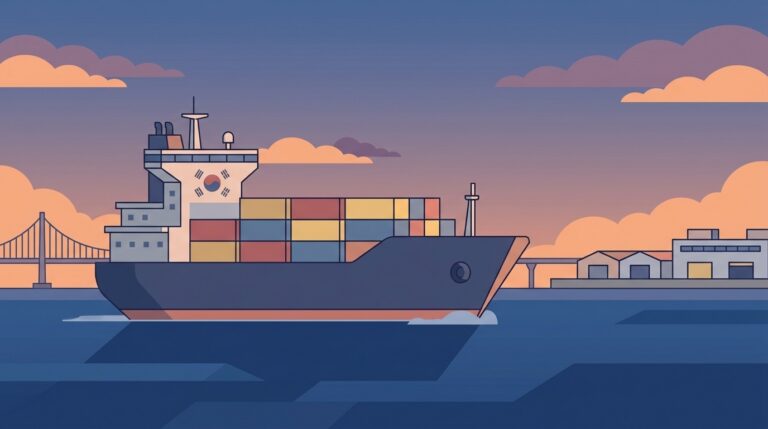
Phase 1: Empathy & Geopolitical Reality
안녕하세요! 매일한글 에디터입니다.
Picture this: You are watching a gripping Korean geopolitical drama like The Whirlwind (돌풍) or tuning into a live National Assembly foreign affairs hearing on KBS. The screen cuts to a tense briefing room. Blue ocean maps flash across high-definition monitors, highlighting the Strait of Malacca, the Taiwan Strait, and the vast expanse of the East Sea and South China Sea. A veteran diplomat taps the glass podium and utters a sentence that sends ripples through the audience: “바닷길이 닫히면 대한민국호의 엔진도 멈춥니다.” (If the sea lanes close, the engine of the Republic of Korea halts as well.)
Many advanced Korean learners hit an intellectual plateau right here. You have mastered everyday honorifics, aced TOPIK II Level 6 listening tests, and can banter comfortably over samgyeopsal. Yet, when discussions turn to international law of the sea, maritime chokepoints, and continental shelf boundaries, you suddenly feel adrift. South Korea is effectively a “geopolitical island.” Cut off to the north by the demilitarized zone (DMZ), over 99.7% of its entire import-export volume navigates international sea lanes. For Korea, 항행의 자유 (Freedom of Navigation) is not merely an abstract Anglo-American legal doctrine under UNCLOS—it is the literal arterial heartbeat of national survival.
In this C2 Masterclass, built directly from high-level diplomatic transcripts, international maritime arbitration briefs, and insider policy seminars, we are bridging the gap between standard textbook legalities and the muscular, persuasive rhetoric used by seasoned Korean diplomats and maritime strategists. Let us dive deep into the high-stakes terminology of maritime law and discover the nuanced worldview embedded in every phrase.
Phase 2: Core Expressions in Depth
1. 항행의 자유를 수호하다 (Hanghaeng-ui jayu-reul suhohada)
- Pronunciation: [Hang-haeng-ui ja-yu-reul su-ho-ha-da] (Think of ‘hang-haeng’ like ‘hung-hang’, sounding like a steady navigational glide, coupled with the resonant ‘su-ho’ meaning vigilant protection)
- Meaning: Literally, “To defend the freedom of navigation”; nuanced meaning: “To actively safeguard sovereign and commercial transit rights against unilateral maritime enclosure under international law.”
- K-Culture Moment: Heard in prime-time political thrillers when a presidential chief of staff warns against accepting unlawful maritime cordons: “어떤 압박 속에서도 공해상의 항행의 자유를 수호하는 것이 국익의 최우선입니다.” (Upholding freedom of navigation on the high seas is our paramount national interest, regardless of geopolitical pressure.)
- Editor’s Insight: Notice the verb 수호하다 (to protect/defend vigilantly) instead of the generic 지키다. In elite Korean political and diplomatic discourse, 수호 conveys a sacred, existential duty often tied to territorial integrity, maritime access, or constitutional values.
- Situation Spectrum: Casual 🚫 | Semi-formal ⚠️ | Formal/Diplomatic ✅
- 🤔 Think About It: Does your native language view the ocean as an empty borderless void or as an interconnected public corridor? In Korean statecraft, the sea is often framed as an existential lifeline that must be actively guarded against strategic bottlenecks.
2. 해상 물류의 생명선 (Haesang mullyu-ui saengmyeongseon)
- Pronunciation: [Hae-sang mul-lyu-ui saeng-myeong-seon] (Flow the ‘l’ sounds together in ‘mul-lyu’ just like ‘mool-yoo’)
- Meaning: Literally, “The lifeline of maritime logistics”; nuanced meaning: “The irreplaceable strategic conduit upon which the state’s economic survival hinges.”
- K-Culture Moment: Often delivered with gravitas by economic anchors on Yonhap News TV when crude oil tankers traverse turbulent regional straits.
- Editor’s Insight: Koreans frequently employ anatomical and biological metaphors in economic commentary—such as 혈맥 (blood vessels) and 생명선 (lifeline). Describing sea routes as 생명선 reminds citizens that their everyday energy, semiconductor exports, and grain supplies are indivisible from peaceful transit through international waters.
- Situation Spectrum: Casual ⚠️ | Semi-formal ✅ | Formal/Diplomatic ✅
- 🤔 Think About It: Why does a country with thousands of miles of coastline refer to distant international straits thousands of kilometers away as its own “lifeline”?
3. 국제법적 비례성의 원칙에 입각하다 (Gukjebopjeok biryeseong-ui wonchige ipgakhada)
- Pronunciation: [Guk-je-beop-jjeok bi-rye-seong-ui won-chi-ge ip-ggak-ha-da] (Notice the glottal hardening of ‘beop’ becoming ‘beop-jjeok’ and ‘ip-gak’ tightening to ‘ip-ggak’)
- Meaning: Literally, “To be grounded in the principle of proportionality under international law”; nuanced meaning: “To formulate maritime delimitation claims strictly justified by coastal length, equity, and established ICJ/UNCLOS jurisprudence.”
- K-Culture Moment: Utilized in high-stakes diplomatic ministry briefings or international maritime boundary disputes involving overlapping Exclusive Economic Zones (EEZ).
- Editor’s Insight: The phrase ~에 입각하다 (to be grounded upon / rooted in) carries vastly more institutional authority than simply saying ~에 따르다 (to follow) or ~를 기준으로 하다 (to base on). It signals unwavering legal rectitude.
- Situation Spectrum: Casual 🚫 | Semi-formal ⚠️ | Formal/Legal ✅
- 🤔 Think About It: How does invoking 비례성의 원칙 (principle of proportionality) contrast with historic unilateral sovereignty claims in East Asian maritime history?
Phase 3: Textbook Korean vs. Real Professional Korean
Situation 1: Describing a critical maritime bottleneck
- 📖 교과서 한국어 (Textbook): “이 해역은 우리의 수송로로서 매우 중대한 의미를 지닙니다.” (I haeyeog-eun uri-ui susongnoro-seo maeu jungdaehan uimi-reul jinimnida. – This sea area has a very significant meaning as our transport route.)
- 🗣️ 진짜 한국어 (Real C2 Professional): “여기가 틀어막히면 국가 경제의 숨통이 직격탄을 맞습니다.” (Yeogiga teureomakimyeon gukga gyeongje-ui sumtongi jikgyeoktaneul matseumnida. – If this corridor gets choked off, our national economy’s jugular takes a direct, fatal blow.)
- 💡 왜 다를까? (Why the difference?): While the textbook relies on flat, bureaucratic descriptors like 중대한 의미 (significant meaning), real Korean analysts and senior policymakers use vivid, visceral idioms like 틀어막히다 (to be choked/plugged up) and 숨통이 직격탄을 맞다 (the breathing passage suffers a direct hit) to stress raw economic vulnerability.
Situation 2: Countering excessive coastal state jurisdictions in international straits
- 📖 교과서 한국어 (Textbook): “우리는 국제해양법 협약의 규정을 엄격하게 준수할 것을 촉구합니다.” (Uri-neun gukjehaeyangbeop hyeobyag-ui gyujeong-eul eomgyeokhage junsuhal geos-eul chokguhamnida. – We urge strict compliance with the provisions of the UN Convention on the Law of the Sea.)
- 🗣️ 진짜 한국어 (Real C2 Professional): “UNCLOS 조항을 자의적으로 확대 해석해 관할권을 밀어붙이는 건 국제 규범상 용납될 수 없습니다.” (UNCLOS johang-eul jauijeogeuro hwakdae haeseokhae gwanhalgwoneul mireobutineun geon gukje gyubeomsang yongnapdoel su eopseumnida. – Arbitrarily expanding the interpretation of UNCLOS clauses to enforce excessive coastal jurisdiction is completely unacceptable under international norms.)
- 💡 왜 다를까? (Why the difference?): Real-world legal pushback does not merely ask for “compliance”; it pinpoints bad-faith actions using terms like 자의적 확대 해석 (arbitrary expansive interpretation) and 밀어붙이다 (to force through/railroad unilateral claims).
Phase 4: K-Culture Deep Dive & Non-Verbal Nuance
4-1. Diplomatic Nunchi & The Art of Strategic Pause
In high-level Korean maritime seminars and bilateral talks (e.g., Korea-China or Korea-Japan maritime delimitation working groups), overt emotional agitation is seen as a tactical defeat. True C2 fluency requires mastering 여백의 미 (the aesthetic of silence) and calibrated 눈치 (Nunchi):
* The Bilateral Posture: When delivering a firm objection regarding transit passage through an international strait, sit upright with both hands resting lightly clasped on the table. Lean forward by exactly two inches when introducing the core legal clause.
* The Calibrated Pause: Before delivering an unyielding stance, pause for two seconds, drop your vocal pitch by a half-octave, and maintain unwavering eye contact. Avoid sharp hand-chopping gestures; instead, use an open palm gesturing smoothly downward toward the briefing document.
4-2. The Cultural Code: “실질적 섬나라” (The De Facto Island State)
To grasp why freedom of navigation elicits such visceral protective instincts in South Korea, one must understand the psychological reality of being a 실질적 섬나라 (de facto island nation). While Korea is geographically a peninsula (반도), the sealed northern border means that every barrel of imported crude oil, every shipment of imported agricultural grain, and every container of Samsung and Hyundai exports must traverse ocean waters. When Koreans debate UNCLOS, they are not engaged in an academic moot court; they are safeguarding the umbilical cord of their national existence.
Phase 5: Real-World Roleplay Scenario
Setting: Ministry of Foreign Affairs (외교부), Seoul. Late evening in the International Maritime Legal Affairs Bureau. You are conferring with Director General Han (한 국장), a veteran maritime law negotiator.
Characters:
* Director General Han (한 국장): Sharp, meticulous, intensely dedicated to securing sea lanes.
* You (Senior Legal Advisor): An international legal consultant advising the Korean delegation ahead of a critical UNCLOS regional working group.
Director General Han: 🎭 안경을 고쳐 쓰며 지도상의 말라카 해협을 볼펜 끝으로 짚는다. “자, 고문관님. 인접 연안국들이 해양 안보를 명분으로 국제해협 통과 선박에 대한 사전 통보제를 의무화하겠다고 나섰습니다. 우리 상선들의 통항에 심각한 차질이 예상되는데, 우리 정부의 기조를 어떻게 정리해야 하겠습니까?”
(Ja, gomungwannim. Injeop yeon-angukdeuri haeyang anboreul myeongbun-euro gukjehaehyeop tonggwa seonbage daehan sajeon tongboje-reul uimuhwahagessdago naseossseumnida. Uri sangseondeurui tonghang-e simgakhang chajiri yesangdoeneunde, uri jeongbu-ui gijoreul eotteoke jeongrihaeya hagessseumnikka?)
(Adjusting his glasses, pointing the tip of his pen at the Strait of Malacca on the chart.) “Now, Advisor. Adjacent coastal states have stepped forward to make prior notification mandatory for vessels transiting international straits, under the pretext of maritime security. This is expected to cause severe disruptions to our merchant fleet’s passage. How should we formulate our government’s baseline position?”
You: 🎭 정중하지만 확신에 찬 어조로 메모를 내려놓으며 말한다. “UNCLOS 제38조에 명시된 ‘통과통항권(Right of Transit Passage)’의 본질을 훼손할 수 없다는 점을 분명히 해야 합니다.”
(UNCLOS jesamsip-paljoe myeongsidoen ‘tonggwatonghanggwon’ui bonjireul hwesonhal su eopdaneun jeomeul bunmyeonghi haeya hamnida.)
(Speaking politely yet with conviction, setting down your notes.) “We must make it clear that the essence of the ‘Right of Transit Passage’ enshrined in Article 38 of UNCLOS cannot be impaired.”
Director General Han: 🎭 고개를 끄덕이며 차 한 모금을 마신다. “맞습니다. 하지만 연안국 측에서는 해양환경 보호와 연안 안전이라는 법적 명분을 집요하게 파고들 텐데요.”
(Matseumnida. Hajiman yeon-anguk cheugeseoneun haeyanghwangyeong boho-wa yeon-an anjeon-iraneun beopjeok myeongbuneul jibyohage pagodeul tendeyo.)
(Nodding, taking a sip of tea.) “True. However, coastal states will persistently exploit legal justifications such as marine environmental protection and coastal safety.”
You: 🎭 시선을 단호하게 유지하며. “해양환경 보호의 당위성은 존중하되, 그것이 공해 및 국제해협에서의 항행의 자유를 자의적으로 제한하는 도구로 전용되어서는 안 된다고 반박해야 합니다.”
(Haeyanghwangyeong boho-ui dangwiseong-eun jonjunghadoe, geugeosi gonghae mit gukjehaehyeop-eseoui hanghaeng-ui jayu-reul jauijeogeuro jehanhaneun doguro jeonyongdoeeoseoneun an doendago banbakhaeya hamnida.)
(Maintaining a resolute gaze.) “While respecting the imperative of marine environmental protection, we must counter that it should never be misappropriated as an instrument to arbitrarily restrict the freedom of navigation on the high seas and through international straits.”
Director General Han: 🎭 미소를 띠며 수첩에 메모를 적는다. “논리가 정교하군요. 특히 우리 경제가 해상 물류의 생명선에 전적으로 의존하고 있다는 점을 감안하면, 한 치의 양보도 어렵습니다.”
(Nolliga jeonggyohagun-yo. Teukhi uri gyeongjega haesang mullyu-ui saengmyeongseone jeonjeogeuro uijonhago itdaneun jeomeul gamanhamyeon, han chi-ui yangbodo eoryeopseumnida.)
(Smiling, jotting down notes in his memo book.) “Your logic is exquisite. Especially considering our economy relies entirely on this lifeline of maritime logistics, even an inch of concession is untenable.”
You: 🎭 보고서의 다음 장을 펼쳐 대안을 제시한다. “국제해사기구(IMO)와의 공조를 통해 항행 안전을 담보하는 다자간 협력 프레임워크를 역제안하는 방안은 어떻겠습니까?”
(Gukjehaesagigu(IMO)waui gongjoreul tonghae hanghaeng anjeoneul dambohaneun dajagan hyeomnyeok peureimweokeureul yeokjean-haneun bang-aneun eotteokkesseumnikka?)
(Turning to the next page of the report to propose an alternative.) “What about counter-proposing a multilateral cooperation framework that guarantees navigational safety in coordination with the International Maritime Organization (IMO)?”
Director General Han: 🎭 손바닥으로 책상을 가볍게 치며 흡족해한다. “훌륭합니다! 일방적 규제를 차단하면서도 국제규범을 선도하는 아주 세련된 출구전략입니다.”
(Hullyunghamnida! Ilbangjeok gyujereul chadanhamyeonseodo gukjegyubeomeul seondohaneun aju seryeondoen chulgujeollyang-imnida.)
(Tapping the desk lightly with his palm, satisfied.) “Excellent! That is a very sophisticated exit strategy that blocks unilateral regulations while spearheading international legal norms.”
You: 🎭 자료를 정리하며 마무리 멘트를 건넨다. “즉각 외교안보실 보고용 요약본으로 다듬어 회람시키겠습니다.”
(Jeukgak oegyoanbosil bogoyong yoyakboneuro dadeumeo hoeramsikigessseumnida.)
(Organizing the documents, delivering the closing line.) “I will immediately refine this into an executive summary for the National Security Office and circulate it.”
🔀 Interactive Decision Point
How would you formulate your next strategic response if a regional partner insists on treating an international strait as territorial waters?
- Choice A (Best): “UNCLOS상의 무해통항권과 통과통항권의 법리적 차이를 명문화하여, 일방적 통제권 행사의 국제법적 위법성을 다자 회의에서 공론화하겠습니다.” (Systematically clarify the legal distinctions between innocent passage and transit passage under UNCLOS, highlighting the illegality of unilateral enforcement in multilateral forums.)
- Feedback: Best! Demonstrates masterful C2 legal vocabulary (법리적 차이, 명문화, 위법성 공론화) and adopts the optimal diplomatic posture.
- Choice B (Bad): “그 나라 배들도 우리 영해에 못 들어오게 똑같이 맞불을 놓는 게 상호주의에 맞습니다.” (Let’s retaliate symmetrically by banning their ships from entering our territorial waters to satisfy reciprocity.)
- Feedback: Bad. Highly unprofessional and legally counterproductive. Escalating to an unlawful maritime tit-for-tat undermines South Korea’s moral high ground as a rule-of-law maritime trading nation.
- Choice C (Risk): “분쟁 소지가 크니 그쪽 요구대로 사전 통보 절차를 거치고 갈등을 피하는 게 상책입니다.” (Since it is prone to disputes, it’s best to simply comply with their prior notification demands and avoid conflict.)
- Feedback: High Strategic Risk. Acquiescing to unlawful restrictions sets an irreversible legal precedent (금반언의 원칙 / estoppel risk) and severely imperils long-term commercial logistics.
Phase 6: 10-Second Shadowing Drill
Sharpen your cadence, pause placements, and vocal authority with these three authentic diplomatic drills:
[⚖️ 단호하고 명료하게 - Resolute & Authoritative]- “공해와 국제해협에서의 / 항행의 자유 보장은 / 타협할 수 없는 / 국제사회의 보편적 규범입니다.”
- (Gonghae-wa gukjehaehyeop-eseoui / hanghaeng-ui jayu bojeong-eun / tahyeophal su eomneun / gukjesahoe-ui bopyeonjeok gyubeom-imnida.)
- (The guarantee of freedom of navigation / on the high seas and through international straits / is an uncompromising / universal norm of the international community.)
[⚓ 결연한 국익 수호 의지로 - Unwavering National Interest Focus]- “해상 수송로의 차단은 / 수출입 물류의 99%를 해상에 의존하는 / 우리 경제의 / 생명선을 끊는 일입니다.”
- (Haesang susongno-ui chadaneun / suchurip mullyu-ui gusip-gu-peosenteureul haesang-e uijonhaneun / uri gyeongje-ui / saengmyeongseoneul kkeunneun irimnida.)
- (The disruption of sea lines of communication / is an act that severs the lifeline / of our national economy / which relies on the sea for 99% of its trade logistics.)
[🌐 정중하지만 단호하게 - Courteous Yet Unbending]- “연안국의 환경 주권 못지않게 / 국제사회의 통과통항권 역시 / 엄격하게 존중되어야 마땅합니다.”
- (Yeon-anguk-ui hwangyeong jugwon motji-anke / gukjesahoe-ui tonggwatonghanggwon yeoksi / eomgyeokhage jonjungdoeeoya mattanghamnida.)
- (No less than the environmental sovereignty of coastal states, / the right of transit passage of the international community / must likewise be strictly respected.)
Phase 7: K-Culture Mini Dictionary
- 실질적 섬나라 (Siljiljeok seomnara)
- Translation: De facto island nation.
- Usage: Used widely by political scientists, think-tank analysts, and editorial columnists to highlight South Korea’s absolute dependence on maritime sea lanes due to geopolitical encirclement and the sealed northern DMZ.
- 통과통항권 (Tonggwatonghanggwon)
- Translation: Right of transit passage (UNCLOS Article 38).
- Usage: The cornerstone legal right exercised by all ships and aircraft in international straits used for international navigation. Unlike “innocent passage” (무해통항), transit passage cannot be suspended, hampered, or subjected to prior notification by coastal states.
- 해상 교통로 / SLOC (Haesang gyotongno)
- Translation: Sea Lines of Communication (SLOC).
- Usage: Essential military and logistics terminology representing the maritime highways connecting South Korea’s ports to the Indian Ocean, Middle East, Europe, and the Americas.
- 배타적 경제수역 경계 획정 (Baetajeok gyeongjesuyeok gyeonggye hoekjeong)
- Translation: EEZ maritime boundary delimitation.
- Usage: A major diplomatic headline phrase when negotiating bilateral maritime borders in overlapping 200-nautical-mile zones with neighboring states.
Phase 8: Survival Kit for High-Level Observers & Visitors
Top 3 Professional Survival Expressions
- “현재 해당 해역의 통항 안정성은 확보된 상태입니까?”
(Hyeonjae haedang haeyeog-ui tonghang anjeongseong-eun hwakbodoen sangtae-imnikka?)- Pro Tip: Use this at port conferences, shipping summits, or maritime seminars to inquire about security conditions along key maritime corridors.
- “연안국의 일방적 관할권 확대에 대한 법적 대응 논리가 필요합니다.”
(Yeon-anguk-ui ilbangjeok gwanhalgwon hwakdae-e daehan beopjeok daeeung nolliga piryohamnida.)- Pro Tip: Ideal when summarizing policy memos or discussing unexpected maritime restrictions.
- “국제해양법재판소(ITLOS) 판례를 검토해 선례를 확인해 주십시오.”
(Gukjehaeyangbeopjaepanso(ITLOS) pannye-reul geomtohae seollye-reul hwaginhae jusipsio.)- Pro Tip: An authoritative command in institutional settings asking research staff to cross-examine ITLOS rulings for binding precedents.
Editor’s Travel Note: Experiencing Korea’s Maritime Beating Heart
If you want to experience the sheer scale of South Korea’s maritime vitality firsthand, step away from downtown Seoul and travel south to Busan. Stand atop the observatory at Taejongdae or take the coastal trail along Oryukdo Island where the East Sea meets the South Sea. You will witness an endless procession of ultra-large container vessels lining the horizon waiting to enter Busan Port—the sixth-busiest container port in the world.
- Local Navigation Tip: Download and install the 네이버 지도 앱 다운로드 to seamlessly look up ferry schedules, coastal walking paths, and port shuttle buses across Busan and Yeosu.
Phase 9: A Step Deeper (한 발 더 깊이)
In Western legal philosophy, the concept of the Mare Liberum (Free Sea), championed by Hugo Grotius, was framed as an expansive intellectual triumph over imperial cartography. In contrast, for Korea, the freedom of the sea is inextricably bound to historical trauma and the collective consciousness of survival. Having weathered centuries of maritime isolation, devastating naval invasions, and the tragic partition of the peninsula, Koreans recognize that physical confinement leads to economic suffocation. When you speak about 항행의 자유, you are invoking the hard-won gateway through which a battle-scarred nation rebuilt itself into an industrial and cultural superpower.
💬 Your Turn: Does your home country take free access to the world’s oceans for granted, or is maritime access a sensitive point of national debate? Let us know in the comments below!
Phase 10: FAQ & Misconception Buster (FAQ Schema)
Q: What is the exact legal difference between 무해통항권 (Innocent Passage) and 통과통항권 (Transit Passage) in Korean?
A: 무해통항권 (Right of Innocent Passage) applies within a coastal state’s territorial sea (영해); passage must be continuous and expeditious, and it can be suspended temporarily by the coastal state for essential security reasons. Furthermore, submarines must navigate on the surface and show their flag. Conversely, 통과통항권 (Right of Transit Passage) applies strictly to international straits connecting high seas or EEZs; it cannot be suspended, submarines may transit submerged, and aircraft are allowed overflight.
Q: Why do Korean commentators use the word ‘생명선’ (Lifeline) rather than just ‘중요한 경로’ (Important Route)?
A: Because South Korea imports more than 90% of its total energy requirements (oil and LNG) by sea through the Strait of Hormuz and the Malacca Strait. A closure of these straits would disrupt the domestic power grid and industrial manufacturing within weeks. The term 생명선 accurately captures this existential vulnerability.
Q: Is the phrase ‘영유권’ (Territorial Sovereignty) synonymous with ‘관할권’ (Jurisdiction)?
A: No. Confusing these two is a common error among advanced learners. 영유권 (Sovereignty) represents complete, supreme authority over national land, internal waters, and territorial sea (up to 12 nautical miles). 관할권 (Jurisdiction), such as in an Exclusive Economic Zone (EEZ) or Continental Shelf, only gives the coastal state sovereign rights over resource exploration and marine research, not complete territorial ownership.
🚨 Common Mistakes Warning Board
- Mistake: Using “공해 (Gonghae)” when referring to coastal economic waters.
- Correction: Distinguish between 공해 (High Seas), where no state has sovereignty, and 배타적 경제수역 (EEZ), which retains high-seas navigational freedom but possesses coastal sovereign economic rights.
- Mistake: Saying “항행의 자유를 주장하다” in high-level diplomatic writing.
- Correction: While 주장하다 (to claim/argue) is grammatically fine, senior policy briefs always use 항행의 자유를 천명하다 (to articulate/proclaim) or 수호하다 (to safeguard/defend) to convey institutional resolve.
- Mistake: Pronouncing “협약 (convention)” as [hyeob-yak].
- Correction: Natural liaison makes it sound like [hyeo-byak] with a crisp stop on the final consonant.
Phase 11: Action Missions & Cultural Integration
- 🥉 Bronze Mission (Solo Practice): Read the 10-Second Shadowing sentences aloud 5 times while recording your voice. Focus on pausing at slashes (
/) without breaking your assertive pitch. - 🥈 Silver Mission (Community Sharing): Find a Korean news article featuring the term 항행의 자유 or 해상 물류. Post a one-sentence summary on your social media using the grammar pattern:
~에 입각하여 항행의 자유를 수호해야 합니다. - 🥇 Gold Mission (Real-world Application): The next time you discuss global supply chains or trade economics with a Korean professional, smoothly deploy the idiom: “한국 경제의 실질적인 숨통을 쥐고 있는 해상 물류의 생명선…” and observe their reaction to your C2 eloquence!
- 🎮 K-Culture Mission: Watch an episode of a political K-drama (such as Designated Survivor: 60 Days or The Whirlwind) and spot at least two instances where maritime borders, naval deployments, or international straits are mentioned.
Phase 12: Interactive Quiz Challenge
Test your mastery of Korean maritime legal terminology and nuanced geopolitical concepts!
- [Situation Judgment] During a maritime law negotiation, a foreign counterpart claims that an international strait should require a 48-hour prior notification for commercial shipping. Which response best reflects standard South Korean statecraft under UNCLOS?
- A) “좋은 제안이니 즉각 수용하여 항행 안전을 도모합시다.”
- B) “UNCLOS상 통과통항권의 본질을 침해하는 일방적 조치이므로 수용할 수 없습니다.”
- C) “어차피 우리 선박은 몇 척 없으니 상관없습니다.”
- [Fill-in-the-Blank] 한국은 삼면이 바다로 둘러싸여 있고 북쪽이 가로막혀 있어, 지정학적으로 _________ 섬나라나 다름없습니다.
- (Hint: Two words meaning “in reality / de facto”)
- [True / False Cultural Check] In South Korean economic terminology, maritime transit routes through international straits are viewed simply as optional transport choices rather than vital survival lifelines.
- (True / False)
👉 Click here for answers and analysis
- Answer: B
- Analysis: Under Article 38 and 44 of UNCLOS, transit passage through international straits cannot be hampered, suspended, or encumbered by unilateral prior notification requirements. Option B accurately deploys professional terminology (통과통항권, 본질 침해, 수용 불가).
- Answer: 실질적 (Siljiljeok)
- Full Sentence: 한국은 삼면이 바다로 둘러싸여 있고 북쪽이 가로막혀 있어, 지정학적으로 실질적 섬나라나 다름없습니다.
- Answer: False
- Analysis: As demonstrated throughout this unit, because over 99.7% of South Korea’s import-export trade travels via maritime routes, these international straits are regarded as existential 생명선 (lifelines), never mere options!







