

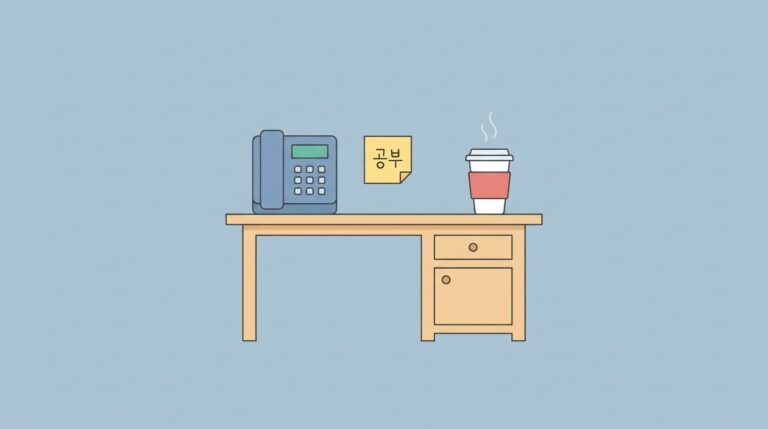
Master Korean Business Phone Calls: How to Leave a Flawless Message
Phase 1: 공감 (Story-Driven Opening)
안녕하세요! 매일한글 에디터입니다. (Hello! It is your editor from Daily Hangul here.)
Picture this: You are sitting in a sleek open-plan office in Gangnam, just like a character in the K-drama Misaeng (Incomplete Life). The phone on your desk rings, or worse—you need to dial a high-profile partner company. Your heart thumps against your ribs. You clear your throat, rehearse your sentence in your head, and dial. But instead of your intended contact, a crisp, polite voice answers: “He stepped away from his desk for a moment.”
Suddenly, your mind goes blank. How do you say, “When he gets back, please tell him to review the quote and call me back” without sounding demanding or accidentally talking like a robot?
Many of our A2 learners tell us that office phone calls are the ultimate test of courage. You cannot rely on hand gestures or facial expressions, and Korean corporate hierarchy feels like walking a tightrope. But do not worry! In today’s guide—built straight from real office feedback and practical tutoring sessions—we are going to break down this exact scenario into easy, bite-sized puzzle pieces. By the time you finish this post, picking up that office receiver will feel like second nature!
Phase 2: 핵심 표현 3선 심층 분석 (3 Core Expressions In-Depth)
1. 돌아오시면 견적서 확인 부탁드린다고 전해 주세요 (Doraosimyeon gyeonjeokseo hwagin butakdeorindago jeonhae juseyo)
- Pronunciation: [Doh-rah-oh-she-myeon gyeon-jeok-seo hwa-gin boo-tak-deu-rin-da-go jeon-hae joo-seh-yo] (Think of ‘dora’ like the explorer, and ‘hwagin’ sounding crisp like ‘Hwa-gin’.)
- Meaning:
- Literal: “When (he/she) returns, please convey that I request confirmation of the quotation.”
- Real Nuance: “Could you kindly let him know to check the estimate once he is back?”
- K-Culture Moment: The classic scene in Business Proposal where an exhausted secretary takes notes on a colorful sticky pad while balancing three incoming calls at once.
- Editor’s Insight: Notice the ending -ㄴ다고 전해 주세요 (-ndago jeonhae juseyo). This is Korean indirect speech used to relay a polite request. It keeps you from sounding like you are ordering the assistant around!
- Situation Spectrum:
- Casual: 🚫 (Way too formal for close friends)
- Semi-formal / Coworkers: ⚠️
- Formal / Business Partner: ✅
- 🤔 Think About It: In English, we often say “Tell him to look at the quote.” Why does Korean wrap this action in three layers of politeness (honorific -시-, 부탁, and 전하다)? What does this reveal about workplace hierarchy?
2. 제 번호로 연락 부탁드립니다 (Je beonhoro yeollak butakdeorimnida)
- Pronunciation: [Jeh bun-ho-roh yeol-lak boo-tak-deu-rim-nee-dah] (The ‘n’ and ‘r’ in yeon-rak blend smoothly into a soft double ‘l’ sound: ‘yeol-lak’.)
- Meaning:
- Literal: “I request contact to my number.”
- Real Nuance: “Please ask him to reach me at this number.”
- K-Culture Moment: In almost every romantic drama, this is the exact moment an office lead leaves their direct extension before hanging up with a firm, professional nod.
- Editor’s Insight: Using 부탁드립니다 (butakdeorimnida) adds a dignified, respectful touch to any phone closing. It sounds far more capable than simply saying “전화해 주세요 (call me)”.
- Situation Spectrum:
- Casual: 🚫
- Semi-formal: ⚠️
- Formal: ✅
- 🤔 Think About It: Why is asking someone to “contact” (연락) preferred over “call” (전화)? It gracefully leaves room for text messages, emails, or phone calls.
3. 자리에 안 계셔서 메모 남깁니다 (Jarie an gyesyeoseo memo namgimnida)
- Pronunciation: [Jah-ree-eh an gye-syeo-seo meh-mo nahm-gim-nee-dah] (‘Gye-syeo’ rhymes with ‘special’ without the ‘l’.)
- Meaning:
- Literal: “Because he is not at his seat, I leave a memo.”
- Real Nuance: “Since he is away from his desk, I would like to leave a message.”
- K-Culture Moment: Every busy office scene where someone taps their pen against a memo pad while verifying details.
- Editor’s Insight: We use 계시다 (gyesida) instead of 있다 (itda) because we are referring honorifically to the person who is absent. In Korean etiquette, you honor the third party even when they aren’t listening!
- Situation Spectrum:
- Casual: 🚫
- Semi-formal: ⚠️
- Formal: ✅
- 🤔 Think About It: How does your native language refer to an absent supervisor? In Korean, failing to use honorifics for an absent senior colleague is considered a noticeable faux pas.
Phase 3: 교과서 한국어 vs 진짜 한국어 (Textbook vs Real Korean)
Situation 1: Asking someone to take a message
- 📖 교과서 한국어: 메시지를 받아 적어 주시겠습니까? (Mesijireul bada jeogeo jusigesseumnikka? – Would you write down my message?)
- 🗣️ 진짜 한국어: 메모 하나만 부탁드려도 될까요? (Memo hanaman butakdeoryeodo doelkkayo? – May I leave a quick message?)
- 💡 왜 다를까?: Real Koreans rarely use the full phrase “메시지를 받아 적다” in spoken office settings. Dropping in a humble “메모 하나만 부탁드립니다” sounds natural, modest, and polite.
Situation 2: Asking for a callback
- 📖 교과서 한국어: 그 사람에게 저에게 전화하라고 말해 주세요. (Geu saramege jeoege jeonhwaharago malhae juseyo. – Tell that person to call me.)
- 🗣️ 진짜 한국어: 제 번호로 회신 부탁드린다고 전해 주세요. (Je beonhoro hoesin butakdeorindago jeonhae juseyo. – Please let them know to reply/call back to my number.)
- 💡 왜 다를까?: Using “그 사람 (that person)” on a business call sounds dismissive and rude! Native speakers use formal business terms like “회신 (callback/reply)” or “연락 (contact)”.
Phase 4: K-Culture 딥다이브 & 비언어적 매너 (Culture Deep Dive & Non-Verbal Manners)
4-1. 눈치 (Nunchi) & Phone Etiquette
Did you know that Koreans actually bow while talking on the phone? Walk into any company in Seoul, and you will see executives nodding their heads and bowing at a 15-degree angle while clutching the phone receiver with two hands.
* The 2-Hand Phone Hold: Even if the other person cannot see you, holding the receiver or notepad with two hands softens your voice and posture.
* Back-channeling (맞장구 – Matjang-gu): Maintain polite engagement every few seconds with short sounds like “네 (Ne)”, “아, 네 (Ah, ne)”, or “알겠습니다 (Algesseumnida)”. Complete silence can make the caller worry the line dropped!
4-2. Corporate Culture Code: The “Palli-Palli” Speed vs Polite Softeners
Korean corporate life moves at lightning speed (빨리빨리 – Palli-Palli). However, when asking someone to handle documentation like an estimate (견적서), direct demands create friction. That is why business calls always wrap direct requests in softening phrases like “바쁘시겠지만 (I know you are busy, but…)” or “확인 부탁드립니다 (We kindly ask for your confirmation)”.
Phase 5: 실전 롤플레이 시나리오 (Real-World Roleplay Scenario)
- Setting: Alex (an overseas marketing assistant) calls Hanil Tech to follow up on a project quote with Manager Park (박 과장). Assistant Manager Kim (김 대리) answers the phone.
-
Characters:
- Alex (알렉스): Diligent, polite foreign professional.
- Kim Daeri (김 대리): Efficient receptionist/colleague at Hanil Tech.
Dialogue:
1. 김 대리: 감사합니다. 한일테크 김민수 대리입니다. (Gamsahamnida. Haniltekeu Gimminsu daeriimnida.)
🎭 [Receiving the call with a bright, crisp tone]
“Thank you for calling. This is Assistant Manager Min-su Kim of Hanil Tech.”
2. 알렉스: 안녕하세요, 디자인루트의 알렉스입니다. 박 과장님 계십니까? (Annyeonghaseyo, Dijainruteu-ui Allekseu-imnida. Bak gwajangnim gyesimnikka?)
🎭 [Speaking clearly with a polite sitting posture]
“Hello, this is Alex from Design Route. Is Manager Park in?”
3. 김 대리: 아, 알렉스 씨 안녕하세요! 과장님이 지금 회의 중이시라 자리에 안 계십니다. (Ah, Allekseu ssi annyeonghaseyo! Gwajangnimi jigeum hoe-ui jung-isira jarie an gyesimnida.)
🎭 [Softening voice apologetically]
“Ah, hello Alex! The manager is in a meeting right now and away from his desk.”
4. 알렉스: 아, 그러시군요. 혹시 메모 하나만 부탁드려도 될까요? (Ah, geureosigunyo. Hoksi memo hanaman butakdeoryeodo doelkkayo?)
🎭 [Nodding slightly while taking out a pen]
“Ah, I see. Could I perhaps leave a brief message?”
5. 김 대리: 네, 말씀하세요. 적어 놓겠습니다. (Ne, malsseumhaseyo. Jeogeo nokgetseumnida.)
🎭 [Clicking a ballpoint pen, ready to take notes]
“Yes, go ahead. I will write it down.”
6. 알렉스: 돌아오시면 견적서 확인 부탁드린다고 전해 주시고 제 번호로 연락 부탁드립니다. (Doraosimyeon gyeonjeokseo hwagin butakdeorindago jeonhae juseyo, je beonhoro yeollak butakdeorimnida.)
🎭 [Pacing words calmly and steadily]
“When he returns, please tell him to check the quote and ask him to reach out to my number.”
7. 김 대리: 네, 확인했습니다. 회의 끝나시는 대로 바로 전달해 드리겠습니다. (Ne, hwaginhaetseumnida. Hoe-ui kkeunnasineun daero baro jeondalhae deurigetseumnida.)
🎭 [Reading back with reassurance]
“Understood. I will pass the message to him as soon as his meeting ends.”
8. 알렉스: 감사합니다. 수고하세요! (Gamsahamnida. Sugohaseyo!)
🎭 [Ending with a cheerful and respectful closing]
“Thank you very much. Have a great day!”
🔀 인터랙티브 분기점 (Interactive Choice)
Now it is your turn! Kim Daeri asks: “Can I take your phone number?” What do you say?
- Option A: 제 번호는 010-1234-5678입니다. 메모해 주셔서 감사합니다! (Je beonhoneun gong-il-gong il-i-sam-sa o-yuk-chil-pal-imnida. Memohae jusyeoseo gamsahamnida!)
- Option B: 야, 내 번호 적어라. (Ya, nae beonho jeogeora.)
- Option C: 제 전화번호 몰라요? 과장님한테 물어보세요. (Je jeonhwabeonho mollayo? Gwajangnimhante mureoboseyo.)
Feedback:
* Option A (Best): 🌟 Perfect! Clear numbers, followed by an expression of gratitude for their help.
* Option B (Bad): 💥 Yikes! This is extremely informal and rude banmal (반말). You might spark an office crisis!
* Option C (Risk): ⚠️ Passive-aggressive. Even if Manager Park has your number, asking his colleague to check makes extra unnecessary work.
Phase 6: 10초 감정 섀도잉 드릴 (10-Second Emotional Shadowing Drill)
Practice speaking these phrases with rhythmic pauses (/) and emotional intention!
- [💼 정중하고 차분하게 – Polite and calm]
돌아오시면 / 견적서 확인 부탁드린다고 / 전해 주세요.
(Doraosimyeon / gyeonjeokseo hwagin butakdeorindago / jeonhae juseyo.) -
[📞 명확하고 신뢰감 있게 – Clear and confident]
제 번호로 / 연락 부탁드립니다.
(Je beonhoro / yeollak butakdeorimnida.) -
[🤝 미안함과 배려를 담아 – Considerate and respectful]
바쁘실 텐데 / 메모 남겨 주셔서 / 감사합니다.
(Bappeusil tende / memo namgyeo jusyeoseo / gamsahamnida.)
Phase 7: K-Culture 미니 사전 (Mini Dictionary)
- 견적서 (Gyeonjeokseo): Price quotation / estimate document. Indispensable for business discussions before contracts are finalized.
- 자리 비우다 (Jari biuda): Literally “to empty one’s seat.” Used when an employee stepped out briefly for coffee, restroom, or a short errand.
- 메모 전달 (Memo jeondal): Delivering or relaying a message/note to another coworker.
- 회신 (Hoesin): A formal reply or response (by phone, memo, or email).
Phase 8: 여행자와 직장인을 위한 생존 키트 (Survival Kit)
서바이벌 표현 TOP 3 (Top 3 Survival Expressions)
- 잠시만 기다려 주세요 (Jamsiman gidaryeo juseyo): Just a moment, please.
Pro Tip: Use this when transferring a call or looking up a document. - 다시 전화드리겠습니다 (Dasi jeonhwadeurigetseumnida): I will call back again.
Pro Tip: Great when the connection is bad or the contact is unreachable. - 통화 괜찮으십니까? (Tonghwa gwaenchaneusimnikka?): Is now a good time to talk?
Pro Tip: Polite business openers always begin with this golden question.
Editor’s Travel & Life Note:
If you are working remotely from Seoul or traveling, you will need to look up corporate phone numbers and office branches. We strongly recommend doing a quick download Naver Map app search to verify business hours and contact numbers before dialing! Also, keep in mind that office extensions in Korea often start with 02 (Seoul) followed by a 4-digit internal team code.
Phase 9: 한 발 더 깊이 (A Step Deeper)
In Korean office culture, the phrase “자리에 안 계십니다 (He is not at his seat)” is a masterclass in social harmony. Instead of saying “He went out to grab an iced Americano,” this standard phrase shields coworkers while offering polite ambiguity. Language in Korean workplaces is designed not just to transmit raw data, but to safeguard interpersonal relationships and mutual dignity.
💬 Your Turn: Does your home country prioritize speedy bluntness or soft indirectness when taking phone messages? Let me know in the comments below!
Phase 10: FAQ & 오해 방지 (FAQ Schema Ready)
Q: Can I use “전화해 (Jeonhwahae)” when asking someone to call me back?
A: Never in an office setting! “전화해” is informal language (banmal) reserved strictly for close friends of the same age or younger. In business contexts, always use “연락 부탁드립니다 (Yeollak butakdeorimnida)”.
Q: What is the difference between 견적서 (Gyeonjeokseo) and 영수증 (Yeongsujeung)?
A: A 견적서 (estimate/quote) is issued before a purchase or project to outline expected costs. A 영수증 (receipt) is issued after payment has already been completed.
Q: How do I say my phone number digit by digit in Korean?
A: Use Sino-Korean numbers (일, 이, 삼, 사…). The hyphen (-) is read as “에 (eh)”. For example: 010-1234-5678 is read as “공일공-에 (eh)-일이삼사-에 (eh)-오육칠팔”.
🚨 흔한 실수 (Common Mistakes) 경고판
- Mistake: Saying “박 과장 있어요? (Is Manager Park there?)”
Correct Action: Use honorifics for superiors and business partners: “박 과장님 계십니까? (Bak gwajangnim gyesimnikka?)” - Mistake: Saying “내 번호로 전화하세요 (Call my number).”
Correct Action: Use humble pronouns and honorific requests: “제 번호로 연락 부탁드립니다 (Je beonhoro yeollak butakdeorimnida).” - Mistake: Hanging up abruptly after getting your answer.
Correct Action: Close with a warm courtesy phrase like “감사합니다, 수고하세요! (Thank you, keep up the good work!)”.
Phase 11: 액션 미션 & 참여 유도 (Action Missions)
- 🥉 Bronze Mission: Record yourself saying “돌아오시면 견적서 확인 부탁드린다고 전해 주세요” three times on your smartphone voice memo app.
- 🥈 Silver Mission: Write down your actual phone number in Korean syllables and read it aloud without hesitating.
- 🥇 Gold Mission: Call a local Korean restaurant, stationery store, or practice partner and use “잠시만 기다려 주세요” or leave a mock message.
- 🎮 K-Culture Mission: Watch an episode of an office K-Drama (like Misaeng or Agency) and spot at least one character saying “자리에 안 계십니다”!
Phase 12: 인터랙티브 퀴즈 챌린지 (Interactive Quiz Challenge)
1. [상황 판단] The person you want to talk to is out of the office. What is the most polite way to ask to leave a message?
* A) 메모 써 (Memo sseo)
* B) 메모 하나만 부탁드려도 될까요? (Memo hanaman butakdeoryeodo doelkkayo?)
* C) 그냥 끊을게요 (Geunyang kkeuneulgeyo)
2. [빈칸 채우기] Fill in the blank with the appropriate business term for “quote/estimate”:
* 돌아오시면 [ ______ ] 확인 부탁드린다고 전해 주세요.
3. [True or False] It is completely fine to refer to an absent client or manager as “그 사람 (that person)” when speaking to their secretary.
* (True / False)
👉 Click to view Answers & Explanations!
- Answer: B. “메모 하나만 부탁드려도 될까요?” is polite, modest, and standard office Korean.
- Answer: 견적서 (Gyeonjeokseo). This stands for quotation or price estimate.
- Answer: False. Calling someone “그 사람” on a business call is considered very blunt and disrespectful. Always use their job title with the honorific “님” (e.g., 과장님, 팀장님).







