

Phase 1: 공감 (스토리 몰입형 오프닝)
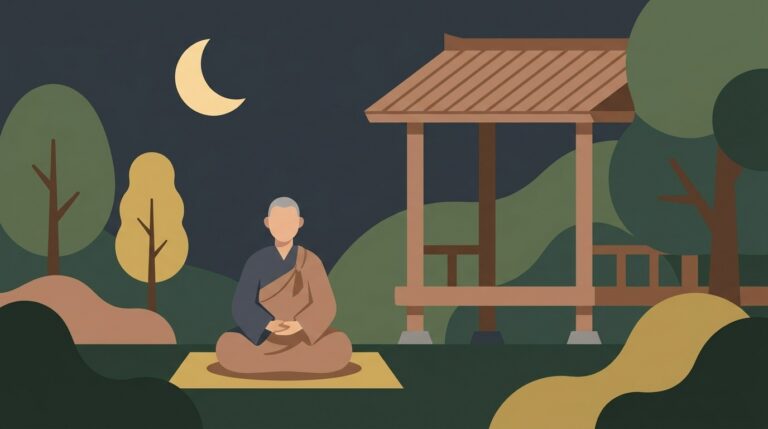
안녕하세요! 매일한글 에디터입니다. Have you ever felt utterly drained by relentless perfectionism while navigating life or work in Korea? In modern K-dramas like My Liberation Notes, characters confront suffocating existential fatigue. Yet over a thousand years ago, the great monk Wonhyo faced the exact same despair. When he drank sweet water in pitch darkness, only to discover at dawn that it came from a rotting human skull, he achieved instant liberation: reality hadn’t changed, only his mind did. That epiphany is encapsulated in ‘일체유심조(一切唯心造)’. Based on coaching advanced learners, this master guide will help you command this timeless Korean philosophy with authentic native nuance.
Phase 2: 핵심 표현 3선 심층 분석
1. 일체유심조 (一切唯心造)
- Pronunciation: [Il-che-yu-sim-jo] (Think of it like ‘eel-chay-yoo-seem-joh’)
- Meaning: Literal: “Everything is created by the mind alone.” | Actual Nuance: External circumstances possess no inherent despair or bliss; your psychological frame alone constructs heaven or hell.
- K-Culture Moment: In healing variety shows like You Quiz on the Block, seasoned veterans and Olympic athletes who overcame crippling slumps often recite this four-character idiom with serene conviction.
- Editor’s Insight: This is not toxic positivity or superficial manifestation; it is radical existential sovereignty born from Buddhist Avatamsaka philosophy (Hwaeomgyeong).
- Situation Spectrum: Casual ⚠️ | Semi-formal ✅ | Formal ✅
- 🤔 Think About It: Does your native tongue distinguish between passive fatalism and active cognitive reframing as sharply as Korean does here?
2. 마음먹기에 달렸다 (Maeummeokgie dallyeotda)
- Pronunciation: [Mae-um-meok-gi-e dal-lyeot-da] (Sounds like ‘mah-eum-muck-gee-ay dahl-lyut-dah’)
- Meaning: Literal: “It hangs upon mind-eating.” | Actual Nuance: “It all comes down to your resolve and perspective.”
- K-Culture Moment: Often murmured by an exhausted protagonist’s mentor in corporate dramas like Misaeng over late-night soju.
- Editor’s Insight: Notice the sensory verb ‘먹다’ (to eat). In Korean culture, resolving to do something is digested into your somatic being like hearty rice.
- Situation Spectrum: Casual ✅ | Semi-formal ✅ | Formal ✅
- 🤔 Think About It: Why does Korean conceptualize mental resolve as internal nourishment rather than a cognitive decision?
3. 번뇌 (煩惱) (Beonnoe)
- Pronunciation: [Beon-noe] (Phonetically merges into ‘bun-noh-ay’ with a smooth nasal liaison)
- Meaning: Literal: “Burning distress and affliction.” | Actual Nuance: Existential cognitive overload and agonizing over desires beyond one’s immediate control.
- K-Culture Moment: In My Mister (나의 아저씨), when Park Dong-hoon sits in spiritual silence at a mountain monastery, his monk friend gently cuts through his world-weary 번뇌.
- Editor’s Insight: High-level speakers use this term both solemnly in existential dialogues and playfully when paralyzed by modern trivialities.
- Situation Spectrum: Casual ⚠️ | Semi-formal ✅ | Formal ✅
- 🤔 Think About It: Is suffering viewed in your culture as an external curse to be cured or an internal attachment to be witnessed?
Phase 3: 교과서 한국어 vs 진짜 한국어
Situation 1: Calming a peer paralyzed by high-stakes burnout
- 📖 교과서 한국어: 마음을 진정시키고 부정적인 생각을 비우십시오. (Maeumeul jinjeongsikigo bujeongjeogin saenggageul biusipsio.) — “Please calm your mind and empty your negative thoughts.”
- 🗣️ 진짜 한국어: 결국 모든 건 마음먹기 나름이잖아, 멘탈 다시 잡자. (Gyeolguk modeun geon maeummeokgi nareum-ijana, mental dasi japja.) — “At the end of the day, it’s all about how you frame it. Let’s pull our headspace back together.”
- 💡 왜 다를까? C2 native speakers blend classical philosophical idioms with modern vernacular like ‘멘탈 잡다’ (reclaiming mental composure) to convey warmth without sounding sanctimonious.
Situation 2: Realizing you worried intensely over an imaginary threat
- 📖 교과서 한국어: 저의 불안은 근거가 없는 환상이었습니다. (Jeoui buraneun geungeoga eomneun hwansang-ieotseumnida.) — “My anxiety was a groundless illusion.”
- 🗣️ 진짜 한국어: 나 혼자 해골물 마시고 번뇌했던 거네! (Na honja haegolmul masigo beonnoehaetdeon geone!) — “I was literally chugging skull-water all by myself, agonizing over nothing!”
- 💡 왜 다를까? Educated Koreans evoke Monk Wonhyo’s skull-water (해골물) as witty self-deprecating shorthand for self-inflicted cognitive placebo.
Phase 4: K-Culture 딥다이브 & 비언어적 매너
4-1. 눈치(Nunchi) & 제스처: The Physicality of Enlightenment
When invoking profound Buddhist idioms like 일체유심조 in high-context Korean conversations, avoid theatrical hand gestures or aggressive eye contact. Authentic cultural delivery involves a subtle drop of the shoulders, an inward exhalation (한숨을 비우듯), and a soft, grounded gaze. Lightly resting your right hand over your upper chest (마음자리) while speaking signals profound empathy and introspection, assuring your listener that you are sharing hard-won wisdom rather than patronizing them.
4-2. 문화 코드 분석: The Temple Stay & Digital Detox Phenomenon
In hyper-digitalized Seoul, over 80% of temple stay participants at centers like Jogyesa or Bongeunsa are young professionals in their 20s and 30s. Unplugged from smartphones, they eat seasonal temple cuisine in deliberate silence (발우공양) and engage in 108 prostrations (108배). To modern Koreans, Buddhist wisdom is not an ascetic religion; it is the ultimate psychological toolkit for survival in a hyper-competitive society.
Phase 5: 실전 롤플레이 시나리오
Setting: A quiet traditional tea house in Bukchon on a rainy Tuesday evening. Steam curls from celadon cups of roasted Solomon’s seal tea (둥굴레차).
Characters:
* 민호 (Min-ho): 33, exhausted tech co-founder facing severe project stagnation.
* 당신 (You): C2-level confidant offering grounded perspective.
- 민호: 🎭 (찻잔을 만지작거리며 깊은 한숨을 쉰다) 진짜 어디서부터 꼬인 건지 모르겠어. 매일이 지옥 같다.
(Jin-jja eodiseobuteo kko-in geonji mo-reu-get-seo. Mae-il-i ji-ok gat-da.)
“I honestly don’t know where things went wrong. Every single day feels like living in hell.” -
당신: 🎭 (차분하게 눈을 맞추며 잔을 채워준다) 대표로서 짊어진 무게가 상상 이상으로 크지?
(Dae-pyo-ro-seo jil-meo-jin mu-ge-ga sang-sang i-sang-eu-ro keu-ji?)
“Carrying the weight of a founder is beyond what anyone can imagine, right?” -
민호: 🎭 (두 손으로 얼굴을 감싸며) 투자자 미팅 갈 때마다 숨이 턱턱 막혀. 번뇌가 끝이 없어.
(Tu-ja-ja mi-ting gal ttae-ma-da sum-i teok-teok ma-kyeo. Beon-noe-ga kkeunh-i eop-seo.)
“Every investor meeting suffocates me. This endless agonizing never stops.” -
당신: 🎭 (고개를 천천히 끄덕이며) 원효 대사가 무덤가에서 마셨던 물 이야기, 알지?
(Won-hyo dae-sa-ga mu-deom-ga-e-seo ma-syeot-deon mul i-ya-gi, al-ji?)
“You know the story of Master Wonhyo drinking water in the graveyard, right?” -
민호: 🎭 (피식 웃으며) 밤엔 달콤했는데 아침에 보니 해골물이었단 거?
(Bam-en dal-kom-haet-neun-de a-chim-e bo-ni hae-gol-mul-i-eot-dan geo?)
“Sweet at night, but a decaying skull in the daylight?” -
당신: 🎭 (미소를 띠며) 맞아. 상황은 그대로인데, 네 마음이 스스로를 몰아세우고 있는 걸지도 몰라.
(Ma-ja. Sang-hwang-eun geu-dae-ro-in-de, ne ma-eum-i seu-seu-ro-reul mo-ra-se-u-go it-neun geol-ji-do mol-ra.)
“Exactly. The situation is static; it might be your own mind backing yourself into a corner.” -
민호: 🎭 (찻잔을 내려놓고 가만히 생각에 잠긴다) 결국 일체유심조라는 말이네.
(Gyeol-guk il-che-yu-sim-jo-ra-neun mal-i-ne.)
“So in the end, it really is Ilcheyusimjo.” -
당신: 🎭 (따뜻하게 어깨를 토닥이며) 그래. 그러니까 오늘 밤만큼은 번뇌 내려놓고 따뜻한 차나 마시자.
(Geu-rae. Geu-reo-ni-kka o-neul bam-man-keum-eun beon-noe nae-ryeo-noh-go tta-tteut-han cha-na ma-si-ja.)
“Yes. So just for tonight, put down the existential turmoil and let’s savor this warm tea.”
🔀 인터랙티브 분기점 (Choose Your Response for Turn 6):
- Option A: “맞아. 상황은 그대로인데, 네 마음이 스스로를 몰아세우고 있는 걸지도 몰라.” (Exactly. Reality is identical; only your mind is cornering you.)
👉 Feedback [Best]: Displays C2 conversational elegance by validating feelings before pivoting to introspective philosophy. - Option B: “야, 그냥 긍정적으로 생각해! 다 네 마음먹기 나름이잖아.” (Hey, just think positive! It’s all up to your mindset.)
👉 Feedback [Bad]: Dismissive and invalidating; weaponizes Buddhist thought into toxic superficial cheerleading. - Option C: “화엄경에서는 일체유심조의 교리를 심오하게 설파하고 있습니다.” (The Avatamsaka Sutra profoundly preaches the doctrine of Ilcheyusimjo.)
👉 Feedback [Risk]: Far too academic and stilted for an intimate, vulnerable conversation between friends.
Phase 6: 10초 감정 섀도잉 드릴
-
[🧘♂️ 초연하고 담담하게 - Serene and deeply composed]
결국 모든 괴로움은 / 밖에서 오는 게 아니라 / 내 안의 마음먹기에 / 달렸더라고요.
(Gyeolguk modeun goeroumeun / bakkeso oneun ge anira / nae anui maeummeokgie / dallyeotdeoragoyo.)
“In the end, all suffering / doesn’t stem from outside / but rather hangs upon / the framing of my own mind.” -
[💡 머리를 탁 치듯 깨달으며 - With sudden electrifying insight]
어젯밤 그 달콤했던 물이 / 실은 해골물이었다니, / 결국 일체유심조였어!
(Eojetbam geu dalkomhaetdeon muri / sireun haegolmurieottani, / gyeolguk ilcheyusimjoyeosseo!)
“To think that sweet water last night / was actually skull water, / it was Ilcheyusimjo all along!”
Phase 7: K-Culture 미니 사전
- 해골물 (Haegolmul) | Skull Water | Originating from Master Wonhyo’s epiphany, natives invoke this noun playfully to describe finding out an uncomfortable truth about something they previously enjoyed without issue.
- 득도 (Deukdo) | Attaining the Tao / Enlightenment | Formally used for spiritual awakening; informally applied to a friend who suddenly transcends everyday stress with unbothered chill.
- 마음자리 (Maeumjari) | The State of the Mind’s Core | A poetic native term for the underlying psychological disposition that governs one’s emotional responses.
- 정토 (Jeongto) | The Pure Land | The Buddhist equivalent of Nirvana or paradise, frequently referenced metaphorically as an unshakeable state of inner peace amidst worldly chaos.
Phase 8: 여행자를 위한 생존 키트
서바이벌 표현 TOP 3
- Expression 1: 템플스테이 신청을 확인하고 싶은데요. (Tempeulseute-i sincheong-eul hwaginhago sipeundeoyo.)
Pro Tip: Use this when arriving at temple administration offices for meditation retreats. - Expression 2: 조용히 참선할 수 있는 공간이 어디인가요? (Joyonghi chamseonhal su inneun gong-gani eodi-ingayo?)
Pro Tip: Perfect for asking monks or temple guides where you can engage in solitary silent reflection. - Expression 3: 마음을 비우는 데 좋은 차를 추천해 주시겠어요? (Maeumeul biuneun de joeun chareul chucheonhae jusigesseoyo?)
Pro Tip: A sophisticated phrasing when visiting authentic Hanok tea rooms in Insadong or Samcheong-dong.
Editor’s Travel Note:
When seeking respite from bustling metropolitan life, visit the official Templestay Official Reservation Portal to book weekend retreats at historic temples nestled within Bukhansan or Jirisan national parks. Download the Naver Map App Download to trace hiking routes leading up to quiet mountain hermitages (암자), and keep small cash bills handy if you wish to purchase traditional incense or roof tile offerings (기와불사).
Phase 9: “한 발 더 깊이” (생각 질문)
In hyper-collectivist societies, societal norms often dictate precise templates for success—prestigious universities, corporate employment, and outward status symbols. When Koreans encounter crushing comparison fatigue, idioms like 일체유심조 provide a legitimate cultural exit hatch. It redirects the locus of control from crushing external validation inward to the sovereignty of one’s own perception.
💬 Your Turn: Have you ever experienced a sudden shift in mindset that turned an agonizing crisis into an absurdly liberating realization? Share your “skull water” story in the comments below!
Phase 10: FAQ & 오해 방지 (FAQ Schema)
Q: Does using ‘일체유심조’ sound overly religious or preachy?
A: Not at all when used in appropriate reflective contexts. While rooted in the Buddhist Avatamsaka Sutra, it functions in modern Korean as a universally respected philosophical idiom that transcends dogmatic religious lines.
Q: Can I use ‘일체유심조’ in casual text messaging with close friends?
A: You can, but usually in a self-reflective or subtly humorous manner (e.g., “오늘 야근도 일체유심조로 버틴다…”). Dropping it abruptly as unsolicited advice might make you sound like an ancient village elder.
Q: What is the grammatical difference between ‘마음먹다’ and ‘결심하다’?
A: ‘결심하다’ (決心) is a formal, cognitive decision to pursue an external goal (e.g., quitting smoking), whereas ‘마음먹다’ encompasses internal emotional positioning, perspective-taking, and gut-level resolve.
🚨 흔한 실수 (Common Mistakes) 경고판
- ❌ Mistake 1: Using 일체유심조 to dismiss someone’s acute material tragedy or illness.
👉 Correct Action: Reserve it for cognitive existential angst or personal reframing, not external catastrophes. - ❌ Mistake 2: Pronouncing it flatly as il-che-yu-sim-jo without Hanja-derived vocal cadence.
👉 Correct Action: Maintain balanced cadence across the four syllables with equal weight. - ❌ Mistake 3: Confusing 해골물 (skull water) with mere poisoned water.
👉 Correct Action: Understand that 해골물 represents an object whose physical nature didn’t change—only your perceptual awareness did.
Phase 11: 액션 미션 & 참여 유도
- 🥉 Bronze Mission (Solo Shadowing): Practice Phase 6’s two drills five times aloud in front of a mirror until the intonation feels effortless.
- 🥈 Silver Mission (Social Journaling): Write a 2-sentence post on Instagram or Threads about a recent stressor, concluding with: “결국 모든 건 마음먹기에 달렸다.” Tag #DailyHangul.
- 🥇 Gold Mission (Real Native Usage): Next time a Korean colleague or language exchange partner vents about abstract future anxieties, validate them and gently ask: “혹시 혼자 해골물 들이켜고 있는 건 아니에요?”
- 🎮 K-Culture Mission: Watch an episode of a healing Korean drama (such as My Mister or Summer Strike) and spot when characters retreat into contemplative silence or discuss the burden of their thoughts.
Phase 12: 인터랙티브 퀴즈 챌린지
1. Situational Judgment:
Your Korean friend is paralyzed with panic over presenting in front of executives. Which phrase offers the most empathetic and natural reassurance?
(A) 그냥 번뇌를 버리고 화엄경을 외우세요.
(B) 결국 마음먹기 나름이니까, 네 페이스대로 편하게 해봐.
(C) 해골물을 마신 것처럼 행동하십시오.
2. Fill-in-the-Blank:
세상의 모든 일은 오직 마음이 만들어낸다는 뜻의 사자성어는 ( )이다.
3. True or False:
The historical monk Wonhyo deliberately drank from a human skull to prove his physical endurance. (True / False)
🔍 Click here to reveal answers and detailed explanations
Answers & Explanations:
1. (B) 결국 마음먹기 나름이니까, 네 페이스대로 편하게 해봐.
Explanation: (B) naturally integrates the philosophical concept into contemporary spoken Korean without sounding absurdly archaic (A) or nonsensical (C).
2. 일체유심조
Explanation: Written as 一切唯心造, representing the Avatamsaka truth that all reality is projected by consciousness.
3. False
Explanation: Wonhyo drank the water in total darkness thinking it was pure mountain water; he only discovered it was inside a rotting skull the next morning upon sunrise!







