

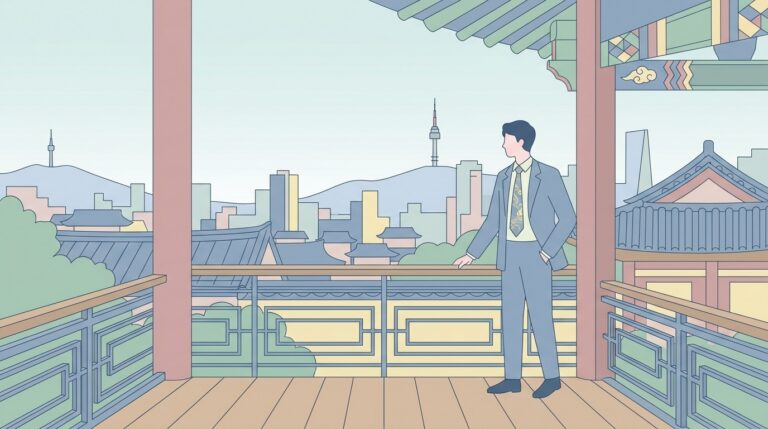
Mastering Korean Diplomatic Rhetoric: The Art of Iron Inside Silk
Phase 1: Empathy & Immersion
안녕하세요! 매일한글 에디터입니다.
Have you ever watched an intense political K-Drama—like Designated Survivor: 60 Days or Queenmaker—and noticed how the most devastating ultimatums are delivered with immaculate bows, serene smiles, and exquisitely polite honorifics? You hear the chief negotiator say, “심도 있게 검토하겠습니다 (Simdo itge geomtohagessseumnida)” with a gracious nod, and you think, “Great! They are going to examine it seriously!” But then the music swells ominously, the opposite envoy’s face drains of color, and the deal collapses.
What just happened? Welcome to the elite tier of Korean communication: 외교 수사학 (Diplomatic Rhetoric). In advanced Korean discourse, the highest form of assertiveness is not raising your voice or issuing blunt ultimatums; it is wrapping steel-hard national interest inside silk-smooth linguistic courtesy (외유내강, iron fist in a velvet glove).
Many of our advanced C2 learners tell us: “I know all the high-level grammar and vocabulary, but in high-stakes boardroom meetings and formal panels, I either sound too aggressive or completely misunderstand when a Korean partner is signaling a polite categorical refusal!” This guide is built directly on executive coaching data and diplomatic debriefs. By decoding strategic ambiguity (전략적 모호성) and learning to read between the spoken syllables (행간 읽기), you will transform from a textbook speaker into an indispensable, culturally astute strategist.
Phase 2: Core Expressions Deep Dive
1. 심도 있게 검토하겠습니다 (Simdo itge geomtohagessseumnida)
- Pronunciation: [Sim-do it-ge geom-to-ha-get-seum-ni-da] (Sounds like “Seem-doe eat-geh gum-toe-ha-get-seum-nee-dah”)
- Meaning:
- Literal: We will review/examine [the matter] in great depth.
- Actual Nuance: “This proposal is completely unacceptable under current conditions, and we have no intention of adopting it unless tectonic shifts occur.”
- K-Culture Moment: In corporate and ministerial summit scenes, when a foreign delegation pushes an impossible condition, the veteran Korean negotiator smiles gently, sips green tea, and murmurs this phrase. The room immediately freezes.
- Editor’s Insight: The word 심도 (depth) sounds proactive, but paired with 검토 (examination/review) in high diplomacy, it serves as an elegant procedural buffer. It buys infinite time without explicitly saying “No.”
- Situation Spectrum: Casual 🚫 | Semi-formal ⚠️ | Formal/Diplomatic ✅
- 🤔 Think About It: In English, “We will look into it deeply” often implies genuine consideration. Why does Korean culture favor postponing a rejection behind procedural diligence rather than giving a definitive direct refusal?
2. 유감의 뜻을 표명하지 않을 수 없습니다 (Yugam-ui tteus-eul pyomyeonghaji aneul su eopseumnida)
- Pronunciation: [Yu-gam-eui tteut-eul pyo-myeong-ha-ji a-neul su eop-seum-ni-da] (Sounds like “You-gahm-ee teut-eul pyoh-myung-hah-jee ah-neul soo up-seum-nee-dah”)
- Meaning:
- Literal: We cannot help but express our sentiments of regret.
- Actual Nuance: “You have crossed an inviolable red line, and we are registering our absolute, non-negotiable condemnation.”
- K-Culture Moment: Think of press briefings issued by the Ministry of Foreign Affairs on national television. When this double-negative structure (~하지 않을 수 없다) appears, bilateral tensions have officially entered critical territory.
- Editor’s Insight: Koreans employ double negation to demonstrate that emotional restraint was exhausted; the speaker was compelled by the gravity of the situation to issue this statement. It removes personal hostility and elevates the stance to an institutional necessity.
- Situation Spectrum: Casual 🚫 | Semi-formal 🚫 | Formal/Diplomatic ✅
- 🤔 Think About It: How does phrasing a statement as an involuntary obligation (“we cannot help but…”) protect institutional dignity while magnifying firmness?
3. 상호 이해의 폭을 넓혔습니다 (Sangho ihae-ui pog-eul neolhyeossseumnida)
- Pronunciation: [Sang-ho i-hae-ui po-geul neol-hyeot-seum-ni-da] (Sounds like “Sahng-hoe ee-hae-ee poh-geul nul-hyut-seum-nee-dah”)
- Meaning:
- Literal: We broadened the scope of mutual understanding.
- Actual Nuance: “We clashed fiercely on almost every substantive point, but we managed to preserve diplomatic decorum and avoid an all-out public brawl.”
- K-Culture Moment: The joint press communiqué after a grueling five-hour closed-door summit where neither side budged an inch.
- Editor’s Insight: Notice that it does not claim 합의 (agreement) or 진전 (progress). It merely asserts that both parties now clearly understand how far apart their positions are. It is the hallmark of strategic ambiguity.
- Situation Spectrum: Casual ⚠️ | Semi-formal ✅ | Formal/Diplomatic ✅
- 🤔 Think About It: When negotiations stall, does acknowledging mutual disagreement politely keep future dialogue alive better than declaring a stalemate?
Phase 3: Textbook Korean vs. Real Native Korean
Situation 1: Rejecting an Unreasonable Proposal in a Bilateral Meeting
- 📖 교과서 한국어 (Textbook): 그 제안은 우리에게 불리해서 받아들일 수 없습니다. (Geu je-an-eun u-ri-e-ge bul-li-hae-seo ba-da-deu-ril su eop-seum-ni-da.) — “That proposal is disadvantageous to us, so we cannot accept it.”
- 🗣️ 진짜 한국어 (Real Diplomatic): 제안의 취지에는 공감하나, 현 단계에서 수용하기에는 현실적인 난점들이 상존합니다. (Je-an-ui chwi-ji-e-neun gong-gam-ha-na, hyeon dan-gye-e-seo su-yong-ha-gi-e-neun hyeon-sil-jeok-in nan-jeom-deul-i sang-jon-ham-nida.) — “While we appreciate the spirit of your initiative, realistic complexities remain before we can accommodate it at this stage.”
- 💡 왜 다를까? (Why the difference?): Directly saying “it is bad for us” sounds petty and aggressive. Elite Korean phrasing validates the other party’s goodwill (취지에 공감) before citing structural barriers (현실적 난점), framing the rejection as an objective impossibility rather than subjective stubbornness.
Situation 2: Expressing Stern Displeasure Over a Breach of Protocol
- 📖 교과서 한국어 (Textbook): 당신들의 행동 때문에 매우 화가 났습니다. (Dang-sin-deul-ui haeng-dong ttae-mun-e mae-u hwa-ga nat-seum-ni-da.) — “We are very angry because of your behavior.”
- 🗣️ 진짜 한국어 (Real Diplomatic): 귀측의 이번 조치는 기존 합의 정신에 부합하지 않는다는 점을 엄중히 지적하지 않을 수 없습니다. (Gwi-cheuk-ui i-beon jo-chi-neun gi-jon hap-ui jeong-sin-e bu-hap-ha-ji an-neun-da-neun jeom-eul eom-jung-hi ji-jeok-ha-ji an-eul su eop-seum-ni-da.) — “We cannot but solemnly point out that your side’s measure does not align with the spirit of our existing consensus.”
- 💡 왜 다를까? (Why the difference?): Emotional words like 화가 났다 (angry) collapse authority. High-register rhetoric invokes legalistic anchor points (합의 정신) paired with grave modifiers (엄중히), projecting unwavering resolve.
Phase 4: K-Culture Deep Dive & Non-Verbal Manners
4-1. 눈치 (Nunchi), Micro-Silence, and Posture
In Western diplomacy, confident assertion is often signaled by steady direct eye contact, firm vocal projection, and quick counter-arguments. In the Korean tradition of high-stakes statecraft, 침묵 (calculated silence) is far more potent.
* The 3-Second Nod-and-Breathe: When receiving an aggressive counterparty demand, an experienced Korean negotiator never reacts immediately. They pause, maintain a neutral posture, tilt their head down slightly (by about 2 degrees), and let out a soft, measured breath. This non-verbal pause signals: “I have absorbed your pressure, and it has failed to shake me.”
* Cup-Holding Decorum: In formal bilateral tea sessions, placing both hands wrapped around the porcelain cup while looking calmly at the table center before speaking establishes unshakeable gravitas (무게감).
4-2. The Cultural Code: 외유내강 (Oeyunaegang) in Modern Leadership
From historical royal envoys during the Joseon Dynasty balancing continental powers to contemporary global trade summits in Seoul, the archetype of the legendary diplomat is never loud or theatrical. It is 외유내강 (外柔內剛)—”soft and gentle on the exterior, unyielding steel on the interior.” In hit K-dramas, the most formidable figures speak with the softest honorifics (극존칭). When you learn to package your most unshakeable boundaries in silky Korean phrasing, you earn profound respect across Korean industry and public sectors.
Phase 5: Real-World Roleplay Scenario
- Setting: A high-level bilateral digital trade committee meeting in a private reception room overlooking Gwanghwamun, Seoul.
- Characters:
- Director Han (한 국장): A veteran Korean negotiator with 25 years of international statecraft experience.
- You (Foreign Delegation Lead): Advocating for an immediate relaxation of proprietary data transfer regulations.
[Dialogue]
Director Han: 우리 측으로서는 귀국의 선진적인 규제 완화 모델에 대해 각별한 관심을 가지고 경청해 왔습니다.
(U-ri cheuk-eu-ro-seo-neun gwi-guk-ui seon-jin-jeok-in gyu-je wan-hwa mo-del-e dae-hae gak-byeol-han gwan-sim-eul ga-ji-go gyeong-cheong-hae wat-seum-ni-da.)
“On our part, we have listened with exceptional interest to your country’s progressive deregulation model.”
🎭 [Director Han places his tea cup down without a sound, smiling faintly]
You: 긍정적인 평가에 감사드립니다. 이번 분기 내에 양해각서(MOU)를 공식 체결할 수 있기를 기대합니다.
(Geung-jeong-jeok-in pyeong-ga-e gam-sa-deu-rim-ni-da. I-beon bun-gi nae-e yang-hae-gak-seo-reul gong-sik che-gyeol-hal su it-gi-reul gi-dae-ham-ni-da.)
“Thank you for the positive evaluation. We hope to officially sign the MOU within this quarter.”
🎭 [Leaning forward with an eager, decisive smile]
Director Han: 다만, 국내 산업 생태계 보호와 데이터 주권이라는 원칙적 가치를 고려할 때, 제기해 주신 일정은 다소 속도 조절이 필요하다는 목소리가 적지 않습니다.
(Da-man, guk-nae san-eop saeng-tae-gye bo-ho-wa de-i-teo ju-gwon-i-ra-neun won-chik-jeok ga-chi-reul go-ryeo-hal ttae, je-gi-hae ju-sin il-jeong-eun da-so sok-do jo-jeol-i pil-yo-ha-da-neun mok-so-ri-ga jeok-ji an-seum-ni-da.)
“However, considering the fundamental values of domestic industrial preservation and data sovereignty, there are significant voices arguing that the proposed timeline requires pacing adjustments.”
🎭 [Maintaining warm eye contact while delicately clasping both hands]
You: 속도 조절이라는 말씀은, 이번 분기 체결이 어렵다는 뜻으로 이해해도 되겠습니까?
(Sok-do jo-jeol-i-ra-neun mal-sseum-eun, i-beon bun-gi che-gyeol-i eo-ryeop-da-neun tteut-eu-ro i-hae-hae-do doe-get-seum-ni-kka?)
“By pacing adjustments, should we understand that finalizing it within this quarter is unfeasible?”
🎭 [Sensing the polite resistance and testing the boundary]
Director Han: 상호 윈-윈(Win-Win)할 수 있는 접점을 찾기 위해, 실무진 차원의 후속 협의를 보다 진중하게 지속해 나갈 필요성이 크다고 사료됩니다.
(Sang-ho win-win-hal su it-neun jeop-jeom-eul chat-gi wi-hae, sil-mu-jin cha-won-ui hu-sok hyeop-ui-reul bo-da jin-jung-ha-ge ji-sok-hae na-gal pil-yo-seong-i keu-da-go sa-ryo-doem-ni-da.)
“To discover common ground that benefits both sides, we deem it highly necessary to continue thoughtful follow-up consultations at the working level.”
🎭 [Slight polite bow of the head, effectively closing the current discussion path]
🔀 Interactive Decision Point: How do you respond to Director Han?
- Option A: “그러면 이번 분기에는 아예 안 된다는 말씀이신가요? 확실히 말씀해 주십시오.” (So you are saying it is completely impossible this quarter? Please be clear.)
- Option B: “국장님의 고견에 깊이 감사드리며, 원칙적 가치와 속도감의 조화를 이룰 수 있는 보완책을 마련하여 실무 협의에 성실히 임하겠습니다.” (We deeply appreciate your esteemed perspective, and we will diligently prepare complementary measures for working-level consultations to harmonize fundamental values with momentum.)
- Option C: “한국 측의 입장을 수용하겠습니다. 그럼 MOU 체결 계획은 전면 폐기하도록 하겠습니다.” (We accept the Korean side’s stance. In that case, we will completely scrap the MOU plan.)
Feedback:
* Option A [Bad]: Demanding a binary yes/no destroys the diplomatic fabric (체면, face). It traps the Korean side and will turn polite delay into an outright stone-wall rejection.
* Option B [Best]: Masterful C2 execution! You respected his face, accepted the need for working-level talks, yet subtly reaffirmed your desire for momentum (속도감의 조화). Steel against steel, wrapped in pure silk.
* Option C [Risk]: Over-reaction. Strategic ambiguity is an invitation to renegotiate terms, not a final termination of diplomatic ties.
Phase 6: 10-Second Emotion Shadowing Drill
Slash marks (/) indicate rhythmic micro-pauses. Match your vocal tone to the emotional cues!
[💼 단호하지만 비단결처럼 부드럽게 / Firm yet silky smooth]
귀측의 입장은 / 충분히 경청하였으나, / 저희로서도 / 양보하기 어려운 원칙적 한계가 있음을 / 양해해 주시기 바랍니다.
(Gwi-cheuk-ui ip-jang-eun / chung-bun-hi gyeong-cheong-ha-yeot-eu-na, / jeo-hui-ro-seo-do / yang-bo-ha-gi eo-ryeo-un won-chik-jeok han-gye-ga it-seum-eul / yang-hae-hae ju-si-gi ba-ram-ni-da.)
“We have listened attentively to your position, but we ask for your understanding that we too have principled boundaries where compromise is difficult.”-
[🧊 얼음처럼 냉철하고 정중하게 / Ice-cold composure and exquisite politeness]
현안에 대한 / 이견이 존재하는 것은 사실이나, / 대화의 문은 / 언제나 열려 있습니다.
(Hyeon-an-e dae-han / i-gyeon-i jon-jae-ha-neun geos-eun sa-sil-i-na, / dae-hwa-ui mun-eun / eon-je-na yeol-lyeo it-seum-ni-da.)
“It is true that divergent viewpoints exist on this pending issue; nevertheless, the door to dialogue remains open.”
Phase 7: K-Culture Mini Dictionary
- 외유내강 (Oeyunaegang – 外柔內剛): Outer gentleness, inner steel. A traditional virtue describing a person whose soft demeanor conceals unbreakable fortitude.
- 행간 (Haenggan – 行間): Literal meaning “between lines.” Reading the 행간 means deducing unspoken political intent behind exquisitely diplomatic phrases.
- 체면 (Che-myeon – 體面): Public dignity, honor, and face. Korean diplomatic rhetoric is specifically calibrated to never strip the counterparty of their 체면.
- 속도 조절 (Sokdo jojeol): Literally “pacing adjustment.” In corporate/diplomatic parlance, a universally recognized euphemism for halting or renegotiating a project without saying “canceled.”
Phase 8: Expat & Professional Survival Kit
Top 3 Executive Survival Phrases:
- 원론적인 입장을 공유해 주셔서 감사합니다.
(Won-ron-jeok-in ip-jang-eul gong-yu-hae ju-syeo-seo gam-sa-deu-rim-ni-da.)
Pro Tip: Use when someone gives you a generic corporate brush-off. It acknowledges their stance while subtly signaling that you know it was just baseline protocol. - 이견을 좁혀 나가는 과정으로 이해하겠습니다.
(I-gyeon-eul jo-pyeo na-ga-neun gwa-jeong-eu-ro i-hae-ha-get-seum-ni-da.)
Pro Tip: Brilliant phrase to conclude a difficult dispute without conceding defeat. - 추후 적절한 시점에 다시 논의하시지요.
(Chu-hu jeok-jeol-han si-jeom-e da-si non-ui-ha-si-ji-yo.)
Pro Tip: The ultimate polite pause button for meetings spiraling into deadlock.
- Editor’s Professional Note: When preparing for high-level meetings in Korea, keeping track of governmental announcements and official statements is critical. Browse the 국립외교원 외교안보연구소 사이트 둘러보기 to analyze real-world Korean press releases and policy briefs.
Phase 9: One Step Deeper (Reflective Insight)
In many Western communicative paradigms influenced by Cartesian logic, clarity is equated with honesty, and ambiguity is often suspected as deceit. However, in Korean collectivist philosophy influenced by Neo-Confucian relational ethics, blunt clarity can be viewed as violent—it corners the other person and threatens communal equilibrium. Strategic ambiguity is not deceptive; it is a collaborative gift of breathing room. By wrapping steel in silk, you honor the relationship while protecting your sacred core interests.
💬 Your Turn: Have you ever experienced a moment in Korean where someone’s extreme politeness actually felt firmer than an outright “No”? Share your story in the comments below!
Phase 10: FAQ & Common Pitfalls
Q: Does “검토해 보겠습니다” always mean “No”?
A: In 85% of formal business/diplomatic proposals, yes, especially when uttered without a specific follow-up date or assigned action item. If accompanied by detailed requests for supplemental data, it may represent genuine conditional consideration.
Q: If a Korean counterpart uses strategic ambiguity with me, how should I interpret it without being rude?
A: Never corner them by demanding: “So is it yes or no?” Instead, mirror their elegance: acknowledge the complexities they raised, and ask, “Which supplementary conditions would make this realistic for your side?”
Q: Is this level of rhetoric used in everyday social Korean?
A: Not with close peers, but you will hear its subtle echoes in tenant-landlord discussions, salary renegotiations, and family elder interactions where preserving interpersonal peace (화목) is paramount.
🚨 Common Mistakes Warning Board
- Mistake 1: Treating polite expressions as enthusiastic approval.
Correction: Always cross-reference linguistic politeness with institutional commitment. - Mistake 2: Forcing binary answers in public settings.
Correction: Allow your partner a graceful procedural escape route. - Mistake 3: Dropping honorifics when negotiations get tense.
Correction: In Korean rhetoric, the more intense the disagreement, the higher the honorific register you must deploy.
Phase 11: Action Missions
- 🥉 Bronze Mission (Solo Shadowing): Record yourself delivering Phase 6’s first drill. Focus on maintaining a calm, melodic cadence without letting any irritated pitch creep in.
- 🥈 Silver Mission (Analytical Decoding): Find an official Korean government or corporate press release regarding a controversial topic. Highlight 2 phrases exemplifying strategic ambiguity and share them on your social study feed.
- 🥇 Gold Mission (Real-World Practice): In your next formal email or meeting, replace an abrupt “어렵습니다 (It’s difficult)” with “현실적인 난점들을 감안하여 신중히 방안을 모색 중입니다.”
- 🎮 K-Culture Mission: Watch an episode of a Korean political or legal drama (like Hyena or Vincenzo). Identify the exact scene where two rivals exchange polite smiles while delivering verbal poison!
Phase 12: Interactive Quiz Challenge
1. Situational Judgment:
During a business partnership summit, the Korean team leader says: “귀사의 제안은 매우 참신하나, 내부 공감대 형성을 위해 시간이 조금 더 필요할 것으로 보입니다.” What is the true state of affairs?
* A) They are completely ready to sign the contract tomorrow.
* B) They have structural internal objections; the current proposal in its present form is unlikely to pass.
* C) They didn’t understand the proposal and want you to explain it again in English.
2. Fill in the Blank:
When registering an institutional complaint without destroying bilateral ties, complete the phrase:
“기존 합의 사항을 준수해 주실 것을 ________ 당부드립니다.” (We solemnly urge you to adhere to the existing agreements.)
3. True or False:
In elite Korean discourse, raising your voice and using informal blunt verbs is accepted as a sign of supreme confidence and power. (True / False)
👉 Click to reveal answers & in-depth explanations!
Answers:
1. B — Citing “need for internal consensus” (내부 공감대 형성) and “more time” (시간이 필요) is textbook diplomatic euphemism for internal resistance.
2. 엄중히 (eom-jung-hi) — Meaning “solemnly / sternly,” this adverb adds weight without losing linguistic polish.
3. False — The true hallmark of authority in Korean statecraft is absolute poise, low vocal register, and unyielding politeness (외유내강).







