

Master Korean Fashion Haul Slang: Nail the Effortless ‘Kku-an-kku’ Look
Phase 1: 공감 (Story Immersion Opening)
안녕하세요! 매일한글 에디터입니다. (Hello! I’m your Daily Hangul editor.)
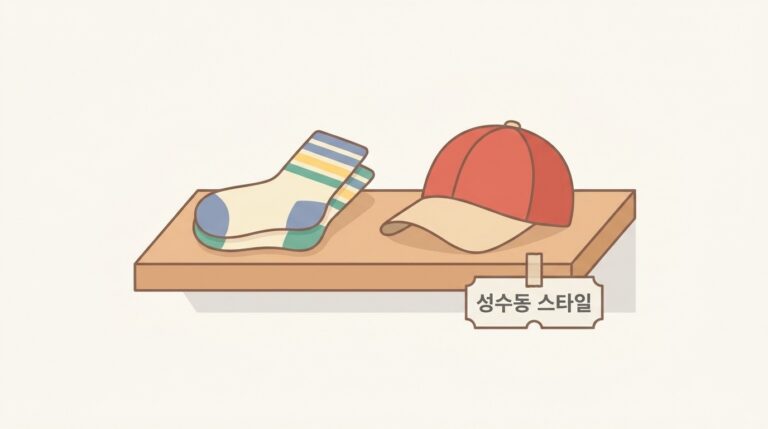
Imagine this: You are curled up on your sofa watching a trendy Seongsu-dong shopping haul video on YouTube. Your favorite Korean fashion creator holds up a pair of bright mustard ribbed socks and an understated vintage navy ball cap, smiles into the lens, and says:
“포인트 주기 좋은 양말이랑 모자로 꾸안꾸 룩을 완성했어요!” (Pointeu jugi joeun yangmarirang mojaro kku-an-kku rugeul wanseonghaesseoyo!)
(“I completed an effortless ‘dressed-up-but-not’ look with accent socks and a cap!”)
You quickly pause the video and open your standard textbook. You look up “꾸안꾸”… and find nothing. Not a single page explains what just happened. Did you mishear? Is it a typo?
You are definitely not alone! One of the biggest pain points our Daily Hangul learners share with us is that textbook Korean teaches you how to say “이 옷은 비쌉니다” (This clothing is expensive), but everyday Koreans and YouTubers speak a totally fresh, vibrant street dialect when talking about fashion. Understanding these haul buzzwords doesn’t just help you decode your favorite vlogs—it instantly helps you blend into youth culture in trendy neighborhoods like Hongdae, Seongsu, or Hannam-dong. Let’s break down this stylish sentence piece by piece so you can chat about your daily fits like a native!
Phase 2: 핵심 표현 3선 심층 분석 (Top 3 Key Expressions)
1. 꾸안꾸 (Kku-an-kku)
- Pronunciation: [Kku-an-kku] (Sounds like “coo-ahn-coo”, with a sharp, bouncy ‘kk’ sound like the ‘c’ in cool)
- Meaning: Short for ‘꾸민 듯 안 꾸민 듯’ (Kkumin deut an kkumin deut). Literal: “Looking like dressed up, but not dressed up.” Real nuance: “Effortlessly chic” or “low-key stylish.”
- K-Culture Moment: You will hear this in almost every idol airport fashion review or “Get Ready With Me” (GRWM) vlog. When an idol pairs gray sweatpants with tailored coats, fans instantly comment: “완전 꾸안꾸 정석이다!” (That’s the textbook definition of effortless chic!)
- Editor’s Insight: Koreans value modesty and harmony, so looking like you spent three hours trying too hard is sometimes seen as slightly unnatural. Kku-an-kku is the sweet spot where you look groomed, stylish, yet relaxed.
- Situation Spectrum: Casual: ✅ | Semi-formal: ⚠️ | Formal: 🚫
- 🤔 Think About It: In your native culture, do people praise someone who looks “overdressed” or someone who rocks an “effortless” vibe? How does fashion reflect social pressure?
2. 포인트 주기 좋다 (Pointeu ju-gi jo-ta)
- Pronunciation: [Po-in-teu ju-gi jo-ta] (Think: “Point” with a soft ‘eu’ ending + “jew-gee joh-tah”)
- Meaning: Literal: “Good for giving a point.” Real nuance: “Great for adding an accent/pop of color or style to an outfit.”
- K-Culture Moment: Seen in every styling clip when someone wears all black or neutral beige, then picks up a bright beanie, neon socks, or a funky ring to make the outfit stand out.
- Editor’s Insight: The loanword ‘포인트’ (point) here does not refer to reward points at a grocery store! It means a visual highlight. When you pair an otherwise plain basic outfit with one eye-catching item, that item is your point.
- Situation Spectrum: Casual: ✅ | Semi-formal: ✅ | Formal: ⚠️
- 🤔 Think About It: Why do you think modern Korean fashion leans heavily toward neutral base colors with just one small highlight item?
3. 룩을 완성하다 (Ruk-eul wan-seong-ha-da)
- Pronunciation: [Rugeul wan-seong-ha-da] (Think: “Look-eul wahn-sung-hah-dah”)
- Meaning: Literal: “To complete a look.” Real nuance: “To pull the whole outfit together.”
- K-Culture Moment: Frequently used by fashion editors in magazines and creators putting on the final accessory—a belt, bag, or shoe—before stepping out the door.
- Editor’s Insight: In early-stage Korean textbooks, you learn “옷을 입다” (to wear clothes). But in everyday fashion conversation, combining clothes into an overall vibe is referred to as creating and “completing a look” (룩을 완성하다).
- Situation Spectrum: Casual: ✅ | Semi-formal: ✅ | Formal: ✅
- 🤔 Think About It: Notice how English fashion loanwords like ‘Look’ (룩) merge naturally with pure Korean action verbs like ‘완성하다’ (to complete). Language borrowing is a creative two-way street!
Phase 3: 교과서 한국어 vs 진짜 한국어 (Textbook vs. Real Korean)
Situation 1: Talking about a simple, casual outfit you love
- 📖 교과서 한국어:
저는 편안하지만 단정한 옷을 입었습니다.
(Jeoneun pyeonanhajiman danjeonghan oseul ibeotseumnida.)
“I wore comfortable yet neat clothes.” - 🗣️ 진짜 한국어:
오늘 완전 꾸안꾸로 입어봤어요.
(Oneul wanjeon kku-an-kkuro ibeobwasseoyo.)
“I went for a totally effortless-chic look today.” - 💡 왜 다를까? (Why is it different?): Textbook sentences use stiff written adjectives, whereas real Koreans use trendy portmanteaus like 꾸안꾸 to convey comfort and cool aesthetics simultaneously.
Situation 2: Suggesting an accessory to liven up a plain outfit
- 📖 교과서 한국어:
이 모자를 쓰면 눈에 잘 띕니다.
(I mojareul sseumyeon nune jal ttwimnida.)
“If you wear this hat, it is very noticeable.” - 🗣️ 진짜 한국어:
이 모자로 포인트 주기 딱 좋아요!
(I mojaro pointeu jugi ttak joayo!)
“This hat is just perfect for adding a pop to your look!” - 💡 왜 다를까? (Why is it different?): While “눈에 띄다” can sometimes mean overly flashy or glaring, “포인트 주기 좋다” carries a distinctly positive, tasteful styling connotation.
Phase 4: K-Culture 딥다이브 & 비언어적 매너 (Deep Dive & Non-Verbal Cues)
4-1. 눈치 (Nunchi) & Body Gestures in Korean Boutiques
When shopping in indie clothing shops in Seongsu or Hongdae, you will notice people rarely shout across the store. Instead:
* The Mirror Nod: Koreans often hold an accessory against their chest while looking in the full-length mirror, slightly tilting their head to check balance. If you’re with a friend, catch their eyes in the mirror and raise your eyebrows approvingly.
* Handing Items Respectfully: Even when asking a store clerk to check a size, hold the item with both hands or support your right elbow with your left hand. It shows warmth and consideration!
4-2. The Cultural Code: Airport Fashion & “Effortless” Beauty
K-Pop stars have transformed airport terminals into high-fashion runways. But if you observe BTS, NewJeans, or IVE departing Incheon Airport, they rarely wear stiff red-carpet evening gowns. Instead, you see oversized hoodies, wide-leg denim, stylish caps, and designer sneakers. This is the pinnacle of 꾸안꾸 (Kku-an-kku) culture: high-end taste concealed inside an approachable, cozy silhouette. It signals: “I don’t need to try too hard to look good.”
Phase 5: 실전 롤플레이 시나리오 (Real-Life Roleplay Scenario)
Setting: A minimalist vintage concept store in Seongsu-dong.
Characters:
* 민지 (Minji): Your trend-savvy Korean bestie.
* You (Alex): Learning to style accessories in Seoul.
Turn 1
민지: 알렉스, 이 모자 써봐! 너 오늘 입은 니트에 찰떡이야.
(Alex, i moja sseobwa! Neo oneul ibeun niteue chaltteogiya.)
🎭 Hands you a deep green vintage cap with a gentle grin.
“Alex, try this cap on! It matches the knit sweater you’re wearing today like a charm.”
Turn 2
Alex: 진짜? 근데 나 오늘 너무 편하게 입고 나왔는데…
(Jinjja? Geunde na oneul neomu pyeonhage ipgo nawanneunde…)
🎭 Looking into the mirror hesitantly while touching the cap brim.
“Really? But I dressed super casually today…”
Turn 3
민지: 에이, 원래 패션의 완성이 꾸안꾸잖아!
(Ei, wonrae paesyeonui wanseongi kku-an-kkujana!)
🎭 Laughs and pulls a pair of cream-colored striped socks from the display rack.
“Come on, effortless chic is the ultimate fashion goal!”
Turn 4
Alex: 그럼 이 양말도 같이 신으면 어때?
(Geureom i yangmaldo gachi sineumyeon eottae?)
🎭 Holding the socks down toward your sneakers to visualize.
“Then how about wearing these socks with it too?”
Turn 5
민지: 오, 대박! 그걸로 포인트 주기 진짜 좋겠다.
(O, daebak! Geugeollo pointeu jugi jinjja jokgetda.)
🎭 Claps hands quietly in excitement.
“Oh, totally! That will make such an awesome accent piece.”
Turn 6
Alex: 양말이랑 모자로 꾸안꾸 룩 완성할 수 있을까?
(Yangmarirang mojaro kku-an-kku ruk wanseonghal su isseulkka?)
🎭 Smiling playfully while adjusting the cap backward.
“Can I complete an effortless-chic look with just socks and a cap?”
Turn 7
민지: 당연하지! 과하지도 않고 센스 있어 보여.
(Dangyeonhaji! Gwahajido anko senseu isseo boyeo.)
🎭 Gives a thumbs-up in the mirror reflection.
“Of course! It’s not over-the-top, and it makes you look super stylish.”
Turn 8
Alex: 좋아, 오늘 쇼핑은 이걸로 결정했어!
(Joa, oneul syoping-eun igeollo gyeoljeonghaesseo!)
🎭 Happily heading toward the counter to pay.
“Great, I’m definitely getting these today!”
🔀 인터랙티브 분기점 (Interactive Decision Point)
Imagine the shop assistant asks if you need anything else. How do you respond naturally?
- Choice A: “이 모자로 포인트 주고 싶은데, 다른 색상도 있나요?” (I mojaro pointeu jugo sipeunde, dareun saeksangdo innayo? / I want to add an accent with this cap, do you have other colors?)
- Feedback (Best!): Perfect! You correctly used the idiom “포인트 주다” and asked for options politely.
- Choice B: “꾸안꾸 옷 주세요.” (Kku-an-kku ot juseyo. / Please give me effortless clothes.)
- Feedback (Risk): Slightly awkward. Kku-an-kku is an overall styling concept or vibe, not a specific garment item on a shelf.
- Choice C: “이거 너무 눈에 띄어서 싫어요.” (Igeo neomu nune ttwieoseo sireoyo. / I hate this because it’s too noticeable.)
- Feedback (Bad): Too blunt and negative. In Korean store etiquette, if something isn’t your style, simply say “둘러보고 올게요” (Dulleobogo olgeyo / I’ll look around a bit more).
Phase 6: 10초 감정 섀도잉 드릴 (10-Second Emotional Shadowing Drill)
Read these aloud, pausing at the slashes (/), matching the emotion indicated!
[😊 신나고 뿌듯하게 / Upbeat & Proud]
포인트 주기 좋은 양말이랑 모자로 / 꾸안꾸 룩을 완성했어요!
(Pointeu jugi joeun yangmarirang mojaro / kku-an-kku rugeul wanseonghaesseoyo!)-
[🤔 고민하며 조언을 구할 때 / Thoughtful & Asking advice]
이 가방으로 / 포인트 주기 괜찮을까요?
(I gabang-euro / pointeu jugi gwaenchaneulkkayo?) -
[😎 칭찬하며 엄지 척! / Complimenting with confidence]
오늘 착장 / 완전 꾸안꾸 느낌 제대로다!
(Oneul chakjang / wanjeon kku-an-kku neukkim jedaeroda!)
Phase 7: K-Culture 미니 사전 (Mini Dictionary)
- 하울 (Haul): Directly adapted from the English word “haul.” Refers to videos or social media posts where creators show off all the goodies they purchased in one shopping spree.
- 착장 (Chakjang): Short for 착용 상태 (state of wearing). Used frequently as “today’s outfit” (OOTD). Example: “오늘 착장 어때요?” (How is my outfit today?)
- 애정템 (Aejeongtem): A compound of 애정 (affection) + 아이템 (item). It means your “ride-or-die holy grail item” that you wear or use constantly.
- 찰떡 (Chaltteok): Literally sticky glutinous rice cake. Used as slang to mean two things match seamlessly together, like peanut butter and jelly: “너한테 찰떡이다!” (It suits you like a charm!)
Phase 8: 여행자를 위한 생존 키트 (Traveler’s Survival Kit)
서바이벌 표현 TOP 3 (Top 3 Phrases)
- 이거 착용해 봐도 돼요? (Igeo chag-yonghae bwado dwaeyo?)
- Pro Tip: In Korean accessory and clothing shops, always ask before trying on hats or items with makeup on your face.
- 다른 색상 있어요? (Dareun saeksang isseoyo?)
- Pro Tip: Found a cap you love, but want another tone for your point? Use this!
- 선물 포장 가능한가요? (Seonmul pojang ganeunghangayo?)
- Pro Tip: Buying stylish socks for your besties back home? Many Seoul boutiques offer aesthetic gift wrapping for free or around 1,000 KRW.
Editor’s Travel Note 💡
- Finding Hidden Spots: When shopping around Seongsu or Yeonnam-dong, avoid relying solely on Google Maps, which often misses tiny independent shops. We strongly recommend making use of 네이버 지도 앱 다운로드 (Naver Map app download) to bookmark cozy hidden boutiques.
- Tax Refund Tip: Look for the “Global Tax Free” logo at checkout. If you spend over 15,000 KRW in certified stores, hold out your passport to get instant or airport tax refunds on fashion items!
Phase 9: “한 발 더 깊이” (Cultural Essay & Reflection)
Korean style emphasizes 조화 (johwa / balance and harmony). Rather than wearing head-to-toe bold logos that scream for attention, modern Korean youth prefer subtle colors with deliberate touches of personality—a vibrant sock, a minimalist pin, or a well-shaped ball cap. This mirrors the cultural concept of 눈치 (Nunchi): showing your taste without overwhelming the shared social space. It’s about being stylishly considerate.
💬 Your Turn: What is your go-to kku-an-kku item when you want to look good without trying too hard? Tell us in the comments below!
Phase 10: FAQ & 오해 방지 (FAQ Schema)
Q: Can I use the word “꾸안꾸” in a job interview or business meeting?
A: No, please avoid this! 꾸안꾸 is trendy slang. While perfectly acceptable among colleagues at a casual creative startup over coffee, standard formal situations require words like “단정하다” (neat/tidy) or “깔끔하다” (clean/presentable).
Q: Does “포인트 주다” mean getting store reward points on my membership card?
A: Not in a fashion context! While “포인트 적립” refers to accumulating loyalty points, “포인트 주다” in styling always means adding an accent or focal point to an ensemble.
Q: Can men use “꾸안꾸”, or is it only for women’s fashion?
A: It is 100% gender-neutral! In fact, Korean men’s fashion channels frequently feature videos like “남자 꾸안꾸 룩북” (Men’s Effortless Chic Lookbook).
🚨 흔한 실수 (Common Mistakes) 경고판
- Mistake: Saying “저는 오늘 꾸안꾸를 입었어요.” (I wore a kku-an-kku.)
- Correct Action: Say “꾸안꾸로 입었어요” (I dressed in a kku-an-kku way) or “꾸안꾸 룩을 연출했어요” (I created an effortless look).
- Mistake: Putting hats directly on your head in small shops without checking.
- Correct Action: Many shops protect white or light-colored caps from makeup or hair wax. Ask “모자 써봐도 되나요?” first.
- Mistake: Confusing 룩 (Look) with 옷 (Clothes).
- Correct Action: 옷 means physical clothing pieces; 룩 refers to the overall aesthetic or vibe.
Phase 11: 액션 미션 & 참여 유도 (Action Missions)
- 🥉 Bronze Mission (Solo Practice): Stand in front of your mirror and practice saying: “이 모자로 포인트 주기 좋아요!” 3 times with a confident smile.
- 🥈 Silver Mission (Social Share): Snap a photo of your favorite accent socks or hat and post it on your Instagram story with the sticker text #꾸안꾸 #매일한글.
- 🥇 Gold Mission (Real-world Challenge): Next time you watch an idol vlog, leave a comment under the video: “오늘 꾸안꾸 착장 너무 예뻐요!” (Your effortless fit today is so pretty!).
- 🎮 K-Culture Mission: Search for the hashtag #꾸안꾸룩 on Instagram or TikTok and analyze how Korean creators pair neutral clothes with colorful accessories!
Phase 12: 인터랙티브 퀴즈 챌린지 (Quiz Challenge)
1. [상황 판단] You are wearing a plain black t-shirt and loose jeans. You put on bright orange sneakers to make your outfit pop. What did you just do?
(A) 포인트를 줬어요 (Po-in-teu-reul jwosseoyo)
(B) 면접을 준비했어요 (Myeonjeob-eul junbihaesseoyo)
(C) 옷을 환불했어요 (Oseul hwanbulhaesseoyo)
2. [빈칸 채우기] Complete the sentence:
“오늘 꾸민 듯 안 꾸민 듯 자연스러운 ( ) 룩을 완성했어요.”
(A) 먹방 (Mukbang)
(B) 꾸안꾸 (Kku-an-kku)
(C) 본방사수 (Bonbangsasu)
3. [True / False] Is it polite to say “꾸안꾸 옷 주세요” to an elderly shopkeeper in a traditional market?
(True / False)
👉 Click here to reveal the answers and explanations!
- Answer: (A) Adding an accent piece (orange sneakers) to a neutral outfit is the exact definition of “포인트를 주다”.
- Answer: (B) 꾸안꾸 is the contraction of 꾸민 듯 안 꾸민 듯 (effortless chic).
- Answer: False. Elderly market owners may not understand youth internet buzzwords, and 꾸안꾸 is a styling concept, not a single article of clothing!







