

Phase 1: Empathy — Welcome to the Table of Korean Debate
안녕하세요! 매일한글 에디터입니다. (Hello! This is your Daily Hangul editor.)
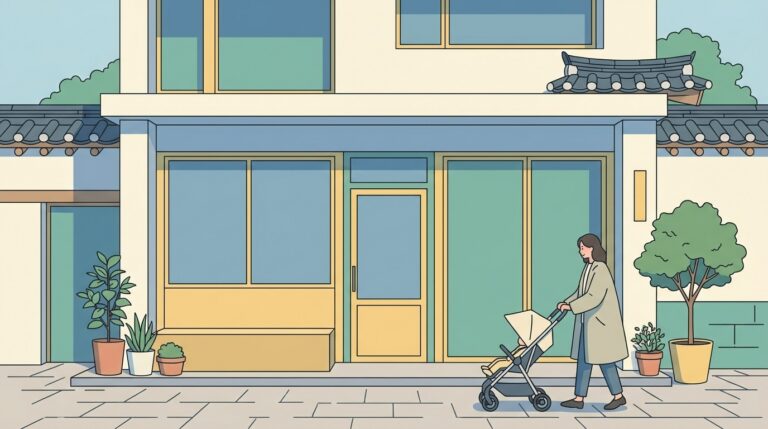
Picture this: You are exploring the trendy backstreets of Yeonnam-dong or Seongsu-dong on a breezy afternoon. You spot a gorgeously designed minimalist café with floor-to-ceiling glass windows and lush monstera plants. As you reach for the door handle, you notice a small, elegant acrylic sign: “NO KIDS ZONE” (or in recent headlines, even “NO SENIOR ZONE”).
A few minutes later, you witness a young couple pushing a stroller politely step back after reading the sign, turning around with quiet sighs. While some patrons inside relish the library-like quietude to study or chat quietly, online debate threads on Korean forums like Instiz and Blind rage with thousands of comments: Is it a business owner’s commercial freedom to protect their ambiance, or is it blatant discrimination that alienates families and vulnerable members of society?
If you have progressed into the intermediate (B1) level of Korean, moving beyond simply ordering an iced Americano is a massive milestone. The hardest hurdle learners face at this level is navigating mature, socially sensitive topics. How do you voice a thoughtful disagreement without sounding rude, aggressive, or overly blunt? Today, we will master the exact phrase Koreans use to articulate progressive, human-rights-focused viewpoints: “반면에 반대하는 입장에서는 일부의 문제를 이유로 모든 어린이와 부모의 출입을 원천 차단하는 것은 부당한 차별이라고 지적해요” (Conversely, critics argue that barring all children and parents outright because of a few bad cases is unfair discrimination). With this guide, based on hundreds of student feedback sessions, you’ll be equipped to join deep coffeehouse talks like a true Seoul insider!
Phase 2: Top 3 Core Expressions in Depth
Here are the three foundational power-phrases that elevate your Korean speech from basic beginner chatter to sophisticated B1+ discourse.
1. 반면에 반대하는 입장에서는 (Banmyeone bandaehaneun ipjang-eseoneun)
- Pronunciation: [Ban-myeon-e ban-dae-ha-neun ip-jang-e-seo-neun] (Sound metaphor: Think of ‘ban-myeon’ like ‘banana’ cut in half to show the other side, and ‘ipjang’ sounding like stepping into someone’s boots).
- Meaning: Literally “On the other side, from the opposing stance…” | Real Nuance: “On the flip side, those against this point out that…” It creates instant objectivity, showing that you are neutrally reporting or respectfully introducing an alternative viewpoint.
- K-Culture Moment: You will hear this exact phrase every Sunday morning on SBS’s Curious Stories Y (궁금한 이야기 Y) or current affairs talk shows whenever an ethical social dilemma is presented.
- Editor’s Insight: In Korean etiquette, launching directly into “I disagree!” (저는 반대해요!) can feel confrontational. Starting with “반면에 반대하는 입장에서는…” creates a cushion that makes you sound balanced, analytical, and respectful.
- Situation Spectrum: Casual: ⚠️ | Semi-formal: ✅ | Formal: ✅
- 🤔 Think About It: Why does Korean culture favor framing strong counterarguments around “positions” (입장) rather than personal pronouns like “I” or “You”?
2. 부당한 차별이라고 생각해요 (Budanghan chabyeor-irago saenggak-haeyo)
- Pronunciation: [Bu-dang-han cha-byeol-i-ra-go saeng-gak-hae-yo] (Sound metaphor: ‘Budang’ rhymes with ‘moo-dong’, expressing an unjust, unfair burden).
- Meaning: Literally “I think it is unfair discrimination.” | Real Nuance: “I feel this crosses the line into unjust discrimination.”
- K-Culture Moment: Frequently uttered in legal K-dramas like Extraordinary Attorney Woo (이상한 변호사 우영우) when addressing systemic bias in public institutions.
- Editor’s Insight: 차별 means discrimination, but pairing it with 부당한 (unjust/unfair) highlights the moral illegitimacy of the action. Ending in ~라고 생각해요 softens the declaration into a polite personal conviction rather than an absolute attack.
- Situation Spectrum: Casual: ✅ | Semi-formal: ✅ | Formal: ✅
- 🤔 Think About It: In your native country, where is the line drawn between private business liberty and public anti-discrimination rights?
3. 일부의 문제로 전체를 제한하는 것은 (Ilbui munje-ro jeonche-reul jehanhaneun geoseun)
- Pronunciation: [Il-bu-ui mun-je-ro jeon-che-reul je-han-ha-neun geo-seun] (Sound metaphor: ‘Ilbu’ = small slice; ‘Jeonche’ = the entire cake).
- Meaning: Literally “Restricting the entirety due to issues with some…” | Real Nuance: “Over-generalizing and penalizing an entire group just because of a few bad apples.”
- K-Culture Moment: Seen across YouTube debate panels discussing whether the misbehavior of a few badly behaved dog owners (개티켓) or loud café customers justifies blanket community bans.
- Editor’s Insight: This expression is the gold standard for logical pushback. It de-escalates emotional arguments by distinguishing between individual behavioral infractions and group-wide civil restrictions.
- Situation Spectrum: Casual: ⚠️ | Semi-formal: ✅ | Formal: ✅
- 🤔 Think About It: Notice how Korean sentence structures stack context first (일부의 문제로 -> because of a few problems) before revealing the action (제한하는 것은 -> restricting everything).
Phase 3: Textbook Korean vs. Real Korean
Situation 1: Introducing a polite counterpoint in casual debate
- 📖 교과서 한국어 (Textbook):
저는 당신의 의견에 반대합니다. (Jeoneun dangsin-ui uigyeone bandaehamnida. / I oppose your opinion.) - 🗣️ 진짜 한국어 (Real-Life):
그 말도 맞는데, 반대쪽 입장도 일리가 있어요. (Geu maldo manneunde, bandaejjok ipjangdo illiga isseoyo. / That makes sense too, but the opposing side also has a valid point.) - 💡 왜 다를까? (Why the difference?):
Calling someone “당신” (dangsin) in spoken conversation often sounds accusatory or aggressive. Real Koreans first validate the listener’s perspective with “그 말도 맞는데” (That’s true too) before opening room for the counterargument.
Situation 2: Calling a blanket ban unfair during a brunch talk
- 📖 교과서 한국어 (Textbook):
그것은 모든 사람에 대한 불공평한 처사입니다. (Geugeoseun modeun sarame daehan bulgongpyeonghan cheosaimnida. / That is an unfair measure toward all people.) - 🗣️ 진짜 한국어 (Real-Life):
일부 때문에 다 막는 건 좀 너무하지 않아요? (Ilbu ttaemune da mangneun geon jom neomuhaji anayo? / Isn’t it a bit too much to block everyone just because of a few people?) - 💡 왜 다를까? (Why the difference?):
“처사” (measure/dealing) is literary and stiff. In spoken Korean, “다 막는 건 좀 너무하다” (blocking everyone is a bit excessive) conveys moral unfairness naturally without sounding like an editorial column.
Phase 4: K-Culture Deep Dive & Non-Verbal Manners
4-1. Nunchi (눈치) & Body Language: The Soft Nod & Angled Gaze
When discussing polarising societal topics in Korea—such as child exclusion, elderly restrictions, or noise etiquette—direct, unblinking eye contact while disagreeing can feel confrontational (공격적).
* The Head Tilt: Gently tilt your head about 10 degrees and look slightly down at the table for a split second as you utter “반면에…” (On the other hand…). This physical gesture signals humility: I am pondering the complexity of this issue, not attacking you.
* Palms-Up Gesture: Keep both hands resting openly on or near your lap, or gently gesture with open palms facing upward. Never point your index finger at someone when expressing disagreement.
4-2. The Cultural Backdrop: Why “No Kids Zones” Struck a Raw Nerve in Korea
To truly understand this issue, you must understand Korean spatial sociology. In ultra-dense metropolitan centers like Seoul, cafés are not merely places to grab caffeine; they function as living rooms, private study dens, and emotional refuges away from cramped apartments.
Starting around 2014, small business owners who invested millions of won in fragile ceramic decor, high-end acoustic speakers, and quiet atmospheres began declaring “No Kids Zones” after incidents where unattended children were burned by hot soup or damaged expensive installations—leaving café owners legally liable for substantial damages.
However, South Korea simultaneously faces the world’s lowest fertility rate. Critics, parents, and human rights bodies like the National Human Rights Commission of Korea (국가인권위원회) swiftly raised alarms: If society marginalizes parents and children in public commercial spaces, does it not send a hostile signal to young families? Today, the concept has even spread to “No Senior Zones” (노시니어존) and “No Study Zones” (노카공존), turning commercial zoning into one of Korea’s most fiercely debated philosophical dilemmas regarding coexistence (공존).
Phase 5: Real-Life Roleplay Scenario
Setting: A stylish café in Seongsu-dong. You are having an afternoon latte with your Korean friend, Min-seo (민서), an architecture designer who loves quiet spaces.
Turn 1
* 🎭 Min-seo gestures towards the door’s ‘No Kids Zone’ sign and sighs with relief as she opens her sketchbook.
* 민서: 역시 여기 오길 잘했다. 노키즈존이라 조용해서 집중이 진짜 잘 돼.
(Yeoksi yeogi ogil jalhaetda. Nokijeujon-ira joyonghaeseo jipjung-i jinjja jal dwae.)
“I knew coming here was the right move. It’s a No Kids Zone, so it’s quiet and I can really concentrate.”
Turn 2
* 🎭 You nod to acknowledge her point, but gently sip your coffee before sharing an alternative perspective.
* 나 (You): 조용해서 편하긴 하네요. 그런데 한편으로는 부모님들이 갈 곳이 점점 줄어드는 것 같아요.
(Joyonghaeseo pyeonhagin hanaeyo. Geureonde hanpyeon-eoroneun bumonimdeuri gal gosi jeomjeom jureodeuneun geot gatayo.)
“It certainly is quiet and comfortable. But on the other hand, it feels like the places parents can visit are constantly shrinking.”
Turn 3
* 🎭 Min-seo frowns slightly, recalling past viral videos of chaotic restaurants.
* 민서: 그렇긴 한데, 가끔 통제가 안 되는 아이들 때문에 다른 손님들이 피해를 보잖아요. 사장님 입장도 이해가 가요.
(Geureotgin hande, gakkeum tongjega an doeneun aideul ttaemune dareun sonnimdeuri pihaereul bojanh-ayo. Sajangnim ipjangdo ihaega gayo.)
“That’s true, but sometimes other customers suffer because of out-of-control children. I also understand the shop owner’s stance.”
Turn 4
* 🎭 You deliver the core phrase with a balanced, empathetic tone.
* 나 (You): 맞아요. 반면에 반대하는 입장에서는 일부의 문제를 이유로 모든 어린이의 출입을 원천 차단하는 건 부당한 차별이라고 지적해요.
(Majayo. Banmyeone bandaehaneun ipjang-eseoneun ilbui munje-reul iyuro modeun eorin-i-ui chur-ibeul woncheon chadhanhaneun geon budanghan chabyeor-irago jijeokhaeyo.)
“That’s fair. Conversely, critics argue that barring all children outright because of a few bad cases is unfair discrimination.”
Turn 5
* 🎭 Min-seo pauses her pencil, contemplating your words.
* 민서: 듣고 보니 그렇네… 전체를 다 막아버리는 건 좀 가혹할 수도 있겠다.
(Deutgo boni geureonne… Jeonchereul da magabeorineun geon jom gahokhal sudo itgetda.)
“Now that you put it that way… completely barring the entire group might indeed be a bit harsh.”
Turn 6
* 🎭 You lean forward slightly, offering a constructive compromise.
* 나 (You): 차라리 ‘케어키즈존’처럼 부모님이 적극적으로 돌보는 규칙을 만드는 게 더 좋은 방법 아닐까요?
(Charari ‘Ke-eo-ki-jeu-jon’ cheoreom bumonim-i jeokgeukjeog-euro dolboneun gyuchik-eul mandeuneun ge deo joeun bangbeop anilkkayo?)
“Wouldn’t creating active supervision guidelines—like a ‘Care Kids Zone’—be a better alternative?”
Turn 7
* 🎭 Min-seo smiles warmly and nods in agreement.
* 민서: 오, 배려와 공존이 가능한 좋은 대안이네요! 무조건 금지하는 것보다 훨씬 성숙한 것 같아요.
(O, baeryeowa gongjon-i ganeunghan joeun dae-an-ineyo! Mujogeon geumjihaneun geotboda hwolssin seongsughan geot gatayo.)
“Oh, that’s a great solution where consideration and coexistence can work! That feels much more mature than outright bans.”
Turn 8
* 🎭 You raise your glass for a light celebratory toast.
* 나 (You): 서로 조금씩 배려하면 모두가 편하게 즐길 수 있을 거예요.
(Seoro jogeumssik baeryeohamyeon moduga pyeonhage jeulgil su isseul geoyeyo.)
“If we show a little mutual consideration, everyone can enjoy their time comfortably.”
🔀 Interactive Decision Point: How Would You Respond to Min-seo in Turn 4?
- Option A: “사장님들이 너무 이기적인 것 같아요. 당장 법으로 노키즈존을 금지해야 해요!” (Shop owners are too selfish. No-Kids zones must be banned by law immediately!)
- ❌ Bad (Aggressive & Dismissive): This completely invalidates the legitimate financial and physical safety risks business owners endure. In Korean conversations, this blunt judgment makes you sound combative.
- Option B: “맞아요. 반면에 반대하는 입장에서는 일부의 문제를 이유로 모든 어린이의 출입을 원천 차단하는 건 부당한 차별이라고 지적해요.” (Core phrase)
- 🌟 Best (Balanced, Respectful & Cultured): Validates Min-seo’s concern first (“맞아요”) then introduces the human-rights perspective objectively using standard journalistic grammar.
- Option C: “저는 상관없어요. 저만 커피 맛있게 마시면 돼요.” (I don’t care. As long as I drink good coffee, that’s all.)
- ⚠️ Risk (Apathetic): While not offensive, it halts an insightful cultural dialogue dead in its tracks.
Phase 6: 10-Second Emotion Shadowing Drill
Practice breathing through these pauses (/) while channeling the specified emotion!
[🤔 차분하고 균형 잡힌 어조로 / Calm and measured]
반면에 / 반대하는 입장에서는 / 일부의 문제를 이유로 / 출입을 원천 차단하는 것은 / 부당하다고 봐요.
(Banmyeone / bandaehaneun ipjang-eseoneun / ilbui munjereul iyuro / chur-ibeul woncheon chadhanhaneun geoseun / budanghadago bwayo.)-
[🥺 진심으로 안타까워하며 / With heartfelt empathy]
아이들이 환영받지 못하는 사회는 / 결국 / 미래가 어두워질 수밖에 없어요.
(Aideuri hwanyeongbatji mot-haneun sahoeneun / gyeolguk / miraega eoduwojil subakke eopseoyo.)
(A society where children are not welcomed will inevitably face a dimmer future.) -
[💡 밝고 건설적인 톤으로 / Bright and constructive]
무조건 금지하기보다 / 서로 배려하는 문화를 / 만들어가면 좋겠어요.
(Mujogeon geumjihagiboda / seoro baeryeohaneun munhwareul / mandeureogamyeon joket-eoyo.)
(Rather than banning outright, I hope we cultivate a culture of mutual consideration.)
Phase 7: K-Culture Mini Dictionary
| # | Term (Hangul + Romanization) | Translation | Daily Life & Discourse Usage |
|---|---|---|---|
| 1 | 원천 차단 (Woncheon chadan) | Preemptive / Outright blockage | Used when access or privileges are banned from the very source without giving individuals an opportunity to comply with rules. |
| 2 | 부당한 차별 (Budanghan chabyeol) | Unjust discrimination | Used frequently in news articles and everyday human-rights debates to label exclusions based on demographic traits rather than actions. |
| 3 | 케어키즈존 (Ke-eo-ki-jeu-jon) | Care Kids Zone | A trending commercial compromise in Korea where children are warmly allowed, provided guardians take full active responsibility for their safety and manners. |
| 4 | 상생 / 공존 (Sangsaeng / Gongjon) | Mutual prosperity / Coexistence | The ultimate buzzwords in contemporary Korean municipal policies, emphasizing harmony among pet lovers, digital nomads, parents, and seniors. |
Phase 8: Survival Kit for Travelers
Survival Expressions TOP 3
- 여기 아이 동반 가능한가요?
(Yeogi ai dongban ganeunghangayo?)
Pro Tip: If you are traveling with family and see an ambiguous café layout, ask this gently at the entrance. It means: “Is it okay to enter with children here?” - 노키즈존인가요?
(Nokijeujon-ingayo?)
Pro Tip: Direct, polite, and saves you the embarrassment of ordering drinks only to realize children are restricted to the outdoor patio. - 조용히 이용하겠습니다.
(Joyonghi iyonghagetseumnida.)
Pro Tip: “We will use the space quietly.” A great phrase to reassure staff if you enter an upscale brunch venue with your family.
Editor’s Travel Note
- Digital Map Pre-Check: Don’t rely exclusively on global map engines in Korea. Search the venue directly on Korean navigation platforms. We strongly recommend visiting the 네이버 지도 앱 다운로드 portal to check store descriptions—owners specifically tag their spaces as #예스키즈존 (Yes Kids Zone) or #노키즈존 (No Kids Zone) in the facility details section!
- Café Manners: In Korean boutique cafés, hot teapots and low glass tables are common. Keeping toddlers from running along corridors is strictly expected, regardless of zoning.
Phase 9: “One Step Deeper” — The Paradox of High Consideration
Korean public life operates under a powerful unwritten code: 남에게 피해를 주지 말자 (Do not cause inconvenience or harm to others). This profound sense of civic responsibility keeps Seoul’s subways pristine, streets remarkably safe, and shared public areas spotless. Yet, this very hyper-awareness can occasionally breed societal rigidity. When the threshold for “inconvenience” becomes extraordinarily low, society risks compartmentalizing human vulnerability—barring energetic children, fragile seniors, or chatty groups from public domains. Real societal maturity lies not in sanitizing spaces of all disruption, but in expanding our tolerance to embrace the noise of human life together.
💬 Your Turn: What is the policy regarding children or seniors in public spaces in your home country? Leave a comment below using the expression “제 생각에는…” (In my opinion…)!
Phase 10: FAQ & Avoiding Misunderstandings
Q: Is it legally permissible for private businesses in Korea to declare a “No Kids Zone”?
A: Yes, currently under Korean business law, private enterprise owners have broad contractual discretion regarding whom they serve on private commercial premises. However, the National Human Rights Commission of Korea (국가인권위원회) issued an official advisory ruling in 2017 stating that blanket child bans constitute discrimination without reasonable cause. While this ruling is non-binding, local district governments in Jeju and Seoul have debated municipal ordinances to incentivize “Child-Friendly Spaces.”
Q: Does using the word “차별” (discrimination) sound overly aggressive in an ordinary conversation?
A: If you say “너 차별주의자야?” (Are you a discriminator/bigot?), it is extraordinarily aggressive! However, if you soften it with “~라고 보는 입장도 있어요” (There’s a perspective that views it as…) or “부당한 차별이라는 지적도 있어요” (There are criticisms that it constitutes unfair discrimination), it sounds intellectually mature and objective.
Q: What is the opposite term of ‘노키즈존’ when searching for family-friendly places?
A: Search for 웰컴키즈존 (Welcome Kids Zone) or 예스키즈존 (Yes Kids Zone). These spots often feature high chairs (아기의자), children’s menus, and stroller ramps.
🚨 Common Mistakes Alert (외국인 학습자 흔한 실수 TOP 3)
| Mistake | Incorrect Form | Correct Action | Why? |
|---|---|---|---|
| 1. Mixing up Opposites | 반대편에서는 (Bandaepyeon-eseoneun) | 반면에 반대하는 입장에서는 | “반대편” literally refers to the physical opposite sidewalk/side of the street. For opinions, use “반대하는 입장” (opposing stance). |
| 2. Overly Direct Criticism | 그 사장님 나빠요 (Geu sajangnim nappayo) | 일부를 이유로 전체를 제한하는 건 아쉬워요 | Calling someone “bad” sounds childish at the B1 level. Express sadness or regret with “아쉬워요” (it’s regrettable) instead. |
| 3. Dropping Quotation Markers | 부당한 차별 생각해요 (Budanghan chabyeol saenggakhaeyo) | 부당한 차별이라고 생각해요 | Don’t forget the indirect citation particle -이라고 when expressing what a concept is categorized as! |
Phase 11: Action Missions & Cultural Challenge
- 🥉 Bronze Mission (Solo Mastery): Say the full sentence aloud 5 times in front of the mirror, emphasizing the pause right after “반면에” and “입장에서는”.
- 🥈 Silver Mission (Social Sharer): Write a short 2-sentence comment on your social media or language journal: “노키즈존에 대해 어떻게 생각해요? 저는 부당한 차별이라고 생각해요 / 사장님 입장도 이해해요.”
- 🥇 Gold Mission (Real Life Application): Next time you discuss social issues with a Korean language partner or tutor on Hellotalk/Italki, integrate the structure “~하는 입장에서는” at least once.
- 🎮 K-Culture Mission: Watch an episode of a Korean current affairs show or a debate on YouTube (search:
노키즈존 찬반 토론) and listen for how many times panelists say “입장” (stance) and “배려” (consideration)!
Phase 12: Interactive Quiz Challenge
Question 1: Situational Judgment
You are chatting with a Korean acquaintance who says that rowdy kids ruin cafés. You want to politely remind them that excluding all children might not be fair. Which phrase is best?
* A) 아이들은 다 시끄러우니까 오지 마세요.
* B) 반면에 일부의 문제로 전체를 차단하는 건 부당하다는 의견도 많아요.
* C) 사장님 마음대로 하는 게 당연해요.
Question 2: Fill-in-the-Blank
“반면에 반대하는 ( )에서는 모든 어린이의 출입을 원천 차단하는 것은 옳지 않다고 봅니다.”
* A) 입장 (ipjang)
* B) 식당 (sikdang)
* C) 입장권 (ipjang-gwon)
Question 3: True / False Cultural Trivia
True or False: The National Human Rights Commission of Korea officially stated that blanket “No Kids Zones” have reasonable justification and do not constitute discrimination under any circumstances.
👉 Click here to reveal the answers and detailed explanations!
- Answer: B
Explanation: Option B introduces the counterargument with balance and nuance. Option A is offensive to families, and Option C completely abandons your intended point! -
Answer: A (입장 – stance/position)
Explanation: “입장” means standpoint or perspective. “식당” is a restaurant, and “입장권” is an admission ticket! -
Answer: False
Explanation: In 2017, the Commission ruled that barring all children regardless of individual conduct constitutes discriminatory treatment without reasonable ground. However, since the ruling is an advisory recommendation without criminal penalization, debates over legal property rights versus public equality remain lively to this day.







