

Phase 1: Empathy (Real-Life K-Culture Story)
안녕하세요! 매일한글 에디터입니다. (Hello! I’m your Daily Hangul editor.)
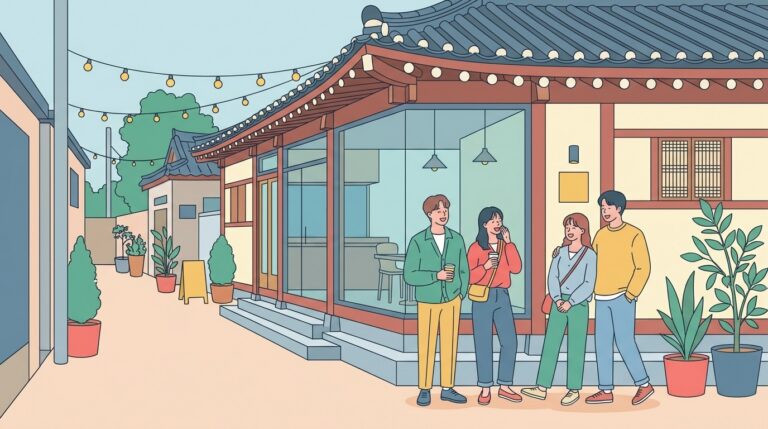
Imagine this: you’ve bookmarked a famous aged pork belly spot in Seongsu-dong after seeing it on your favorite K-actor’s Instagram. You arrive on a Wednesday afternoon, expecting an easy seat, but the line stretches down the alley. Frustrated, you ask a friendly Korean standing nearby if it’s always this busy. With an understanding grin, they reply, “글쎄요, 웨이팅은 사바사, 날바날이에요!” If your traditional textbook only taught you stiff phrases like “경우에 따라 다릅니다” (It differs according to the situation), you might stand there wondering what “sabasa” and “nalbanal” could possibly mean. Don’t worry! This is the exact moment many of our learners face when transitioning from textbook Korean to actual street Korean. Today, we will decode this witty linguistic rhythm so you can speak, laugh, and navigate Seoul’s foodie scenes like an experienced local.
Phase 2: Core Expressions Deep Dive
1. 사바사 (Sabasa)
- Pronunciation: [sa-ba-sa] (Sounds like “Sah-bah-sah”, like dancing a quick salsa beat!)
- Meaning: Literal: “Person by person” (사람 바이 사람 / Saram bai saram). Real Nuance: “It depends on the person” or “To each their own.”
- K-Culture Moment: On K-variety shows like I Live Alone or Workman, when cast members argue whether mint chocolate tastes good or spicy chicken feet are edible, someone inevitably chimes in: “호불호는 사바사죠!” (Likes and dislikes depend on the person!)
- Editor’s Insight: Koreans combined the native word 사람 (saram, person) with the English preposition “by” (바이). It neatly replaces long grammatical structures like “사람에 따라 달라요” (It varies depending on the person).
- Situation Spectrum: Casual: ✅ | Semi-formal: ⚠️ | Formal: 🚫
- 🤔 Think About It: Why do you think Korean youth combine English loanwords with Korean nouns to create slang? How does your native language compress common ideas?
2. 날바날 (Nalbanal)
- Pronunciation: [nal-ba-nal] (Sounds like “Nahl-bah-nahl”, rhyming with “dull-barn-all”)
- Meaning: Literal: “Day by day” (날 바이 날 / Nal bai nal). Real Nuance: “It depends on the day” or “Every day is different.”
- K-Culture Moment: K-pop fans visiting music show recordings or entertainment agency pop-up stores in Hongdae frequently tweet: “오늘 대기 줄은 날바날이에요” (The waiting line today totally depends on the day).
- Editor’s Insight: “날” means day or date. Just like weather forecasts in rainy season, foot traffic and waiting lines in Seoul change unpredictably depending on whether it is a weekday, weekend, rainy day, or public holiday.
- Situation Spectrum: Casual: ✅ | Semi-formal: ⚠️ | Formal: 🚫
- 🤔 Think About It: In English, people say “hit or miss” or “day to day.” How does the symmetrical rhythm of “Nal-ba-nal” sound to your ears?
3. 케바케 (Kebake)
- Pronunciation: [ke-ba-ke] (Sounds like “Kay-bah-kay”, like “cake” without the hard ‘k’ at the end)
- Meaning: Literal: “Case by case” (케이스 바이 케이스 / Ke-i-seu bai ke-i-seu). Real Nuance: “It all depends on the circumstances.”
- K-Culture Moment: In workplace K-dramas, junior employees discussing remote work policies or overtime pay often remark: “퇴근 시간은 팀마다 케바케예요” (Leaving work on time is case-by-case depending on the team).
- Editor’s Insight: This is the founding ancestor of the “-바-” pattern! Koreans took the English idiom “case by case”, shortened each word to its first syllable, and built a whole family of slang (사바사, 날바날, 템바템 for items, 겜바겜 for games).
- Situation Spectrum: Casual: ✅ | Semi-formal: ⚠️ | Formal: 🚫
- 🤔 Think About It: Isn’t it fascinating how an English business expression transformed into an indispensable piece of everyday Korean slang?
Phase 3: Textbook Korean vs. Real Korean
Situation 1: Explaining restaurant wait times
- 📖 교과서 한국어: 상황에 따라 대기 시간이 다릅니다. (Sanghwange ttara daegi sigani dareumnida. / Waiting time varies depending on the situation.)
- 🗣️ 진짜 한국어: 웨이팅은 날바날이라 장담 못 해요! (Weiting-eun nalbanal-ira jangdam mot haeyo! / Line waits are day by day, so I can’t guarantee anything!)
- 💡 왜 다를까?: The textbook phrase sounds like an automated public announcement recorded on a subway train. Real Koreans prefer short, rhythmic colloquialisms that build camaraderie and sound relatable.
Situation 2: Talking about tolerance for spicy food
- 📖 교과서 한국어: 사람마다 매운 것을 먹는 능력이 다릅니다. (Sarammada maeun geoseul meongneun neungnyeogi dareumnida. / The ability to eat spicy food differs from person to person.)
- 🗣️ 진짜 한국어: 맵기 체감은 완전 사바사예요. (Maepgi chegamu-eun wanjeon sabasayeyo. / How spicy it feels is totally person-by-person.)
- 💡 왜 다를까?: Native speakers avoid complicated grammatical clauses when sharing everyday preferences, choosing punchy three-syllable terms instead.
Phase 4: K-Culture Deep Dive & Non-Verbal Manners
4-1. 눈치 (Nunchi) & Gestures
When using “사바사” or “날바날”, your body language does half the talking! Koreans typically tilt their head slightly to one side, raise their eyebrows knowingly, and make a gentle weighing motion with one hand (palm facing upward, tilting left and right like a balance scale). This gesture signals: “There is no single truth; it fluctuates!” Paired with a warm smile, it conveys that you understand how unpredictable life can be.
4-2. Culture Code: Korean “웨이팅 문화” (Waiting Culture)
Queuing up at famous restaurants (맛집 / matjip) has become a legitimate hobby and cultural trend in South Korea. Foodies don’t mind waiting 90 minutes if the experience is memorable. Instead of standing outside in freezing cold or blistering heat, trendy restaurants use digital tablet systems like Catch Table or Tableing. Because weather, weekday office schedules, and viral social media trends cause sudden spikes in foot traffic, locals will always warn you: “그 식당 대기는 진짜 날바날이야!” (The line for that restaurant is truly day by day!)
Phase 5: Real Roleplay Scenario
Setting: Alex and his Korean friend Minho are standing in front of a buzzing K-BBQ restaurant in Yeonnam-dong on a Friday evening.
- Turn 1 (Alex): 여기 유명한 삼겹살집인데 지금 줄 서야 할까요? (Yeogi yumyeonghan samgyeopsaljibin-de jigeum jul seoya halkkayo? / This is a famous pork belly spot, should we queue up now?) 🎭 [Alex checks his watch nervously while peering at the crowded door]
- Turn 2 (Minho): 글쎄요, 보통 주말엔 사람이 많은데 대기는 날바날이에요. (Geulsseyo, botong jumalen sarami maneunde daegineun nalbanalieyo. / Well, usually weekends are crowded, but wait times are day by day.) 🎭 [Minho tilts his hand like a scale with an easygoing smile]
- Turn 3 (Alex): 혹시 웨이팅 등록하는 태블릿 있어요? (Hoksi weiting deungnokhaneun taebleut isseoyo? / By any chance, is there a waiting registration tablet?) 🎭 [Alex points to a small stand next to the restaurant entrance]
- Turn 4 (Minho): 네, 입구 쪽에 캐치테이블 기계 있네요! 등록해 봐요. (Ne, ipgu jjoge Kaechiteibeul gigye inneyeo! Deungnokhae bwayo. / Yes, there is a Catch Table device by the door! Go register your number.) 🎭 [Minho gestures toward the stand encouragingly]
- Turn 5 (Alex): 앞에 12팀 남았어요. 얼마나 걸릴까요? (Ape yeoldu-tim namasseoyo. Eolmana geollilkkayo? / There are 12 groups ahead of us. How long will it take?) 🎭 [Alex blinks with wide eyes, holding his phone]
- Turn 6 (Minho): 식사 속도는 사바사라 30분이면 들어갈 수도 있어요! (Siksa sokdoneun sabasara samsip-bunimyeon deureogal sudo isseoyo! / Eating speed is person-by-person, so we might enter in 30 minutes!) 🎭 [Minho pats Alex on the shoulder cheerfully]
- Turn 7 (Alex): 다행이네요! 그럼 근처 인생네컷 가서 사진 먼저 찍을까요? (Dahaeng-ineyo! Geureom geuncheo Insaeng-ne-keot gaseo sajin meonjeo jjigeulkkayo? / What a relief! Then shall we take four-cut photo booth pictures nearby first?) 🎭 [Alex smiles excitedly and points down the street]
- Turn 8 (Minho): 좋아요! 카톡 호출 알림 오면 바로 뛰어와요! (Joayo! Katok hochul allim omyeon baro ttwieowayo! / Great idea! When the KakaoTalk alert rings, let’s run right back!) 🎭 [Minho gives a thumbs-up and walks along]
🔀 Interactive Choice Point
You walk into another restaurant and want to ask the staff if you will wait long. What do you say?
* Option A: “지금 대기 시간 긴가요? 아니면 케바케인가요?” (Jigeum daegi sigan gin-gayo? Animyeon kebakengayo?)
* Feedback (Best): Polite, natural, and shows you understand how dynamic lines can be!
* Option B: “어제는 사람 없던데 왜 오늘은 날바날이에요?” (Eojeneun saram eopdeonde wae oneureun nalbanalieyo?)
* Feedback (Risk): Grammatically awkward and sounds like you are blaming the staff for customer volume.
* Option C: “사바사 하지 말고 지금 바로 앉혀 줘요.” (Sabasa haji malgo jigeum baro anchyeo jwoyo.)
* Feedback (Bad): Rude and nonsensical. “사바사” is not a verb that a server does!
Phase 6: 10-Second Emotion Shadowing Drill
Practice these natural sentences out loud using pauses (/) and emotional tone indicators:
- [🤔 고심하며 / Pondering & Realistic]
이 식당 웨이팅은 / 날바날이라 / 직접 가봐야 알아요!
(I sikdang weiting-eun / nalbanal-ira / jikjeop gabwaya arayo! / Waiting at this restaurant is day-by-day, so you only know once you go!) -
[😌 담담하고 쿨하게 / Cool & Relaxed]
매운 음식 잘 먹는 건 / 사람마다 / 완전 사바사예요.
(Maeun eumsik jal meongneun geon / sarammada / wanjeon sabasayeyo. / Being able to handle spicy food is totally person-by-person.) -
[✨ 센스 있고 재치 있게 / Witty & Playful]
주말 홍대 카페 자리는 / 케바케니까 / 서둘러 가요!
(Jumal Hongdae kape jarineun / kebakeneikka / seodulleo gayo! / Cafe seats in Hongdae on weekends are case-by-case, so let’s hurry!)
Phase 7: K-Culture Mini Dictionary
- 사바사 (Sabasa) | Person-by-Person | Used when people’s tastes, physical habits, stamina, or learning speeds vary drastically.
- 날바날 (Nalbanal) | Day-by-Day | Used when conditions like crowd traffic, wait times, weather, or sales discounts change each day.
- 케바케 (Kebake) | Case-by-Case | The classic baseline expression for whenever an outcome depends strictly on circumstances.
- 웨이팅 (We-i-ting) | Waitlist / Line | Konglish term used universally across Korea for queuing up at restaurants, clubs, or exhibits.
Phase 8: Traveler’s Survival Kit
Top 3 Survival Expressions for Restaurant Lines
- 웨이팅 얼마나 걸려요? (Weiting eolmana geollyeoyo?)
- Meaning: How long is the wait?
- Pro Tip: Ask the staff host directly with a gentle head nod if there is no digital kiosk.
- 대기 등록 어디서 해요? (Daegi deungnok eodiseo haeyo?)
- Meaning: Where do I register for the waitlist?
- Pro Tip: Use this when you see people gathering around but cannot locate the tablet display.
- 포장은 바로 되나요? (Pojang-eun baro doenayo?)
- Meaning: Can I get takeout right away without waiting?
- Pro Tip: At busy dessert and chicken spots, takeout often skips the physical queue entirely!
Editor’s Travel Note
- Install the Catch Table app global edition before boarding your flight to browse live queues and reserve dining tables.
- Use the Naver Map app mobile guide to check peak visiting hours under restaurant detail pages so you avoid unexpected rushes.
Phase 9: One Step Deeper
Korean slang abbreviations reflect more than just laziness; they showcase a collective desire for speed (빨리빨리 / ppalli-ppalli) and social intimacy. In a collectivist society where expressing absolute disagreement or certainty can sometimes feel overly blunt, phrases like “사바사” and “날바날” soften social interactions. They convey: “I respect that your experience might be totally different from mine.” By wrapping complex variables into three witty syllables, Koreans build casual empathy in seconds.
💬 Your Turn: What is something in your hometown that is completely “사바사” (person by person) or “날바날” (day by day)? Share your thoughts in the comments below!
Phase 10: FAQ & Common Mistakes
Q: Can I use 사바사 and 날바날 with elders or in business meetings?
A: No. These are colloquial internet/spoken slang terms. In formal presentations or with seniors, stick to “사람에 따라 다릅니다” (It differs depending on the person) or “상황에 따라 다릅니다” (It depends on the situation).
Q: What is the exact difference between 사바사 and 케바케?
A: “케바케” (Case-by-case) is the broad umbrella term for all situations. “사바사” (Person-by-person) specifically focuses on human factors such as individual tastes, pain tolerance, or personality traits.
Q: Can I invent new “-바-” words on the spot?
A: Absolutely! Koreans love creative coinages. Common ones include “부바부” (부서 바이 부서 / department-by-department at work) and “점바점” (점포 바이 점포 / franchise branch-by-branch).
🚨 Common Mistakes (흔한 실수 TOP 3)
- Pronouncing it as full words: Saying “사람 바이 사람이에요” out loud sounds like reading a dictionary entry. Keep it snappy: “사바사예요!”
- Using formal honorific endings wrongly: Do not say “사바사이십니다” to sound polite; adding honorific markers to slang sounds comical and unnatural.
- Applying 날바날 to fixed facts: Train departure schedules or store opening policies are not “날바날” because they are fixed by rules, not fluctuating factors.
Phase 11: Action Missions
- 🥉 Bronze Mission (Solo Shadowing): Stand in front of your mirror and repeat “웨이팅은 날바날이에요!” three times with a slight shoulder shrug.
- 🥈 Silver Mission (Social Connection): Text a fellow K-learner friend or study group about a spicy food challenge: “불닭볶음면 맵기는 사바사야!” (Buldak ramen spiciness is person-by-person!)
- 🥇 Gold Mission (Real Life Execution): The next time you visit a Korean restaurant or cafe, check the line and mutter or say to the staff: “오늘 웨이팅은 날바날이네요!”
- 🎮 K-Culture Mission: Watch a new Korean vlog on YouTube and look out for subtitle abbreviations ending in “-바-” (like 점바점 or 케바케) in the comments.
Phase 12: Interactive Quiz Challenge
Quiz 1. Situational Judgment
Your friend asks if the temperature in Seoul in October is cold. You want to say that some days are warm while other days are freezing. Which phrase fits best?
* (A) 서울 날씨는 완전 사바사예요.
* (B) 서울 날씨는 완전 날바날이에요.
* (C) 서울 날씨는 웨이팅이에요.
Quiz 2. Fill in the Blank
매운 떡볶이를 잘 먹는 건 사람 취향이라서 [ ? ]예요.
* (A) 날바날
* (B) 사바사
* (C) 교과서
Quiz 3. True or False
“사바사” can be safely written on an official university job application cover letter to show friendly personality.
* (A) True
* (B) False
👉 Click here to reveal the answers and explanations!
- Quiz 1 Answer: (B) 서울 날씨는 완전 날바날이에요.
- Explanation: Weather fluctuates day to day, so “날바날” (Day by day) is the exact match!
- Quiz 2 Answer: (B) 사바사
- Explanation: Individual food preferences and tolerances depend on the specific person, making “사바사” (Person by person) the correct term.
- Quiz 3 Answer: (B) False
- Explanation: “사바사” is informal youth slang. Never write it on formal resumes or academic papers; use “개인에 따라 다릅니다” instead!
- Explanation: “사바사” is informal youth slang. Never write it on formal resumes or academic papers; use “개인에 따라 다릅니다” instead!







