

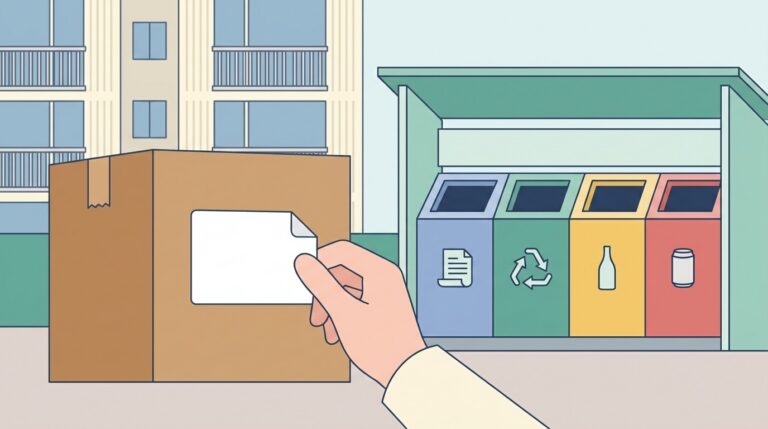
Why Leaving That Sticker on Your Korean Delivery Box Is a Bad Idea
Phase 1: Empathy (Story-Immersive Opening)
안녕하세요! 매일한글 에디터입니다. (Hello! I’m your Daily Hangul editor.)
Picture this scene straight out of a taut Seoul-based thriller like Netflix’s Unlocked or that indie K-Drama where the protagonist moves into their first cozy officetel (오피스텔) in Hongdae. You just ordered instant ramyeon and skin toners with Coupang’s miraculous Dawn Delivery (새벽배송). You eagerly tear open the cardboard box, toss it into the recycling area downstairs, and head back up with your shiny new haul. But stop right there! Did you leave the white paper label stuck to the cardboard?
In Korea, that tiny paper rectangle—called an 운송장 (unsongjang)—holds your full name, mobile number, exact flat address, and sometimes even the door entry passcode you scribbled for the courier. In crowded Korean residential complexes, identity theft, smishing, and targeted voice phishing often start with someone simply snapping a photo of an unpeeled delivery sticker. Many of our international students tell us, “Back home, nobody cares about cardboard boxes! Why are my Korean roommates frantically scribbling over boxes with permanent markers?”
Today, we are going to unlock the exact B1-level Korean phrases, security hacks, and cultural etiquette you need to protect your private info while mastering real-life apartment living in Korea. Let’s make sure your personal data stays as safe as your favorite K-pop photocards!
Phase 2: Top 3 Core Expressions in Depth
1. 운송장 스티커 꼭 떼서 버려야 해요. (Unsongjang seutikeo kkok tteseo beoryeoya haeyo.)
- Pronunciation: [Un-song-jang seu-ti-keo kkok tte-seo beo-ryeo-ya hae-yo] (Think: “Oon-song-jahng sti-cur co-ck they-saw buh-ryuh-ya he-yo”)
- Meaning: Literal: “You must definitely peel off the waybill sticker and discard it.” / Real Nuance: “Make sure you rip off that shipping label before tossing the box!”
- K-Culture Moment: You’ll hear this uttered by a protective Korean mom visiting her college student’s studio apartment, or an officetel building manager (경비 아저씨) reminding new tenants by the communal sorting bins.
- Editor’s Insight: The verb 떼다 (tteda) means to detach or peel off an adhesive surface. Pairing it with 꼭 (kkok) creates an affectionate yet firm imperative for your safety.
- Situation Spectrum: Casual ✅ | Semi-formal ✅ | Formal ⚠️
- 🤔 Think About It: In many Western countries, recycling focuses strictly on cardboard sorting. Why does modern Korean urban life treat disposal as both an ecological and a privacy-protection chore?
2. 개인정보는 펜으로 싹 지우세요. (Gaeinjeongboneun peneuro ssak jiuseyo.)
- Pronunciation: [Gae-in-jeong-bo-neun pe-neu-ro ssak ji-u-se-yo] (Think: “Geh-in-jung-bo-noon pen-oo-ro ssahk jee-oo-seh-yo”)
- Meaning: Literal: “Erase personal information completely with a pen.” / Real Nuance: “Black out your personal details completely with a thick marker!”
- K-Culture Moment: Seen in viral Korean YouTube lifestyle hacks where creators show their favorite Daiso “privacy roller stamps” or oil-based marker tricks on glossy labels.
- Editor’s Insight: The adverb 싹 (ssak) vividly evokes sweeping something away cleanly in one swift stroke. It transforms a routine task into a satisfying ritual.
- Situation Spectrum: Casual ✅ | Semi-formal ✅ | Formal ✅
- 🤔 Think About It: Korean places immense emphasis on onomatopoeia and mimetic words (의성어/의태어). Notice how ssak communicates thoroughness without long technical explanations.
3. 갈기갈기 찢어서 따로 분리배출해요. (Galgigalgi jjijeoseo ttaro bunribaechoolhaeyo.)
- Pronunciation: [Gal-gi-gal-gi jji-jeo-seo tta-ro bul-li-bae-chul-hae-yo] (Think: “Gahl-gee-gahl-gee jee-juh-saw tah-ro bool-lee-beh-chool-heh-yo”)
- Meaning: Literal: “Tear into shreds and discharge separately.” / Real Nuance: “Shred it to pieces and throw it in the general trash bag, not the cardboard pile!”
- K-Culture Moment: Characters in crime K-dramas destroying evidence, or cautious single-person households (1인 가구) practicing self-defense in residential alleys.
- Editor’s Insight: 갈기갈기 (galgigalgi) means “into fine ribbons or shreds.” Notice the second term: 분리배출 (bunribaechool) is the formal civic term for sorting recyclables, unlike the everyday word 분리수거 (bunrisugeo).
- Situation Spectrum: Casual ✅ | Semi-formal ✅ | Formal ⚠️
- 🤔 Think About It: Why does Korea use distinct terms for citizens discarding sorted trash (bunribaechool) versus sanitation trucks collecting it (bunrisugeo)?
Phase 3: Textbook Korean vs. Real Korean
Situation 1: Telling your roommate to rip off the sticker
- 📖 교과서 한국어: 상자에 부착된 라벨을 완전히 제거하십시오. (Sangja-e buchakdoen rabereul wanjeonhi jegeohasipsio.) — “Please completely remove the label affixed to the box.”
- 🗣️ 진짜 한국어: 박스에 붙은 송장 스티커 손으로 쫙 뜯어버려! (Bakseu-e bimmun songjang seutikeo soneuro jwwak tteudeobeoryeo!) — “Just rip the shipping sticker right off the box with your hand!”
- 💡 왜 다를까?: Nobody says “라벨을 제거하십시오” in a shared kitchen. Real Koreans substitute English loanwords like box (박스) and use dynamic words like 뜯다 (tteudda – to rip/tear) combined with 쫙 (jjwak – vigorously).
Situation 2: Asking if you can just leave it
- 📖 교과서 한국어: 이것을 그대로 버려도 문제없습니까? (Igeoseul geudaero beoryeodo munjeeopseumnikka?) — “Is it devoid of problem if I throw this away as is?”
- 🗣️ 진짜 한국어: 이거 그냥 버리면 털리지 않아? (Igeo geunyang beoryeomyeon teolriji ana?) — “Won’t our info get hacked if we just dump this?”
- 💡 왜 다를까?: The slang verb 털리다 (teollida) literally means “to be dusted off/shaken down,” but colloquially means getting your personal information leaked, identity stolen, or account hacked.
Phase 4: K-Culture Deep Dive & Non-Verbal Manners
4-1. Nunchi (눈치) & Recycling Etiquette
When taking down your boxes to the apartment’s sorting area (분리수거장), eye contact should be polite and brief. If an elderly neighbor or the building security manager (경비원) is nearby, flattening your cardboard completely shows high civic consideration (배려).
- The Hand Gesture: When removing stickers, peel the thermal paper completely away from the brown cardboard. Leaving thermal label glue ruins the paper pulp recycling batch. Toss the cardboard into the flat paper pile, but ball up the sticker and bury it in your standard paid volume-rate garbage bag (종량제 봉투).
- Body Posture: When tearing up your name label in public view, turn your body slightly inwards. Standing openly while inspecting private names can give off an eerie impression in close-knit neighborhoods.
4-2. The Cultural Paradox of Solo Living (1인 가구)
South Korea has one of the world’s most advanced residential delivery networks. You can order groceries at 11 PM and hear them land outside your door by 6 AM. However, the surge in single-person households—especially young women living alone in studio apartments—has heightened collective vigilance around stalking, fake delivery scams, and identity leaks.
This security culture directly birthed unique retail phenomena: Daiso Korea carries an entire aisle section dedicated to 택배 송장 지우개 (parcel label erasers) and privacy rollers. Protecting your name isn’t considered paranoia in Seoul; it is seen as smart, mature adulting.
Phase 5: Real-Life Roleplay Scenario
Setting: The ground floor recycling depot of a Mapo-gu officetel on Sunday evening. Minho, a friendly neighbor who lives down the hall, spots you struggling with a massive cardboard box.
- Turn 1 (Minho): 이웃님, 주말에 택배 많이 시키셨네요! 상자 엄청 크다. (I-un-nim, jumare taekbae mani sikisyeonne-yo! Sangja eomcheong keuda.)
🎭 Grinning while holding his own neatly tied paper bundles.
(Neighbor, you ordered a lot of parcels this weekend! That box is massive.) - Turn 2 (You): 네, 자취 시작하느라 생필품 좀 샀어요. (Ne, jachwi sijakhaneura saengpilpum jom sasseoyo.)
🎭 Chuckling shyly while stepping toward the paper bin.
(Yeah, I bought some daily essentials since I just started living alone.) - Turn 3 (Minho): 잠깐만요! 상자에 운송장 그대로 붙어 있는데요? (Jamkkanmanyo! Sangja-e unsongjang geudaero buteo inneundeyo?)
🎭 Eyes widening, gently pointing his finger at your delivery label.
(Wait a second! The shipping label is still stuck on the box!) - Turn 4 (You): 아, 이거 종이라서 같이 재활용하면 안 돼요? (A, igeo jong-iraseo gachi jaehwalyonghamyeon an dwaeyo?)
🎭 Tilting head in confusion, stopping mid-throw.
(Oh, it’s paper, so shouldn’t it be recycled together?) - Turn 5 (Minho): 안 돼요! 스티커는 비닐 코팅이라 재활용도 안 되고, 개인정보 털려요! (An dwaeyo! Seutikeoneun binil koting-ira jaehwalyongdo an doego, gaeinjeongbo teollyeoyo!)
🎭 Shaking his hand in a waving “no-no” gesture.
(No way! The sticker has plastic coating so it’s not recyclable, and your private info could leak!) - Turn 6 (You): 헉, 제 이름이랑 번호, 동호수까지 다 적혀 있네요. (Heok, je ireum-irang beonho, dong-hosukkaji da jeokhyeo inne-yo.)
🎭 Looking closely at the sticker in surprise.
(Gosh, my name, phone number, and even my building and unit number are on here.) - Turn 7 (Minho): 손톱으로 모서리 살짝 긁어서 떼어내고, 갈기갈기 찢어 버리세요. (Sontobeuro moseori saljjak geulgeoseo tteeonaego, galgigalgi jjijeo beoriseyo.)
🎭 Miming the peeling and ripping motion with both hands.
(Scratch the corner lightly with your fingernail, peel it off, and rip it to shreds.) - Turn 8 (You): 진짜 고마워요! 하마터면 큰일 날 뻔했네요. (Jinjja gomawoyo! Hamateomyeon keun-il nal ppeonhaenne-yo.)
🎭 Bowing slightly with an appreciative smile, quickly peeling the label.
(Thank you so much! That could have turned into a real problem.)
🔀 Interactive Choice Point
What will you do right after peeling off the label?
* Choice A: Hand the intact sticker to Minho and say “Thank you, throw it away for me!” (Bad: Never hand documents with your personal information to strangers or casual acquaintances.)
* Choice B: Crumple it into a ball and toss it right onto the open recycling floor. (Risk: Anyone can unfold a crumpled sticker; plus, it litters communal space.)
* Choice C: Tear the label crisscross into tiny shreds, keep the scraps in your pocket, and toss them into the general waste bag inside your apartment. (Best: Flawless security habits and excellent recycling etiquette!)
Phase 6: 10-Second Emotion Shadowing Drill
Read aloud along with these rhythm breaks (/) and emotional cues:
[😲 깜짝 놀라며 경각심을 주는 어조]
상자 버릴 때 / 운송장 스티커 / 꼭 떼야 해요!
(Sangja beoril ttae / unsongjang seutikeo / kkok tteya haeyo!)-
[🤫 목소리를 낮추고 비밀스럽게]
전화번호랑 호수 보이면 / 개인정보 털려요. / 조심하세요!
(Jeonhwabeonhorang hosu boimyeon / gaeinjeongbo teollyeoyo. / Josimhaseyo!) -
[💪 결연하고 단호하게]
펜으로 싹 칠해서 / 갈기갈기 / 찢어버릴 거예요.
(Peneuro ssak chilhaeseo / galgigalgi / jjijeobeoril geoyeyo.)
Phase 7: K-Culture Mini Dictionary
- 운송장 (Unsongjang) | Noun: Waybill / Tracking shipping label
- The physical paper label attached to your parcel displaying barcode, sender, recipient, and routing details. In Korea, courier drivers often shorten this to 송장 (songjang).
- 분리배출 (Bunribaechool) | Noun: Separate discharge / Sorting waste at the source
- The responsible citizen action of sorting plastics, cans, vinyl, styrofoam, and paper before disposal. Governed strictly by local district offices (구청).
- 개인정보 유출 (Gaeinjeongbo Yuchul) | Noun: Personal data leak
- A serious legal and social concern in Korea. Used frequently in company security policies, bank 2FA warnings, and police safety advisories.
- 송장 롤러 스탬프 (Songjang Rolleoseutaempeu) | Noun: Privacy identity roller stamp
- A popular handheld ink roller sold at stationery shops and Daiso that stamps jumbled alphabetical patterns over thermal shipping labels to render text unreadable.
Phase 8: Traveler & Expat Survival Kit
Top 3 Survival Expressions
- 이거 매직펜으로 지워야 돼요? (Igeo maejikpeneuro jiwoya dwaeyo?)
- “Should I black this out with a permanent marker?”
- Pro Tip: If thermal paper is hard to peel, scribble over your phone digits and name with an alcohol-based marker, or scrape it with a coin.
- 박스 테이프도 다 떼서 버려야 하나요? (Bakseu teipeudo da tteseo beoryeoya hanayo?)
- “Do I need to peel off the plastic box tape completely too?”
- Pro Tip: Yes! Cardboard bins in Korea require boxes to be flattened with all clear plastic packaging tape stripped away.
- 운송장 지우개 어디서 팔아요? (Unsongjang jiugae eodiseo parayo?)
- “Where do you sell shipping label privacy erasers?”
- Pro Tip: Ask this at the stationary or lifestyle counter at Daiso or Artbox.
Editor’s Travel & Living Note
If you live in Korea or manage deliveries while on an extended stay, tracking parcel updates through dedicated apps prevents packages from sitting outside unattended. You can check parcel status directly by installing the 스마트택배 배송조회 앱 다운로드 링크 or ordering safely via the 쿠팡 공식 온라인 쇼핑몰 바로가기.
Security Pro-tip: When ordering food or goods via Korean apps, always choose the option “문 앞 배송 (Leave at front door)” and omit your personal phone number from the box notes by selecting the “안심번호 서비스 (Virtual 050 Safety Number)” option at checkout!
Phase 9: “One Step Deeper” (Reflective Question)
South Korea boasts one of the safest societies in the world; you can leave your laptop on a café table in Gangnam for an hour and find it untouched. Yet, paradoxically, Koreans maintain ultra-strict vigilance against digital intrusions and residential profiling. In dense apartment towers where hundreds share the same hallway, the physical boundary is secure, but the digital frontier feels porous. Protecting your parcel sticker isn’t about distrusting your neighbors; it’s about respecting the collective social covenant of urban anonymity.
💬 Your Turn: How does your hometown handle package disposal and privacy? Would people think you are being overly cautious if you shredded every delivery label? Share your thoughts below!
Phase 10: FAQ & Avoiding Misunderstandings
Q: Can I just throw the whole shipping label into the paper recycling bin?
A: No. Shipping labels are made from thermal paper (감열지) with chemical and adhesive backings. They do not dissolve cleanly in water during the paper recycling process. You must peel off the label and toss it into the regular general trash bag (종량제 봉투).
Q: Why do Korean shopping sites give me an “050” phone number on the parcel?
A: That is Korea’s 안심번호 (Ansim Beonho – Safe Relay Number). It masks your real mobile number with a temporary routing number so that whoever sees the box cannot trace your actual phone or KakaoTalk ID.
Q: The adhesive is so strong that the sticker won’t peel off! What should I do?
A: Do not panic! Use a wet wipe or hand sanitizer with alcohol to dissolve the thermal ink, use a pocket key/coin to scrape off your name and address, or use box cutters to cut out the cardboard section containing the text.
🚨 Common Mistakes Alert
- Mistake: Throwing folded boxes away with the clear plastic tape and stickers still attached.
- Correct Action: Strip all transparent packing tape and shipping labels; discard them in regular waste; flatten the cardboard flat.
- Mistake: Assuming only the phone number matters, leaving the name and room number visible.
- Correct Action: Erase or shred all three: Name, mobile number, and apartment unit number (동/호수).
- Mistake: Burning shipping stickers with a lighter inside an apartment corridor.
- Correct Action: Dangerous! Thermal paper turns black when exposed to heat, but doing this indoors triggers smoke alarms and creates toxic fumes. Use a marker or roller stamp instead.
Phase 11: Action Missions
- 🥉 Bronze Mission (Solo): Find a used shipping box at home. Practice peeling the sticker off in one piece while saying: “운송장 스티커 떼서 버려요!” (Unsongjang seutikeo tteseo beoryeoyo!)
- 🥈 Silver Mission (Community): Go to a local Daiso or stationery shop, find a privacy roller stamp (송장 지우개), and snap a photo to share in your Korean study group or Instagram story with the tag
#DailyHangul. - 🥇 Gold Mission (Real Life): Next time you recycle in Korea, completely de-tape and de-label two boxes, flatten them neatly, and place them in the paper collection zone with 100% confidence.
🎮 K-Culture Mission: Watch any modern Korean apartment thriller (like the movie Door Lock or drama Stranger). Spot whether delivery boxes or couriers appear as plot devices for neighborhood surveillance!
Phase 12: Interactive Quiz Challenge
Test your knowledge with these three practical questions!
1. Situation Challenge:
You are throwing away a Coupang cardboard box. Which item belongs in the paper recycling bin (종이류)?
* A) The glossy thermal shipping label
* B) The transparent PVC sealing tape
* C) The stripped, flattened clean cardboard box
2. Fill-in-the-Blank:
개인정보가 유출되지 않게 운송장을 손으로 _______ 찢었어요. (I tore the shipping label into shreds by hand so that my private data wouldn’t leak.)
* Hint: Think of the expressive adverb meaning “into tiny ribbons/shreds.”
3. True or False:
In Korea, it is polite and legal to leave delivery boxes fully assembled without flattening them at the apartment recycling station.
* [True / False]
👉 Click to reveal answers and detailed explanations!
1. Answer: C
Explanation: Thermal stickers (A) and plastic tape (B) are non-recyclable contaminants that must go into general waste. Only the clean cardboard box (C) belongs in the paper bin.
2. Answer: 갈기갈기 (galgigalgi)
Explanation: 갈기갈기 찢다 is the natural, vivid expression for tearing paper into shreds.
3. Answer: False
Explanation: Cardboard boxes must always be flattened (납작하게 펴다) to conserve bin space and maintain community order. Leaving intact boxes can result in notices from the resident committee or fines!







