

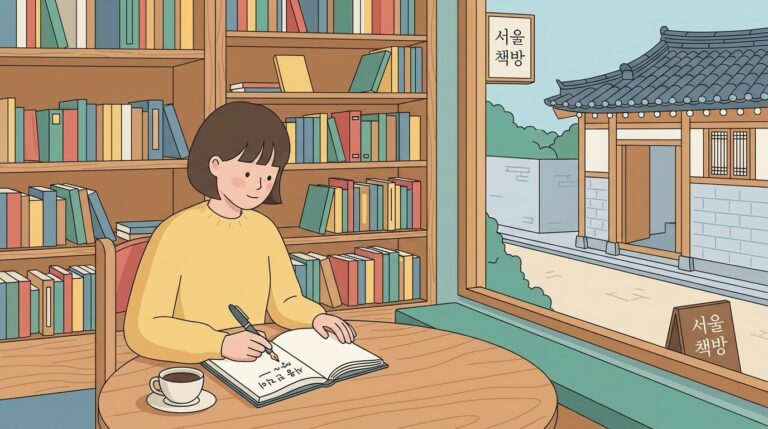
Phase 1: Empathy & Hook
안녕하세요! 매일한글 에디터입니다. Have you ever felt totally drained after doom-scrolling TikTok or Instagram Reels for hours, watching fifteen-second video clips that vanish from memory the moment you swipe? You are definitely not alone. When walking through trendy Seoul neighborhoods like Seongsu-dong, Euljiro, or Yeonnam-dong recently, you might notice something fascinating. Instead of staring glued to smartphone screens, stylish Gen Z locals are proudly carrying thick classic paperback novels, jotting down lines into leather-bound journals with fountain pens, and queuing up around the block for indie book fairs. Welcome to the text-hip phenomenon. In a fast-paced society overloaded with cheap dopamine, reading analog print and transcribing meaningful prose has become the ultimate lifestyle badge. This curated guide is built on real classroom feedback to help intermediate Korean learners master the vocabulary behind this cultural wave, effortlessly talk about modern lifestyle aesthetics, and navigate Seoul’s coolest literary spaces with confidence.
Phase 2: Core Expressions Deep Dive
1. 텍스트힙 (Tekseuteu-hip)
- Pronunciation: [Tek-seu-teu-hip] (Sounds like “Text” followed by “Hip” with a crisp, clipped Korean ending)
- Meaning: Literal: Text + Hip / Nuance: The cultural aesthetic where reading printed text, visiting quiet bookstores, and collecting literary essays is considered effortlessly cool and fashionable.
- K-Culture Moment: When K-pop idols post mirror selfies showing a vintage essay book tucked under their arm instead of a luxury designer clutch, fans comment: “와, 진짜 텍스트힙 그 자체다!” (Wa, jinjja tekseuteu-hip geu jacheda! – “Wow, that is the definition of Text-Hip!”).
- Editor’s Insight: Unlike the traditional view of reading as a nerdy or dutiful study task, 텍스트힙 frames reading as an artistic, counter-cultural identity statement.
- Situation Spectrum:
- Casual: ✅
- Semi-formal: ✅
- Formal: ⚠️ (Appropriate in cultural trend analysis, but avoid in strict corporate reporting)
- 🤔 Think About It: In your native culture, is reading physical books viewed as a solitary habit or an aesthetic fashion statement?
2. 필사하다 (Pilsahada)
- Pronunciation: [Pil-sa-ha-da] (Pronounce “Pil” like ‘pillar’ and “sa” like ‘salad’)
- Meaning: Literal: To transcribe / Nuance: To deliberately hand-copy passages or quotes from a book into a personal notebook to absorb the emotional resonance.
- K-Culture Moment: In contemporary K-Dramas featuring introspective writers or college students, characters often gift each other a fountain pen alongside a “필사 노트” (pilsa noteu – transcription notebook).
- Editor’s Insight: At the B2 level, notice how 필사 (hand transcription) differs from 단순 메모 (mere note-taking) or 받아쓰기 (dictation practice). 필사 carries artistic intent and mindfulness.
- Situation Spectrum:
- Casual: ✅
- Semi-formal: ✅
- Formal: ✅
- 🤔 Think About It: Why does the physical friction of pen on paper create a sense of emotional calm across different cultures?
3. 도파민 디톡스 (Dopamin Ditokseu)
- Pronunciation: [Do-pa-min Di-tok-seu] (Sounds like “Dopamine Detox” pronounced with clear Korean syllabic beats)
- Meaning: Literal: Dopamine detox / Nuance: Intentionally disconnecting from addictive digital stimuli (short-form videos, push notifications) in favor of slow, analog experiences.
- K-Culture Moment: Lifestyle vloggers on YouTube in Seoul title their weekend routines: “주말 하루 스마트폰 끄고 도파민 디톡스하기” (Jumal haru seumateupon kkeugo dopamin ditokseuhagi – “Turning off my smartphone for a weekend dopamine detox”).
- Editor’s Insight: Pairs frequently with the verb 하다 (to do) or 겸 (combined with), as in “도파민 디톡스 겸 독서” (reading books as a dopamine detox).
- Situation Spectrum:
- Casual: ✅
- Semi-formal: ✅
- Formal: ✅
- 🤔 Think About It: Does your home language create medical-sounding slang to describe modern psychological fatigue?
Phase 3: Textbook Korean vs. Real Korean
Situation 1: Talking about reading habits
- 📖 교과서 한국어: “저는 책을 읽는 취미가 있습니다.” (Jeoneun chaegeul ilnneun chwimiga itseumnida. – “I have a hobby of reading books.”)
- 🗣️ 진짜 한국어: “요즘 텍스트힙에 꽂혀서 주말마다 독립서점 투어 다녀요.” (Yojeum tekseuteu-hipe kkot-hyeoseo jumalmada dongnipseojeom tueo danyeoyo. – “Lately I’m obsessed with Text-Hip, so I go on indie bookstore tours every weekend.”)
- 💡 왜 다를까?: The textbook phrase sounds like an elementary school self-introduction. Native intermediate speakers use figurative verbs like 꽂히다 (to be hooked on) and specify the cultural format (독립서점 투어).
Situation 2: Choosing an analog break over screen time
- 📖 교과서 한국어: “스마트폰을 너무 많이 사용해서 머리가 아픕니다.” (Seumateuponeul neomu mani sayonghaeseo meoriga apeumnida. – “My head hurts because I used my smartphone too much.”)
- 🗣️ 진짜 한국어: “쇼츠에 뇌가 절여진 것 같아서 도파민 디톡스 좀 하려고요.” (Syocheue noega jeoryeojin geot gataseo dopamin ditokseu jom haryeogoyo. – “I feel like my brain is pickled by YouTube Shorts, so I’m doing a dopamine detox.”)
- 💡 왜 다를까?: Native Korean youth vividly express mental exhaustion using the idiom 뇌가 절여지다 (one’s brain is pickled/soaked) paired with the trendy compound 도파민 디톡스.
Phase 4: K-Culture Deep Dive & Non-Verbal Manners
4-1. 눈치 (Nunchi) & Quiet Etiquette in Book Cafes
Independent bookstores (독립서점) and silent book cafes (북카페) in Seoul operate under an unwritten code of sensory consideration. Entering these spaces requires switching your bodily volume down instantly:
* Camera Etiquette: Taking photos of the aesthetic interior is common, but keep your phone on absolute silent mode (무음 모드). Avoid continuous rapid clicking, and never photograph pages of open books without purchasing them first.
* Physical Touch: In curated indie shops, sample books are marked with “견본” (sample) or “미리보기”. If a book is wrapped in plastic film (비닐 래핑), do not tear it open. Treat books with two hands, resting your beverage at least half an arm’s distance away.
4-2. Cultural Code Analysis: The Literary Turn of K-Stars
Why has reading suddenly become the coolest lifestyle trend? Consider BTS member RM or popular idols who consistently recommend challenging literary titles, poetry collections, and art essays. When Han Kang was awarded the Nobel Prize in Literature, book retail servers crashed as young adults rushed to buy physical paper copies. Reading in modern Korea is no longer seen as a dull academic obligation; it serves as personal branding, intellectual distinction, and active resistance against hyper-speed digital saturation.
Phase 5: Interactive Role-Play Scenario
Setting: A tranquil indie bookstore-cafe in Yeonnam-dong. You are browsing the essay section holding a coffee.
Characters:
– You: An intermediate Korean learner seeking a thoughtful book to transcribe.
– Minji (민지): The indie bookstore owner with round spectacles and a warm smile.
Dialogue:
1. You: 저기요, 사장님 혹시 조용히 필사하기 좋은 책 추천해 주실 수 있나요? (Jeogiyo, sajangnim hoksi joyonghi pilsahagi joeun chaek chucheonhae jusil su innayo?)
🎭 Leaning forward slightly, speaking in a considerate half-whisper.
“Excuse me, owner, could you recommend a book that’s good for quiet transcription?”
- Minji: 그럼요! 요즘 짧은 호흡의 산문집이나 시집이 인기가 많아요. (Geureomyo! Yojeum jjalbeun hoheubui sanmunjibi-na sijibi ingiga manayo.)
🎭 Picking up a slim, fabric-bound book from the curated display shelf.
“Of course! Lately, short-breath prose collections and poetry books are very popular.” -
You: 사실 요즘 쇼츠만 보다가 도파민 디톡스 좀 하려고 들렀거든요. (Sasil yojeum syocheuman bodaga dopamin ditokseu jom haryeogo deulleotgeodeunyo.)
🎭 Chuckling shyly while showing your personal fountain pen and notebook.
“To be honest, I stopped by to do a dopamine detox after watching too many Shorts.” -
Minji: 아, 완전 텍스트힙 감성이시네요! 이 시집이 문장이 유독 정갈해서 손글씨로 쓰기 딱 좋아요. (A, wanjeon tekseuteu-hip gamseong-isineyo! I sijibi munjangi yudok jeonggalhaeseo songgeulssiro sseugi ttak joayo.)
🎭 Handing you the sample copy with both hands.
“Ah, you have the total Text-Hip vibe! The sentences in this poetry book are particularly neat, perfect for handwriting.” -
You: 표지 디자인도 정말 예쁘네요. 여기서 바로 읽고 가도 되나요? (Pyoji dijaindo jeongmal yeppeuneyo. Yeogiseo baro ilkgo gado doenayo?)
🎭 Gently opening the first page to examine the paper quality.
“The cover design is truly pretty too. May I read it right here?” -
Minji: 네, 저쪽 창가 자리에 필사용 독서대랑 연필도 준비되어 있어요. (Ne, jeojjok chang-ga jarie pilsayong dokseodaerang yeonpildo junbidoeeo isseoyo.)
🎭 Pointing gracefully toward a wooden counter desk beside sunny windows.
“Yes, book stands and pencils for transcription are prepared over at that window seat.” -
You: 와, 세심한 배려 감사해요. 이 책으로 한 권 결제할게요. (Wa, sesimhan baeryeo gamsahaeyo. I chaekeuro han gwon gyeoljehalgeyo.)
🎭 Handing your credit card politely with both hands.
“Wow, thank you for your thoughtful attention. I will purchase this one copy.” -
Minji: 네! 편안한 힐링 시간 되세요. (Ne! Pyeon-an-han hilling sigan doeseyo.)
🎭 Wrapping the book in brown craft paper with a bookstore stamp.
“Sure! Have a peaceful and healing time.”
🔀 Branching Decision Point
Minji notices your handwritten journal and asks: “한국어로 필사하시는 거예요? 대단하세요!” (Are you transcribing in Korean? That is amazing!). How do you respond?
- Option A: “네! 매일 좋은 문장을 필사하면서 한국어 표현도 익히고 있어요.” (Ne! Maeil joeun munjangeul pilsahamyeonseo hangugeo pyohyeondo ikhigo isseoyo.)
- Option B: “당연하죠. 저는 책을 아주 잘 읽는 사람입니다.” (Dangyeonhajyo. Jeoneun chaegeul aju jal ilnneun saram-imnida.)
- Option C: “그냥 텍스트힙처럼 보이려고 인스타 사진 찍는 중이에요.” (Geunyang tekseuteu-hipcheoreom boiryeogo inseuta sajin jjikneun jung-ieyo.)
Feedback:
* Option A (Best Choice): Humble, culturally polished, and highlights your active learning approach. Minji might even share local literary events with you.
* Option B (Bad Choice): Overly self-assertive and stiff; sounds arrogant in an introspective Korean community space.
* Option C (Risk Choice): Self-deprecating irony, but might make you sound superficial if delivered without warm humor.
Phase 6: 10-Second Emotional Shadowing Drill
Practice reading these out loud, observing the slash marks (/) for natural rhythm and cadence.
[😌 Calmb & Reflective]
“요즘 머릿속이 복잡해서 / 스마트폰 끄고 / 필사하고 있어요.”
(Yojeum meoritsogi bokjaphaeseo / seumateupon kkeugo / pilsahago isseoyo.)
“My head has been cluttered lately / so I turned off my phone / and am copying quotes by hand.”-
[🤩 Inspired & Trendy]
“SNS에서 본 / 독립서점에 왔는데 / 완전 텍스트힙 그 자체예요!”
(SNS-eseo bon / dongnipseojeome wanneunde / wanjeon tekseuteu-hip geu jacheyeyo!)
“I came to this indie bookstore I saw on social media / and it’s literally the definition of Text-Hip!” -
[☕ Gentle & Inquiring]
“혹시 여기서 / 조용히 책 읽으면서 / 커피 마셔도 되나요?”
(Hoksi yeogiseo / joyonghi chaek ilgeomyeonseo / keopi masyeodo doenayo?)
“Could I perhaps / quietly read a book here / while drinking coffee?”
Phase 7: K-Culture Mini Dictionary
- 문해력 (Munhaeryeok): Reading comprehension & literacy. Extensively debated on Korean news due to concerns over declining vocabulary skills caused by short video formats.
- 활자 중독 (Hwalja Jungdok): Print addict / Text obsession. Playfully used by people who feel a physical impulse to read any text in sight, from ingredients on cereal boxes to classic literature.
- 독립서점 (Dongnip Seojeom): Independent bookstore. Curated shops operated by passionate individuals carrying indie publications, zines, and poetry unavailable in big chain stores.
- 북캉스 (Buk-kangseu): Book + Vacance (Vacation). Spending one’s vacation or holiday resting quietly in an air-conditioned library, bookstore hotel, or book cafe.
Phase 8: Survival Kit for Travelers
Top 3 Travel Survival Phrases
- “이 책 샘플 읽어봐도 되나요?” (I chaek saemple ilgeomwado doenayo?)
- Pronunciation: [I chaek saem-peul il-geo-bwa-do doe-na-yo?]
- Pro Tip: Always ask before breaking any paper seal or opening display volumes on curated racks.
- “선물용으로 포장해 주실 수 있나요?” (Seonmulyong-euro pojanghae jusil su innayo?)
- Pronunciation: [Seon-mul-yong-eu-ro po-jang-hae ju-sil su in-na-yo?]
- Pro Tip: Many indie shops offer unique stamps, ribbons, and wax seals for bookstore gift wrapping.
- “책갈피도 같이 구매할 수 있나요?” (Chaekgalpido gachi gumaehal su innayo?)
- Pronunciation: [Chaek-gal-pi-do ga-chi gu-mae-hal su in-na-yo?]
- Pro Tip: Indie bookstores create limited-edition artistic bookmarks (책갈피) that make thoughtful, flat souvenirs.
Editor’s Travel Note
- App Tip: Standard global search tools often miss alleyway book cafes. Search “독립서점” (indie bookstore) or “북카페” (book cafe) directly using the Naver Map application download on iOS or Android for up-to-date operating hours.
- Payment Tip: Small specialty bookshops accept all local debit cards, Apple Pay, and T-money in Seoul, but having a digital travel prepaid card like WOWPASS ensures frictionless checkout.
Phase 9: One Step Deeper (Reflection Question)
In a society with some of the fastest broadband and smartphone penetration rates globally, the rise of Text-Hip reveals a longing for intentional slowness. Young Koreans turning to physical paper are not rejecting modern technology; they are curating a sanctuary from relentless speed, sensory bombardment, and competitive connectivity. Carrying a book down the street has evolved into an outward assertion of one’s inner pace and emotional depth.
💬 Your Turn: What analog habit gives you peace when digital life becomes overwhelming? Leave a comment below using the expression “도파민 디톡스” (Dopamine detox)!
Phase 10: FAQ & Common Pitfalls
Q: Is ‘텍스트힙’ (Text-Hip) used in serious formal essays or job interviews?
A: It is widely understood and used in media lifestyle sections and marketing reports. However, in formal academic papers or corporate interviews, standard expressions such as 독서 문화의 부활 (revival of reading culture) or 아날로그 소비 트렌드 (analog consumption trends) sound more professional.
Q: What is the exact difference between ‘필사’ and ‘메모’?
A: 메모 (memo) is brief note-taking focused on recording facts or tasks. 필사 (pilsa) means slowly transcribing continuous literary text by hand to appreciate the author’s stylistic tone and emotional nuance.
Q: Can I use ‘힙하다’ (to be hip) to describe traditional cultural items?
A: Yes! Modern Korean youth frequently say “이 전통 한옥 진짜 힙하다!” (This traditional Hanok is really hip!). Pairing traditional, vintage, or quiet items with ‘힙하다’ captures contemporary Korean street aesthetics.
🚨 Common Mistakes Alert
- Mistake: Saying “책을 복사해요” (I’m photocopying the book) when you mean writing by hand.
- Correct Action: Use “책을 필사하고 있어요” (I am transcribing the book).
- Mistake: Calling an independent bookstore “도서관” (library).
- Correct Action: Use “독립서점” (indie bookstore) or “동네책방” (neighborhood bookshop).
- Mistake: Using informal 반말 like “완전 힙해” to staff in independent shops.
- Correct Action: Keep polite 존댓말 intact: “분위기가 완전 힙하네요!”
Phase 11: Action Missions
- 🥉 Bronze Mission (Solo): Write down one sentence from your favorite Korean song lyric or quote into your notebook using fountain pen or pencil, practicing mindful 필사 (pilsa).
- 🥈 Silver Mission (Social Media): Take a photo of your book collection or favorite reading nook and post it with the hashtag #텍스트힙 and #도파민디톡스.
- 🥇 Gold Mission (Real World): Visit a local Korean bookstore or cafe in Seoul, order in Korean, and ask: “조용히 읽기 좋은 책 하나 추천해 주실 수 있나요?”
- 🎮 K-Culture Mission: Watch an episode of a recent Korean variety show or YouTube talk show (such as Salon Drip) and spot whenever guests mention books or the word 텍스트힙.
Phase 12: Interactive Quiz Challenge
1. Context Judgment
Your friend has spent five straight hours watching short dance challenge videos and complains of a foggy brain. What is the most natural B2 advice?
* A) “더 많은 비디오를 시청하세요.”
* B) “스마트폰 잠깐 끄고 도파민 디톡스 겸 필사나 해봐.”
* C) “컴퓨터로 시험공부를 시작하세요.”
👉 Click to view answer & explanation
Answer: B
Explanation: Suggesting a dopamine detox (도파민 디톡스) combined with hand transcription (필사) directly addresses mental fatigue in authentic conversational Korean.
2. Fill-in-the-Blank
“요즘 젊은 세대는 종이책을 읽는 문화를 가장 멋진 유행으로 여기는데, 이를 가리켜 ‘__________’이라고 불러요.”
👉 Click to view answer & explanation
Answer: 텍스트힙 (Text-Hip)
Explanation: The blend of text (텍스트) and hip (힙) designates the current Gen Z literary reading aesthetic.
3. True or False Cultural Quiz
In indie book cafes in Seoul, it is polite to open wrapped sample books and take loud flash photos as long as you buy a coffee.
👉 Click to view answer & explanation
Answer: False
Explanation: Wrapped books are sealed for sale. Photography should always be silent and discreet, respecting the quiet atmosphere of the space.







