

Phase 1: Empathy (Story-Driven Opening)
안녕하세요! 매일한글 에디터입니다. (Hello! I’m your Daily Hangul editor.)
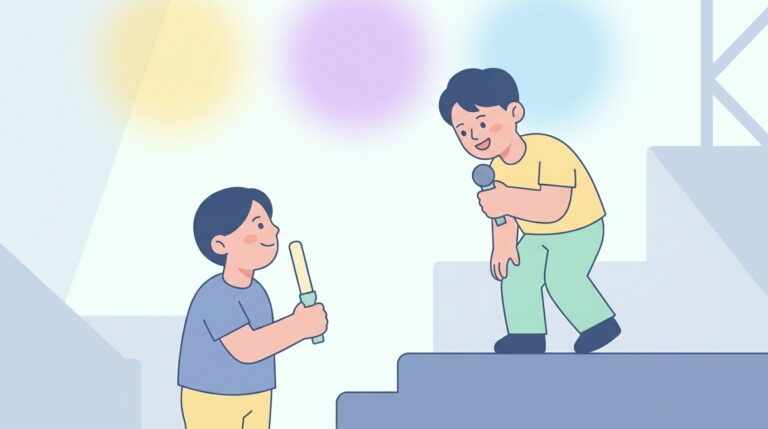
Picture this: You are standing in the front row of an intimate fan meeting in Hongdae, Seoul. The venue is buzzing with excitement, and your pulse is hammering like a bass drum. Suddenly, your ultimate bias turns around, locks eyes with you, and flashes a radiant, eye-crinkling smile. In that split second, your brain completely short-circuits. You want to pour your heart out and say, “My heart literally stopped the moment you smiled!” But what actually comes out of your mouth? Either complete silence or a stiff, robotic textbook sentence you memorized from an old dialogue: 당신을 보고 제 심장이 멈추었습니다. (Which sounds more like an emergency room status report than fan love!).
Take a deep breath—you are not alone. Hundreds of passionate K-pop and K-drama fans freeze in this exact scenario because traditional language courses rarely touch upon the vibrant world of jujeop (주접)—the Korean art of witty, playful, and dramatic praise. Based on real-world classroom feedback and fan meeting experiences, this guide will equip you with natural, native-approved expressions that turn your genuine excitement into charming Korean that makes idols beam.
Phase 2: Core Expressions Deep Dive
1. 심장이 멎는 줄 알았어요 (Sim-jang-i meot-neun jul a-rat-eo-yo)
- Pronunciation: [Sim-jang-i meot-neun jool ah-rah-sseo-yo] (Think: seem-jahng-ee + mut-noon + jool + ah-raht-aw-yo)
- Meaning: Literal: “I thought my heart was stopping” vs. Actual Nuance: “You took my breath away / I was completely swooning!”
- K-Culture Moment: Heavily used in Weverse comments and Bubble replies whenever an idol uploads an unexpected selfie (selca) featuring bare-faced visuals or a killer smile.
- Editor’s Insight: The grammar pattern
-는 줄 알았어요expresses a mistaken assumption (“I really felt like… but it turned out not to be fatal”). This grammatical cushion keeps the dramatic exaggeration cute rather than terrifying. - Situation Spectrum: Casual: ✅ | Semi-formal: ✅ | Formal: ⚠️
- 🤔 Think About It: In English, we often say “I dropped dead” or “My jaw dropped.” Notice how Korean focuses on the visceral sensation of the heart pausing (심장이 멎다).
2. 눈 마주치고 심쿵했어요 (Nun ma-ju-chi-go sim-kung-haet-eo-yo)
- Pronunciation: [Noon ma-joo-chee-go seem-koong-haess-eo-yo] (Noon like afternoon, sim-kung mimics a heavy, sudden heartbeat thud)
- Meaning: Literal: “Eyes met and heart went thump” vs. Actual Nuance: “When we made eye contact, my heart skipped a huge beat!”
- K-Culture Moment: The staple subtitle for YouTube fan-cams (jik-cam) during music show “ending fairy” shots where the star winks directly into the lens.
- Editor’s Insight: “심쿵” combines 심장 (heart) and 쿵 (the sound of a heavy drop or thud). While it is slang, pairing it with the polite ending
-했어요makes it perfectly respectful for fan signs. - Situation Spectrum: Casual: ✅ | Semi-formal: ✅ | Formal: 🚫
- 🤔 Think About It: Onomatopoeia (sound-symbolic words) plays a gigantic role in daily Korean speech. How does turning a heart’s sound into a verb create instant warmth?
3. 제 심장 책임지세요 (Je sim-jang chaek-im-ji-se-yo)
- Pronunciation: [Jeh seem-jang chaek-eem-jee-seh-yo] (Jeh like jelly, chaek-im sounds like “check-in”)
- Meaning: Literal: “Please take legal/moral responsibility for my heart” vs. Actual Nuance: “You’re dangerously charming; it’s practically criminal!”
- K-Culture Moment: The classic sticky post-it question at album signings or written on cheering placards held high during concert ments.
- Editor’s Insight: In formal society, “책임지다” is a solemn phrase about accountability, legal duties, or raising children. Applying such a heavy word to your emotional fluttering is the core essence of modern jujeop (주접).
- Situation Spectrum: Casual: ✅ | Semi-formal: ✅ | Formal: 🚫
- 🤔 Think About It: Playfully blaming someone else for your fluttering heart is seen as peak flattery in Korea. Would this feel too intense or humorous in your own native tongue?
Phase 3: Textbook Korean vs. Real Korean
Situation 1: Describing the feeling of eye contact
- 📖 교과서 한국어: 당신과 눈이 마주쳤을 때 사랑에 빠졌습니다. (Dangsin-gwa nun-i maju-chyeosseul ttae sarang-e ppajyeosseumnida.) – “When our eyes met, I fell in love.”
- 🗣️ 진짜 한국어: 눈 마주치자마자 심쿵했어요! (Nun maju-chijamaja simkung-haesseoyo!) – “The second our eyes met, my heart skipped a beat!”
- 💡 왜 다를까?: The word “당신” sounds like an archaic translation of Western literature or an argument between strangers in spoken Korean. Native speakers use swift connectors like
-자마자(as soon as) paired with expressive slang like심쿵.
Situation 2: Expressing overwhelming praise on social media
- 📖 교과서 한국어: 당신의 미소는 너무나 아름답습니다. (Dangsin-ui miso-neun neomuna areumdapseumnida.) – “Your smile is exceedingly beautiful.”
- 🗣️ 진짜 한국어: 그렇게 웃어 주시면 심장 멎잖아요! (Geureoke useo jusimyeon simjang meotjanayo!) – “If you smile like that, my heart is going to stop, you know!”
- 💡 왜 다를까?: Modern K-fans rarely rely on stiff declarative statements. Instead, they frame their compliments through charming rhetorical consequences with endings like
-잖아요(as you well know!).
Phase 4: K-Culture Deep Dive & Non-verbal Manners
4-1. 눈치 (Nunchi) & Gestures
When interacting at a fan event or hi-touch line, eye contact requires good nunchi (cultural tact). An unbroken, wide-eyed stare can come across as aggressive. Instead, maintain soft eye contact, blinking naturally, and accompany your words with an expressive two-handed gesture over your chest, or a small finger heart (손가락 하트) or cheek heart (볼하트). If handing a gift or letter, always offer it using both hands with a slight bow of the head.
4-2. Culture Code: The Rise of “주접 댓글” (Jujeop Comments)
Historically, the word jujeop (주접) carried negative connotations, referring to unrefined greed or messy behavior. However, Gen Z and fandom communities completely rebranded it into “creative, over-the-top, theatrical praise.” On YouTube and Instagram, Korean fans compete to leave the most absurdly poetic comments (e.g., “Why did NASA spend billions researching stars when your eyes hold the entire galaxy?”). Understanding jujeop is your secret key to understanding modern Korean youth humor.
Phase 5: Real-Life Roleplay Scenario
Setting: A brightly lit fan-sign hall inside Dongdaemun Design Plaza (DDP). Up-tempo instrumental tracks play softly in the background.
Character: Idol Minho (민호), charismatic main vocalist with a gentle gaze, holding a silver marker.
- Turn 1 – Minho: 안녕하세요! 오늘 와 줘서 정말 고마워요. (Annyeonghaseyo! Oneul wa jwoseo jeongmal gomawoyo.) – [🎭 Smiling warmly and waving both hands welcomingly] “Hello! Thank you so much for coming today.”
- Turn 2 – Learner: 민호 씨, 실물 보니까 말이 안 나와요! (Minho ssi, silmul bonikka mari an nawayo!) – [🎭 Clasping hands together nervously with wide eyes] “Minho, seeing you in real life makes me speechless!”
- Turn 3 – Minho: 하하, 편하게 말씀하세요. 떨지 말고요! (Haha, pyeonhage malsseumhaseyo. Tteolji malgoyo!) – [🎭 Leaning forward slightly, tilting his head with an attentive smile] “Haha, please speak comfortably. Don’t be nervous!”
- Turn 4 – Learner: 방금 저 보고 웃어 주실 때 심장이 멎는 줄 알았어요. (Banggeum jeo bogo useo jusil ttae simjangi meotneun jul arasseoyo.) – [🎭 Dramatically touching hand to chest and letting out a soft sigh] “When you just looked at me and smiled, I thought my heart stopped.”
- Turn 5 – Minho: 진짜요? 제 미소 때문에요? (Jinjja-yo? Je miso ttaemune-yo?) – [🎭 Chuckles shyly, covering his mouth with one hand] “Really? Because of my smile?”
- Turn 6 – Learner: 네, 눈 마주치자마자 심쿵했어요! 제 심장 책임지세요. (Ne, nun majuchijamaja simkunghaesseoyo! Je simjang chaekimjiseyo.) – [🎭 Giggling bashfully while flashing a quick finger heart] “Yes, the moment our eyes met, my heart fluttered! You must take responsibility for my heart.”
- Turn 7 – Minho: 하하, 그럼 제가 평생 멋진 노래로 책임질게요! (Haha, geureom jega pyeongsaeng meotjin noraero chaekimjilgeyo!) – [🎭 Making a playful pinky-promise gesture with an ear-to-ear grin] “Haha, then I will take responsibility for the rest of my life with great singing!”
- Turn 8 – Learner: 꼭 약속해요! 다음 콘서트도 갈게요. (Kkok yaksokhaeyo! Daeum konseoteudo galgeyo.) – [🎭 Nodding enthusiastically with a double thumbs-up] “Promise me! I will definitely go to the next concert too.”
🔀 Interactive Decision Branch
Minho winks and says: “오늘 저 보려고 어디서 오셨어요? (Where did you travel from to see me today?)” How will you answer?
- Option A: “민호 씨 미소 보려고 지구 반 바퀴 날아왔어요! (I flew halfway around the world just to see your smile!)”
- Option B: “저는 2024년 공식 팬클럽 회원 카드 소지자입니다. (I am a card-carrying member of the official 2024 fan club.)”
- Option C: “당신 없으면 저는 이제 살 수 없습니다. (Without you, I cannot go on living at all.)”
Feedback:
* Choice A (Best): Playful, charming, and fits the fun jujeop atmosphere like a glove. Minho will love the flattering energy!
* Choice B (Bad): Far too formal, clinical, and kills the conversational warmth instantly.
* Choice C (Risk): Too heavy and borderline obsessive (부담스럽다). Keep praise lighthearted, not overwhelming.
Phase 6: 10-Second Emotional Shadowing Drill
Practice these lines out loud, focusing on rhythm and vocal inflection at each slash mark (/):
[😊 설레고 벅차오르는 심정으로]
눈 마주치고 / 웃어 주는 순간 / 심장이 멎는 줄 알았어요!
(Nun ma-ju-chi-go / u-seo ju-neun sun-gan / sim-jang-i meot-neun jul a-rat-eo-yo!)
“The moment our eyes met / and you smiled / I thought my heart stopped!”-
[🥺 심장을 부여잡고 장난스럽게]
진짜… / 너무 멋있어서 / 제 심장 / 책임지셔야 해요!
(Jin-jja… / neo-mu meos-iss-eo-seo / je sim-jang / chaek-im-ji-syeo-ya hae-yo!)
“Seriously… / you’re so handsome / you have to / take responsibility for my heart!” -
[✨ 반짝이는 눈빛으로 신나게]
미소 보자마자 / 완전 / 제대로 / 심쿵했어요!
(Mi-so bo-ja-ma-ja / wan-jeon / je-dae-ro / sim-kung-haet-eo-yo!)
“The second I saw your smile / I totally / properly / got heart-fluttered!”
Phase 7: K-Culture Mini Dictionary
- 주접 (Jujeop) | Over-the-top praise / creative fandom hyperbole
- Originally meant bad table manners or acting foolish; now it refers to affectionate, witty exaggerations fans leave on idols’ social posts.
- 심쿵 (Simkung) | Heart-flutter / sudden swoon
- Formed from 심장 (heart) + 쿵 (thud). Used whenever a human, puppy, or charming act makes your pulse unexpectedly leap.
- 최애 (Choeae) | Ultimate bias / favorite person
- Rooted in Hanja (最愛), meaning “most loved.” In every K-pop group or K-drama cast, your number one pick is your 최애.
- 눈맞춤 (Nunmatchum) | Eye contact
- A pure Korean term for holding gazes. Cherished at fan meetings where artists make deliberate eye contact with each supporter.
Phase 8: Traveler’s Survival Kit
Survival Expressions TOP 3
- 실물이 훨씬 더 멋있으세요! (Silmuri hwolssin deo meos-isseuseyo!)
- Pronunciation: [Seel-mool-ee hwol-sseen daw maw-sheet-euh-seh-yo!]
- Pro Tip: Means “You look so much cooler in real life!” The single most reliable compliment to bring a broad smile to any Korean star’s face.
- 사진 한 장만 같이 찍어 주실 수 있나요? (Sajin han jangman gachi jjigeo jusil su innayo?)
- Pronunciation: [Sah-jeen hahn jahng-mahn gah-chee jjee-gaw joo-seel soo ees-nah-yo?]
- Pro Tip: Polite phrasing to ask for a selfie. Always ask first before pointing your smartphone camera in casual settings.
- 항상 건강 조심하세요! (Hangsang geon-gang josimhaseyo!)
- Pronunciation: [Hahng-sahng gun-gahng joh-seem-hah-seh-yo!]
- Pro Tip: Means “Please always take care of your health!” Shows deep, genuine affection, as Korean fans prioritize artist wellbeing above all.
Editor’s Travel Note
When heading to concert venues like the Olympic Park KSPO Dome or Gocheok Sky Dome, make sure you download the Naver Map app for smooth transit routing. Google Maps often lacks real-time walking and subway exit details in South Korea. Also, grab a transit card or WOWPASS at Incheon Airport to hop between subway lines hassle-free.
Phase 9: Going One Step Deeper
Korean conversational culture is built on empathy, shared collective sentiment (우리 or “we”), and deep emotional release. In a society known for high-pressure academic and corporate environments, jujeop offers a socially sanctioned space for pure, guilt-free silliness. When fans playfully exclaim that their “hearts stopped,” everyone understands it is not medical distress—it is an affectionate emotional bridge that brings idols and supporters closer together.
💬 Your Turn: Have you ever experienced a magical moment when someone made eye contact and made your day? What would you say to your bias if you met them for 10 seconds? Drop your Korean practice sentence in the comments below!
Phase 10: FAQ & Avoiding Misunderstandings
Q: Can I use “심장이 멎는 줄 알았어요” with my Korean boss or university professor?
A: No! Although it ends in the polite -요 form, the theatrical exaggeration belongs strictly in fan culture or among close friends. For senior figures, use dignified expressions like “정말 깊은 감명을 받았습니다” (I was deeply impressed).
Q: Does “심쿵” only apply to romantic feelings for human idols?
A: Not at all! Koreans frequently say “심쿵했어요” when watching videos of playful kittens, seeing an adorable dessert arrive at a cafe, or when a friend shows unexpected kindness.
Q: What is the exact difference between “심쿵” and “심멎”?
A: 심쿵 (Simkung) captures that quick “flutter / thump” in your chest, while 심멎 (Sim-meot, short for 심장 멎음) describes that total freeze where your heart feels like it flatlined from pure visual shock.
🚨 Common Mistakes Warning Board
- Addressing an idol as “당신” (Dangsin): Calling an idol “당신” sounds confrontational or like an old married couple bickering. Correct Action: Address them by name + 씨 (e.g., 민호 씨) or name + 오빠/언니 if you know their age dynamic.
- Confusing “멎다” (to stop) with “맞다” (to be right / to be hit): Saying “심장이 맞았어요” sounds like your chest got physically struck by an object. Keep the vowel clear: 멎 (meot).
- Delivering “책임지세요” with a stony face: If you say “Take responsibility!” without smiling, security guards might get nervous! Correct Action: Always deliver it with a warm grin, giggle, or finger heart.
Phase 11: Action Missions & Engagement
- 🥉 Bronze Mission (Solo Shadowing): Stand in front of your mirror, smile, and say “눈 마주치자마자 심쿵했어요!” three times with natural intonation.
- 🥈 Silver Mission (Social Media Comment): Head to your favorite idol or actor’s latest Instagram or Weverse post and leave a simple comment: “웃는 모습 보고 심쿵했어요! 💖”
- 🥇 Gold Mission (Real-Life Application): The next time you attend a concert, fan meet, or pop-up store, tell a performer or staff member: “실물이 훨씬 더 멋있으세요!”
- 🎮 K-Culture Mission: Open YouTube, search for any live performance of your favorite K-pop track, scroll to the Korean comments, and find at least one user using the words
심장,심쿵, or creative주접!
Phase 12: Interactive Quiz Challenge
Question 1 (Situational Judgment):
You are at an offline fan-signing event. Your bias looks at you and flashes a huge grin. Which line is the most natural and culturally appropriate?
* A) 당신은 매우 아름답군요. (Dangsin-eun maeu areumdapgunyo.)
* B) 웃어 주실 때 심장이 멎는 줄 알았어요! (Useo jusil ttae simjangi meotneun jul arasseoyo!)
* C) 심장이 정지했으니 119에 전화하세요. (Simjangi jeongjihaesseuni 119-e jeonhwahaseyo.)
Question 2 (Fill in the Blank):
눈 마주치자마자 너무 설레서 ( ________ )했어요!
* Hint: It’s the two-syllable slang for a heart-flutter thud!
Question 3 (True or False Cultural Trivia):
In Korean fan culture, saying “제 심장 책임지세요” (Take responsibility for my heart) is considered an offensive legal claim that requires police mediation.
Click to view answers and explanations
- Answer 1: B. It is natural, polite, and uses authentic fan praise. (Option A uses the awkward word “당신,” and Option C asks to call the Korean emergency ambulance service!).
- Answer 2: 심쿵 (Simkung). The full sentence reads: “눈 마주치자마자 너무 설레서 심쿵했어요!” (The moment our eyes met, my heart skipped a beat because I was so fluttered!).
- Answer 3: False. It is an affectionate, witty jujeop comment used to playfully tease someone for being overwhelmingly attractive.







