

Phase 1: Empathy
안녕하세요! 매일한글 에디터입니다. (Hello! This is your Daily Hangul editor.)
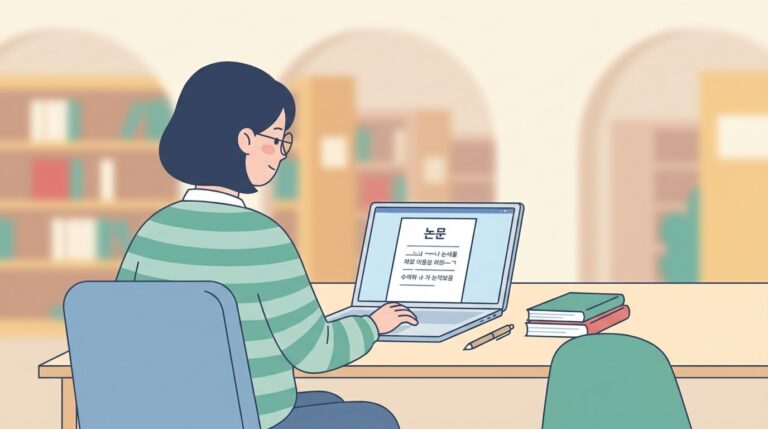
Picture this: It is 2:15 AM in a quiet study lounge at a university in Seoul. Your desk is cluttered with half-empty mega-sized iced Americanos, printed journal articles marked up in highlighter, and your laptop screen glowing with the menacing blue dashboard of CopyKiller (카피킬러)—the AI plagiarism verification program trusted by almost every university in South Korea. You hit “검사하기 (Run Check)”, holding your breath. Three minutes later, the result pops up in glaring red numbers: 28% Similarity. Your heart drops into your stomach. Your master’s thesis defense is in two weeks, and your advisor has a strict rule: anything over 10% is an automatic failure.
Did you intentionally steal someone’s ideas? Absolutely not! But in Korean academic writing, failing to follow hyper-specific citation rules—like forgetting quotation marks for direct quotes or mishandling secondary citations—instantly flags your hard work as academic dishonesty. When international researchers study in Korea, research ethics (연구윤리) can feel like navigating an invisible minefield. Transparent, honest citation habits are not just about avoiding penalties; they protect your academic honor and give your work undeniable authority. Based on real feedback from graduate students and researchers in Korea, this guide will walk you through essential intermediate (B2) phrases, practical citation ethics, and local lab etiquette so you can write with confidence.
Phase 2: Core Expressions (3 Key Phrases)
1. 출처를 명확히 밝히다 (Chulcheoreul myeonghwakhi balkhida)
- Pronunciation: [Chul-cheo-reul myeong-hwak-hi bal-ki-da] (Sounds like: Chool-chaw-reul myung-hwahk-hee bahl-kee-dah)
- Meaning: Literally “To clearly reveal the source”; used to mean “to attribute and cite sources accurately and transparently.”
- K-Culture Moment: Think of courtroom or campus investigation dramas like Law School. When a researcher is confronted about their paper, this phrase represents the gold standard of professional defense: “저는 모든 문장의 출처를 명확히 밝혔습니다! (I attributed the sources of every single sentence!)”
- Editor’s Insight: The verb 밝히다 comes from “밝다” (bright). You are literally illuminating dark corners where ideas came from so nobody suspects intellectual theft.
- Situation Spectrum: Casual 🚫 | Semi-formal ⚠️ | Formal ✅
- 🤔 Think About It: In your home culture, is citation viewed mostly as a legal technicality to avoid copyright lawsuits, or as a moral reflection of your personal character as it often is in Korea?
2. 카피킬러 검사를 돌리다 (Kapi-killeo geomsa-reul dollida)
- Pronunciation: [Ka-pi-kil-leo geom-sa-reul dol-li-da] (Sounds like: Kah-pee-keel-luh gum-sah-reul dohl-lee-dah)
- Meaning: Literally “To run a CopyKiller check.”
- K-Culture Moment: Before any thesis submission, senior lab members (seonbae) always ask juniors (hubae) in a nonchalant yet urgent tone: “카피킬러 돌려봤어? (Did you run CopyKiller yet?)”
- Editor’s Insight: In spoken Korean, running an automated software check, batch script, or even doing laundry uses the active verb 돌리다 (to rotate/spin). It implies initiating a standardized, automated procedure.
- Situation Spectrum: Casual ✅ | Semi-formal ✅ | Formal ⚠️
- 🤔 Think About It: Why do you think Korean universities rely so heavily on a single standardized national software platform rather than allowing each professor to use different tools?
3. 재인용 표기를 누락하다 (Jae-inyong pyogi-reul nurakhada)
- Pronunciation: [Jae-in-yong pyo-gi-reul nu-rak-ha-da] (Sounds like: Jae-een-yong pyo-gee-reul noo-rahk-hah-dah)
- Meaning: Literally “To omit the secondary citation notation.”
- K-Culture Moment: During thesis mock defenses, professors often catch students reading a quote cited in another scholar’s paper without consulting the original source. Omitting this attribution makes it appear as though you read the original book yourself.
- Editor’s Insight: 누락하다 (nurakhada) implies an accidental or negligent omission rather than deliberate malice, making it an essential formal word when explaining or correcting an honest administrative oversight.
- Situation Spectrum: Casual 🚫 | Semi-formal ⚠️ | Formal ✅
- 🤔 Think About It: How does directly checking primary literature versus relying on secondary citations alter your sense of accountability as an independent researcher?
Phase 3: Textbook Korean vs Real Korean
Situation 1: Letting your lab mate know you finished reformatting your references
- 📖 Textbook Korean: 저는 논문의 참고문헌 표기를 모두 마쳤습니다. (Jeoneun nonmunui chamgomunheon pyogireul modu machyeotseumnida.) — “I have finished marking all references in the thesis.”
- 🗣️ Real Korean: 레퍼런스랑 각주 정리 싹 끝냈어요. (Reopeoreonseurang gakju jeongni ssak kkeutnaesseoyo.) — “I completely cleaned up the references and footnotes.”
- 💡 Why it differs: Modern Korean university students and graduate researchers casually mix academic loanwords like “레퍼런스” (references) with idiomatic adverbs like “싹” (completely/cleanly) to sound natural instead of overly robotic.
Situation 2: Warning a peer about why their plagiarism score is dangerously high
- 📖 Textbook Korean: 표절률을 낮추기 위해 인용 부호를 사용하십시오. (Pyojeollyureul natchugi wihae inyong buhoreul sayonghasipsio.) — “Please use quotation marks in order to lower the plagiarism rate.”
- 🗣️ Real Korean: 따옴표 제대로 안 묶으면 표절률 확 올라가요. (Ttaompyo jedaero an mukkeumyeon pyojeollyul hwak ollagayo.) — “If you don’t wrap them in quotes properly, your similarity score spikes immediately.”
- 💡 Why it differs: Native speakers use descriptive terms like “따옴표로 묶다” (to wrap in quotes) and visceral adverbs like “확” (sharply, abruptly) to explain CopyKiller mechanics vividly.
Phase 4: K-Culture Deep Dive & Non-verbal Manners
4-1. 눈치 (Nunchi) & Lab Manners
When meeting your thesis advisor (지도교수님 – Jidogyosunim) to review your plagiarism report:
* Two-Handed Delivery: Always print your CopyKiller certificate and hand it over using both hands, gently bowing your head slightly. Never slide it across the table with one hand.
* No Excuses Upfront: If your similarity index (표절률) is higher than recommended (usually above 10-15%), never say “The program is wrong.” Practice humility: “직접 인용 부분의 따옴표 표기가 미흡했습니다. 꼼꼼히 수정하겠습니다. (My quote annotations were inadequate. I will revise them meticulously.)” Taking prompt ownership shows scholarly integrity.
4-2. Cultural Code: The High Stakes of 연구윤리 (Research Ethics)
In Korean society, academic achievements hold immense social weight. When high-profile politicians, celebrities, or researchers face plagiarism allegations, the public backlash is instantaneous and severe. Plagiarism is seen not merely as a technical infringement, but as an act of deceit toward one’s academic ancestors (선학) and community. By strictly annotating sources, you show profound respect for the academic collective.
Phase 5: Real-World Roleplay Scenario
Setting: A university graduate research lab in Seoul, 11:30 PM. Min-jae, a seasoned Ph.D. mentor (선배), is reviewing the reader’s draft thesis before final digital submission.
- 민재 (Min-jae): 혹시 카피킬러 돌려봤어? 표절률 몇 % 나왔어? (Hoksi Kapi-killeo dollyeobwasseoyo? Pyojeollyul myeot peosenteu nawasseo?)
🎭 Peers over his reading glasses with a concerned look.
“Did you run CopyKiller yet? What percentage did you get?” - 학습자 (Learner): 방금 돌려봤는데 22% 나와서 깜짝 놀랐어요. (Banggeum dollyeobwanneunde isibi peosenteu nawaseo kkamjjak nollasseoyo.)
🎭 Tapping on the mouse anxiously while staring at the screen.
“I just ran it and got 22%, which completely shocked me.” - 민재 (Min-jae): 직접 인용한 문장에 큰따옴표랑 출처 표기 제대로 묶었어? (Jikjeop inyonghan munjange keunttaompyorang chulcheo pyogi jedaero muk-eosseo?)
🎭 Points his pen at the second paragraph of page 45.
“Did you enclose direct quotes in quotation marks and attribute citations properly?” - 학습자 (Learner): 아, 문헌은 본문에 적었는데 따옴표 처리를 몇 개 빠뜨렸어요. (A, munheoneun bonmune jeogeonneunde ttaompyo cheorireul myeot gae ppatturyeosseoyo.)
🎭 Scratching head apologetically.
“Ah, I listed the author in the text, but forgot quotation marks on a few sentences.” - 민재 (Min-jae): 단순하게 문헌만 적으면 안 되고, 인용 문맥을 명확히 밝혀야 해. (Dansunhage munheonman jeogumyeon an doego, inyong munmaegeul myeonghwakhi balkhyeoya hae.)
🎭 Hands over a reference manual.
“You cannot just list references; you must clearly articulate citation contexts.” - 학습자 (Learner): 선배님 말씀대로 각주랑 직접 인용 부분을 다시 손볼게요. (Seonbaenim malsseumdaero gakjurang jikjeop inyong bubuneul dasi sonbolgeyo.)
🎭 Nodding respectfully and taking careful notes.
“I will revise the footnotes and direct quotes just as you advised, sunbae-nim.” - 민재 (Min-jae): 그래, 정직하게 쓰는 게 결국 교수님 심사 통과하는 지름길이야. (Geurae, jeongjikhage sseuneun ge gyeolguk gyosunim simsa tonggwahaneun jireumgiriya.)
🎭 Smiling encouragingly and offering a can of coffee.
“Right. Writing transparently is ultimately the fastest route to passing the committee’s review.” - 학습자 (Learner): 네! 출처 하나하나 꼼꼼히 대조해서 재검사 돌리겠습니다. (Ne! Chulcheo hanahana kkomkkomhi daejohaeseo jaegeomsa dolligesseumnida.)
🎭 Focusing back on the keyboard with renewed determination.
“Yes! I will cross-check every single citation and re-run the verification!”
🔀 Interactive Decision Point
Suppose your advisor spots two sentences that match a 2018 paper word-for-word without quotation marks. How do you respond?
- Choice A: “이 정도 문장은 학계에서 누구나 쓰는 일반적인 표현 아닌가요? (Aren’t these general expressions anyone in academia uses?)”
- Choice B: “제가 직접 인용 부호 처리를 누락했습니다. 즉시 출처와 따옴표를 정비해 수정본을 제출하겠습니다. (I omitted the direct quotation marks. I will fix the citations and submit a revised version immediately.)”
- Choice C: “카피킬러 시스템 오류인 것 같습니다. 다시 검사해 보겠습니다. (I think it is a system glitch in CopyKiller. I’ll test it again.)”
Feedback:
* Choice A (Bad): Defensive and risks questioning the professor’s academic judgment.
* Choice B (Best): Takes immediate personal responsibility, demonstrates professional integrity, and suggests constructive action.
* Choice C (Risk): Shifting blame to software flags you as unaccountable and careless.
Phase 6: 10-Second Emotion Shadowing Drill
Master the rhythm of lab conversations with natural pauses (/) and authentic emotion:
[😰 당황스럽고 다급하게 / Flustered & Urgent]
“표절률이 생각보다 높게 나와서 / 출처 표기를 / 다시 점검해야겠어요!”
(Pyojeollyuri saenggakboda nopge nawaseo / chulcheo pyogireul / dasi jeomgeomhaeyagesseoyo!)
“The plagiarism rate came out higher than expected, / so I need to / recheck my citations!”-
[🧐 신중하고 꼼꼼하게 / Deliberate & Meticulous]
“다른 논문의 문장을 가져올 때는 / 반드시 / 인용 부호를 달고 / 출처를 밝혀야 합니다.”
(Dareun nonmunui munjangeul gajyeool ttaeneun / bandeusi / inyong buhoreul dalgo / chulcheoreul balkhyeoya hamnida.)
“When bringing sentences from other papers, / you must / add quotation marks / and state the source.” -
[😌 안도하며 자신 있게 / Relieved & Confident]
“재검사를 돌렸더니 / 표절률이 4%로 떨어져서 / 안심하고 제출할 수 있어요.”
(Jaegeomsareul dollyeotteoni / pyojeollyuri sapeosenteuro tteoreojyeoseo / ansimhago jechulhal su isseoyo.)
“After re-running the check, / the similarity rate dropped to 4%, / so I can submit with peace of mind.”
Phase 7: K-Culture Mini Dictionary
- 카피킬러 (Kapi-killeo) | CopyKiller Plagiarism Checker
The standard web-based plagiarism prevention platform used across Korea. Most universities provide free institutional accounts to enrolled students via university portal integration. - 각주 (Gakju) | Footnote
Explanatory notes placed at the bottom of the page. In Korean humanities and social science papers, footnotes are frequently used to provide background nuances as well as source citations. - 재인용 (Jae-inyong) | Secondary Citation
Citing a study that was quoted inside another author’s work without having read the primary work yourself. Korean research ethics require you to explicitly state:[Primary Author], cited in [Secondary Author]. - 연구윤리 (Yeongu-yunri) | Research Ethics
The formal moral guidelines governing academic integrity, encompassing data fabrication (위조), falsification (변조), and plagiarism (표절).
Phase 8: Survival Kit for Travelers & International Scholars
Top 3 Survival Phrases for Campus Life
- “학교 포털로 카피킬러 무료 검사 가능한가요?” (Hakgyo poteollo Kapi-killeo muryo geomsa ganeunghangayo?)
Pro Tip: Can I get free CopyKiller checks through the university portal? (Never pay out of pocket before checking your university library’s license!) - “이 부분 재인용 표기 형식 좀 봐주실 수 있나요?” (I bubun jae-inyong pyogi hyeongsik jom bwajusil su innayo?)
Pro Tip: Could you check the secondary citation format in this section? (A polite way to ask a senior lab mate for feedback.) - “참고문헌 스타일 가이드 어디서 다운받아요?” (Chamgomunheon seutail gaideu eodiseo daunbadayo?)
Pro Tip: Where do I download the reference style guide? (Crucial for APA vs. Chicago Korean variations.)
Editor’s Campus Note
- Essential Research Portals: Always access national repositories like the RISS Research Information Sharing Service and DBpia Korean Journal Database through your university library proxy to access full text dissertations and journals for free.
- Printing & Lab Culture: Need to bind your draft thesis quickly? Search for “복사실” (copy shop) right outside the university front gate. They specialize in formatting margins, cardstock cover binding, and fast turnaround before defense deadlines.
Phase 9: “One Step Deeper” (Reflective Prompt)
In Korean scholarship, citation is more than a defense against intellectual property infringement; it is an act of filial piety toward knowledge. Academic knowledge in Korea is perceived as a generational relay where today’s researcher stands upon the shoulders of respected mentors (선배 and 스승). When you obscure your sources, you inadvertently break that chain of academic respect. Clean citations are your public badge of honor—a proof that you entered the scholarly circle through diligence rather than shortcuts.
💬 Your Turn: Have you ever experienced cultural differences in how strictly citation rules or software checks are enforced between your home country and Korea? Drop your thoughts in the comments below!
Phase 10: FAQ & Common Mistakes
Q: Why does CopyKiller show a high similarity percentage even when I wrote the paper myself?
A: CopyKiller automatically compares six consecutive syllables against millions of domestic theses. If you use standardized phrases (like “본 연구의 목적은 다음과 같다”) or forget to wrap direct block quotes in proper quotation mark tags, the algorithm marks them as identical text. Simply adjust the filtering settings for bibliography and quotes in your institutional portal.
Q: Can I translate an English paper into Korean and put it in my thesis without quotation marks?
A: No! Translating an idea without attributing the original author constitutes “번역 표절” (translated plagiarism). You must mention the original author, publication year, and state that it is a translation by the author.
Q: What is the acceptable CopyKiller percentage for Korean master’s and doctoral degrees?
A: While policies vary by department, most Korean graduate programs require a similarity score strictly below 10% to 15%. Any submission above 20% will almost certainly delay your final defense.
🚨 Common Mistakes Warning Board
- Mistake: Citing a secondary source as if you read the original book.
Correct Action: Always indicate both sources clearly: “[원작자], [2차 연구자]에서 재인용” (Original Author, cited in Secondary Author). - Mistake: Grouping multiple citations into one giant footnote at the very end of a 300-word paragraph.
Correct Action: Place the in-text citation or footnote marker immediately following the specific statement or data point being referenced. - Mistake: Forgetting to exclude the bibliography (참고문헌 제외) when uploading to CopyKiller.
Correct Action: Tick the box for “참고문헌 제외 (Exclude Bibliography)” in CopyKiller settings so your reference titles don’t artificially inflate your plagiarism score.
Phase 11: Action Missions
- 🥉 Bronze Mission (Solo Drill): Open your current draft or a short Korean essay. Find three external claims and check if each has an explicit source annotation (
출처). Practice saying aloud: “이 문장의 출처를 명확히 밝혔습니다.” - 🥈 Silver Mission (Community Share): Share on your study Instagram or Korean learning journal: Post a snapshot of your clean citation list with the caption: “정직한 인용 습관으로 논문 준비 완료! #매일한글 #연구윤리 #CopyKiller”
- 🥇 Gold Mission (Real-world Execution): Log into your university portal, run a document through CopyKiller, and check your exclusion filters for quotes (인용문) and bibliography (참고문헌). Aim for an honest score under 10%!
- 🎮 K-Culture Mission: Watch an episode of a Korean academic drama (such as Law School or Black Dog) and listen closely for the words “출처” (source), “표절” (plagiarism), or “연구윤리” (research ethics).
Phase 12: Interactive Quiz Challenge
1. Situational Judgment
You quoted a whole paragraph word-for-word from an established professor’s book into your Korean literature review. You included the book in the reference list at the back of your thesis, but did not use quotation marks in the body text. Is this acceptable?
Click to view Answer & Explanation
Answer: No, it is not acceptable.
Explanation: Even if the book is listed in your references, directly quoting text without quotation marks (따옴표) or block-quote indentation will be flagged as direct plagiarism by CopyKiller and academic review boards. Always use quotation marks for verbatim text!
2. Fill-in-the-Blank
Fill in the missing Korean verb:
“논문의 신뢰도를 높이려면 모든 인용문의 ________를 명확히 ________야 합니다.”
(To raise the credibility of your thesis, you must clearly state the sources of all citations.)
Click to view Answer & Explanation
Answer: 출처 (source) / 밝혀 (reveal/state)
Full Sentence: “논문의 신뢰도를 높이려면 모든 인용문의 출처를 명확히 밝혀야 합니다.”
3. True / False Cultural Trivia
Statement: In Korean universities, self-plagiarism (자기표절 / duplicating your own previous term papers or published articles without citation) is completely permitted because you own your own words.
Click to view Answer & Explanation
Answer: False!
Explanation: Submitting your own prior assignments or published journal articles without proper citation is considered “중복게재” (duplicate publication) or self-plagiarism, which violates national research ethics standards in South Korea.







