

Phase 1: Empathy (Story-Driven Opening)
안녕하세요! (Annyeonghaseyo!) I’m your Daily Hangul editor.
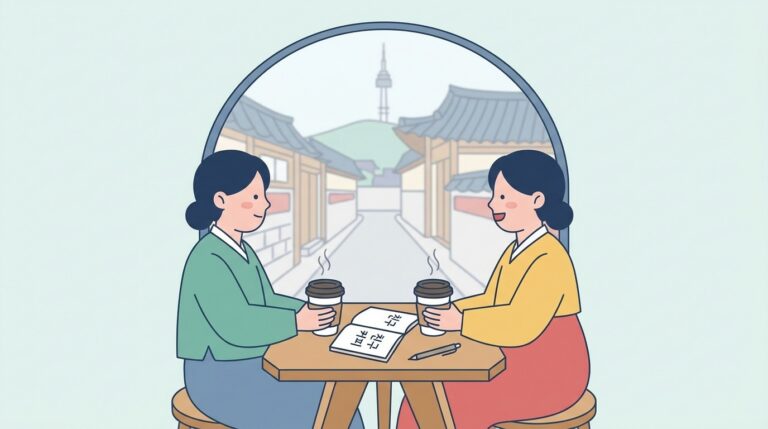
Picture this: You are sitting in a sunlit cafe in Yeonnam-dong, Seoul, sipping an iced Americano with your new Korean friend. The conversation is flowing nicely until they look at you with curious eyes and ask, “So, what do you like to do on weekends?”
Suddenly, your mind freezes. You remember textbook words like “reading” or “swimming,” but they feel stiff—almost like you are answering an official job interview question rather than chilling with a friend! You wonder: Do real Koreans actually say ‘My hobby is reading’? Will I sound robotic if I say ‘취미 (chwimi)’?
Don’t worry, you are not alone! Hundreds of beginner students have told me that talking about free time is one of the most intimidating icebreakers. In this guide, you will master smooth, natural, and friendly ways to share your weekend fun without breaking a sweat. Let’s make talking about hobbies feel effortless!
Phase 2: 3 Core Expressions Deep Dive
1. 취미가 뭐예요? (Chwimiga mwoyeyo?)
- Pronunciation: [Chwimiga mwoyeyo?] (Sounds like: Chwee-mee-gah mwoh-yeh-yoh)
- Meaning: Literal: “What is your hobby?” | Nuance: A classic, polite icebreaker used to discover someone’s personal interests.
- K-Culture Moment: You will hear this constantly during blind dates in reality shows like Single’s Inferno or during first-meeting episodes in popular K-Dramas.
- Editor’s Insight: While textbook-perfect, it sounds slightly formal. Native speakers often transition quickly into everyday routine questions right after this.
- Situation Spectrum: Casual ⚠️ | Semi-formal ✅ | Formal ✅
- 🤔 Think About It: In English, we often ask “What do you do for fun?” How does framing it around “hobby (취미)” shift the feeling toward an organized passion?
2. 영화 보는 거 좋아해요. (Yeonghwa boneun geo joahaeyo.)
- Pronunciation: [Yeonghwa boneun geo joahaeyo.] (Sounds like: Young-hwa boh-neun guh joh-ah-heh-yoh)
- Meaning: Literal: “I like the thing of watching movies.” | Nuance: “I like watching movies.”
- K-Culture Moment: Casual chats over Korean fried chicken when discussing recent box office hits or new trending K-Dramas on streaming platforms.
- Editor’s Insight: The pattern [Verb stem + 는 거 좋아해요 (-neun geo joahaeyo)] is pure magic for A1 beginners. Just plug any action in front of it to say what you enjoy doing!
- Situation Spectrum: Casual ⚠️ | Semi-formal ✅ | Formal ✅
- 🤔 Think About It: Notice how Korean creates nouns out of verbs using “거 (geo, thing)”. Why do you think native speakers soften statements this way?
3. 주말에 보통 뭐 해요? (Jumare botong mwo haeyo?)
- Pronunciation: [Jumare botong mwo haeyo?] (Sounds like: Joo-mahl-eh boh-tong mwoh heh-yoh)
- Meaning: Literal: “On the weekend, usually what do you do?” | Nuance: “What do you usually do on weekends?”
- K-Culture Moment: Casual Monday morning coffee runs between coworkers or campus friends in youth dramas like Twenty-Five Twenty-One.
- Editor’s Insight: This is actually used more often than “취미가 뭐예요?”. It feels less like an exam question and lets the other person answer with simple things like sleeping in or visiting bakeries.
- Situation Spectrum: Casual ⚠️ | Semi-formal ✅ | Formal ✅
- 🤔 Think About It: Is taking a nap or relaxing a “hobby” in your culture? In Korea, weekend relaxation is an essential leisure topic!
Phase 3: Textbook Korean vs. Real Korean
Situation 1: Talking about reading books
- 📖 Textbook Korean: 제 취미는 독서입니다. (Je chwimineun dokseo-imnida. / My hobby is reading.)
- 🗣️ Real Korean: 책 읽는 거 좋아해요. (Chaek ingneun geo joahaeyo. / I like reading books.)
- 💡 Why is it different? The word 독서 (dokseo) is a formal Sino-Korean noun. Saying “독서입니다” sounds like a resume entry! Using the conversational verb phrase 책 읽다 (chaek ikda) feels friendly and down-to-earth.
Situation 2: Asking someone about their downtime
- 📖 Textbook Korean: 당신의 취미는 무엇입니까? (Dangsin-ui chwimineun mueosimnikka? / What is your hobby?)
- 🗣️ Real Korean: 쉬는 날에 주로 뭐 하세요? (Swineun nare juro mwo haseyo? / What do you usually do on your days off?)
- 💡 Why is it different? The pronoun 당신 (dangsin, you) can sound confrontational or unnatural in daily speech. Koreans drop the subject and ask about rest days (쉬는 날) to keep the atmosphere comfortable.
Phase 4: K-Culture Deep Dive & Non-Verbal Manners
4-1. Nunchi (눈치) & Gestures
When discussing hobbies in Korea, humility and engagement are key. Even if you are a master pianist or marathon runner, avoid sounding boastful. Use enthusiastic nodding (끄덕끄덕, kkeodeok-kkeodeok) and lean forward slightly when listening. React with soft exclamations like “아, 진짜요?” (A, jinjjayo? / Oh, really?) to show genuine interest in their free-time passions.
4-2. Cultural Code: The Rise of “Jipsuni” & “Café Hopping”
In modern South Korea, you don’t need an elaborate sport to qualify for a hobby. Millions of young Koreans proudly identify as a 집순이 (Jipsuni, female homebody) or 집돌이 (Jipdori, male homebody), binge-watching series or recharging alone (집콕, jipkok). Alternatively, visiting aesthetic bakeries (카페 투어, kape tueo) is considered a legitimate, deeply appreciated weekend pursuit!
Phase 5: Real-World Roleplay Scenario
Setting: A minimalist cafe in Yeonnam-dong. You are meeting Minjun, a friendly language-exchange partner.
- 민준 (Minjun): 혜진 씨, 주말에 보통 뭐 해요? (Hyejin ssi, jumare botong mwo haeyo? / Hyejin, what do you usually do on weekends?)
- 🎭 Action:
[Smiling warmly, taking a sip of coffee] - You: 저는 음악 듣는 거 좋아해요. (Jeoneun eum-ak deutneun geo joahaeyo. / I like listening to music.)
- 민준 (Minjun): 오, 어떤 음악 좋아하세요? (O, eotteon eum-ak joahaseyo? / Oh, what kind of music do you like?)
- 🎭 Action:
[Tapping fingers to an imaginary beat with excitement] - You: K-Pop 좋아해요! 뉴진스 팬이에요. (K-Pop joahaeyo! Nyujinseu paen-ieyo. / I like K-Pop! I’m a NewJeans fan.)
- 민준 (Minjun): 저도요! 민지 진짜 좋아해요. (Jeodoyo! Minji jinjja joahaeyo. / Me too! I really like Minji.)
- 🎭 Action:
[Leaning in with wide, excited eyes] - You: 노래 다 너무 좋아요. (Norae da neomu joayo. / All their songs are so good.)
- 민준 (Minjun): 다음 주말에 콘서트 영상 같이 봐요! (Daeum jumare konseoteu yeongsang gachi bwayo! / Let’s watch their concert video together next weekend!)
🔀 Interactive Decision Point
How do you reply to Minjun’s invitation?
- Option A: 좋아요! 같이 봐요. (Joayo! Gachi bwayo. / Sounds great! Let’s watch together.)
- Feedback: [Best] Warm, enthusiastic, and completely natural for building a friendship!
- Option B: 당신은 누구예요? (Dangsineun nuguyeyo? / Who are you?)
- Feedback: [Bad] Rude and completely out of place in friendly Korean conversation.
- Option C: 취미 없어요. (Chwimi eopseoyo. / I have no hobby.)
- Feedback: [Risk] Shuts down the friendly mood abruptly and leaves an awkward silence.
Phase 6: 10-Second Emotion Shadowing Drill
Practice matching the emotional melody of native speakers! Listen, pause, and imitate:
[😊 Cheerful & Open]취미가 / 뭐예요? (Chwimiga / mwoyeyo? / What is your hobby?)[✨ Bright & Passionate]영화 보는 거 / 진짜 좋아해요! (Yeonghwa boneun geo / jinjja joahaeyo! / I really like watching movies!)[☕ Relaxed & Friendly]주말에 / 보통 뭐 하세요? (Jumare / botong mwo haseyo? / What do you usually do on weekends?)
Phase 7: K-Culture Mini Dictionary
- 집순이 / 집돌이 (Jipsuni / Jipdori) | Homebody | A widespread, endearing term for people who love staying cozy at home during their leisure hours.
- 갓생 (Gatsaeng) | “God-life” / Productive living | A popular buzzword among Gen Z for living diligently (e.g., morning workouts, reading, language study as weekend routines).
- 카페 투어 (Kape tueo) | Cafe hopping | The beloved weekend pastime of hunting for beautiful bakeries and signature drinks across town.
- 넷플릭스 정주행 (Netpeullikseu jeongjuhaeng) | Binge-watching Netflix | Combining the brand name with 정주행 (driving straight through) to describe marathon streaming sessions.
Phase 8: Traveler’s Survival Kit
Top 3 Weekend Explorer Phrases:
- 여기 추천해 주세요. (Yeogi chucheonhae juseyo.)
- Meaning: Please recommend something here.
- Pro Tip: Use this at trendy cafes when you aren’t sure which dessert is their signature specialty.
- 사진 찍어도 돼요? (Sajin jjigeodo dwaeyo?)
- Meaning: May I take a picture?
- Pro Tip: Polite and essential when visiting boutique lifestyle pop-ups in Seongsu-dong.
- 근처에 예쁜 카페 있어요? (Geuncheoe yeoppeun kape isseoyo?)
- Meaning: Is there a pretty cafe nearby?
- Pro Tip: A wonderful way to get authentic weekend hangout tips from locals.
Editor’s Travel Note:
When exploring Seoul’s trendiest hobby hotspots like Hongdae, Seongsu, or Ikseon-dong, Google Maps often lacks walking precision. Make sure to check our Naver Map app download guide to easily bookmark viral cafes, craft workshops, and photo booths!
Phase 9: One Step Deeper (Reflective Essay)
In many Western cultures, a “hobby” implies an individualistic, specialized craft—such as woodworking, long-distance running, or oil painting. However, in Korean society, hobby chats serve primarily as a bridge for 공감 (gonggam, mutual empathy). Asking about weekend habits is rarely about testing someone’s unique achievements; it is an invitation to discover shared rhythms of daily life. Admitting that you spent Sunday recharging in bed with snacks is just as bonding as running a marathon, because it honors shared human comfort.
💬 Your Turn: What do you usually do on Saturdays? Type in Korean below using “~ 보는 거 좋아해요” or “~ 듣는 거 좋아해요”!
Phase 10: FAQ & Common Mistakes
Q: Can I use “취미 (chwimi)” with someone older than me?
A: Yes! You can politely ask: “취미가 어떻게 되세요? (Chwimiga eotteoke doeseyo?)”, which is an honorific and respectful way to ask an elder or senior colleague about their hobbies.
Q: What if I don’t really have a special hobby?
A: No problem at all! You can say: “그냥 집에서 쉬는 거 좋아해요. (Geunyang jibeseo swineun geo joahaeyo. / I just like resting at home.)” Native speakers will warmly relate!
Q: How do I say “I like listening to music”?
A: Say “음악 듣는 거 좋아해요. (Eum-ak deutneun geo joahaeyo.)” Remember to conjugate 듣다 (deutda) to 듣는 거 (deutneun geo).
🚨 Common Mistakes Alert:
- Mistake 1: Translating “My hobby is…” into “내 취미는… (Nae chwimineun…)” with new acquaintances.
- Correct Action: Use polite speech: “제 취미는… (Je chwimineun…)” or simply stick to “[Verb] 거 좋아해요”.
- Mistake 2: Saying “당신 취미 뭐예요? (Dangsin chwimi mwoyeyo?)”
- Correct Action: Never use 당신 (dangsin) in spoken conversation; address the person by name + 씨 (e.g., 민준 씨, 취미가 뭐예요?).
- Mistake 3: Treating simple verbs as nouns without “-는 거” (e.g., saying “영화 보다 좋아해요”).
- Correct Action: Always link verbs using “-는 거 좋아해요” (e.g., 영화 보는 거 좋아해요).
Phase 11: Action Mission & Engagement
- 🥉 Bronze Level: Say “주말에 보통 뭐 해요?” out loud 5 times in front of the mirror with a bright, welcoming smile.
- 🥈 Silver Level: Post an Instagram Story of your current favorite hobby with the caption: “[Activity] 좋아해요!”
- 🥇 Gold Level: Leave a comment below introducing your real-life hobby in natural Korean!
- 🎮 K-Culture Mission: Watch an episode of the Korean variety show I Live Alone (나 혼자 산다) and spot how celebrities describe their free-time home habits.
Phase 12: Interactive Quiz Challenge
1. Situational Judgment: You want to politely ask a friendly language partner about their weekend plans. What sounds most natural?
* (A) 당신은 무엇을 합니까? (Dangsineun mueoseul hamnikka?)
* (B) 주말에 보통 뭐 하세요? (Jumare botong mwo haseyo?)
* (C) 취미를 보고하십시오. (Chwimireul bogohasipssio.)
2. Fill in the Blank: Fill in the missing pattern for “I like eating delicious food.”
* 맛있는 음식 [ ] 좋아해요.
3. True or False: In Korea, saying that you enjoy simply relaxing at home (집콕) on weekends is considered socially awkward.
Click here to reveal answers & explanations!
- Question 1 Answer: (B)
- Explanation: (B) is warm, polite, and universally used. (A) uses the awkward pronoun 당신, while (C) sounds like a military command to “report your hobbies!”
- Question 2 Answer: 먹는 거 (meongneun geo)
- Explanation: The verb stem 먹- (to eat) attaches to -는 거 to form 먹는 거 좋아해요 (I like eating).
- Question 3 Answer: False
- Explanation: Being a proud homebody (집순이/집돌이) is completely embraced and celebrated in contemporary Korean culture!
- Explanation: Being a proud homebody (집순이/집돌이) is completely embraced and celebrated in contemporary Korean culture!







