

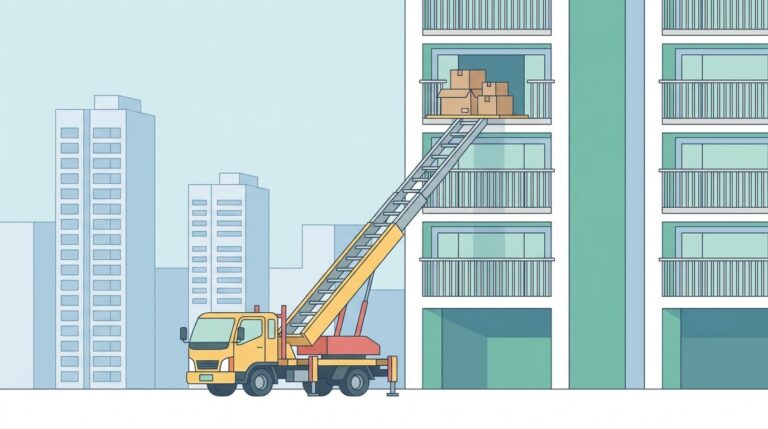
Moving High-Rise in Korea: Ladder Truck vs. Elevator Fees Guide
Phase 1: 공감 (Story-driven Opening)
안녕하세요! 매일한글 에디터입니다.
Picture this: You have just signed a lease for a dreamy high-rise apartment in Seoul, overlooking the glittering skyline just like in your favorite K-dramas (Because This Is My First Life or Hospital Playlist). You pack up your life, call a moving company for a full-pack move (pojang-isa), and celebrate with a cup of iced americano. But then, the moving crew arrives, looks up at your 15th-floor balcony, and asks: “사다리차 예약하셨어요? 아니면 엘리베이터 사용료 내셨어요?” (Did you book a ladder truck? Or did you pay the elevator fee?)
Suddenly, your heart skips a beat. You discover that in Korean high-rise apartment complexes, moving your furniture isn’t just about loading a truck. You often have to choose between renting an external hydraulic ladder truck (sadari-cha) or reserving the residential elevator with the management office—both of which come with separate, unexpected fees ranging from 100,000 to over 300,000 KRW!
Navigating this system in Korean can feel intimidating when you’re caught between a busy moving crew and a strict building manager. That is why we built this step-by-step survival guide based on real international residents’ experiences. By the end of this lesson, you will comfortably compare moving quotes, ask precise questions about ladder truck access, and negotiate building fees like a savvy local resident.
Phase 2: 핵심 표현 3선 심층 분석 (Top 3 Core Expressions)
1. 사다리차 사용이 가능한 층인가요? (Sadari-cha sayong-i ganeunghan cheung-ingayo?)
- Pronunciation: [sah-dah-ri-cha sah-yong-ee gah-neung-hahn cheung-een-gah-yoh?] (Think of ‘sadari’ like ‘safari’ with a ‘d’, and ‘cha’ like ‘char’.)
- Meaning: Literal: “Is this a floor where ladder truck use is possible?” | Nuance: “Can we bring in a ladder truck at this height/location, or are there physical obstacles?”
- K-Culture Moment: In modern Korean lifestyle vlogs or slice-of-life dramas, you often see enormous yellow crane trucks parking in tight apartment courtyard spaces to hoist refrigerators directly through window verandas.
- Editor’s Insight: Even if you live on the 8th floor, tall trees, narrow parking fire lanes, or underground parking ceilings can prevent a ladder truck from parking. Always ask this before booking one!
- Situation Spectrum: Casual ⚠️ | Semi-formal ✅ | Formal ✅
- 🤔 Think About It: In many Western countries, furniture moves through hallways or freight elevators. Why did Korea develop such a hyper-efficient external ladder-truck culture?
2. 엘리베이터 이용료는 얼마인가요? (Ellibe-iteo sayongnyoneun eolma-ingayo?)
- Pronunciation: [el-lee-beh-ee-ter sah-yong-nyoh-neun eol-mah-een-gah-yoh?]
- Meaning: Literal: “How much is the elevator usage fee?” | Nuance: “What is the building’s official reservation charge for moving via the elevator?”
- K-Culture Moment: Characters in K-dramas visiting the apartment Gwalli-samuso (management office) holding a clipboard, negotiating building deposits and elevator schedules.
- Editor’s Insight: Note the pronunciation change:
이용료is pronounced이용뇨due to nasalization rules. In Korea, elevators belong to the residents’ community, so using them for hours during a move incurs wear-and-tear fees set by the resident council.- Situation Spectrum: Casual 🚫 | Semi-formal ✅ | Formal ✅
- 🤔 Think About It: How does paying a communal fee to use an elevator in your own building reflect Korean apartment collective responsibility?
3. 방문 견적 받아보고 결정할게요. (Bangmun gyeonjeok badabogo gyeoljeonghalgeyo.)
- Pronunciation: [bahng-moon gyeon-jeok bah-dah-boh-goh gyeol-jeong-hahl-geh-yoh]
- Meaning: Literal: “I will decide after receiving an in-person visit estimate.” | Nuance: “I am not committing to your company yet; I want an on-site inspection first.”
- K-Culture Moment: An experienced homeowner dealing with competing moving service team leaders politely setting boundaries to get the best deal.
- Editor’s Insight: Never book an expensive Pojang-isa move solely through text photos! Korean moving companies often add unexpected surcharges on moving day if your actual belongings exceed photo estimates. An on-site quote (bangmun gyeonjeok) prevents this.
- Situation Spectrum: Casual 🚫 | Semi-formal ✅ | Formal ✅
- 🤔 Think About It: Why is a gentle postponement like “I will decide after…” preferred in Korean business etiquette over an outright refusal?
Phase 3: 교과서 한국어 vs 진짜 한국어 (Textbook vs. Real Korean)
Situation 1: Inquiring if you can use the elevator instead of a ladder truck
- 📖 교과서 한국어: 엘리베이터로 가구를 운반해도 됩니까? (Ellibe-iteoro gagureul unbanhaedo doemnikka?) – “May I transport furniture using the elevator?”
- 🗣️ 진짜 한국어: 혹시 사다리차 대신 엘리베이터 이사 가능한가요? (Hoksi sadari-cha daesin ellibe-iteo isa ganeunghangayo?) – “By any chance, can we do an elevator move instead of a ladder truck?”
- 💡 왜 다를까?: Native speakers use
엘리베이터 이사(elevator move) as a compound noun and soften the request with혹시(by any chance) rather than asking rigid textbook questions with운반(cargo transport).
Situation 2: Asking the moving company for price comparisons
- 📖 교과서 한국어: 비용의 차이를 가르쳐 주십시오. (Biyong-ui chai-reul gareuchyeo jusipsio.) – “Please teach me the difference in costs.”
- 🗣️ 진짜 한국어: 사다리차랑 엘리베이터 비용 차이가 얼마나 나요? (Sadari-charang ellibe-iteo biyong chai-ga eolmana nayo?) – “How much is the cost difference between the ladder truck and the elevator?”
- 💡 왜 다를까?: In spoken Korean,
가르쳐 주다sounds overly pedantic for price checks. Using conversational markers like~랑(and/with) and얼마나 나요?sounds natural and polite.
Phase 4: K-Culture 딥다이브 & 비언어적 매너 (Cultural Deep-Dive & Nunchi)
4-1. 눈치(Nunchi) & Management Office Etiquette
When you go to the apartment’s 관리사무소 (Gwalli-samuso / Management Office) to book the elevator:
1. The Polite Stance: Knock gently, open the door, and bow at a 30-degree angle. Do not demand immediate booking. Begin with: “안녕하세요, 이번에 OOO호로 이사 오게 된 입주민입니다.” (Hello, I am the new resident moving into unit OOO).
2. Protective Padding Request: When booking the elevator, ask if they provide or require 보양작업 (boyang-jageop)—the protective padded carpets inside the elevator walls. Showing you care about keeping communal property undamaged wins instant resident points.
3. The Drink Offering: It is a timeless Korean tradition to bring a box of energy drinks (like Bacchus or Vita500) to the security guards (Gyeongbi-ajeossi) and management staff before a noisy moving morning. This prevents complaints from neighbors!
4-2. The High-Rise Lifestyle & Moving Day Jajangmyeon
Over 60% of South Koreans live in high-density apartment complexes (apateu danji). Because high-rises are packed so closely, using a ladder truck requires precision coordination so it does not block the parking lot entrance. And once the last box is lifted through the veranda and the movers finish their job, there is one mandatory ritual: sitting on folded moving boxes on the floor and eating steaming bowls of Jajangmyeon (black bean noodles) with sweet-and-sour pork (Tangsuyuk).
Phase 5: 실전 롤플레이 시나리오 (Real-World Roleplay Scenario)
- Setting: Inside the apartment Management Office (관리사무소).
- Characters: Alex (Intermediate Korean Learner) & Manager Kim (Strict but helpful apartment manager).
- Alex: 🎭 [Politely knocking and bowing] 안녕하세요! 이번에 1204호로 이사 오게 되었는데요. (Annyeonghaseyo! Ibeone 1204-horo isa oge doeeonneundeyo. / Hello! I am moving into unit 1204.)
- Manager Kim: 🎭 [Looking over reading glasses] 아, 네! 반갑습니다. 이사 날짜가 언제예요? (A, ne! Bangapseumnida. Isa naljjaga eonjeyeyo? / Ah, yes! Welcome. When is your moving date?)
- Alex: 🎭 [Showing calendar on phone] 다음 주 토요일 오전인데요, 사다리차 사용이 가능한 동인가요? (Daeum ju toyoil ojeon-indeyo, sadari-cha sayong-i ganeunghan dong-ingayo? / Next Saturday morning. Is ladder truck use possible for this building?)
- Manager Kim: 🎭 [Checking the site plan] 1204호 라인은 화단이랑 나무 때문에 사다리차가 못 들어가요. 엘리베이터 쓰셔야겠네. (1204-ho raineun hwadan-irang namu ttaemune sadari-chaga mot deureogayo. Ellibe-iteo sseusyeoyagenne. / Ladder trucks cannot enter line 1204 due to flower beds and trees. You will have to use the elevator.)
- Alex: 🎭 [Nodding understandingly] 그렇군요. 그럼 엘리베이터 이용료가 얼마인가요? (Geureokgunyo. Geureom ellibe-iteo sayongnyoga eolma-ingayo? / I see. Then how much is the elevator usage fee?)
- Manager Kim: 🎭 [Hands an application form] 사용료는 15만 원이고, 미리 계좌이체 하셔야 예약 확정됩니다. (Sayongnyoneun siboman-won-igo, miri gyejwa-iche hasyeoya yeyak hwakjeongdoemnida. / The fee is 150,000 KRW, and you must do a bank transfer in advance to confirm the reservation.)
- Alex: 🎭 [Holding the paper with two hands] 네, 알겠습니다. 혹시 엘리베이터 보양재는 관리실에서 대여해 주시나요? (Ne, algesseumnida. Hoksi ellibe-iteo boyangjaeneun gwallisireseo daeyeohae jusinayo? / Understood. By any chance, does the office rent out elevator protective padding?)
- Manager Kim: 🎭 [Smiles warmly at Alex’s thoroughness] 에고, 꼼꼼하시네! 네, 이삿날 아침에 경비실에서 빌려드립니다. (Ego, kkomkkomhasine! Ne, isannal achime gyeongbisireseo billyeodeurimnida. / Wow, you are so meticulous! Yes, we lend them from the security office on moving day morning.)
🔀 Interactive Decision Point
Suppose Manager Kim tells you that another resident also booked the elevator for Saturday morning. What do you say?
- Option A: “제가 먼저 왔는데 그냥 제가 쓰면 안 돼요?” (Je-ga meonjeo wanneunde geunyang je-ga sseumyeon an dwaeyo? – I came first, can’t I just use it?)
- Option B: “그럼 혹시 오후 시간대로 변경해서 예약할 수 있을까요?” (Geureom hoksi ohu sigandaero byeongyeonghaeseo yeyakhal su isseulkkayo? – Then, could I change the reservation to an afternoon time slot?)
- Option C: “그럼 그냥 사다리차 억지로 부를게요.” (Geureom geunyang sadari-cha eokjiro bureulgeyo. – Then I’ll just force a ladder truck call anyway.)
-
Feedback:
- Option A [Bad]: Disregards communal harmony. In Korea, apartment schedules operate strictly by first-paid registration.
- Option B [Best]: Displays respectful problem-solving (Nunchi). Moving teams frequently shift schedules between morning (오전) and afternoon (오후) blocks.
- Option C [Risk]: High danger! If a ladder truck damages apartment landscape trees, you will be liable for costly restoration fines.
Phase 6: 10초 감정 섀도잉 드릴 (10-Second Emotion Shadowing Drill)
Practice matching these rhythm breaks (/) and emotional tone cues!
[😊 친절하고 싹싹하게 / Polite and Cheerful]- 저 이번에 / 12층으로 이사하는데 / 견적 문의 좀 드릴게요!
- (Jeo ibeone / sibi-cheung-euro isahaneunde / gyeonjeok muni jom deurilgeyo!)
- “I am moving to the 12th floor this time, so I’d like to ask for a quote!”
[🤔 신중하고 꼼꼼하게 / Thoughtful and Inquiring]- 사다리차가 나을까요, / 아니면 엘리베이터 예약이 / 더 저렴할까요?
- (Sadari-chaga naeulkkayo, / animyeon ellibe-iteo yeyag-i / deo jeoryeomhalkkayo?)
- “Would a ladder truck be better, or would reserving the elevator be cheaper?”
[🤝 정중하게 확답하기 / Courteous and Decisive]- 네, 확인 감사합니다! / 관리사무소에 / 엘리베이터 이용료 먼저 확인해 볼게요.
- (Ne, hwag-in gamsahamnida! / Gwalli-samusoe / ellibe-iteo sayongnyo meonjeo hwag-inhae bolgeyo.)
- “Yes, thank you for confirming! I will check the elevator fee with the management office first.”
Phase 7: K-Culture 미니 사전 (Key Vocabulary Dictionary)
- 포장이사 (Pojang-isa) | Full-Service Packing Move
- The gold-standard Korean moving system where movers wrap every spoon, disassemble wardrobes, transport everything, reassemble furniture, and even steam-clean the floors at your new home.
- 사다리차 (Sadari-cha) | Ladder Truck (Hydraulic Lift Truck)
- A specialized truck with an expandable ladder track that hoists large furniture through open veranda windows, common up to the 25th floor.
- 관리사무소 (Gwalli-samuso) | Apartment Management Office
- The administrative nerve center of Korean apartment complexes responsible for security, parking permits, elevator bookings, and building maintenance.
- 엘리베이터 사용료 (Ellibe-iteo Sayongnyo) | Elevator Moving Fee
- A mandatory fee paid to the apartment complex fund to cover excessive power use, elevator wear, and temporary resident inconvenience on moving day.
Phase 8: 여행자 & 거주자를 위한 생존 키트 (Survival Kit)
Top 3 Survival Expressions
- 방문 견적은 무료인가요? (Bangmun gyeonjeog-eun muryo-ingayo?)
- “Is the on-site quote free of charge?”
- Pro Tip: Almost all reputable Korean moving companies offer free home visits (무료 방문 견적). Never pay for a quotation visit.
- 이사 당일 추가 비용은 없죠? (Isa dang-il chuga biyong-eun eopjyo?)
- “There are no additional hidden costs on moving day, right?”
- Pro Tip: Confirm whether meal expenses (식대) or disposal fees (폐기물 스티커) are included in the quote.
- 엘리베이터 예약 완료했어요. (Ellibe-iteo yeyak wanryohaesseoyo.)
- “I have completed the elevator reservation.”
- Pro Tip: Inform your moving crew team leader at least 3 days in advance so they do not bring an unneeded ladder truck.
Editor’s Moving Note
- Compare prices easily using the Zimssa moving app download platform, where you can upload photos of your room and receive multiple competitive quotes from vetted movers.
- Verify building addresses and street widths beforehand on the Naver Map road view service to see if a ladder truck can physically enter the driveway.
Phase 9: “한 발 더 깊이” (Cultural Reflection Essay)
In South Korea, high-rise living is more than just architecture; it is a lesson in shared communal citizenship (공동체 의식). When you book an elevator for a move, you aren’t just paying a utility fee—you are compensating your neighbors for occupying one of the building’s vital vertical arteries during their morning commutes. In a culture where interpersonal consideration (배려) shapes daily life, coordinating your move through the building management office signals that you are entering the community as a thoughtful, respectful neighbor.
💬 Your Turn: In your home country, how do people usually move into high-rise apartments? Do you have external cranes, or do you reserve cargo lifts? Share your experience in the comments below!
Phase 10: FAQ & 흔한 실수 방지 (FAQ Schema)
Q: Which one is cheaper: a ladder truck or the elevator fee?
A: It depends on the floor and the building! For lower floors (2nd to 5th), elevator fees (usually 100,000–150,000 KRW) are often cheaper than ladder trucks (which start around 120,000–180,000 KRW). However, for very high floors, elevator fees can climb to 250,000–300,000 KRW, making ladder trucks faster and sometimes comparable in cost. Always compare both!
Q: Can ladder trucks reach every apartment floor in Korea?
A: No. Standard ladder trucks reach up to around the 20th–24th floor, while specialized high-altitude ladder trucks can reach the 27th floor. Beyond the 28th floor, virtually all moves must use the building’s freight or passenger elevator.
Q: Do I pay the elevator fee to the moving company or the management office?
A: You pay the elevator fee directly to the apartment’s 관리사무소 (Management Office) or their official bank account. Never pay this fee to the moving company unless they have agreed in writing to handle building fees on your behalf.
🚨 Common Mistakes (흔한 실수 TOP 3)
- Assuming all elevators are free to use: Moving without notifying the office can lead to security shutting off elevator access mid-move and imposing penalty fines. Always book at least 1–2 weeks ahead!
- Relying solely on phone photo quotes: If movers arrive and discover narrow staircases or unmentioned storage items, they may charge heavy on-site surcharges. Ask for 방문 견적 (on-site visit).
- Forgetting moving trash disposal: In Korea, you cannot throw away large furniture without municipal stickers (대형 폐기물 스티커). Ask the movers to place discarded furniture at the designated recycling area, then purchase stickers at the local community center (주민센터) or convenience store.
Phase 11: 액션 미션 & 참여 유도 (Action Missions)
- 🥉 Bronze Mission (Self Practice): Stand in front of your mirror and practice asking: “사다리차 사용이 가능한가요?” (Sadari-cha sayong-i ganeunghangayo?) smoothly three times.
- 🥈 Silver Mission (Social Sharing): Screenshot Phase 6’s Emotion Shadowing Drill, post it to your study story, and tag
@DailyHangulwith your audio recording. - 🥇 Gold Mission (Real-world Challenge): Next time you pass an apartment management office (관리사무소) or see a ladder truck in action, identify whether they are doing a 포장이사 (full-service move) or using elevator protection padding (보양작업)!
🎮 K-Culture Mission: Watch an episode of a Korean real estate or interior variety show (such as Where is My Home / 구해줘! 홈즈) and listen for how often hosts discuss 엘리베이터 유무 (elevator presence) and 사다리차 진입 여부 (ladder truck access)!
Phase 12: 인터랙티브 퀴즈 챌린지 (Quiz Challenge)
Q1. Situational Judgment:
You are moving into a 19th-floor apartment. The moving company quotes 200,000 KRW for a ladder truck, while the apartment management office charges 100,000 KRW for elevator use. However, the apartment courtyard has trees blocking balcony window access. What should you do?
* A) Book the ladder truck anyway and ask movers to cut tree branches.
* B) Book the elevator with the management office and inform the moving company.
* C) Carry all the furniture up the stairs by hand.
Q2. Fill in the Blank:
When asking for an in-person estimate from a moving company, you should request a “방문 ____” (Bangmun _____).
Q3. True or False:
In South Korea, moving into an apartment via the elevator is always free as long as you pay your monthly maintenance bills.
* (True / False)
👉 Click here to reveal the answers and explanations!
- Q1 Answer: B. If physical obstacles like trees or flowerbeds block access, a ladder truck cannot deploy safely. Reserving the elevator is the only viable method.
- Q2 Answer: 견적 (Gyeonjeok – estimate/quotation). Full term: 방문 견적 (Bangmun gyeonjeok).
- Q3 Answer: False. Most Korean apartments charge a designated moving fee (엘리베이터 이용료) to cover heavy communal wear and electricity during large moves.







