

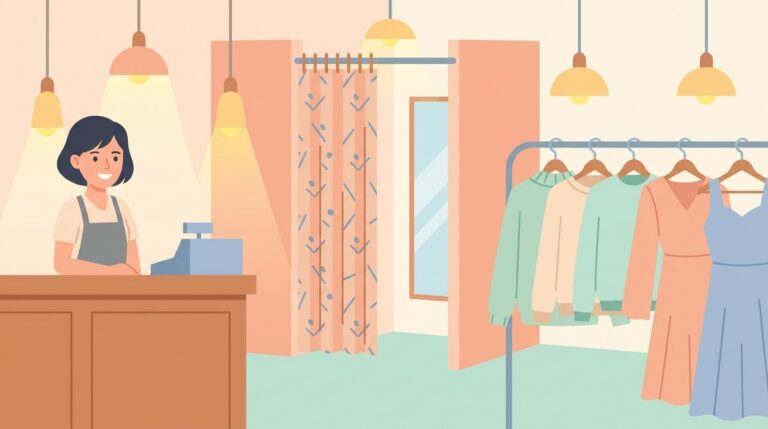
Phase 1: 공감 (Story-driven Opening)
안녕하세요! 매일한글 에디터입니다.
Picture this: You are exploring the cobblestone alleyways of Seongsu-dong—Seoul’s trendiest fashion district. You spot a minimalist indie boutique bathed in warm amber lighting. On the rack hangs an effortlessly chic oversized blazer, exactly like the one your favorite K-drama lead wore in Crash Landing on You. Excitedly, you slip into the fitting room, pull it on, and look into the mirror. It looks fantastic from the front, but when you button it up, your shoulders feel pinched and the waist is just a little too snug.
You step outside, eager to find a slightly bigger size. A smiling shop assistant approaches you and asks, “도와드릴까요? (Dowadeurilkkayo? / May I help you?)” Suddenly, your mind freezes. You want to say, “It’s a bit tight! Do you have a larger one?” but the Korean words vanish. You awkwardly tug at your sleeve, mumble “Small… big?” and end up leaving the boutique empty-handed, regretting that missed fashion moment all the way back to the subway station.
We have all been there! Shopping for clothes in another country can feel intimidating, especially in Korea where cuts and sizing standards differ from Western brands. Based on feedback from hundreds of our beginner students, navigating sizing issues is one of the top shopping anxieties. Today, you will master the exact phrase you need—“사이즈가 조금 작아요 (The size is a little small)”—so you can shop confidently, politely, and effortlessly anywhere in Seoul.
Phase 2: Core 3 Expressions In-Depth Analysis
1. 사이즈가 조금 작아요 (Saijeuga jogeum jagayo)
- Pronunciation: [Sai-jeu-ga jo-geum ja-ga-yo] (Think: “Sigh-zoo-gah joe-gum jah-gah-yo”—soft and rhythmic).
- Meaning: Literal: “Size is a little small.” / Real Nuance: “This fits just a bit too tight on me.”
- K-Culture Moment: Seen in romantic comedies whenever the lead character goes shopping before a high-stakes date or blind date.
- Editor’s Insight: In Korean communication, direct complaints can sound harsh. Adding “조금 (jogeum / a little)” acts as an emotional cushion. Even if a jacket barely zips up, saying it is “a little small” preserves a gentle, polite tone.
- Situation Spectrum: Casual ✅ | Semi-formal ✅ | Formal ⚠️
- 🤔 Think About It: In English, we often say, “This doesn’t fit me.” Korean speakers phrase it as “The size is small,” focusing on the object rather than personal blame. How does shifting focus away from yourself change how polite a sentence feels?
2. 한 치수 큰 거 있어요? (Han chisu keun geo isseoyo?)
- Pronunciation: [Han chi-su keun geo is-seo-yo] (Think: “Hahn chee-soo koon guh ees-suh-yo”).
- Meaning: Literal: “Is there one size bigger thing?” / Real Nuance: “Do you have this in one size up?”
- K-Culture Moment: Fashion vloggers in Dongdaemun asking shop owners for oversized street-style silhouettes.
- Editor’s Insight: “치수 (chisu)” is the native Korean word for garment sizing, while “사이즈 (saijeu)” is loanword English. You can swap them interchangeably: “한 사이즈 큰 거 있어요?” also sounds completely natural!
- Situation Spectrum: Casual ✅ | Semi-formal ✅ | Formal ✅
- 🤔 Think About It: Notice the word “거 (geo)”, which means “thing” or “item.” Casual spoken Korean frequently replaces long nouns with short functional words to keep speech light and quick.
3. 입어봐도 돼요? (Ibeobwado dwaeyo?)
- Pronunciation: [I-beo-bwa-do dwae-yo] (Think: “Ee-buh-bwah-doh dweh-yo”).
- Meaning: Literal: “Even if I try putting it on, is it okay?” / Real Nuance: “May I try this on?”
- K-Culture Moment: Essential before entering any fitting room in underground shopping malls like Express Bus Terminal (Goto Mall).
- Editor’s Insight: In Korea, many shops (especially budget boutiques) do not allow trying on white shirts, knitwear, or delicate silks to avoid makeup stains. Always asking this question first proves you have great manners (Nunchi).
- Situation Spectrum: Casual ✅ | Semi-formal ✅ | Formal ✅
- 🤔 Think About It: The construction “-도 돼요 (-do dwaeyo)” translates to “is it permissible?” Respecting shared store property is deeply rooted in communal Korean etiquette.
Phase 3: 교과서 한국어 vs 진짜 한국어 (Textbook vs. Real Korean)
Situation 1: Telling the clerk the jacket is too snug
- 📖 교과서 한국어 (Textbook): 이 옷은 나에게 너무 작습니다. (I oseun naege neomu jakseumnida. / This clothing is excessively small for me.)
- 🗣️ 진짜 한국어 (Real-life): 사이즈가 조금 작아요. (Saijeuga jogeum jagayo. / The size is a little small.)
- 💡 왜 다를까? Textbook phrases sound like an official military statement or a written manual. Real native speakers soften their observation using polite conversational endings (-아요/어요) and softeners like 조금 (jogeum).
Situation 2: Asking for a medium or large instead of a small
- 📖 교과서 한국어 (Textbook): 더 큰 치수를 저에게 주십시오. (Deo keun chisureul jeoege jusipsio. / Please hand me a bigger size.)
- 🗣️ 진짜 한국어 (Real-life): 혹시 한 치수 큰 거 있어요? (Hoksi han chisu keun geo isseoyo? / By any chance, do you have one size up?)
- 💡 왜 다를까? Demanding an item with “주십시오 (give me)” sounds bossy. Adding “혹시 (hoksi / by any chance)” instantly turns you into a sweet, considerate shopper whom staff love to assist.
Phase 4: K-Culture 딥다이브 & 비언어적 매너
4-1. 눈치 (Nunchi) & Body Language in the Fitting Room
- The Two-Handed Hold: When handing a garment back to the staff, hold it lightly with both hands or hold your forearm with your opposite hand. This micro-gesture signals respect.
- The Gentle Pinch: If you aren’t sure of your pronunciation, gently pinch the side seam or waistband with a slight apologetic smile while saying “사이즈가 조금 작아요 (Saijeuga jogeum jagayo).” The clerk will understand instantly.
- Footwear Respect: Korean fitting rooms usually have an elevated wooden step or a clean mat inside. Always slip off your outdoor shoes before stepping onto the mat!
4-2. Culture Code: The “Free Size” & “Face Cover” Mystery
- Understanding “Free Size” (프리사이즈): Many Korean indie brands sell one-size-fits-all tops and dresses labeled Free. In reality, Korean Free Size typically corresponds to an international US Small to Medium (around size 55 in Korean women’s sizing). Don’t feel discouraged if it doesn’t fit—Korean street fashion relies heavily on specific tailoring standards.
- The Iconic Face Cover (페이스커버): When trying on clothes, the clerk might hand you a thin non-woven fabric bag with an open bottom. This is a face cover! You pull it over your head like a hood before slipping on pullovers or tight necklines to prevent foundation and lip tint stains. Embracing this habit shows supreme retail etiquette in Seoul.
Phase 5: 실전 롤플레이 시나리오 (Real-Life Roleplay Scenario)
Setting: “Aura Studio”, a chic clothing store in Seongsu. Soft indie pop is playing, and neatly curated autumn coats line the racks.
Characters:
* Min-ji (Staff): A stylish, attentive boutique clerk wearing an oversized beige trench coat.
* You: A curious shopper looking for the perfect everyday jacket.
Turn 1
Min-ji: 어서 오세요! 천천히 구경하세요.
(Eoseo oseyo! Cheoncheonhi gugyeonghaseyo.)
“Welcome! Please take your time looking around.”
🎭 Smiles warmly and folds knits on a display table
Turn 2
You: 저기요, 이거 입어봐도 돼요?
(Jeogiyo, igeo ibeobwado dwaeyo?)
“Excuse me, may I try this on?”
🎭 Holds up a black leather jacket with both hands
Turn 3
Min-ji: 네, 탈의실은 이쪽이에요. 페이스커버 챙겨드릴게요!
(Ne, taruisireun ijjogieyo. Peiseukeobeo chaenggyeodeurilgeyo!)
“Yes! The fitting room is over here. Let me grab you a face cover!”
🎭 Guides you to the changing booth with a courteous gesture
Turn 4
You: 감사합니다!
(Gamsahamnida!)
“Thank you!”
🎭 Steps into the fitting room and tries on the jacket
Turn 5
Min-ji: 손님, 사이즈는 어떠세요? 잘 맞으세요?
(Sonnim, saijeuneun eotteoseyo? Jal majeuseyo?)
“How is the size, customer? Does it fit well?”
🎭 Waits politely outside the curtain
Turn 6
You: 음, 예쁜데… 사이즈가 조금 작아요.
(Eum, yeppeunde… saijeuga jogeum jagayo.)
“Um, it is pretty, but… the size is a little small.”
🎭 Steps out and slightly shrugs shoulder blades to show tension
Turn 7
You: 혹시 한 치수 큰 거 있어요?
(Hoksi han chisu keun geo isseoyo?)
“By any chance, do you have one size up?”
🎭 Points gently to the size tag on the collar
Turn 8
Min-ji: 네! 라지(L) 사이즈로 바로 가져다드릴게요. 잠시만요!
(Ne! Raji saijeuro baro gajyeodadeurilgeyo. Jamsimanyo!)
“Yes! I will bring you the Large right away. Just a moment!”
🎭 Nods enthusiastically and heads toward the stockroom
🔀 Interactive Decision Point
Suppose Min-ji returns and tells you: “죄송해요, 라지 사이즈는 품절이에요. (Sorry, Large is sold out).” What do you say?
- Option A: “싫어요, 다른 거 주세요! (Sireoyo, dareun geo juseyo! / I hate it, give me another!)”
- Feedback: ❌ Bad. Extremely blunt and impolite. “싫어요” sounds childish and confrontational.
- Option B: “아, 아쉽네요. 다른 옷도 둘러볼게요. (A, aswimneyo. Dareun otdo dulleobolgeyo. / Ah, that’s a pity. I’ll look around at other clothes.)”
- Feedback: 🌟 Best! Expresses realistic disappointment politely (아쉽네요) while showing appreciation for the store.
- Option C: “그냥 갈게요. (Geunyang galgeyo. / I’ll just leave.)”
- Feedback: ⚠️ Risk. Not necessarily vulgar, but sounds slightly cold and dismissive. Adding a small “감사합니다” softens it considerably.
Phase 6: 10초 감정 섀도잉 드릴 (10-Second Emotion Shadowing)
Practice reading these sentences aloud! Follow the rhythm pauses (/) and embody the emotion tag:
[🥺 Slightly shy & apologetic]
“저기요… / 사이즈가 / 조금 작아요.”
(Jeogiyo… / saijeuga / jogeum jagayo.)
Editor’s Rhythm Tip: Don’t rush “조금” (jogeum). Stretch it slightly like “jo-geum~” to sound endearing.-
[✨ Hopeful & curious]
“혹시… / 한 치수 / 큰 거 있어요?”
(Hoksi… / han chisu / keun geo isseoyo?)
Editor’s Rhythm Tip: Raise your intonation at “있어요?” just like asking a friendly question in English. -
[😊 Grateful & bright]
“입어볼게요, / 정말 / 감사합니다!”
(Ibeobolgeyo, / jeongmal / gamsahamnida!)
Editor’s Rhythm Tip: Land cleanly and firmly on “-다 (da)” with an energetic nod.
Phase 7: K-Culture 미니 사전 (Mini Dictionary)
-
프리사이즈 (Peurisaijeu)
- Meaning: One-size-fits-all (Free Size).
- Real-world usage: Common in Hongdae and Ewha street shops. If an item says Free, ask “이거 프리사이즈예요? (Is this Free Size?)” to know if other sizes exist.
- 피팅룸 / 탈의실 (Pitingnum / Taruisil)
- Meaning: Fitting room / Changing booth.
- Real-world usage: Both words are used interchangeably. Department stores often use 탈의실, whereas trendy lifestyle shops write 피팅룸 on the door signs.
- 페이스커버 (Peiseukeobeo)
- Meaning: Face cover (protective head pouch).
- Real-world usage: Offered before trying on shirts or sweaters. Put it on over your head before changing to protect delicate white fabrics from makeup.
- 교환 (Gyohwan)
- Meaning: Exchange.
- Real-world usage: If you bought something and realize at your hotel that it runs small, bring your receipt within 7 days and ask: “사이즈 교환돼요? (Can I exchange the size?)”.
Phase 8: 여행자를 위한 생존 키트 (Traveler’s Survival Kit)
Survival Phrases TOP 3
- “입어봐도 돼요?” (Ibeobwado dwaeyo?)
- Pro Tip: Never enter a fitting booth without checking with the staff first; some items are showcase-only.
- “사이즈가 조금 커요.” (Saijeuga jogeum keoyo.)
- Pro Tip: The opposite of today’s phrase! Use this if an item feels like a tent on you.
- “다른 색상 있어요?” (Dareun saeksang isseoyo?)
- Pro Tip: If you love the cut but dislike the shade, this phrase unlocks hidden color options kept in back stock.
Editor’s Travel Note
- Finding Boutiques: Skip generic search engines and install the Naver Map app navigation guide to uncover indie boutiques hidden inside Seongsu red-brick alleys and Hannam-dong hills.
- Tax Refunds on the Spot: Major shopping spots in Myeongdong and Dongdaemun offer instant tax refunds. Keep your physical passport handy and ask: “텍스 리펀 돼요? (Tekseu ripeon dwaeyo? / Do you offer tax refunds?)”.
- Fitting Room Rules: When entering the changing booth, step out of your shoes immediately on the perimeter step. Never step onto the changing floor mat in sneakers!
Phase 9: “한 발 더 깊이” (Cultural Deep Dive)
In Western retail culture, telling a clerk “This is too small” is treated as an objective, factual transaction. However, in Korean society, interpersonal interactions are wrapped in “쿠션어 (Cushion words)”—verbal pillows designed to cushion the impact of a negative assessment.
When you say, “사이즈가 조금 작아요 (The size is a little small),” the word 조금 is not strictly a mathematical measurement. It functions as an empathetic buffer. It whispers: “The garment is lovely, and the shop is wonderful; it’s simply that my body happens to need a tiny bit more room.” This protects the feelings (Gibun) of the person assisting you. By adopting these small linguistic cushions, you aren’t just memorizing grammar; you are embracing the warmth and reciprocal consideration at the heart of Korean life.
💬 Your Turn: What is your go-to polite phrase when something doesn’t fit while shopping in your home country? Share your experience in the comments below!
Phase 10: FAQ & Common Mistakes
Q: Can I try on clothes at Dongdaemun night markets?
A: At wholesale buildings (like DDP Fashion Mall or apM Luxe), trying on clothes is usually strictly forbidden because they cater to bulk buyers. However, retail buildings like Doota or Migliore have fitting rooms where you can ask, “입어봐도 돼요? (Can I try this on?)”.
Q: How do Korean women’s clothing sizes work compared to US/EU sizes?
A: Korea frequently uses numerical codes like 44 (XS / US 0-2), 55 (S / US 4), 66 (M / US 6-8), and 77 (L / US 10). If you are usually a US Medium, ask for “육십육 (66 / Yuk-sip-yuk)” or “라지 (Large)”.
Q: Can I return clothes if they do not fit after leaving the shop?
A: Yes, but keep the paper receipt (영수증 / yeongsujeung) and ensure tags are attached! Most Korean shops permit exchanges within 7 or 14 days, though some street stalls in Hongdae or subway malls operate on an “Exchange only, no refund (환불 불가)” policy.
🚨 Common Mistakes Warning Board
| Mistake | What Happens | Correct Action |
|---|---|---|
| 1. Saying “너무 작아요! (Neomu jagayo!)” with a frown | Sounds like you are complaining that their clothing is terribly made. | Use “조금 작아요 (Jogeum jagayo)” with a gentle, polite tone. |
| 2. Walking straight into a fitting room unannounced | Surprises the staff and can breach store policy on delicate clothes. | Catch the clerk’s eye, show the clothes, and ask “입어봐도 돼요?” |
| 3. Stepping into the fitting room with shoes on | Tracks street dirt onto white fabric mats; considered very disrespectful. | Take off your shoes on the step outside the curtain before stepping in. |
Phase 11: 액션 미션 & 참여 유도 (Action Missions)
- 🥉 Bronze Mission (Solo Vocal Drill): Stand in front of your mirror with your favorite jacket. Say out loud 3 times: “사이즈가 조금 작아요! 한 치수 큰 거 있어요?” until it rolls off your tongue smoothly.
- 🥈 Silver Mission (Social Share): Write down “사이즈가 조금 작아요” on a sticky note, take a snap next to your wardrobe, and post it to your Instagram stories tag-teaming your study buddies with the hashtag
#DailyHangulShopping. - 🥇 Gold Mission (Real Life Action): The next time you visit a Korean retail store (like SPAO, Topten, or an indie K-fashion boutique online/offline), use “입어봐도 돼요?” or type “사이즈 교환 가능한가요?” in customer support chat!
🎮 K-Culture Mission: Watch any shopping scene in a modern Korean drama (such as Business Proposal or True Beauty). Listen closely for the word “사이즈 (saijeu)” or “어울려요 (it suits you)”. Leave a comment telling us what show you caught it in!
Phase 12: 인터랙티브 퀴즈 챌린지 (Interactive Quiz)
Test what you learned today before you go shopping!
- Situation Judgment: You tried on a stylish sweater in Myeongdong, but the sleeves are tight. You want to ask for a size up without sounding rude. What do you say?
- A) 이 옷 이상해요. (I ot isanghaeyo.)
- B) 사이즈가 조금 작아요. 한 치수 큰 거 있어요? (Saijeuga jogeum jagayo. Han chisu keun geo isseoyo?)
- C) 큰 거 빨리 주세요. (Keun geo ppalli juseyo.)
- Fill in the Blank: Complete the polite question to ask permission before entering the changing booth:
- “저기요, 이거 ______ 봐도 돼요?” (Hint: Put on)
- True or False: In Korea, stepping onto the clean fitting room carpet with outdoor street shoes on is completely normal and acceptable. (True / False)
👉 Click to reveal answers & explanations!
- Answer: B. 사이즈가 조금 작아요. 한 치수 큰 거 있어요? is the golden combination of polite critique and clear inquiry. (A means “This clothes is weird”, C means “Give me big one fast!”).
- Answer: 입어 (Ibeo). The full sentence is “입어봐도 돼요? (May I try this on?)” from the verb 입다 (ipda / to wear).
- Answer: False! Always take off your shoes before stepping onto the fitting booth mat. Keeping shoes on is considered bad etiquette in Korean fitting rooms.







