

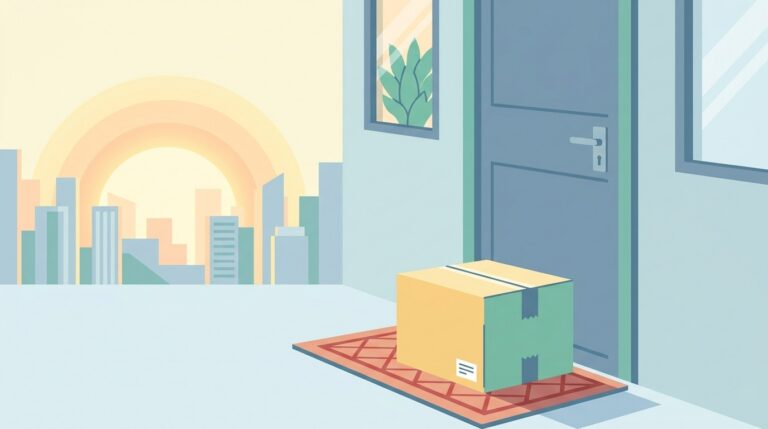
Master Korean Rocket Delivery Like a Local Friend: Your Stress-Free A2 Survival Guide
Phase 1: 공감 (Story-Immersive Opening)
안녕하세요! 매일한글 에디터입니다.
Imagine this: You have just unlocked the door to your cozy studio apartment (원룸 – wonrum) in Hongdae after a long flight. It is 10:45 PM. You open your suitcase, only to realize your international plug adapter is nowhere to be found, your travel-size shampoo exploded, and tomorrow morning brings your first day of Korean language classes! In most parts of the world, this is a midnight emergency that ruins your sleep. But your Korean roommate smiles casually, sips their iced Americano, and taps their phone screen: “걱정 마, 로켓 배송 시키면 내일 아침 7시 전에 와! (Geokjeong ma, roket baesong sikimyeon naeil achim ilgop-si jeone wa! – Don’t worry, if you order Rocket Delivery, it’ll arrive before 7 AM!)”
Welcome to Korea’s legendary delivery universe, where speed is practically an art form. Yet for many A2 beginners, looking at delivery notifications, deciphering courier texts, or telling the driver where to leave your package can feel like an intimidating exam. You might freeze up wondering: Do I need to sign something? What if they ring the bell while I’m sleeping? How do I say ‘leave it at my door’?
Take a deep breath! Over the past decade tutoring expats and travelers, I have guided hundreds of students through this exact moment. By the end of this guide, you will master the 3 essential survival phrases, navigate dawn drop-offs like a native Seoulite, and order your midnight essentials with zero stress.
Phase 2: 핵심 표현 3선 심층 분석 (Top 3 Core Expressions)
1. 문 앞에 놓아 주세요 (Mun ape no-a juseyo)
- Pronunciation: [Mun a-pe no-ah joo-seh-yo] (Think of ‘moon’ in English, followed by ‘ah-pay’, and ‘no-ah ju-say-yo’)
- Meaning: Literal: “Please put [it] in front of the door.” | Real Nuance: “Please leave the package at my doorstep (contactless drop-off).”
- K-Culture Moment: In K-Dramas like Hospital Playlist or Business Proposal, characters never wait hand-to-hand for daily parcels. Couriers simply drop items right outside the digital door lock, take a quick photo, and text the homeowner.
- Editor’s Insight: The marker ‘앞에’ (ape) means ‘in front of’. In Korea, contactless delivery is default. Adding ‘-주세요’ (-juseyo) creates the ideal polite level for customer-to-service interactions without sounding overly stiff.
- Situation Spectrum: Casual (⚠️ 문 앞에 둬 – friends only) | Semi-formal (✅ 문 앞에 놓아 주세요 – standard polite) | Formal (✅ 문 앞에 놓아 주시기 바랍니다 – app default text)
- 🤔 Think About It: In many Western countries, packages left outside apartment doors might risk theft. Why do Koreans leave valuable electronics outside doors with zero anxiety?
2. 오늘 밤 12시 전에 주문하면 내일 와요 (Oneul bam yeol-du-si jeone jumunhamyeon naeil wayo)
- Pronunciation: [Oh-neul bahm yul-doo-she jeo-neh joo-moon-ha-myeon neh-eel wah-yo] (Think of ‘oh-null’, ‘bam’ like bamboo, ‘yul-doo’ like 12, ‘wayo’ like ‘why-o’)
- Meaning: Literal: “If you order before 12 tonight, it comes tomorrow.” | Real Nuance: “Order before midnight to catch the dawn/next-day guarantee!”
- K-Culture Moment: Often heard among tired college students and office workers when planning breakfast meal prep or ordering hangover remedies late at night.
- Editor’s Insight: ‘-(으)면’ (-(eu)myeon) is the A2 grammar point for “if / when”. Pairing ‘전에’ (jeone – before) with time expressions is essential for tracking order deadlines.
- Situation Spectrum: Casual (✅ 12시 전에 시키면 내일 와) | Semi-formal (✅ 12시 전에 주문하면 내일 와요) | Formal (✅ 자정 전에 주문하시면 익일 배송됩니다)
- 🤔 Think About It: How does language reflect a society’s obsession with punctuality and hyper-efficiency?
3. 배송 조회 어떻게 해요? (Baesong johwae eotteoke haeyo?)
- Pronunciation: [Bae-song jo-hwae uh-ttuh-keh hae-yo] (Bae like ‘bagel’, song like ‘music track’, ‘uh-tuh-kay’ like ‘okay’ with a t-sound)
- Meaning: Literal: “Delivery inquiry how do [I]?” | Real Nuance: “How do I track my order/package?”
- K-Culture Moment: You’ll hear this when an expat friend asks a Korean buddy to help decipher tracking alerts on Coupang or Naver Shopping.
- Editor’s Insight: ‘조회’ (johwae) refers to checking official digital records. Whenever you want to ask how to do an action in A2 Korean, simply attach ‘어떻게 해요?’ (eotteoke haeyo?) to a noun.
- Situation Spectrum: Casual (⚠️ 조회 어떻게 해?) | Semi-formal (✅ 배송 조회 어떻게 해요?) | Formal (✅ 배송 조회를 어떻게 진행합니까?)
- 🤔 Think About It: Why does Korean combine Chinese characters (한자: 配送 照會) with pure Korean question forms for everyday app actions?
Phase 3: 교과서 한국어 vs 진짜 한국어 (Textbook vs. Real-Life Korean)
Situation 1: Asking the courier where they will leave the item
- 📖 교과서 한국어: 물품을 어디에 적치해 주시겠습니까? (Mulpumeul eodie jeokchihae jusigessseumnikka? – Where will you deposit the goods?)
- 🗣️ 진짜 한국어: 기사님, 문 앞에 두고 가주세요! (Gisanim, mun ape dugo gajuseyo! – Driver-nim, please leave it at the door and head off!)
- 💡 왜 다를까? Textbook Korean uses legalistic nouns like ‘적치’ (storage/deposit). Real Koreans address service specialists kindly as ‘기사님’ (gisanim) and use active, practical verbs like ‘두고 가다’ (leave and go).
Situation 2: Asking someone when their package arrives
- 📖 교과서 한국어: 당신의 화물이 어느 시각에 도착할 예정입니까? (Dangsinui hwamuri eoneu sigage dochakhal yejeong-imnikka? – At what hour is your cargo scheduled to arrive?)
- 🗣️ 진짜 한국어: 택배 언제 와요? (Taekbae eonje wayo? – When is the package coming?)
- 💡 왜 다를까? ‘당신’ (dangsin – you) and ‘화물’ (cargo) sound like a cold border-customs investigation! Real life uses the warm, universal noun ‘택배’ (taekbae – parcel/package) and simple present tense.
Phase 4: K-Culture 딥다이브 & 비언어적 매너 (Deep Dive & Non-Verbal Manners)
4-1. 눈치 (Nunchi) & Doorstep Etiquette
In Korea, delivery drivers work under tight minute-by-minute schedules.
* Never make them wait at the intercom: If you live in an apartment with a shared entrance (공동현관 – gongdong hyeongwan), always include your access code in the delivery notes (e.g., #1234호 호출 or 비번: 종1234*). Making a driver stand outside in the winter freeze ruins the delivery harmony!
* No face-to-face interaction needed: You do not need to open the door in pajamas to bow or offer a tip. Tips are non-existent in Korea. Instead, Koreans send a quick text: “감사합니다! (Gamsahamnida! – Thank you!)” upon receiving the drop-off confirmation photo.
4-2. Cultural Code: The ‘Ppalli-Ppalli’ (빨리빨리) Dawn Revolution
Rocket Delivery (로켓배송) by platforms like Coupang and Market Kurly transformed Korean lifestyle. The concept of 새벽배송 (Dawn Delivery) means ordering milk, groceries, or a phone case at 11:59 PM and waking up at 6:30 AM to find it outside your door. It stems from Korea’s high population density, rapid logistics networks, and the beloved Ppalli-Ppalli (fast-fast) spirit.
Phase 5: 실전 롤플레이 시나리오 (Real-World Roleplay Scenario)
Setting: 11:20 PM. You are in your room freezing because autumn turned to winter overnight. Your Korean friend, Min-woo (민우), is helping you order an electric blanket online.
- 민우 (Min-woo):
🎭 Looking at your shivering hands벌써 춥지? 지금 바로 전기장판 시키자! (Beolsseo chupji? Jigeum baro jeongijangpan sikija! – Cold already, right? Let’s order an electric blanket right now!) - You: 지금 시키면 언제 와요? (Jigeum sikimyeon eonje wayo? – If I order now, when does it arrive?)
- 민우 (Min-woo):
🎭 Swiping quickly on his phone screen로켓배송이라서 내일 새벽 7시 전에 도착해! (Roket-baesong-iraseo naeil saebyeok ilgop-si jeone dochakhae! – Because it’s Rocket Delivery, it arrives before 7 AM tomorrow dawn!) - You: 와, 진짜 빠르네요! 배송 메모에는 뭐라고 써요? (Wa, jinjja ppareuneyo! Baesong memoneuneun mworago sseoyo? – Wow, truly fast! What do I write in the delivery notes?)
- 민우 (Min-woo): 보통 ‘문 앞에 놓아 주세요’라고 적으면 돼. (Botong ‘mun ape no-a juseyo’rago jeogeumyeon dwae. – Usually, you can just write ‘please leave it in front of the door’.)
- You:
🎭 Typing carefully‘문 앞에 놓아 주세요’… 공동현관 비밀번호도 써야 해요? (‘Mun ape no-a juseyo’… gongdong-hyeongwan bimil-beonhodo sseoya haeyo? – ‘Please leave it at the door’… Do I also need to write the building entrance password?) - 민우 (Min-woo): 응, 꼭 써야 기사님이 들어오실 수 있어! (Eung, kkok sseoya gisanim-i deureo-osil su isseo! – Yeah, you must write it so the driver can come in!)
- You: 알겠어요! 주문 완료했어요. (Algesseoyo! Jumun wanryo-haesseoyo. – Got it! Order completed.)
🔀 Interactive Branching Choice
The next morning at 6:45 AM, you hear a soft rustle outside the door and receive a text alert with a picture of your box. What will you do?
* Choice A: Open the door immediately, run out into the hallway in socks, and shout “감사합니다 기사님!”
* Choice B: Wait quietly until you hear the elevator leave, open the door, take the box inside, and reply to the automated text with “감사합니다 수고하세요!”
* Choice C: Call the phone number on the delivery sticker immediately to ask if the blanket is properly tested.
Branch Feedback:
* Choice A (Risk): Awkward! The driver is likely sprinting down the stairs to hit their delivery quota; catching them off-guard might startle both of you.
* Choice B (Best!): Pure Korean native etiquette! Respects the driver’s speedy flow while expressing warm gratitude via message.
* Choice C (Bad): Calling the courier directly for product inquiries is considered inconsiderate; delivery drivers only handle transport, not manufacturer support!
Phase 6: 10초 감정 섀도잉 드릴 (10-Second Emotion Shadowing Drill)
Practice these natural rhythm pauses (/) with the designated emotion:
[⚡ Urgently & Excited]
“12시 전에 시키면 / 내일 아침에 바로 와요!”
(Yeol-du-si jeone sikimyeon / naeil achime baro wayo!)-
[😊 Polite & Calm]
“기사님, / 문 앞에 / 놓아 주세요!”
(Gisanim, / mun ape / no-a juseyo!) -
[🤔 Curious & Inquiring]
“배송 조회가 / 아직 안 떠요 / 어떻게 해요?”
(Baesong johwaega / ajik an tteoyo / eotteoke haeyo?)
Phase 7: K-Culture 미니 사전 (Mini Dictionary)
- 새벽배송 (Saebyeok-baesong) | Dawn Delivery
Delivery guaranteed between 12:00 AM and 7:00 AM. Essential for breakfast fresh foods or urgent morning needs. - 문 앞 (Mun ap) | Front of the door / Doorstep
The standard delivery drop-off location across almost all Korean residential buildings. - 운송장 번호 (Unsongjang beonho) | Tracking / Waybill Number
The 10 to 12 digit tracking number assigned to your parcel. You enter this on search portals to see item movements in real time. - 로켓와우 (Roket-wau) | Rocket Wow
Korea’s most prevalent delivery subscription membership, offering free shipping and free returns even for a single item.
Phase 8: 여행자를 위한 생존 키트 (Traveler’s Survival Kit)
Top 3 Survival Phrases
- 택배 문 앞에 두고 가주세요. (Taekbae mun ape dugo gajuseyo.)
Pro Tip: Save this in your notes app to copy-paste into courier text messages instantly. - 배송 조회 어디서 봐요? (Baesong johwae eodiseo bwayo?)
Pro Tip: Use this when asking your hotel concierge or Airbnb host about a missing parcel. - 오늘 주문하면 언제 도착해요? (Oneul jumunhamyeon eonje dochakhaeyo?)
Pro Tip: Ask shop owners in physical stores that offer home courier delivery.
Editor’s Travel Note
If you are traveling in Korea, download the [Coupang app installation guide for foreigners] or use [Trazy travel shopping support]. Remember: Korean apartment door passwords usually end with the star symbol (*) or hash key (#). When filling out delivery requests at guest houses, always write: 공동현관 비밀번호: #1234# to ensure your midnight package makes it right to your room door.
Phase 9: “한 발 더 깊이” (Cultural Reflection Essay)
Have you ever wondered why foreign tourists are stunned to see thousands of unattended cardboard boxes sitting quietly in Seoul apartment corridors all day long? This phenomenon reveals Korea’s profound communal trust and modern high-surveillance urban environment. In Korean culture, taking someone else’s parcel is not just illegal; it is a profound social taboo heavily monitored by endless CCTV cameras and black-box cameras on parked cars. When you receive a package outside your door, you are taking part in a unique web of communal security.
💬 Your Turn: Would you feel safe leaving your newly bought smartphone outside your door overnight in your home country? Share your thoughts below!
Phase 10: FAQ & 오해 방지 (FAQ Schema)
Q: Can foreigners without an Alien Registration Card (ARC) use Rocket Delivery?
A: Coupang usually requires a domestic Korean payment method and resident verification for full Rocket Delivery access. However, short-term travelers can use services like Baemin B-Mart (배민 B마트) with foreign credit cards, or ask their hotel front desk/Airbnb host to place an order on their behalf using their domestic account!
Q: What should I do if the delivery driver texts me a photo of a door that isn’t mine?
A: Do not panic! Immediately copy your tracking number (운송장 번호) and text back: “주소가 잘못된 것 같아요. 확인 부탁드립니다. (Jusoga jalmotdoen geot gatayo. Hwag-in butakdeurimnida. – I think the address is incorrect. Please check.)”
Q: Do I need to be awake at 6 AM to receive a Dawn Delivery?
A: Absolutely not! That is the beauty of 새벽배송 (Dawn Delivery). The courier does not ring the bell or knock to avoid waking residents. They drop the package quietly, take a verification photo, and leave.
🚨 Common Mistakes Warning Board
- Mistake: Answering the door with a loud shout when you hear rustling at 5 AM.
Correct Action: Let the driver work in peace. Check your doorstep after they take the photo and leave. - Mistake: Forgetting to input the entrance code for your villa (빌라).
Correct Action: Always specify the entrance passcode (공동현관 비번) in the secondary address field. - Mistake: Offering cash tips to the courier.
Correct Action: Korea has zero tipping culture. A polite text saying “감사합니다” is the best gift.
Phase 11: 액션 미션 & 참여 유도 (Action Missions)
- 🥉 Bronze Mission (Solo Practice): Read the 3 core phrases aloud 3 times each using our emotion shadowing guides.
- 🥈 Silver Mission (Social Media): Take a screenshot of your favorite Korean drama character receiving a parcel, and write in the caption:
문 앞에 놓아 주세요! - 🥇 Gold Mission (Real Life): Order something online to your accommodation in Korea and successfully retrieve it using the doorstep note!
- 🎮 K-Culture Mission: Watch an episode of a modern Seoul slice-of-life drama (like My Liberation Notes) and spot how many times cardboard boxes appear near the apartment entrance.
Phase 12: 인터랙티브 퀴즈 챌린지 (Interactive Quiz)
Test your A2 delivery instincts!
1. Situation Challenge:
You are ordering on a Korean app at 11:30 PM. What is the most natural sentence to request the driver to leave the package outside your door?
* (A) 물건을 문 앞에 버려주세요.
* (B) 문 앞에 놓아 주세요.
* (C) 집에 들어와서 식탁에 두세요.
2. Fill-in-the-Blank:
“오늘 밤 12시 전에 주문하면 내일 ____.” (If you order before midnight, it arrives tomorrow.)
* (A) 와요 (wayo)
* (B) 가요 (gayo)
* (C) 먹어요 (meogeoyo)
3. True or False Culture Check:
In Korea, it is considered polite to hand a 3,000 KRW tip to the Rocket Delivery driver when they drop off your dawn package. (True / False)
🔍 Click to Reveal Answers & Explanations!
- Answer: (B) 문 앞에 놓아 주세요.
Explanation: (A) uses ‘버려주세요’ which means ‘please throw away/trash it’! (C) asks them to enter your house and leave it on your dining table, which would be shocking! - Answer: (A) 와요.
Explanation: ‘와요’ (from 오다) means ‘it comes/arrives’. ‘가요’ means goes, and ‘먹어요’ means eats. - Answer: False.
Explanation: Korea does not have a tipping culture. Couriers move extremely fast on tight schedules, and tipping can cause confusion.







