

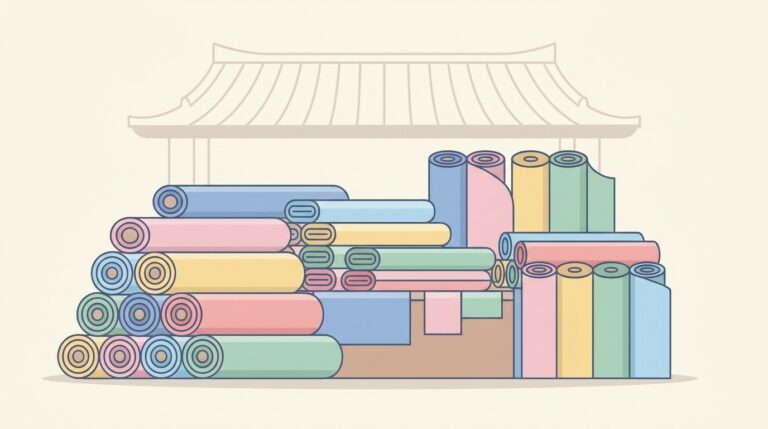
Conquering the Dongdaemun Fabric Labyrinth: The Ultimate C1 Korean Guide for Fashion Designers
Phase 1: Empathy (Story Immersion Opening)
안녕하세요! 매일한글 에디터입니다. Have you ever stepped inside the labyrinthine halls of Dongdaemun Shopping Complex (동대문종합시장), completely overwhelmed by towering stacks of textiles, whizzing transport carts, and fast-talking vendors? If you have ever dreamt of producing a collection in Seoul or sourcing premium Korean textiles for your independent label, you already know the stakes. Walking down the dense aisles of Building D without the right trade terminology feels daunting. You want to request fabric samples without being dismissed as a casual tourist, inquire about batch dye consistencies, and negotiate minimal cut quantities with professional poise. As your trusted cultural navigator with a decade of mentoring international designers in Seoul, I have distilled this C1-level field manual from real masterclass case studies. By mastering authentic industry vernacular today, you will transition from a hesitant visitor into a respected peer whom wholesale merchants take seriously.
Phase 2: Core Expressions in Depth
1. 스와치 좀 챙겨갈 수 있을까요? (Seuwachi jom chaenggyeogal su isseulkkayo?)
- Pronunciation: Seu-wa-chi jom chaeng-gyeo-gal su i-sseul-kka-yo? (Think of ‘swatch’ pronounced with an energetic Korean cadence: seu-wah-chee, rolling effortlessly into jom like ‘chum’).
- Meaning: Literal: “Could I take a swatch?” | Industry Nuance: “May I respectfully take a sample swatch card to evaluate for production?”
- K-Culture Moment: In the fashion-industry drama Record of Youth (청춘기록), young designers swiftly weave through market corridors, polite yet razor-sharp, asking vendors for fabric swatches while keeping their portfolios tucked underarm.
- Editor’s Insight: Do not say “샘플 주세요” (Please give me a sample), which sounds vague or retail-oriented. The trade loanword 스와치 (swatch) paired with the verb 챙기다 (to collect / pack / take care of) signals that you understand wholesale protocol.
- Situation Spectrum:
- Casual (반말): 🚫 스와치 챙겨도 돼? (Too rude for merchants)
- Semi-formal (존댓말): ✅ 스와치 좀 챙겨갈 수 있을까요? (Ideal and professional)
- Formal (격식체): ⚠️ 스와치를 수령해도 되겠습니까? (Overly bureaucratic)
- 🤔 Think About It: Why does the Korean wholesale industry prefer nuanced loanwords like 스와치 over native terms like 견본? How does specialized jargon delineate insider status in your native language?
2. 이 원단 탕 차이 심한 편인가요? (I wondan tang chai simhan pyeon-ingayo?)
- Pronunciation: Ee won-dan tang cha-ee shim-han pyeon-ing-ga-yo? (Rhyme tang with the clean stop of ‘tongue’, chai like ‘chai tea’).
- Meaning: Literal: “Is the vat difference severe for this fabric?” | Industry Nuance: “Does this fabric exhibit noticeable dye lot variation between production batches?”
- K-Culture Moment: Remember high-stakes design competition reality shows where contestants inspect rolls under fluorescent lighting, sweating over mismatched panels before runway critiques? This is the exact phrase they utter.
- Editor’s Insight: 탕 (Tang) stems from the Sino-Korean term for a dyeing vat (湯). In textile manufacturing, each dye bath yields slight hue discrepancies. Asking about 탕 차이 instantly tells the merchant you are considering bulk production, not just making a single dress.
- Situation Spectrum:
- Casual: 🚫 이거 탕 차이 심해? (Impolite)
- Semi-formal: ✅ 이 원단 탕 차이 심한 편인가요? (Natural industry standard)
- Formal: ✅ 해당 원단의 로트별 색상 편차가 큰 편입니까? (Appropriate for formal corporate sourcing meetings)
- 🤔 Think About It: Korean craftspeople value consistency and transparency. How does acknowledging technical manufacturing flaws upfront foster commercial trust (신뢰) in Korean merchant culture?
3. 샘플감으로 한 야드만 끊어주실 수 있나요? (Saempeulgam-euro han yadeuman kkeunheojusil su 있nayo?)
- Pronunciation: Saem-peul-gam-eu-ro han ya-deu-man kkeun-eo-ju-sil su in-na-yo? (Kkeun-eo sounds like cracking a crisp stick: kkeun-nuh).
- Meaning: Literal: “Could you cut just one yard for sample fabric?” | Industry Nuance: “Could you please cut a single sample yard for prototype development?”
- K-Culture Moment: Behind-the-scenes vlogs of K-pop stylists scouring Dongdaemun at 2:00 PM show them negotiating tiny sample cuts before dressing superstar idols for world tours.
- Editor’s Insight: Wholesale vendors survive on volume (롤 – rolls). Selling a single yard is technically a favor and often a net loss. By specifying 샘플감 (sample-use material) and using the verb 끊다 (to cut / sever yardage) rather than 자르다, you show legitimate production intent.
- Situation Spectrum:
- Casual: 🚫 한 마만 잘라줘. (Disrespectful to older shop owners)
- Semi-formal: ✅ 샘플감으로 한 야드만 끊어주실 수 있나요? (Polite, humble, effective)
- Formal: ⚠️ 시제품 제작용으로 1야드 재단을 요청드립니다. (Too stiff for wholesale stalls)
- 🤔 Think About It: In your culture, is purchasing sub-minimum orders seen as a right or a courtesy? How does the linguistic framing of a transaction alter seller willingness?
Phase 3: Textbook Korean vs Real Korean
Situation 1: Inquiring about fabric sample swatches
- 📖 교과서 한국어 (Textbook): 천 샘플을 조금 주실 수 있습니까? (Cheon saempleul jogeum jusil su isseumnikka? – Could you give me a little fabric sample?)
- 🗣️ 진짜 한국어 (Real-World): 사장님, 이 라인 스와치 하나 뜯어가도 될까요? (Sajangnim, i rain seuwachi hana tteudeogadao doelkkayo? – Boss, may I tear off one swatch from this line?)
- 💡 왜 다를까?: Fabric swatches in Dongdaemun are frequently stapled to rings or pinned in layers. Insiders say 뜯어가다 (to detach/tear off gently) because it mirrors the actual physical action of retrieving the swatch from the display rack.
Situation 2: Asking if the fabric is in immediate stock
- 📖 교과서 한국어 (Textbook): 이 원단의 재고가 창고에 있습니까? (I wondan-ui jaegoga changgo-e isseumnikka? – Is the inventory of this fabric in the warehouse?)
- 🗣️ 진짜 한국어 (Real-World): 이거 지금 매장에 당겨올 수 있어요, 아니면 공장 발주 넣어야 돼요? (Igeo jigeum maejang-e danggyeool su isseoyo, animyeon gongjang balju neoeoya dwaeyo? – Can you pull this to the booth today, or do we need to place a factory order?)
- 💡 왜 다를까?: Seasoned buyers distinguish between items physically pulled from nearby inventory depots (당겨오다) and mill re-orders (발주 넣다). This demonstrates deep operational literacy.
Phase 4: K-Culture Deep Dive & Non-Verbal Manners
4-1. 눈치 (Nunchi) & Market Physicality
- The Clipboard & Swatch Bag Aura: Never enter Dongdaemun looking like a lost sightseer. Bring a large neutral tote bag and a structured notebook or binder. Hold the swatch rings with two hands and avoid letting fabric edges drag on the narrow floor aisles.
- Timing Your Approach: Peak morning hours (9:00 AM – 11:30 AM) are frantic as vendors dispatch parcels to manufacturing districts like Seongsu-dong and Sindang-dong. If you approach an owner while they are scribbling invoices (장끼), stand back silently, offer a modest nod, and wait until their pen rests.
- Touch Etiquette: Do not aggressively yank fabrics. Stroke the surface with the back of your hand first to check hand-feel (터치감), signaling professional tactile appraisal rather than casual curiosity.
4-2. The Dongdaemun Fast-Fashion Ecosystem
Dongdaemun is the beating heart of Korea’s dynamic fashion cycle. Unlike Western fashion capitals where collections take six to nine months, Seoul operates on an astonishing two-week turn cycle. A design conceptualized on Monday can be cut on Tuesday, sewn in an alley atelier in Changsin-dong on Wednesday, and retailed on Saturday night. Understanding this lightning-fast supply chain helps you appreciate why merchants value decisiveness, clear communication, and precise technical vocabulary.
Phase 5: Real-World Roleplay Scenario
Setting: The buzzing 2nd floor of Dongdaemun Shopping Complex Building D. Rolls of woven linens and dense cotton twills tower toward the ceiling. Character: 사장님 (Mr. Park, 58, a seasoned textile merchant with reading glasses resting on his nose, holding a calculative yet warm gaze).
- You: 안녕하세요, 사장님! 매대 앞에 걸린 린넨 혼방 라인 좀 보고 싶은데요. (Annyeonghaseyo, sajangnim! Maedae ape geollin rinnen honbang rain jom bogo sipeundeyo. / 🎭 Greeting respectfully with a 30-degree bow, pointing toward the hanging sample collection.)
- 사장님: 어, 그래요. 그쪽 줄이 이번 S/S 시즌에 반응 제일 좋아. (Eo, geuraeyo. Geujjok juri ibeon S/S sijeun-e baneung jeil joa. / 🎭 Pushing his glasses up, observing your serious demeanor.)
- You: 터치감이 생각보다 탄탄하네요. 혹시 이거 바이오 워싱 들어간 건가요? (Teochigami saenggakboda tantanhaneyo. Hoksi igeo baio wosing deureogan geongayo? / 🎭 Stroking the edge of the fabric with your knuckles, testing the drape.)
- 사장님: 맞아요, 학생. 바이오 가공 두 번 돌려서 세탁해도 수축 거의 없어. (Majayo, haksaeng. Baio gagong du beon dollyeoseo setakhaedo suchuk geoui eopseo. / 🎭 Nodding approvingly at your technical query.)
- You: 컬렉션 메인 원단으로 고려 중인데, 탕 차이는 심하지 않은 편이죠? (Keollekshyeon mein wondan-euro goryeo jung-inde, tang chaineun simhaji aneun pyeon-ijyo? / 🎭 Speaking with measured, professional pacing.)
- 사장님: 염색 공장이 탄탄해서 탕은 거의 일정해요. 리오더 들어가도 색 안 튀어. (Yeomsaek gongjang-i tantanhaeseo tang-eun geoui iljeonghaeyo. Riodeo deureogado saek an twieo. / 🎭 Pulling out his vendor ledger to show batch consistency.)
- You: 다행이네요. 패턴 떠보려고 하는데, 샘플감으로 네이비 2야드만 끊어주실 수 있을까요? (Dahaeng-ineyo. Paeteon tteoboryeogo haneunde, saempleugam-euro neibi du yadeuman kkeunheojusil su isseulkkayo? / 🎭 Pulling out your notebook, speaking with humble confidence.)
- 사장님: 원래 커팅 잘 안 해주는데, 디자이너 양반 열정이 보이네. 2야드 준비해 줄게요! (Wonrae keoting jal an hae-juneunde, dijaineo yangban yeoljeong-i boine. Du ya-deu junbihae julgeyo! / 🎭 Smiling genuinely, grabbing his measuring yardstick and heavy tailor shears.)
🔀 Interactive Decision Point
How do you respond when the vendor confirms your sample cut?
- Option A: “깎아주시면 안 돼요? 샘플인데 너무 비싸요.” (Can’t you give me a discount? It’s just a sample, so it’s too expensive.)
- Option B: “감사합니다, 사장님! 명함 한 장 주시면 메인 오더 넣을 때 바로 연락드릴게요.” (Thank you so much, Boss! If you could give me your business card, I will contact you directly when placing the main bulk order.)
- Option C: “카드 결제 되죠? 부가세 영수증도 끊어주세요.” (Credit card works, right? Issue a VAT tax receipt too.)
Feedback Breakdown:
* Option A (Bad): Immediate rapport killer. Sample cuts already represent operational overhead for merchants. Demanding discounts on single yards marks you as an inconsiderate retail consumer.
* Option B (Best): Perfect industry etiquette. Exchanging business cards (명함) validates your professional identity and confirms future high-volume purchasing intent, making the vendor glad they cut fabric for you.
* Option C (Risk): While legally valid, small wholesale sample cuts are overwhelmingly settled via quick cash or instant mobile bank transfer (계좌이체). Forcing card terminals for single-yard cuts at wholesale counters can irritate busy merchants.
Phase 6: 10-Second Emotion Shadowing Drill
Listen carefully to the rhythm and master these three emotional cadences:
[🧐 Professional & Inquiring]
이 원단 / 수축률이 / 어떻게 되나요? / (I wondan / suchungnyuri / eotteoke doenayo? / What is the shrinkage rate / of this fabric?)[🤝 Polite & Business-Focused]
샘플감 먼저 보고 / 반응 좋으면 / 롤 단위로 / 뺄게요. / (Saempleugam meonjeo bogo / baneung joeumyeon / rol dan-wiro / ppaelkkeyo. / I’ll inspect the sample cut first / and if customer response is positive / I’ll order by the roll.)[😊 Grateful & Relationship-Building]
사장님, / 스와치 챙겨주셔서 감사합니다! / 메인 때 / 다시 올게요! / (Sajangnim, / seuwachi chaenggyeojusyeoseo gamsahamnida! / Mein ttae / dasi olgeyo! / Boss, / thank you for letting me take swatches! / I’ll be back / for the main production run!)
Phase 7: K-Culture Mini Dictionary
- 스와치 (Seuwachi) | Fabric Swatch
Small fabric cuttings attached to cardstock displaying fabric composition, weight, and color range. Essential currency for fashion designers in Dongdaemun. - 야드 / 마 (Yadeu / Ma) | Yard / Traditional Ma
Textile measurement units (1 yard ≈ 91.4 cm; 1 마 is traditionally equivalent). In Dongdaemun, “야드” and “마” are used interchangeably when cutting woven yardage. - 탕 (Tang) | Dye Lot / Dye Bath
Refers to single-batch chemical vat dyeing. Asking about “탕 차이” prevents catastrophic color panel mismatches in production. - 식서 (Sikseo) | Selvedge / Grainline
The woven finished edge running lengthwise down fabric rolls. Essential when discussing fabric orientation and pattern cutting layout with patternmakers.
Phase 8: Traveler’s Survival Kit
Top 3 Survival Phrases
- 계좌이체로 보내드려도 될까요? (Gyejwa-ichereon bonaedeuryeodo doelkkayo?)
Can I send the payment via bank transfer?
Pro Tip: Wholesale stalls prefer immediate mobile transfers over credit cards for small fabric cuttings. - 이 혼용률이 어떻게 돼요? (I honyongnyuri eotteoke dwaeyo?)
What is the fiber composition ratio of this material?
Pro Tip: Essential for checking cotton, polyester, and elastane blends before designing apparel care labels. - 스와치에 적힌 번호로 연락드리면 되나요? (Seuwachie jeokhin beonhoro yeollakdeurimyeon doenayo?)
Should I reach out to the phone number written on the swatch?
Pro Tip: Establishes your direct sourcing pipeline without needing to revisit the stall in person.
Editor’s Travel Note
Before heading to the market, make sure you complete your setup on the Naver Map navigation app to save Building A, B, C, and D pins beforehand, as GPS signals can drop significantly inside the dense subterranean floor levels. Also install the Kakao T taxi hailing app if you intend to transport bulky sample rolls back to your workspace. Keep at least 50,000 KRW in crisp cash in your wallet for small swatch ring fees or single-yard processing cuts.
Phase 9: “One Step Deeper” (Reflective Question)
Traditional Korean commerce is fundamentally underpinned by 정 (Jeong)—an intangible bond of mutual human warmth, consideration, and reciprocity. In wholesale spaces like Dongdaemun, transactions are not purely cold capital exchanges; they are long-term collaborative partnerships between artists and material suppliers. When a merchant agrees to cut a single yard of fabric for you, they are essentially taking a financial gamble on your talent and creative future. They treat you with relational faith, hoping your garments succeed on the global stage.
💬 Your Turn: How does the relationship between textile merchants and designers operate in your country? Do suppliers evaluate your personal passion, or is it strictly governed by formal minimum contracts? Share your insights in the comments below!
Phase 10: FAQ & Avoiding Misunderstandings
Q: Can I buy swatches for free, or do I have to pay for them?
A: In Dongdaemun, taking one or two basic card swatches (스와치) is generally free of charge if you are an industry practitioner or design student. However, thick sample books, high-end fur/leather collections, or heavily embroidered lace swatches carry a deposit fee ranging between 3,000 KRW and 10,000 KRW, which is typically refunded upon your first main fabric order.
Q: What should I do if a vendor seems impatient or curt?
A: Do not take it personally. Dongdaemun merchants juggle hundreds of phone orders, factory deliveries, and motorcycle freight couriers (오토바이 퀵) simultaneously. Greet them briskly, ask clear technical questions without wavering, and show appreciation for their time. Your concise competence will soften their demeanor.
Q: What is the minimum cut if a merchant refuses to sell a single yard?
A: Standard wholesale protocol often stipulates a 3-yard to 5-yard minimum for high-demand textiles if they cut directly from a fresh roll (신규 롤). If they firmly refuse a 1-yard cut, politely ask: “그럼 짜투리 원단 남은 거 있을까요?” (Do you have any leftover remnants or end-cuts available?).
🚨 Common Mistakes Warning Board
- Mistake: Shouting “얼마예요?” (How much is this?) from outside the stall while casually pointing at random bolts.
Correct Action: Step inside the aisle space, point to the exact fabric swatch code, and ask: “야드당 단가가 어떻게 되나요?” (What is the unit price per yard?). - Mistake: Unrolling bolts displayed on shelves without asking permission.
Correct Action: Always ask: “이거 한번 펼쳐봐도 될까요?” (May I spread this out to check it?). - Mistake: Wandering in on Sunday afternoons.
Correct Action: Remember that Dongdaemun Shopping Complex fabric sections close on Sundays, and wholesale booths wrap up their workday by 4:00 PM on weekdays.
Phase 11: Action Missions & Engagement
- 🥉 Bronze Mission (Solo Practice): Stand in front of your mirror and practice reciting: “샘플감으로 한 야드만 끊어주실 수 있나요?” five times with an upright posture and confident eye contact.
- 🥈 Silver Mission (Social Connection): Write your top three desired fabric names in Korean (e.g., 린넨, 실크 공단, 코튼 트윌) on your Instagram Story and tag @DailyHangul with your design mood board.
- 🥇 Gold Mission (Field Mastery): Visit Dongdaemun Shopping Complex Building C or D, find one fabric swatch you love, politely obtain it using today’s exact phrasing, and collect the merchant’s business card.
🎮 K-Culture Mission: Watch an episode of a fashion-centric Korean drama or a Seoul Fashion Week backstage documentary on YouTube. Note how many times you hear industry words like 오더 (order), 가봉 (basting/fitting), or 원단 (fabric)!
Phase 12: Interactive Quiz Challenge
Test your real-world readiness for the Dongdaemun fabric market:
- Situational Judgment: You want to check whether your garments will maintain color uniformity across different production batches. Which question should you ask?
- A) 이 원단 빨면 줄어드나요?
- B) 이 원단 탕 차이 심한 편인가요?
- C) 이 원단 단가가 왜 이렇게 비싸요?
- Fill-in-the-Blank: 사장님, 메인 오더 넣기 전에 패턴 제작용으로 (____) 1야드만 끊어주실 수 있을까요?
- A) 식서감
- B) 부자재
- C) 샘플감
- True / False Cultural Nuance: In Dongdaemun Fabric Market, paying for single-yard sample cuts with large commercial credit cards is the most courteous and preferred payment method.
- [ ] True
- [ ] False
🔍 Click here to reveal Answers & Explanations
- Correct Answer: B | Explanation: 탕 차이 refers specifically to dye vat color variations across production lots, which is crucial for garment uniformity.
- Correct Answer: C (샘플감) | Explanation: Specifying that your cut is for 샘플감 (sample material) contextualizes your small yardage order within a professional prototyping workflow.
- Correct Answer: False | Explanation: Wholesale vendors absorb administrative processing fees and loss of inventory on small sample cuttings. Immediate bank transfers (계좌이체) or cash payments are far more appreciated.







