

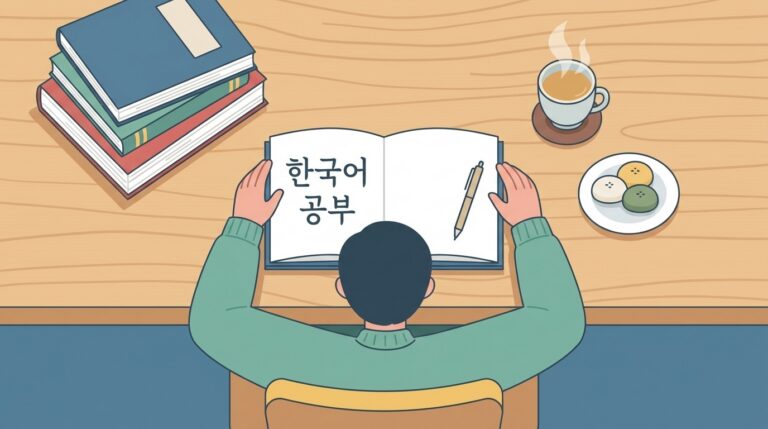
Phase 1: Empathy (Story-Driven Opening)
안녕하세요! 매일한글 에디터입니다. (Hello! I am your Daily Hangul editor.)
If you have ever watched K-dramas like Crash Course in Romance or Sky Castle, you know that exam season in South Korea is unlike anything else in the world. Imagine quiet streets suddenly alive at 6:00 AM, temples crowded with parents offering three thousand bows, and high school gates surrounded by junior students banging pots and shouting support. In Korea, test-taking is not just an individual task; it is a full-throttle community marathon fueled by passion, high expectations, and gallons of warm barley tea.
Now imagine your Korean friend, coworker, or favorite idol is preparing for a major test like the university entrance exam (수능, Suneung) or college midterms. You want to offer comfort, but translating “Good luck!” literally from your native language often sounds awkward, distant, or surprisingly formal. As a Korean language educator with over ten years of coaching learners, I have watched countless beginners accidentally say stiff phrases that made their Korean buddies chuckle rather than feel supported. This guide will teach you the exact warm, natural expressions real Koreans text and whisper when it matters most, giving you the cultural confidence of a true local insider.
Phase 2: Core Expressions Deep Dive
1. 시험 잘 봐! (Siheom jal bwa!)
- Pronunciation: Si-heom jal bwa (Think of “she-hum” + “jahl” like the first half of jalapeno + “bwah” like the start of voilà).
- Meaning: Literal: “See the test well!” | Actual Nuance: “Do great on your exam! / Good luck on your test!”
- K-Culture Moment: In high school dramas, this is the classic line whispered by your desk partner while slipping a chocolate milk carton onto your notebook right before the supervisor enters.
- Editor’s Insight: In Korean, the verb for taking an examination is actually 보다 (boda, to see). Therefore, wishing someone to “see it well” means hoping every question they set their eyes upon turns out to be easy and accurate!
- Situation Spectrum: Casual (시험 잘 봐) ✅ | Semi-formal (시험 잘 봐요) ✅ | Formal (시험 잘 보세요) ✅
- 🤔 Think About It: Why does Korean link “seeing” an exam with “taking” an exam? How does your native language conceptualize the physical act of testing?
2. 파이팅! / 화이팅! (Paiting! / Hwaiting!)
- Pronunciation: Pai-ting or Hwai-ting (Sounds like “pie-ting” or “why-ting” with a crisp, punchy rhythm).
- Meaning: Literal: “Fighting!” | Actual Nuance: “You got this! / Let’s go! / Hang in there!”
- K-Culture Moment: K-Pop groups huddling backstage with their hands stacked in the center right before an album comeback showcase or survival program audition.
- Editor’s Insight: Borrowed from the English word “fight,” this iconic Konglish phrase carries zero violent meaning. It is pure kinetic encouragement, used across all age groups from kindergarteners to corporate boardrooms.
- Situation Spectrum: Casual ✅ | Semi-formal ✅ | Formal ⚠️ (In very solemn or formal contexts, opt for 힘내세요 [Himnaeseyo]).
- 🤔 Think About It: Is there a single word in your language that can instantly convey empathy, adrenaline, and team solidarity all at once?
3. 찍는 것도 다 맞아라! (Jjingneun geotdo da maj-ara!)
- Pronunciation: Jjing-neun geot-do da ma-ja-ra (“Jjeeng-noon” + “gut-dough” + “dah” + “mah-jah-rah”).
- Meaning: Literal: “May even everything you randomly guess hit the bullseye!” | Actual Nuance: “May all your lucky guesses be 100% correct!”
- K-Culture Moment: Friends handing out toy plastic forks or small axes wrapped in bright cellophane on the morning of nationwide examinations.
- Editor’s Insight: The verb 찍다 (jjikda) means to poke, stamp, or chop—and in student slang, it means guessing blindly on a multiple-choice bubble sheet. This warm wish shows you care even if your friend didn’t have time to study every chapter.
- Situation Spectrum: Casual ✅ | Semi-formal 🚫 | Formal 🚫
- 🤔 Think About It: In many cultures, guessing on a test is viewed with shame. Why does Korean culture turn guessing into a humorous, loving blessing between peers?
Phase 3: Textbook Korean vs. Real Korean
Situation 1: Right before they walk into the exam room
- 📖 교과서 한국어: 행운을 빕니다. (Haeng-un-eul bimnida. – I wish you good fortune.)
- 🗣️ 진짜 한국어: 긴장하지 말고 평소대로 해! (Gin-jang-ha-ji mal-go pyeong-so-dae-ro hae! – Don’t be nervous, just do what you normally do!)
- 💡 왜 다를까?: 행운을 빕니다 sounds like a line translated from a 1950s foreign movie. Real Koreans focus on easing psychological pressure rather than asking the universe for supernatural luck.
Situation 2: Texting a friend studying late at night
- 📖 교과서 한국어: 열심히 공부하십시오. (Yeol-sim-hi gong-bu-ha-sip-si-o. – Please study diligently.)
- 🗣️ 진짜 한국어: 너무 무리하지 말고 컨디션 조절 잘해! (Neo-mu mu-ri-ha-ji mal-go keon-di-syeon jo-jeol jal-hae! – Don’t overdo it, make sure to take care of your body/condition!)
- 💡 왜 다를까?: Korean students are already studying until their eyes burn. Telling them to “study hard” can feel suffocating; showing deep concern for their sleep and stamina is true friendship.
Phase 4: K-Culture Deep Dive & Non-Verbal Manners
4-1. 눈치 (Nunchi) & Gestures
- The Low Fighting Fist: Do not jump around shouting loudly right outside an examination room. Koreans make a discreet, firm fist at chest level, tucking the elbow slightly backward while looking directly into the person’s eyes with a supportive nod.
- The Golden 15-Minute Rule: When using your social radar (눈치, nunchi), never engage a Korean test-taker in an extended chat right before their exam. A gentle delivery of a beverage and a warm smile speak far louder than a long speech.
4-2. Culture Code: The Sticky Food Secret
Why do Koreans give yeot (엿, sticky traditional taffy) and chapssaltteok (찹쌀떡, glutinous rice cakes) to test takers? In Korean, the verb “to pass an exam” is 붙다 (butda), which also literally means “to stick or adhere”! The folklore says eating sticky snacks will make your name stick securely to the university admissions list.
Conversely, eating seaweed soup (미역국, miyeok-guk) is the ultimate exam taboo! Seaweed is slippery (미끄럽다, mikkeureopda), which brings to mind the dreadful verb for failing: 떨어지다 (tteoreojida, to slip and fall). Never suggest eating seaweed soup to a Korean friend taking a test!
Phase 5: Real-World Roleplay Scenario
- Setting: 11:30 PM at a quiet study cafe (스터디 카페) in Sinchon, Seoul, on the eve of college midterms.
- Character: Minho (민호), your Korean university classmate, buried under highlighters and empty canned coffee.
-
Dialogue (8 Turns):
- User: 민호야, 아직도 공부하고 있어? (Min-ho-ya, a-jik-do gong-bu-ha-go iss-eo? – “Minho, are you still studying?”)
🎭 Hands him a warm chocolate bar with a soft smile. - Minho: 응, 내일 교양 시험인데 범위가 너무 많아… 머리가 하얘졌어. (Eung, nae-il gyo-yang si-heom-in-de beom-wi-ga neo-mu manh-a… meo-ri-ga ha-yae-jyeoss-eo. – “Yeah, my elective exam is tomorrow, but the material is endless… My mind has gone completely blank.”)
🎭 Sighs heavily and rubs his temples. - User: 아이고, 고생 많네. 오늘 밤새우려고? (A-i-go, go-saeng manh-ne. O-neul bam-sae-u-ryeo-go? – “Oh no, you are working so hard. Are you pulling an all-nighter?”)
🎭 Speaks in a considerate whisper. - Minho: 그러려고 했는데 집중이 하나도 안 돼. 떨어지면 어떡하지? (Geu-reo-ryeo-go haess-neun-de jip-jung-i ha-na-do an dwae. Tteol-eo-ji-myeon eo-tteok-ha-ji? – “I planned to, but I can’t concentrate. What if I fail?”)
🎭 Looks anxiously at his textbook. - User: 걱정 마! 너 그동안 열심히 준비했잖아. (Geok-jeong ma! Neo geu-dong-an yeol-sim-hi jun-bi-haess-janh-a. – “Don’t worry! You’ve prepared thoroughly all this time.”)
🎭 Gives a firm, reassuring nod. - Minho: 진짜 그럴까? 헷갈리는 문제가 너무 많아서 무서워. (Jin-jja geu-reol-kka? Het-gal-li-neun mun-je-ga neo-mu manh-a-seo mu-seo-wo. – “Do you really think so? I’m scared because so many topics confuse me.”)
🎭 Relaxes his shoulders slightly. - User: 찍는 것도 다 맞을 거야! 시험 잘 봐, 파이팅! (Jjing-neun geot-do da ma-jeul geo-ya! Si-heom jal bwa, pa-i-ting! – “Even your wild guesses will be right! Do great, fighting!”)
🎭 Pumps a quiet fist at chest height. - Minho: 고마워! 네 말 들으니까 마음이 편해진다. 얼른 자야겠어! (Go-ma-wo! Ne mal deul-eu-ni-kka ma-eum-i pyeon-hae-jin-da. Eol-leun ja-ya-gess-eo! – “Thank you! Hearing you say that really calms me down. I should sleep soon!”)
🎭 Closes his textbook with a thankful grin.
- 🔀 Interactive Choice Point: How would you respond if Minho said he hasn’t slept in 30 hours?
- Option A: “내일 아침까지 무조건 다 외워!” (Memorize everything by tomorrow morning no matter what!) -> [Bad]: Induces extreme panic and ignores his mental burnout.
- Option B: “컨디션 조절이 제일 중요해. 지금 가서 푹 자!” (Condition management is most important. Go home and sleep well right now!) -> [Best]: Balances practical advice with sincere care for his health.
- Option C: “그냥 시험 포기하고 술 마시러 가자!” (Just give up on the test and let’s grab drinks!) -> [Risk]: Might sound playful, but can seem dismissive of his academic effort.
Phase 6: 10-Second Emotion Shadowing Drill
Practice these three punchy lines with your voice matching the emotional markers!
[😌 차분하고 따뜻하게 - Calm and warm]
걱정하지 마, / 너는 잘할 수 있어.
(Geok-jeong-ha-ji ma, / neo-neun jal-hal su iss-eo.)
“Don’t worry, / you can do great.”-
[🔥 씩씩하고 힘차게 - Energetic and confident]
끝까지 / 힘내서 / 파이팅 하자!
(Kkeut-kka-ji / him-nae-seo / pa-i-ting ha-ja!)
“Until the very end, / gather your energy / let’s do this, fighting!” -
[😉 장난스럽고 다정하게 - Playful and sweet]
모르는 문제도 / 찰떡같이 / 정답만 찍어라!
(Mo-reu-neun mun-je-do / chal-tteok-gat-i / jeong-dam-man jjik-eo-ra!)
“Even for questions you don’t know, / stick like rice cake / and guess only the correct answers!”
Phase 7: K-Culture Mini Dictionary
- 수능 (Suneung): College Scholastic Ability Test. The monumental 8-hour exam in November that determines university admission for half a million Korean seniors.
- 벼락치기 (Byeorakchigi): Cramming at the last minute. Derived from 벼락 (lightning) and 치다 (to strike), describing an intense rush to study before dawn.
- 찰떡합격 (Chaltteok-hapgyeok): Passing with a tight cling. Slang describing someone passing their test effortlessly, like sticky glutinous rice cake adhering to a plate.
- 찍신 (Jjik-sin): The God of Guessing. A humorous term celebrating someone who miraculously picks all the right answers on multiple-choice sections through sheer intuition.
Phase 8: Traveler’s Survival Kit
Survival Phrases TOP 3
- 조용한 자리 있나요? (Jo-yong-han ja-ri iss-na-yo?) – Is there a quiet seat available?
Pro Tip: Essential when visiting popular cafes in Hongdae or Sinchon during university exam weeks. - 비타민 음료 어디 있어요? (Bi-ta-min eum-ryo eo-di iss-eo-yo?) – Where are the vitamin drinks?
Pro Tip: Grab an iced bottle of Vita500 or Bacchus at any convenience store as a budget-friendly gift for your studying friends. - 시험 잘 보세요! (Si-heom jal bo-se-yo!) – Good luck on your examination!
Pro Tip: The standard polite form to cheer on your Korean language academy teachers or university lab seniors.
Editor’s Travel Note
If you visit Seoul during the midterm months (April and October), try experiencing a local 24-hour study cafe equipped with silent keyboards and tea bars. You can find high-rated spots by checking the Naver Map app download guide. Most kiosk screens offer English options, and you can pay effortlessly with a foreign travel credit card or T-Money balance.
Phase 9: “한 발 더 깊이” (One Step Deeper)
In South Korea, studying is seldom considered an isolated, individual achievement. It is a shared family endeavor shaped by historical reverence for scholarship and the concept of Jeong (정)—the unspoken, warm emotional bond connecting people through shared struggle. When you wish a Korean friend good luck, you are doing more than exchanging pleasantries; you are acknowledging their discipline, soothing their unspoken pressure, and becoming an emotional anchor in their high-stress world.
💬 Your Turn: What kinds of superstitions, traditions, or cheer phrases do students use in your home country before a big exam? Share your stories in the comments below!
Phase 10: FAQ & Common Mistakes
Q: Can I say “행운을 빕니다” to my Korean buddy before a test?
A: While grammatically correct, 행운을 빕니다 sounds like a subtitle from an old Western movie. Use 시험 잘 봐! (casual) or 시험 잘 보세요! (polite) instead for a natural touch.
Q: Is it true that people really avoid seaweed soup before exams?
A: Yes, absolutely! Even people who don’t believe in superstitions avoid eating slippery miyeok-guk on test days just to avoid the negative psychological association with slipping and failing.
Q: What is the most popular modern exam cheer gift besides rice cakes?
A: In the mobile age, sending a KakaoTalk digital coupon (Gifticon) for a warm Americano and chocolate cake, or luxury chocolates like Ferrero Rocher, is the most popular trend.
🚨 Common Mistakes Warning Board
- Mistake: Shouting “싸워라!” (Ssa-wo-ra!) thinking it means “Fight!”.
Correct Action: 싸우다 means to engage in a physical fight or argument. Always shout 파이팅! (Paiting!) or 화이팅! (Hwaiting!). - Mistake: Texting “공부 더 열심히 해!” (Study even harder!) the night before.
Correct Action: Avoid adding pressure. Text “푹 자고 컨디션 조절 잘해!” (Sleep well and keep your stamina in top shape!). - Mistake: Giving someone slippery food like bananas or peeled apples.
Correct Action: Gift sticky, sweet, or sharp items (like chocolate, yeot, or novelty forks) that symbolize sticking to the test or pinning down the right answer.
Phase 11: Action Mission & Participation
- Bronze Level: Look into your mirror right now and practice saying “시험 잘 봐, 파이팅!” three times with a reassuring smile.
- Silver Level: Send a supportive direct message to a fellow Korean language learner on Instagram or KakaoTalk: “오늘도 힘내세요! 파이팅!”
- Gold Level: The next time someone mentions a test or presentation, offer this phrase: “준비한 만큼 잘할 거예요!” (You will do great just as much as you’ve prepared!).
- 🎮 K-Culture Mission: Watch an episode of a Korean high school or university drama (such as Twenty-Five Twenty-One or Weightlifting Fairy Kim Bok-joo) and count how many times characters make the iconic low chest-fist while cheering!
Phase 12: Interactive Quiz Challenge
1. Situation Check: Your Korean friend is looking pale from studying at 1:00 AM. What is the most comforting thing to say?
– A) 시험 포기하지 말고 밤새워! (Don’t give up on the test, pull an all-nighter!)
– B) 너무 무리하지 말고 컨디션 조절해! (Don’t push too hard, take care of your condition!)
– C) 행운을 빌어 드립니다. (I give you my luck.)
2. Fill-in-the-Blank: Complete the famous playful saying:
찍는 것도 다 (____)! (May even your random guesses hit the mark!)
– A) 맞아라 (maj-a-ra)
– B) 울어라 (ul-eo-ra)
– C) 자라 (ja-ra)
3. True or False: In Korean culture, eating seaweed soup (미역국) on exam morning is believed to help the brain think smoothly.
– True
– False
👉 Click here to check your answers and detailed explanations!
- Question 1 Answer: B
Explanation: Showing genuine concern for physical condition and encouraging rest is the golden rule of Korean exam etiquette. - Question 2 Answer: A (맞아라)
Explanation: 맞다 means to be correct or to hit the mark. 찍는 것도 다 맞아라! is the quintessential playful exam blessing! - Question 3 Answer: False
Explanation: Seaweed soup is slippery (미끄럽다), which symbolizes slipping and failing the exam (떨어지다). Koreans strictly avoid it on test days!







