

Renting a Car in Korea: Present Your IDP Like a Local Friend
Phase 1: 공감 (Story-Immersive Opening)
안녕하세요! 매일한글 에디터입니다.
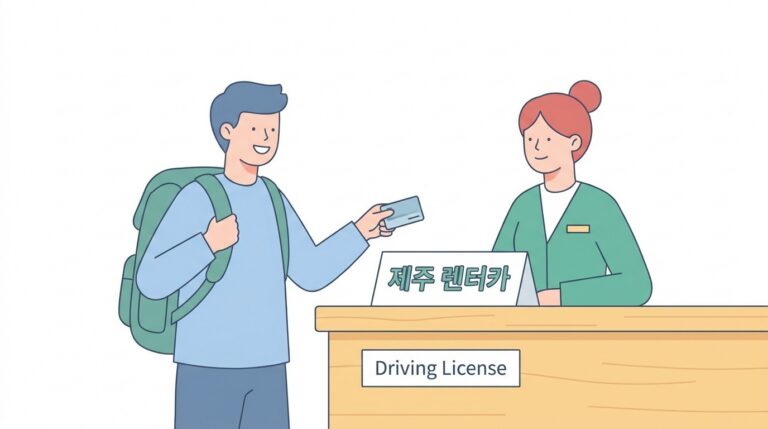
Picture this: you have just landed at Jeju International Airport after dreaming about that breezy coastal drive along the emerald ocean, just like the scenes in your favorite K-dramas. You take the cheerful shuttle bus to the rental company, step up to the sleek customer service desk, and your heart skips a beat. The staff member politely bows and asks: “고객님, 국제운전면허증 보여주시겠어요?” (Gogaengnim, gukje unjeon myeonheojeung boyeojusigesseoyo? / “Customer, could you please show me your international driving permit?”)
Suddenly, your mind goes blank. Which booklet do you hand over? Do they need your home country license too? What about your passport? You fumble through your backpack while other travelers line up behind you. We have all been there! Renting a car in another country can feel intimidating, especially when legal documents are involved. But do not worry. This guide is crafted directly from real feedback and field experiences of our elementary (A2) learners. By the time you finish this lesson, you will hand over your documents with confident smiles, natural Korean phrases, and zero stress.
Phase 2: 핵심 표현 3선 심층 분석 (Top 3 Essential Expressions)
1. 국제 면허증 여기 있어요. (Gukje myeonheojeung yeogi isseoyo.)
- Pronunciation: [Guk-je myeon-heo-jeung yeo-gi i-sseo-yo] (Sounds like “Gook-jeh myun-huh-jung yuh-gi ee-ssuh-yo”)
- Meaning: Literal: “International permit is here.” | Real Nuance: “Here is my International Driving Permit.”
- K-Culture Moment: Just like a character in a healing road-trip variety show handing their paperwork to the rental agent before driving along the coastal road.
- Editor’s Insight: In Korean service interactions, adding “여기 있어요” makes you sound warm and cooperative. You do not need complex grammar; this simple sentence signals immediate politeness.
- Situation Spectrum: Casual (⚠️) / Semi-formal (✅) / Formal (✅)
- 🤔 Think About It: In English, we often say “Here you go!” In Korean, stating the name of the item first helps the clerk immediately identify what you are offering among your stack of documents.
2. 제 여권도 같이 드릴게요. (Je yeogwondo gachi deurilgeyo.)
- Pronunciation: [Je yeo-gwon-do ga-chi deu-ril-ge-yo] (Sounds like “Jeh yuh-gwon-doh gah-chee deu-ril-geh-yo”)
- Meaning: Literal: “I will also give my passport together.” | Real Nuance: “Here is my passport as well.”
- K-Culture Moment: Think of a traveler checking into a boutique hanok or rental office, preemptively handing both passport and permit with considerate manners.
- Editor’s Insight: “드릴게요” comes from the humble verb “드리다” (to give to an elder or respected person). Using it shows excellent manners and makes Korean staff instantly smile at your natural fluency.
- Situation Spectrum: Casual (🚫) / Semi-formal (✅) / Formal (✅)
- 🤔 Think About It: Why does Korean use a special verb for giving something to someone else in a service setting? It reflects the cultural value of mutual respect (Jon-daen-mal).
3. 운전자 추가할 수 있나요? (Unjeonja chugahal su innayo?)
- Pronunciation: [Un-jeon-ja chu-ga-hal su in-na-yo] (Sounds like “Oon-juhn-jah choo-gah-hahl soo een-nah-yo”)
- Meaning: Literal: “Is adding a driver possible?” | Real Nuance: “Can I register an additional driver?”
- K-Culture Moment: When two travel buddies on a Jeju getaway decide to take turns driving so both can enjoy the scenic sunset views.
- Editor’s Insight: If you are traveling with a partner or friend, never let them touch the steering wheel without registering them first, otherwise insurance will not cover you! Memorize this sentence.
- Situation Spectrum: Casual (⚠️) / Semi-formal (✅) / Formal (✅)
- 🤔 Think About It: Korean prefers asking about possibility (“~수 있나요?”) rather than demanding direct actions. It creates a polite and collaborative tone.
Phase 3: 교과서 한국어 vs 진짜 한국어 (Textbook vs. Real Korean)
Situation 1: Handing over your documents
- 📖 교과서 한국어: 이것은 저의 국제 운전 면허증입니다. (Igeoseun jeoui gukje unjeon myeonheojeung-imnida. / “This is my international driving license.”)
- 🗣️ 진짜 한국어: 국제 면허증 여기 있어요. (Gukje myeonheojeung yeogi isseoyo. / “Here is my international permit.”)
- 💡 왜 다를까?: Native Korean speakers rarely say “이것은 저의” (this is my) when the document is already in their hands. Dropping redundant pronouns makes you sound completely natural.
Situation 2: Asking if the paperwork is complete
- 📖 교과서 한국어: 모든 서류 제출이 완료되었습니까? (Modeun seoryu jechuri wannyodoeeossumnikka? / “Is the submission of all documents completed?”)
- 🗣️ 진짜 한국어: 이거면 다 됐나요? (Igeomyeon da dwaennayo? / “Is this everything you need?”)
- 💡 왜 다를까?: Real life at the rental counter is fast-paced. A friendly, compact phrase like “이거면 다 됐나요?” is far more conversational and natural for A2 learners.
Phase 4: K-Culture 딥다이브 & 비언어적 매너 (Deep Dive & Non-Verbal Manners)
4-1. 눈치 (Nunchi) & The Two-Hand Rule
In Korea, etiquette is communicated through your hands and eyes before you utter a single syllable. When presenting your International Driving Permit, home country license, and passport, always hand them over using both hands (두 손으로 건네기). Alternatively, support your right forearm lightly with your left hand while passing the papers. Maintain gentle eye contact and give a slight 15-degree nod. Tossing cards or sliding booklets across the counter with one hand is seen as careless or dismissive.
4-2. The Korean Road Trip Culture (차박 & 드라이브 코스)
In K-dramas like Our Blues and Hometown Cha-Cha-Cha, scenic seaside roads define romantic and healing adventures. In Korea, road trips often revolve around “드라이브 코스” (drive courses) with curated rest stops called “휴게소” (hyugeso) famous for walnut cakes (hodu-gwaja) and twisted doughnuts. When you rent a car smoothly, you unlock access to hidden mountain cafes and quiet coastal viewpoints that public buses cannot easily reach.
Phase 5: 실전 롤플레이 시나리오 (Real-World Roleplay Scenario)
Setting: The bright and bustling rental car counter at Jeju Island.
NPC: Agent Min-ji (민지 씨), an efficient and friendly customer representative wearing a neat company vest.
- Turn 1 (Min-ji): 안녕하세요! 예약자 성함이 어떻게 되세요? (Annyeonghaseyo! Yeyakja seonghami eotteoke doeseyo? / “Hello! May I have the name for the reservation?”)
- Turn 2 (You):
🎭 Smiling warmly and giving a gentle nod마이클입니다. 예약 확인해 주세요. (Maikeul-imnida. Yeyak hwaginhae juseyo. / “I am Michael. Please check my reservation.”) - Turn 3 (Min-ji): 네, 확인되었습니다. 국제운전면허증하고 여권 확인 도와드릴게요. (Ne, hwagindoeeosseumnida. Gukje unjeon myeonheojeunghago yeogwon hwagin dowadeurilgeyo. / “Yes, confirmed. I will help verify your International Driving Permit and passport.”)
- Turn 4 (You):
🎭 Handing both booklets forward using two hands국제 면허증 여기 있어요. 제 여권도 같이 드릴게요. (Gukje myeonheojeung yeogi isseoyo. Je yeogwondo gachi deurilgeyo. / “Here is my international permit. Here is my passport as well.”) - Turn 5 (Min-ji): 감사합니다. 본국 운전면허증 실물도 가지고 계신가요? (Gamsahamnida. Bonguk unjeon myeonheojeung silmuldo gajigo gyesingayo? / “Thank you. Do you also have the physical driver’s license from your home country?”)
- Turn 6 (You):
🎭 Pulling your home country plastic card from your wallet네, 본국 면허증도 여기 있어요. (Ne, bonguk myeonheojeungdo yeogi isseoyo. / “Yes, my home country license is here too.”) - Turn 7 (Min-ji): 완벽합니다! 혹시 운전자 추가하실 분 계신가요? (Wanbyeokhamnida! Hoksi unjeonja chugahasil bun gyesingayo? / “Perfect! By any chance, is there anyone you would like to add as a driver?”)
- Turn 8 (You):
🎭 Turning to your friend with a cheerful grin네, 제 친구도 운전자 추가할 수 있나요? (Ne, je chingudo unjeonja chugahal su innayo? / “Yes, can I add my friend as a driver too?”)
🔀 인터랙티브 분기점 (Interactive Choice)
Now Min-ji asks for your payment and deposit. What do you do?
* Option A: Hand over a digital screenshot of your friend’s credit card and say “이걸로 결제해 주세요.” (Igeollo gyeoljehae juseyo.)
* Option B: Present your physical credit card that matches the driver’s name using two hands and say “제 카드로 결제할게요.” (Je kadeuro gyeoljehalgeyo.)
* Option C: Shrug and say “현금만 돼요?” (Hyeon-geum-man dwaeyo?) while pulling out cash.
Feedback:
* Option A [Risk]: Korean car rental companies strictly require a physical credit card issued under the primary driver’s exact name. Screenshots or third-party cards will be rejected!
* Option B [Best!]: Excellent! Using your own physical card matches Korea’s identity verification rules, and the two-hand gesture wins instant customer service goodwill.
* Option C [Bad]: Most major rental companies do not accept cash deposits from foreign travelers due to toll and traffic violation liabilities.
Phase 6: 10초 감정 섀도잉 드릴 (10-Second Shadowing Drill)
Practice speaking these phrases with rhythmic pauses (/) and authentic emotional intonation!
[😊 밝고 공손하게 / Bright and polite]
국제 면허증 / 여기 있어요. (Gukje myeonheojeung / yeogi isseoyo.)-
[🤝 정중하고 배려 깊게 / Thoughtful and respectful]
제 여권도 / 같이 드릴게요. (Je yeogwondo / gachi deurilgeyo.) -
[🧐 호기심과 확인 / Inquiring and clear]
운전자 / 추가할 수 있나요? (Unjeonja / chugahal su innayo?) -
[✨ 안도하며 확인 / Relieved and cheerful]
이거면 / 서류 다 됐나요? (Igeomyeon / seoryu da dwaennayo?)
Phase 7: K-Culture 미니 사전 (Mini Dictionary)
- 국제운전면허증 (Gukje unjeon myeonheojeung)
Meaning: International Driving Permit (IDP).
Usage: The grey paper booklet issued under the 1949 Geneva Convention. You must present the physical booklet, not a PDF copy. - 본인 명의 (Bonin myeong-ui)
Meaning: Under one’s own legal name.
Usage: Rental cars and credit cards must be “본인 명의.” If your reservation and credit card names differ, you may be denied the car. - 종합보험 / 완전자차 (Jonghap boheom / Wanjeon jacha)
Meaning: Full comprehensive collision damage waiver.
Usage: Rental staff will ask if you want “완전자차.” For peace of mind on unfamiliar roads, always say yes! - 내비게이션 (Naebigeisyeon)
Meaning: In-car GPS navigation unit.
Usage: Most Korean rentals come with high-tech screens. You can ask staff: “영어 지원 되나요?” (Does it support English?).
Phase 8: 여행자를 위한 생존 키트 (Traveler’s Survival Kit)
서바이벌 표현 TOP 3
- 본국 면허증도 있어요. (Bonguk myeonheojeungdo isseoyo.)
Pro Tip: Staff will almost always ask for your original home country license alongside your IDP. Have both ready together. - 영어 내비게이션으로 바꿔주세요. (Yeongeo naebigeisyeoneuro bakkwojuseyo.)
Pro Tip: Say this before leaving the parking bay so the agent can switch the GPS system to English mode for you. - 기름은 얼마나 채워야 해요? (Gireumeun eolmana chaewoya haeyo?)
Pro Tip: Useful when asking about the fuel return policy (usually returning at the same level as pickup).
Editor’s Travel Note
- Navigation Tip: Google Maps does not provide turn-by-turn driving directions in South Korea due to national security map data regulations. Before your trip, make sure to read our detailed guide on how to complete the 네이버 지도 앱 다운로드 및 필수 설정 (Naver Map App Download and Setup) and Kakao Navi.
- Essential Document Trio: Keep your physical IDP booklet, home plastic license, and passport together in a single pouch.
Phase 9: 한 발 더 깊이 (A Step Deeper)
In many Western cultures, transactions at a car rental desk are purely transactional: you slide your card across, grab the keys, and leave. In Korea, however, counter interactions carry a subtle undercurrent of mutual care (Jeong and Yewui). When you hand documents with two hands and speak with polite verb endings like “~드릴게요,” the rental staff will often go out of their way to offer extra perks—such as recommending scenic non-toll roads or double-checking your tire conditions.
💬 Your Turn: Have you ever driven in a foreign country, or are you planning your first road trip in Korea? Which scenic drive is on your bucket list? Drop your thoughts in the comments below!
Phase 10: FAQ & 오해 방지 (FAQ & Common Mistakes)
Q: Can I rent a car in Korea with only my International Driving Permit and not my home country license?
A: No. Korean law requires rental companies to verify both your valid International Driving Permit (1949 Convention IDP) and your original physical domestic driver’s license from your home country.
Q: Can I use an international driver’s license app or digital photo on my phone?
A: Absolutely not. Korea does not recognize digital versions of foreign permits. You must present the physical paper booklet stamped by your home country’s authorized automobile association.
Q: What should I do if my name on the reservation does not match my passport exactly?
A: Contact the rental company customer center immediately prior to arrival. Korean automated registration systems check spelling strictly against your passport page.
🚨 흔한 실수 (Common Mistakes) 경고판
- Mistake 1: Handing only the IDP booklet and leaving the original home country driver’s card at the hotel.
Correct Action: Keep both licenses physically together at all times. - Mistake 2: Bringing a credit card that belongs to a spouse or travel partner who is not listed as the primary driver.
Correct Action: Ensure the primary driver holds a physical credit card under their own name (본인 명의). - Mistake 3: Handing items with a single hand while looking at your smartphone.
Correct Action: Put your phone down, make soft eye contact, and present documents with both hands.
Phase 11: 액션 미션 & 참여 유도 (Action Missions)
- 🥉 Bronze Mission (Solo Practice): Stand in front of your mirror with your passport and a notebook. Practice saying: “국제 면허증 여기 있어요. 제 여권도 같이 드릴게요” three times while using both hands.
- 🥈 Silver Mission (Social Share): Record yourself repeating the phrase in Phase 6, tag our Instagram
@DailyHangul, and share your road trip destination dream with fellow learners! - 🥇 Gold Mission (Real Action): On your next trip to Korea, use “운전자 추가할 수 있나요?” or “영어 내비게이션으로 바꿔주세요” directly at the rental desk without switching to English!
- 🎮 K-Culture Mission: Watch an episode of a Korean travel show (such as House on Wheels or Jeju Road Trip vlog) and spot the moment characters interact with service counters or use GPS systems.
Phase 12: 인터랙티브 퀴즈 챌린지 (Interactive Quiz Challenge)
Q1. Situational Choice
You are standing at the Jeju car rental counter. Which sentence should you say when handing your permit to the agent?
* A) 이거 가져가. (Igeo gajyeoga.)
* B) 국제 면허증 여기 있어요. (Gukje myeonheojeung yeogi isseoyo.)
* C) 면허증 줄까 말까? (Myeonheojeung julkka malkka?)
Q2. Fill in the Blank
When offering your passport alongside your license politely, you say:
“제 여권도 같이 ________.” (I will also give you my passport together.)
Q3. True or False
In Korea, it is completely acceptable to show a smartphone photo of your International Driving Permit instead of the paper booklet. (True / False)
👉 Click here to reveal the answers and explanations!
- Q1 Answer: B) 국제 면허증 여기 있어요.
Explanation: Option A is rude informal speech, and Option C is teasing language (“Shall I give it or not?”). Option B is the ideal polite standard for service interactions. - Q2 Answer: 드릴게요 (deurilgeyo)
Explanation: “드릴게요” is the humble, respectful form of giving something to another person in polite society. - Q3 Answer: False
Explanation: Digital copies or mobile scans of an IDP are legally void in South Korea. You must show the original physical booklet.






