

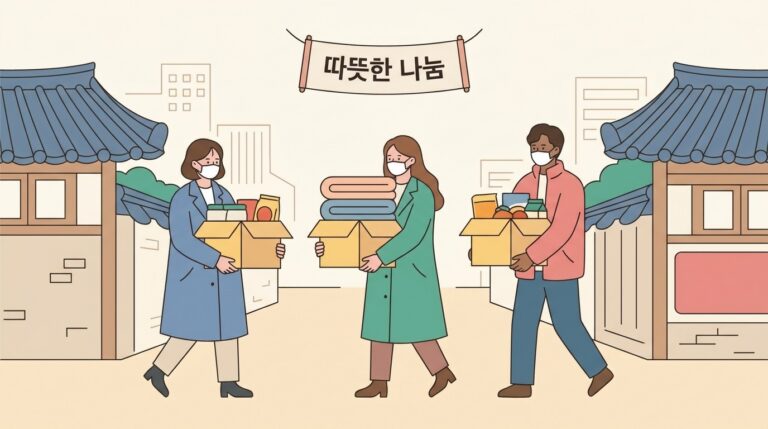
The Native Guide to Korean NGOs and Volunteering: Speaking with Heart and Conviction
Phase 1: Empathy & Immersion
안녕하세요! 매일한글 에디터입니다. (Hello! This is your Daily Hangul editor.)
Picture this: You are watching a poignant scene in a high-stakes K-Drama like Tomorrow or Run On. The protagonist walks into a bustling grassroots civic center in Seoul, passionate about addressing community crises. Suddenly, terms fly across the table—words like bokji sagakjidae (복지 사각지대) and seonhan yeonghyangryeok (선한 영향력). You’ve studied Korean for years, conquered the intermediate TOPIK levels, and can order food or banter with friends effortlessly. Yet, standing in a community hall or listening to civic leaders discuss real-world impact, you hit a linguistic brick wall.
Discussing volunteer initiatives, civic duty, and non-profit endeavors in South Korea requires more than just dictionary definitions; it demands cultural maturity and emotional cadence. Many advanced learners tell us: “I want to participate in community projects in Korea, but my speech sounds like an elementary school essay or an overly stiff legal deposition!” Today’s guide fixes that gap. Drawn from real-world non-profit field experiences and feedback from top-tier expatriate leaders in Seoul, this lesson elevates your Korean from textbook-correct to community-ready.
Phase 2: Top 3 Core Expressions in Depth
1. 선한 영향력을 전파하다 (Seonhan yeonghyangnyeogeul jeonpahada)
- Pronunciation: [Sun-hahn young-hyang-nyuk-eul jeon-pah-hah-dah] (Think of ‘sun’ as in the bright morning star, followed by ‘young’ and ‘hyang’ like incense).
- Meaning: Literal: “To spread virtuous influence” | Nuanced: To exert an inspiring, ethically positive impact on society.
- K-Culture Moment: You will hear this phrase constantly in Korean variety shows and entertainment interviews when celebrities donate to disaster relief funds or when K-Pop fandoms pool resources for green energy projects.
- Editor’s Insight: Seonhan (virtuous/good) paired with yeonghyangnyeok (influence) is the gold standard for describing modern philanthropy in Korea. It emphasizes communal uplift rather than boastful altruism.
- Situation Spectrum: Casual: ⚠️ | Semi-formal: ✅ | Formal: ✅
- 🤔 Think About It: In many Western individualistic contexts, charity is framed as personal philanthropy or tax-deductible giving. Why do you think Korean civic discourse prefers framing it as “spreading virtue across the network”?
2. 복지 사각지대를 발굴하다 (Bokji sagakjidaereul balgulhada)
- Pronunciation: [Boke-jee sah-gahk-jee-dae-reul bahl-gool-hah-dah] (Rhymes roughly with ‘folk’ without the ‘l’ for ‘bok’, followed by geometric ‘sagak’ meaning blind angle).
- Meaning: Literal: “To excavate welfare blind spots” | Nuanced: To actively seek out and support vulnerable populations overlooked by mainstream administrative systems.
- K-Culture Moment: Regularly featured in investigative journalism series like Unanswered Questions (그것이 알고 싶다) and local community town hall debates on social welfare.
- Editor’s Insight: Balgulhada literally means to unearth or excavate archaeological artifacts. Using it here conveys diligence—that helping people requires purposeful investigation, not just passive waiting.
- Situation Spectrum: Casual: 🚫 | Semi-formal: ✅ | Formal: ✅
- 🤔 Think About It: How does institutional visibility determine who receives empathy in your home country versus in South Korea?
3. 발 벗고 나서다 (Bal beotgo naseoda)
- Pronunciation: [Bahl buht-goh nah-suh-dah] (Sounds like ‘bal’ with an open ‘ah’, then ‘but’ with a softer ‘uh’).
- Meaning: Literal: “To take off one’s shoes and step out” | Nuanced: To roll up one’s sleeves and proactively take the initiative to help.
- K-Culture Moment: Found in human-interest documentaries when entire neighborhood associations rush out to shovel snow or distribute winter supplies after a blizzard.
- Editor’s Insight: This idiom evokes an image of someone so urgent to rescue or help a neighbor that they do not even waste time putting on shoes before running outside.
- Situation Spectrum: Casual: ✅ | Semi-formal: ✅ | Formal: ✅
- 🤔 Think About It: Notice the physicality of Korean idiomatic verbs. Why do bodily gestures (like bare feet or rolling sleeves) play such a strong role in expressing sincere compassion?
Phase 3: Textbook Korean vs. Real Native Korean
Situation 1: Describing Community Solidarity
- 📖 교과서 한국어 (Textbook): 우리는 어려운 사람들을 많이 돕습니다. (Uri-neun eoryeoun saramdeureul mani dopsumnida. / We help difficult people a lot.)
- 🗣️ 진짜 한국어 (Real Native): 우리 단체는 복지 사각지대에 놓인 이웃들을 위해 발 벗고 나서고 있어요. (Uri danche-neun bokji sagakjidae-e noin iutdeureul wihae bal beotgo naseogo isseoyo. / Our organization proactively steps up for neighbors situated in welfare blind spots.)
- 💡 왜 다를까? (Why the difference?): Saying “어려운 사람들” sounds slightly condescending or rudimentary at a C1 level. Using “사각지대에 놓인 이웃” respects human dignity and frames the challenge as a structural gap rather than an individual flaw.
Situation 2: Appealing for Small Collective Donations
- 📖 교과서 한국어 (Textbook): 기부금을 많이 내어 주십시오. (Gibugeumeul mani naeeo jusipsio. / Please pay a lot of donation money.)
- 🗣️ 진짜 한국어 (Real Native): 십시일반으로 따뜻한 마음에 동참해 주시길 부탁드립니다. (Sipsi-ilban-euro ttatteut-han maeum-e dongchamhae jusigil butakdeurimnida. / We ask you to join this warm endeavor by chipping in together.)
- 💡 왜 다를까? (Why the difference?): Demanding money outright violates Korean modesty norms. Invoking the four-character idiom Sipsi-ilban (ten spoons make a bowl of rice) highlights collective solidarity, making even tiny contributions feel profoundly valued.
Phase 4: K-Culture Deep Dive & Non-Verbal Manners
4-1. 눈치 (Nunchi) & Gestures in Civic Settings
- The Two-Handed Handover: Whether handing out briquettes (yeontan) or delivering hot boxed lunches (dosirak) to vulnerable elders, always deliver items using two hands while bowing your head slightly at a 15-degree angle. Never stand upright or look down from above.
- Eye Level with Beneficiaries: When speaking with elders at a soup kitchen or community center, crouch down so your eye level is slightly lower than theirs. It displays humbleness (gyeomson) and removes the power dynamic of the “giver vs. receiver.”
- Restraint with Social Media Snaps (인증샷 예절): Taking proof-of-work selfies at an NGO site without permission can be viewed as performative virtue signaling (yeonsik-yong bongsa). Keep your phone tucked away until community leaders explicitly invite group photography.
4-2. Cultural Code: The Fandom Charity Phenomenon
In South Korea, non-governmental activism is uniquely intertwined with contemporary entertainment culture. Global K-Pop fandoms do not merely stream tracks; they fund forest restoration projects, donate thousands of kilograms of rice wreaths (ssal-hwasan) during comeback press conferences, and build schools in developing nations under their idol’s name. This mirrors the historical concept of Dure (두레)—traditional mutual-aid cooperative networks. Today, civic NGOs directly collaborate with digital communities to turn collective affection into structural charity.
Phase 5: Real-World Roleplay Scenario
Setting: The planning office of a green community NGO in Mapo-gu, Seoul.
NPC: Team Leader Min-ji (민지 팀장), a dedicated, sharp-eyed community organizer in her 30s.
- 민지 팀장: 수현 씨, 이번 쪽방촌 겨울나기 지원 캠페인 기획안 검토해 보셨어요? (Suhyeon ssi, ibeon jjokbangchon gyeoul-nagi jiwon kaempe-in gihoegan geomtohae bosyeosseoyo? / 🎭 Checking her tablet with focused concern / Suhyeon, did you review the winter survival support campaign proposal for the flophouse district?)
- 수현 (You): 네, 팀장님. 꼼꼼히 살펴봤는데 실질적인 난방 지원이 시급해 보입니다. (Ne, timjangnim. Kkomkkomhi salpyeobwassneunde siljiljeogin nanbang jiwoni sigeuphae boimnida. / 🎭 Nodding attentively / Yes, Team Leader. I reviewed it thoroughly, and practical heating support appears urgent.)
- 민지 팀장: 맞아요. 그런데 예산이 한정적이라 시민들의 자발적 후원이 절실한 상황이에요. (Majayo. Geureonde yesani hanjeongjeog-ira simindeurui jabaljeok huwoni jeolsilhan sanghwang-ieyo. / 🎭 Sighing softly, pointing at the budget sheet / Exactly. But our budget is limited, so voluntary citizen sponsorship is critical.)
- 수현 (You): 온라인 펀딩을 통해 십시일반으로 모금 활동을 전개하면 어떨까요? (Online peonding-eul tonghae sipsi-ilban-euro mogeum hwaldong-eul jeongaehamyeon eotteolkkayo? / 🎭 Leaning in with an engaged smile / How about launching a crowdfunding campaign where people can chip in collectively?)
- 민지 팀장: 좋은 아이디어네요! 다만 모금 명분이 대중에게 진정성 있게 닿아야 해요. (Joeun a-idi-eoneyo! Daman mogeum myeongbuni daejung-ege jinjeongseong itge dah-aya haeyo. / 🎭 Tapping the table thoughtfully / Great idea! However, the justification for fundraising must reach the public with authenticity.)
- 수현 (You): 복지 사각지대에 놓인 분들의 생생한 목소리를 담아 선한 영향력을 호소해 보겠습니다. (Bokji sagakjidae-e noin bundeurui saengsaenghan moksorireul dama seonhan yeonghyangnyeogeul hosohae bogesseumnida. / 🎭 Showing a draft on the laptop / I will try to appeal to their sense of positive impact by highlighting the authentic voices of those in welfare blind spots.)
- 민지 팀장: 훌륭해요. 우리 청년 활동가들이 발 벗고 나선다면 분명 큰 반향을 일으킬 거예요. (Hullyunghaeyo. Uri cheongnyeon hwaldonggadeuri bal beotgo naseondamyeon bunmyeong keun banhyang-eul ireukil geoyeyo. / 🎭 Smiling with relief and warm encouragement / Wonderful. If our youth activists step up enthusiastically, it will surely create a strong resonance.)
- 수현 (You): 믿고 맡겨 주십시오. 현장의 온기가 전해지도록 최선을 다하겠습니다. (Mitgo matgyeo jusipsio. Hyeonjang-ui ong-giga jeonhaejidorok choeseon-eul dahagessseumnida. / 🎭 Bowing politely with determined conviction / Please count on me. I will do my best so the warmth from the field truly carries through.)
🔀 Interactive Decision Point
Team Leader Min-ji asks: “What should our primary slogan be for the social media donor appeal banner?”
- Choice A: “어려운 불우이웃을 위해 돈을 기부합시다!” (Eoryeoun buru-iuseul wihae doneul gibuhapsida! / Let’s donate money for unfortunate neighbors!)
- Choice B: “복지 사각지대 해소를 위해 작은 온기를 보태주세요.” (Bokji sagakjidae haesoreul wihae jageun ong-gireul botaejuseyo. / Please add a little warmth to resolve welfare blind spots.)
- Choice C: “기부하지 않으면 이웃들이 추운 겨울을 못 버팁니다.” (Gibuhaji aneumyeon iutdeuri chuun gyeoureul mot beotimnida. / If you don’t donate, our neighbors cannot survive the cold winter.)
Feedback:
* Choice A (Bad): Using buru-iut (unfortunate neighbor) alongside explicit demands for money feels archaic, blunt, and patronizing for a modern C1 campaign.
* Choice B (Best!): Poetic, dignified, and highly natural. Botaejuseyo (add/contribute) captures community solidarity without guilt-tripping.
* Choice C (Risk): Excessive guilt-tripping (guilt appeal) alienates Korean internet users and violates modern non-profit marketing ethics.
Phase 6: 10-Second Emotion Shadowing Drill
Practice these natural cadences. Follow the slash mark / for breath pauses!
[🔥 사명감과 열정을 담아 / Passionate & Mission-Driven]
우리 단체는 / 보이지 않는 그늘 속 / 복지 사각지대를 해소하기 위해 / 발 벗고 나섰습니다.
(Uri danche-neun / boiji anneun geuneul sok / bokji sagakjidae-reul haesohagi wihae / bal beotgo naseossseumnida.)-
[🤝 따뜻하고 호소력 짙게 / Warm & Deeply Appealing]
작은 정성이 모여 / 큰 기적을 만듭니다. / 십시일반으로 / 선한 영향력을 전파해 주세요.
(Jageun jeongseong-i moyeo / keun gijeog-eul mandeumnida. / Sipsi-ilban-euro / seonhan yeonghyangnyeogeul jeonpahae juseyo.) -
[🏢 차분하고 신뢰감 넘치게 / Calm & Professional Trust]
후원금 사용 내역의 투명성을 보장하며, / 가장 취약한 현장으로 / 직접 찾아가겠습니다.
(Huwongeum sayong naeyeog-ui tumyeongseong-eul bojanghamyeo, / gajang chwiyakhan hyeonjang-euro / jikjeop chajagagessseumnida.)
Phase 7: K-Culture Mini Dictionary
- 십시일반 (Sipsi-ilban) | Literal: Ten spoons make one meal. | Used universally in community projects and fundraisers to explain how small actions, when multiplied by community solidarity, solve overwhelming problems.
- 재능 기부 (Jaeneung gibu) | Talent Donation. | Donating one’s professional skills (e.g., legal counsel, graphic design, translation, medical care) free of charge to charities instead of monetary gifts.
- 투명성 (Tumyeongseong) | Transparency / Accountability. | A make-or-break metric in modern Korean civic society. NGOs must publicly publish audited reports to verify that donations reach their targets without administrative waste.
- 연탄 나눔 (Yeontan nanum) | Coal Briquette Sharing. | An iconic winter volunteering activity where groups form human chains on steep hillsides in older neighborhoods to deliver heating fuel to low-income homes.
Phase 8: Survival Kit for Travelers & Field Volunteers
Top 3 Field Phrases
- 봉사활동 확인서 발급이 가능한가요? (Bongsahwaldong hwaginseo balgeubi ganeunghangayo?)
Pro Tip: Essential if you need formal proof of civic service for university credits or corporate records. - 정기 후원 절차는 어떻게 되나요? (Jeonggi huwon jeolchaneun eotteoke doenayo?)
Pro Tip: Use this when shifting from a one-time cash contribution to ongoing monthly bank transfers (CMS auto-debit). - 외국인 자원봉사자도 현장 활동에 참여할 수 있나요? (Oegugin jawonbongsajado hyeonjang hwaldong-e chamyeohal su innayo?)
Pro Tip: Asks whether field projects are open to non-Koreans or if visa constraints apply.
Editor’s Field Note: Practical Volunteer Logistics
If you wish to participate in legitimate volunteer activities across South Korea, make sure to visit the official 1365 Volunteer Portal official website operated by the Ministry of the Interior and Safety. Create an account with your Alien Registration Card (ARC) to register for nationwide civic missions and track verifiable hours.
Phase 9: A Step Deeper (한 발 더 깊이)
In Korean society, community charity is rarely perceived as an individual’s unilateral condescension downward. Historically rooted in traditional village safety nets like Hyangyak (향약) and mutual defense pacts, the ethos of giving is viewed as maintaining the equilibrium of the whole organism. When the IMF Asian financial crisis hit in 1997, millions of ordinary Koreans queued for hours to donate family gold wedding rings to pay national debt. Non-profit involvement in Korea is not simply a weekend hobby; it is an active exercise of collective resilience.
💬 Your Turn: Does your native language view charity as individual virtue, religious obligation, or collective survival? Tell us your thoughts in the comments below!
Phase 10: FAQ & Common Pitfalls
Q: Can non-Korean residents claim tax deductions for donations made to local NGOs?
A: Yes! If the Korean non-profit is an officially registered Public Interest Corporation (공익법인), you can register your Resident Registration Number or Alien Registration Number (ARC) with the organization. At year-end tax adjustment (Yeonmaljeongsan), your donation certificate (Gibu-geum Yeongsujeung) will automatically link to the National Tax Service Hometax portal.
Q: What is the linguistic difference between 시민단체 (Simindanche) and NGO?
A: While commonly used interchangeably, Simindanche (Civic Group) frequently denotes grassroots advocacy, civil rights watchdog activities, and policy reform movements inside Korea. NGO (비정부기구) is often preferred when discussing humanitarian aid, international development, or non-partisan charitable foundations.
Q: Do I need advanced Korean skills to volunteer in Seoul?
A: Fieldwork like tree planting, sorting food parcels, or delivering coal briquettes requires only basic listening comprehension and good physical stamina. However, coordinating projects, managing public outreach, or counseling demands C1-level nuance.
🚨 Common Mistakes Alert
- Mistake 1: Saying “저는 불우이웃을 돕고 싶어요” (I want to help poor/unfortunate people).
Correct Action: Use “소외된 이웃” (marginalized neighbors) or “취약 계층” (vulnerable demographics) to avoid patronizing labels. - Mistake 2: Using the blunt imperative “기부해 주세요” (Please donate).
Correct Action: Soften the request through collaborative idioms: “따뜻한 동참을 부탁드립니다” (We ask for your warm participation). - Mistake 3: Calling an NGO team leader “사장님” (President/Owner).
Correct Action: Non-profits operate under civic titles. Address leaders as “팀장님” (Team Leader), “국장님” (Director General), or “상임대표님” (Executive Representative).
Phase 11: Action Mission Challenge
- 🥉 Bronze Level: Practice shadowing the 3 emotion drills in Phase 6 three times while recording your voice on your smartphone.
- 🥈 Silver Level: Find a social media campaign post by a Korean civic organization (like Good Neighbors, World Vision Korea, or Green Korea) and leave a supportive comment in Korean using the expression 선한 영향력.
- 🥇 Gold Level: Write a 4-sentence introductory bio explaining what causes you care about using the terms 복지 사각지대, 발 벗고 나서다, and 십시일반.
- 🎮 K-Culture Mission: Watch an episode of a documentary series like Human Theater (인간극장) and spot at least two instances where neighbors share food or assistance using communal expressions.
Phase 12: Interactive Quiz Challenge
1. Situational Choice
You are presenting an NGO project proposal to a local council. Which sentence sounds most sophisticated and culturally appropriate for a C1 speaker?
- A) 가난한 사람들을 도와주지 않으면 큰일 납니다.
- B) 복지 사각지대를 적극 발굴하여 촘촘한 사회 안전망을 구축해야 합니다.
- C) 자원봉사자들에게 많은 칭찬을 해 주시길 바랍니다.
🔍 Click here for Answer & Explanation
Correct Answer: B
Explanation: Option B uses advanced civic vocabulary (복지 사각지대 발굴, 촘촘한 사회 안전망 구축 = building a dense social safety net). Option A sounds excessively colloquial and blunt, while Option C is simplistic and contextually out of place.
2. Fill-in-the-Blank
작은 힘이라도 여럿이 모으면 큰 도움이 된다는 뜻의 사자성어로, 빈칸에 들어갈 알맞은 단어는 무엇일까요?
“우리 모두 (________)의 마음으로 성금을 모았습니다.”
🔍 Click here for Answer & Explanation
Correct Answer: 십시일반 (Sipsi-ilban)
Explanation: Sipsi-ilban (十匙一飯) reflects the timeless Korean collective philosophy that ten spoonfuls of rice gathered together make a whole bowl for someone in need.
3. Cultural True or False
True or False: In Korea, taking frequent personal selfie photos (인증샷) of recipients while distributing food supplies at an elder welfare shelter is widely considered a great way to show enthusiasm on social media.
🔍 Click here for Answer & Explanation
Correct Answer: False
Explanation: Photographing vulnerable individuals without their explicit consent or using charity recipients as photo props violates personal dignity and is heavily criticized as performative philanthropy in Korean civic culture.







