

Phase 1: 공감 (Story Opening)
안녕하세요! 매일한글 에디터입니다.
Have you ever walked into a sleek startup office in Teheran-ro or an upscale café in Seongsu-dong, only to spot an exhausted 28-year-old corporate strategist slumping in a chair, clad head-to-toe in a baggy camouflage uniform with his combat boots untied? If you are new to Korean society, this sight might feel like an impending national emergency. But don’t panic—it is simply the quintessentially Korean ritual known as Yebigun (예비군 – Reserve Military Training).
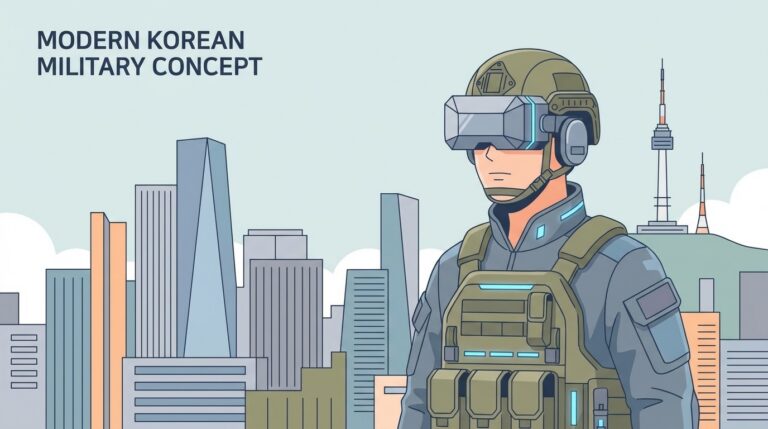
For years, reserve training was culturally caricatured as a dreary bureaucratic nuisance where young men took a day off work to nap behind bushes and complain about an allowance that barely covered a bowl of gukbap. However, if you tune into Korean news or talk shows today, you will witness a fierce, high-level socio-political debate. The Korean military is aggressively overhauling these sessions into a high-tech training ecosystem powered by VR simulations and laser-guided MILES gear. Concurrently, a generation hyper-sensitive to institutional equity is asking: “Why are we compensating citizens who fulfill mandatory national defense with sub-minimum-wage stipends?”
To engage in discussions with native Koreans at a native, C2 fluency level, you cannot merely understand the word for “soldier.” You must command the socio-legal vocabulary of civic sacrifice, defense modernization, and fiscal reality. Drawing from deep ethnographic observations and curriculum feedback from corporate expatriates in Seoul, this guide equips you with the master-level terminology and sociolinguistic nuance required to unpack modern Korea’s military discourse.
Phase 2: 핵심 표현 3선 심층 분석
1. 예비군 훈련 보상비 현실화 (한글)
- Pronunciation: [Yebigun hullyeon bosangbi hyeonsilhwa] (Think of the rhythm: Yeh-bee-goon hool-lyeon boh-sang-bee hyeon-sheel-hwa, where hyeonsilhwa flows like ‘hyon-sheel-hwa’ without a hard ‘s’ break).
- Meaning: Realization of reserve force training compensation / Aligning drill allowances with actual opportunity costs.
- K-Culture Moment: Featured on late-night political panel shows like Ssulzun or current affairs debates on YouTube where civic activists confront defense officials.
- Editor’s Insight: In Korean bureaucratic parlance, 현실화 (realization) does not mean “making something happen” in the abstract; it specifically means updating outdated financial tables to match genuine market value or inflation.
- Situation Spectrum: Casual: ⚠️ | Semi-formal: ✅ | Formal: ✅
- 🤔 Think About It: In your home country, is compulsory civic service rewarded through market-rate tax incentives, or is it treated as a purely unpaid patriotic sacrifice?
2. 과학화 훈련 체계 (한글)
- Pronunciation: [Gwahakhwa hullyeon chegye] (Pronounce gwahak smoothly, transitioning into hwa like an exhale, followed by che-gye).
- Meaning: Scientific/smart modernized training system (incorporating VR, digital simulation, and smart sensor targeting).
- K-Culture Moment: Often covered in defense tech showcases, defense ministry vlogs, and YouTube tech-reviews demonstrating state-of-the-art military VR simulation ranges in Namyangju.
- Editor’s Insight: The affix -화 (-hwa) denotes systematic transformation. 과학화 transforms what was once an unscientific, manual drill into a data-driven tactical simulation.
- Situation Spectrum: Casual: ⚠️ | Semi-formal: ✅ | Formal: ✅
- 🤔 Think About It: How does your native language differentiate between simple digitization (디지털화) and systemic scientific integration (과학화)?
3. 국방의 의무에 걸맞은 합당한 대우 (한글)
- Pronunciation: [Gukbang-ui uimue geolmajeun hapdanghan daeu] (Soften the ui to sound close to eh in fluid speech: Guk-bang-eh eui-moo-eh geol-mah-jeun).
- Meaning: Fair and dignified treatment commensurate with the duty of national defense.
- K-Culture Moment: Invoked in National Assembly audits, op-ed columns in major newspapers, and thought-provoking workplace discussions about civic equity.
- Editor’s Insight: At the C2 level, pairing 걸맞은 (fitting/commensurate) with 합당한 대우 (just treatment) signals native-level rhetorical elegance when discussing social contracts.
- Situation Spectrum: Casual: 🚫 | Semi-formal: ✅ | Formal: ✅
- 🤔 Think About It: How does the grammar of obligation in your language reflect the mutual responsibility between citizen and state?
Phase 3: 교과서 한국어 vs 진짜 한국어
Situation 1: Describing the experience of attending reserve drills
- 📖 교과서 한국어: 이번 주에 예비군 훈련 통지서를 받아서 훈련에 참석해야 합니다. (I received a notice for reserve training this week and must attend.)
- 🗣️ 진짜 한국어: 이번 주에 예비군 훈련에 들어가는데, 요즘 과학화 훈련장이라 가라로 때우지도 못해요. (I am heading into reserve drills this week, and because they use smart tech ranges now, there is zero room to slack off.)
- 💡 왜 다를까? Native Koreans rarely use stiff, textbook passive phrasing. Slang terms like 가라로 때우다 (to cut corners or skate by) illustrate the gritty reality of modern smart ranges where infrared sensors grade your tactical accuracy automatically.
Situation 2: Expressing an opinion on daily training stipends
- 📖 교과서 한국어: 훈련 보상비가 실질적인 비용에 비해 부족하므로 인상되어야 한다고 생각합니다. (I believe the training stipend should be raised as it is insufficient relative to actual costs.)
- 🗣️ 진짜 한국어: 솔직히 교통비랑 식비 수준의 쥐꼬리만한 보상비는 청년들의 기회비용을 완전히 무시하는 처사죠. (Frankly, offering a measly pittance that barely covers transit and lunch outright disregards young people’s real opportunity costs.)
- 💡 왜 다를까? C2 speakers deploy potent idiomatic metaphors such as 쥐꼬리만한 (rat’s tail / pittance) and formal critique nouns like 처사 (handling/treatment) to articulate legitimate social grievances with stylistic impact.
Phase 4: K-Culture 딥다이브 & 비언어적 매너
4-1. Nunchi & Nonverbal Etiquette: The “Frog Camo Paradox”
There is an enduring cultural running gag in South Korea: put a brilliant CEO, a hyper-athletic personal trainer, or a disciplined surgeon into their old reserve camouflage uniform, and within ten minutes they will slouch, drag their feet, and exude existential boredom. This is known as 개구리복(군복)의 마법 (the magic of combat fatigues).
However, when entering a modern 과학화 훈련장 (scientific training site), nonverbal dynamics shift:
* Maintaining Composure: While casual slouching is tolerated during transport, reserve soldiers demonstrate sharp decorum when interacting with young active-duty instructors (조교). Even if the instructor is eight years younger, treating them with condescension is a major cultural taboo. Polite semi-formal speech (존댓말) is strictly observed.
* Physical Respect for Modern Tech: With advanced VR goggles, high-precision laser firearms, and biometric sensors in use, mishandling smart gear brings sharp reprimands. Treating military gear with deliberate care displays mature civilian responsibility.
4-2. Cultural Code Analysis: The Fair Society Mandate
In modern K-Dramas like D.P., the raw realities of military conscription were brought to the global stage. Yet, the discourse surrounding the Reserve Forces mirrors South Korea’s broader societal obsession with 공정성 (fairness/equity). Unlike decades past when uncompensated sacrifice was demanded under the banner of unconditional patriotism, today’s Korean workforce views mandatory reserve drills through the lens of economic equity. When an employee takes time off from a high-stakes corporate project, receiving a nominal stipend of under 20,000 KRW creates genuine friction. Understanding this conversation allows you to comprehend how Korean youth renegotiate their social contract with public institutions.
Phase 5: 실전 롤플레이 시나리오
Setting: A premium coffee lounge in Pangyo Techno Valley. Min-woo (a 30-year-old software architect in modern pixelated military fatigues) sits down with Elena (a senior foreign director who recently arrived at their Seoul office).
- Elena: 민우 님, 오늘 복장이 평소랑 완전히 다르시네요! 군대로 복귀하시는 건가요? (Min-woo nim, oneul bokjang-i pyeongsorang wanjeonhi dareusineyo! Gundaero bokgwihasineun geongayo?)
🎭 Looking astonished, tilting head while gesturing toward his fatigues. -
Min-woo: 아, 엘레나 님. 오늘 과학화 예비군 훈련장에 다녀오는 길입니다. 예비군 4년 차거든요. (A, Elena nim. Oneul gwahakhwa yebigun hullyeonjange danyeooneun girimnida. Yebigun sahyeon chageodeunyo.)
🎭 Chuckles softly, massaging his tired shoulder, resting his military cap on the table. -
Elena: 과학화 훈련장이요? 예전 뉴스에서 보던 진흙탕 훈련이랑은 다른가 봅니다? (Gwahakhwa hullyeonjang-iyo? Yejeon nyuseueseo bodeon jinheuktang hullyeon-irang-eun dareun-ga bomnida?)
🎭 Leaning forward with genuine curiosity. -
Min-woo: 네, 최첨단 VR 시뮬레이터에 마일즈(MILES) 장비를 착용하고 교전 훈련을 해서 빈틈이 없었어요. (Ne, choecheomdan VR simyulleiteoe maijeu jangbireul chagyeonghago gyojeon hullyeoneul haeseo bintelmi eopseosseoyo.)
🎭 Nods earnestly, making tactical gesture motions with his hands. -
Elena: 대단하네요. 그런데 하루 종일 본업을 비우고 훈련받으셨는데, 보상은 충분히 나오나요? (Daedanhaneyo. Geureonde haru jong-il boneobeul biugo hullyeonbadeusyeonneunde, bosang-eun chungbunhi naonayo?)
🎭 Speaking with empathy, raising an eyebrow inquiringly. -
Min-woo: 그게 가장 큰 논란거리예요. 훈련은 첨단화됐는데 보상비 현실화는 아직 갈 길이 멉니다. (Geuge gajang keun nollangeori-yeyo. Hullyeon-eun cheomdanhwadwaenneunde bosangbi hyeonsilhwaneun ajik gal giri meomnida.)
🎭 Sighs subtly, setting his coffee cup down with a reflective look. -
Elena: 청년들의 시간과 기회비용을 고려하면 정당한 대우가 제도적으로 정착되어야겠군요. (Cheongnyeondeurui sigangwa gihoebiyong-eul goryeohamyeon jeongdanghan daeuga jedojeogeuro jeongchakdoeeoyagetgunyo.)
🎭 Nodding firmly in agreement with a supportive expression. -
Min-woo: 정확한 지적이세요. 국방의 의무를 다하는 만큼 사회적 인정과 실질적 보상이 맞물려야 하니까요. (Jeonghwakhan jijeogiseyo. Gukbang-ui uimureul dahaneun mankeum sahoejeok injeong-gwa siljiljeok bosang-i manmullyeoya hanikkayo.)
🎭 Smiles appreciatively, visibly relieved by her deep cultural comprehension.
🔀 인터랙티브 분기점 (Choose Elena’s Next Response)
-
Option A: 그래도 나라를 지키는 숭고한 국방의 의무인데, 보상 금액에 너무 연연하는 건 애국심이 부족한 태도 아닐까요? (Still, national defense is a noble patriotic duty; isn’t fixating on money a sign of lacking patriotism?)
Feedback: [BAD] Tone-deaf and alienating. In modern Korea, framing legitimate requests for minimum wage compensation as “lacking patriotism” disregards generational equity and will cause awkward tension. -
Option B: 맞아요. 훈련 체계가 과학화된 만큼, 예비군들의 헌신에 걸맞은 합당한 보상 현실화가 조속히 추진되면 좋겠네요. (Indeed. Since the training infrastructure has evolved scientifically, I hope fair compensation commensurate with reservists’ dedication is swiftly enacted.)
Feedback: [BEST] Perfectly demonstrates C2-level sociopolitical awareness, balanced cultural empathy, and sophisticated vocabulary. -
Option C: 회사 안 나오고 총 쏘는 게임 같은 VR 훈련도 하고, 돈도 조금이나마 받으니 꿀 빠신 거 아니에요? (Didn’t you skip work, play with VR games shooting guns, and get paid a little something on top? Sounds like easy slacking!)
Feedback: [RISK] High conversational hazard. Unless you are lifelong childhood friends, downplaying physical exhaustion as 꿀 빨다 (slacking off easily) will come across as disrespectful.
Phase 6: 10초 감정 섀도잉 드릴
-
[😤 단호하고 결연하게 / Firmly and resolutely]
“훈련 체계의 첨단화도 중요하지만, / 청년들의 헌신에 대한 / 실질적인 보상비 현실화가 / 최우선 과제입니다.”
(Hullyeon chegye-ui cheomdanhwado jungyohajiman, / cheongnyeondeurui heonsine daehan / siljiljeogin bosangbi hyeonsilhwaga / choe-useon gwaje-imnida.)
(“Modernizing the training framework is crucial, / but realizing tangible compensation / for the dedication of our youth / remains the utmost priority.”) -
[🤩 감탄하며 놀란 듯 / Astonished and impressed]
“예전의 주먹구구식 훈련에서 벗어나, / 첨단 VR과 마일즈 장비를 도입한 / 과학화 훈련 체계라니 / 정말 격세지감이네요!”
(Yejeon-ui jumeokgugusik hullyeoneseo beoseona, / cheomdan VR-gwa maijeu jangbireul do-iphan / gwahakhwa hullyeon chegyerani / jeongmal gyeokse-jigam-ineyo!)
(“Moving far beyond the clumsy, haphazard drills of the past / to establish a smart training system with advanced VR and MILES gear— / what an astounding transformation!”)
Phase 7: K-Culture 미니 사전 (핵심 키워드 4개)
-
예비군 (Yebigun / Reserve Forces)
Context: Citizens who have completed active military service and are mobilized annually for readiness drills. Represents a distinct cultural demographic and social dynamic in Korean corporate life. -
과학화 훈련관 (Gwahakhwa Hullyeongwan / Smart Scientific Training Center)
Context: High-tech facilities utilizing laser-sensors, VR simulators, and automated target scoring systems to conduct rigorous tactical exercises. -
훈련 보상비 (Hullyeon Bosangbi / Drill Compensation Allowance)
Context: The government stipend provided to cover transport, food, and daily wages during mobilization. A central topic of recent equity debates. -
기회비용 (Gihoebiyong / Opportunity Cost)
Context: Heavily utilized in modern Korean societal discourse to quantify the professional and economic earnings lost when individuals fulfill public duties.
Phase 8: 여행자를 위한 생존 키트
서바이벌 표현 TOP 3
-
“오늘 예비군 훈련 때문에 부재중이십니다.” (Oneul yebigun hullyeon ttaemune bujaejung-isimnida.)
Meaning: “He/She is out of office today due to reserve military training.”
Pro Tip: Use this when explaining team member absences during enterprise client meetings or scheduling negotiations. -
“과학화 훈련장 가는 셔틀버스는 어디서 탑승하나요?” (Gwahakhwa hullyeonjang ganeun syeoteulbeoseuneun eodiseo tapseunghanayo?)
Meaning: “Where do I board the shuttle bus heading to the scientific reserve training center?”
Pro Tip: High-tech ranges are typically situated on city outskirts; dedicated shuttles run from major subway terminals. -
“국방의 의무를 성실히 이행해 주셔서 감사합니다.” (Gukbang-ui uimureul seongsilhi ihaenghae jusyeoseo gamsahamnida.)
Meaning: “Thank you for faithfully executing your duty of national defense.”
Pro Tip: A refined phrase to share when an employee, colleague, or peer returns to work in uniform.
Editor’s Travel Note
When navigating transit near active bases or outlying smart ranges, civilian navigation apps sometimes blur aerial satellite views for national defense protocols. For accurate public transport routes to outlying reserve training centers, check the 대한민국 국방부 예비군 공식 포털 및 훈련장 교통편 안내 alongside real-time bus arrivals on 네이버 지도 대중교통 길찾기 앱.
Phase 9: “한 발 더 깊이” (생각 질문)
South Korea’s modern defense apparatus reflects an intricate socio-philosophical transition. For decades, the collective memory of the Korean War positioned uncompensated military duty as an unconditional civic virtue under communal nationalism. Today, as South Korea establishes itself as a global high-tech and cultural powerhouse, its citizens demand institutional symmetry: an advanced digital military must be matched by advanced, dignified civic compensation. True modernization is not merely replacing rifles with lasers, but treating human capital with democratic respect.
💬 Your Turn: How does your culture balance national security obligations against individual economic opportunity costs? Share your thoughts below in advanced Korean or English!
Phase 10: FAQ & 오해 방지 (FAQ Schema)
Q: Why do South Korean reservists often look exhausted or unenthusiastic despite attending modernized smart training?
A: Historically, reserve training was seen as an inefficient disruption to demanding corporate careers. While high-tech facilities have made the drills far more physically intensive and objective, the sluggish demeanor is also a humorous cultural defense mechanism—a harmless subcultural ritual where adults momentarily drop corporate stress.
Q: Can foreign residents in Korea be called up for Korean reserve forces training?
A: No. The duty of national defense (국방의 의무) under Article 39 of the Constitution applies strictly to South Korean citizens. Naturalized citizens may face different guidelines, but foreign nationals on work, residency, or student visas are entirely exempt.
Q: How much is the current reserve drill compensation, and why is it controversial?
A: For basic day drills, allowances historically hovered around 15,000 to 20,000 KRW, barely covering round-trip transportation and lunch. With minimum hourly wages around 10,000 KRW, young professionals advocate for compensatory parity that honors genuine lost wages.
🚨 흔한 실수 (Common Mistakes) 경고판
- Mistake 1: Calling reserve training 군대 다시 입대 (re-enlisting in the army).
Correct Action: Always refer to it precisely as 예비군 훈련 (reserve drill) or 소집 점검 (mobilization inspection). - Mistake 2: Assuming smart ranges mean lighthearted video gaming.
Correct Action: Recognize that 과학화 훈련 체계 involves rigorous physical tactical movement with precise digital accountability. - Mistake 3: Saying “수고하셨습니다” to higher-ranking military officials.
Correct Action: Use “고생 많으셨습니다” to show natural courtesy without overstepping hierarchical protocol.
Phase 11: 액션 미션 & 참여 유도
- Bronze Mission (Solo Practice): Read the 10-second Shadowing Drill aloud 3 times, paying close attention to intonation pauses (/) and firm pitch.
- Silver Mission (Social Sharing): Post a short reflection on social media or a language journal discussing the term 보상비 현실화 and what fair civic duty means to you.
- Gold Mission (Real-life Execution): The next time a Korean coworker arrives at the office with their camo uniform, greet them with: “오늘 훈련 고생 많으셨어요!” and observe their grateful reaction.
- 🎮 K-Culture Mission: Watch an episode of a Korean current affairs program (such as PD Note or Current Affairs Straight) covering defense technology and identify when the word 과학화 is used.
Phase 12: 인터랙티브 퀴즈 챌린지
1. Situational Judgment
Which expression is most stylistically appropriate when delivering an analytical presentation on defense reform?
* A) 요즘 예비군 훈련비 너무 짜서 다들 화났어요.
* B) 청년들의 기회비용을 보전하기 위한 예비군 훈련 보상비 현실화가 시급합니다.
* C) 과학화 훈련장에서 레이저 쏘니까 재미있긴 하더라고요.
🔍 정답 확인 (Click to View Answer & Feedback)
정답: B
해설: Option B showcases superior C2 academic lexicon (기회비용 보전, 보상비 현실화, 시급합니다). Option A uses informal colloquialisms (짜다), while Option C is far too casual for formal analysis.
2. Fill-in-the-Blank
VR과 마일즈 장비를 결합하여 훈련의 실효성을 높이는 시스템을 “___________ 훈련 체계”라고 부릅니다.
(Fill in the blank with the advanced compound term meaning ‘scientific/modernized’).
🔍 정답 확인 (Click to View Answer & Feedback)
정답: 과학화 (Gwahakhwa)
해설: The full term is 과학화 훈련 체계 (Scientific/Smart Training System).
3. True / False Cultural Insight
True or False: In contemporary Korean society, asking for increased reserve training compensation is widely condemned as an unpatriotic act.
🔍 정답 확인 (Click to View Answer & Feedback)
정답: False
해설: Across bipartisan political spheres and generational lines, reasonable compensation matching opportunity costs is considered an essential pillar of societal equity (공정성).







