

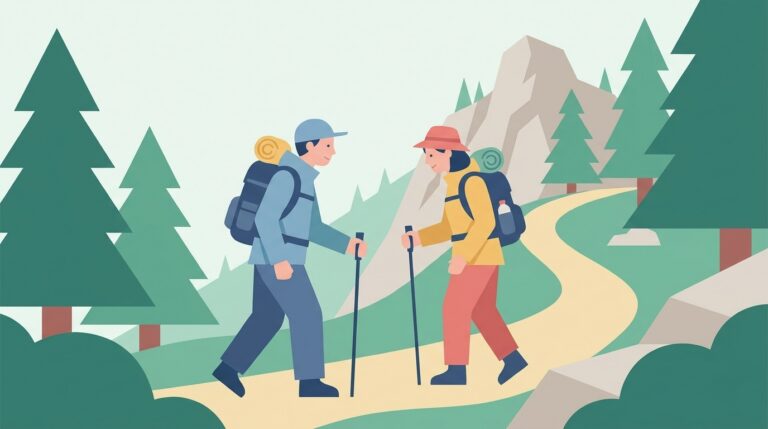
Greeting People on the Mountain: Master Korean Trail Etiquette
Phase 1: Empathy (Story Immersion Opening)
안녕하세요! 매일한글 에디터입니다. (Hello! I’m your Daily Hangul editor.)
Picture this: You are halfway up Mt. Bukhansan on a crisp Saturday morning. Your calves are burning, your forehead is dripping with sweat, and you’re contemplating whether turning back is socially acceptable. Suddenly, a Korean grandmother dressed in head-to-toe vibrant neon Gore-Tex, armed with dual trekking poles, zips past you like a mountain gazelle. As she passes, she looks you in the eye with a radiant grin and calls out: “안녕하세요! 힘내세요!”
Wait… what just happened? In the bustling underground subway stations of Seoul, strangers rarely make eye contact, let alone greet each other. Yet, here on the rocky ridges of a mountain, complete strangers are nodding, bowing, and sharing cheerful greetings as if you’ve been neighbors for twenty years!
Many of our intermediate learners tell us: “I froze! I didn’t know whether to give a formal 90-degree bow, say ‘Annyeonghaseyo’, or just smile awkwardly while gasping for air.” We hear you loud and clear. Hiking is practically Korea’s unofficial national religion, and the trail is one of the rare cultural spaces where traditional social barriers dissolve. When you master natural trail greetings, you don’t just speak Korean—you tap straight into the beating heart of Korean Jeong (정, warm communal bonding). Let’s unlock the exact words, rhythm, and body language to make your next Korean hike unforgettable!
Phase 2: Core Expressions Deep Dive
Here are the top three expressions you will hear and use on every single trail across South Korea.
1. 안녕하세요! (Annyeonghaseyo!)
- Pronunciation: [An-nyeong-ha-se-yo!] (Sounds like: “Ahn-nyung-hah-say-yo” with a light, bouncy, upward lilt on the final syllable)
- Meaning: Literal: “Are you in peace?” | Trail Nuance: “Hello fellow hiker! Keep up the good work!”
- K-Culture Moment: Think of classic hiking scenes in variety shows like 2 Days & 1 Night (1박 2일) or dramas like Jirisan (지리산), where climbers shout this out while catching their breath on steep stone stairways.
- Editor’s Insight: On city streets, “안녕하세요” sounds standard and polite. On a mountain trail, say it crisply and briskly. Don’t drag out the syllables; deliver it like a high-energy high-five in vocal form.
- Situation Spectrum: Casual: ⚠️ | Semi-formal: ✅ | Formal: ✅
- 🤔 Think About It: Why do you think Koreans reserve spontaneous greetings for nature trails, while maintaining quiet privacy in bustling subway stations?
2. 수고하세요! (Sugo-haseyo!) / 수고하십니다! (Sugo-hasimnida!)
- Pronunciation: [Su-go-ha-se-yo! / Su-go-ha-sim-ni-da!] (Sounds like: “Sue-go-hah-say-yo” / “Sue-go-hah-sheem-nee-dah”)
- Meaning: Literal: “Keep enduring the hard effort!” | Trail Nuance: “Kudos to your hard climb! Keep pushing forward!”
- K-Culture Moment: You are resting by a wooden pavilion (쉼터) eating an apple, and another hiker is trudging uphill past you carrying a heavy backpack. You exchange this exact phrase.
- Editor’s Insight: In normal workplace Korean, saying “수고하세요” to an elder or boss can sometimes be perceived as slightly impolite because it implies evaluating their labor. But on the mountain? All hierarchies melt away! Saying “수고하십니다!” to anyone tackling a steep incline is 100% warm, empathetic, and respectful.
- Situation Spectrum: Casual: ⚠️ | Semi-formal: ✅ | Formal: ✅
- 🤔 Think About It: In English, we often say “Good job!” or “Keep going!” How does acknowledging someone’s shared physical struggle (sugo) reflect the Korean value of mutual empathy?
3. 조심해서 내려가세요! (Josimhaeseo naeryeogaseyo!)
- Pronunciation: [Jo-sim-hae-seo nae-ryeo-ga-se-yo!] (Sounds like: “Cho-sheem-hae-suh neh-ryuh-gah-say-yo” – soften the ‘j’ sound like ‘ch’)
- Meaning: Literal: “Please go down carefully.” | Trail Nuance: “Watch your footing on the way down! Have a safe descent!”
- K-Culture Moment: You are hiking upward on loose granite rocks, and a hiker descending passes you by. They remind you to step carefully, and you reply with this exact phrase to ensure their safety on slippery slopes.
- Editor’s Insight: Statistically, over 70% of hiking accidents occur during the descent when knees are fatigued. Koreans instinctively watch out for one another’s safety downhill. Use this whenever you meet people descending while you are going up (or vice-versa).
- Situation Spectrum: Casual: 🚫 | Semi-formal: ✅ | Formal: ✅
- 🤔 Think About It: Does your native culture have a specific greeting designed solely for safety during transit, or do you rely on generic farewells like “Goodbye”?
Phase 3: Textbook Korean vs. Real Korean
Notice how real trail interactions cut straight to authentic warmth without unnecessary stiffness.
Situation 1: Passing a tired hiker on a narrow stone ridge
- 📖 교과서 한국어 (Textbook): 만나서 반갑습니다. 좋은 하루 보내세요. (Mannaseo bangapseumnida. Joeun haru bonaeseyo. – “Nice to meet you. Have a nice day.”)
- 🗣️ 진짜 한국어 (Real-World): 힘내세요! 거의 다 왔어요! (Himnaeseyo! Geoui da wasseoyo! – “Cheer up! You’re almost at the top!”)
- 💡 왜 다를까? (Why the difference?): Nobody has the lung capacity for stiff introductions at 600 meters above sea level! Trail language is purely motivational. Fun insider fact: When a Korean hiker tells you “거의 다 왔어요” (You’re almost there), you usually still have at least 25 minutes of grueling stairs left!
Situation 2: Stepping aside on a narrow cliff path to let someone pass
- 📖 교과서 한국어 (Textbook): 먼저 지나가십시오. (Meonjeo jinagasipsio. – “Please proceed ahead of me.”)
- 🗣️ 진짜 한국어 (Real-World): 먼저 가세요~ 천천히 가세요~ (Meonjeo gaseyo~ Cheoncheonhi gaseyo~ – “Go ahead first~ Take your time~”)
- 💡 왜 다를까? (Why the difference?): The drawn-out softening ending “~요~” creates an easygoing, comforting vibe that releases social pressure on treacherous, narrow pathways.
Phase 4: K-Culture Deep Dive & Non-Verbal Manners
4-1. 눈치 (Nunchi) & Trail Body Language
- The Trail Nod (목례 – Mok-rye): Never bow 90 degrees while wearing a backpack! You could lose your balance. Instead, maintain steady footing, make brief eye contact, and make a crisp, warm 15-degree nod accompanied by a smile behind your sunglasses.
- Trekking Pole Discipline: Keep your sharp pole tips facing backwards and downwards toward the dirt. Pointing pole tips forward or waving them during greetings is considered hazardous trail behavior.
- The Right of Way (양보 – Yangbo): The golden rule of Korean mountains is that uphill climbers have priority. Descending hikers step into a safe alcove, pause, and greet the climbing hiker: “먼저 올라오세요!” (Please come up first!).
4-2. Culture Code: The Holy Grail of 등산 (Hiking Culture)
In Korea, hiking isn’t merely cardio; it is a full-blown culinary pilgrimage! Notice how hikers pack fresh cucumbers (오이) and cherry tomatoes, which offer pure hydration on rocky peaks. And the real climax happens at the mountain foot (하산길): savoring crispy seafood scallion pancake (해물파전) washed down with ice-cold rice wine (막걸리). If an elder offers you a slice of cucumber or a cup of warm barley tea on a resting boulder, never decline outright—accept with two hands and a warm “감사합니다! 잘 먹겠습니다!”
Phase 5: Real-World Roleplay Scenario
Setting: Bukhansan Baegundae trail. The wind is cool, and the granite steps are steep.
NPC: Park Sang-hoon (박상훈, 61), a retired engineer clad in high-tech orange hiking gear, resting by a shaded pine tree with a thermos of hot tea.
- Alex: (Pant… pant) 안녕하세요! (Annyeonghaseyo!)
🎭 [Wipes sweat from brow, offers a cheerful eye-smile and a quick 15-degree nod]
“Hello!” -
Mr. Park: 아이고, 안녕하세요! 혼자 산 타러 왔어요? (Aigo, annyeonghaseyo! Honja san tareo wasseoyo?)
🎭 [Chuckles heartily, offering a thumbs up]
“Oh my, hello! Did you come hiking alone?” -
Alex: 네, 날씨가 좋아서요. 정상이 아직 멀었나요? (Ne, nalssiga joaseoyo. Jeongsang-i ajik meoreonnayo?)
🎭 [Points trekking pole downwards toward path while resting weight]
“Yes, because the weather is so nice. Is the summit still far away?” -
Mr. Park: 에이, 조금만 더 가면 돼요! 한 20분? 힘내요! (Ei, jogeumman deo gamyeon dwaeyo! Han isip-bun? Himnaeyo!)
🎭 [Grins knowingly, adjusting his visor]
“Nah, just a little bit more! Maybe 20 minutes? Cheer up!” -
Alex: 다행이네요. 감사합니다! (Dahaeng-ineyo. Gamsahamnida!)
🎭 [Breathes a sigh of relief]
“What a relief. Thank you!” -
Mr. Park: 내려올 때 돌길 미끄러우니까 조심해요. (Naeryeool ttae dolgil mikkeureounikka josimhaeyo.)
🎭 [Taps the rocky step with his boot to caution]
“The rocky path is slippery on the way down, so be careful.” -
Alex: 네, 아저씨도 조심해서 내려가세요! (Ne, ajeossido josimhaeseo naeryeogaseyo!)
🎭 [Smiles with genuine care, gripping backpack straps]
“Yes, you be careful going down too, sir!” -
Mr. Park: 하하, 고마워요. 수고해요! (Haha, gomawoyo. Sugohaeyo!)
🎭 [Waves a gloved hand warmly as Alex steps forward]
“Haha, thank you. Keep up the good hike!”
🔀 Interactive Decision Point
As you reach the top of the ridge, Mr. Park unzips his cooler bag and offers you a freshly sliced, chilled cucumber: “학생, 오이 하나 먹고 가!” (Student, take a cucumber slice before you go!). How do you respond?
- Choice A: Wave your hands aggressively: “아니요, 됐습니다! 모르는 사람 음식 안 먹어요!” (No, I’m good! I don’t eat food from strangers!)
- Choice B: Bow slightly, receive the cucumber with both hands: “와, 감사합니다! 정말 잘 먹겠습니다!” (Wow, thank you! I will enjoy this so much!)
- Choice C: Look confused, grab it casually with one hand without saying anything, and shove it in your pocket.
Feedback:
- Choice A (Bad): While boundary awareness is normal in Western cities, this response comes across as overly confrontational and kills the warm trail vibe (Jeong).
- Choice B (Best! ⭐): Pure perfection. Receiving trail gifts with both hands (두 손) and vocalizing gratitude honors the generous spirit of Korean hikers. You might even end up invited to their post-hike pajeon feast!
- Choice C (Risk): Taking snacks single-handedly without acknowledging the elder creates an uncomfortable silence and signals bad manners (버릇없음).
Phase 6: 10-Second Emotion Shadowing Drill
Practice these lines out loud. Notice the breath marks (/) to mimic natural cadence while climbing!
[😊 활기차고 씩씩하게 / Energetic & Upbeat]
“안녕하세요! / 힘내세요!”
(An-nyeong-ha-se-yo! / Him-nae-se-yo!)
-> “Hello! / Keep pushing forward!”-
[😮 숨차지만 밝은 미소로 / Out of breath yet bright & friendly]
“감사합니다~ / 먼저 가세요!”
(Gam-sa-ham-ni-da~ / Meon-jeo ga-se-yo!)
-> “Thank you~ / Please go ahead first!” -
[🙏 따뜻하고 진심 어린 어조로 / Warm & deeply sincere tone]
“수고하십니다! / 조심해서 내려가세요!”
(Su-go-ha-sim-ni-da! / Jo-sim-hae-seo nae-ryeo-ga-se-yo!)
-> “Kudos to your effort! / Have a safe descent!”
Phase 7: K-Culture Mini Dictionary
| # | Keyword | Meaning | Real-World Context |
|---|---|---|---|
| 1 | 정상 (Jeongsang) | Summit / Peak | The ultimate goal. Everyone queues here for 15 minutes just to take a verification photo (인증샷) in front of the giant granite summit stone! |
| 2 | 하산 (Hasan) | Descent | Walking down the mountain. The phrase “안전 하산” (safe descent) is frequently exchanged among veteran hikers. |
| 3 | 오이 (Oi) | Cucumber | The legendary Korean hydration hack. Packed with 95% water and minerals; hikers bite into cold cucumbers at rest stops instead of sugary sports drinks. |
| 4 | 산악회 (Sanakhwe) | Hiking Club | Ubiquitous Korean weekend clubs. Members wear matching colorful jackets, charter buses to provincial peaks, and sing trot songs on the way back. |
Phase 8: Traveler Survival Kit
Top 3 Survival Phrases
- 얼마나 더 가야 해요? (Eolmana deo gaya haeyo?)
Meaning: How much further do I have to go?
💡 Pro Tip: If someone answers “다 왔어요” (You’re practically there), prepare yourself mentally for at least 500 more stone steps! - 정상까지 몇 분 걸려요? (Jeongsang-kkaji myeot bun geollyeoyo?)
Meaning: How many minutes to the summit?
💡 Pro Tip: A great question to ask descending hikers who checked their smartwatch timers. - 사진 한 장만 찍어주시겠어요? (Sajin han jangman jjigeojusigesseoyo?)
Meaning: Could you take a picture for me?
💡 Pro Tip: Ask any middle-aged hiker (ajumma or ajeossi). They take their photography angles very seriously and will instruct you how to pose against the skyline!
Editor’s Travel Note
- Essential Navigation: Do not rely on Google Maps for mountain trails in Korea—trails and topographic contour lines are poorly rendered. Instead, complete your Naver Map app download to track real-time trail routes, elevation profiles, and public restroom checkpoints.
- Transit & Essentials: Wear sturdy shoes with good grip; Korean mountains are predominantly hard granite (화강암), which turns slick when dusty or wet. Always tap your T-money transit card for buses returning from trailheads, as taxis can be scarce on busy Sunday afternoons.
Phase 9: “한 발 더 깊이” (One Step Deeper)
In hyper-dense urban Seoul, personal space is a precious commodity. City dwellers protect each other’s boundaries through a silent social contract of polite indifference. Yet, ascending just 400 meters above sea level completely shatters this invisible wall. Gravity, sweat, and steep granite rock faces equalize all human beings. Whether you are a corporate CEO, an exchange student, or a retiree, everyone breathes the exact same thin air. On the mountain trail, exchanging a warm “안녕하세요” is not mere etiquette—it is an affirmation of mutual human survival and collective empathy (Jeong).
💬 Your Turn: Have you ever experienced an instant shift in social friendliness between a city and its countryside or nature trails in your home country? Share your stories in the comments below!
Phase 10: FAQ & Common Mistakes
Q: Do I need to greet every single person I pass on a crowded weekend trail?
A: Not at all! On extremely popular peaks like Bukhansan or Gwanaksan on a sunny Sunday, hundreds of hikers pass by every minute. If you greeted everyone, you’d run out of oxygen! Greet people when the trail narrows, when you make direct eye contact, or when someone pauses to let you pass.
Q: Can I say “안녕!” (Annyeong!) casually if the hiker looks around my age?
A: Stick to polite standard speech (존댓말) using “안녕하세요” or “수고하세요”. Even if someone looks like a peer, trail camaraderie is built on mutual respect. Dropping into casual 반말 (informal speech) with a stranger can feel abrupt and impolite.
Q: What if an older hiker addresses me in 반말 (informal speech)? Should I be offended?
A: Not at all! Older Korean hikers (어르신) often use affectionate, informal speech like “힘내, 젊은이!” (Cheer up, young buck!). It stems from parental affection and trail encouragement, not disrespect. Always reply back in polite speech (“네, 감사합니다!”).
🚨 흔한 실수 (Common Mistakes) Top 3
| Mistake | What Happens | Correct Action |
|---|---|---|
| 1. Bowing at 90 degrees | Losing balance on slippery rocks or bumping someone with your backpack. | Give a crisp, 15-degree head nod (목례) with steady footing. |
| 2. Saying “수고하셨습니다” to climbers | 수고하셨습니다 (past tense) implies their work is finished, which feels awkward if they still have 2 hours of climbing ahead! | Use present tense: “수고하십니다!” or simply “힘내세요!” |
| 3. Ignoring food offerings | Walking past awkwardly when an elder offers you fruit or treats. | Receive with both hands, bow lightly, and say “감사합니다! 잘 먹겠습니다!” |
Phase 11: Action Missions
- 🥉 Bronze Mission (Solo Vocal Drill): Practice saying “안녕하세요! 수고하세요!” out loud 5 times while climbing a flight of stairs at home or work.
- 🥈 Silver Mission (Social Sharing): Check out your favorite K-pop idols or actors on Instagram who post hiking photos (search the tag
#등산스타그램). Leave a supportive comment: “안전 하산하세요!” (Have a safe descent!). - 🥇 Gold Mission (Real Trail Challenge): On your next hike in Korea, be the first person to initiate eye contact and greet three different descending hikers with “조심해서 내려가세요!”
🎮 K-Culture Bonus Mission: Watch an episode of a Korean hiking vlog or the reality show I Live Alone (나 혼자 산다) featuring a mountain episode. Count how many times you spot hikers sharing cucumbers (오이) and exchanging trail greetings!
Phase 12: Interactive Quiz Challenge
Test your trail intuition below!
1. Situational Judgment
You are descending a steep trail and meet an out-of-breath hiker pushing hard to reach the summit. What is the most natural and encouraging phrase to say?
* A) “여기서 주무시면 안 돼요.” (You shouldn’t sleep here.)
* B) “힘내세요! 거의 다 왔어요!” (Cheer up! You’re almost there!)
* C) “내일 다시 오세요.” (Please come back tomorrow.)
👉 Click to view the correct answer & explanation
Correct Answer: B
Explanation: Saying “힘내세요! 거의 다 왔어요!” is the quintessence of Korean trail culture! It injects energy into the tired hiker. (Even if the summit is still 30 minutes away, it’s the warm thought that counts!)
2. Fill in the Blank
When you see a fellow hiker descending a slippery rocky path, you want to remind them to descend safely:
“돌길 미끄러우니까 ______ 내려가세요!”
(The rocky path is slippery, so go down ______!)
👉 Click to view the correct answer & explanation
Correct Answer: 조심해서 (Josimhaeseo)
Complete Sentence: “돌길 미끄러우니까 조심해서 내려가세요!” (The rocky path is slippery, so please go down carefully!).
3. True or False Etiquette Check
Q: On Korean hiking paths, the person walking downhill always has the right of way over the person climbing uphill.
👉 Click to view the correct answer & explanation
Correct Answer: False (거짓)
Explanation: Uphill climbers (올라가는 사람) have the right of way because stopping disrupts their rhythm and breathing. Descending hikers should step into a safe pocket, pause, and let climbers pass first.







