

Phase 1: Empathy (Immersive Storytelling Opening)
안녕하세요! 매일한글 에디터입니다. (Annyeonghaseyo! It is your Daily Hangul editor.)
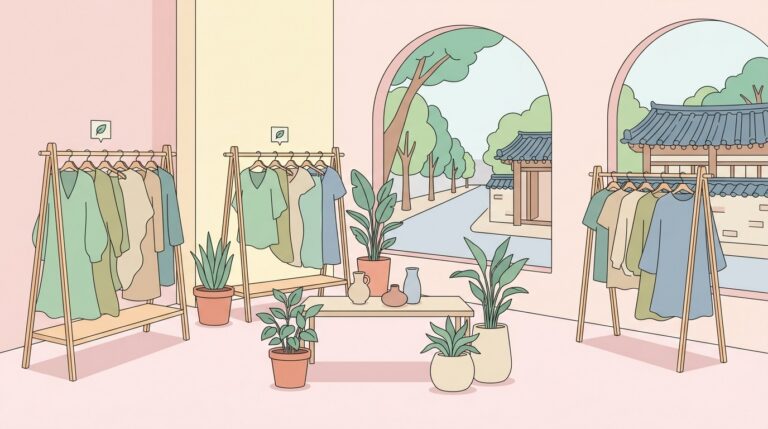
Picture this: You are walking down the industrial-chic alleys of Seongsu-dong, Seoul’s undisputed epicenter of indie fashion. You push open the fluted-glass door of an avant-garde concept showroom. On the minimalist steel rack hangs an impeccably cut trench coat crafted from apple leather and upcycled organic hemp. You run your fingers across the textured fabric and your heart races—you want to know if this collection genuinely adheres to circular fashion principles or if it is merely jumping on a fleeting green trend. But suddenly, your linguistic instincts freeze.
You know textbook vocabulary like “환경” (environment) or “동물 보호” (animal protection), yet stammering out “이 옷은 동물을 학대하지 않았습니까?” (Does this garment not abuse animals?) feels jarringly clinical and overly aggressive in a sophisticated Seoul boutique. You want to ask nuanced questions about plant-based textiles, dissect corporate greenwashing with effortless wit, and connect with design curators on an intellectual, socio-cultural level. Based on real feedback from our advanced learners, navigating the world of Korean ethical fashion requires high-register idioms and sharp socio-cultural acumen. Let’s upgrade your Korean to C2 proficiency so you can converse like an enlightened, trend-setting Seoulite.
Phase 2: Deep Dive into 3 Core Expressions
1. 가치소비를 지향하다 (Gachi-sobireul jihyanghada)
- Pronunciation: [Gachi-sobireul jihyanghada] (Pronounce jihyang softly like sighing “gee-hyahng” with an open, flowing breath)
- Meaning: Literally “to aim for value-based consumption”; practically “to practice conscious consumerism / align purchasing power with personal ethics.”
- K-Culture Moment: Heard frequently in deep-dive lifestyle interviews on YouTube channels where eco-conscious artists and influencers discuss building intentional, capsule wardrobes instead of falling into fast-fashion hauls.
- Editor’s Insight: Be extremely careful not to confuse 지향 (jihyang, aiming toward) with 지양 (jiyang, avoiding/refraining from)! Stating “가치소비를 지양해요” means you avoid ethical purchases—an awkward slip for a C2 speaker.
- Situation Spectrum: Casual ⚠️ | Semi-formal ✅ | Formal ✅
- 🤔 Think About It: In your native language, does “ethical consumerism” sound like a moral duty or a trendy lifestyle? Notice how Korean frames this as expressing personal values (가치) through the marketplace.
2. 그린워싱에 휘둘리지 않다 (Geurinwosing-e hwidulliji anta)
- Pronunciation: [Geurinwosing-e hwidulliji anta] (Hwidullida sounds like “hwee-dool-lee-da”, evocative of being spun in a dizzying whirlwind)
- Meaning: Literally “to not be swung around by greenwashing”; practically “to see through superficial eco-marketing and remain discerning.”
- K-Culture Moment: Used by conscious fashion critics on platforms like Brunch or YouTube when reviewing corporate capsule collections that slap recycled tags on non-biodegradable synthetic blends.
- Editor’s Insight: Pairing the global term 그린워싱 with the native passive verb 휘둘리다 (to be swayed/manipulated) showcases effortless C2 naturalness. It portrays you as a sovereign, critical consumer.
- Situation Spectrum: Casual ✅ | Semi-formal ✅ | Formal ✅
- 🤔 Think About It: How easily does your native language adapt modern loanwords into active, idiomatic verb constructions?
3. 지속 가능한 미학을 추구하다 (Jisok ganeunghan mihageul chuguhada)
- Pronunciation: [Jisok ganeunghan mihageul chuguhada] (Chugu hits crisp and decisive, like “choo-goo”, denoting intellectual pursuit)
- Meaning: Literally “to pursue a sustainable aesthetic”; practically “to seek fashion where environmental responsibility and high design coexist harmoniously.”
- K-Culture Moment: Quoted by visionary creative directors in Korean high-fashion magazines like Vogue Korea and W Korea during Seoul Fashion Week.
- Editor’s Insight: At the C2 level, you do not just talk about “착한 옷” (kind clothes); you discuss “미학” (aesthetics). This shifts the conversation from mundane utility to philosophy.
- Situation Spectrum: Casual ⚠️ | Semi-formal ✅ | Formal ✅
- 🤔 Think About It: How does phrasing sustainability as an “aesthetic” rather than an “inconvenience” change the cultural prestige of ethical living?
Phase 3: Textbook Korean vs Real Korean
Situation 1: Inquiring about cruelty-free materials in a showroom
- 📖 교과서 한국어 (Textbook Korean):
이 가죽 재킷은 동물을 해치지 않고 만든 비건 제품인가요?
(I gajuk jaekiseun dongmureul haechiji anko mandeun bigeon jepumingayo?)
“Is this leather jacket a vegan product made without harming animals?” - 🗣️ 진짜 한국어 (Real Native Korean):
혹시 이거 비건 레더나 친환경 신소재로 나온 라인인가요?
(Hoksi igeo bigeon redeona chinhwan-gyeong sinsojaero naon rain-in-gayo?)
“By any chance, is this line made with vegan leather or eco-friendly innovative textiles?” - 💡 왜 다를까? (Why is it different?):
Native speakers rarely use visceral, emotional terms like “동물을 해치지 않다” when speaking to sales associates. Instead, they use refined fashion industry concepts such as “신소재” (innovative materials) and “라인” (product line) to demonstrate sophisticated awareness without moral posturing.
Situation 2: Critiquing a fast-fashion brand’s misleading “green” line
- 📖 교과서 한국어 (Textbook Korean):
이 회사는 환경을 보호하는 척하면서 소비자를 속이고 있습니다.
(I hoesaneun hwan-gyeong-eul bohohaneun cheokhameseoneun sobijareul sogigo itseumnida.)
“This company pretends to protect the environment while deceiving consumers.” - 🗣️ 진짜 한국어 (Real Native Korean):
마케팅만 친환경으로 포장한 전형적인 그린워싱 아닐까요?
(Maketingman chinhwan-gyeong-euro pojanghan jeonhyeongjeogin geurinwosing anilkkayo?)
“Isn’t this just quintessential greenwashing, wrapped exclusively in eco-friendly marketing?” - 💡 왜 다를까? (Why is it different?):
High-level Korean relies on rhetorical question endings (~아닐까요?) and metaphorical verbs like 포장하다 (to package/wrap). This style delivers razor-sharp critique wrapped in polite, intellectual nuance.
Phase 4: K-Culture Deep Dive & Non-Verbal Nuance
4-1. Nunchi (눈치) & Gestural Manners in Sustainable Spaces
In upscale Korean boutiques and zero-waste designer showrooms (especially in Seongsu, Hannam, or Samcheong-dong), ethical engagement has its own silent etiquette. Avoid grilling retail curators like an investigative auditor. Demonstrating good Nunchi means observing the space first.
* The Tag Touch: Gently lift the garment care label with two hands and read the material composition before asking questions. This signals that you respect their technical craftsmanship.
* The Subtle Incline: When discussing sustainability, tilt your head slightly with a respectful nod and soften your gaze. This shifts your inquiry from an aggressive test of their supply chain into an appreciative artistic dialogue.
4-2. Cultural Code Analysis: The “Meaning Out” (미닝아웃) Revolution
In contemporary Korea, ethical consumerism has evolved into the phenomenon known as 미닝아웃 (Meaning Out)—a portmanteau of “Meaning” and “Coming Out.” Driven by the MZ generation, ethical fashion is no longer viewed as an ascetic sacrifice. Instead, purchasing from local upcycling brands (like PLEATS MAMA or 119REO) or choosing plant-based cactus leather is considered the ultimate form of 자존감 소비 (self-esteem consumption). Wearing ethical fashion has become a personal badge of cultural distinction and conscious pride.
Phase 5: Real-Life Roleplay Scenario
Setting: “Atelier Dan (아틀리에 단)”, a high-end sustainable concept store in Seongsu-dong.
Curator Min-jae (민재): A refined stylist wearing tailored upcycled linen trousers and minimalist titanium spectacles.
Learner (Alex): A conscious global shopper looking for an authentic plant-based winter overcoat.
- Turn 1 (Curator Min-jae):
어서 오세요. 이번 시즌은 식물성 원료와 재생 섬유를 결합한 컬렉션을 선보이고 있습니다.
(Eoseo oseyo. Ibeon sijeuneun sikmulseong wollyowa jaesaeng seomyureul gyeolhabhan keolleksyeoneul seonbo-igo itseumnida.)
“Welcome. This season, we are showcasing a collection that marries plant-based raw materials with regenerated fibers.”
🎭 Warmly bows at 15 degrees, gesturing towards the center rack with an open palm. -
Turn 2 (Learner Alex):
디스플레이가 인상적이네요. 혹시 이 코트에 쓰인 원단도 비건 신소재인가요?
(Diseupeulle-iga insangjeogineyyo. Hoksi i koteue ssein wondando bigeon sinsojaeingayo?)
“The display is striking. Is the textile used in this overcoat also an innovative vegan material?”
🎭 Lightly touches the hem of the coat with two fingers while maintaining eye contact. -
Turn 3 (Curator Min-jae):
네, 맞습니다. 한지 가죽과 선인장 레더를 하이브리드로 직조해 내구성과 통기성을 둘 다 잡았습니다.
(Ne, matseumnida. Hanji gajukgwa seon-injang redeoreul haibeurideuro jikjohae naeguseonggwa tonggiseong-eul dul da jabatsseumnida.)
“Indeed. We created a hybrid weave of traditional Hanji paper leather and cactus leather, capturing both durability and breathability.”
🎭 Taps his spectacles thoughtfully, pointing out the subtle grain of the lapel. -
Turn 4 (Learner Alex):
한지와 비건 레더의 조합이라니 참신하네요. 단순히 유행을 좇기보다는 지속 가능한 미학을 제대로 구현한 것 같아요.
(Hanjisawa bigeon redeoui johab-irani chamsinhadeyo. Dansunhi yuhaeng-eul jotgibodaneun jisok ganeunghan mihageul jedaero guhyeonhan geot gat-ayo.)
“A combination of Hanji and vegan leather is truly innovative. Rather than chasing fleeting trends, it seems you have realized a truly sustainable aesthetic.”
🎭 Nods slowly with genuine appreciation, admiring the hand-stitched lining. -
Turn 5 (Curator Min-jae):
알아봐 주셔서 감사해요. 요즘 무늬만 친환경인 브랜드가 워낙 많다 보니, 저희는 생산 전 과정을 투명하게 공개하고 있거든요.
(Arabwa jusyeoseo gamsahaeyo. Yojeum munimyeon chinhwan-gyeong-in beuraendeuga wonak manta boni, jeohuineun saengsan jeon gwajeong-eul tumyeonghage gonggae-hago itgeodeunyo.)
“Thank you for recognizing that. With so many brands adopting superficial eco-facades these days, we choose to transparently disclose our entire supply chain.”
🎭 Hands over an embossed traceability booklet with two hands. -
Turn 6 (Learner Alex):
소비자로서 그린워싱에 휘둘리지 않으려면 이런 생산 공정의 투명성이 정말 필수적이죠.
(Sobijaroseo geurinwosing-e hwidulliji aneuryeomyeon ireon saengsan gongjeong-ui tumyeongseong-i jeongmal pilsujeog-ijyo.)
“As a consumer, to avoid being swayed by greenwashing, transparency in production is an absolute necessity.”
🎭 Takes the booklet reverently with both hands and scans the sourcing index. -
Turn 7 (Curator Min-jae):
깊이 공감합니다. 고객님처럼 제대로 된 가치소비를 지향하는 분들을 만날 때 창작자로서 가장 보람을 느껴요.
(Gipi gonggamhamnida. Gogaeknim-cheoreom jedaero doen gachi-sobireul jihyanghaneun bundeureul mannal ttae changjakjaroseo gajang boram-eul neukkyeoyo.)
“I deeply resonate with that. Meeting clients who genuinely champion value-driven consumption gives us our greatest fulfillment as creators.”
🎭 Places a warm hand over his heart with an authentic, friendly smile. -
Turn 8 (Learner Alex):
저야말로 철학이 담긴 옷을 만나 기쁩니다. 이 라인으로 피팅 한번 부탁드려도 될까요?
(Jeoyamallo cheolhagi damgin oseul manna gippeumnida. I rain-euro piting hanbeon butakdeuryeodo doelkkayo?)
“The pleasure is entirely mine—finding clothes imbued with real philosophy. May I try on this piece in the fitting room?”
🎭 Steps back gently, gesturing toward the fitting room area with a polite smile.
🔀 Interactive Branching Moment
Curator Min-jae asks: “고객님은 비건 패션을 선택할 때 어떤 요소를 가장 중요하게 보세요?” (What factor do you prioritize most when choosing vegan fashion?)
- Choice A: “원단의 윤리적 출처와 생산 공정의 지속 가능성을 최우선으로 검토해요.”
(Wondan-ui yunrijeok chulcheowa saengsan gongjeong-ui jisok ganeungseong-eul choe-useon-euro geomtohayeo.)
👉 Best Choice: Demonstrates flawless C2 vocabulary (윤리적 출처, 검토하다) while aligning perfectly with the store’s elevated philosophy. - Choice B: “동물 가죽은 불쌍하니까 무조건 가짜 가죽으로 된 것만 사요.”
(Dongmul gajukeun bulssanghanikka mujogeon gajja gajuk-euro doen geonman sayo.)
👉 Risk Choice: Grammatically correct, but sounds childish and overly sentimental. Using “가짜 가죽” (fake leather) instead of “비건 레더/신소재” devalues the craftsmanship. - Choice C: “저는 환경 생각해서 가치소비를 완전히 지양하거든요!”
(Jeoneun hwan-gyeong saenggakhaeseo gachi-sobireul wanjeonhi jiyanghageodeunyo!)
👉 Bad Choice: Catastrophic vocabulary confusion! Using “지양하다” (to avoid) instead of “지향하다” (to strive for) accidentally announces that you completely reject ethical shopping!
Phase 6: 10-Second Emotional Shadowing Drill
Shadow these sentences out loud. Focus on natural pauses marked with / and mimic the emotional inflection indicators!
[🧐 지적이고 통찰력 있게 - Discerning & Insightful]
마케팅만 번지르르한 제품보다 / 생산 과정이 투명한 / 지속 가능한 브랜드를 선호해요.
(Maketingman beonjireureuhan jepumboda / saengsan gwajeong-i tumyeonghan / jisok ganeunghan beuraendeureul seonhohaeyo.)
“Rather than products with sleek marketing gloss, / I prefer sustainable brands / with transparent manufacturing processes.”-
[🌿 확신에 찬 단호함으로 - Confident & Principled]
소비자의 안목이 높아질수록 / 기업의 그린워싱은 / 더 이상 발붙이지 못할 거예요.
(Sobija-ui anmogi nop-ajilsurok / gieobui geurinwosing-eun / deo isang balbuchiji mothal geoyeyo.)
“As consumers’ discernment sharpens, / corporate greenwashing / will no longer find a foothold.” -
[✨ 세련되고 감각적인 찬사로 - Elegant & Complementary]
한지의 질감을 살린 비건 레더라니, / 한국 전통과 현대적인 감각이 / 절묘하게 어우러졌네요.
(Hanji-ui jilgameul sallin bigeon redeorani, / hanguk jeontong-gwa hyeondaejeogin gamgagi / jeolmyohage eoureojyeonne-yo.)
“Vegan leather that highlights the texture of Hanji paper— / Korean tradition and contemporary sensibility / have harmonized exquisitely.”
Phase 7: K-Culture Mini Dictionary
-
미닝아웃 (Mining-aut) [Noun]
Literal translation: Meaning Out.
Real-World Usage: The consumer movement of expressing political, ethical, or environmental beliefs through visible purchasing decisions. Commonly used in business headlines and lifestyle magazines across Seoul. -
새활용 (Saehwalyong) [Noun]
Literal translation: New utilization.
Real-World Usage: The pure Korean term for “upcycling” (as opposed to mere recycling, 재활용). You will see this prominently displayed in places like the Seoul Upcycling Plaza (서울새활용플라자) and boutique workshops. -
비건 레더 (Bigeon redeo) [Noun]
Literal translation: Vegan leather.
Real-World Usage: Replaces outdated terms like “인조가죽” (synthetic leather) or “레자” (loanword for faux leather). In modern Korean retail, it refers exclusively to cruelty-free, high-grade synthetic or plant-derived textiles. -
돈쭐내다 (Donjjul-naeda) [Slang Verb]
Literal translation: To give someone a scolding with money.
Real-World Usage: A playful cultural slang compound of “돈” (money) and “혼쭐내다” (to scold severely). It means rallying consumers to shower an ethical, socially conscious small business with overwhelming orders to reward them.
Phase 8: Traveler’s Survival Kit
Survival Expressions TOP 3
- 혹시 재생 원사나 유기농 면으로 제작되었나요?
(Hoksi jaesaeng wonsana yuginong myeon-euro jejak-doe-eonnayo?)
Pro Tip: Use this when inspecting casual street-wear or canvas totes to inquire if pieces use recycled yarn or organic cotton without sounding pedantic. - 동물성 소재가 배제된 제품군을 따로 볼 수 있을까요?
(Dongmulseong sojaega baeje-doen jepumguneul ttaro bol su isseulkkayo?)
Pro Tip: A polite, elegant phrasing to request the showroom’s cruelty-free collection. - 패키징도 제로 웨이스트 방식으로 포장해 주실 수 있나요?
(Paekijingdo jero weiseuteu bangsigeuro pojanghae jusil su innayo?)
Pro Tip: Ask this at checkout if you prefer your purchase without unnecessary plastic polybags or bubble wrap.
Editor’s Travel Note
When hunting for ethical fashion in Seoul, look beyond mainstream department stores. Take subway line 2 to Seongsu Station (성수역) or wander through Yeonnam-dong and Hannam-dong. To navigate these tucked-away independent ateliers effortlessly, consider downloading the Naver Map app, as international navigation apps often fail to show indie pop-up shops. Most zero-waste boutiques accept T-Money cards or international contactless credit cards. Remember: many sustainable boutiques reward patrons who bring their own shopping bags (에코백 지참) with a modest discount or complimentary upcycled fabric charms!
Phase 9: “One Step Deeper” (Sociolinguistic Insight)
In Western discourse, ethical consumption often emerges from individualist protest—a solitary moral crusade against systemic corporate greed. In Korean society, however, ethical consumption is filtered through the collective consciousness of 연대 (solidarity) and mutual responsibility. The trendy concept of 돈쭐 proves that ethical purchasing is viewed as an interactive, celebratory communal effort to protect honorable members of society. By wearing sustainable Korean fashion, you are not simply broadcasting your private virtue; you are participating in a communal etiquette that respects the collective future.
💬 Your Turn: In your home country, is ethical fashion seen as a luxury hobby, a moral duty, or a collective cultural movement? Share your perspective in the comments below using the phrase “저는 가치소비를 위해…”!
Phase 10: FAQ & Avoiding Misunderstandings
Q: Can I use the term “가짜 가죽” (Gajja gajuk) when asking for vegan leather?
A: Avoid it in modern retail settings. While “가짜 가죽” literally means “fake leather,” it carries strong connotations of cheap, low-grade counterfeits from older street markets. High-end designers and sustainable boutiques prefer 비건 레더 (vegan leather) or 친환경 신소재 (eco-friendly innovative textiles).
Q: Is vegan fashion widely recognized by older shop owners in traditional markets?
A: In traditional textile markets like Dongdaemun Shopping Complex or Gwangjang Market, older merchants may not immediately understand the loanword “비건 패션” (vegan fashion). Instead, use clear material descriptions such as 동물 가죽 말고 식물성 섬유 (plant fibers instead of animal leather) or 면/마 소재 (cotton/linen materials).
Q: What is the most natural way to decline plastic shopping bags without sounding rude?
A: Simply hold up your personal tote and say with a gentle smile: “쇼핑백은 괜찮습니다. 제 가방에 바로 담아갈게요!” (A shopping bag is fine without—I will put it right into my own bag!). This is polite, friendly, and universally understood.
🚨 Common Mistakes Alert
| Mistake | Why it Fails | Correct Action |
|---|---|---|
| Confusing 지향 with 지양 | Saying “가치소비를 지양해요” means you oppose ethical shopping. | Always use 지향하다 for goals you support and 지양하다 for actions you avoid. |
| Using 불쌍하다 (pitiful) to explain veganism | Saying “동물이 불쌍해서 샀어요” sounds juvenile and emotional. | Elevate your diction with 윤리적 가치 (ethical value) or 생명 존중 (respect for life). |
| Pronouncing 워싱 as 워킹 in 그린워싱 | Can be misheard as “green working.” | Keep the soft ‘sh’ sound: 그린워싱 [Geurin-wosing]. |
Phase 11: Action Missions
- 🥉 Bronze Mission (Solo Practice): Stand before a mirror and pronounce 가치소비를 지향하다 and 그린워싱에 휘둘리지 않다 five times each, maintaining a steady, confident cadence.
- 🥈 Silver Mission (Social Connection): Search the hashtag
#가치소비or#미닝아웃on Instagram. Leave a polite Korean comment on a sustainable designer’s post using today’s target grammar: “지속 가능한 미학이 돋보이는 멋진 컬렉션이네요!” - 🥇 Gold Mission (Real-World Execution): Visit a showroom or vintage store in Seoul (or order from a Korean brand online) and ask the curator if their collection uses 친환경 신소재 or 새활용 원단.
- 🎮 K-Culture Mission: Watch a contemporary K-Drama set in corporate fashion (such as Now, We Are Breaking Up or an indie design documentary) and listen for how designers debate ethical textile sourcing versus production margins.
Phase 12: Interactive Quiz Challenge
1. Situational Judgment
You are attending a Seoul Fashion Week panel discussion on ethical apparel. You want to praise a designer for proving that eco-friendly materials can be luxurious and stylish. Which sentence is most appropriate?
* (A) 이 옷은 동물을 안 죽여서 참 착한 옷이네요.
* (B) 친환경 소재로도 독창적인 지속 가능한 미학을 완벽히 구현하셨네요.
* (C) 마케팅만 친환경인 전형적인 그린워싱을 지향하셨군요.
2. Fill-in-the-Blank
소비자들이 기업의 과장된 친환경 마케팅인 ________에 휘둘리지 않고 주체적으로 물건을 구매할 때, 진정한 ________가 정착될 수 있습니다.
(When consumers are not swayed by corporations’ exaggerated eco-marketing known as [ A ] and make autonomous purchases, true [ B ] can take root.)
3. Cultural True/False
In Korean retail culture, calling an eco-friendly faux leather bag “가짜 가죽 (Gajja gajuk)” is regarded as a sophisticated, culturally savvy C2 compliment to the showroom curator.
* [ True / False ]
👉 Click to reveal answers & detailed explanations!
1. Correct Answer: (B)
Explanation: Option (B) uses sophisticated C2 register vocabulary (지속 가능한 미학, 구현하다) suitable for an intellectual fashion forum. Option (A) is overly childish (동물을 안 죽여서), while Option (C) accuses the designer of being a greenwasher (그린워싱을 지향하다)!
2. Correct Answer:
* [A]: 그린워싱 (Greenwashing)
* [B]: 가치소비 (Value-based consumption)
3. Correct Answer: False
Explanation: “가짜 가죽” translates to “counterfeit/cheap fake leather.” To compliment upscale sustainable alternatives, use 비건 레더 (vegan leather) or 친환경 대체 가죽 (eco-friendly alternative leather).







