

Conquering Seoul’s Streetwear Scene: Talk Like a True Fashion Insider
Phase 1: 공감 (Story-Driven Opening)
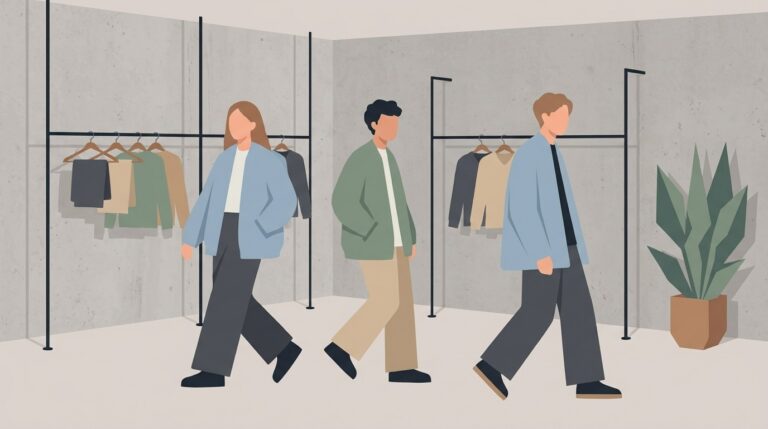
안녕하세요! 매일한글 에디터입니다. Have you ever stepped into a dimly lit, minimalist concrete boutique in Seongsu-dong (성수동) or an archive vintage cellar in Hongdae (홍대), only to freeze when a stunningly chic clerk in head-to-toe Gorpcore asks you a rapid-fire question? You want to compliment a one-of-a-kind reconstructed blazer or ask about the silhouette, but your textbook vocabulary only gave you stiff phrases like “이 옷은 예쁩니다” (This clothing is pretty). The clerk nods politely, but that electric cultural connection fades away. As an advanced (C1) Korean learner, you don’t just want to buy clothes—you want to enter the conversation, decode the underground subculture, and exchange aesthetic respect. Based on real feedback from seasoned travelers and fashion students in Seoul, this guide bridges the gap between mechanical grammar and authentic Seoul street cred.
Phase 2: 핵심 표현 3선 심층 분석
1. 이 착장 완전 찰떡이에요 (I chak-jang wan-jeon chal-tteok-i-e-yo)
- Pronunciation: [I chak-jang wan-jeon chal-tteo-gi-e-yo] (Sounds like chak-jahng, with chal-tteok snapping like the chew of sticky rice cake)
- Meaning: Literal: “This outfit is totally sticky rice cake” | Real Nuance: “This outfit fits your personal vibe and silhouette flawlessly.”
- K-Culture Moment: Frequently heard on YouTube fashion transformation vlogs and Street Woman Fighter styling behind-the-scenes when dancers flatter each other’s custom stage wear.
- Editor’s Insight: While beginners rely on “어울려요” (it suits you), C1 insiders use “착장” (a curated outfit/fit) combined with “찰떡” (perfection, adhering without friction). It shows you appreciate styling as an art form rather than an isolated garment.
- Situation Spectrum: Casual: ✅ | Semi-formal: ⚠️ | Formal: 🚫
- 🤔 Think About It: Why does Korean culture equate culinary textures like glutinous rice cake (찰떡) with harmonious visual aesthetics?
2. 핏이 제대로 사네요 (Pit-i je-dae-ro sa-ne-yo)
- Pronunciation: [Pi-si je-dae-ro sa-ne-yo] (Rhymes with “peace” shifting into a brisk “sah-neh-yo”)
- Meaning: Literal: “The fit is truly living” | Real Nuance: “The silhouette falls absolutely right; the cut brings the piece to life.”
- K-Culture Moment: Street photographers at Seoul Fashion Week shouting compliments to models strolling outside Dongdaemun Design Plaza (DDP).
- Editor’s Insight: In Korean fashion, “핏” (loanword from English ‘fit’) doesn’t just denote sizing—it refers to architectural drape. Saying something “살아있다” (is alive / stands out) acknowledges the craftsmanship and posture.
- Situation Spectrum: Casual: ✅ | Semi-formal: ✅ | Formal: ⚠️
- 🤔 Think About It: In English, clothes “fit well”; in Korean, the fit “lives”. What does this animistic phrasing reveal about how Seoulites view visual presence?
3. 무드가 독보적이에요 (Mu-deu-ga dok-bo-jeok-i-e-yo)
- Pronunciation: [Mu-deu-ga dok-bbo-jeo-gi-e-yo] (Dok-bo sounds crisp, emphasizing exclusivity)
- Meaning: Literal: “The mood is peerless/incomparable” | Real Nuance: “This piece has an unmatched aesthetic vibe that you can’t find anywhere else.”
- K-Culture Moment: High-profile K-pop visual directors reviewing vintage archive pullouts for an album jacket concept in Euljiro.
- Editor’s Insight: When discussing subcultures—whether Y2K, Cyberpunk, or Acubi style—using standard adjectives like “독특해요” (it’s unique) sounds like a tourist review. “독보적” (unrivaled) elevates your critique to professional cultural discourse.
- Situation Spectrum: Casual: ✅ | Semi-formal: ✅ | Formal: ✅
- 🤔 Think About It: How has the loanword “Mood” (무드) evolved in Seoul’s subcultures to replace older notions of 분위기 (atmosphere)?
Phase 3: 교과서 한국어 vs 진짜 한국어
Situation 1: Expressing that an oversized leather jacket looks amazing
- 📖 교과서 한국어: 이 가죽 재킷은 당신의 체형에 아주 잘 맞습니다. (I gajuk jaekiseun dangsineui chehyeonge aju jal matseumnida. / This leather jacket fits your body shape very well.)
- 🗣️ 진짜 한국어: 오버핏 실루엣인데 어깨 라인이 무너지지 않고 핏이 제대로 사네요. (Obeopit silluesinde eokkae raini muneojiji anko pisi jedaero saneyo. / It’s an oversized silhouette, but the shoulder line doesn’t sag; the drape is immaculate.)
- 💡 왜 다를까? Textbook Korean sounds like a medical fitting or robotic translation. Streetwear connoisseurs in Seoul focus on structural nuances like drape, tailoring balance, and intentional slouch.
Situation 2: Asking if a curated piece is an archival/rare find
- 📖 교과서 한국어: 이 가게는 특별하고 드문 옷을 팝니까? (I gageneun teukbyeolhago deumun oseul pamnikka? / Does this store sell special and rare clothes?)
- 🗣️ 진짜 한국어: 이거 바잉해 오신 아카이브 피스인가요? 디깅 제대로 하셨네요! (Igeo ba-ing-hae osin aka-i-beu piseu-in-ga-yo? Di-ging je-dae-ro ha-syeon-ne-yo! / Did you buy this as an archive piece? You did some serious vintage digging!)
- 💡 왜 다를까? Subcultural vintage stores in Euljiro and Seongsu run on specialized curatorial terminology (바잉, 아카이브, 디깅). Speaking this dialect instantly builds peer rapport with indie store founders.
Phase 4: K-Culture 딥다이브 & 비언어적 매너
4-1. 눈치 (Nunchi) & Gestures in Independent Showrooms
In Seoul’s independent designer showrooms and basement vintage archives, an unwritten code of posture exists. Never rifle aggressively through hangers. Show respect to curated garments: gently touch the hem with two fingers, tilt the hanger at a 45-degree angle without wrenching it off the rail, and maintain calm eye contact with the curator before inspecting delicate fabrics. A subtle 15-degree nod combined with relaxed eye contact conveys that you aren’t just a passerby taking selfies for social media, but an informed aesthete.
4-2. 문화 코드 분석: From Stage to Street
Korean subcultural fashion is driven by the phenomenon known as Guk-hip (국힙, Korean Hip-Hop) and competitive dance shows like Street Woman Fighter. The boundary between stage outfit and street style in Seoul is porous. When an idol or street dancer pairs a traditional Hanbok-inspired norigae accessory with parachute cargo pants and trail runners, it triggers an instant nationwide movement. Street fashion in Seoul is not counter-culture in opposition to mainstream culture; it is the high-velocity engine that continuously reinvents mainstream K-pop aesthetics.
Phase 5: 실전 롤플레이 시나리오
Setting: A subterranean industrial-concept archive shop tucked in an alley near Seongsu Station. Exposed concrete walls, ambient electronic music humming, and scent of sandalwood burning.
NPC: Min-jun (민준), a 28-year-old boutique curator dressed in vintage Japanese workwear, wearing silver-rimmed glasses.
- Turn 1 (민준): 어서 오세요. 편하게 둘러보시고 피팅 원하시면 말씀해 주세요. (Eoseo oseyo. Pyeonhage dulleobosigo piting wonhasimyeon malsseumhae juseyo. / 🎭 Greeting with a subtle, non-intrusive head nod while holding a clothing steamer. / Welcome. Feel free to browse, and let me know if you want to try anything on.)
- Turn 2 (Learner): 감사합니다. 매장 무드가 진짜 감각적이네요. (Gamsahamnida. Maejang mudeuga jinjja gamgakjeogineyo. / 🎭 Glancing admiringly around the curated rack. / Thank you. The mood of your store is truly tasteful.)
- Turn 3 (민준): 알아봐 주셔서 감사합니다. 이번 시즌엔 해체주의 워크웨어 위주로 셀렉해 봤어요. (Arabwa jusyeoseo gamsahamnida. Ibeon sijeunen haechejuui wokeuweeo wijuro sellekhae bwasseoyo. / 🎭 Smiling pleasantly, visibly relaxing his posture. / Thank you for noticing. This season we curated mainly deconstructed workwear.)
- Turn 4 (Learner): 저기 걸린 카고 팬츠 착용해 봐도 될까요? 원단 질감이 독특해서요. (Jeogi geollin kago paencheu chagyonghae bwado doelkkayo? Wondan jilgami dokteukhaeseoyo. / 🎭 Pointing politely with an open palm toward the garment. / May I try on those cargo pants over there? The fabric texture is really unique.)
- Turn 5 (민준): 네, 이쪽 피팅룸 이용하시면 돼요. 신발 벗고 들어가시면 됩니다. (Ne, ijjok pitingrum iyonghasimyeon dwaeyo. Sinbal beotgo deureogasimyeon doemnida. / 🎭 Guiding toward the curtained fitting booth with both hands gesturing direction. / Yes, you can use the fitting room here. Please take off your shoes before stepping inside.)
- Turn 6 (Learner): [Exits fitting room] 기장감도 딱 맞고, 허리 라인 핏이 제대로 사네요! (Gijang-gamdo ttak matgo, heori rain pisi jedaero saneyo! / 🎭 Checking the mirror silhouette and turning to show the drape. / The length is spot on, and the waistline fit falls alive!)
- Turn 7 (민준): 고객님 체형에 완전 찰떡인데요? 스트릿 무드 제대로 나요. (Gogaengnim chehyeonge wanjeon chal-tteoginde-yo? Seuteurit mudeu jedaero nayo. / 🎭 Nodding enthusiastically with widened eyes. / It fits your physique like sticky rice cake! It radiates authentic street mood.)
- Turn 8 (Learner): 마음에 쏙 드네요. 이 착장 그대로 데려갈게요! (Maeume ssok deuneyo. I chak-jang geudaero deryeogalgeyo! / 🎭 Smiling decisively and holding the garment respectfully. / I’m completely sold. I’ll take this entire piece home!)
🔀 인터랙티브 분기점 (Interactive Choice after Turn 5)
You’ve put on the designer trousers in the booth, but the waist is slightly loose while the drape is magnificent. What do you say as you open the curtain?
- Option A: “허리가 좀 헐렁한데 벨트로 조이면 핏 괜찮을까요?” (Heoriga jom heolleonghande belteuro joimyeon pit gwaenchaneulkkayo? / The waist is a bit loose; would the fit stay sharp if cinched with a belt?)
- Outcome (Best): Shows you understand styling alternatives. The curator will offer a tailored belt option and respect your fashion eye.
- Option B: “이 옷 사이즈가 잘못 만들어진 것 같은데요.” (I ot sa-i-jeuga jalmot mandeureojin geot gateundeyo. / I think the sizing of this garment was manufactured incorrectly.)
- Outcome (Bad): Blames the silhouette of an intentionally oversized cut, projecting amateur ignorance and offending the curator.
- Option C: “싸게 해주시면 수선해서 입을게요.” (Ssage haejusimyeon suseonhaeseo ibeulgeyo. / If you give me a discount, I’ll pay to get it altered.)
- Outcome (Risk): Extreme faux pas. In Korean designer showrooms and boutique archives, haggling is considered very disrespectful.
Phase 6: 10초 감정 섀도잉 드릴
Practice your rhythm, emotional pauses (/), and natural cadences:
[😎 무심한 듯 시크하게 / Effortlessly cool & detached]
“솔직히 말해서 / 이 착장은 / 핏이 다 했네요.”
(Soljiki malhaeseo / i chak-jangeun / pisi da haenneyo.)-
[🤩 숨길 수 없이 감탄하며 / Uncontrollable genuine awe]
“와, 이 빈티지 자켓 디테일 / 진짜 미쳤다! / 무드가 독보적이에요.”
(Wa, i bintiji jaket dite-il / jinjja michyeotta! / Mudeuga dokbojeogieyo.) -
[🤝 큐레이터에게 존중을 담아 / Respectful peer affirmation]
“바잉 센스가 대단하세요. / 어디서 이런 레어템을 / 디깅하셨어요?”
(Ba-ing senseuga daedanhaseyo. / Eodiseo ireon re-eo-temeul / di-ging-ha-syeosseoyo?)
Phase 7: K-Culture 미니 사전 (핵심 키워드 4개)
- 착장 (Chak-jang) | Complete Outfit Coordination
- Modern slang originating from fashion communities. Unlike the general noun ‘옷’ (clothes), ‘착장’ evaluates the synergy of garments, footwear, headwear, and jewelry together.
- 꾸안꾸 (Kku-an-kku) | Effortless Chic (Abbreviation of 꾸민 듯 안 꾸민 듯)
- The holy grail of modern Seoul aesthetics: looking exceptionally stylish without appearing as if you spent three hours trying.
- 디깅 (Di-ging) | Digging / Cultural Curating
- Borrowed from DJ culture (‘crate digging’), widely used by Korean youth to describe hunting down rare vintage, hidden local streetwear brands, or obscure indie labels.
- 성수 룩 (Seongsu Look) | The Seongsu District Aesthetic
- A metropolitan uniform characterized by oversized tailored blazers, distressed denim or utilitarian nylon track pants, chunky silver rings, and artisanal ceramic coffee tumblers.
Phase 8: 여행자를 위한 생존 키트
서바이벌 표현 TOP 3
- 이거 혹시 다른 컬러나 사이징도 오더 가능한가요? (Igeo hoksi dareun keolleona sa-i-jingdo odeeo ganeunghangayo?)
- Pro Tip: Use this in independent label showrooms when a display sample doesn’t fit. Korean boutiques often hold alternate stock in rear lockers or can ship directly.
- 텍스 리펀드 영수증 발행해 주실 수 있나요? (Tekseu ripeondeu yeongsujeung balhaenghae jusil su innayo?)
- Pro Tip: Streetwear stores in Seongsu, Hannam-dong, and Dosan often support instant tax refund slips on purchases over 15,000 KRW.
- 착용해 볼 때 페이스 커버 써야 하나요? (Chagyonghae bol ttae pe-i-seu keobeo sseoya hanayo?)
- Pro Tip: Essential courtesy for tops and knitwear in Korea! Many stores mandate disposable non-woven face covers to avoid makeup stains.
Editor’s Travel Note
- Essential Apps: Download the Naver Map app on iOS and Android rather than foreign navigation apps, as it tags underground pop-up stores in real time. For checking local streetwear restocks and retail drops, keep the Musinsa online fashion store app handy on your phone.
- Payment & Subculture Ettiquette: Most Seoul hipster alley boutiques are strictly cashless. Keep a major contactless credit card or Korean mobile transit card (Climate Card or T-money) ready.
Phase 9: “한 발 더 깊이” (생각 질문)
In Western individualist subcultures, street fashion often evolves out of deliberate rebellion against collective standards. In South Korea, however, street fashion reveals an interesting cultural duality: the collective urge to embrace hyper-synchronized macro trends (such as Gorpcore or Y2K), contrasted with micro-individualism achieved through bespoke accessory curation and precision layering. This tension between belonging to the tribe and asserting private taste makes Seoul one of the most dynamic fashion capitals on earth.
💬 Your Turn: In your home country, is street fashion viewed as an underground counter-culture, or has it entered mainstream retail as smoothly as it has in Seoul? Leave a comment below!
Phase 10: FAQ & 오해 방지 (FAQ Schema)
Q: Can I negotiate the price at vintage shops in Hongdae or Dongmyo?
A: At traditional outdoor flea markets like Dongmyo Shrine Market (동묘), friendly bargaining is part of the experience. However, at curated subcultural vintage boutiques (빈티지 숍) in Hongdae, Yeonnam-dong, or Seongsu, prices are strictly fixed (정찰제). Attempting to haggle there creates awkwardness.
Q: What is the difference between “오버핏” (Over-fit) and just wearing clothes that are too big?
A: In Korean fashion critique, “오버핏” implies an intentionally calculated silhouette where structural points (like drop shoulders and sleeve stacks) balance out, whereas simply oversized clothing is described as “헐렁하다” (loose/ill-fitting) or “남의 옷 같다” (looks like someone else’s clothes).
Q: Can I take photos inside hip independent boutiques?
A: Always observe store signage. If you see “촬영 금지” (No Photography) or sensitive archive tags, asking beforehand by saying “매장 사진 몇 장만 찍어도 될까요?” (May I take a few photos of the store?) shows high cultural etiquette.
🚨 흔한 실수 (Common Mistakes) 경고판
- Mistake: Stepping into boutique fitting rooms with outdoor shoes still on.
- Correct Action: In 90% of Korean fashion stores, fitting room floors are raised mats. Step out of your shoes outside the curtain, or step onto the designated slippers provided.
- Mistake: Trying on white shirts or graphic pullovers without asking for a face cover (페이스 커버).
- Correct Action: Politely check: “페이스 커버 착용하고 입어볼게요” (I will wear a face cover and try it on).
- Mistake: Describing every stylish person simply as “패셔니스타” (fashionista).
- Correct Action: That term feels outdated and 2000s-esque. Modern Seoulites say someone has “센스 있다” (has innate sense), “옷을 센스 있게 잘 입는다”, or “무드가 미쳤다”.
Phase 11: 액션 미션 & 참여 유도
- 🥉 Bronze Mission: Stand before your mirror and film a 5-second video describing today’s outfit aloud: “오늘 내 착장, 핏이 제대로 살았네!” (O-neul nae chak-jang, pi-si je-dae-ro sa-ran-ne!).
- 🥈 Silver Mission: Go onto Instagram or Threads, locate a Korean streetwear label (e.g., Andersson Bell, Ader Error, or Thisisneverthat), and leave an advanced comment complimenting their lookbook: “이번 컬렉션 무드가 진짜 독보적이네요!”
- 🥇 Gold Mission: Walk into an independent showroom in Seoul or a Korean boutique abroad, ask for the fitting booth with high-level etiquette, and execute the C1 phrase: “원단 질감이랑 실루엣이 독특해서 입어보고 싶어요.”
- 🎮 K-Culture Mission: Watch an episode of a Korean dance show or K-hip-hop cypher, and count how many times participants use the words “무드”, “핏”, and “착장”.
Phase 12: 인터랙티브 퀴즈 챌린지
Test your subcultural mastery! Click each section below to check your answers and detailed breakdowns.
1. 상황 판단 퀴즈: Which compliment is most natural at a trendy Seongsu showroom?
- Question: You love how the boutique curator styled an archival deconstructed knitwear item. What should you say?
- (A) 이 옷은 색상이 예쁘고 비싸 보입니다.
- (B) 디테일도 섬세하고 전체적인 착장 무드가 독보적이에요!
- (C) 옷의 규격이 제 신체 치수와 적합하게 일치합니다.
- Answer: (B)
- Explanation: (A) is too elementary and focuses bluntly on price. (C) uses hyper-literal technical terminology that sounds like a clinical lab report. (B) naturally integrates ‘디테일’ (craft details), ‘착장’ (styling), and ‘독보적’ (unmatched mood), which is the benchmark of C1 conversational competence.
2. 빈칸 채우기 퀴즈: Fill in the core idiom
- Question: Complete the insider idiom meaning “This jacket fits you like a second skin with zero awkwardness”:
- “이 가죽 자켓, 너한테 완전 ______인데?”
- Answer: 찰떡 (Chal-tteok)
- Explanation: While “딱” (just right) also works colloquially, “찰떡” (sticky rice cake) is the iconic, culturally evocative term for a match made in heaven.
3. O/X 문화 퀴즈: Streetwear Etiquette
-
Statement: In Seongsu and Hannam-dong curated archive showrooms, it is customary to negotiate at least a 10% discount if you pay in cash.
-
Answer: X (False)
- Explanation: Curated streetwear and designer archive shops operate under strict fixed pricing (정찰제). Bargaining is inappropriate in these spaces and will cause discomfort (눈치).
“







