

Emergency Korean: Navigating an Elevator Breakdown with Poise and Fluency
Phase 1: 공감 (Story-Driven Opening)
안녕하세요! 매일한글 에디터입니다.
Picture this quintessential K-Drama sequence: You are heading back to your 22nd-floor officetel in the bustling heart of Mapo after an exhausting day of exploring Seoul’s vibrant alleys. In your hand is a warm takeout bag of crispy fried chicken. The elevator doors glide shut with a soft chime. You press your floor, smooth jazz hums from the speaker, and the digital display begins its steady ascent: 12, 13, 14… Suddenly, a jarring thud rattles the floor beneath your sneakers. The cabin shudders to a dead halt. The overhead lights flicker and switch to an eerie emergency amber, and the ventilation fan cuts out with an ominous wheeze. You look at your smartphone—your 5G signal instantly drops to a solitary, despairing bar.
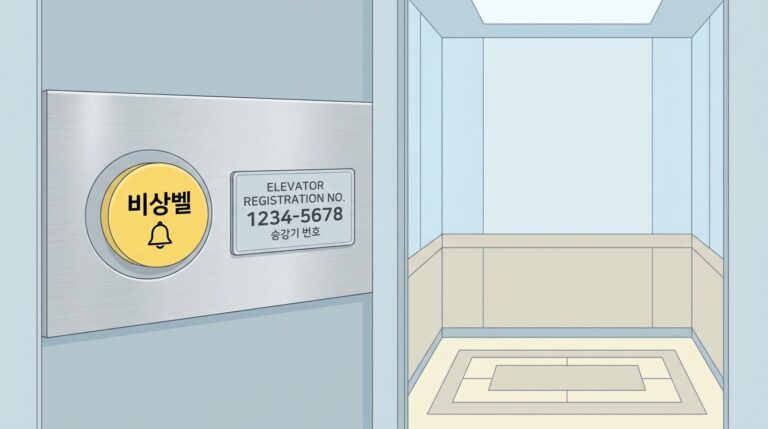
Your heart spikes. In English, you could easily shout, explain, or demand assistance. But trapped inside a steel shaft suspended twelve stories above ground in South Korea, a paralyzing linguistic fog descends. You stare at the console: amidst the sea of metallic buttons sits an amber icon labeled ‘비상통화’ (Emergency Call). What happens when you press it? When the operator’s crackling voice asks for your coordinates, how do you communicate with crystal-clear precision without succumbing to panic?
Many advanced Korean learners mistakenly assume their high TOPIK scores will automatically translate into emergency resilience. However, real crises strip away conversational hesitation, demanding immediate, protocol-exact Korean under extreme adrenaline. This guide is crafted directly from field debriefs with foreign residents and local emergency dispatchers. Mastering these C2-level communicative strategies will not only safeguard your physical well-being in an urban crisis, but it will also give you absolute mastery over one of the most high-stakes communicative situations in modern Korean high-rise living.
Phase 2: 핵심 표현 3선 심층 분석 (Deep Dive into 3 Essential Expressions)
1. 엘리베이터가 멈췄어요. 안에 갇혔습니다. (El-li-be-i-teo-ga meom-chwoss-eo-yo. An-e gat-hyeoss-seum-ni-da.)
- Pronunciation: [El-li-be-i-teo-ga meom-chwoss-eo-yo. Ahn-eh gah-tyeot-seum-ni-da] (Think of gat-hyeot sounding crisp like “got-shut” combined into one clipped, breathless pop).
- Meaning: Literal: “The elevator has stopped. I am trapped inside.” vs. Nuance: A high-clarity emergency dispatch statement delivering the essential incident facts first—mechanical failure followed immediately by human confinement.
- K-Culture Moment: In modern suspense thrillers like Stranger (비밀의 숲), characters do not mince words when reporting sudden infrastructure sabotage; they lead with the passive-state verb 갇히다 (to be trapped/confined) to trigger immediate escalation protocols.
- Editor’s Insight: Notice the verb choice 갇혔습니다 rather than 안에 있어요 (I am inside). The passive voice 갇히다 denotes involuntary restriction of mobility, which legally upgrades the situation from a maintenance hitch to an active rescue priority under Korea’s Elevator Safety Management Act.
- Situation Spectrum: Casual 🚫 | Semi-formal ⚠️ | Formal ✅
- 🤔 Think About It: In English, we often say “I’m stuck in an elevator,” which sounds mildly inconvenient. Why does the Korean passive 갇히다 carry a stronger legal and physical weight of involuntary confinement?
2. 승강기 고유번호 일곱 자리를 확인해 주세요. (Seung-gang-gi go-yu-beon-ho il-gop ja-ri-reul hwag-in-hae ju-se-yo.)
- Pronunciation: [Seung-gang-gi go-yu-beon-ho eel-gop jah-ri-reul hwa-gin-hae joo-seh-yo] (Rhymes intuitively with “sung-gahng-gee go-you-bun-hoe”).
- Meaning: Literal: “Please check the seven-digit elevator identification number.” vs. Nuance: The single most vital tactical question you will hear from the 119 dispatcher or maintenance operator, instructing you to read the metallic safety plate located right above the button panel.
- K-Culture Moment: Seen on civic safety infomercials and realistic slice-of-life dramas like Live (라이브), where first responders locate trapped residents across thousands of identical high-rise apartments exclusively using this universal digital locator.
- Editor’s Insight: Korea features over 800,000 registered elevators, all cataloged under the National Elevator Information System (국가승강기정보센터). The seven-digit code instantly yields the building’s exact legal address, hoistway number, and technician contact to emergency personnel even if you have no idea what building you just walked into.
- Situation Spectrum: Casual 🚫 | Semi-formal ⚠️ | Formal ✅
- 🤔 Think About It: How does South Korea’s hyper-systematized, data-driven approach to infrastructure differ from rescue procedures in your home country, where street addresses and landmarks often take precedence?
3. 문을 강제로 열지 마시고, 침착하게 대기해 주십시오. (Mun-eul gang-je-ro yeol-ji ma-si-go, chim-chak-ha-ge dae-gi-hae ju-sip-si-o.)
- Pronunciation: [Moon-eul gahng-jeh-ro yeol-ji mah-shi-go, cheem-chahk-hah-geh dae-gee-hae joo-ship-shi-oh].
- Meaning: Literal: “Do not open the door forcibly, and please wait calmly.” vs. Nuance: A standard authoritative safety directive issued to avert fatal hoistway falls and sudden safety-gear disengagements.
- K-Culture Moment: Disasters in film such as Exit (엑시트) emphasize the deadly impulse of panicking victims trying to pry open jammed industrial doors instead of trusting structural safety brakes.
- Editor’s Insight: The phrase employs the formal directive -시어 주십시오, conveying institutional authority. Hearing this command signifies that technical intervention is underway and that your sole physical duty is staying anchored to the floor away from the door seam.
- Situation Spectrum: Casual 🚫 | Semi-formal ⚠️ | Formal ✅
- 🤔 Think About It: Why do Korean institutional safety commands lean heavily on prescriptive, honorific verb endings (-십시오) rather than imperative colloquialisms during critical emergencies?
Phase 3: 교과서 한국어 vs 진짜 한국어 (Textbook vs. Real Korean)
Situation 1: Pressing the Intercom Button to Report the Malfunction
- 📖 교과서 한국어:
여보세요, 기계가 고장 났습니다. 도와주세요.
(Yeo-bo-se-yo, gi-gye-ga go-jang nass-seum-ni-da. Do-wa-ju-se-yo.)
“Hello, the machine is broken. Please help me.” - 🗣️ 진짜 한국어:
비상 통화 맞나요? 14층 부근에서 승강기가 급정지해서 안에 갇혔어요.
(Bi-sang tong-hwa mat-na-yo? Sip-sa-cheung bu-geun-e-seo seung-gang-gi-ga geup-jeong-ji-hae-seo an-e gat-hyeoss-eo-yo.)
“Is this the emergency center? The elevator made a sudden stop near the 14th floor, and we are trapped inside.” - 💡 왜 다를까? Textbook Korean uses vague terms like 기계 (machine) and generic cries for help. Native situational Korean utilizes accurate domain vocabulary (승강기, 급정지) and specifies location coordinates immediately to preempt dispatch delays.
Situation 2: Inquiring About Rescue ETA Without Sounding Aggressive
- 📖 교과서 한국어:
언제 올 것입니까? 빨리 오세요.
(Eon-je ol geos-im-ni-kka? Ppal-li o-se-yo.)
“When will you come? Come quickly.” - 🗣️ 진짜 한국어:
출동하시는 데 대략 얼마나 걸릴까요? 호흡이 답답한 동승자가 있어서요.
(Chul-dong-ha-si-neun de dae-ryak eol-ma-na geol-ril-kka-yo? Ho-heub-i dap-dap-han dong-seung-ja-ga iss-eo-seo-yo.)
“Approximately how long will dispatch take? A fellow passenger is experiencing breathing difficulties, so I wanted to check.” - 💡 왜 다를까? Barking “빨리 오세요” can strain professional communication. Advanced Korean uses the indirect softener -아서/어서요 while providing vital medical context (동승자 호흡 곤란) to naturally elevate rescue triage level.
Phase 4: K-Culture 딥다이브 & 비언어적 매너 (Deep Dive & Non-Verbal Etiquette)
4-1. 눈치 (Nunchi) & Crisis Body Language
Elevator compartments in South Korea are compact social spaces where personal boundaries are tightly negotiated. When trapped, collective anxiety can spike quickly, making non-verbal poise crucial:
* The Myth of Asphyxiation: Korean elevators are not airtight capsules; ventilation louvers continually circulate air. Pointing this out quietly to hyperventilating passengers displays quintessential, calming 배려 (consideration).
* Physical Stance: Do not pace or slam the metal wall panels. Lean your back lightly against the reinforced handrail wall, bend your knees slightly to brace against potential recalibration drops, and keep your hands off the sliding doors.
* Reading the Room (눈치): If you are sharing the cabin with an elderly person (어르신) or an anxious delivery courier, immediately take the initiative to communicate with the intercom operator so they do not feel the burden of handling the crisis alone.
4-2. Cultural Code Analysis: The High-Rise Republic (아파트 공화국)
With over 60% of South Koreans residing in multi-unit high-rise complexes (아파트 and 오피스텔), the elevator is considered an extension of communal neighborhood life. Consequently, South Korea maintains one of the world’s strictest regulatory frameworks: the 승강기 안전종합정보망 (Elevator Comprehensive Information Network).
Every cabin in the country is outfitted with a standardized yellow or silver rectangular plate emblazoned with a QR code and a bold 7-digit 승강기 고유번호. This is not arbitrary serial bookkeeping—it is integrated directly into the national 119 fire and rescue database. Understanding this infrastructure reveals a core facet of Korean society: intense bureaucratic integration designed to render mutual civic emergencies resolvable within minutes through precise protocol.
Phase 5: 실전 롤플레이 시나리오 (Interactive Roleplay Simulation)
Setting: A 15-story older commercial building in Euljiro, Seoul. The elevator stalls with a jolt between the 7th and 8th floors. You are trapped alongside a startled food delivery courier holding a thermal bag.
- Turn 1 (Dispatcher):
네, 비상통화 장치입니다. 어떤 문제이신가요?
(Ne, bi-sang-tong-hwa jang-chi-im-ni-da. Eot-teon mun-je-i-sin-ga-yo?)
“Yes, this is the emergency intercom service. What is the issue?”
🎭 Calm, metallic electronic tone through the cabin speaker. -
Turn 2 (You):
엘리베이터가 덜컹거리더니 갑자기 멈췄습니다. 안에 두 명 갇혀 있어요.
(El-li-be-i-teo-ga deol-keong-geo-ri-deo-ni gap-ja-gi meom-chwoss-seum-ni-da. An-e du myeong gat-hyeo iss-eo-yo.)
*”The elevator rattled and suddenly came to a stop. Two of us are trapped inside.”
🎭 Speaking firmly toward the circular yellow intercom microphone. -
Turn 3 (Dispatcher):
다치신 분은 없으십니까? 조작판 위 승강기 번호 일곱 자리 불러주시겠어요?
(Da-chi-sin bun-eun eops-eu-sim-ni-kka? Jo-jak-pan wi seung-gang-gi beon-ho il-gop ja-ri bul-leo-ju-si-gess-eo-yo?)
“Is anyone injured? Could you please read off the seven-digit elevator number above the control panel?”
🎭 Typing sounds audible over the intercom. -
Turn 4 (You):
부상자는 없습니다. 승강기 번호는 0-1-2-3-4-5-6 입니다.
(Bu-sang-ja-neun eops-seum-ni-da. Seung-gang-gi beon-ho-neun gong-il-i-sam-sa-o-yuk im-ni-da.)
*”No injuries. The elevator identification number is 0-1-2-3-4-5-6.”
🎭 Reading slowly, enunciating each digit clearly using Sino-Korean numbers. -
Turn 5 (Dispatcher):
을지로 3가 대양빌딩 확인되셨습니다. 현재 위치는 몇 층 정도인가요?
(Eul-ji-ro sam-ga dae-yang-bil-ding hwag-in-doe-syeoss-seum-ni-da. Hyeon-jae wi-chi-neun myeot cheung jeong-do-in-ga-yo?)
“Verified: Daeyang Building, Euljiro 3-ga. What floor level are you currently at?”
🎭 Dispatcher confirms physical address instantly. -
Turn 6 (You):
7층과 8층 사이에 걸쳐 있는 것 같습니다. 조명은 들어오는데 환풍기가 멈췄어요.
(Chil-cheung-gwa pal-cheung sa-i-e geol-chyeo iss-neun geot gat-seum-ni-da. Jo-myeong-eun deul-eo-o-neun-de hwan-pung-gi-ga meom-chwoss-eo-yo.)
*”It appears to be caught between the 7th and 8th floors. The lights are on, but the ventilation fan has stopped.”
🎭 Looking up at the floor indicator and observing cabin details. -
Turn 7 (Dispatcher):
네, 관제 센터에서 구조팀과 유지보수 업체를 긴급 출동시켰습니다. 문을 억지로 열려고 하시면 절대 안 됩니다.
(Ne, gwan-je sen-teo-e-seo gu-jo-tim-gwa yu-ji-bo-su eop-che-reul gin-geup chul-dong-si-kyeoss-seum-ni-da. Mun-eul eok-ji-ro yeol-ryeo-go ha-si-myeon jeol-dae an doem-ni-da.)
*”Understood. Control center has dispatched the rescue squad and maintenance service. You must never attempt to force the doors open.”
🎭 Reassuring yet stern tone. -
Turn 8 (You):
네, 무리하지 않고 안전하게 기다리겠습니다. 빠른 출동 부탁드립니다.
(Ne, mu-ri-ha-ji an-ko an-jeon-ha-ge gi-da-ri-gess-seum-ni-da. Ppa-reun chul-dong bu-tak-deu-rim-ni-da.)
*”Understood, we will not do anything rash and will wait safely. Please hurry the dispatch.”
🎭 Nodding toward your fellow passenger, reassuring them with a steady posture.
🔀 인터랙티브 분기점 (Interactive Choice Branching)
After 10 minutes of waiting, the cabin suddenly drops two inches with a grinding sound, and the courier next to you begins clawing at the rubber door seal with his keys.
- Choice A: “기사님, 지금 문 열면 추락 위험 있어요! 안전 브레이크 잡힌 상태니까 손대지 마세요!” (Delivery sir, if you open the door now, there is a fall hazard! The safety brake is engaged, so please do not touch it!)
- Outcome (Best): Decisive, technically accurate, protective. You demonstrate C2 mastery of imperative safety terms (추락 위험, 안전 브레이크), immediately halting high-risk behavior and calming the passenger.
- Choice B: “저기요… 하지 마세요. 무서워요.” (Excuse me… please don’t. I’m scared.)
- Outcome (Bad): Too passive. It signals vulnerability rather than authoritative logic, failing to prevent dangerous manual tampering.
- Choice C: “차라리 천장 비상탈출구를 열고 위로 올라가죠!” (Let’s rather open the ceiling emergency hatch and climb up!)
- Outcome (Risk): Lethal cinematic fiction. Elevator ceiling hatches are locked from the exterior on commercial elevators in Korea to prevent untrained civilians from entering active counterweight zones.
Phase 6: 10초 감정 섀도잉 드릴 (10-Second Emotion Shadowing Drill)
Practice matching the cadence, micro-pauses (/), and precise emotional registers below:
- Drill 1:
[😰 다급하지만 명확하게 / Urgent but crystal-clear]
“비상통화 연결됐나요? / 7층에서 갑자기 멈췄고, / 승강기 번호는 / 0-2-3-4-5-6-7 입니다!”
(Bi-sang-tong-hwa yeon-gyeol-dwaess-na-yo? / Chil-cheung-e-seo gap-ja-gi meom-chwoss-go, / seung-gang-gi beon-ho-neun / gong-i-sam-sa-o-yuk-chil im-ni-da!) -
Drill 2:
[🧘 차분하게 동승자를 진정시키며 / Calm and reassuring to your cabin peer]
“당황하지 마세요. / 승강기는 케이블이 여러 개라 / 절대 추락하지 않아요. / 안내 방송대로 기다립시다.”
(Dang-hwang-ha-ji ma-se-yo. / Seung-gang-gi-neun ke-i-beul-i yeo-reo gae-ra / jeol-dae chu-rak-ha-ji an-a-yo. / An-nae bang-song-dae-ro gi-da-rip-si-da.) -
Drill 3:
[📞 비상벨 상담원에게 협조하며 / Cooperative, disciplined briefing to dispatch]
“네, / 전자기판 불은 꺼졌지만 / 비상 조명은 작동 중입니다. / 문 강제 개방 없이 / 그대로 대기하겠습니다.”
(Ne, / Jeon-ja-gi-pan bul-eun kkeo-jyeoss-ji-man / bi-sang jo-myeong-eun jak-dong jung-im-ni-da. / Mun gang-je gae-bang eop-si / geu-dae-ro dae-gi-ha-gess-seum-ni-da.)
Phase 7: K-Culture 미니 사전 (Mini Glossary)
-
승강기 고유번호 (Seung-gang-gi Go-yu-beon-ho) | National Elevator Identification Number
A unique 7-digit alphanumeric identifier assigned to every elevator across South Korea. Acting as the unit’s unique resident registration number (주민등록번호), it provides real-time address and hoistway specifications to 119 emergency centers. -
비상통화장치 (Bi-sang-tong-hwa-jang-chi) | Emergency Intercom Unit
The regulatory two-way speakerphone inside the elevator cab. If the on-site security office (경비실) does not answer within 20–30 seconds, it automatically cascades your call to an external 24/7 maintenance center or municipal monitoring station. -
119 안전신고센터 (Il-il-gu An-jeon-sin-go-sen-teo) | 119 Emergency Response Center
Korea’s unified emergency dispatch agency handling fire, medical, and rescue operations. In entrapment scenarios, 119 works in tandem with specialized elevator mechanics to safely perform hoistway levelling. -
추락방지안전장치 (Chu-rak-bang-ji-an-jeon-jang-chi) | Safety Brake / Overspeed Governor
The mechanical wedge mechanism installed on car guide rails. Even during total power loss or snapped suspension lines, this failsafe mechanically jams the cabin against structural rails to prevent free-fall.
Phase 8: 여행자를 위한 생존 키트 (Traveler’s Survival Kit)
서바이벌 표현 TOP 3 (Top 3 Emergency Survival Phrases)
-
“승강기 고유번호 불러드릴게요.”
(Seung-gang-gi go-yu-beon-ho bul-leo-deu-ril-ge-yo.)
Pro Tip: Memorize this line verbatim. The moment the intercom engages, volunteering the 7-digit code saves precious minutes of confusion over building names. -
“폐소공포증 환자가 있어요.”
(Pye-so-gong-po-jeung hwan-ja-ga iss-eo-yo.)
Pro Tip: “There is a passenger with claustrophobia.” Useful if severe panic or hyperventilation develops, as dispatch centers elevate response speed. -
“강제로 문 열지 마세요, 위험해요.”
(Gang-je-ro mun yeol-ji ma-se-yo, wi-heom-hae-yo.)
Pro Tip: “Don’t pry the door open, it’s dangerous.” Use this authoritative statement to stop impulsive co-passengers from risking hoistway falls.
Editor’s Travel Note
- Essential Digital Lifeline: Before wandering through towering metropolitan complexes, verify that you have access to the 국가승강기정보센터 웹사이트 or the multilingual emergency reporting portal on your phone. Even if your voice roaming struggles, you can enter the 7-digit elevator ID directly into emergency text reporting services.
- Local Architecture Tip: Older commercial buildings (상가) in historical districts often house elevators dating back decades. If an elevator starts jerking or its floor indicator light displays erratic errors, avoid entering and take the stairs (계단).
Phase 9: “한 발 더 깊이” (Cultural Reflection)
In many Western cultures, personal autonomy and self-reliance take precedence during emergencies—people often search for release levers or try to muscle doors open. In contrast, South Korea’s response philosophy is deeply communal, systematic, and trust-oriented. The built environment is viewed as a unified civic machine run by accredited technicians (승강기 안전관리자). Attempting solo heroics is culturally critiqued as an act that endangers everyone inside the cabin, while maintaining calm discipline and adhering strictly to intercom protocols is seen as the peak of civic maturity (성숙한 시민의식). Language reflects this: the imperative is not an individualistic “I will get us out,” but the deferential collective “안전 수칙에 따라 침착하게 대기합시다” (Let us wait calmly in accordance with safety regulations).
💬 Your Turn: Have you ever experienced an elevator malfunction while traveling abroad? How would your home culture react compared to Korea’s collective, system-reliant protocol? Share your thoughts below!
Phase 10: FAQ & 흔한 실수 경고판 (FAQ & Common Mistakes)
Q: 비상벨을 눌렀는데 아무 소리도 안 나면 어떻게 해야 하나요?
A: 비상통화장치는 즉시 연결되지 않더라도 20~30초간 신호가 간 뒤 외부 유지관리업체로 자동 착신 전환됩니다. 벨을 한 번 꾹 누르고 30초 이상 차분히 음성을 기다리세요. 그래도 응답이 없다면 스마트폰으로 119에 전화하여 승강기 고유번호 7자리를 구두로 전달하시면 됩니다.
Q: 엘리베이터에 갇히면 산소가 부족해져서 질식할 위험이 있나요?
A: 과학적으로 전혀 불가능합니다. 대한민국 승강기 안전 기준상 모든 카는 상부와 하부에 영구적인 자연 환기 슬릿(louver)이 설계되어 있어 완전 밀폐되지 않습니다. 질식 공포는 심리적 과호흡에서 기인하므로 안심하고 심호흡을 하셔도 됩니다.
Q: 승강기 고유번호가 적힌 스티커를 찾지 못할 때는 어떻게 위치를 설명하나요?
A: 카 내부 조작판 상단, 문 모서리 상단, 혹은 거울 프레임 모서리를 확인하세요. 만약 훼손되어 식별이 불가능하다면 스마트폰 지도 앱(네이버 지도, 카카오맵)의 GPS 현재 위치를 켠 뒤 해당 건물의 도로명 주소와 대략적인 층수를 119 요원에게 브리핑해야 합니다.
🚨 흔한 실수 (Common Mistakes) 경고판
- ❌ Mistake 1: Panicking and trying to pry open the door with keys or fingers.
- Correct Action: Keep hands completely away from door seams. Elevators have door interlocks; prying them can short-circuit rescue mechanics or cause fatal falls into hoistway gaps.
- ❌ Mistake 2: Jumping inside the cabin to test whether the floor sensor resets.
- Correct Action: Stay stationary. Jumping can trigger mechanical wedge governors, wedging the car deeper into guide rails and complicating extraction.
- ❌ Mistake 3: Shouting indistinctly into the intercom without noting floor markers.
- Correct Action: Take a breath, look directly at the yellow 7-digit ID plate, and state the numbers in clear Sino-Korean digits (영-일-이-삼-사-오-육).
Phase 11: 액션 미션 & 참여 유도 (Action Missions)
- 🥉 Bronze Mission (Solo Practice): Step into your building’s elevator today, find the yellow rectangular badge, and read its 7-digit number out loud in Korean using Sino-Korean pronunciation three times.
- 🥈 Silver Mission (Community Share): Snap an educational photo of an elevator safety panel (without displaying private personal data) and share it on Instagram or your study notes with the caption: “오늘 배운 생존 표현: 승강기 고유번호 일곱 자리를 확인하세요! #DailyHangul #EmergencyKorean”.
- 🥇 Gold Mission (Real-world Readiness): Simulate a 20-second rescue report using your phone’s voice recorder app without reading a script: describe a sudden stop, identify the floor level, and give your building coordinates cleanly.
- 🎮 K-Culture Mission: Watch an episode of a modern Korean urban drama (e.g., Hospital Playlist or Vincenzo). Spot whether you can spot the yellow elevator ID sticker beside the cabin door in scenes filmed in commercial towers!
Phase 12: 인터랙티브 퀴즈 챌린지 (Interactive Quiz Challenge)
1. [상황 판단] 엘리베이터가 10층에서 멈추고 비상벨을 눌렀을 때, 관제원에게 가장 먼저 전달해야 하는 정보는?
(A) 내가 타려던 목적지 층수
(B) 승강기 조작판에 부착된 7자리 승강기 고유번호
(C) 내가 배달시키거나 구매한 물건의 내역
2. [빈칸 채우기] 다음 문장의 빈칸에 들어갈 가장 자연스러운 응급 표현을 고르세요.
“무리하게 문을 ________ 마시고, 119 구조대가 올 때까지 침착하게 기다리십시오.”
(A) 닫지
(B) 강제로 열지
(C) 두드리지
3. [True / False 문화 퀴즈]
한국의 모든 승강기는 완전 밀폐형으로 제작되어 정지 시 15분 이내에 산소가 고갈된다. (O / X)
정답 및 해설 보기 (Click to Reveal Answers)
-
정답: (B)
해설: 건물 명칭보다 7자리 승강기 고유번호를 전달하는 것이 전국 119 종합상황실 데이터베이스에서 정확한 위치와 건물 내부 상세 도면을 도출하는 가장 빠른 방법입니다. -
정답: (B)
해설: 응급 상황에서 승강기 도어를 억지로 여는 위험 행위를 제어하는 공식 안전 지침은 ‘강제로 열지 (마시고)’입니다. -
정답: (X)
해설: 승강기안전관리법상 모든 카는 상·하부 자연 환기 시스템을 갖추고 있어 질식할 위험이 전혀 없습니다. 심리적 불안을 줄이고 차분하게 대기하는 것이 핵심입니다.







