

Beyond Camouflage: Modernized Reserve Training and the Fight for Fair Compensation
Phase 1: 공감 (Story-Immersive Opening)
안녕하세요! 매일한글 에디터입니다. Have you ever stepped into a quiet office in Pangyo or Yeouido on a crisp Wednesday morning, only to encounter a familiar, razor-sharp software developer sporting an oversized camouflage uniform and slightly muddy combat boots, clutching an iced Americano with a look of stoic exhaustion? If you live or work in South Korea, this seasonal ritual is unmistakable: it is the return of the Yebigun (예비군, Reserve Forces).
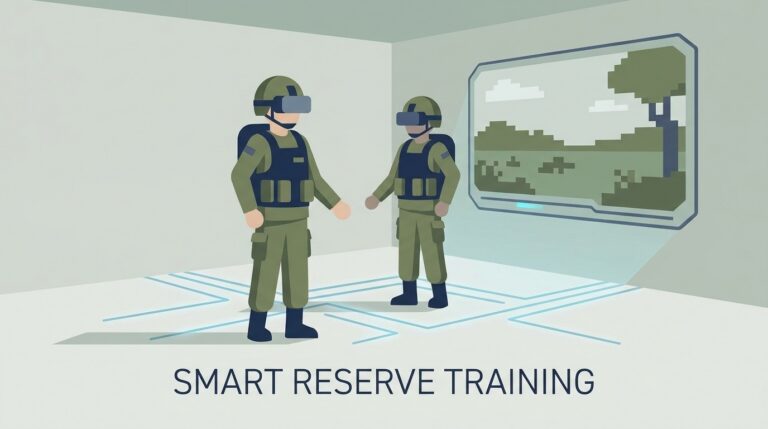
For decades, civilian discourse around reserve training oscillated between nostalgia and collective groans about lost working hours, tepid lunchboxes, and nominal transportation stipends that barely covered highway tolls. However, a profound shift is unfolding across the peninsula. Today, dusty shooting ranges have evolved into cutting-edge simulation facilities equipped with VR tactical headsets and MILES (Multiple Integrated Laser Engagement System) laser gear. Concurrently, a vocal generation of civic-minded citizens is sparking intense public debates about bosang hyeonsilhwa (보상 현실화)—demanding that civic duty be matched with equitable economic compensation rather than symbolic allowances.
Mastering this sophisticated socio-military discourse elevates your Korean from textbook conversational fluency to authentic C2-level sociolinguistic competence. Based on genuine field queries from our high-level corporate expats and foreign policy analysts, this masterclass equips you to dissect modern civil defense dynamics, navigate sensitive civic duty conversations with impeccable cultural literacy, and understand why the modern Korean reservist is both a high-tech tactical participant and an assertive economic citizen.
Phase 2: 핵심 표현 3선 심층 분석 (Core Expressions In-Depth)
1. 과학화 훈련체계 (Gwahakhwa hullyeon-chegye)
- Pronunciation: [Gwahakhwa hullyeon-chegye] (Think: Gwa-hahk-hwa hool-lyeon che-gye; rhythmic stress on che-gye like ‘check-yeah’)
- Meaning: Scientific Training System (Lit.) vs. High-tech, data-driven simulation training adopting VR, laser gear, and digital scoring (Nuance).
- K-Culture Moment: Seen in documentary features and military-themed YouTube shows like Workman or defense editorials covering smart training centers (스마트 예비군 훈련장).
- Editor’s Insight: This phrase represents the Ministry of National Defense’s transition away from repetitive physical drills to objective, technology-mediated evaluations. When someone mentions gwahakhwa hullyeon-chegye, it denotes an ecosystem where individual marksmanship and indoor squad tactics are scored via sensors, eliminating subjective instructor bias.
- Situation Spectrum: Casual (⚠️) / Semi-formal (✅) / Formal (✅)
- 🤔 Think About It: Does your native culture frame military reservist preparedness as a low-cost civic obligation, or does it invest heavily in digitizing civil defense infrastructure?
2. 보상 현실화 (Bosang hyeonsilhwa)
- Pronunciation: [Bosang hyeon-sil-hwa] (Sounds like Boh-sang hyun-sheel-hwa)
- Meaning: Rationalization/Actualization of Compensation (Lit.) vs. Adjusting stipends to reflect real minimum wage and socioeconomic opportunity costs (Nuance).
- K-Culture Moment: Prominently featured in National Assembly hearing broadcasts and editorial debates about civil rights on news programs such as JTBC Newsroom.
- Editor’s Insight: In advanced Korean, hyeonsilhwa (현실화) rarely means ‘making something real’ in a fantasy sense; it almost always signifies bridging the gap between outdated statutory figures and modern market economic reality. Using this phrase exhibits a deep grasp of ongoing administrative and constitutional welfare debates.
- Situation Spectrum: Casual (⚠️) / Semi-formal (✅) / Formal (✅)
- 🤔 Think About It: At what point does a state’s appeal to ‘unconditional patriotic sacrifice’ (애국심에 기반한 희생) lose legitimacy in a market-driven democracy?
3. 국방의 의무에 걸맞은 예우 (Gukbang-ui uimue geolmajeun ye-u)
- Pronunciation: [Gukbang-ui uimue geolmajeun ye-u] (Fluid liaison: Gook-bahng-ui wee-moo-eh geol-mah-jeun yeh-oo)
- Meaning: Honor/treatment commensurate with the duty of national defense.
- K-Culture Moment: Frequently deployed in official presidential speeches on Memorial Day (현충일) or by civic advocacy groups rallying for veteran and reservist dignity.
- Editor’s Insight: Ye-u (예우) is a high-register term signifying deep societal courtesy and institutional respect. Coupling it with geolmajeun (befitting/commensurate) articulates that serving the nation is an honorable contribution requiring concrete dignity, not mere platitudes.
- Situation Spectrum: Casual (🚫) / Semi-formal (✅) / Formal (✅)
- 🤔 Think About It: How does your native language distinguish mere financial compensation from societal honor (예우) for civil service?
Phase 3: 교과서 한국어 vs 진짜 한국어 (Textbook vs. Real Korean)
Situation 1: Talking about high-tech modern training gear
- 📖 교과서 한국어:
“예비군 훈련장에 새로운 과학 장비가 도입되어 훈련이 효율적입니다.”
(Yebigun hullyeonjange saeroun gwahak jangbiga doipdoe-eo hullyeoni hyoyuljeok-imnida. – New scientific equipment has been introduced at the reserve training center, making training efficient.) - 🗣️ 진짜 한국어:
“요즘 스마트 훈련장은 마일즈 장비에 모의 교전까지 갖춰져 있어서, 옛날처럼 시간 때우다 오는 분위기가 전혀 아니에요.”
(Yojeum seumateu hullyeonjangeun maijeu jangbie moui gyojeonkkaji gatchwojyeo isseoseo, yennal-cheoreom sigan tte-uda oneun bun-wigiga jeonhyeo anieyo. – Nowadays, smart training camps feature MILES gear and simulated combat engagements, so it’s totally not the atmosphere of killing time like the old days.) - 💡 왜 다를까? Textbook Korean sounds like an official press release. Native speakers use the colloquial expression 시간을 때우다 (to kill/waste time) juxtaposed against specific defense tech acronyms (마일즈 장비) to reflect the heightened tactical intensity of contemporary camps.
Situation 2: Discussing the insufficient daily training allowance
- 📖 교과서 한국어:
“예비군 훈련 보상비가 물가에 비해 다소 부족하다고 생각합니다.”
(Yebigun hullyeon bosangbiga mulgae bihae daso bujokhada-go saenggakhapnida. – I think the reserve training compensation fee is somewhat insufficient compared to prices.) - 🗣️ 진짜 한국어:
“교통비랑 식대 빼면 사실상 열정 페이나 다름없어서, 훈련 보상비를 최저시급 수준으로 현실화해야 한다는 목소리가 높아요.”
(Gyotongbirang sikdae ppaemyeon sasilsang yeoljeong pe-ina dareumeopseoseo, hullyeon bosangbireul choejeosigeup sujuneuro hyeonsilhwa-haeya handaneun moksoriga nop-ayo. – If you subtract transportation and food, it’s practically ‘passion pay’; public sentiment is strong that training stipends must be actualized to at least minimum wage levels.) - 💡 왜 다를까? C2-level discourse incorporates idioms like 열정 페이 (exploitative ‘passion pay’) and sociopolitical tropes like 목소리가 높다 (demands are mounting) to formulate critical socio-economic critiques.
Phase 4: K-Culture 딥다이브 & 비언어적 매너 (Culture Deep Dive)
4-1. 눈치 (Nunchi) & Gestures: The Spectrum of Reservist Posture
When a Korean man attends reserve training, you will notice a legendary cultural paradox: the Yebigun Mode (예비군 모드). The moment a normally driven, disciplined corporate professional buttons up his military fatigues, his posture tends to drop into a famously relaxed, lethargic slouch (어슬렁거리는 걸음걸이). This is a collective non-verbal coping mechanism—a silent, humorous protest against being temporarily pulled out of civilian life.
However, your nunchi must detect the subtle shift inside the modern Gwahakhwa center. When stepping into sensor-monitored smart shooting ranges, slumping instantly vanishes. Reservists switch into focused efficiency to achieve high marks and earn early dismissal (조기 퇴소). If you are discussing reserve duty with a Korean colleague, never scold their apparent lack of enthusiasm in uniform; validate their sacrifice, nod knowingly, and ask if their facility had digital marksmanship systems.
4-2. Cultural Codes: The Sacred Solidarity of PX Hauls & Civic Duty
In South Korean corporate hierarchy, reserve training is one of the few legally mandated exemptions (공가, official paid leave) that even the most demanding supervisor cannot question. Colleagues traditionally cover the absent member’s duties without complaint.
In exchange, an unspoken cultural compact exists: upon return, the reservist brings back a haul from the base’s duty-free commissary (PX, Post Exchange). Popular items include high-end skincare products (such as renowned snail repair creams available at extreme discounts) or iconic military confectioneries. Expressing appreciation when someone shares PX treats reinforces professional camaraderie and acknowledges their civic service.
Phase 5: 실전 롤플레이 시나리오 (Action Role-play Scenario)
Setting: A quiet lounge at a tech firm in Pangyo. Min-woo (31, Senior Product Designer) has just returned from three days of regional reserve training. Alex (30, Foreign Strategy Consultant, C2 Korean speaker) approaches him.
- Turn 1 (Alex): 민우 님, 전투복 입으신 거 보니까 동원 훈련 다녀오셨군요! 피곤하시죠?
(Min-u nim, jeontubok ibeusin geo bonikka dong-won hullyeon danyeo-osyeotgunyo! Pigonhasijyo?
“Min-woo, seeing you in fatigues, you must have returned from Dongwon mobilization training! You must be exhausted!”)
🎭 Hands Min-woo a fresh canned cold-brew with a respectful nod. - Turn 2 (Min-woo): 아, 알렉스 님. 온몸이 쑤시네요. 그래도 요즘은 스마트 훈련장이라 예전처럼 무작정 대기하진 않더라고요.
(A, Allekseu nim. Onmomi ssusineyo. Geuraedo yojeumeun seumateu hullyeonjang-ira yejeoncheoreom mujakjeong daegihajin anteoragoyo.
“Ah, Alex. My whole body aches. Still, it was a smart training center, so we didn’t waste time waiting aimlessly like before.”)
🎭 Chuckles softly, rubbing his shoulder. - Turn 3 (Alex): 과학화 훈련체계가 실제로 체감되던가요? 마일즈 장비로 시가지 전투 훈련도 해보셨어요?
(Gwahakhwa hullyeon-chegyega siljero chegamboedongayo? Maijeu jangbiro sigaji jeontu hullyeondo haebosyeosseoyo?
“Could you genuinely feel the difference with the scientific training system? Did you experience urban combat training with MILES gear?”)
🎭 Leans in with authentic professional curiosity. - Turn 4 (Min-woo): 네, 센서 달린 조끼 입고 교전하는데 점수가 실시간으로 전광판에 떠서 다들 눈에 불을 켜고 하더라고요. 덕분에 조기 퇴소했습니다.
(Ne, senseo dallin jokki ipgo gyojeonhaneunde jeomsuga silsiganeuro jeongwangpane tteoseo dadeul nune bureul kyeogo hadeoragoyo. Deokbune jogi toesohaesseumnida.
“Yes, engaging in combat while wearing sensor-equipped vests displays scores on digital boards in real time, so everyone fought with fierce determination. Thanks to that, I got early dismissal.”)
🎭 Grins with pride, showing his dismissal stamp. - Turn 5 (Alex): 조기 퇴소라니 대단하네요! 그런데 이번 국회에서도 예비군 보상 현실화 문제가 다시 도마 위에 올랐던데요.
(Jogi toesorani daedanhaneyo! Geurende ibeon gukhoe-eseodo yebigun bosang hyeonsilhwa munjega dasi doma wie ollatdeondeyo.
“Early dismissal—impressive! By the way, the issue of rationalizing reservist compensation came up in the National Assembly again recently.”)
🎭 Adopts a thoughtful, analytical expression. - Turn 6 (Min-woo): 맞아요. 훈련 체계는 첨단화되는데, 지급되는 실비는 며칠 일 못 한 기회비용을 메우기엔 턱없이 모자란 게 현실이죠.
(Maj-ayo. Hullyeon chegyeneun cheomdanhwadoeneunde, jigeupdoeneun silbineun myeochil il mot han gihoebiyong-eul me-ugien teokeopsi mojaran ge hyeonsirijyo.
“Exactly. While the training systems become cutting-edge, the actual stipends are hopelessly insufficient to offset the opportunity costs of missing work.”)
🎭 Sighs deeply, setting down his cap. - Turn 7 (Alex): 청년들의 소중한 시간에 걸맞은 경제적 예우와 사회적 합의가 조속히 뒷받침되어야 할 것 같습니다.
(Cheongnyeondeurui sojunghan sigane geolmajeun gyeongjejeok ye-uwa sahoejeok hab-uiga josokhi dwitbachimdoeeoya hal geot gatseumnida.
“Economic compensation befitting the precious time of these young adults and a firm social consensus must be established expeditiously.”)
🎭 Speaks with genuine warmth and civic empathy. - Turn 8 (Min-woo): 그렇게 공감해 주시니 위로가 되네요. 참, 이건 PX에서 알렉스 님 드리려고 챙겨온 달팽이 크림이에요!
(Geureoke gong-gamhae jusini wiroga doeneyo. Cham, igeon pi-ekseu-eseo Allekseu nim deuriryeogo chaenggyeoon dalpaengi keurim-ieyo!
“Hearing such empathy is truly comforting. Oh, by the way, here is some snail repair cream I picked up at the PX for you!”)
🎭 Hands over a neatly wrapped cosmetic box with a broad smile.
🔀 인터랙티브 분기점 (Interactive Crossroads)
Min-woo sighs about his lost freelance earnings during reserve duty. How do you respond?
- Choice A: “국방은 신성한 의무인데 돈을 따지는 건 애국심이 부족한 것 아닌가요?” (Isn’t military defense a sacred duty? Isn’t counting money a lack of patriotism?)
- Choice B: “청년층의 기회비용을 일방적으로 희생시키는 구조는 지속 가능하지 않죠. 정당한 보상 현실화가 시급해 보입니다.” (A system that unilaterally sacrifices young people’s opportunity costs is unsustainable. Legitimate compensation actualization appears urgent.)
- Choice C: “그냥 다음 훈련 때는 몸 아프다고 진단서 내고 빠지시는 게 낫겠어요.” (Next time, you’d better just submit a medical note claiming illness and skip it.)
Feedback Guide:
* Choice A [Bad]: Disastrous tone-deafness. Lecturing a modern citizen on abstract patriotism invalidates genuine socioeconomic sacrifice.
* Choice B [Best]: Flawless C2 communicative empathy. Acknowledges institutional necessity while respecting personal economic rights.
* Choice C [Risk]: Immature and culturally reckless. Advocating for evading military service (병역 기피) touches upon a grave legal and social taboo in South Korea.
Phase 6: 10초 감정 섀도잉 드릴 (10-Second Shadowing Drill)
Practice these high-level sentences with rhythm, natural pauses (/), and authentic emotional inflection.
- [🫡 자부심과 냉철함]
훈련 체계의 첨단화도 중요하지만, / 정당한 보상 없는 의무의 강요는 / 설득력을 얻기 어렵습니다.
(Hullyeon chegye-ui cheomdanhwado jung-yohajiman, / jeongdanghan bosang eomneun uimu-ui gang-yoneun / seoldeungnyeog-eul eotgi eoryeopseumnida.)
(While modernizing training systems is crucial, / demanding civic duty without fair compensation / struggles to maintain public persuasion.) -
[🎯 성취감과 홀가분함]
스마트 사격장에서 / 만점을 기록한 덕분에 / 두 시간 조기 퇴소 통보를 받았습니다!
(Seumateu sagyeokjang-eseo / manjeom-eul girok-han deokbune / du sigan jogi toesotongboreul badatseumnida!)
(Thanks to scoring a perfect mark / at the smart shooting range, / I received notification of early dismissal by two hours!) -
[🤝 깊은 공감과 연대감]
생업을 멈추고 훈련에 임한 예비군들에게 / 걸맞은 예우를 다하는 것이 / 진정한 안보의 시작입니다.
(Saeng-eob-eul meomchugo hullyeone imhan yebigundeurege / geolmajeun ye-ureul dahaneun geosi / jinjeonghan anbo-ui sijagimnida.)
(Providing honor and fair treatment / to reservists who paused their livelihoods to train / marks the true beginning of national security.)
Phase 7: K-Culture 미니 사전 (Mini Dictionary)
- 조기 퇴소 (Jogi Toeso) | Early Dismissal
The holy grail of the modern reservist. In scientifically evaluated facilities, squads that score in the top tier in shooting and tactical simulation are allowed to leave 1–2 hours ahead of the rest. - 스마트 예비군 훈련장 (Seumateu Yebigun Hullyeonjang) | Smart Reserve Training Center
State-of-the-art centers replacing regional outdoor dirt ranges, equipped with digital registration, computerized laser target practice, and indoor VR simulators. - 마일즈 장비 (Maijeu Jangbi) | MILES Gear (Multiple Integrated Laser Engagement System)
Laser transmitters mounted on rifles combined with body harness detectors that immediately signal hits, eliminations, or wounds, eliminating disputes over tactical combat outcomes. - 공가 (Gong-ga) | Official Paid Leave
Legally guaranteed paid administrative leave mandated under Korean labor law for employees summoned for civic obligations such as reserve training or voting.
Phase 8: 여행자를 위한 생존 키트 (Traveler’s Survival Kit)
Survival Expressions TOP 3
- 예비군 훈련 때문에 공가 신청서 제출했습니다.
(Yebigun hullyeon ttaemune gong-ga sincheongseo jechulhaesseumnida.)
“I have submitted my official paid leave request due to reserve forces training.”
Pro Tip: Use this in corporate HR software when submitting scheduling changes. - 혹시 훈련 끝나고 PX 이용할 시간 있나요?
(Hoksi hullyeon kkeutnago pi-ekseu iyonghal sigan innayo?)
“By any chance, will there be time to access the PX after training ends?”
Pro Tip: Ask squad leaders politely to confirm shopping windows before boarding shuttle buses. - 도시락 퀄리티가 이전보다 훨씬 개선되었네요.
(Dosirak kwollitiga ijeonboda hwolssin gaeseondoe-eotneyo.)
“The quality of the catered lunchbox has improved remarkably compared to previous years.”
Pro Tip: A classic conversational icebreaker among reservists during noon mess breaks.
Editor’s Travel Note
If you work or reside in South Korea as an overseas professional, you might encounter administrative paperwork regarding military exemptions or civic responsibilities. For certified verification or status inquiries, consult the 정부24 예비군 복무 확인서 및 행정 서비스 포털 using your registered digital certificate. Additionally, when visiting metropolitan peripheries near training centers (such as Namyangju or Goyang), use 카카오맵 대중교통 길찾기 서비스 to locate specialized morning shuttle buses dispatched from local subway stations.
Phase 9: “한 발 더 깊이” (Critical Reflection)
The trajectory of South Korea’s reserve training evolution mirrors the broader democratization and economic maturation of Korean society itself. In earlier decades of industrial modernization, individual sacrifice under the banner of national security went largely unquestioned by a collectivist public ethos. Today, young Korean citizens perceive citizenship as an equitable partnership: individual duties must be met with constitutional transparency, objective technological evaluations, and dignity befitting market realities. When you understand the reservist’s demand for bosang hyeonsilhwa, you are peering directly into the heartbeat of contemporary Korean social equity.
💬 Your Turn: How does your country balance mandatory civil service with economic compensation? Have you ever witnessed high-tech simulation used in civic defense? Share your thoughts below in advanced Korean!
Phase 10: FAQ & 오해 방지 (FAQ Schema)
Q: Do foreign residents or naturalized citizens have to attend Korean reserve forces training?
A: Foreign nationals residing in Korea are entirely exempt from military conscription and reserve obligations. Naturalized Korean citizens (귀화자) historically had the option to enlist or take an exemption; however, if a naturalized male opts for active service, he subsequently enters the reserve forces pool like any native-born citizen.
Q: Why do Korean reservists complain about compensation if meals and transportation are provided?
A: The grievance centers on opportunity cost (기회비용). Active reservists are frequently working professionals, small business owners, or freelancers. Taking one to three days off can mean lost business revenues or forfeited billable hours, whereas the statutory daily training stipend often amounts to only 8,000 to 30,000 KRW, falling far below standard daily minimum wage rates.
Q: What is the practical purpose of early dismissal (조기 퇴소) based on performance?
A: Previously, training duration was fixed regardless of effort, which led to widespread passivity and disengagement. By introducing objective electronic scoring (via smart targets and laser gear), the military instituted a meritocratic incentive: the top-performing squads leave ahead of commuter rush hour, drastically boosting focus and tactical engagement.
🚨 Common Mistakes (흔한 실수 TOP 3)
- Confusing 예비군 (Yebigun – Reservists) with 민방위 (Minbangwi – Civil Defense):
Wrong: Calling a 38-year-old attending an online community lecture an ‘active reservist.’
Correction: Reserve service (예비군) covers 8 years post-discharge; thereafter, men transition to Civil Defense (민방위) until age 40. - Describing reserve pay as 월급 (Monthly Salary):
Wrong: “예비군 월급이 적다.”
Correction: Use 훈련 보상비 (Training compensation fee) or 실비 지원 (Actual expense reimbursement). - Assuming military uniforms imply active mobilization deployment:
Wrong: Panicking when seeing dozens of men in uniform on the Seoul subway.
Correction: Recognize them as peaceful neighbors fulfilling their routine annual training obligations.
Phase 11: 액션 미션 & 참여 유도 (Action Missions)
- 🥉 Bronze Mission (Solo Shadowing): Read aloud the Phase 6 shadowing sentences three times, focusing on pausing sharply at the
/marks. - 🥈 Silver Mission (Social Media Dialogue): Leave a comment on a Korean current affairs video discussing military budgets using the phrase: 국방의 의무에 걸맞은 예우가 필요하다고 봅니다.
- 🥇 Gold Mission (Real-world Application): The next time a Korean friend or colleague mentions attending reserve training, surprise them by asking: “혹시 스마트 훈련장에서 마일즈 장비 써보셨어요? 조기 퇴소 하셨나요?”
🎮 K-Culture Mission: Watch an episode of a modern military-themed Korean variety show or workplace drama where a colleague returns in uniform, and identify how many times the terms PX, 선배님, and 조기 퇴소 are mentioned!
Phase 12: 인터랙티브 퀴즈 챌린지 (Interactive Quiz Challenge)
1. Situational Judgment:
Your colleague returns from reserve training looking exhausted. Which response demonstrates the highest socio-cultural fluency?
– (A) 군복 입으셨으니 지금 바로 사격 자세 한번 보여주세요!
– (B) 동원 훈련 고생 많으셨어요! 스마트 훈련장에서 조기 퇴소는 성공하셨나요?
– (C) 일도 안 하고 훈련비까지 받으셨으니 오늘 커피는 쏘셔야죠?
2. Fill in the Blank:
청년들의 기회비용을 보전하기 위해 훈련비의 [ ________ ]가 시급하다는 여론이 형성되고 있다.
(Public opinion is forming that [ ________ ] of training fees is urgent to protect the opportunity cost of young people.)
3. True or False:
Modern Korean smart reserve training facilities (스마트 예비군 훈련장) determine early dismissal through subjective evaluations given by military drill sergeants.
🔍 정답 및 해설 (Click to reveal Answer Key)
-
정답: (B)
해설: (A) is socially awkward; (C) is offensive given how low the compensation is. (B) shows sophisticated empathy and understands modern reserve culture. -
정답: 보상 현실화 (Bosang hyeonsilhwa)
해설: The accurate sociopolitical collocation for aligning civic allowances with actual living costs is ‘보상 현실화’. -
정답: False (X)
해설: The primary hallmark of scientific training centers is objective, digitized measurement (such as laser sensors and electronic targets), eliminating subjective human evaluation to reward early dismissal fairly.
“







