

Phase 1: Empathy & Storytelling Opening
안녕하세요! 매일한글 에디터입니다. (Hello! It’s your Daily Hangul editor.)
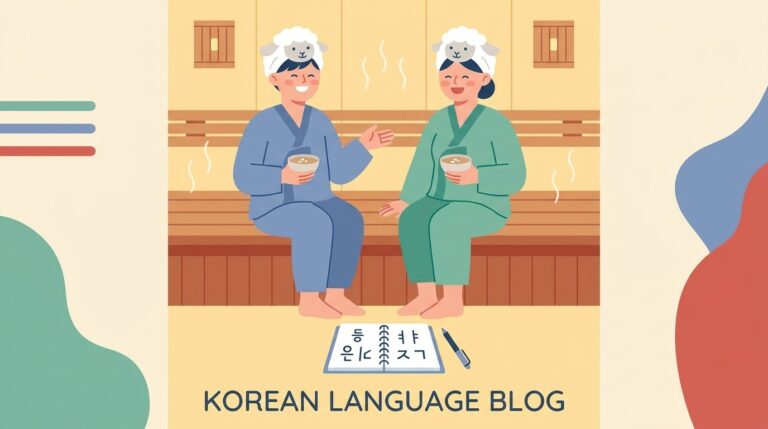
Picture this: You step into the warm, pine-scented hall of a bustling Korean bathhouse (jjimjilbang). The floor is pleasantly toasty under your bare feet, and around you, people are chilling on bamboo mats in matching loungewear, sipping sweet rice punch, and wearing those adorable towel hats with two puffy buns that look just like sheep horns! You grab the small face towel provided at the counter, try folding both ends inward, and balance it on your head—only for it to instantly flop apart like a deflated pancake. A friendly local nearby giggles warmly, and you freeze, wondering: How on earth do I ask for help without sounding like a textbook robot?
Don’t worry, you are not alone! Over the past ten years coaching Korean learners, I’ve heard this exact story dozens of times. That iconic “sheep head towel” (양머리, yangmeori) is more than just a playful photo op; it’s your ultimate icebreaker into Korean bathhouse culture. In this guide, you will master the exact step-by-step phrases to fold the hat, ask for assistance, and chat comfortably with locals at a B1 intermediate level. Let’s make your next bathhouse visit completely stress-free and unforgettable!
Phase 2: Core Expressions Deep Dive
1. 이거 어떻게 접어요? (Igeo eotteoke jeobeoyo?)
- Pronunciation: [I-geo eo-tteo-ke jeo-beo-yo?] (Think of “eo” like the “u” in “cup”, and “jeo” rhyming with “law”)
- Meaning: Literal: “How do I fold this?” | Real Nuance: “Could you show me how to fold this towel?”
- K-Culture Moment: Seen in almost every classic variety show (like Running Man) whenever cast members or international guests struggle to fold their towels during a bathhouse mission.
- Editor’s Insight: Using the casual-polite ending
-어요 (-eoyo)keeps this phrase friendly and approachable without crossing into overly informal territory. It’s the natural choice when speaking to a fellow guest resting near you.- Situation Spectrum: Casual: ✅ | Semi-formal: ✅ | Formal: ⚠️
- 🤔 Think About It: In English, we often ask “Do you know how to…?” but in Korean, jumping straight to “어떻게 (~how)” feels proactive, polite, and completely natural. Notice how Korean values direct clarity paired with soft polite verb endings!
2. 양머리 해볼래요? (Yangmeori haebollaeyo?)
- Pronunciation: [Yang-meo-ri hae-bol-lae-yo?] (“Yang” as in “yawn” with an -ng; “bollae” rhymes with “ballet”)
- Meaning: Literal: “Do you want to try doing the sheep head?” | Real Nuance: “Shall we make sheep head towels together?”
- K-Culture Moment: A quintessential scene in romantic K-dramas where a couple folds towels for each other on heated floors, creating an instantly cute, lighthearted moment.
- Editor’s Insight: The grammar pattern
-ㄹ래요? (-llaeyo?)asks someone’s intention in a gentle, inviting tone. It suggests doing an activity together rather than pushing them.- Situation Spectrum: Casual: ✅ | Semi-formal: ✅ | Formal: 🚫
- 🤔 Think About It: Notice that Koreans use the verb 하다 (hada, to do) instead of 만들다 (mandeulda, to make) or 쓰다 (sseuda, to wear) when referring to hairstyles and towel shapes. It shows that 양머리 is seen as a fun personal style!
3. 생각보다 엄청 쉽네요! (Saenggakboda eomcheong swimneyo!)
- Pronunciation: [Saeng-gak-bo-da eom-cheong swim-ne-yo!] (“Swim” sounds like swimming, and “-neyo” shows spontaneous realization)
- Meaning: Literal: “Compared to my thoughts, it is very easy!” | Real Nuance: “Wow, this is way easier than I expected!”
- K-Culture Moment: The triumphant reaction after someone teaches you how to roll the three edges of the towel and you successfully pop it onto your head.
- Editor’s Insight: Combining
-보다 (-boda, compared to)with the exclamatory ending-네요 (-neyo)expresses genuine pleasant surprise. Korean speakers love when you use-네요because it signals authentic, in-the-moment emotion.- Situation Spectrum: Casual: ✅ | Semi-formal: ✅ | Formal: ⚠️
- 🤔 Think About It: Sharing your emotional reaction openly creates quick social rapport (jeong, 정) in communal Korean spaces. How does your native language express that “aha!” moment?
Phase 3: Textbook Korean vs. Real Korean
Situation 1: Asking someone sitting nearby to show you how to roll the towel
- 📖 Textbook Korean: 이것을 접는 방법을 가르쳐 주시겠습니까? (Igeoseul jeomneun bangbeobeul gareuchyeo jusigesseumnikka? – “Will you teach me the method of folding this?”)
- 🗣️ Real Korean: 이거 어떻게 접는지 알려주실 수 있어요? (Igeo eotteoke jeomneunji allyeojusil su isseoyo? – “Could you show me how you fold this?”)
- 💡 Why is it different? The textbook phrasing sounds like an official petition or interview question. In real everyday Korean, replacing 가르치다 (teach in an academic sense) with 알려주다 (inform/show gently) makes the interaction warm, humble, and conversational.
Situation 2: Complimenting your friend once the towel hat is on
- 📖 Textbook Korean: 귀여운 모자 모양이 되었습니다. (Gwiyeoun moja moyang-i doe-eosseumnida. – “A cute hat shape has become.”)
- 🗣️ Real Korean: 와, 진짜 찰떡이다! 완전 잘 어울려요! (Wa, jinjja chaltteogida! Wanjeon jal eoullyeoyo! – “Whoa, it fits you like a glove! It looks super good on you!”)
- 💡 Why is it different? Native speakers rarely describe objects mechanically. Slang like 찰떡이다 (chaltteok-ida, literally “like sticky rice cake,” meaning a perfect match) instantly adds vibrant personality to your compliment.
Phase 4: K-Culture Deep Dive & Non-Verbal Manners
4-1. 눈치 (Nunchi) & Bathhouse Body Language
- The Towel Tightness Check: A yangmeori stays on because of tension. Fold the towel horizontally into thirds, then roll both ends outward like rolling up your sleeves—at least 3 to 4 tight rolls on each side. When asking someone for help, hold the towel flat with both hands as a respectful gesture before handing it over.
- Mind Your Space on the Heated Floor: When practicing, keep your towel close to your mat. In a jjimjilbang, people nap everywhere. Avoid shaking towels vigorously or talking loudly across the room. A soft head nod (목례, mongnye) accompanied by a warm smile is the ultimate non-verbal way to break the ice.
4-2. The Cultural Phenomenon: Yangmeori & K-Media
- The sheep towel hat trend took over Korea in the early 2000s, popularized by classic Korean dramas like My Lovely Sam Soon and endless entertainment variety programs.
- Wearing the towel hat isn’t just about cute Instagram snaps; functionally, it keeps your hair contained, absorbs steam, and protects your scalp when you step into super-hot charcoal or salt saunas (hanjeungmak). Pair your yangmeori with a cup of cold sikhye (sweet fermented rice punch) and a trio of guun gyeran (baked eggs cracked directly against your friend’s towel-covered forehead—gently, of course!), and you have experienced the absolute soul of Korean leisure.
Phase 5: Real-Life Roleplay Scenario
Setting: A warm, open common hall at a large bathhouse in Busan. You are sitting on a bamboo mat, holding a yellow cotton towel, staring at a group nearby wearing neat sheep hats.
Characters: You (intermediate learner) and Minji (friendly bathhouse regular resting nearby).
- You: 🎭 Politely making eye contact with a gentle smile
저기요, 실례지만 이거 어떻게 접어요?
(Jeogiyo, sillyejiman igeo eotteoke jeobeoyo?)
“Excuse me, sorry to bother you, but how do I fold this?” -
Minji: 🎭 Brightens up and gestures toward your towel
아, 양머리요? 그거 1분이면 만들어요! 수건 이리 줘보세요.
(A, yangmeoriyo? Geugeo il-bun-imyeon mandeureoyo! Sugeon iri jwoboseyo.)
“Ah, the sheep hat? You can make it in one minute! Pass me the towel.” -
You: 🎭 Handing the towel with both hands
감사합니다! 유튜브 보고 해봤는데 자꾸 풀리더라고요.
(Gamsahamnida! Yutyubeu bogo haebwanneunde jakku pullideoragoyo.)
“Thank you! I tried watching YouTube, but it kept unraveling.” -
Minji: 🎭 Lays towel flat and folds it into thirds horizontally
이렇게 세로로 삼등분 접고요, 양쪽 끝을 소매 걷듯이 세 번씩 똘똘 말면 돼요.
(Ireoke seroro sam-deung-bun jeopgoyo, yangjjok kkeuteul somae geotdeusi se beonssik ttolttol malmyeon dwaeyo.)
“Fold it into thirds lengthwise like this, then roll both ends tightly outward three times like folding up your sleeves.” -
You: 🎭 Watching closely, trying it along with your spare towel
아! 안쪽이 아니라 바깥쪽으로 마는 거였군요!
(A! Anjjogi anira bakkatjjogeuro maneun geoyeotgunyo!)
“Ah! So you roll it toward the outside, not the inside!” -
Minji: 🎭 Pops the finished hat gently on your head and chuckles
맞아요! 이제 가운데를 살짝 벌려서 머리에 쓰면 끝이에요. 완전 찰떡인데요?
(Majayo! Ije gaunde-reul saljjak beollyeoseo meorie sseumyeon kkeuchieyo. Wanjeon chaltteogindeyo?)
“Exactly! Now widen the middle pouch and wear it on your head. It suits you so well!” -
You: 🎭 Feeling the secure fit and smiling proudly
와, 생각보다 엄청 단단하게 고정되네요! 생각보다 엄청 쉬워요.
(Wa, saenggakboda eomcheong dandanhage gojeongdoeneyo! Saenggakboda eomcheong swiwoyo.)
“Wow, it holds together way more firmly than I thought! It’s super easy.” -
Minji: 🎭 Pointing happily toward the snack counter
그쵸? 이제 식혜랑 구운 계란 드시면서 땀 식히면 완벽해요!
(Geuchyo? Ije sikhye-rang guun gyeran deusimyeonseo ttam sikimyeon wanbyeokhaeyo!)
“Right? Now if you cool off with some sikhye and baked eggs, it’s perfect!”
🔀 Interactive Choice Point: How will you reply to Minji?
- Choice A: “정말 친절하게 알려주셔서 감사해요! 제가 식혜 한 잔 사드릴게요.” (Thank her warmly and offer to buy her a sweet rice punch.)
- Choice B: “이제 다 배웠으니까 가볼게요.” (Say you learned it all and abruptly walk away.)
- Choice C: “이거 머리가 좀 조여서 아픈데요?” (Complain that the towel feels too tight around your forehead.)
Feedback:
* Choice A (Best Outcome): Perfect! Offering to grab a drink displays exceptional jeong (Korean bonding spirit). Minji will likely insist on cracking eggs together and sharing local food tips.
* Choice B (Bad Outcome): Too transactional! It breaks the warm social rapport of the bathhouse community.
* Choice C (Risk Outcome): A bit awkward. While honest, it ignores her helpful effort. Better to adjust the folds gently yourself first!
Phase 6: 10-Second Emotional Shadowing Drill
Read these lines aloud, pausing at the slashes (/) and matching the emotional cues!
[😊 호기심 가득하고 싹싹하게 / Curious & Bright]
저기요, / 이거 어떻게 접는지 / 잠깐 보여주실 수 있어요?
(Jeogiyo, / igeo eotteoke jeomneunji / jamkkan boyeojusil su isseoyo?)-
[😲 깨달음을 얻고 감탄하며 / Delighted Realization]
아하! / 안쪽이 아니라 / 바깥쪽으로 세 번 말아야 하는군요!
(Aha! / anjjogi anira / bakkatjjogeuro se beon maraya haneungunyo!) -
[🥰 신나고 뿌듯하게 / Proud & Cheerful]
우와, / 거울 보니까 / 생각보다 완전 잘 어울려요!
(Uwa, / geoul bonikka / saenggakboda wanjeon jal eoullyeoyo!)
Phase 7: K-Culture Mini Dictionary
- 찜질복 (Jjimjilbok) | Bathhouse Loungewear | The loose-fitting cotton shirt and shorts provided by the front desk. Everyone wears the exact same uniform, creating a relaxed environment where social titles disappear.
- 식혜 (Sikhye) | Sweet Rice Punch | A chilled traditional sweet drink containing grains of cooked rice. It is the signature beverage of Korean bathhouses, served in tall plastic bottles with straws to replenish sugars after hot saunas.
- 구운 계란 (Guun Gyeran) | Sauna-Baked Eggs | Eggs slow-baked at high temperatures inside stone kilns, featuring a distinct brown tint, chewy white, and nutty flavor. Conventionally ordered in batches of three.
- 불가마 (Bulgama) | Kiln Sauna | A dome-shaped heating room built from clay and stone. Temperatures often exceed 70–90°C (160–190°F), making the damp yangmeori towel hat essential to shield hair from intense dry heat.
Phase 8: Traveler’s Survival Kit
Top 3 Survival Phrases for Jjimjilbangs
- 수건 한 장 더 주실 수 있나요? (Sugeon han jang deo jusil su innayo?)
Meaning: Could I please get one more towel?
Pro Tip: Most male locker rooms provide unlimited towels inside, but female facilities give 2 towels at check-in. If you need an extra towel to make a hat, politely ask the reception desk before entering. - 식혜 큰 거 하나랑 계란 세 개 주세요. (Sikhye keun geo hana-rang gyeran se gae juseyo.)
Meaning: One large sikhye and three eggs, please.
Pro Tip: The universal snack combo! You’ll hear this order at the snack bar 50 times an hour. - 키로 결제할게요. (Kiro gyeoljehalgeyo.)
Meaning: I will pay with my electronic key/wristband.
Pro Tip: Modern Korean jjimjilbangs are completely cashless inside. Tap your locker wristband at the snack bar and settle the total bill at the front desk when leaving.
Editor’s Travel Note
Before heading to an authentic bathhouse, always check opening hours and real-time reviews. You can easily locate top-rated saunas nearby by checking ratings—make sure to download the Naver Map app as standard foreign map apps often lack updated Korean store hours. Keep in mind that outdoor shoes stay in the shoe locker at reception before you ever touch the lounge floors!
Phase 9: A Step Deeper (Reflection)
In a world obsessed with appearances and status symbols, the Korean jjimjilbang is a rare sanctuary of unconditional equality. When people trade designer clothes for identical faded cotton jjimjilbok and fold modest white bath towels into silly sheep ears, corporate titles and social differences dissolve completely. Everyone sits cross-legged on the same warm floor, cracking hard-boiled eggs and chatting freely.
Making a sheep head towel is essentially an invitation to play—a cultural license to be lighthearted together in a shared communal living room.
💬 Your Turn: Have you ever visited a communal sauna or bathhouse in Korea or your home country? What is one lighthearted cultural icebreaker that helps strangers connect where you live? Share your thoughts in the comments below!
Phase 10: FAQ & Common Mistakes
Q: Can anyone wear the sheep head towel, or is it only for kids and women?
A: Absolutely anyone can wear it! While you see young kids and couples sporting it most frequently for photos, you will also see middle-aged men (ajeossi) and grandmothers (halmeoni) wearing it comfortably inside hot kilns to keep sweat out of their eyes and protect their hair.
Q: Are towels free to take into the heated common areas?
A: Yes! The standard small cotton towels given to you at check-in are meant to accompany you throughout the baths, dry sauna rooms, and common lounging halls. However, remember that bath towels must be returned to the collection bins when leaving; taking them home is strictly forbidden.
Q: What if my towel is too small to fit around my head?
A: Korean bathhouse towels are standard face towels (around 40×80 cm). If your hat feels tight, the secret is in the rolls: only fold the outer rolls two to three times instead of four, which leaves a wider pouch in the center for your head.
🚨 Common Mistakes Board
- ❌ Mistake 1: Rolling the towel inwards.
- Correct Action: Always roll the ends outward (바깥쪽으로). Rolling inward makes the folds unravel the second you pull the hat open.
- ❌ Mistake 2: Wearing outside shoes or socks inside the lounge.
- Correct Action: Korean jjimjilbang floors are equipped with ondol (subfloor heating). Everyone walks barefoot. Leave your footwear locked in the shoe cabinet.
- ❌ Mistake 3: Cracking sauna eggs directly on your bare forehead with full force.
- Correct Action: While dramatic K-dramas show actors smashing eggs on heads, real sauna eggs have tough shells! Tap the egg gently on the wooden floor or palm first, or use a towel-padded head to crack it painlessly.
Phase 11: Action Mission & Engagement
- 🥉 Bronze Mission (Solo Practice): Grab any standard hand towel at home right now. Lay it flat, fold into thirds horizontally, roll both ends outward 3 times, pull the center open, and put it on your head in the mirror!
- 🥈 Silver Mission (Social Share): Snap a quick selfie wearing your sheep head towel, upload it to Instagram or your study journal, and caption it: “양머리 완성! 생각보다 엄청 쉽네요! (Sheep hat complete! So much easier than I thought!)”
- 🥇 Gold Mission (Real-Life Application): On your next visit to a Korean bathhouse, ask a staff member or local: “저기요, 이거 어떻게 접는지 알려주실 수 있어요?” and learn directly on site.
- 🎮 K-Culture Mission: Watch an episode of a Korean reality show or drama set in a bathhouse (such as Running Man Episode 41 or Legend of the Blue Sea Episode 11) and spot the exact moment the characters roll their towels!
Phase 12: Interactive Quiz Challenge
1. Situational Judgment:
You are at a jjimjilbang and want to ask someone near you how to fold the sheep towel without sounding stiff or rude. Which sentence is the most natural for a B1 learner?
* A) 이것을 접는 방법을 가르쳐라.
* B) 이거 어떻게 접는지 알려주실 수 있어요?
* C) 수건을 왜 이렇게 접었습니까?
2. Fill-in-the-Blank:
When expressing surprise that the hat was unexpectedly simple to make, you say:
“와, 생각(________) 엄청 쉽네요!”
3. True or False:
To make the yangmeori stay firmly on your head, you must roll the ends inward toward your body. (True / False)
👉 Click here for Answers & Explanations!
- Answer: B (Choice A is an impolite command form; Choice C means “Why did you fold the towel like this?” which sounds accusatory. Choice B is warm, polite, and natural!)
- Answer: 보다 (boda) (생각보다 means “compared to what I thought / more than expected”).
- Answer: False! You must roll the edges outward (바깥쪽으로). If you roll inward, the hat comes undone immediately when expanded.







