

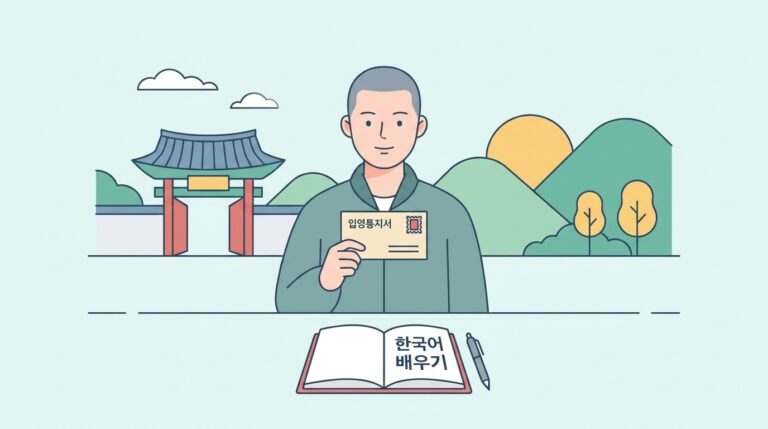
A Guide to Korean Military Service: The Draft Notice and Boot Camp Enlistment
안녕하세요! 매일한글 에디터입니다. Have you ever watched a K-drama where a male lead receives a crisp, fateful envelope and the atmosphere suddenly turns dead serious? Or perhaps your favorite K-pop bias shared a photo with a buzzed haircut, leaving you teary-eyed as you typed farewell messages on social media? In South Korea, military conscription (병역의무) is not just a government duty; it is a life-defining rite of passage that touches every family, friendship, and pop culture fandom.
For international fans and intermediate Korean learners, the culture around receiving the draft notice (입영통지서) and entering the training boot camp (훈련소 입소) often feels full of mysterious acronyms, poignant rituals, and emotionally charged phrases. Today, we will unpack the authentic language, social etiquette, and cultural subtext surrounding this major milestone so you can understand K-media on a deeper level and offer heartfelt, natural comfort to your Korean friends.
Phase 2: 3 Core Expressions in Depth
1. 입영통지서가 나왔어요 (Ipyeong-tongjiseoga nawasseoyo)
- Pronunciation: [I-pyeong-tong-ji-seo-ga na-wa-sseo-yo] (Think: “Ee-pyeong tong-jee-suh-gah nah-wah-ssuh-yo”)
- Meaning: Literally “The enlistment notice came out,” but colloquially used as “I got drafted” or “My enlistment date has officially arrived.”
- K-Culture Moment: You will see this scene in almost every coming-of-age drama or webtoon: a young man quietly stares at a paper envelope stamped with the Military Manpower Administration logo while his family stops eating dinner in silence.
- Editor’s Insight: The verb 나오다 (naoda, to come out) is used here because government administrative decisions or official documents “come out” or are issued. Saying this signals that one’s civilian pause button has been officially pressed.
- Situation Spectrum: Casual (✅ – as 입영통지서 나왔어), Semi-formal (✅), Formal (✅)
- 🤔 Think About It: In many Western countries, military service is voluntary. In Korea, how does receiving a mandatory legal notice shape a young person’s perspective on civic duty and peer solidarity?
2. 몸 건강히 잘 다녀와 (Mom geon-gang-hi jal da-nyeo-wa)
- Pronunciation: [Mom geon-gang-hi jal da-nyeo-wa] (Think: “Mom gun-gang-hee jal dah-nyuh-wah”)
- Meaning: Literally “Go and come back healthily and well,” equivalent to “Stay safe and return in good health!”
- K-Culture Moment: At the entrance of the Nonsan Army Training Center (논산훈련소), loved ones cling to the recruit’s hands and repeat this sentence with tears in their eyes.
- Editor’s Insight: Koreans prioritize health above all else when someone enlists. Notice the phrase uses 다녀오다 (danyeo-oda, to go and come back), emphasizing the promise of a safe return rather than the departure.
- Situation Spectrum: Casual (✅ – to close peers), Semi-formal (⚠️ – use 몸 건강히 잘 다녀오세요), Formal (🚫)
- 🤔 Think About It: Why does Korean culture emphasize “returning safely” rather than “serving honorably” or “fighting bravely” during everyday military farewells?
3. 머리 미니까 실감 나네 (Meori mi-ni-kka sil-gam na-ne)
- Pronunciation: [Meo-ri mi-ni-kka sil-gam na-ne] (Think: “Muh-ree mee-nee-kkah sheel-gahm nah-neh”)
- Meaning: Literally “Now that I shaved my head, it feels real.”
- K-Culture Moment: The iconic salon mirror selfie posted by celebrities 24 hours before enlisting, showing their freshly cropped military buzzcut.
- Editor’s Insight: The word 밀다 (milda) literally means “to push,” but colloquially it means to shave one’s head down to the scalp. 실감 나다 (silgam nada) means a vague situation suddenly feels tangible and realistic.
- Situation Spectrum: Casual (✅), Semi-formal (⚠️ – 머리 미니까 실감 나요), Formal (🚫)
- 🤔 Think About It: Why is shaving hair treated as the ultimate psychological demarcation line separating civilian life from military identity in Korean society?
Phase 3: Textbook Korean vs. Real Korean
Scenario 1: Announcing Enlistment to Friends
- 📖 Textbook Korean: 저는 조만간 군 복무를 시작할 예정입니다. (Jeoneun jomangan gun bokmureul sijak-hal yejeong-imnida. – I am scheduled to begin my military service soon.)
- 🗣️ 진짜 한국어: 나 영장 나왔어. 다음 달에 입대해. (Na yeongjang nawasseo. Daeum dare ipdaehae. – I got my draft paper. I enlist next month.)
- 💡 Why the Difference? Real Koreans rarely use formal bureaucratic terms like 군 복무를 시작하다 (commence military service) in peer circles; they refer directly to the draft order as 영장 (yeongjang) and use 입대하다 (ipdaehada, to enter the military).
Scenario 2: Farewell Greeting to an Enlisting Friend
- 📖 Textbook Korean: 국방의 의무를 충실히 수행하십시오. (Gukbang-ui uimureul chung-sil-hi suhaeng-hasipsio. – Please faithfully fulfill your duty of national defense.)
- 🗣️ 진짜 한국어: 다치지 말고 몸조심해! 연락 자주 하고! (Dachiji malgo momjosimhae! Yeollak jaju hago! – Don’t get hurt, take care of yourself! Keep in touch often!)
- 💡 Why the Difference? Patriotic and legalistic textbook phrases sound unnaturally stiff or satirical among peers. Real Koreans prioritize physical safety and maintaining personal communication.
Phase 4: K-Culture Deep Dive & Non-Verbal Manners
4-1. 눈치 (Nunchi) & Gestures at the Training Camp Gate
When accompanying an enlisting friend or idol to the training center (훈련소 입소식), the atmosphere is a mix of tension and bittersweet emotion.
* The Deep Bow (큰절, Keunjeol): Enlisting men often drop to their knees and bow deeply to their parents right before crossing the parade ground checkpoint. As a friend or spectator, stand back respectfully with both hands folded in front of you.
* Avoid Awkward Salutes: Unless a recruit has formally completed basic training, giving a crisp military salute (경례) on day one looks premature and awkward. Instead, offer a warm two-handed handshake or a lingering two-arm hug with reassuring back pats.
4-2. Cultural Code: The “Gunbaekgi” (군백기) Phenomenon
In the entertainment world, the 18 to 21 months of service creates a hiatus known as 군백기 (Gunbaekgi), a portmanteau of 군대 (military) and 공백기 (hiatus/blank period). K-pop agencies meticulously record pre-filmed video content, albums, and handwritten letters scheduled for release during this period. For fans, supporting a star through their military hiatus by writing letters via the military app or supporting their unit with positive community projects is a cherished ritual of loyalty.
Phase 5: Real-World Roleplay Scenario
Setting: A pojangmacha (street food tent) in Seoul on the eve of Junho’s enlistment. Junho has his freshly shaved buzzcut covered with a baseball cap.
Characters: Junho (enlisting tomorrow morning) & Alex (intermediate Korean learner friend).
- Junho: [🎭 nervously adjusting his cap] 모자 벗으면 진짜 어색해. 머리 미니까 실감 나네. (Moja beoseumyeon jinjja eosaekhae. Meori minikka silgam nane. – It feels so awkward if I take my cap off. Shaving my head makes it feel real.)
- Alex: [🎭 leaning forward with an empathetic smile] 모자 잘 어울려! 생각보다 두상이 예쁜데? (Moja jal eoullyeo! Saenggakboda dusang-i yeppeunde? – The cap looks great on you! Your head shape is nicer than I thought!)
- Junho: [🎭 sighs softly, stirring the fishcake soup] 내일 훈련소 들어갈 생각 하니까 잠이 안 올 것 같아. (Naeil hullyeonso deureogal saenggak hanikka jami an ol geot gata. – Thinking about walking into the training center tomorrow, I don’t think I can sleep tonight.)
- Alex: [🎭 raising a warm glass of barley tea or drink] 긴장되는 게 당연하지. 그래도 넌 적응 잘할 거야. (Ginjang-doeneun ge dang-yeonhaji. Geuraedo neon jeogeung jalhal geoya. – It’s totally natural to be nervous. But you’ll adapt really well.)
- Junho: [🎭 smiling with relief] 고맙다. 자대 배치받고 스마트폰 쓸 수 있게 되면 바로 연락할게. (Gomapda. Jadae baechibatgo seumateupon sseul su itge doemyeon baro yeollakhalge. – Thanks, man. Once I get deployed to my base and can use my smartphone, I’ll contact you right away.)
- Alex: [🎭 nodding reassuringly] 응, 편지도 인편으로 자주 쓸게. 밥 잘 챙겨 먹어. (Eung, pyeonjido inpyeoneuro jaju sseulge. Bap jal chaenggyeo meogeo. – Yeah, I will send internet letters often too. Make sure you eat all your meals.)
- Junho: [🎭 clinking glasses] 그래, 건강하게 잘 버티고 올게. (Geurae, geon-gang-hage jal beotigo olge. – Alright, I will hang in there in good health and come back.)
- Alex: [🎭 tapping Junho’s shoulder affectionately] 응! 몸 건강히 다치지 말고 잘 다녀와! (Eung! Mom geon-gang-hi dachiji malgo jal danyeowa! – Yes! Stay healthy, don’t get hurt, and come back safe!)
🔀 Interactive Decision Point
How would you reply if Junho says: “군대 있는 동안 나 잊어버리면 안 돼!” (Don’t forget me while I’m in the army!)
- Option A: 당연하지! 제대할 때까지 기다릴 테니까 걱정 마. (Best – Warm, deeply supportive, and culturally comforting.)
- Option B: 군대는 그냥 법이니까 빨리 끝내세요. (Bad – Overly cold, dismissive, and grammatically awkward in a peer friendship.)
- Option C: 군대 가면 연락 아예 안 되는 거 아니야? (Risk – Unintentionally anxious; military recruits can now use phones during off-duty hours at their regular bases!)
Phase 6: 10-Second Emotion Shadowing Drill
Practice matching the cadence and emotion markers below. Slash marks (/) indicate natural micro-pauses.
[🥺 아쉽고 애교 섞어서]
“진짜 가는 거야? / 시간 날 때마다 / 꼭 연락해야 해!”
(Jinjja ganeun geoya? / Sigan nal ttaemada / kkok yeollakhaeya hae! – Are you really leaving? / Whenever you have time / you must keep in touch!)-
[💪 씩씩하고 든든하게]
“다치지만 말고 / 밥 든든하게 먹고 / 몸 건강히 잘 다녀와!”
(Dachijiman malgo / bap deundeunhage meokgo / mom geon-gang-hi jal danyeowa! – Just don’t get injured / eat hearty meals / and come back safe and healthy!) -
[🫡 비장하면서도 담담하게]
“머리 미니까 / 이제야 실감 나네. / 멋지게 해내고 올게!”
(Meori minikka / ijeya silgam nane. / Meotjige haenaego olge! – Now that my hair is shaved / it finally feels real. / I’ll handle it with pride and return!)
Phase 7: K-Culture Mini Dictionary
- 영장 (Yeongjang): Colloquial term for the formal enlistment warrant or draft notice (입영통지서). Hearing someone say “나 영장 나왔어” immediately elicits solemn sympathy from friends.
- 곰신 (Gomsin): Short for 고무신 (gomusin, traditional rubber shoes). It refers to girlfriends waiting for their partners while they serve, originating from the old idiom “turning one’s rubber shoes backward” (to be unfaithful).
- 군백기 (Gunbaekgi): The military hiatus of male idols and actors. Fans spend this time streaming past music videos and checking discharge countdown timers.
- 훈련병 (Hullyeonbyeong): A trainee soldier undergoing the preliminary 5-week basic military course before receiving an official rank and permanent base assignment.
Phase 8: Survival Kit for Travelers & Visitors
Survival Expressions TOP 3
- 입소식이 몇 시에 시작해요? (Ipsosig-i myeot sie sijakhaeyo?)
What time does the entrance ceremony start?
Pro Tip: Training center ceremonies start promptly; gate guards are strict about entry cutoff times. - 여기가 논산 훈련소 가는 셔틀 타는 곳인가요? (Yeogiga nonsan hullyeonso ganeun syeoteul taneun gosingayo?)
Is this where I catch the shuttle to Nonsan Training Camp?
Pro Tip: On enlistment days, local taxis and buses outside Nonsan Station operate special routes. - 수료식 때 외부 음식 반입 되나요? (Suryosik ttae oebu eumsik ban-ip doenayo?)
Can we bring outside food during the completion ceremony?
Pro Tip: Loved ones often rent local pensions to cook home meals for soldiers during their brief ceremony leave.
Editor’s Travel Note
If you ever visit someone for their enlistment entrance or graduation ceremony, public transportation near major training grounds like Nonsan (Chungnam) or Chuncheon (Gangwon) gets heavily crowded. Make sure you use the official 네이버 지도 앱 다운로드 to track real-time KTX schedules and rural bus lines rather than generic global mapping tools.
Phase 9: “한 발 더 깊이” (One Step Deeper)
In South Korea, mandatory military service functions as an unspoken psychological baseline across generations. It creates an instant social bridge: strangers at company dinners bond over their old military stations, training anecdotes, and shared memories of cold winter night watches. For young men, enlisting represents an interruption of personal dreams and careers, yet surviving it provides immense resilience and social recognition as mature adults. Understanding this nuanced blend of sacrifice, camaraderie, and civic solidarity will help you understand modern Korean workplace hierarchy and emotional bonds far better.
💬 Your Turn: Does your country have mandatory conscription or volunteer service? How do people bid farewell to those entering the military in your culture? Share your thoughts below!
Phase 10: FAQ & Misconceptions
Q: Can soldiers use mobile phones in the Korean military now?
A: Yes! Since 2020, recruits and soldiers are permitted to use their smartphones during designated personal hours after daily duties and on weekends (typically between 5:30 PM and 9:00 PM). However, during the initial 5-week boot camp (훈련소), phone access is still strictly limited to brief weekly reward calls.
Q: Can foreigners send letters to idols or friends in boot camp?
A: Yes, through digital trainee letter portals like The Camp (더캠프) app. Letters submitted online are printed out daily and distributed to trainees during evening roll call.
Q: How long is mandatory service currently?
A: As of recent reforms, active army and marine service is 18 months, navy is 20 months, air force is 21 months, and alternative social service (사회복무요원) is 21 months.
🚨 흔한 실수 (Common Mistakes) TOP 3
- Mistake: Congratulating someone on enlisting by saying 축하해요! (Chukahae-yo!).
Correct Action: Enlistment is an obligation, not an award. Say 몸 건강히 잘 다녀오세요 (Stay healthy and return safely) instead. - Mistake: Asking intimate questions like “총 쏴봤어요?” (Did you shoot someone?) to veterans.
Correct Action: Focus questions on practical well-being, like meal quality or their physical endurance. - Mistake: Assuming the friend can hang out immediately before reporting.
Correct Action: Enlistment day morning is reserved strictly for intimate family time and emotional goodbyes; plan your farewell dinner at least a few days in advance.
Phase 11: Action Missions
- 🥉 Bronze Mission (Solo): Stand before a mirror and practice saying: “몸 다치지 말고 건강히 잘 다녀와!” three times with authentic, warm eye contact.
- 🥈 Silver Mission (Social Share): Look up your favorite Korean celebrity’s enlistment or discharge date and write a supportive Korean message on Weverse or Instagram using the phrase “군백기 동안 기다릴게요!”.
- 🥇 Gold Mission (Real World): If a Korean mutual friend announces their enlistment, write them a sincere parting note using at least two expressions learned today.
- 🎮 K-Culture Mission: Watch an episode of a military-themed variety show or drama (like D.P.) and identify the scene where a character hands over their civilian possessions in an enlistment parcel box.
Phase 12: Interactive Quiz Challenge
Test your intermediate comprehension with these three quick questions!
- Which phrase is the most natural and compassionate wish for an enlisting friend?
- a) 군대 입대 축하해!
- b) 몸 건강히 잘 다녀와.
- c) 국방의 의무를 어서 마치세요.
- Fill in the blank:
입영통지서를 받고 머리를 짧게 ( ____ ) 실감이 났다.- a) 미니까
- b) 빗으니까
- c) 감으니까
- True or False: Trainee soldiers in their very first week of basic boot camp are allowed to use smartphones all day.
👉 Click to reveal answers & explanations!
- Answer 1: b) 몸 건강히 잘 다녀와. (Saying congratulations sounds sarcastic or insensitive, and option c is stiff textbook Korean.)
- Answer 2: a) 미니까. (머리를 밀다 is the idiomatic phrase for shaving one’s head down to a buzzcut.)
- Answer 3: False. (Trainees at the recruit training camp have extremely limited phone privileges until they graduate and report to their assigned permanent bases.)







