

Conquering the Sang-gyeon-rye: The Essential Korean Guide to Meeting Your Future In-Laws
Phase 1: Empathy (Welcome to the Ultimate Korean Rite of Passage)
안녕하세요! 매일한글 에디터입니다. (Hello! It’s your Daily Hangul editor here.)
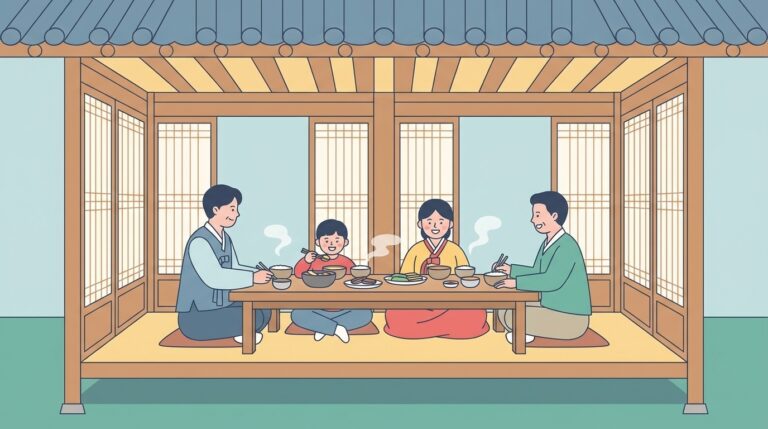
Picture this: You are seated in a hushed, serene private room inside a historic Hanok dining establishment in Insadong. The soft scent of pine wood and seasoned sesame oil lingers in the air. Suddenly, the paper sliding door slides open, and your partner’s parents step in. Your spine stiffens, your palms turn cold and clammy, and your carefully memorized vocabulary suddenly vanishes from your brain. Welcome to the world of 상견례 (Sang-gyeon-rye)—the official, formal pre-wedding meeting between both sets of parents in Korea.
If you feel overwhelmed with nervous jitters, take a deep breath. You are not alone! Even native Koreans view the Sang-gyeon-rye as one of the most terrifying, high-stakes social milestones of adult life. You are not expected to recite 17th-century poetry; what truly captures Korean hearts is thoughtful deference, authentic humility, and knowing how to navigate polite social rhythms. As a B1 intermediate learner, this is your shining moment to bridge cultural gaps with grace. With lessons drawn from real multicultural couples who have walked this path, this guide will transform your nervous butterflies into quiet poise.
Phase 2: Core Expressions Deep Dive
1. 말씀 많이 들었습니다 (Malsseum mani deureoss-seumnida)
- Pronunciation: [Mahl-sseum mah-nee deu-reot-seum-nee-dah] (Pronounce malsseum with a crisp, clear double-s sound, and mani like the English word “money”).
- Meaning: “I have heard so much about you.” (Literal: “I have listened to your honorable words many times.”)
- K-Culture Moment: Seen in nearly every family K-Drama (such as Crash Landing on You or King the Land), where the protagonist bows at an exact 45-degree angle upon entering the private dining suite.
- Editor’s Insight: This phrase does double duty. By using the honorific noun 말씀 (malsseum) instead of the casual word 말 (mal), you implicitly praise your partner for speaking fondly and frequently about their parents.
- Situation Spectrum: Casual: 🚫 | Semi-formal: ⚠️ | Formal: ✅
- 🤔 Think About It: Notice how Korean creates specialized vocabulary just to honor the other person’s speech. How does your native language verbally elevate elders when greeting them for the first time?
2. 음식이 정말 정갈하고 맛있네요 (Eumsigi jeongmal jeonggalhago masin-neyo)
- Pronunciation: [Eum-shee-gee jung-mahl jung-gahl-hah-goh mah-sheen-neh-yoh] (Flow smoothly across jeong-gal, rhyming with “jung-gull”).
- Meaning: “The food is so neat, refined, and delicious.”
- K-Culture Moment: Delivered mid-meal when an awkward silence descends between seasonal courses at a traditional banquet.
- Editor’s Insight: Most beginners only know 맛있어요 (masisseoyo – it’s tasty). Elevating your reaction to 정갈하다 (jeonggalhada – clean, aesthetically harmonious, and refined) signals emotional maturity and sophisticated culinary appreciation.
- Situation Spectrum: Casual: ⚠️ | Semi-formal: ✅ | Formal: ✅
- 🤔 Think About It: In English, we often comment on how rich or flavorful a meal is. Why do you think Korean dining etiquette places such a high aesthetic value on “neatness and purity” (정갈함)?
3. 부족하지만 예쁘게 봐주세요 (Bujokhajiman yeppeuge bwajuseyo)
- Pronunciation: [Boo-johk-hah-jee-mahn yeh-ppeu-geh bwah-joo-seh-yoh] (Make the double pp sound crisp, like snapping a tiny twig).
- Meaning: “I still have many shortcomings, but please look upon me with warmth and favor.”
- K-Culture Moment: The emotional climax at the end of the meeting when the prospective bride or groom bows respectfully before departing.
- Editor’s Insight: In Korean, 예쁘게 보다 doesn’t mean physical beauty. It means viewing someone with affectionate generosity and forgiving their small missteps. It is the golden key to melting an in-law’s protective guard.
- Situation Spectrum: Casual: 🚫 | Semi-formal: ⚠️ | Formal: ✅
- 🤔 Think About It: In Western job interviews and introductions, asserting your strengths is vital. Why does Korean culture value proactively highlighting that you are “lacking” (부족하다)?
Phase 3: Textbook Korean vs. Real Korean
Situation 1: Asking for more water or warm tea at the table
- 📖 교과서 한국어 (Textbook): 물 좀 주십시오. (Mul jom jusipsio. – “Please give me water.”)
- 🗣️ 진짜 한국어 (Real-Life): 여기 따뜻한 차 한 잔 더 부탁드립니다. (Yeogi ttatteut-han cha han jan deo butakdeurimnida. – “Could we please request another cup of warm tea here?”)
- 💡 왜 다를까? (Why is it different?): Textbook forms like “주십시오” sound command-like and overly robotic. In upscale dining spaces, native speakers use 부탁드립니다 (butakdeurimnida – “I humbly request”) to maintain an elegant, gentle atmosphere.
Situation 2: Acknowledging your nervous butterflies honestly
- 📖 교과서 한국어 (Textbook): 저는 지금 몹시 불안합니다. (Jeoneun jigeum mop-si buranhamnida. – “I am currently extremely anxious.”)
- 🗣️ 진짜 한국어 (Real-Life): 오늘 너무 긴장해서 손이 떨릴 정도예요. (Oneul neomu ginjanghaeseo soni tteollil jeongdoyeyo. – “I was so nervous today that my hands are practically trembling!”)
- 💡 왜 다를까? (Why is it different?): “불안하다” denotes emotional distress or clinical instability. Confessing your “긴장” (nervous excitement) with a gentle smile makes you relatable and shows the family that their presence matters immensely to you.
Phase 4: K-Culture Deep Dive & Non-Verbal Manners
4-1. 눈치 (Nunchi) & Gestures
- The Two-Hand Rule (두 손 쓰기): When receiving a glass of water, passing the side dish, or pouring tea, never use a single hand. Rest your left fingers softly beneath your right wrist or right forearm. This ancient gesture proves your hands are empty of concealed weapons and full of deference.
- The Head-Turn Sip (고개 돌려 마시기): When raising a glass of alcohol or tea in front of your elders, do not drink face-to-face. Turn your torso 45 degrees away, cover your mouth and glass with your off-hand, and take a measured sip.
- Soft Eye Contact: Continuous, unblinking eye contact is considered aggressive. Keep your gaze centered gently around their necktie, collarbone, or the rim of their tea cup while nodding actively to show attentiveness.
4-2. Culture Code: The Han-jeongsik Choreography
A Sang-gyeon-rye is almost always conducted around a multi-course meal (한정식). Never pick up your spoon or chopsticks until the eldest person at the table takes their first bite. Avoid divisive topics like wedding real estate costs, political candidates, or religious disagreements. Keep your focus squarely on childhood anecdotes, health wishes, and seasonal weather.
Phase 5: Real-Life Role-Play Scenario
Setting: A quiet private banquet room in Seoul. Gentle traditional gayageum strings resonate softly in the background.
Characters:
* 어머님 (Eomeonim): Prospective mother-in-law. Gracious, sharp-eyed, and observant.
* You: A thoughtful B1 intermediate learner meeting the parents for the first time.
1. 어머님: 어서 와요. 오느라 차 많이 안 막혔어요? (Eoseo wayo. Oneura cha mani an makhyeosseoyo?)
“Welcome! Did you run into heavy traffic on your way here?”
2. You: 🎭 (Standing upright, bowing at 45 degrees with hands folded over your navel)
안녕하세요, 어머님, 아버님! 말씀 많이 들었습니다. (Annyeonghaseyo, eomeonim, abeonim! Malsseum mani deureoss-seumnida.)
“Hello, Mother, Father! I have heard so many wonderful things about you.”
3. 어머님: 🎭 (Smiling warmly as she takes her seat)
인상이 참 좋네. 한국 생활은 좀 익숙해졌어요? (Insang-i cham jonne. Hanguk saenghwareun jom iksuk-haejyeosseoyo?)
“You have such a kind impression! Have you grown accustomed to living in Korea?”
4. You: 🎭 (Waiting until both parents sit down before taking your seat)
네, 주변에서 많이 도와주셔서 잘 지내고 있습니다. 그래도 오늘 자리는 정말 떨리네요. (Ne, jubyeon-eseo mani dowajusyeoseo jal jinaego issseumnida. Geuraedo oneul jarineun jeongmal tteollineyo.)
“Yes, everyone around me helps so much that I’m doing well. Still, I admit I am truly nervous today!”
5. 어머님: 🎭 (Laughs gently with a soft hand wave)
호호, 긴장할 것 없어요. 자, 음식 나왔으니 먼저 한 젓가락 들어요. (Hoho, ginjanghal geot eopseoyo. Ja, eumsik nawasseuni meonjeo han jeotgarak deureoyo.)
“Hoho, no need to be so nervous. Look, the food has arrived, please take the first bite.”
6. You: 🎭 (Keeping hands in lap, smiling deferentially)
어머님, 아버님 먼저 드세요. 맛있게 먹겠습니다! (Eomeonim, abeonim meonjeo deuseyo. Masitge meokgetseumnida!)
“Please go ahead first, Mother and Father. I shall eat with gratitude!”
7. 어머님: 🎭 (Nods with clear satisfaction at your table manners)
어머, 예의도 참 바르셔라. 입맛에는 잘 맞아요? (Eomeo, yeuido cham bareusyeora. Ipmmaseneun jal majayo?)
“My, what wonderful manners. Does the food suit your palate?”
8. You: 🎭 (Tasting a morsel of steamed lotus root, then dabbing your lips with a napkin)
네! 음식이 정말 정갈하고 맛있습니다. 초대해 주셔서 감사합니다. (Ne! Eumsigi jeongmal jeonggalhago masitseumnida. Chodaehae jusyeoseo gamsahamnida.)
“Yes! The food is so wonderfully refined and delicious. Thank you sincerely for hosting me today.”
🔀 Interactive Decision Point
During the meal, the father-in-law suddenly picks up a small carafe of traditional rice wine (백세주) and offers to pour you a drink. What do you do?
- Option A: Shake your head and say, “저 술 못 마십니다.” (Jeo sul mot masimnida. – “I cannot drink alcohol.”)
Feedback: [Bad] Excessively blunt! Even if you do not drink alcohol, declining bluntly damages the communal harmony. Say instead that you are weak with alcohol but accept the gesture gently, or ask for tea. - Option B: Hold your glass with both hands (right hand holding the bowl, left hand supporting underneath), bow your head, and turn slightly away to drink.
Feedback: [Best] Flawless execution! You demonstrated the two-handed reception and the turned-away drinking etiquette in one fluid move. - Option C: Shout “원샷!” (One-shot!) and gulp it down while maintaining direct eye contact.
Feedback: [Risk] Major danger zone! Sang-gyeon-rye is an elegant formal dinner, not a college campus pub crawl.
Phase 6: 10-Second Emotion Shadowing Drill
Practice speaking these aloud with deliberate pauses (/) and authentic emotional inflections:
[🥺 Trembling with nervous sincerity]
처음 뵙겠습니다 / 말씀 많이 들었습니다.
(Cheoeum boepgetseumnida / malsseum mani deureoss-seumnida.)
“It is an honor to meet you / I have heard so much about you.”-
[😋 Gentle culinary appreciation]
음식이 / 정말 깔끔하고 / 입에 딱 맞아요.
(Eumsigi / jeongmal kkalkkeumhago / ibe ttak majayo.)
“The food / is truly clean and refined / and suits my taste perfectly.” -
[🙇♂️ Deep humility and respectful warmth]
부족하지만 / 예쁘게 / 봐주세요.
(Bujokhajiman / yeppeuge / bwajuseyo.)
“Though I am lacking / please look upon me / with warmth and kindness.”
Phase 7: K-Culture Mini Dictionary
- 상견례 (Sang-gyeon-rye): The official formal pre-nuptial meeting where both biological families meet face-to-face to sanction the engagement.
- 예의범절 (Yee-beom-jeol): The comprehensive Korean moral code governing etiquette, polite physical posture, and generational speech levels.
- 눈치 (Nunchi): The intuitive social radar used to assess conversational moods, table needs, and silent elder cues instantly.
- 어르신 (Eoreusin): A venerable title used to refer politely to elders or elderly parents without using informal familial tags.
Phase 8: Survival Kit for Travelers & Future In-Laws
Survival Expressions TOP 3
- 편하게 말씀해 주세요. (Pyeonhage malsseumhae juseyo.)
Pro Tip: Use this to give permission to elders if they hesitate to drop down to comfortable speech levels (banmal). - 차 한 잔 더 드릴까요? (Cha han jan deo deurilkkayo?)
Pro Tip: Watch the teapot closely. Offering tea proactively earns top marks for thoughtfulness. - 귀한 시간 내주셔서 감사합니다. (Gwihan sigan naejusyeoseo gamsahamnida.)
Pro Tip: Use this closing phrase right as the bill is settled and coats are gathered.
Editor’s Travel Note
When booking your private dining suite in Seoul, look for soundproof rooms labeled “상견례 전용 룸” (rooms dedicated to pre-wedding meetings). You can research customer reviews, room layouts, and noise ratings through the 네이버 지도 앱 다운로드 platform before placing non-refundable restaurant deposits.
Phase 9: A Step Deeper (Reflective Essay)
In many individualistic societies, a wedding is viewed primarily as a voluntary union between two independent souls. In Korea, marriage remains a deep blending of two family ecosystems, ancestral histories, and collective lineages. When you sit across from your prospective in-laws, you are not merely showcasing personal accomplishments; you are assuring them that their child will be cherished within a warm, respectful partnership. Sincerity in Korea is communicated through restraint, active listening, and modest humility.
💬 Your Turn: How does your native culture handle the first formal dinner between two prospective sets of in-laws? Are there similar table customs you must follow? Share your stories in the comments below!
Phase 10: FAQ & Common Mistakes
Q: What should I wear to a Korean Sang-gyeon-rye?
A: Dress conservatively and polished. Men should opt for a fitted navy or charcoal suit with a subtle tie. Women should wear an elegant midi dress, a neat pantsuit, or a blouse paired with a mid-length skirt in calm, pastel tones. Avoid overly bright neon colors, excessive jewelry, or casual slip-ons.
Q: Should I bring a gift to the meeting?
A: Absolutely! A tasteful gift creates an immediate sense of goodwill. Classic, beloved gifts include traditional Korean bellflower confections (도라지정과), luxury seasonal fruit baskets, or elegant hanji-wrapped rice cakes (떡).
Q: What should I call my partner’s parents during the meal?
A: Address them formally as 어머님 (Eomeonim – Mother) and 아버님 (Abeonim – Father). Calling them “엄마/아빠” (Mom/Dad) is far too casual for a first meeting, while “선생님” (Teacher) feels too detached.
🚨 흔한 실수 (Common Mistakes) Warning Board
- Mistake 1: Lifting your cutlery before the elders.
Correct Action: Keep your hands gently on your lap until the eldest person picks up their spoon or chopsticks. - Mistake 2: Pouring your own drink at the table.
Correct Action: Self-serving beverages in formal dining is a social faux pas. Fill the elders’ cups first, and allow someone else to fill yours. - Mistake 3: Over-bragging about financial assets.
Correct Action: Let your partner speak proud words on your behalf; present yourself with polite modesty.
Phase 11: Action Missions
- 🥉 Bronze Mission: Stand in front of your mirror and practice bowing at a 45-degree angle while reciting “말씀 많이 들었습니다” 5 times with a gentle smile.
- 🥈 Silver Mission: Write a comment below praising a Korean dish using the intermediate adjective 정갈하다 in a full sentence.
- 🥇 Gold Mission: Role-play a 3-minute tea greeting with a language exchange partner using the two-handed pouring rule.
- 🎮 K-Culture Mission: Watch an episode of a Korean family drama (like My Father is Strange or Once Again) and spot the exact moment an elder says “음식 나왔으니 먼저 들어요.”
Phase 12: Interactive Quiz Challenge
1. Situation Judgment
The main dish is placed on the table, and everyone is chatting. What is your immediate action?
👉 Click to view the correct answer and feedback
Answer: Wait patiently until the elders pick up their utensils first. Once they begin tasting, say “맛있게 먹겠습니다” (I will eat with gratitude) and begin your meal. Starting first is considered disrespectful to family elders!
2. Fill-in-the-Blank
Complete the iconic humility phrase used when wrapping up the meeting:
“부족하지만 ________ 봐주세요.”
👉 Click to view the correct answer and feedback
Answer: 예쁘게 (yeppeuge).
Full sentence: “부족하지만 예쁘게 봐주세요.” (Though I have shortcomings, please look upon me favorably.)
3. True or False
When drinking tea or alcohol in front of prospective in-laws, you should stare straight into their eyes to demonstrate your honesty.
👉 Click to view the correct answer and feedback
Answer: False!
In Korean formal dining, you should turn your torso slightly to the side, shield your glass with your free hand, and drink without facing the elders directly.







