

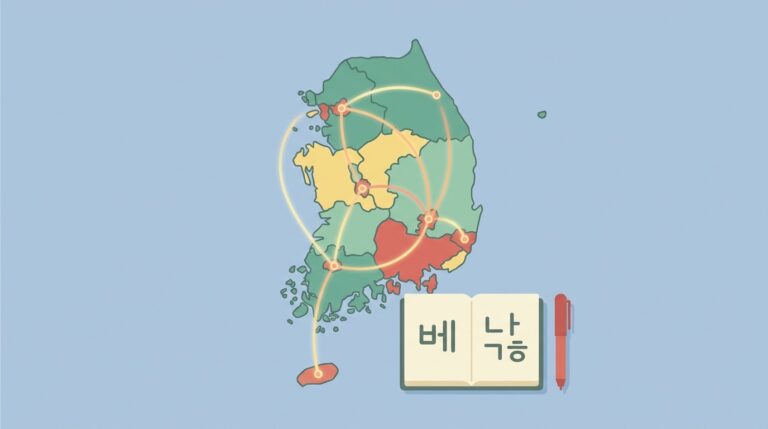
Phase 1: Empathy (Story-Immersive Opening)
안녕하세요! 매일한글 에디터입니다.
Imagine this scene: You are watching a fiery late-night panel debate on JTBC or an intense parliamentary committee standoff in a political drama like Chief of Staff (보좌관). The veteran lawmaker leans toward the microphone, his voice cutting through the tension: “수도권 일극 체제가 지속되는 한, 지방 소멸은 시간문제입니다!” (Sudogwon ilgeuk chejega jisokdoeneun han, jibang somyeoreun siganmunje-imnida! / As long as the Seoul-centric unipolar system continues, regional extinction is only a matter of time!) The studio falls silent. The policy jargon flies fast and heavy—words like 지방 분권 (decentralization), 균형 발전 (balanced development), and 재정 자립도 (fiscal self-reliance) echo across the floor.
You have achieved advanced Korean proficiency, yet sitting in a seminar room or joining a high-level policy discussion with native Korean colleagues, your mind freezes. How do you articulate complex governance dilemmas without sounding like you are simply reciting a dusty sociology textbook? Or worse, how do you avoid sounding politically insensitive regarding historical regional rivalries?
Over the past decade of coaching foreign diplomats, governance scholars, and K-culture analysts at Daily Hangul, I have seen brilliant non-native speakers hit this exact plateau. Debating politics in Korean at a C2 level is not merely about grammar; it is about wielding the precise socio-political register that commands intellectual respect. In this guide, you will master the elite rhetorical frameworks native policy experts use to debate South Korea’s regional autonomy and decentralization policies with effortless nuance.
Phase 2: Core Expressions Deep Dive (C2 Level)
1. 수도권 일극 체제를 탈피하다 (Sudogwon ilgeuk chejereul talpihada)
- Pronunciation: [Su-do-gwon il-geuk che-je-reul tal-pi-ha-da] (Think of the sound rhythm like: Sue-doe-gwon eel-geuk cheh-jeh-rul tahl-pee-ha-da)
- Meaning: Literal: “To break out of the Capital Area unipolar system.” / Nuanced: To dismantle the disproportionate economic, administrative, and cultural centralization concentrated in the greater Seoul metropolitan region.
- K-Culture Moment: Frequently heard during national presidential debates or public policy forums broadcasted on KBS/JTBC when candidate panels address real estate bubbles in Gangnam versus shrinking provincial populations.
- Editor’s Insight: The verb 탈피하다 (talpihada) literally means a reptile shedding its skin. In policy discourse, it conveys a profound, structural metamorphosis rather than a superficial adjustment. Using this instead of simply 벗어나다 (beoseonada) instantly demonstrates high-tier formal Korean.
- Situation Spectrum: Casual: 🚫 | Semi-formal: ⚠️ | Formal: ✅
- 🤔 Think About It: Why do you think Korean public discourse refers to Seoul and Gyeonggi-do collectively as 수도권 (Sudogwon) rather than just “the capital city”? Reflect on how infrastructure sprawl shapes the nation’s political identity.
2. 지방 소멸 위기에 선제적으로 대응하다 (Jibang somyeol wigie seonjejeogeuro dae-eunghada)
- Pronunciation: [Ji-bang so-myeol wi-gi-e seon-je-jeok-eu-ro dae-eung-ha-da] (Jee-bahng soh-myul wee-gee-eh sun-jeh-juck-uh-ro deh-eung-ha-da)
- Meaning: Literal: “To preemptively respond to the crisis of regional extinction.” / Nuanced: To take proactive, preventative policy measures before provincial cities face irreversible demographic collapse and depopulation.
- K-Culture Moment: Featured in prime-time investigative journalism documentaries like KBS Sisa Window examining empty schoolhouses and closing maternity clinics in rural Jeolla or Gyeongsang provinces.
- Editor’s Insight: 지방 소멸 (Jibang somyeol) is not hyperbole in Korea; it is an official socio-economic term established by national research institutes (Korea Employment Information Service). Adding the adverb 선제적으로 (preemptively) elevates your speech from passive commentary to strategic policy initiative.
- Situation Spectrum: Casual: 🚫 | Semi-formal: ⚠️ | Formal: ✅
- 🤔 Think About It: In many Western nations, rural flight is discussed as “urbanization.” Why does Korean political discourse frame it as existential 소멸 (extinction)? What does this say about national survival anxieties?
3. 자치재정권을 확충하여 풀뿌리 민주주의를 실현하다 (Jachijaejeonggwoneul hwakchunghayeo pulppuri minjuju-uireul silhyeonhada)
- Pronunciation: [Ja-chi-jae-jeong-gwon-eul hwak-chung-ha-yeo pul-ppu-ri min-ju-ju-ui-reul sil-hyeon-ha-da] (Jah-chee-jeh-jung-gwun-ul hwahk-choong-ha-yuh pool-ppoo-ree meen-joo-joo-ee-rul sheel-hyun-ha-da)
- Meaning: Literal: “To expand local fiscal rights and realize grassroots democracy.” / Nuanced: To allocate independent tax collection and budgetary powers to municipal governments so that democratic decision-making can truly thrive from the ground up.
- K-Culture Moment: Often cited in think-tank symposia or op-eds by provincial governors in newspapers like The Hankyoreh or The Chosun Ilbo demanding central government tax restructuring.
- Editor’s Insight: 풀뿌리 (pulppuri) means “grassroots.” When paired with legal-administrative terms like 자치재정권 (local fiscal autonomy rights), it balances technical rigor with democratic idealism.
- Situation Spectrum: Casual: 🚫 | Semi-formal: ⚠️ | Formal: ✅
- 🤔 Think About It: Does your native culture consider fiscal power an administrative function or a foundational democratic right? Notice how Korean rhetoric interlocks budgetary autonomy directly with civil democracy.
Phase 3: Textbook Korean vs. Real Korean
Situation 1: Describing the demographic and economic decline of provincial cities
- 📖 교과서 한국어: 지방 도시들의 인구가 많이 줄어들어서 경제가 나빠지고 있습니다. (Jibang dosideurui inguga mani jureodeureoseo gyeongjega nappajigo itseumnida. / The population of local cities has decreased a lot, so the economy is getting bad.)
- 🗣️ 진짜 한국어: 청년층 유출 심화로 인한 지방 소멸 위기가 이미 가시화되고 있습니다. (Cheongnyeoncheung yuchul simhwaro inan jibang somyeol wigiga imi gasihwadoego itseumnida. / The crisis of regional extinction driven by the intensified youth exodus is already materializing.)
- 💡 왜 다를까? (Why the difference?): While the textbook sentence is grammatically flawless, sophisticated C2 debates replace vague qualifiers like “줄어들어서” (because it decreased) with precise sociological nomenclature like “청년층 유출 심화” (intensification of youth outflow) and “가시화되다” (to become visible/manifest).
Situation 2: Demanding devolution of administrative authority from the central government
- 📖 교과서 한국어: 중앙 정부는 지방 정부에게 더 많은 권한과 돈을 나누어 주어야 합니다. (Jung-ang jeongbuneun jibang jeongbuege deo maneun gwonhangwa doneul nanueo jueoya hamnida. / The central government must share more authority and money with local governments.)
- 🗣️ 진짜 한국어: 중앙에 편중된 권한과 재정을 과감하게 이양해야 비로소 균형 발전의 물꼬를 틔울 수 있습니다. (Jung-ang-e pyeonjungdoen gwonhangwa jaejeong-eul gwagamhage iyanghaeya biroso gyunhyeong baljeonui mulkkoreul ti-ul su itseumnida. / Only by boldly devolving centralized authority and fiscal resources can we finally clear the way for balanced regional development.)
- 💡 왜 다를까? (Why the difference?): Native political thinkers rarely say “돈을 나누어 주다” (share money). They employ administrative terms such as “재정 이양” (fiscal devolution) and dynamic idiomatic metaphors like “물꼬를 틔우다” (to open the irrigation gate / clear the path).
Phase 4: K-Culture Deep Dive & Non-Verbal Manners
4-1. 눈치 (Nunchi) & Gestures in Political Debates
When debating regional autonomy in Korea, emotional sensitivity is paramount. Historical regional imbalances (particularly the developmental disparity between the Gyeonggi/Seoul capital region and southern regions like Honam and Yeongnam) evoke deep social sentiment.
- Open Palm Moderation: In Korean political forums, pointing with an index finger is seen as belligerent. When emphasizing an opponent’s oversight, hold your hand open with fingers pressed together, palm tilted at a 45-degree angle toward the audience or whiteboard.
- Deference Nodding (경청의 끄덕임): Even during sharp rebuttals, maintain slight, slow nods while your interlocutor presents their argument. This conveys 경청 (active respectful listening), which neutralizes personal animosity and signals that your critique is purely policy-driven.
- Vocal Modulation: Lower your pitch and deliberately lengthen sentence endings slightly when presenting contentious counterarguments (e.g., “~라는 점에는 동의하지만…”). High-pitched, clipped tones suggest agitation and damage your rhetorical authority.
4-2. Cultural Code Analysis: The “In-Seoul” (인서울) Dilemma
From the critically acclaimed drama Our Blues to slice-of-life hits like Welcome to Samdal-ri, modern K-media constantly wrestles with the magnetic pull of the capital. In Korean society, “In-Seoul” (인서울) is not merely a geographic location; it is a socio-economic caste denoting university admission, corporate prestige, and lifestyle infrastructure. Consequently, discussions on 지방 분권 (regional decentralization) in Korea are not dry technocratic negotiations—they are debates about equity, youth burnout, and national survival. When you speak on this topic, acknowledging the educational and infrastructural centralization of Seoul makes your arguments resonate on a deeply cultural frequency.
Phase 5: Real-World Roleplay Scenario
Setting: A live televised parliamentary policy symposium in Yeouido, Seoul. You are a senior policy fellow debating Assembly Member Park Sun-woo (박선우 의원), an articulate lawmaker representing a metropolitan constituency.
Turn 1
박선우 의원: 지방 분권의 당위성에는 원칙적으로 공감합니다만, 지자체의 열악한 재정 자립도를 감안할 때 시기상조 아닙니까?
(Jibang bungwonui dangwiseong-eneun wonchikjeogeuro gonggamhamnida-man, jijacheui yeorakan jaejeong jaripdoreul gamanhal ttae sigisangjo animnikka?)
“I agree in principle with the necessity of decentralization, but considering the abysmal fiscal self-reliance of local governments, isn’t it premature?”
🎭 [자료를 단정히 정리하며 미소를 띤 채 여유로운 어조로]
Turn 2
학습자: 의원님 말씀도 일리가 있습니다. 하지만 재정 이양이 수반되지 않는 분권 논의야말로 본말이 전도된 것 아닙니까?
(Uiwon-nim malsseumdo illiga itseumnida. Hajiman jaejeong iyang-i subandoeji anneun bungwon noni-yamallo bonmari jeondodoen geot animnikka?)
“Your point is well-taken, Assemblyman. However, isn’t discussing decentralization without accompanying fiscal devolution putting the cart before the horse?”
🎭 [차분하게 손바닥을 펴 보이며 상대의 논점을 정면으로 응시하며]
Turn 3
박선우 의원: 그렇다면 구체적으로 어떤 방식으로 국세와 지방세의 격차를 해소하자는 말씀이십니까?
(Geureotdamyeon guchejeogeuro eotteon bangsigeuro guksewa jibangseui gyeokchareul haesohajaneun malsseum-isipnikka?)
“Then in concrete terms, how do you propose we bridge the gap between national and local taxes?”
🎭 [안경을 살짝 고쳐 쓰며 날카로운 눈빛으로 반문하며]
Turn 4
학습자: 현행 7 대 3 수준인 국세와 지방세 배분 비율을 중장기적으로 6 대 4까지 단계적으로 재편해야 합니다.
(Hyeonhaeng chil dae sam sujunin guksewa jibangse baebun biyureul jungjanggijeogeuro yuk dae sa-kkaji dangyejeogeuro jaepyeonhaeya hamnida.)
“We must progressively restructure the current 7-to-3 ratio between national and local taxes toward a 6-to-4 distribution over the medium to long term.”
🎭 [준비된 인포그래픽을 가리키며 확신에 찬 목소리로]
Turn 5
박선우 의원: 급격한 세제 개편은 수도권 유권자들의 반발을 초래하고 국가 전략 산업 투자를 위축시킬 수 있습니다.
(Geupgyeokan seje gaepyeoneun sudogwon yugwonjadeurui banbareul choraehago gukga jeonnyak saneop tujareul wichuksigil su itseumnida.)
“A drastic tax overhaul could incite severe backlash from metropolitan voters and curb investment in vital strategic national industries.”
🎭 [양미간을 살짝 찌푸리며 엄중한 경고를 담아]
Turn 6
학습자: 수도권 과밀화로 인한 사회적 비용이 이미 임계점에 도달했다는 점을 유권자들에게 적극 설득해야 합니다.
(Sudogwon gwamilhwaro inan sahoejeok biyong-i imi imgyejeom-e dodalhaetdaneun jeomeul yugwonjadeurege jeokgeuk seoldeukaeya hamnida.)
“We must actively persuade voters that the social costs incurred by capital overcrowding have already reached a critical threshold.”
🎭 [고개를 천천히 끄덕이며 단호하면서도 포용력 있는 톤으로]
Turn 7
박선우 의원: 결국 사회적 대타협을 이끌어낼 정치적 리더십이 관건이라는 뜻으로 들리는군요.
(Gyeolguk sahoejeok daetahyeobeul ikkeureonael jeongchijeok rideosibi gwangeon-iraneun tteuseuro deullineungunyo.)
“It sounds like you are arguing that political leadership capable of forging a grand social compromise is the ultimate linchpin.”
🎭 [고개를 끄덕이며 메모장에 요점을 기록하며]
Turn 8
학습자: 정확하십니다. 균형 발전은 단순한 시혜가 아니라 대한민국의 지속 가능한 미래를 위한 생존 전략입니다.
(Jeonghwakhasipnida. Gyunhyeong baljeoneun dansunhan sihye-ga anira daehanmingugui jisok ganeunghan miraereul wihan saengjon jeollyang-imnida.)
“Precisely. Balanced development is not mere charity to provinces; it is an existential survival strategy for the sustainable future of South Korea.”
🎭 [확신에 찬 눈빛으로 청중과 패널을 아우르며 결론을 맺음]
🔀 Interactive Decision Point
How would you address Assembly Member Park’s concern regarding metropolitan voter backlash in Turn 6?
- Option A: 수도권 사람들의 이기주의는 국가적 위기 앞에서 용납될 수 없습니다! 무조건 양보해야 합니다. (Metropolitan selfishness cannot be tolerated in national crises! They must surrender unconditionally.)
- Option B: 수도권 과밀화로 인한 사회적 비용이 이미 임계점에 도달했다는 점을 유권자들에게 적극 설득해야 합니다. (We must actively persuade voters that the social costs incurred by capital overcrowding have already reached a critical threshold.)
- Option C: 서울 시민들의 의견이 가장 중요하니, 그분들이 반대한다면 정책을 전면 재검토해야죠. (Seoul citizens’ opinions matter most, so if they oppose it, we must reconsider the entire policy.)
Feedback:
* Option A (Bad): High political risk! Using terms like “이기주의” (selfishness) immediately antagonizes millions of voters and halts productive policy dialogue.
* Option B (Best!): Flawless C2 diplomacy. It re-frames decentralization not as taking from the capital, but as relieving unsustainable urban pressure that harms everyone.
* Option C (Risk): Capitulates on the debate principle entirely, weakening your authority as a policy advocate.
Phase 6: 10-Second Emotion Shadowing Drill
Master the rhythmic cadences of Korean policy debate. Pay strict attention to breath pauses (/) and emotional tone indicators.
Drill 1: [🧐 냉철하고 단호하게 (Cool-headed & Resolute)]
수도권 일극 체제는 / 국가 경쟁력의 왜곡을 낳고, / 지방 소멸을 가속화할 뿐입니다.
(Sudogwon ilgeuk chejeneun / gukga gyeongjaengnyeogui waegogeul natgo, / jibang somyeoreul gaseokhwahal ppunimnida.)
“The capital unipolar system / only distorts national competitiveness / and accelerates regional extinction.”
Drill 2: [💡 설득력 있고 무게감 있게 (Persuasive & Weighty)]
중앙의 권한을 이양하는 것은 / 단순한 재정 지원이 아니라, / 자치분권의 실질적 토대를 닦는 일입니다.
(Jung-angui gwonhaneul iyanghaneun geoseun / dansunhan jaejeong jiwoni anira, / jachibungwonui siljiljeok todaereul dakneun irimnida.)
“Devolving central authority / is not merely about financial subsidies, / but about laying the substantive foundation for self-governing decentralization.”
Drill 3: [🔥 단호한 결단의 목소리로 (Decisive & Visionary)]
국토 균형 발전은 / 더 이상 미룰 수 없는 / 국가 백년대계의 핵심 과제입니다.
(Gukto gyunhyeong baljeoneun / deo isang mirul su eomneun / gukga baengnyeondaegyeui haeksim gwaje-imnida.)
“Balanced national land development / is a core task for the nation’s grand century-long plan / that can no longer be delayed.”
Phase 7: K-Culture Mini Dictionary (4 Key Terms)
- 수도권 (Sudogwon / Capital Area)
- Translation: Greater Seoul Metropolitan Area (encompassing Seoul, Incheon, and Gyeonggi-do).
- Usage: Over 50% of South Korea’s population resides here. In politics, it represents the primary demographic battleground where national elections are won or lost.
- 지방 소멸 (Jibang Somyeol / Regional Extinction)
- Translation: Regional demographic extinction.
- Usage: An academic and administrative metric tracking municipalities where elderly populations vastly outnumber women of reproductive age. Used to argue for emergency rural subsidies.
- 메가시티 (Megacity / Megacity Initiative)
- Translation: Inter-municipal economic mega-regions (e.g., Busan-Ulsan-Gyeongnam ‘Bu-Ul-Gyeong’ Mega-alliance).
- Usage: Frequently used by regional policy leaders seeking to combine provincial administrative resources to rival Seoul’s economic gravity.
- 국토 균형 발전 (Gukto Gyunhyeong Baljeon / Balanced National Territory Development)
- Translation: Geographically balanced socio-economic development.
- Usage: Found in Article 120–123 of the South Korean Constitution. A sacred statutory phrase cited to defend regional universities, public enterprise relocations, and high-speed rail expansions.
Phase 8: Survival Kit for Travelers & Policy Observers
Planning to attend a seminar at the Sejong Government Complex or travel across regional tech hubs like Pangyo, Daejeon, and Busan? Keep these expressions in your pocket:
- Top 1: 혁신도시 이전 공공기관 현황 자료를 열람할 수 있을까요?
(Hyeoksindosi ijeon gonggonggigwan hyeonhwang jaryoreul yeollamhal su isseulkkayo?)
“May I review the data regarding the relocation of public institutions to Innovation Cities?”
Pro Tip: Say this at municipal public information desks to receive comprehensive territorial policy briefs. -
Top 2: KTX 세종역 신설을 둘러싼 지역 간 입장 차이가 팽팽하네요.
(KTX Sejong-yeok sinseoreul dulleossan jiyeok gan ipjang cha-iga paengpaenghaneyo.)
“The divergence in local stances regarding the construction of KTX Sejong Station is quite contentious.”
Pro Tip: High-register conversational opener when traveling through Chungcheong province. -
Top 3: 이번 지방선거에서 메가시티 공약이 핵심 쟁점으로 떠올랐습니다.
(Ibeon jibangseon-geo-eseo megasiti gong-yagi haeksim jaengjeomeuro tteo-ollatseumnida.)
“The megacity pledge has emerged as a focal contention in this local election.”
Pro Tip: Perfect for academic roundtable discussions or political journalism interviews.
Editor’s Travel Note:
When navigating regional governance visits beyond Seoul, standard global apps will fail you. Always secure your transit by using the 코레일톡 KTX 예매 앱 다운로드 for high-speed train tickets between Seoul and provincial capitals. For local navigation across provincial administrative zones, make sure to use the 네이버 지도 앱 다운로드 to check accurate regional bus routes that do not register properly on foreign map services.
Phase 9: “한 발 더 깊이” (One Step Deeper)
In South Korea, geographic centralization is intimately intertwined with social validation. The term 인서울 (In-Seoul) does not simply describe a coordinate on a peninsula; it reflects decades of post-war industrial strategy that concentrated capital, premier universities, and political patronage into a single mega-urban core. For generations, migration to the capital was synonymous with familial pride and upward mobility. Today, however, the younger demographic in provincial regions faces a dual burden: the emotional stigma of being perceived as “left behind” versus the crushing housing costs and hyper-competition of Seoul. When you analyze Korean decentralization policies, you are examining the philosophical tug-of-war between hyper-efficient meritocratic centralization and the communal preservation of ancestral homelands.
💬 Your Turn: How does your home country manage the tension between mega-cities and rural depopulation? Share your perspective in the comments below using the phrase “균형 발전을 위해서는…” (For balanced development…)!
Phase 10: FAQ & Common Mistakes
Q: Is using the word “지방 (Jibang)” considered offensive or condescending to people living outside Seoul?
A: While 지방 (provinces/local areas) is an official administrative term, repetitive use in everyday conversation can sometimes carry an unintentional Seoul-centric tone (“the boonies”). In policy discourse, pairing it with institutional terms like 지방 자치 (local autonomy) or 지방 자치 단체 (local government) is standard. However, to sound maximally sophisticated and neutral, native experts often substitute it with 지역 (Jiyeok / region), as in 지역 균형 발전 (regional balanced development).
Q: What is the exact difference between “지방 분권 (Jibang bungwon)” and “자치 분권 (Jachi bungwon)”?
A: 지방 분권 focuses on the functional dispersion of power from the central government downward to local tiers. Conversely, 자치 분권 underscores the democratic empowerment of local residents to govern themselves. Contemporary progressive and conservative policies both increasingly favor 자치 분권 to emphasize citizen sovereignty.
Q: Can I use “중앙집권적 (centralized)” in casual conversation?
A: It sounds excessively academic for casual cafe chatter! Reserve 중앙집권적 (centralized) and 지방분권적 (decentralized) for debates, university lectures, news columns, or professional boardroom presentations.
🚨 흔한 실수 (Common Mistakes) 경고판
- ❌ Mistake 1: Translating “local tax” as 로컬 세금 (rokeol segeum).
- ✅ Correct Action: Always use 지방세 (Jibangse). Its counterpart, national tax, is 국세 (Gukse).
- ❌ Mistake 2: Saying 지방을 살려야 합니다 (We must save the countryside) in a formal debate.
- ✅ Correct Action: Use high-register lexicon: 지방 경제를 활성화해야 합니다 (We must revitalize local economies) or 지역 소멸 위기를 극복해야 합니다 (We must overcome the crisis of regional extinction).
- ❌ Mistake 3: Confusing 이양 (Iyang – devolution of rights/powers) with 이전 (Ijeon – physical relocation).
- ✅ Correct Action: Say 권한을 이양하다 (devolve authority), but say 공공기관을 지방으로 이전하다 (relocate public institutions to provinces).
Phase 11: Action Mission & Community Challenge
- 🥉 Bronze Mission (Solo Practice): Read Drill 2 from Phase 6 aloud three times into your smartphone voice recorder, focusing on the
/pauses until your pacing sounds measured and calm. - 🥈 Silver Mission (Community Sharing): Leave a comment below answering the “Your Turn” question using at least one advanced phrase: “수도권 일극 체제” or “지방 소멸 위기”.
- 🥇 Gold Mission (Real-world Execution): Tune into an episode of a Korean current affairs program (such as MBC 100-Minute Debate or KBS Sunday Diagnostic) and take notes on three distinct policy terms used by panelists when discussing regional issues.
- 🎮 K-Culture Mission: Watch an episode of the political drama Chief of Staff (보좌관) Season 1 or 2, and catch the moment the characters mention 지역구 예산 (electoral district budget). Notice how fiercely constituency funds are defended!
Phase 12: Interactive Quiz Challenge
1. Situational Judgment
You are presenting at a Seoul municipal policy forum. You want to argue that Seoul should cooperate with surrounding provinces instead of hoarding development resources. Which statement is the most eloquent and respectful?
- A) 서울만 잘 사는 것은 불공평하니 경기도에 돈을 나눠주세요.
- B) 수도권 독식을 지양하고 인근 지자체와 상생 협력 모델을 구축해야 합니다.
- C) 서울 중심의 사고방식을 가진 사람들을 전부 교체해야 합니다.
2. Fill-in-the-Blank
중앙 정부에 집중된 권한과 예산을 지자체로 과감히 ( )해야 진정한 풀뿌리 민주주의를 실현할 수 있습니다.
* A) 이전 (Ijeon)
* B) 이양 (Iyang)
* C) 수출 (Suchul)
3. True / False Cultural Quiz
- Q: In official South Korean policy documents, the term “지방 소멸 (Jibang somyeol)” is banned because it causes excessive public panic.
- True or False?
🔍 Click here to reveal the answers and explanations!
-
Answer: B
Explanation: “지양하다” (to avoid/refrain from) and “상생 협력 모델” (win-win cooperative model) represent quintessential C2 diplomatic rhetoric. Option A is overly simplistic, and Option C is aggressive. -
Answer: B (이양 / Iyang)
Explanation: Transferring legal power or fiscal jurisdiction to a sub-entity is called 이양 (devolution). 이전 refers to physical relocation, and 수출 means export. -
Answer: False
Explanation: 지방 소멸 (Regional Extinction) is an officially recognized statistical index and research classification widely used in government white papers and national assembly audits.






