

Declutter Your Space Like a Local: Mastering Korean Secondhand Trading
Phase 1: Empathy (Story-Driven Opening)
안녕하세요! 매일한글 에디터입니다. (Hello! This is your Daily Hangul editor.)
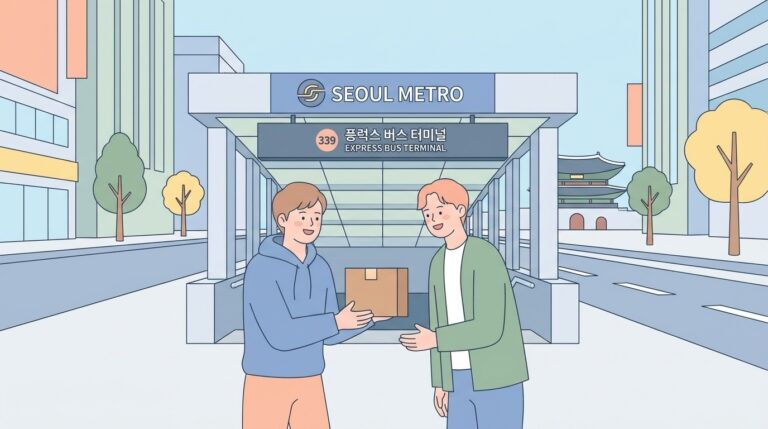
Have you ever looked around your room in Korea—perhaps a cozy one-room (원룸, wonrum) studio in Sinchon or Hongdae—and realized you have accumulated way too much stuff? Maybe you bought an extra rice cooker, three identical winter jackets, or study books you swore you’d finish. In Korea, space is sacred, and living surrounded by unused clutter quickly drains your energy. Remember that scene in popular lifestyle K-dramas where characters stand awkwardly outside a subway station holding a giant floor lamp, texting anxiously on their phone? That is the quintessential Korean secondhand trading experience!
Many of our intermediate learners tell us: “I want to declutter (비우기, bi-ugi) and sell my unused things on Karrot Market (당근마켓, Danggeun Market), but I’m terrified of making a faux pas or sounding rude in chat.” Trading in Korea isn’t just a financial transaction; it’s a neighborhood ritual governed by polite etiquette, mutual trust, and unspoken social codes known as nunchi. By mastering the phrases in this guide, you will not only reclaim your living space through chic minimalism but also experience one of the warmest community subcultures in modern Korea. Let’s turn that clutter into pocket money and genuine cultural connection!
Phase 2: Top 3 Core Expressions Deep-Dive
1. 안 써서 정리해요 (An sseoseo jeongnihaeyo)
- Pronunciation: [An sseo-seo jeong-ni-hae-yo] (Sound analogy: ‘An’ like ‘un-‘ in undo, ‘sseo’ like ‘sir’ without the ‘r’, ‘jeongni’ sounds like ‘jung-nee’)
- Meaning: Literal: “I don’t use it, so I am organizing/tidying it up.” vs. Actual Nuance: “I am parting with this item simply because it’s unused, not because it is broken or defective.”
- K-Culture Moment: Commonly written in the first line of listings on secondhand apps to reassure buyers that an item is in near-mint condition.
- Editor’s Insight: In Korean culture, stating why you are letting go of an item shows transparency. Saying “안 써서 정리해요” eliminates suspicion and instantly boosts buyer confidence.
- Situation Spectrum: Casual (Friends): ⚠️ (Use ‘안 써서 버리긴 아깝고 너 가질래?’) / Semi-formal (Trading Apps): ✅ / Formal (Business): 🚫
- 🤔 Think About It: Why does Korean culture value sharing the personal reason behind selling an item rather than just stating its features?
2. 네고 가능한가요? (Nego ganeunghangayo?)
- Pronunciation: [Ne-go ga-neung-han-ga-yo] (Sound analogy: ‘Nego’ rhymes with ‘Lego’, ‘ganeung’ sounds like ‘gah-neung’)
- Meaning: Literal: “Is negotiation possible?” vs. Actual Nuance: “Could you offer a slight discount, if you don’t mind?”
- K-Culture Moment: Used in direct messenger chats when a buyer wants to test the waters without offending the seller.
- Editor’s Insight: ‘네고’ is a loanword from English “negotiation”. Pairing it with the polite question ending “-한가요?” softens the request. Remember: asking for more than 10-15% off is considered bad manners!
- Situation Spectrum: Casual: ⚠️ / Semi-formal (Trading Apps): ✅ / Formal: 🚫
- 🤔 Think About It: In your native culture, is bargaining expected or considered impolite? How does using English loanwords change the emotional weight of negotiating in Korean?
3. 무료 나눔해요 (Muryo nanumhaeyo)
- Pronunciation: [Mu-ryo na-num-hae-yo] (Sound analogy: ‘Muryo’ sounds like ‘moo-ryo’, ‘nanum’ like ‘nah-noom’)
- Meaning: Literal: “I am doing a free sharing.” vs. Actual Nuance: “I am giving this away for free to someone who truly needs it.”
- K-Culture Moment: A frequent highlight in neighborhood apps where residents give away house plants, extra groceries, or furniture to neighbors.
- Editor’s Insight: The word nanum (나눔, sharing) carries a heartwarming emotional warmth rooted in traditional communal spirit (jeong, 정). It sounds much more dignified and generous than simply saying ‘공짜로 줘요’ (I give it away for free).
- Situation Spectrum: Casual: ✅ / Semi-formal: ✅ / Formal: ⚠️
- 🤔 Think About It: How does changing the word from “free giveaway” to “sharing” reshape the dignity of both the giver and the receiver?
Phase 3: Textbook Korean vs. Real-World Korean
Situation 1: Listing an unused item quickly at a cheap price
- 📖 Textbook Korean: “사용하지 않는 물건을 저렴하게 판매합니다.” (Sayonghaji anneun mulgeoneul jeoryeomhage panmaehamnida. – I sell unused items at a low price.)
- 🗣️ Real-World Korean: “안 써서 헐값에 넘겨요. 쿨거래 환영해요!” (An sseoseo heol-gapse neomgyeoyo. Kulgeorae hwanyeonghaeyo! – Letting it go for dirt cheap since I don’t use it. Quick hassle-free buyers welcome!)
- 💡 Why the Difference?: Native speakers use colloquial compounds like 헐값 (dirt cheap) and community slang like 쿨거래 (cool/smooth deal) to signal that they are easygoing, realistic, and ready to close the trade promptly.
Situation 2: Politely declining an excessive discount request
- 📖 Textbook Korean: “가격을 깎아줄 수 없습니다.” (Gagyeogeul kkak-a-jul su eopseumnida. – I cannot lower the price.)
- 🗣️ Real-World Korean: “죄송하지만 네고는 어려워요. 이 가격에 안 팔리면 그냥 쓰려고요!” (Joesonghajiman negoneun eoryeowoyo. I gagyeoge an pallimyeon geunyang sseuryeogoyo! – Sorry, but negotiation is difficult. If it doesn’t sell at this price, I’ll just keep using it!)
- 💡 Why the Difference?: Direct refusals can sound harsh in Korean text chats. Adding the gentle rationale that you will “just keep using it” (그냥 쓰려고요) helps the buyer save face while setting a firm boundary.
Phase 4: K-Culture Deep-Dive & Non-Verbal Manners
4-1. Nunchi & Physical Manners at the Trade Meetup
Direct secondhand deals (jikgeorae, 직거래) usually take place in front of recognizable public landmarks: subway station exits, convenience store fronts, or apartment security booths. When meeting the buyer or seller:
1. Two-Hand Rule: Always hand over the item and receive the payment (or show the mobile transfer confirmation screen) using both hands or with your right hand supported by your left arm at the elbow.
2. The Polite Bow: A slight 15-to-30-degree bow paired with “감사합니다, 잘 쓰세요!” (Thank you, please use it well!) leaves a lasting impression.
3. Visual Confirmation: Give the buyer 5-10 seconds to inspect the item without hovering aggressively over them. Step back slightly to give them physical space.
4-2. Cultural Code: ‘Manner Temperature’ & The Minimalist Wave
In Korea, secondhand apps feature a “Manner Temperature” (매너온도), starting at standard human body temperature: 36.5°C. Positive reviews elevate your score, while cancellations or impoliteness drop it. Furthermore, hit entertainment shows like The House Detox (신박한 정리) have triggered a national wave of emotional minimalism. Koreans view clearing out unused belongings not as getting rid of junk, but as clearing mental space (마음 정리) and circulating good energy back into the community.
Phase 5: Real-World Roleplay Scenario
Setting: Near Hapjeong Station Exit 3. You are meeting Minji to sell an unused electric kettle.
- Minji: 저기 혹시… 당근이세요? (Jeogi hoksi… Danggeuniseyo? / Excuse me… are you from Karrot?)
🎭 Looking around holding her smartphone with a shy smile - You: 네, 맞아요! 주전자 가져왔어요. (Ne, majayo! Jujeonja gajyeowasseoyo. / Yes, that’s right! I brought the kettle.)
🎭 Handing over the paper shopping bag with both hands - Minji: 와, 생각보다 상태가 진짜 좋네요! 거의 새것 같아요. (Wa, saenggakboda sangtaega jinjja jonneyo! Geoui saegeot gatayo. / Wow, the condition is much better than expected! It looks almost new.)
🎭 Peeking inside the bag carefully - You: 네, 사놓고 안 써서 정리하는 중이에요. (Ne, sanoko an sseoseo jeongnihaneun jung-ieyo. / Yes, I bought it but didn’t use it, so I’m decluttering.)
🎭 Smiling warmly and nodding - Minji: 혹시 작동은 잘 되나요? (Hoksi jakdongeun jal doenayo? / By any chance, does it work properly?)
🎭 Asking with gentle curiosity - You: 네, 어제 테스트해 봤는데 문제없었어요. (Ne, eoje teseteuhae bwanneunde munjeeopseosseoyo. / Yes, I tested it yesterday and had no issues.)
🎭 Reassuring tone with open posture - Minji: 감사해요! 방금 계좌로 15,000원 입금했어요. 확인해 보세요. (Gamsahaeyo! Banggeum gyejwaro man-o-cheon-won ipgeumhaesseoyo. Hwaginhae boseyo. / Thank you! I just transferred 15,000 won to your account. Please check.)
🎭 Showing the mobile bank confirmation screen - You: 확인했습니다! 조심히 들어가시고 잘 쓰세요. (Haginhaesseumnida! Josimhi deureogasigo jal sseuseyo. / Confirmed! Get home safely and enjoy using it.)
🎭 Giving a polite goodbye bow
🔀 Interactive Decision Point
Minji suddenly asks: “혹시 1,000원만 깎아주실 수 있나요?” (Could you drop 1,000 won?)
- Option A: “안 돼요. 이미 싸게 올렸어요.” (No. I already listed it cheap.)
- Option B: “현장 네고는 곤란해요. 채팅으로 미리 말씀해 주셨어야 해요.” (On-site discount is difficult. You should have mentioned it in chat beforehand.)
- Option C: “직접 와주셨으니 1,000원 빼드릴게요!” (Since you came all the way here in person, I’ll take off 1,000 won!)
Feedback & Analysis:
* Option A (Bad): Grammatically correct but overly blunt and abrasive. It ruins the friendly atmosphere instantly.
* Option B (Best): Setting boundaries against “on-site negotiation” (현장 네고) is fully standard practice in Korea. This response is polite yet firm.
* Option C (Risk): Generous, but encourages poor marketplace etiquette. Only choose this if you genuinely want to give a bonus to a neighbor.
Phase 6: 10-Second Emotion Shadowing Drill
Practice these lines out loud, paying close attention to the pause slashes (/) and emotional tone tags:
[😊 밝고 친절하게]
“안녕하세요! / 포장 깨끗하게 해뒀어요.”
(Annyeonghaseyo! / Pojang kkaekkeuthage haedwoesseoyo. / Hello! / I packed it up nice and clean.)-
[🤝 정중하고 단호하게]
“죄송하지만 / 직거래만 가능해요.”
(Joesonghajiman / Jikgeoraeman ganeunghaeyo. / I’m sorry, but / only in-person trade is possible.) -
[💖 따뜻하고 배려 넘치게]
“안 쓰는 물건인데 / 필요하신 분이 잘 쓰셨으면 좋겠어요.”
(An sseuneun mulgeoninde / piryohasin buni jal sseusyeosseumyeon jokgesseoyo. / It’s an unused item, / so I hope someone in need can make great use of it.)
Phase 7: K-Culture Mini Dictionary
- 쿨거래 (Kulgeorae): Cool trade. Meaning a transaction made instantly without bargaining, nitpicking, or hesitation.
- 직거래 (Jikgeorae): Direct/in-person trade. Meeting face-to-face to inspect the item and avoid delivery fees or delivery fraud.
- 당근하다 (Danggeunhada): To Karrot. A ubiquitous modern verb meaning to buy, sell, or trade items through secondhand local apps.
- 매너온도 (Maeneo-ondo): Manner temperature. A reputation metric on Karrot Market reflecting a user’s politeness, punctuality, and reliability.
Phase 8: Traveler’s Survival Kit
Survival Expressions TOP 3
- “문 앞에 두고 가주세요.” (Mun ape dugo gajuseyo.)
- Romanization: [Mun a-pe du-go ga-ju-se-yo]
- Pro Tip: Perfect for non-face-to-face trading (문고리 거래, door-handle trade) outside apartment doors.
- “반값택배 가능한가요?” (Ban-gap-taekbae ganeunghangayo?)
- Romanization: [Ban-gap-taek-bae ga-neung-han-ga-yo]
- Pro Tip: Ask for convenience store “half-price parcel delivery” (GS25 or CU), which costs only ~1,800 to 2,200 KRW!
- “예약 중인가요, 거래 가능한가요?” (Yeyak jung-in-gayo, georae ganeunghangayo?)
- Romanization: [Ye-yak jung-in-ga-yo, geo-rae ga-neung-han-ga-yo]
- Pro Tip: Clarify whether an enticing item is already reserved before sending longer inquiries.
Editor’s Travel Note
If you are living or staying in Korea for a few months, explore the Danggeun Market App Guide for Foreign Residents to verify your local neighborhood via GPS. For cashless payments, link your Korean bank app or use Toss/KakaoPay to transfer money on the spot seamlessly within seconds.
Phase 9: One Step Deeper (Humanities Essay)
Secondhand trading in Korea reflects a unique modern revival of Pumasi (품앗이)—the traditional agricultural custom of mutual exchange and communal aid. In high-density Korean metropolitan apartment complexes, people often feel isolated despite living right next door to hundreds of neighbors. Trading an unused blender or giving away baby clothes offers a rare, heartwarming excuse for two strangers to look each other in the eye, exchange warm words, and share goodwill (정, Jeong). Decluttering becomes more than just minimalism; it is an act of environmental care and civic solidarity.
💬 Your Turn: What item in your room right now are you ready to let go of? How would you describe it in Korean? Share your listing sentence in the comments below!
Phase 10: FAQ & Avoiding Misunderstandings
Q: Can foreigners without a Korean resident card (ARC) use Karrot Market?
A: You can browse listings freely, but sending direct messages or listing items requires Korean mobile phone identity verification (본인인증). If you do not have an ARC yet, consider using campus international student boards or Joonggonara web communities that allow simple email log-ins.
Q: Is it rude to check the item thoroughly during an in-person meeting?
A: Not at all! In fact, sellers expect you to check electronics or clothing. Simply say: “잠깐 확인해 봐도 될까요?” (Jamkkan hwaginhae bwado doelkkayo? / May I check it for a brief moment?).
Q: What should I do if a buyer doesn’t show up at the agreed time?
A: Wait 10 minutes, then send a polite message: “도착하셨나요? 10분 정도 기다렸는데 연락이 없으셔서 이동하겠습니다.” (Have you arrived? I waited about 10 minutes, but since there’s no reply, I will be leaving.) Never wait indefinitely!
🚨 Common Mistakes Alert Board
- Mistake: Demanding a price cut at the physical meetup site (현장 네고).
- Correct Action: Always negotiate price inside the app chat before agreeing to the meetup time and location.
- Mistake: Showing up empty-handed without a bag to hold the purchased item.
- Correct Action: Bring an eco-bag (에코백) or shopping bag. Sellers are not obligated to provide wrapping.
- Mistake: Ghosting a chat when you change your mind.
- Correct Action: Send a short courtesy note: “죄송하지만 다른 물건을 구매하게 되었습니다. 좋은 하루 보내세요!” (Sorry, but I ended up purchasing something else. Have a great day!).
Phase 11: Action Mission & Community Challenge
- 🥉 Bronze Mission (Solo Shadowing): Practice saying “안 써서 정리해요. 상태 깨끗해요!” 5 times in front of the mirror with your friendliest smile.
- 🥈 Silver Mission (Social Media Check): Take a photo of an unused item in your room, write a 1-sentence mock description in Korean using
#DailyHangul #안써서정리해요, and tag us! - 🥇 Gold Mission (Real-World Execution): Browse a Korean secondhand app or local expat board. Find an interesting item and ask: “혹시 직거래 가능한가요?”
- 🎮 K-Culture Mission: Watch an episode of a modern K-drama (like Work Later, Drink Now or Crash Landing on You) and spot whenever characters exchange goods or mention neighborhood trading!
Phase 12: Interactive Quiz Challenge
1. Situational Judgment Quiz
You want to decline a buyer who is asking for a 50% discount on your winter coat. Which response is the most natural and polite?
– (A) 싫어요. 말도 안 되는 소리 하지 마세요.
– (B) 죄송하지만 그 가격에는 판매가 어려워요.
– (C) 네, 그렇게 가져가세요.
2. Fill-in-the-Blank Quiz
Complete the sentence to say: “I am giving this away for free because I don’t use it.”
“안 써서 무료 (______)해요.”
3. True or False Culture Quiz
True or False: Asking for an extra discount in cash right in front of the seller at the station exit is considered standard, clever negotiation in Korea.
👉 Click here for answers & explanations
- Answer: (B)
- Explanation: Option (B) “죄송하지만 그 가격에는 판매가 어려워요” is polite yet firm. Option (A) is combative and rude, while Option (C) accepts an unfair deal.
- Answer: 나눔 (nanum)
- Explanation: “무료 나눔” is the standard idiomatic Korean phrase for giving items away to neighbors for free.
- Answer: False
- Explanation: In-person negotiation (현장 네고) is widely considered bad manners (비매너) in Korean secondhand trading culture. Price discussions should always be concluded beforehand in the app.
- Explanation: In-person negotiation (현장 네고) is widely considered bad manners (비매너) in Korean secondhand trading culture. Price discussions should always be concluded beforehand in the app.
“







