

Phase 1: 공감 (Story Immersion Opening)
안녕하세요! 매일한글 에디터입니다.
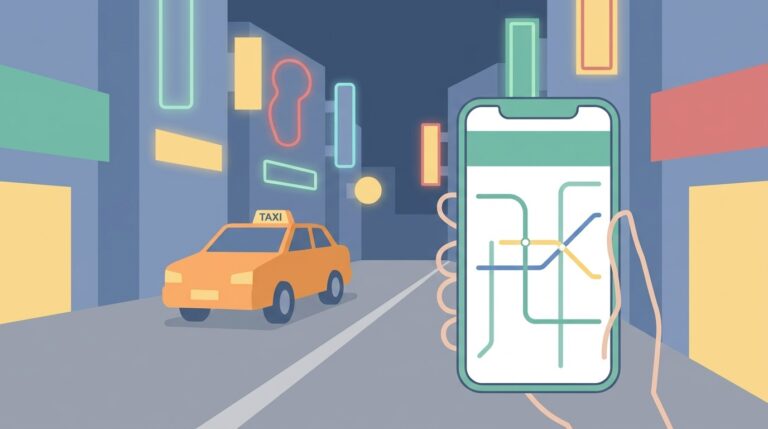
Picture this: It is 1:15 AM on a chilly Saturday morning in Hongdae. The vibrant sounds of indie buskers and laughter from pocha tents begin to fade as the subway stations roll down their metal shutters. You pull out your coat collar against the brisk wind, standing curbside with your friends, trying to hail a cab. You spot the dim red glow of a sign on an approaching windshield, wave your hand frantically, but it flashes right past you, its sign mysteriously flipping from “빈차” (Vacant) to “예약” (Reserved). Meanwhile, a sleek black van pulls up next to you, a passenger hops in effortlessly, and the driver glides away. If you have ever felt stranded on the bustling streets of Seoul or overwhelmed by the barrage of options on Korean mobility apps—from Kakao T 일반 to Blue, Venti, and Black—you are definitely not alone.
Navigating Korea’s taxi ecosystem is an essential milestone for reaching advanced fluency. In this masterclass guide curated from hundreds of hours of real feedback from expatriates and advanced Korean learners, we will demystify the multi-tiered taxi hailing apps, breakdown native etiquette that prevents awkward misunderstandings, and equip you with natural, high-level Korean expressions that make drivers instantly recognize you as a seasoned resident rather than a lost tourist.
Phase 2: Core Expressions Deep Dive
1. 길 건너편에서 태워주실 수 있나요?
- Pronunciation: [Gil geon-neo-pyeon-e-seo tae-wo-ju-sil su in-na-yo?] (Think: Geel gun-nuh-pyun-eh-suh teh-wo-joo-sheel soo een-nah-yo?)
- Meaning: “Could you pick me up across the street?”
- K-Culture Moment: In modern K-Dramas like My Liberation Notes, characters often call a taxi while standing on complex, divided avenues where making a U-turn requires a 15-minute detour. You call the driver via the app to save both parties valuable time.
- Editor’s Insight: At a C1 level, polite consideration for Seoul’s complex one-way systems and median bus lanes demonstrates deep communicative competence. Instead of demanding an impossible pickup, offering to cross via the crosswalk signals exceptional street smarts.
- Situation Spectrum:
- Casual: 🚫
- Semi-formal (Polite to Elders/Strangers): ✅
- Formal: ⚠️
- 🤔 Think About It: In many Western cities, passengers expect ride-share drivers to circle around blocks to reach their exact curb. Why does Korean transit etiquette place higher value on passenger agility to bypass gridlock?
2. 내비게이션대로 가주셔도 괜찮아요.
- Pronunciation: [Nae-bi-ge-i-syeon-dae-ro ga-ju-syeo-do gwaen-chan-a-yo.] (Think: Neh-bee-gay-ee-shun-deh-roh gah-joo-shuh-doh gwen-chahn-ah-yo.)
- Meaning: “It is completely fine if you follow the navigation system’s route.”
- K-Culture Moment: A staple scene in Korean variety shows: the tense dynamic between a taxi driver who prides himself on 30 years of intuitive shortcut knowledge versus the live T-map algorithm. Saying this immediately diffuses tension.
- Editor’s Insight: Veteran drivers sometimes hesitate to follow GPS routes for foreigners, fearing complaints about intentional detours (바가지 요금). This sentence grants explicit consent, establishing mutual trust and ensuring a smooth ride.
- Situation Spectrum:
- Casual: 🚫
- Semi-formal: ✅
- Formal: ✅
- 🤔 Think About It: How does this phrase reflect the delicate balance between respecting a senior professional’s pride and reassuring them against systemic misunderstandings?
3. 기사님, 여기서 바로 세워주세요.
- Pronunciation: [Gi-sa-nim, yeo-gi-seo ba-ro se-wo-ju-se-yo.] (Think: Ghee-sah-neem, yuh-ghee-suh bah-roh seh-woh-joo-seh-yoh.)
- Meaning: “Driver, please pull over right here.”
- K-Culture Moment: Just like the classic scene in Crash Landing on You where a character abruptly spots an ally on the street corner and exits swiftly before a traffic light shifts.
- Editor’s Insight: Notice the vocative title “기사님” (Gisanim). Never call a taxi driver “아저씨” (Ajossi) or “운전사” (Unjeonsa) in direct conversation. “기사님” honors their professional license and sets a respectful, cooperative tone.
- Situation Spectrum:
- Casual: 🚫
- Semi-formal: ✅
- Formal: ✅
- 🤔 Think About It: What cultural values drive the Korean linguistic norm of addressing service specialists with professional titles rather than general familial markers?
Phase 3: Textbook Korean vs. Real Korean
Situation 1: Choosing a paid tollway for a faster trip
- 📖 교과서 한국어: 고속도로를 이용하여 신속하게 이동해 주십시오. (Gosokdororeul iyonghayeo sinsokhage idonghae jusipsio.)
- 🗣️ 진짜 한국어: 기사님, 통행료 나와도 되니까 빠른 길로 부탁드려요. (Gisanim, tonghaengryo nawado doenikka ppareun gillo butakdeuryeoyo. / “Driver, toll fees are totally fine, so please take whichever route is quickest.”)
- 💡 왜 다를까? Textbook Korean uses stiff, written imperatives (“이용하여 이동하십시오”). Natural speech among native Koreans focuses on practical real-world variables—specifically acknowledging toll fees (통행료) to proactively grant permission for expressways.
Situation 2: Getting off early due to a red signal
- 📖 교과서 한국어: 교차로 신호등 앞에서 저를 내려주시기 바랍니다. (Gyocharo sinhodeung apeseo jeoreul naeryeojusigi baramnida.)
- 🗣️ 진짜 한국어: 어차피 신호 걸렸으니까 여기서 내려도 될까요? (Eochapi sinho geollyeosseumikka yeogiseo naeryeodo doelkkayo? / “Since we’re caught at the light anyway, would it be alright if I hop out here?”)
- 💡 왜 다를까? Advanced speakers leverage pragmatic markers like “어차피” (anyway/in any case) to save both the driver’s fuel and their own time, showing keen situational awareness.
Phase 4: K-Culture Deep Dive & Non-Verbal Manners
4-1. 눈치 (Nunchi) & Non-Verbal Etiquette
- The Soft Door Close (문 살살 닫기): Modern Korean taxis, particularly ionic sedans like Hyundai Sonatas and Grandeurs, have lightweight door latches. Slamming a cab door (문 쾅 닫기) is considered very rude. Close the door gently with controlled wrist pressure.
- The Courtesy Nod (목례): When boarding, catch the rear-view mirror’s reflection, make gentle eye contact, and offer a slight head tilt while delivering your greeting.
- Seating Hierarchy: The prime passenger seat is the back-right seat (상석). Sitting in the front passenger seat next to the driver is acceptable if you are in a group, but when traveling solo, entering the back seat provides comfortable professional space for both parties.
4-2. Cultural Code Analysis: The Evolution of Hailing
In classic 2000s K-Dramas, late-night Gangnam scenes invariably featured frantic people stepping dangerously onto vehicular lanes waving paper bank notes to bargain for a ride. Today, manual street-hailing (길빵 – slang for flagging down on the road) is practically obsolete in dense metropolitan centers after midnight. Platforms like Kakao T and Tada have completely rewritten Korean mobility. Drivers screen calls through telematics algorithms, prioritizing calls with designated destinations or premium tiers like Kakao Blue (which assigns automatically without driver pre-screening). Understanding this tech transformation explains why waving your arm at a cab with its roof light turned off will yield zero results.
Phase 5: Real-Life Roleplay Scenario
Setting: 11:45 PM outside Gangnam Station Exit 11. Drizzling rain. You board a mid-sized silver sedan booked via Kakao T.
Characters: You (Advanced Korean speaker) and 기사님 박철수 (Veteran Seoul cabbie in his 60s).
- 기사님: (안경을 고쳐 쓰며 미러를 힐끗 본다) 어서 오세요. 카카오 호출하신 분 맞으시죠? 전화번호 뒷자리 어떻게 되세요?
(Eoseo oseyo. Kakao hochulhasin bun majeusijyo? Jeonhwabeonho dwitjari eotteoke doeseyo?)
“Welcome. Are you the one who called via Kakao? What are the last four digits of your phone number?” - You: (가볍게 목례를 하며 뒷좌석에 앉는다) 네, 기사님! 1234 맞습니다. 늦은 시간에 감사해요.
(Ne, gisanim! 1234 matseumnida. Neujeun sigane gamsahaeyo.)
“Yes, driver! That’s right, 1234. Thank you so much for picking me up at this late hour.” - 기사님: (내비게이션을 터치하며) 올림픽대로로 갈 건데, 지금 비가 와서 한남대교 쪽이 좀 밀리네요.
(Ollimpikdaeroro gal geonde, jigeum biga waseo Hannamdaegyo jjogi jom millineyo.)
“I plan to take the Olympic Expressway, but with the rain, it looks congested near Hannam Bridge.” - You: (스마트폰 지도를 슬쩍 확인하며) 아, 그래요? 기사님, 내비 추천 경로대로 가주셔도 괜찮아요.
(A, geuraeyo? Gisanim, naebi chucheon gyeongrodaero gajusyeodo gwaenchannayo.)
“Ah, really? Driver, it’s completely fine if you follow whichever route the navigation recommends.” - 기사님: (너털웃음을 터뜨리며) 한국말을 참 잘하시네! 유학 온 지 꽤 됐나 봐요?
(Hangungmareul cham jalhasine! Yuhak on ji kkwae dwaenna bwayo?)
“Your Korean is outstanding! You must have been studying abroad here for quite some time?” - You: (미소를 띠며) 좋게 봐주셔서 감사합니다. 서울 생활 적응 중이에요.
(Joke bwajusyeoseo gamsahamnida. Seoul saenghwal jeogeung jung-ieyo.)
“Thank you for the kind compliment. I’m still adapting to Seoul life.” - 기사님: (목적지 골목 입구에 브레이크를 밟으며 비상등을 켠다) 골목 안쪽은 공사 중이라 진입이 어려운데, 여기서 내려드려도 될까요?
(Golmok anjjogeun gongsa jung-ira jin-ibi eoryeounde, yeogiseo naeryeodeuryeodo doelkkayo?)
“The interior alley is under construction so it is difficult to enter. Would it be alright if I let you off here?” - You: (우산을 챙기며 카드를 터치기에 태그한다) 네, 여기서 바로 세워주세요. 수고 많으셨습니다!
(Ne, yeogiseo baro sewojuseyo. Sugo maneusyeotseumnida!)
“Yes, please pull over right here. Thank you for your hard work!”
🔀 Interactive Decision Point
The driver asks: “골목 안쪽까지 무리해서 들어가 드릴까요?” (Shall I squeeze into the alley for you anyway?)
* Choice A: “비 오니까 그냥 집 대문 앞까지 끝까지 들어가 주세요.” (Bad: Demanding an entry into a blocked alley risks vehicle entrapment and breeds irritation.)
* Choice B: “어차피 입구 다 왔으니까 골목 앞에서 내려주시면 걸어갈게요.” (Best: Demonstrates acute empathy, speed, and polite problem-solving.)
* Choice C: “알아서 판단해 주세요.” (Risk: Overly ambiguous; leaves the driver bewildered.)
Phase 6: 10-Second Emotion Shadowing Drill
Master native rhythmic flow and emotional color. Note the pause markers (/):
- [😊 Friendly & Reassuring]
기사님, / 통행료 더 나와도 되니까 / 제일 빠른 길로 가주세요.
(Gisanim, / tonghaengryo deo nawado doenikka / jeil ppareun gillo gajuseyo.) -
[😌 Polite & Accommodating]
골목 안쪽 복잡하니까, / 코너 돌아 바로 세워주셔도 / 괜찮아요.
(Golmok anjjok bokjaphani-kka, / koneo dora baro sewojusyeodo / gwaenchannayo.) -
[🥺 Urgent yet Respectful]
비행기 시간 때문에 그러는데, / 혹시 조금만 서둘러주실 수 있을까요?
(Bihaenggi sigan ttaemune geureoneunde, / hoksi jogeumman seodulleojusil su isseulkkayo?)
Phase 7: K-Culture Mini Dictionary
- 빈차 (Bin-cha) | Vacant / Available
Displayed with an illuminated red LED sign on standard taxi windshields. Counter-intuitively, red indicates the cab is available, while green or no light means occupied or en route to a call. - 심야 할증 (Sim-ya Hal-jeung) | Late-Night Surcharge
The dynamic premium applied to taxi fares between 10:00 PM and 4:00 AM, ranging from 20% to 40% depending on peak midnight hours. - 카카오 T 블루 (Kakao T Blue) | Auto-Assigned Franchise Taxi
A premium service within Kakao T where drivers cannot decline dispatches. Ideal for rush hour or torrential rain when standard taxis reject calls. - 모범택시 (Mo-beom Taek-si) | Deluxe Black Taxi
Distinguished by a black exterior with yellow roof caps and gold striping. Driven by veteran drivers with 10+ years accident-free records, offering superior spaciousness and comfort at a higher base fare.
Phase 8: Traveler’s Survival Kit
TOP 3 Survival Phrases
- 트렁크 좀 열어주실 수 있나요? (Teureongkeu jom yeoreojusil su innayo?)
- Pro Tip: Korean drivers usually release the trunk electronically from the driver’s seat. Stand behind the vehicle and lift when you hear the latch click.
- 카드로 계산할게요. (Kadeuro gyesanhalgeyo.)
- Pro Tip: T-Money transit cards, Apple Pay (Hyundai Card only), and international credit cards are widely accepted on dashboard terminals.
- 영수증은 버려주셔도 돼요. (Yeongsujeungeun beoryeojusyeodo dwaeyo.)
- Pro Tip: Keep this handy if you do not need an itemized paper receipt, saving time upon departure.
Editor’s Travel Note
Before stepping foot outside Incheon Airport, ensure you download the essential ride-hailing software. You can prepare by following our 카카오 T 앱 다운로드 가이드 which now supports foreign phone numbers and international credit cards. For real-time route comparisons, consult the 네이버 지도 길찾기 서비스 to view live taxi fare estimations before boarding.
Phase 9: Taking a Step Deeper
In South Korea, taxis are not merely commercial conveyances; they represent micro-social chambers where communal expectations and professional boundaries intersect. The swift rhythm of Seoul’s roads reflects the famous “빨리빨리” (hurry, hurry) ethos, yet taxi cabins remain governed by profound etiquette rituals—from vocal deference to the silent mutual understanding between passenger and driver. When you adapt to these subtle norms, such as stepping out before an impassable signal or honoring the driver as “기사님”, you participate in an intricate network of everyday respect that defines urban Korean society.
💬 Your Turn: What was your most memorable taxi experience in Korea, or how does hailing a cab differ in your hometown? Share your story in the comments below!
Phase 10: FAQ & Avoiding Misunderstandings
Q: Why does an available taxi drive past me even when the roof light is illuminated?
A: If the digital dashboard sign reads “예약” (Reserved) or “휴무” (Off Duty), the vehicle is either dispatched via an app or heading back to the garage. During late-night hours, almost all operating taxis are responding to active app requests rather than picking up street passengers.
Q: Can I use foreign credit cards directly in Korean taxis without the app?
A: Yes! All Korean taxis are equipped with physical credit card terminals. Simply tap or insert your foreign Visa, Mastercard, or AMEX. However, pre-registering your card in mobility apps prevents communication barriers regarding payments.
Q: What is the primary difference between Kakao T Standard and Kakao T Blue?
A: Standard calls (일반호출) allow nearby drivers to see your destination and choose whether to accept your ride. Kakao T Blue is an automated dispatch service with an extra matching fee (typically 1,000 to 3,000 KRW) where drivers cannot refuse the dispatch.
🚨 Common Mistakes Alert Board
- Mistake 1: Trying to hail a cab with a glowing red “빈차” sign thinking red means ‘occupied’.
- Correct Action: In Korea, RED sign = Vacant (Available). Green sign = Reserved (Booked).
- Mistake 2: Addressing the driver as “아저씨” (Ajossi).
- Correct Action: Always address the driver respectfully as “기사님” (Gisanim).
- Mistake 3: Forcibly opening or closing the doors of deluxe vans like Tada or Kakao Venti.
- Correct Action: Modern van taxis have automated sliding doors. Wait two seconds for the door to slide open and close automatically.
Phase 11: Action Mission & Engagement
- 🥉 Bronze Level: Read the 3 Core Expressions aloud 5 times each, focusing on polite intonation.
- 🥈 Silver Level: Share this guide on Instagram or X, tagging your favorite travel buddy with your choice of taxi tier (Kakao Blue vs Tada).
- 🥇 Gold Level: Next time you take a taxi in Korea, converse entirely in Korean using our Phase 5 roleplay phrases without opening a translation app!
- 🎮 K-Culture Mission: Watch an episode of a modern urban drama (e.g., Itaewon Class or Hospital Playlist) and spot which character uses the word “기사님” when entering a vehicle.
Phase 12: Interactive Quiz Challenge
1. 상황 판단 (Situational Judgment):
You need to catch a train at Seoul Station in 25 minutes during heavy snowfall, and standard taxis keep declining your call. What is the most effective action?
* A) Continue waving your arm on the street corner.
* B) Switch the app dispatch option to Kakao T Blue or Venti.
* C) Call the police for transit help.
2. 빈칸 채우기 (Fill in the Blank):
“기사님, 통행료 나와도 되니까 ______ 길로 부탁드립니다.”
(Hint: fastest)
3. True or False (문화 상식):
In Korean taxis, slamming the door hard indicates that you are confident and satisfied with the service.
정답 및 해설 보기 (Click to see answers)
- 정답: B
- 해설: Kakao T Blue and Venti enforce mandatory dispatches without driver destination filtering, ensuring near-instant pickup during bad weather or high demand.
- 정답: 빠른 (또는 제일 빠른)
- 해설: “빠른 길” means the fastest route, often taking expressways or tollways.
- 정답: False
- 해설: Slamming the door (문 쾅 닫기) is viewed as disrespectful and jarring to the driver. Always close the door gently!
- 해설: Slamming the door (문 쾅 닫기) is viewed as disrespectful and jarring to the driver. Always close the door gently!







