

Phase 1: 공감 (스토리 몰입형 오프닝)
안녕하세요! 매일한글 에디터입니다.
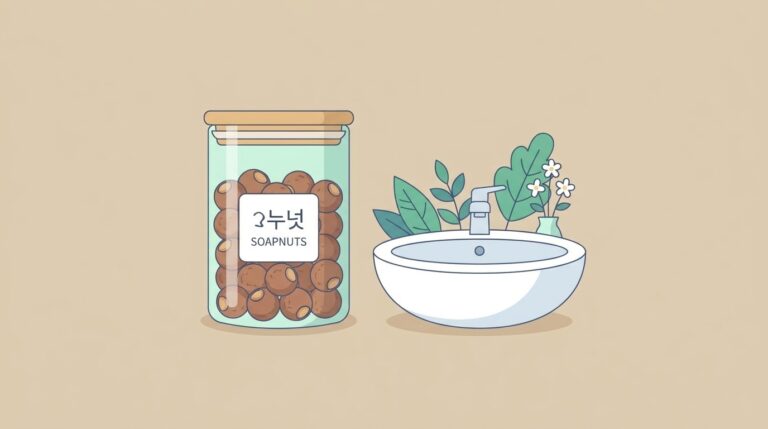
Imagine this: You’ve mastered the art of Korean apartment waste separation—sorting clear PET bottles from opaque plastics with the precision of a seasoned district inspector. You feel like an honorary Seoulite. But then, you step into a chic zero-waste refill shop in Mangwon-dong or Seongsu-dong, wanting to discuss how synthetic surfactants exacerbate microplastic runoff in urban waterways. You reach for a glass jar of dried soapnuts (무환자나무 열매), eager to chat with the eco-curator about shifting away from polymer-based detergents. Suddenly, your fluent Korean defaults to elementary phrases: “이거 좋아요?” (Is this good?) or “플라스틱 나빠요” (Plastic is bad).
Frustrating, isn’t it? As a C2 learner, you already possess high-level grammar, yet specialized discourse around ecological accountability, synthetic surfactant residues, and circular consumer habits often feels strangely out of reach. This guide bridges that gap. Grounded in authentic interactions from Seoul’s burgeoning zero-waste movement, this lesson equips you with sophisticated, native-level formulations so you can navigate nuanced environmental debates effortlessly with local activists, peers, and eco-conscious friends.
Phase 2: 핵심 표현 3선 심층 분석
1. 미세 플라스틱 배출을 줄이고자 소프넛으로 갈아탔어요.
- Pronunciation: [Mise peullaseutik baechureul jul-igoja sopeuneoseuro garatasseoyo] (Sound analogy: Pronounce ‘mise’ like ‘me-say’, and ‘garatasseoyo’ with a brisk, smooth glide like changing trains at Wangsimni station)
- Meaning: Literal: “In order to reduce microplastic discharge, I transferred over to soapnuts.” | Nuance: “I made the switch to soapnuts specifically to cut down on microplastic runoff.”
- K-Culture Moment: Commonly heard during deep-dive lifestyle interviews on indie YouTube channels like Sustaina-Seoul or when chatting with conscious consumers at low-waste markets.
- Editor’s Insight: The verb 갈아타다 (to transfer/switch vehicles) is metaphorically extended here to consumer items and habits, reflecting seamless lifestyle pivots.
- Situation Spectrum: Casual: ✅ | Semi-formal: ✅ | Formal: ✅
- 🤔 Think About It: Why does Korean frequently utilize transit metaphors (갈아타다) to denote consumer and lifestyle transitions compared to the English “switched to”?
2. 화학 계면활성제가 생태계에 잔류하는 게 늘 마음에 걸렸거든요.
- Pronunciation: [Hwahak gyemyeon-hwalkseongjega saengtaegyee janryuhaneun ge neul maeume geollyeotgeodeunyo] (Sound analogy: ‘Gye-myeon’ sounds like ‘gay-myeon’; say ‘geollyeotgeodeunyo’ with a soft, reflective trailing cadence)
- Meaning: Literal: “Chemical surfactants lingering in the ecosystem has always hung on my mind.” | Nuance: “I’ve always felt uneasy about chemical surfactants accumulating in aquatic ecosystems.”
- K-Culture Moment: A protagonist in a healing K-Drama quietly preparing homemade laundry liquid while explaining their ethical boundaries to a roommate.
- Editor’s Insight: “마음에 걸리다” indicates a subtle, lingering ethical prick of conscience, far more evocative than simply saying “걱정되다” (to be worried).
- Situation Spectrum: Casual: ✅ | Semi-formal: ✅ | Formal: ⚠️
- 🤔 Think About It: How does grounding ethical concern in internal emotion (“마음에 걸리다”) reflect the Korean interpersonal tendency to avoid didactic preachiness?
3. 미세 섬유 여과 한계를 고려하면 친환경 세정제 도입이 시급해요.
- Pronunciation: [Mise seomyu yeogwa hangyereul goryeohamyeon chinhwangyeong sejeongje do-ibi sigeuphaeyo] (Sound analogy: Crisp Sino-Korean cadence: ‘yeo-gwa’ matches the cadence of ‘pure water filter’)
- Meaning: Literal: “Considering the micro-fiber filtration limit, eco-friendly cleaner adoption is urgent.” | Nuance: “Given the limitations of filtering synthetic microfibers, adopting biodegradable detergents is an imperative.”
- K-Culture Moment: Featured in documentary panel discussions on KBS or editorial debates regarding wastewater infrastructure.
- Editor’s Insight: High-density Sino-Korean terminology (여과, 한계, 시급) establishes an intellectual, discursive register suited for civic forums or academic debates.
- Situation Spectrum: Casual: 🚫 | Semi-formal: ⚠️ | Formal: ✅
- 🤔 Think About It: Notice how nominalization (도입, 여과) in high-level Korean depersonalizes urgency, shifting the focus to collective civic strategy.
Phase 3: 교과서 한국어 vs 진짜 한국어
Situation 1: Explaining why you prefer soapnuts for washing synthetic garments
- 📖 교과서 한국어: 합성 세제는 세탁할 때 미세 플라스틱을 많이 만듭니다. 반면에 소프넛은 자연 추출물이라서 수질오염을 줄입니다. (Hapseong sejeneun setakhal ttae mise peullaseutigeul mani mandeumnida. Banmyeone sopeuneoseun jayeon chuchulmuriraseo sujil-oyeomeul jurimnida.)
- 🗣️ 진짜 한국어: 합성 세제 찌꺼기나 합성 섬유 마찰로 빠지는 미세 플라스틱 문제 때문에, 아무래도 천연 사포닌 성분인 소프넛에 손이 먼저 가더라고요. (Hapseong seje jikkeogina hapseong seomyu machallo ppajineun mise peullaseutik munje ttaemune, amuraedo cheon-yeon saponin seongbunin sopeuneose soni meonjeo gadeoragoyo.)
- 💡 왜 다를까?: Native speakers avoid textbook contrast words like ‘반면에’ in spoken discourse. Instead, sensory phrases like “손이 먼저 가다” (my hand naturally reaches for it first) subtly convey preference alongside scientific context.
Situation 2: Inquiring about detergent residues on clothing
- 📖 교과서 한국어: 세탁 후 섬유에 세제가 남아 있습니까? 그것은 피부에 나쁩니다. (Setak hu seomyue sejega nama itseumnikka? Geugeoseun pibue nappeumnida.)
- 🗣️ 진짜 한국어: 헹굼을 아무리 철저히 해도 섬유 틈새에 잔류 세제가 남기 마련인데, 소프넛은 잔여물 부담이 전혀 없나요? (Henggumeul amuri cheoljeohi haedo seomyu teumsaee janryu sejega namgi maryeoninde, sopeuneoseun janyeomul budami jeonhyeo eomnayo?)
- 💡 왜 다를까?: At C2 level, using grammatical frameworks like “~기 마련이다” (inevitably bound to) displays mastery of colloquial realism rather than blunt assertions.
Phase 4: K-Culture 딥다이브 & 비언어적 매너
4-1. 눈치(Nunchi) & 제스처: Seoul’s Zero-Waste Refill Stations
When entering conscious grocery hubs like Almang Market (알맹상점) in Mangwon or Songpa, show-and-tell etiquette matters. Never grab refill jars without taring your scales first. Present your pre-washed containers, nodding slightly with both palms open beneath the scale: “용기 무게 먼저 잴게요” (I’ll tare my container first). When observing bulk soapnuts, scoop gently with wooden tongs rather than bare hands. Expressing quiet communal awareness (공동체적 배려) is the ultimate demonstration of cultural fluency.
4-2. 문화 코드 분석: The Rise of ‘Gachi-Sobi’ (가치소비)
Korea’s MZ generation has popularized 가치소비 (values-driven ethical consumption). It is no longer considered eccentric to carry cotton pouches for soapnuts; rather, it functions as lifestyle cultural capital (힙한 친환경). Celebrities and variety shows frequently highlight homemade enzymatic detergents and soapnut decoctions. Embracing zero-waste in Korea is deeply communal: proper sorting and pollution mitigation are seen as the ultimate courtesy to your neighborhood neighbors (이웃에 대한 예의).
Phase 5: 실전 롤플레이 시나리오
- 배경: A sunny afternoon inside a cozy zero-waste refill atelier tucked away in an alley near Mangwon Station.
- 등장인물: 나 (Learner), an eco-conscious resident, and 지우 (Jiwoo), the knowledgeable shop manager holding a wooden scoop.
- 나: 안녕하세요! 세탁용 천연 세제 코너를 둘러보다가 소프넛 열매를 봤는데, 이게 진짜 합성 세제를 완전히 대체할 수 있나요? (Annyeonghaseyo! Setakyong cheon-yeon seje koneoreul dulleobodaga sopeuneot yeolmaereul bwanneunde, ige jinjja hapseong sejereul wanjeonhi daechehal su innayo?)
- 🎭 Action: Tapping gently on the glass display jar, looking intrigued.
- 지우: 네, 그럼요! 열매 껍질에 든 ‘사포닌’이 천연 계면활성제 역할을 톡톡히 해서 기름때까지 깔끔하게 지워내거든요. (Ne, geureomyo! Yeolmae kkeobjire deun ‘saponin’i cheon-yeon gyemyeon-hwalkseongje yeokhwareul toktokhi haeseo gireumttaekkaji kkalkkeumhage jiwonaegeodeunyo.)
- 🎭 Action: Holding up a dried soapnut shell to the sunlight with a proud smile.
- 나: 합성 섬유 옷을 돌릴 때 미세 플라스틱 배출도 신경 쓰였는데, 소프넛을 쓰면 마찰 손상도 덜할까요? (Hapseong seomyu oseul dollil ttae mise peullaseutik baechuldo singyeong sseuyeonneunde, sopeuneoseul sseumyeon machal sonsangdo deolhalkkayo?)
- 🎭 Action: Furrowing brows slightly to convey thoughtful eco-concern.
- 지우: 맞아요. 합성 세제의 강한 화학 성분이 섬유를 마모시켜 미세 플라스틱을 더 뿜어내게 만드는데, 소프넛은 섬유 손상이 현저히 적어요. (Majayo. Hapseong seje-ui ganghan hwahak seongbuni seomyureul mamosikyeo mise peullaseutigeul deo ppumeonaege mandeuneunde, sopeuneoseun seomyu sonsangi hyeonjeohi jeogeoyo.)
- 🎭 Action: Nodding emphatically while demonstrating laundry wash-bag placement.
- 나: 찬물 세탁 시에도 사포닌 성분이 제대로 우러나오는지 궁금하네요. (Chanmul setak si-edo saponin seongbuni jedaero ureonaoneunji gunggeumhaneyo.)
- 🎭 Action: Tilting head slightly, testing the practicality.
- 지우: 찬물에는 서너 알을 따뜻한 물에 미리 10분 정도 불려두거나, 끓여서 ‘소프넛 워터’ 원액으로 쓰시면 말끔해요! (Chanmureneun seoneo areul ttatteushan mure miri sipbun jeongdo bullyeodugeona, kkeullyeoseo ‘sopeuneot woteo’ won-aegeuro sseusimyeon malkkeumhaeyo!)
- 🎭 Action: Pulling out a pre-made amber concentrate jar from the shelf.
- 나: 섬유유연제를 따로 안 넣어도 꿉꿉한 냄새 없이 뽀송하게 유지되나요? (Seomyu-yuyeonjereul ttaro an neoheodo kkupkkuphan naemsae eopsi pposonghage yujidoenayo?)
- 🎭 Action: Inhaling softly near the natural cotton samples to check fragrance.
- 지우: 전혀 끈적이지 않고 무향에 가까워서 햇볕에 널면 은은한 햇살 냄새만 남는답니다. (Jeonhyeo kkeunjeogiji anko muhyange gakkaweoseo haetbyeote neolmyeon euneunhan haetsal naemsaeman namneundapnida.)
- 🎭 Action: Grinning warmly and extending a tare sheet for measuring.
🔀 인터랙티브 분기점 (What would you say next?)
- Choice A: “그럼 일단 300그램만 소분해서 가져가 볼게요. 다회용 주머니에 담아주세요.” (Geureom ildan sambaek-geuraemman sobunhaeseo gajyeoga bolgeyo. Dahoeyong jumeonie damajuseyo.)
- Choice B: “소프넛이 이렇게 좋으면 대기업들은 왜 진작 안 만들었을까요? 좀 수상하네요.” (Sopeuneosi ireoke joeumyeon daegieopdeureun wae jinjak an mandeureosseulkkayo? Jom susanghaneyo.)
- Choice C: “환경 생각해서 플라스틱 빨대도 안 쓰는데, 이것도 당장 우리 아파트 단지에 소문내야겠어요.” (Hwangyeong saenggakhaeseo peullaseutik ppaldaedo an sseuneunde, igeon dangjang uri apateu danjie somunnaeyagesseoyo.)
Feedback:
* Choice A (Best): Pragmatic, environmentally conscious, and uses advanced zero-waste phrasing (“소분하다”, “다회용 주머니”). The vendor will appreciate your prepared container.
* Choice B (Bad): Cynical and abrasive; displays a confrontational attitude toward local artisans advocating natural solutions.
* Choice C (Risk): Enthusiastic but slightly theatrical. In Korean social norms, proselytizing lifestyle changes abruptly to neighbors can feel intrusive.
Phase 6: 10초 감정 섀도잉 드릴
- Sentence 1 [🌿 차분하면서도 결단력 있게]:
합성 세제 대신 소프넛을 쓰는 건 / 단순한 유행이 아니라 / 미세 플라스틱을 줄이려는 일상적 실천이에요.
(Hapseong seje daesin sopeuneoseul sseuneun geon / dansunhan yuhaengi anira / mise peullaseutigeul juriryeoneun ilsangjeok silcheon-ieyo.) -
Sentence 2 [🤔 깊은 문제의식을 담아 차분하게]:
세탁 하수관을 통해 여과 없이 방류되는 미세 섬유들이 / 결국엔 우리 식탁으로 고스란히 되돌아오잖아요.
(Setak hasugwaneul tonghae yeogwa eopsi bangryudoeneun mise seomyudeuri / gyeolgugen uri siktageuro goseuranhi doedora-ojanayo.) -
Sentence 3 [✨ 밝고 자신감 넘치는 어조로]:
열매 서너 알 우려냈을 뿐인데 / 세척력도 기대 이상이고 / 잔여 세제 걱정이 말끔히 사라졌어요.
(Yeolmae seoneo al uryeonaesseul ppuninde / secheokryeokdo gidae isang-igo / janyeo seje geokjeongi malkkeumhi sarajyeosseoyo.)
Phase 7: K-Culture 미니 사전
- 소분(小分) 매장 (Sobun Maejang) | Refill & Bulk Store
- Meaning: Establishments where shoppers purchase household essentials without single-use packaging by the gram.
- 미세 섬유 탈락 (Mise Seomyu Tallak) | Microfiber Shedding
- Meaning: The peeling and detachment of synthetic micro-threads during friction-heavy agitation inside washing drums.
- 가치소비 (Gachi-Sobi) | Values-Driven Consumption
- Meaning: Purchasing products aligning strictly with one’s moral, social, and environmental principles, even if they cost more.
- 잔류 세제 (Janryu Seje) | Detergent Residue
- Meaning: The remaining synthetic surfactant layers embedded in clothing weave after incomplete rinsing cycles.
Phase 8: 여행자를 위한 생존 키트
서바이벌 표현 TOP 3
- “가져온 다회용 용기에 소분해서 무게 달아도 될까요?”
(Gajyeo-on dahoeyong yonggie sobunhaeseo muge dara-do doelkkayo?)- Pro Tip: Essential phrase inside Korean zero-waste bulk shops.
- “미세 플라스틱 안 나오는 천연 수세미나 세탁용 소프넛 구비되어 있나요?”
(Mise peullaseutik an naoneun cheon-yeon susemina setakyong sopeuneot gubidoeeo innayo?)- Pro Tip: Inquiries about dried loofah scrubbers and soapnuts.
- “생분해성 원료로 제작된 제품인지 확인하고 싶어요.”
(Saengbunhaeseong wollyoro jejakdoen jepuminji hwaginhago sipeoyo.)- Pro Tip: Ask this at upscale lifestyle pop-ups in Hannam-dong or Seongsu.
Editor’s Travel Note
Before embarking on your eco-conscious tour in Seoul, make sure to complete your 네이버 지도 앱 다운로드 to pinpoint hidden neighborhood refill shops (리필스테이션) and local zero-waste groceries across Yeonnam and Mangwon. Tap into Seoul’s climate-card transit pass (기후동행카드) for unlimited subway and bike mobility, keeping your personal carbon emissions near zero.
Phase 9: “한 발 더 깊이” (생각 질문)
In South Korea, environmental action exists at the intersection of Confucian communal responsibility and ultra-modern civic efficiency. The meticulous rigor of apartment waste sorting (분리배출) was not solely born from state mandate, but from an unspoken social contract where carelessness inconveniences your neighbors (남에게 폐를 끼치지 않는다). As the dialogue evolves toward invisible pollutants like microplastics and synthetic surfactants, conscious consumers are transitioning from merely disposing responsibly to curating non-toxic lifestyles at the point of origin.
💬 Your Turn: What invisible environmental challenge in your own daily life could be substituted with an age-old natural item like soapnuts? Share your reflections below in Korean!
Phase 10: FAQ & 오해 방지
Q: 소프넛으로 빨래를 하면 섬유 냄새가 시큼하거나 불쾌하지 않나요?
A: Dried soapnut shells naturally possess a mildly tangy, vinegar-like scent in the jar due to pure saponin acids, but this completely dissolves during washing. Once your laundry dries under ventilation, it leaves a totally neutral, crisp, odorless fabric.
Q: 드럼세탁기에도 소프넛을 그대로 넣고 돌려도 고장이 안 나나요?
A: Yes, perfectly safe! Place 4 to 6 shells inside the small cotton mesh pouch provided and drop it straight into the drum with your laundry. Because soapnuts create very low foaming action compared to bubbling chemical surfactants, they prevent motor strain and detergent residue buildup.
Q: 합성 세제 대신 소프넛을 쓰면 기름때나 흰옷 표백도 확실히 해결되나요?
A: While soapnuts dissolve sebum and everyday stains effectively, they do not contain synthetic optical brighteners. For stubborn collars or whites, combine soapnuts with oxygen bleach (과탄산소다) for optimal brightening.
🚨 흔한 실수 (Common Mistakes)
- Mistake: Calling microplastics “작은 플라스틱” (small plastic).
- Correct Action: Use the formal scientific compound 미세 플라스틱 (Microplastics).
- Mistake: Using the verb “씻다” (wash body/hands) for laundry instead of “빨래하다” or “세탁하다”.
- Correct Action: Say “소프넛으로 세탁해요” (I do laundry with soapnuts).
- Mistake: Confusing chemical surfactants with simple soaps by saying “화학 비누”.
- Correct Action: Use 화학 계면활성제 (Chemical surfactant) when critiquing industrial water contaminants.
Phase 11: 액션 미션 & 참여 유도
- 🥉 Bronze Mission (Solo Shadowing): Record yourself reciting Sentence 2 from Phase 6, focusing on the natural cadences of “여과 없이 방류되는”.
- 🥈 Silver Mission (Community Engagement): Post a photo of your laundry setup on Instagram or Threads using the caption: “미세 플라스틱 줄이기, 오늘부터 소프넛으로 세탁 시작! #제로웨이스트 #가치소비”.
- 🥇 Gold Mission (Real-world Immersion): Step into an eco-friendly shop in Korea and ask the clerk whether they stock soapnut starter packs using phrase #1 from Phase 8.
- 🎮 K-Culture Mission: Watch an episode of a Korean nature documentary or sustainable lifestyle vlog on YouTube and comment using “마음에 걸리다” to describe plastic waste.
Phase 12: 인터랙티브 퀴즈 챌린지
1. 상황 판단 퀴즈 (Situational Choice)
Refill station manager asks: “세탁 세제 소분해가실 때 전용 주머니 챙겨오셨나요?” How do you answer at an advanced, polite C2 level?
* A) 네, 가방에 다회용 주머니를 미리 구비해 왔어요.
* B) 아니요, 그냥 비닐봉지 공짜로 하나 주세요.
* C) 주머니 따위는 필요 없고 손으로 들고 갈게요.
🔍 정답 및 해설 확인하기 (Click to reveal answer)
- 정답: A
- 해설: In zero-waste stores, bringing reusable pouches shows high cultural understanding. Using “구비해 오다” (prepared/equipped beforehand) displays polished C2 diction. Option B goes against zero-waste principles, and Option C is excessively crude.
2. 빈칸 채우기 (Fill in the Blank)
합성 세제 속에 포함된 화학 ( )는 하천에 유입되었을 때 미생물 분해가 어려워 수질 생태계를 위협합니다.
🔍 정답 및 해설 확인하기 (Click to reveal answer)
- 정답: 계면활성제 (Gyemyeon-hwalkseongje – Surfactant)
- 해설: 계면활성제 is the exact term for chemical foaming agents that alter surface tension in industrial detergents.
3. True / False 문화 퀴즈
한국의 제로웨이스트 샵에서는 빈 용기를 지참하더라도 매장 내 무게 저울로 공병 무게(Tare weight)를 먼저 측정해야 한다. (O / X)
🔍 정답 및 해설 확인하기 (Click to reveal answer)
- 정답: O (True)
- 해설: Standard refill protocol in Korean eco-shops requires measuring and recording the container’s empty tare weight before filling products by the gram.







