

Phase 1: Empathy (Story-Immersive Opening)
안녕하세요! 매일한글 에디터입니다.
You are sitting in a buzzing, neon-lit alleyway in Euljiro, surrounded by the intoxicating sizzle of thick pork belly (samgyeopsal) crackling over white-hot lump charcoal. The energy is electric, the laughter flows, and you reach across the iron table to turn a crisp piece of kimchi. In a split second, a droplet of scalding rendered lard splatters directly onto your wrist—or worse, the scorching outer rim of a boiling earthenware ttukbaegi grazes your knuckles. A sharp, throbbing shock races up your arm.
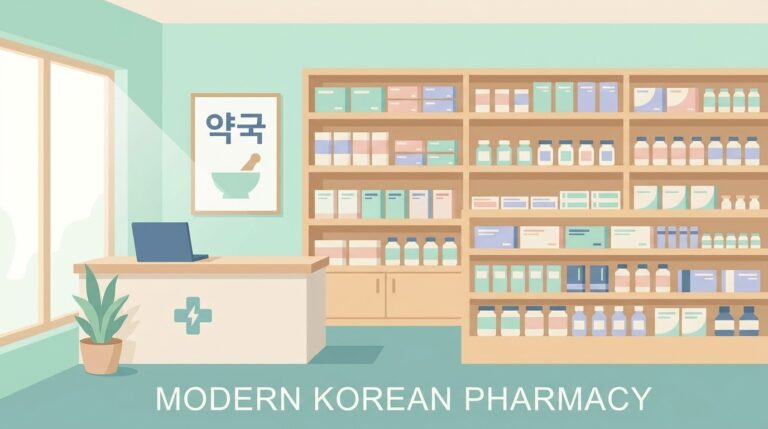
Instinctively, you pull back. Within minutes, the skin turns a menacing crimson, and that notorious deep, pulsating throb begins. You know you need clinical intervention, but as you stumble into a nearby Korean pharmacy (약국), sudden panic sets in. While your conversational Korean is stellar—you can debate K-drama plot arcs or parse modern economic trends—medical triage is a completely different arena. How do you describe the sensation of deep subcutaneous heat versus surface friction? How do you ask for a specialized beta-sitosterol burn ointment instead of a generic hydrocortisone that could worsen the tissue?
Over the past decade of coaching foreign diplomats, researchers, and global professionals in Seoul, I have seen even C-level Korean speakers freeze when physical trauma strikes. When you are in pain, cognitive bandwidth drops. You cannot afford textbook ambiguity. This masterclass is reverse-engineered from real emergency room triage logs and consultations with Seoul pharmacists. By internalizing these advanced, high-precision expressions and cultural triage codes, you will not only secure exact, scar-preventative medical treatment across South Korea, but you will navigate high-stakes clinical encounters with native-level poise and linguistic authority.
Phase 2: Core Expressions Deep Dive (핵심 표현 3선)
1. 기름이 튀어서 데었는데, 화끈거려요. (Gireumi twieoseo deeonneunde, hwakkeungeoryeoyo.)
- Pronunciation: Gi-reu-mi twi-eo-seo de-eon-neun-de, hwak-keun-geo-ryeo-yo. (Metaphor: Think of the explosive initial twi like the pop of hot grease, followed by the rolling guttural warmth of hwak, evoking a hot gust of wind hitting your face).
- Meaning:
- Literal: Grease splattered and burned me, and it is burning/flushing.
- Nuance: A native-exclusive sensory verb, “화끈거리다” captures the deep, persistent, throbbing thermal sensation where the trapped heat radiates beneath the dermis.
- K-Culture Moment: Seen frequently in kitchen dramas like Pasta or culinary reality shows like Culinary Class Wars, where a chef suffers a flash fryer burn and immediately calls out to the sous-chef for running water.
- Editor’s Insight: In Korean clinical parlance, differentiating between “따끔거리다” (stinging, sharp, needle-like pain) and “화끈거리다” (radiating, feverish burn-heat) dictates whether the pharmacist reaches for an antibacterial soothing gel or a vasodilation burn agent.
- Situation Spectrum: Casual: ✅ | Semi-formal: ✅ | Formal: ✅
- 🤔 Think About It: English often relies on the adjective “burning” for both temperature and pain, but Korean dissects thermal sensation into fine-grained sensory ideophones (의태어/의성어). How does having distinct words for stinging (따끔) vs. hot-throbbing (화끈) alter the way a patient conceptualizes their injury?
2. 물집이 잡혔는데, 터뜨리지 않고 붙일 습윤 드레싱 있을까요? (Muljibi japhyeonneunde, teotteuriji anko buchil seubyun deuresing isseulkkayo?)
- Pronunciation: Mul-ji-bi ja-phyeon-neun-de, teo-tteu-ri-ji an-ko bu-chil seu-byun deu-re-sing i-sseul-kka-yo? (Metaphor: Mul-jip sounds crisp like a water-bubble snapping, while seub-yun glides softly across the palate like a moist barrier).
- Meaning:
- Literal: A blister has formed, but can I get a moist dressing to apply without popping it?
- Nuance: Shows profound medical awareness. In Korea, blistered burns (2도 화상, second-degree) require sterile exudate retention to prevent permanent scarring (흉터 예방).
- K-Culture Moment: In slice-of-life medical dramas like Hospital Playlist, residents meticulously warn pediatric and geriatric patients never to manually puncture blisters caused by boiling broth or heating pads.
- Editor’s Insight: The phrase “물집이 잡히다” literally translates to “a water-house has been caught/formed.” Using this set collocation instantly signals to healthcare providers that you understand standard dermatological care.
- Situation Spectrum: Casual: ⚠️ | Semi-formal: ✅ | Formal: ✅
- 🤔 Think About It: In Western retail pharmacies, hydrocolloid dressings are often filed under blister care; in South Korea, moist healing (습윤 드레싱) is an obsession intimately tied to the nation’s cosmetic aesthetic standards. How does cultural vanity transform basic wound care into high-tech retail medicine?
3. 화기를 완전히 뺀 후에 바를 화상 연고 좀 추천해 주세요. (Hwagireul wanjeonhi ppaen hue bareul hwasang yeongo jom chucheonhae juseyo.)
- Pronunciation: Hwa-gi-reul wan-jeon-hi ppaen hu-e ba-reul hwa-sang yeon-go jom chu-cheon-hae ju-se-yo. (Metaphor: The aspirated hwa exhales trapped heat, while ppae requires a firm, tense lip release, mirroring the physical extraction of inflammation).
- Meaning:
- Literal: Please recommend a burn ointment to apply after completely removing the fire-energy.
- Nuance: “화기(火氣)” is a traditional concept seamlessly integrated into modern Korean emergency medicine—the lingering residual thermal energy trapped inside subcutaneous tissue that continues to cook deep layers if not dissipated under cool water.
- K-Culture Moment: Traditional elders or mothers in family dramas scolding younger generations: “화기부터 빼야지, 연고부터 바르면 덧나!” (You must draw out the trapped heat first; putting ointment on right away will cause it to fester!).
- Editor’s Insight: If you apply thick petroleum-based ointment before the wound has cooled under gentle tap water for 15–20 minutes, you seal the heat in. Pharmacists will deeply respect you for using the professional phrase “화기를 빼다.”
- Situation Spectrum: Casual: ✅ | Semi-formal: ✅ | Formal: ✅
- 🤔 Think About It: How does the integration of Hanja concepts like Hwa-gi (fire qi/energy) into modern pharmacology showcase Korea’s unique syncretism between Eastern systemic logic and Western evidence-based medicine?
Phase 3: Textbook Korean vs. Real Korean (교과서 vs. 진짜 한국어)
Situation 1: Describing the initial contact burn to a clinician
- 📖 교과서 한국어 (Textbook):
- “저는 피부에 화상을 입었습니다. 매우 고통스럽습니다.”
- (Jeoneun pibue hwasangeul ibeotseumnida. Maeu gotongseureopseumnida.)
- Translation: “I have sustained a burn on my skin. It is very painful.”
- 🗣️ 진짜 한국어 (Real-World C2):
- “불판에 살짝 스쳤는데, 표피가 벗겨지진 않았고 벌겋게 부어오르면서 열감이 심해요.”
- (Bulpane saljjak seuchyeonneunde, pyopiga beotgyeojijin anatgo beolgeoke bueo-oreumyeonseo yeolgami simhaeyo.)
- Translation: “I lightly grazed the grill plate; the epidermis hasn’t peeled, but it’s flushing red, swelling, and radiating intense trapped heat.”
- 💡 왜 다를까? (Why the divergence?): Textbook phrasing relies on passive, rigid clinical translations that fail to convey depth, blistering, or epidermal integrity. Real-world Korean utilizes descriptive physiological verbs (스치다, 부어오르다) and somatic temperature markers (열감) that tell the medical professional the burn depth instantly.
Situation 2: Requesting specific active-ingredient topicals at the pharmacy counter
- 📖 교과서 한국어 (Textbook):
- “약사님, 화상 치료 연고를 하나 주십시오.”
- (Yaksanil, hwasang chiryo yeongoreul hana jusipsio.)
- Translation: “Pharmacist, please give me one burn treatment ointment.”
- 🗣️ 진짜 한국어 (Real-World C2):
- “진물은 안 나는데 화끈거림이 안 가라앉아서요. 구아이아줄렌 계열이나 베타시토스테롤 성분 연고 있을까요?”
- (Jinmureun an naneunde hwakkeungeorimi an gara-anjaseoyo. Guaiajullen gyeyeorina betasitoseuterol seongbun yeongo isseulkkayo?)
- Translation: “There’s no exudate/weeping yet, but the burning throb won’t subside. Do you have a guaiazulene-based or beta-sitosterol ointment?”
- 💡 왜 다를까? (Why the divergence?): In Korea, over-the-counter burn topicals split sharply into soothing anti-inflammatory blue azulene creams (아즈렌), sesame-oil derived wound-healing ointments (미보연고), and antibacterial compounds. Specifying symptoms and active ingredients bypasses ineffective generic salves and earns immediate clinical rapport.
Phase 4: K-Culture Deep Dive & Non-Verbal Etiquette
4-1. 눈치 (Nunchi) & Clinical Body Language
When dealing with medical emergencies in South Korea—whether at an urban pharmacy (약국) or a local surgical clinic (외과의원)—body language speaks louder than grammar:
* The Visual Triage Angle: Never shove an open burn wound directly into a healthcare worker’s face without warning. Keep the injured limb elevated at mid-chest level, covered gently with a sterile gauze or clean paper towel. When ready, pull the dressing back with a steady, controlled motion while offering a slight bow of the head.
* Vocal Demeanor: In severe pain, foreign patients often raise their volume or sigh loudly. In Korean healthcare, high-pitched agitation is perceived as a breakdown of emotional control (평정심). Lower your vocal pitch, speak with deliberate cadence, and use the polite semi-formal ending (-요) or formal (-ㅂ니다). This triggers instant respect and focused clinical urgency from the pharmacist.
* The Blister Rule: Never scratch, pick, or manipulate burned tissue at the counter. Doing so induces visceral discomfort in the clinician and may prompt them to refer you away to an emergency ward unnecessarily due to infection liabilities.
4-2. The Cultural Code: “흉터 노이로제” (Scar Neurosis) & Rapid Healing
South Korea’s global reputation for dermatology and aesthetic perfectionism directly influences how burns are managed on the street. A superficial burn that might be treated casually in Western households with ice cubes and plain petroleum jelly is treated in Seoul with absolute cosmetic vigilance. The collective cultural horror of post-inflammatory hyperpigmentation (색소 침착) or hypertrophic scarring (비후성 반흔) means that Korean pharmacies stock some of the most cutting-edge moist wound-healing technology in the world.
From hydrocolloid sheets with tapered bevel edges to silver-sulfadiazine sprays and pure plant-derived beta-sitosterol ointments (MEBO), the goal in Korea is not just “preventing infection”—it is restoring the dermis to absolute porcelain invisibility (자국 없이 완치). When you speak to a pharmacist with this shared aesthetic goal, you unlock their highest level of personalized cosmetic-dermatological guidance.
Phase 5: Real-Life Roleplay Scenario (실전 롤플레이 시나리오)
Setting: A pristine, brightly lit pharmacy near a busy K-BBQ alley in Gangnam. The air smells subtly of herbal extracts and sanitizing alcohol.
Characters:
* You (Alex): An advanced international executive whose forearm made direct contact with a red-hot iron grill edge 20 minutes ago.
* Pharmacist Han (한 약사님): A seasoned, sharp-eyed community pharmacist in her late 40s wearing a crisp white coat with a stethoscope pen clip.
[Turn 1: Alex]
안녕하세요, 약사님. 방금 식당 불판에 팔을 데었는데, 응급 처치용 연고 좀 부탁드립니다.
(Annyeonghaseyo, yaksanil. Banggeum sikdang bulpane pareul deeonneunde, eunggeup cheochiyong yeongo jom butakdeurimnida.)
“Hello, Pharmacist. I just grazed my forearm on a restaurant grill plate. Could I get an ointment for emergency first aid?”
🎭 행동 지문: Left arm held gingerly at chest height, gesturing carefully toward the reddened area.
[Turn 2: Pharmacist Han]
어머나, 많이 붉어졌네요. 차가운 물로 화기는 좀 빼고 오셨어요? 물집은 잡혔나요?
(Eomeona, mani bulgeojyeonneyo. Chagaun mullo hwagireun jom ppaego osyeosseoyo? Muljibeun japhyeonnayo?)
“Oh dear, it’s flared up quite red. Did you dissipate the trapped heat with cool water before coming? Has a blister formed?”
🎭 행동 지문: Adjusts her spectacles, stepping out from behind the register to visually inspect the wound without touching.
[Turn 3: Alex]
네, 화장실 흐르는 미온수로 15분 정도 열감은 식혔습니다. 아직 큰 수포는 안 올라왔는데, 표피 아래로 미세하게 물집이 잡히려 해요.
(Ne, hwajangsil heureuneun mionsuro sip-obun jeongdo yeolgameun sikhyeotseumnida. Ajik keun suponeun an olla-wanneunde, pyopi araero misehage muljibi japhiryeo haeyo.)
“Yes, I cooled the heat sensation under running lukewarm water in the restroom for about 15 minutes. A large bulla hasn’t risen yet, but tiny micro-blisters are forming right beneath the epidermis.”
🎭 행동 지문: Points precisely to the perimeter of the erythema with an open palm.
[Turn 4: Pharmacist Han]
응급 처치를 아주 침착하게 잘하셨네요! 열감을 바로 안 식히면 진피층까지 손상되거든요. 지금 따끔거리세요, 아니면 욱신거리면서 화끈거리세요?
(Eunggeup cheochireul aju chimchakhage jalhasyeonneyo! Yeolgameul baro an sikhimyeon jinpicheungkkaji sonsangdoegoedeunyo. Jigeum ttagkeumgeoriseyo, animyeon uksingeorimyeonseo hwakkeungeoriseyo?)
“You handled first aid very calmly and properly! If you don’t cool that heat immediately, it damages down into the dermis. Is it stinging sharply right now, or is it throbbing with radiating heat?”
🎭 행동 지문: Reaches into a specialized drawer labeled ‘외용 화상 소독/보호제’ (Topical Burn Disinfection & Protection).
[Turn 5: Alex]
욱신거리면서 계속 화끈거려요. 흉터 지는 게 제일 염려되는데, 바르는 폼이나 하이드로겔 패치가 나을까요?
(Uksingeorimyeonseo gyesok hwakkeungeoryeoyo. Hyungteo jineun ge jeil yeomnyeodoeneunde, bareuneun pomina haideurogel paechiga naeulkkayo?)
“It’s throbbing and continuously burning. My biggest concern is scarring; would a topical foam or a hydrogel patch be better?”
🎭 행동 지문: Shows clear, focused eye contact, matching the pharmacist’s professional seriousness.
[Turn 6: Pharmacist Han]
지금처럼 열감이 남아있을 땐 접착식 하이드로콜로이드를 붙이면 오히려 열이 갇혀서 덧나요. 우선 이 아즈렌 연고로 화기랑 염증을 가라앉히시고요, 내일부터 진물 상태 보고 메디폼을 올리세요.
(Jigeumcheoreom yeolgami namaisseul ttaen jeopchaksik haideurokolloideureul buchimyeon ohiryeo yeori gathyeoseo deonnayo. Useon i ajeuren yeongoro hwagirang yeomjeungeul gara-anjhisigoyo, naeilbuteo jinmul sangtae bogo medipomeul olliseyo.)
“When heat still remains like right now, applying an adhesive hydrocolloid will trap the thermal energy and make it fester. First, calm the trapped heat and inflammation with this Azulene ointment, and from tomorrow, observe the exudate before putting on Medifoam.”
🎭 행동 지문: Hands over a blue aluminum tube of Guaiazulene alongside a non-adherent foam dressing pad.
[Turn 7: Alex]
아, 열이 갇힐 수 있군요. 그럼 오늘 밤에는 거즈만 느슨하게 대고, 연고를 두껍게 얹어두면 될까요?
(A, yeori gathil su itgunyo. Geureom oneul bameneun geojeuman neuseunhage daego, yeongoreul dukkeopge eonjeodumyeon doelkkayo?)
“Ah, the heat can get trapped. Then for tonight, should I just apply the ointment thickly and cover it loosely with sterile gauze?”
🎭 행동 지문: Nods thoughtfully, taking mental notes of the clinical progression.
[Turn 8: Pharmacist Han]
정확합니다! 물은 절대 닿지 않게 조심하시고, 혹시라도 내일 물집이 노랗게 곪거나 통증이 심해지면 바로 피부과로 가셔야 해요.
(Jeonghwakhamnida! Mureun jeoldae dachi anke josimhasigo, hoksirado naeil muljibi norake golmgeona tongjeungi simhaejimyeon baro pibugwaro gasyeoya haeyo.)
“Precisely! Be extremely careful not to let water touch it, and if tomorrow the blister turns yellow with pus or the pain intensifies, head straight to a dermatology clinic.”
🎭 행동 지문: Bags the medications with a warm, encouraging smile of reassurance.
🔀 인터랙티브 분기점 (Choose Your Response)
Imagine Pharmacist Han asks you at Turn 2: “물집 잡힌 걸 소독 바늘로 터뜨려 드릴까요?” (Shall I lance the blister with a sterilized needle?) How do you answer?
- Option A: “네, 물집이 터져야 약이 속까지 깊숙이 들어가서 빨리 낫겠죠? 얼른 터뜨려 주세요!”
(Feedback: ❌ BAD. Lancing an early-stage burn blister strips away your body’s best sterile biological bandage, leaving raw dermis vulnerable to secondary bacterial infection and guaranteed scarring). - Option B: “아닙니다. 감염 위험이랑 흉터 때문에 표피를 유지하고 싶은데, 터뜨리지 않고 흡수시키는 약으로 주세요.”
(Feedback: 🏆 BEST. Demonstrates flawless C2 clinical reasoning. Keeping the roof of the blister intact protects the healing basement membrane and speeds up cosmetic recovery without keloid risks). - Option C: “상관없어요, 약사님이 알아서 제일 안 아픈 방향으로 아무렇게나 처리해 주세요.”
(Feedback: ⚠️ RISK. Passive compliance relinquishes your control over scar outcomes. In Korea, patients are expected to actively advocate for their aesthetic and medical preferences).
Phase 6: 10-Second Emotional Shadowing Drill
Master native rhythmic cadence and cadence breaks (/) during medical distress:
- Drill 1:
[🔥 다급하고 고통스럽게 / Urgent & In Pain]
불판에 데어서 / 피부가 벌겋게 일어났는데 / 화기 빼는 연고 좀 / 빨리 주시겠어요?
(Bulpane de-eoseo / pibuga beolgeoke ireonanneunde / hwagi ppaeneun yeongo jom / ppalli jusigesseoyo?)
“I burned myself on the grill / and the skin has flared up scarlet red; / could you quickly give me / an ointment that draws out the trapped heat?” -
Drill 2:
[🩹 안도하며 차분하게 / Relieved & Composed]
흐르는 물에 / 충분히 식히고 왔으니 / 물집 안 터지게 덮는 / 습윤 드레싱으로 부탁드립니다.
(Heureuneun mure / chungbunhi sikhigo watseuni / muljip an teojige deopneun / seubyun deuresingeuro butakdeurimnida.)
“Since I sufficiently cooled it / under running water, / please give me a moist dressing / to cover the blister without popping it.” -
Drill 3:
[🧐 신중하고 꼼꼼하게 / Prudent & Precise]
진물이 나거나 / 흉터가 착색되지 않도록 / 2차 감염 막는 소독제도 / 같이 챙겨주세요.
(Jinmuri nageona / hyungteoga chaksaekdoeji antorok / icha gam-yeom mangneun sodokjedo / gachi chaenggyeojuseyo.)
“So that exudate doesn’t seep / or the scar become hyperpigmented, / please also include an antiseptic / to prevent secondary infection.”
Phase 7: K-Culture Mini Dictionary (핵심 키워드 4선)
-
화기 (Hwa-gi / Residual Thermal Energy)
- Translation: The trapped sub-dermal heat of a burn.
- Real Usage: Used constantly across Korean medical clinics and kitchens. “화기가 덜 빠진 상태에서 밴드를 붙이면 피부가 익어버려요.” (If you put a plaster on while the residual heat hasn’t cooled, the tissue continues to cook).
- 진물 (Jin-mul / Serous Exudate)
- Translation: Wound fluid, serous leakage, or weepiness.
- Real Usage: Critical marker for dressing selection. “진물이 많이 나오면 하이드로콜로이드 대신 폼 드레싱(메디폼)을 쓰셔야 흡수가 됩니다.” (If there is heavy serous exudate, you must use a foam dressing instead of thin hydrocolloid to absorb it).
- 습윤 드레싱 (Seub-yun Deu-re-sing / Moist Wound Dressing)
- Translation: Hydrocolloid/Polyurethane foam occlusive dressings.
- Real Usage: Often requested by brand names like 메디폼 (Medifoam) or 듀오덤 (DuoDERM). Essential for scarless healing in modern Korean skin trauma care.
- 착색 (Chak-saek / Post-Inflammatory Hyperpigmentation)
- Translation: Skin discoloration or melanin staining following trauma.
- Real Usage: “자외선 차단 안 하시면 화상 부위에 착색 생겨요.” (If you don’t block UV rays after the burn heals, you will get permanent hyperpigmentation staining).
Phase 8: Traveler’s Survival Kit (여행자를 위한 생존 키트)
Top 3 Survival Phrases
- 1. “화상 입은 지 30분 됐는데, 진통제도 같이 주시겠어요?”
(Hwasang ibeun ji samsipbun dwaenneunde, jintongjedo gachi jusigesseoyo?)
Pro Tip: Burns trigger severe prostaglandin release. Asking for an NSAID (소염진통제, like Dexibuprofen/덱시부프로펜) alongside topical salve drastically minimizes both pain and inflammatory tissue damage. - 2. “수포가 터져서 살점이 드러났는데 2차 감염 예방 연고 주세요.”
(Supoga teojyeoseo saljeomi deureonanneunde icha gam-yeom yebang yeongo juseyo.)
Pro Tip: Use when a blister bursts accidentally. Signals the pharmacist to provide an antibiotic ointment containing Bacitracin/Polymyxin rather than simple soothing gels. - 3. “가장 가까운 화상 전문 외과나 응급실이 어디인가요?”
(Gajang gakkaun hwasang jeonmun oegwana eunggeupsiri eodi-ingayo?)
Pro Tip: For burns larger than the size of the patient’s palm or burns involving joints, head straight to specialized burn centers like Bestian Hospital (베스티안병원) in Seoul.
Editor’s Travel Note
- Emergency Pharmacy Navigation: In South Korea, pharmacies (약국) close around 7–8 PM, but metropolitan areas operate designated late-night pharmacies (공공심야약국). Instead of searching in English, utilize 대한민국 응급의료포털 E-Gen 웹사이트 to filter operating clinics and pharmacies in real-time.
- Digital Maps over Western Apps: Google Maps is severely functionally restricted in South Korea. Download and bookmark emergency locations using 네이버 지도 앱 다운로드 to find late-night emergency clinics (응급의학과) and neighborhood surgical centers (외과의원).
Phase 9: “One Step Deeper” (한 발 더 깊이)
In Western individualist contexts, an accident at a dinner table is often met with discreet silence or solitary embarrassment. In South Korea, however, a culinary burn instantly triggers a visceral collective response grounded in communal care and the infamous 빨리빨리 (hurry-hurry) efficiency. Tablemates will summon ice water, the restaurant owner (사장님) will rush out with a clean towel or an ointment kit from behind the counter, and everyone in your vicinity will share their personal dermatological gospel.
Yet, this hyper-collective solicitude carries an acute duality: the societal pressure of 외모 관리 (aesthetic maintenance) means that even a minor burn is treated as an urgent cosmetic crisis that must be managed flawlessly to prevent visible scarring. Navigating an emergency in Korea requires balancing gratitude for this intense communal support while asserting precise linguistic boundaries over your own medical autonomy.
💬 Your Turn: Have you ever experienced an unexpected minor injury while traveling abroad? How did the local reaction differ from what you would expect in your home culture? Drop your thoughts in the comments below!
Phase 10: FAQ & Common Mistakes (오해 방지 가이드)
Q: Can I buy specialized burn ointments over-the-counter in Korea without a prescription?
A: Yes. Highly effective burn ointments—such as Guaiazulene (아즈렌, excellent for cooling and early inflammation) and Beta-sitosterol (미보연고, traditional sesame-oil extract exceptional for tissue regeneration)—are classified as general OTC drugs (일반의약품) and can be purchased over the counter at any local pharmacy without a hospital prescription.
Q: Should I apply ice directly to my burn if cold water isn’t available?
A: Absolutely not. Korean emergency physicians strongly advise against direct ice application. Extreme cold causes severe vasoconstriction, further cutting off blood microcirculation to an already compromised dermis and potentially causing frostbite necrosis on top of thermal injury. Use gentle, running tap water between 15°C and 20°C for 15 to 20 minutes.
Q: When should I skip the pharmacy and go directly to the 응급실 (Emergency Room)?
A: If the burn blisters over an area larger than your palm, if it chars the skin white, brown, or leathery black (third-degree, destroying nerve endings), or if it circles an entire joint (wrist, elbow, knee), bypass local pharmacies immediately and call 119 or head to an emergency medical center (응급의료센터).
🚨 흔한 실수 (Common Mistakes) 경고판
- Applying Toothpaste or Soy Sauce (민간요법의 함정): Older folklore in East Asia suggests applying flour, toothpaste, or fermented soy sauce to cool burns. Correct Action: Never put unsterile household items on damaged skin; this creates catastrophic bacterial infection vectors.
- Popping the Blister to “Drain the Fluid” (수포 인위적 파열): Many believe draining fluid accelerates drying. Correct Action: The blister roof is a biological barrier bathing the wound in healing cytokines. Keep it intact and seal it with a non-adherent foam dressing (메디폼).
- Sealing Hot Burns with Vaseline or Thick Oil Salves (초기 유분 차단): Applying thick petroleum jelly immediately traps the internal heat (화기), driving tissue destruction deeper. Correct Action: Cool the injury under water for at least 15 minutes before applying any barrier ointments.
Phase 11: Action Mission & Engagement (실천 미션)
- 🥉 Bronze Mission (Solo Mastery): Stand in front of the mirror. Look at your forearm and recite the Core Expression 1 shadowing drill 3 times with authentic emotional urgency: “불판에 살짝 스쳤는데, 열감이 심해요.”
- 🥈 Silver Mission (SNS & Peer Learning): Take a photo of your travel first-aid kit. Post it to your study group or Instagram Stories, tagging our community and labeling your burn care products with their exact Korean terms (화상 연고, 습윤 밴드, 소독제).
- 🥇 Gold Mission (Real-World Execution): Next time you pass a Korean pharmacy, step inside and locate the 외용제 (topical remedies) aisle. Locate either 아즈렌 연고 (Azulene) or 미보연고 (Mibo) and note the active ingredients listed on the back.
- 🎮 K-Culture Mission: Watch an episode of a medical drama (e.g., Romantic Doctor, Teacher Kim). Spot the exact moment the triage staff deals with a burn or trauma patient and write down two verbs they use to describe the wound status.
Phase 12: Interactive Quiz Challenge (퀴즈 챌린지)
1. Situational Judgment
You brushed your wrist against a boiling stew bowl. The skin is bright red, throbbing intensely, but no blister has formed yet. You enter a pharmacy. Which of the following is the most clinically sound and linguistically natural request?
* A) “살점이 다 썩었으니 소독약과 가위를 빨리 주세요.”
* B) “화기가 안 빠져서 화끈거리는데, 열감 가라앉히는 연고 있을까요?”
* C) “피부가 아프니까 아무 항생제나 주사해 주십시오.”
2. Fill-in-the-Blank
Fill in the missing Hanja-derived term representing residual trapped heat:
* “화상 치료의 핵심은 피부 속에 갇힌 (____)를 찬물로 완전히 빼내는 것입니다.”
3. True / False Cultural Check
- Statement: In South Korea, it is standard medical and cosmetic practice to pop clear burn blisters immediately to ensure topical medications penetrate deeper into the dermis. (True / False)
👉 Click to reveal answers & deep explanations (정답 및 해설 확인하기)
-
Answer: B
Explanation: Option B perfectly describes the physiological state (lingering heat, throbbing sensation) without hyperbole and asks for an appropriate anti-inflammatory cooling salve. Option A uses bizarre, graphic exaggeration (“my flesh is rotting”), and Option C inappropriately demands an antibiotic injection at a retail counter. -
Answer: 화기 (Hwa-gi)
Explanation: Hwa-gi (火氣) refers to the residual thermal energy that must be dissipated to halt subcutaneous protein denaturation. -
Answer: False
Explanation: Both dermatology clinics and reputable pharmacies in Korea strictly advise leaving the blister intact (수포 보존) to safeguard the sterile basement membrane and prevent cosmetic scarring.






