

Phase 1: 공감 (Story-driven Opening)
안녕하세요! 매일한글 에디터입니다.
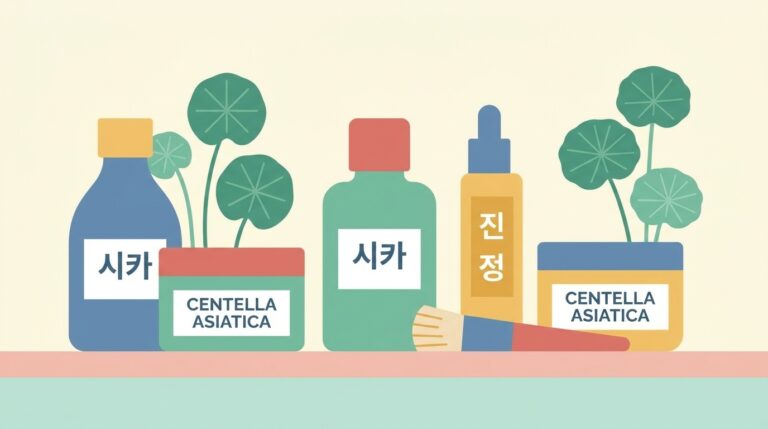
Imagine this: You just landed at Incheon Airport after a 14-hour flight. Between the bone-dry airplane cabin air, instant jet lag, and the sudden shift in humidity, your skin is screaming. You check into your hotel in Hongdae, glance into the bathroom mirror, and gasp—sudden redness, tiny bumps, and angry flare-ups across your cheeks. We have all been there. You rush down to the nearest Olive Young, determined to find a miracle cure. Inside, fluorescent lights illuminate endless aisles of gleaming serums, ampoules, and toner pads. Every product displays Korean labels packed with buzzwords like 진정 (calming), 장벽 강화 (barrier strengthening), and the holy grail of K-Beauty: 시카 (Cica / Centella Asiatica).
You want to ask the staff for a targeted, potent Cica solution that will stop your breakout in its tracks without clogging your pores. But how do you express complex skin conditions beyond just pointing and saying, “이거 좋아요?” (Is this good?). Over the past decade coaching intermediate learners, I have found that beauty and wellness conversations are where textbook Korean fails the hardest. Native Koreans use vivid, descriptive expressions for their skin. Mastering these B2-level phrases will not only save your complexion on your next Seoul adventure, but it will also give you the confidence to talk skincare like a true beauty insider. Let us dive in!
Phase 2: 핵심 표현 3선 심층 분석
1. 피부가 뒤집어졌을 때 진정시키는 데 시카만 한 게 없어요.
- Pronunciation: [Pibuga dwijibeojyeosseul ttae jinjeongsikineun de sikaman han ge eopseoyo.] (Sound analogy: Say ‘dwi-jee-buh’ quickly, like flipping a pancake in a pan!)
- Meaning: “When your skin completely breaks out, nothing beats Cica for calming it down.”
- K-Culture Moment: You will hear beauty creators on YouTube or characters in lifestyle K-Dramas say this when their skin flares up from heavy studio makeup or sudden seasonal transitions (환절기).
- Editor’s Insight: 뒤집어지다 literally means “to turn inside out” or “be overturned.” When applied to skin, it graphically conveys an intense, sudden flare-up. Pairing it with the grammar pattern ~만 한 게 없다 (“nothing compares to ~”) delivers an authoritative, native-level recommendation.
- Situation Spectrum:
- Casual (Friends): ✅ 피부 뒤집어졌을 때 진정엔 시카만 한 게 없어.
- Semi-formal (Polite store interaction): ✅ 피부가 뒤집어졌을 때 진정시키는 데 시카만 한 게 없어요.
- Formal (Broadcast/Clinic): ⚠️ 피부 트러블이 심화되었을 때 진정 관리에는 시카 성분이 가장 효과적입니다.
- 🤔 Think About It: In English, we say our skin “broke out,” treating it like an escape or eruption. Koreans say it “turned inside out” (뒤집어지다). What does this reveal about how Koreans perceive sudden skin changes as a fundamental disruption of balance?
2. 여드름 흉터 흔적 완화에 도움이 되는 재생 성분이에요.
- Pronunciation: [Yeodeureum hyungteo heunjeok wanwhae doumi doeneun jaesaeng seongbunieyo.] (Sound analogy: ‘wan-wha’ glides softly, mirroring the gentle soothing sensation it describes.)
- Meaning: “It’s a regenerative ingredient that helps fade acne scars and post-breakout marks.”
- K-Culture Moment: Beauty consultants at dermatology clinics in Gangnam or skincare counter specialists frequently use this exact phrasing when recommending Centella-infused post-laser ointments.
- Editor’s Insight: Intermediate learners often default to 치료 (cure/treatment), but cosmetics in Korea legally cannot claim medical cures. Instead, words like 완화 (alleviation/fading) and 재생 성분 (regenerative ingredient) are standard, sophisticated B2 vocabulary used by educated consumers.
- Situation Spectrum:
- Casual: ⚠️ 여드름 자국 없애는 데 좋은 재생 성분이야.
- Semi-formal: ✅ 여드름 흉터 흔적 완화에 도움이 되는 재생 성분이에요.
- Formal: ✅ 본 제품은 트러블 흔적 완화 및 피부 재생을 돕는 유효 성분을 함유하고 있습니다.
- 🤔 Think About It: Why does Korean skincare vocabulary differentiate between an active wound (여드름), a sunken mark (흉터), and pigmentation (흔적)? Notice how specificity reflects cultural attention to immaculate skin texture.
3. 자극 없이 붉은 기를 가라앉혀 줘서 민감성 피부에 딱이에요.
- Pronunciation: [Jageuk eopsi bulgeun gireul garaanjhyeo jwoseo mingamseong pibue ttagieyo.] (Sound analogy: ‘gara-anj-hyeo’ sounds like letting settling dust sink gently to the floor.)
- Meaning: “It soothes redness without irritation, so it’s absolutely perfect for sensitive skin.”
- K-Culture Moment: When a K-Pop idol reveals their night-care routine on a vlog, patting a Cica ampoule over flared cheeks while praising how mild it feels.
- Editor’s Insight: 붉은 기 (redness/flushing) uses the noun-forming suffix -기, which denotes a trace or nuance of a condition. 가라앉히다 is the causative form of 가라앉다 (to sink/settle), giving the mental image of cooling down heat and inflammation.
- Situation Spectrum:
- Casual: ✅ 자극 없이 붉은 기 가라앉혀 줘서 민감한 내 피부에 딱이야.
- Semi-formal: ✅ 자극 없이 붉은 기를 가라앉혀 줘서 민감성 피부에 딱이에요.
- Formal: ⚠️ 피부 자극을 최소화하고 홍조 현상을 완화하여 민감성 피부에 적합합니다.
- 🤔 Think About It: The word 딱이에요 expresses a satisfying, tailored fit. How does using such sensory-rich expressions elevate your ability to express personal comfort compared to simply saying “좋아요”?
Phase 3: 교과서 한국어 vs 진짜 한국어
Situation 1: Describing a sudden breakout to a beauty advisor
- 📖 교과서 한국어: “얼굴에 여드름과 염증이 많이 발생했습니다.” (Facial acne and inflammation have occurred in large amounts.)
- 🗣️ 진짜 한국어: “환절기라 그런지 피부가 완전 확 뒤집어졌어요.” (Maybe it’s the seasonal change, but my skin has completely broken out like crazy.)
- 💡 왜 다를까? Textbook Korean sounds like a clinical medical chart. Native speakers naturally add contextual hedges (~라 그런지) and vivid expressive adverbs (확, 완전) to convey emotional distress over unexpected blemishes.
Situation 2: Asking if a Cica product calms down trouble spots
- 📖 교과서 한국어: “이 시카 화장품은 피부 진정 효능을 보유하고 있습니까?” (Does this Cica cosmetic possess skin-soothing efficacy?)
- 🗣️ 진짜 한국어: “이거 붉은 기랑 트러블 가라앉히는 데 효과 좀 볼 수 있을까요?” (Will I be able to see some real results in calming down redness and trouble with this?)
- 💡 왜 다를까? Koreans rarely ask about “properties” (효능 보유). Instead, they use colloquial experiential idioms like 효과를 보다 (“to see an effect/benefit”) to ask whether the purchase will yield noticeable results.
Phase 4: K-Culture 딥다이브 & 비언어적 매너
4-1. 눈치(Nunchi) & Gestures at the Beauty Store
When browsing inside Korean drugstores like Olive Young or Lalavla, staff members often stay within arm’s reach to assist. If you want private browsing time, politely hold your shopping basket with both hands in front of you and offer a light nod with a soft smile; this subtly signals “혼자 볼게요” (I’ll browse on my own).
When asking a consultant to look at your skin, never aggressively point your index finger directly at your blemishes. Instead, gently tilt your face toward them and indicate the affected area with an open hand or the back of two fingers. This shows modesty and avoids putting your conversational partner in an awkward physical proximity.
4-2. The “Hwahae” Culture and Ingredient Literacy
In South Korea, consumers do not just trust marketing claims; they practice rigorous 성분 분석 (ingredient analysis). Almost every Korean skincare enthusiast uses apps like 화해 (Hwahae) or 파우더룸 (PowderRoom) to scan for the “20 cautionary ingredients” (20가지 주의성분) before purchasing. Cica—derived from 병풀 (Centella Asiatica, traditionally known as 호랑이풀 or “tiger grass” because injured tigers rolled in it to heal wounds)—became a national obsession precisely because it scores exceptionally green and safe on these analytical apps.
Phase 5: 실전 롤플레이 시나리오
Setting: Olive Young Flagship Store in Seongsu-dong. The shop is buzzing with indie brands and upbeat K-Pop.
Characters:
* 민지 (Min-ji): A sharp, friendly Olive Young beauty advisor with glowing glass skin.
* You: An intermediate Korean speaker struggling with irritated, jet-lagged skin.
민지: 어서 오세요! 고객님, 찾으시는 스킨케어 라인 있으실까요?
(Eoseo oseyo! Gogaengnim, chajeusineun seukinkeeo rain isseusilkkayo?)
“Welcome! Are you looking for any particular skincare line?”
🎭 [Hands you a small shopping basket with both hands and offers an attentive smile]
You: 네, 비행기 타고 왔더니 피부가 확 뒤집어져서요. 진정 라인 좀 추천받을 수 있을까요?
(Ne, bihaenggi tago watdeoni pibuga hwak dwijibeojyeoseoyo. Jinjeong rain jom chucheonbadeul su isseulkkayo?)
“Yes, my skin completely broke out after my flight. Could I get a recommendation for a soothing line?”
🎭 [Tilts head slightly and gestures toward cheeks with an open hand]
민지: 아이고, 건조해서 붉은 기가 많이 올라오셨네요. 평소에 민감한 편이세요?
(Aigo, geonjohaeseo bulgeun giga mani ollaosyeonneyo. Pyeongsoe mingamhan pyeon-iseyo?)
“Oh dear, the dryness brought up quite a lot of redness. Is your skin usually sensitive?”
🎭 [Gently leans in to inspect your skin with a sympathetic look]
You: 네, 유분기 많은 건 트러블이 바로 나서 순한 시카 성분 위주로 보고 있어요.
(Ne, yubungi maneun geon teureobeori baro naseo sunhan sika seongbun wijuro bogo isseoyo.)
“Yes, oily formulas break me out immediately, so I’m mainly looking for gentle Cica ingredients.”
🎭 [Nods firmly to communicate your clear preference]
민지: 그러시면 병풀 추출물이 고함량으로 들어간 이 시카 수딩 세럼 어떠세요? 끈적임 없이 쏙 흡수돼요.
(Geureosimyeon byeongpul chuchulmuri gohamnyang-euro deureogan i sika suding sereom eotteoseyo? Kkeunjeogim eopsi ssok heupsudwaeyo.)
“In that case, how about this Cica soothing serum formulated with high-potency Centella extract? It absorbs seamlessly without stickiness.”
🎭 [Dispenses a small drop onto your inner wrist with clean technique]
You: 와, 쿨링감도 있고 자극 없이 붉은 기를 금방 가라앉혀 줄 것 같네요.
(Wa, kullinggamdo itgo jageuk eopsi bulgeun gireul geumbang garaanjhyeo jul geot ganneyo.)
“Wow, it feels cooling, and it seems like it will calm down redness quickly without irritation.”
🎭 [Gently taps the serum on the back of your hand to feel the finish]
민지: 맞아요! 오늘 밤에 듬뿍 얹고 주무시면 내일 아침에 트러블이 눈에 띄게 진정될 거예요.
(Majayo! Oneul bame deumpuk eonjgo jumusimyeon naeil achime teureobeori nune ttwige jinjeongdoel geoyeyo.)
“Exactly! If you apply a generous layer tonight before bed, your troubles will noticeably calm down by morning.”
🎭 [Points with an open palm toward the accompanying Cica sleeping pack]
You: 마침 찾던 제품이에요. 여드름 흔적 완화에도 좋다니 이걸로 할게요!
(Machim chatdeon jepumieyo. Yeodeureum heunjeok wanwhaedo jotani igeollo halgeyo!)
“This is just what I was looking for. Since it’s also good for fading breakout traces, I’ll take this one!”
🎭 [Places the product inside your basket with a satisfied smile]
🔀 인터랙티브 분기점 (Interactive Decision Point)
At this moment, Min-ji suggests adding an exfoliating AHA/BHA peeling pad to “clear dead skin cells.” Your skin is already peeling and red. How do you respond?
- Option A: “아니요, 지금 피부 장벽이 무너진 상태라 각질 제거제는 자극적일 것 같아요. 시카 크림만 주세요.” (Best – Native B2 logic. Explicitly notes a broken skin barrier and declines harsh acids politely.)
- Option B: “싫어요. 그거 쓰면 제 얼굴 망가져요.” (Bad – Excessively blunt, rude honorific mismatch, creates sudden social tension.)
- Option C: “네, 주는 대로 다 살게요.” (Risk – Passive agreement that will likely inflame your sensitive skin and drain your travel budget.)
Phase 6: 10초 감정 섀도잉 드릴 (Emotional Shadowing)
Practice reading these out loud with natural rhythm and emotional coloring. Slash marks (/) indicate breath pauses.
[😫 속상하고 다급하게 - Frustrated & Urgent]
“비행기 타고 왔더니 / 피부가 확 뒤집어졌어요… / 진정 라인 좀 / 추천해 주실 수 있나요?”
(Bihaenggi tago watdeoni / pibuga hwak dwijibeojyeoseoyo… / jinjeong rain jom / chucheonhae jusil su innayo?)-
[✨ 감탄하며 안도하듯 - Impressed & Relieved]
“끈적이지도 않고 / 자극 없이 붉은 기를 / 싹 가라앉혀 줘서 / 제 피부에 진짜 딱이에요!”
(Kkeunjeogijido anko / jageuk eopsi bulgeun gireul / ssak garaanjhyeo jwoseo / je pibue jinjja ttagieyo!) -
[🧐 신중하고 꼼꼼하게 - Inquiring & Discerning]
“이 제품 / 여드름 흉터 흔적 완화에도 / 진짜 도움이 될까요? / 병풀 함량이 얼마나 돼요?”
(I jepum / yeodeureum hyungteo heunjeok wanwhaedo / jinjja doumi doelkkayo? / byeongpul hamryangi eolmana dwaeyo?)
Phase 7: K-Culture 미니 사전
- 시카 (Sika) / 병풀 (Byeongpul) | Centella Asiatica (Tiger Grass)
- Everyday/Beauty Context: The ultimate calming herb in K-Beauty. Appears in toners, ampoules, and “cica-balms.” If a Korean says, “시카 바르고 자야겠다”, they mean their skin needs instant first aid.
- 피부 장벽 (Pibu Jangbyeok) | Skin Barrier
- Everyday/Beauty Context: The outermost protective layer of the skin. When your skin stings from simple water or moisturizer, Koreans say “장벽이 와르르 무너졌다” (My barrier completely collapsed).
- 뒤집어지다 (Dwijibeojida) | To flip out / Break out violently
- Everyday/Beauty Context: Used figuratively for messy events or stomach upsets, but most frequently for sudden clusters of breakouts on the face.
- 진정 케어 (Jinjeong Keeo) | Soothing Care / Calming Treatment
- Everyday/Beauty Context: The category of skincare aimed at reducing redness, cooling surface heat, and lowering inflammation rather than whitening or anti-aging.
Phase 8: 여행자를 위한 생존 키트
서바이벌 표현 TOP 3
- “민감성 피부용 저자극 테스트 완료된 제품인가요?”
(Mingamseong pibuyong jeojageuk teseuteu wallyodoen jepumingayo?)
Pro Tip: Perfect question for hypersensitive skin. It asks if the item underwent clinical hypoallergenic testing. - “끈적이지 않고 산뜻하게 마무리되는 제형으로 보여주세요.”
(Kkeunjeogiji anko santteuthage mamurideoneun jehyeong-euro boyeojuseyo.)
Pro Tip: Use this to avoid thick, pore-clogging creams when shopping during Korea’s muggy monsoon summers. - “외국인 텍스 리펀 현장 환급 가능한가요?”
(Oegugin tekseu ripeon hyeonjang hwangeup ganeunghangayo?)
Pro Tip: Major Olive Young branches can deduct tax immediately at checkout if you carry your physical passport.
Editor’s Travel Note
Before stepping into a beauty shop, install and review your items through the Hwahae cosmetic ingredient scanner app download. It breaks down irritants by color codes. For offline navigation to flagship stores in Seongsu or Myeongdong that stock exclusive indie Cica brands, rely on the Naver Map navigation app download instead of standard global maps, which lack updated walking routes in Seoul shopping alleys.
Phase 9: “한 발 더 깊이” (생각 질문)
In South Korea, skincare is rarely viewed as mere vanity or cosmetic luxury. It is categorized under 자기관리 (self-management), reflecting personal hygiene, diligence, and respect toward others in social interactions. Having 꿀피부 (honey skin) or maintaining an unblemished complexion symbolizes discipline over lifestyle and stress. When you discuss your skincare routine in Korean, using nuanced terms like 진정 and 피부 장벽 demonstrates that you respect this cultural philosophy of mindful balance.
💬 Your Turn: How does skincare perception in your home country compare? Is it viewed as medical treatment, pampering self-care, or a standard daily routine? Share your thoughts below in Korean or English!
Phase 10: FAQ & 오해 방지 (FAQ Schema)
Q: Is “Cica” a unique brand name in Korea?
A: No! “Cica” is short for Centella Asiatica (Cicatrization). In Korean cosmetics, it serves as a universal ingredient category name utilized across hundreds of different brands, from Dr. Jart to COSRX and Beplain.
Q: How do I clarify between “whiteheads/trouble” and cystic acne?
A: Use 좁쌀 여드름 (millet-seed acne) for tiny textured whiteheads/closed comedones, and 화농성 여드름 (inflammatory/purulent acne) for deep, painful cystic bumps.
Q: Can I use Cica every day, or is it an exfoliant?
A: Cica is purely a calming, healing botanical agent, not an exfoliating chemical acid. You can use Cica ampoules, creams, and toners daily, morning and night, without risking over-exfoliation.
🚨 흔한 실수 (Common Mistakes) 경고판
- Mistake: Asking “이거 상처 치료제예요?” (Is this a wound remedy?) at a cosmetic store.
- Correct Action: Keep 치료 for pharmacies (약국). At beauty counters, ask: “트러블 진정에 좋은 화장품이에요?” (Is this cosmetic good for calming trouble?).
- Mistake: Pronouncing 시카 like English “Seeker” or “Sika deer.”
- Correct Action: Pronounce it with a sharp, clean short vowel sound: [시카 – Shi-ka].
- Mistake: Saying “얼굴이 아파요” (My face hurts) when skin stings from a cream.
- Correct Action: Say “얼굴이 따가워요” (My face stings/pricks) or “화끈거려요” (My face feels hot/burning).
Phase 11: 액션 미션 & 참여 유도
- 🥉 Bronze Mission (Solo): Stand in front of your bathroom mirror. Point to your cheek and practice saying “피부가 뒤집어졌을 때 진정시키는 데 시카만 한 게 없어요” three times with crisp diction.
- 🥈 Silver Mission (Community): Snap a photo of your favorite calming skincare product. Post it on social media with the sentence: “붉은 기 가라앉히는 데 최고! #진정케어 #시카”
- 🥇 Gold Mission (Real-world): Visit an Olive Young or your local K-Beauty boutique. Ask the clerk for a recommendation using the phrase: “자극 없이 붉은 기 가라앉혀 주는 시카 세럼 추천해 주세요!”
- 🎮 K-Culture Mission: Watch an episode of a recent slice-of-life K-Drama. Spot the scene where a character applies small circular patches to their face before bed. Can you recognize the 트러블 패치 (trouble patch)?
Phase 12: 인터랙티브 퀴즈 챌린지
Test your mastery of B2 K-Beauty language!
1. Situation Judgment: Your skin suddenly erupted in painful bumps after wearing a mask all day. What is the most natural way to describe this to a Korean friend?
* (A) 제 피부 세포가 사망했습니다.
* (B) 마스크 때문에 피부가 완전 뒤집어졌어요.
* (C) 얼굴에 바이러스가 침투하였습니다.
2. Fill in the Blank: “자극 없이 ______ 기를 가라앉혀 줘서 민감성 피부에 딱이에요.”
* (A) 푸른
* (B) 노란
* (C) 붉은
3. True or False: In Korea, asking for 병풀 추출물 means you are looking for tiger grass / Cica extract.
* (T) True / (F) False
👉 Click to reveal answers & explanations!
- 1. Answer: (B) 피부가 완전 뒤집어졌어요 is the authentic native idiom for an acute breakout. (A) and (C) sound bizarrely robotic or alarmist.
- 2. Answer: (C) 붉은. 붉은 기 (redness/flushing) is the correct term for inflammatory facial redness.
- 3. Answer: (T) True. 병풀 (Byeongpul) is the pure Korean biological term for Centella Asiatica, commonly marketed as Cica.







