

Phase 1: Empathy (Real Market Story)
안녕하세요! 매일한글 에디터입니다.
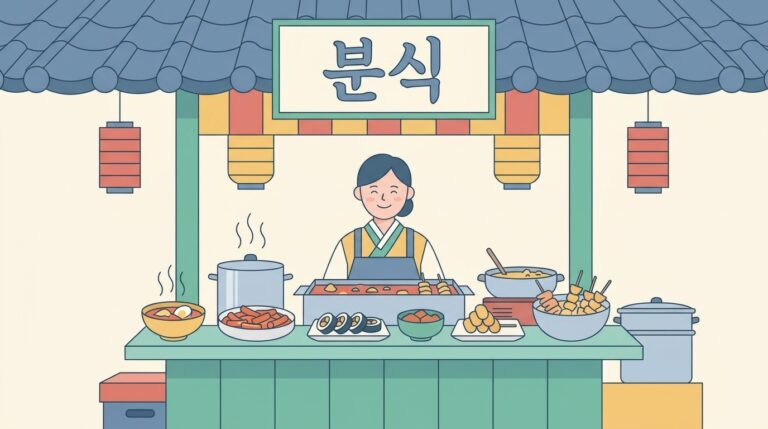
Imagine stepping into the energetic maze of Gwangjang Market or Mangwon Market in Seoul. The air smells of sizzling scallion oil, bubbling spicy tteokbokki, and sweet cinnamon hotteok. You stroll up to a bustling cart, and your eyes land on an intriguing, steaming dish you have never seen before. You desperately want to try it, but your mind goes blank. How do you ask what it is without sounding like an automated translation bot? Do you point an awkward index finger? Do you stammer in English? Many of our A2 learners share this exact pain point: they know textbook grammar, yet they freeze in front of a warm market vendor. Learning how to naturally ask “What is this?” in Korean will unlock the heart of Korean street food culture, turning an intimidating stall into your favorite local hangout.
Phase 2: Core Expressions Deep Dive
1. 이게 뭐예요? (Ige mwoyeyo?)
- Pronunciation: [I-ge mwo-ye-yo?] (Think: “Ee-geh” like ‘get’ without the t, followed by “mwoh-yeh-yo”)
- Meaning: Literal: “What is this?” | Nuance: Friendly, polite, and universally natural for everyday items right in front of you.
- K-Culture Moment: Seen in almost every Korean travel variety show like Jinny’s Kitchen when curious guests lean over the counter.
- Editor’s Insight: 이게 (Ige) is the contracted, natural spoken form of 이것이 (Igeos-i). Using 이게 (Ige) instantly makes you sound like someone living in Korea rather than reading from a stiff dictionary.
- Situation Spectrum: Casual (with friends): ⚠️ (Use ‘이게 뭐야?’) | Semi-formal (Market stalls/Cafes): ✅ | Formal: ✅
- 🤔 Think About It: Notice how Korean skips “excuse me” when asking simple questions if your tone is bright and your body language is warm. How does your culture signal curiosity?
2. 저건 이름이 뭐예요? (Jeogeon ireumi mwoyeyo?)
- Pronunciation: [Jeo-geon i-reu-mi mwo-ye-yo?] (Sounds like: “Juh-gohn ee-roo-mee mwoh-yay-yo”)
- Meaning: Literal: “As for that over there, what is its name?” | Nuance: Curious, respectful inquiry about a specific dish slightly further away from you.
- K-Culture Moment: When K-Pop idols visit night markets in reality vlogs and point at delicious skewers hanging behind the glass counter.
- Editor’s Insight: 저건 (Jeogeon) points to objects far from both you and the vendor. Adding 이름 (ireum – name) shows you recognize it as an authentic dish and want to know its exact title.
- Situation Spectrum: Casual: ⚠️ | Semi-formal: ✅ | Formal: ✅
- 🤔 Think About It: In Korean, spatial words shift precisely based on distance: 이거 (this near me), 그거 (that near you), and 저거 (that over there).
3. 이거 많이 매워요? (Igeo mani maewoyo?)
- Pronunciation: [I-geo ma-ni mae-wo-yo?] (Sounds like: “Ee-guh mah-nee meh-woh-yo”)
- Meaning: Literal: “Is this very spicy?” | Nuance: Essential survival phrase to gauge Korean spice levels before ordering.
- K-Culture Moment: Classic Korean drama scene where a foreign friend or a novice eater takes a bite of street food, tearing up as everyone laughs affectionately.
- Editor’s Insight: Korean street food colors can be deceiving! Even brown stews might pack a punch of Cheongyang chili peppers. Always pair “What is this?” with this spice check.
- Situation Spectrum: Casual: ⚠️ | Semi-formal: ✅ | Formal: ✅
- 🤔 Think About It: Why is “spiciness” such an emotional bond in Korean cuisine? Sharing spice tolerance often sparks immediate friendship.
Phase 3: Textbook Korean vs. Real Korean
Situation 1: Pointing at food on the counter
- 📖 교과서 한국어 (Textbook): 이것은 무엇입니까? (Igeoseun mueosimnikka? / What is this?)
- 🗣️ 진짜 한국어 (Real-life): 이거 뭐예요? (Igeo mwoyeyo? / What is this?)
- 💡 왜 다를까? (Why is it different?): 무엇입니까 belongs in formal business presentations or military drills. Saying it at an outdoor market will make the vendor giggle at your extreme stiffness!
Situation 2: Asking what ingredients are inside
- 📖 교과서 한국어 (Textbook): 이 음식의 재료는 무엇입니까? (I eumsigui jaeryoneun mueosimnikka? / What are the ingredients of this food?)
- 🗣️ 진짜 한국어 (Real-life): 이거 안에 뭐 들었어요? (Igeo ane mwo deureosseoyo? / What’s inside this?)
- 💡 왜 다를까? (Why is it different?): Real conversation prefers active verbs like 들다 (to be contained) over formal nouns like 재료 (ingredient).
Phase 4: K-Culture Deep Dive & Non-Verbal Manners
4-1. 눈치 (Nunchi) & Gestures
- Never single-finger point: Stabbing an index finger at food can feel confrontational or unhygienic. Instead, gesture toward the dish with an open palm or softly point while tilting your head curiously.
- Warm Eye Contact & Nod: When the vendor answers, nod twice while making a slight appreciative sound like “아~ (Ah~)”. This shows active listening and good nunchi.
4-2. Cultural Code: The Magic of Market Imonim
In Korean markets, female stall owners are warmly called 이모님 (Imonim), meaning “maternal auntie.” Using this word instantly dissolves social distance. It honors their warmth and often leads to a little extra sample treat (서비스 – seobiseu or 덤 – deom).
Phase 5: Real-Life Roleplay Scenario
Setting: Mangwon Market on a brisk autumn evening. You are standing in front of a sizzling griddle operated by a lively vendor auntie.
- Turn 1 (Learner): 저기요, 이모님! 이게 뭐예요? (Jeogiyo, imonim! Ige mwoyeyo? / Excuse me, Auntie! What is this?)
🎭 Leaning forward slightly, gesturing with an open hand toward golden crispy pancakes. - Turn 2 (Vendor Auntie): 어서 와요! 이건 녹두 빈대떡이야. (Eoseo wayo! Igeon nokdu bindaetteog-iya. / Welcome! This is mung bean bindaetteok.)
🎭 Flipping a sizzling pancake with a wide metal spatula and smiling broadly. - Turn 3 (Learner): 빈대떡이요? 이거 고기도 들어가요? (Bindaetteog-iyo? Igeo gogido deureogayo? / Bindaetteok? Does meat go into this too?)
🎭 Looking curious with eyes lit up. - Turn 4 (Vendor Auntie): 그럼! 돼지고기랑 숙주나물이 듬뿍 들어갔지. (Geureom! Dwaejigogirang sukjunamuri deumppuk deureogatji. / Of course! It is packed with pork and bean sprouts.)
🎭 Tapping the edge of the pancake proudly. - Turn 5 (Learner): 우와, 맛있겠네요! 이거 많이 매워요? (Uwa, masitgenneyo! Igeo mani maewoyo? / Wow, looks delicious! Is this very spicy?)
🎭 Smiling while checking dietary preferences. - Turn 6 (Vendor Auntie): 하나도 안 매워. 고소해! 하나 부쳐줄까? (Hanado an maewo. Gosohae! Hana buchyeojulkka? / Not spicy at all. It’s savory! Shall I fry one for you?)
🎭 Placing a freshly fried pancake onto a cutting tray. - Turn 7 (Learner): 네, 하나 포장해 주세요! 얼마예요? (Ne, hana pojanghae juseyo! Eolmayeyo? / Yes, please wrap one to go! How much is it?)
🎭 Taking out a payment card or cash politely with both hands. - Turn 8 (Vendor Auntie): 오천 원! 양파 간장도 많이 넣었어, 맛있게 먹어! (Ocheon won! Yangpa ganjangdo mani neoeosseo, masitge meogeo! / Five thousand won! I included plenty of onion soy sauce, enjoy!)
🎭 Handing over the warm bag with a big wink.
🔀 Interactive Decision Point
The auntie offers you a tiny freshly cut piece on a toothpick to try.
* Choice A: “우와, 감사해요! (Uwa, gamsahaeyo!)” eat it, smile, and order one right away.
* Choice B: “깎아주세요! (Kkakkajuseyo! – Give me a discount!)” before even tasting it.
* Choice C: Look suspicious, wave both hands, and say “싫어요 (Sireoyo – I hate it)”.
Detailed Feedback:
* Choice A [Best]: Perfect market manners! Accepting samples with gratitude creates an instant connection and builds great rapport.
* Choice B [Risk]: Asking for discounts immediately on affordable street food can offend hard-working market vendors.
* Choice C [Bad]: Saying “싫어요” is blunt and impolite to elders. If you cannot eat it, say: “괜찮습니다, 감사합니다 (Gwaenchanseumnida, gamsahaeyo – I am okay, thank you).”
Phase 6: 10-Second Emotional Shadowing Drill
Practice matching the cadence and emotional rhythm using / for natural pauses:
[😊 호기심 가득 밝게 / Bright & full of curiosity]- 저기요, / 이모님! / 이게 / 뭐예요? (Jeogiyo, / imonim! / Ige / mwoyeyo?)
[😋 군침 돌며 기대감에 / Mouth-watering anticipation]- 우와, / 진짜 / 맛있겠네요! (Uwa, / jinjja / masitgenneyo!)
[🥺 맵찔이의 간절한 확인 / Spice-sensitive plea]- 혹시 / 이거 / 많이 / 매워요? (Hoksi / igeo / mani / maewoyo?)
Phase 7: K-Culture Mini Dictionary
- 이모님 (Imonim) | Friendly term for middle-aged female restaurant/market staff | Literally “maternal aunt.” Use it instead of formal “여기요 (yeogiyo)” to instantly warm up conversations.
- 서비스 (Seobiseu) | Free complimentary item | Derived from English “service,” refers to free side dishes, drinks, or extra samples given out of goodwill.
- 덤 (Deom) | Extra bonus scoop/handful | Traditional Korean concept of giving an extra spoonful or item for free in traditional markets.
- 포장 (Pojang) | Takeout / Packing | Essential word when ordering street food to enjoy back in your hotel room: “포장해 주세요 (Pojanghae juseyo).”
Phase 8: Traveler’s Survival Kit
Top 3 Survival Phrases
- 이거 하나 주세요. (Igeo hana juseyo.)
- Pronunciation: [I-geo ha-na ju-se-yo.]
- Pro Tip: Combine this with pointing: “Please give me one of this.”
- 카드 돼요? (Kadeu dwaeyo?)
- Pronunciation: [Ka-deu dwae-yo?]
- Pro Tip: While most urban markets take cards, smaller carts prefer cash or bank transfer. Always carry small cash (1,000 & 5,000 KRW notes).
- 덜 맵게 해 주세요. (Deol maepge hae juseyo.)
- Pronunciation: [Deol maep-ge hae ju-se-yo.]
- Pro Tip: Means “Please make it less spicy.” Essential for ddeokbokki or stir-fried chicken carts!
Editor’s Travel Note
Before heading into the maze of historic alleys, make sure you complete your Naver Map app download as Google Maps does not support walking directions in South Korea. Bring a refillable water bottle, a small pack of wet wipes, and an empty stomach!
Phase 9: One Step Deeper (Cultural Insight)
In many Western cultures, asking what an item is can feel strictly transactional—exchanging product details for cash. But in a Korean traditional market, asking “이게 뭐예요?” is an invitation for social connection (정 – Jeong). Korean vendors take immense pride in feeding people. When you ask about their food with polite curiosity, you are validating their culinary craft, transforming a 3,000 won snack into a heartfelt cultural exchange.
💬 Your Turn: What is the most unusual or intriguing Korean street food you have ever seen in K-Dramas or on social media? Leave a comment below, and let’s decode what it’s called together!
Phase 10: FAQ & Avoiding Misunderstandings
Q: Can I use “이게 뭐야? (Ige mwoya?)” with stall owners?
A: No! Dropping “-요 (-yo)” turns it into informal banmal (반말). Unless you are best friends or speaking to a child, using banmal with an elder market vendor sounds disrespectful. Always keep the “-요”: “이게 뭐예요?”
Q: What is the difference between 이거 (igeo), 그거 (geugeo), and 저거 (jeogeo)?
A: 이거 (igeo) is close to you. 그거 (geugeo) is close to the vendor or person you are speaking with. 저거 (jeogeo) is far away from both of you (like a menu board or a pot in the back).
Q: What should I do if the vendor speaks back super fast in Korean?
A: Don’t panic! Simply smile and say: “조금 천천히 말씀해 주세요 (Jogeum cheoncheonhi malsseumhae juseyo – Please speak a little slowly)”. Vendors appreciate your effort and will slow down with gestures.
🚨 Common Mistakes Alert
- Mistake: Calling young female workers “아줌마 (Ajumma)”.
- Correct Action: “Ajumma” can sometimes sound abrasive. Opt for “사장님 (Sajangnim – owner)” or “이모님 (Imonim – auntie)”.
- Mistake: Handing money or cards over with only one hand.
- Correct Action: Always hand cash, cards, or received food using two hands or with your left hand lightly supporting your right forearm.
- Mistake: Standing in front of the stall eating takeout items that block foot traffic.
- Correct Action: Step slightly to the side of the cart counter to let other hungry market-goers place their orders.
Phase 11: Action Missions
- 🥉 Bronze Mission (Solo Practice): Stand in front of your refrigerator or kitchen pantry, point at three unfamiliar sauces or ingredients, and say aloud: “이게 뭐예요?”
- 🥈 Silver Mission (Social Engagement): Watch a clip of your favorite Korean food show or K-Drama market scene. Pause on a street food cart, take a screenshot, and post in our community chat asking: “이거 이름이 뭐예요?”
- 🥇 Gold Mission (Real Life): Visit a local Korean supermarket (like H-Mart) or Korean restaurant. Ask a friendly Korean staff member: “이거 무슨 맛이에요? (What flavor is this?)” using two-handed etiquette.
- 🎮 K-Culture Mission: Watch Episode 1 of Street Food: Asia (Seoul) on Netflix. Spot three times someone asks about an ingredient or dish name!
Phase 12: Interactive Quiz Challenge
Test what you learned today before heading to the market!
1. Situation Challenge:
You are at Tongin Market pointing at a dark, rolled snack sitting right on the counter directly in front of you. Which phrase is the most natural?
* (A) 저것은 이름이 무엇입니까?
* (B) 이게 뭐예요?
* (C) 그거 뭐냐?
2. Fill-in-the-Blank:
You cannot handle hot chili peppers. You want to ask the Auntie if the tteokbokki is spicy:
* “이거 많이 ____________?”
3. True or False:
Calling an older female market vendor “이모님 (Imonim)” is considered impolite because she is not your biological relative. (True / False)
👉 Click here to check your answers!
- Answer: (B) 이게 뭐예요?
- Explanation: The item is right in front of you (이게), and the polite spoken ending -요 makes it perfectly respectful and natural.
- Answer: 매워요 (maewoyo)
- Explanation: “이거 많이 매워요?” means “Is this very spicy?”
- Answer: False
- Explanation: In Korean traditional markets, kinship titles like 이모님 (Imonim) are friendly terms of endearment that express warmth and respect toward market vendors!
- Explanation: In Korean traditional markets, kinship titles like 이모님 (Imonim) are friendly terms of endearment that express warmth and respect toward market vendors!







