

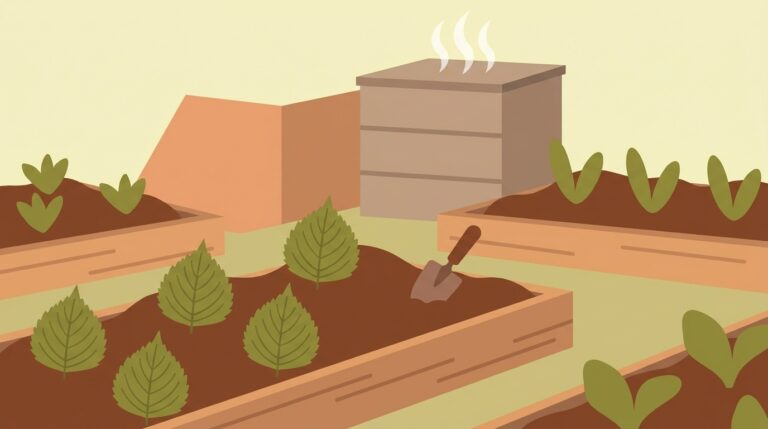
Mastering the Art of Korean Soil: Composting and Earth Care for the Discerning Gardener
Phase 1: Empathy & Story-Driven Opening
안녕하세요! (Annyeonghaseyo!) It is your Daily Hangul editor and local cultural navigator here!
Picture this: Inspired by the rustic, soul-healing scenes of the film Little Forest (리틀 포레스트) and rural K-dramas like Hometown Cha-Cha-Cha, you have secured your very own plot at a suburban jumal nongjang (주말농장, weekend allotment garden) just outside Seoul. With proud enthusiasm, you gather vegetable peelings and dried leaves, eager to blend your own organic compost. Just as you are about to bury your kitchen scraps, an elder gardener in a wide-brimmed sunhat halts your shovel with a gasp: “그렇게 생쓰레기를 바로 넣으면 흙이 썩고 가스 차서 모종 다 죽어요!” (Geureoke saeng-sseuregireul baro neoumeon heuk-i sseokgo gaseu chaseo mojong da jugeoyo! — “If you put raw waste right in, the earth rots, gas builds up, and your seedlings die!”).
You know standard Korean vocabulary, yet in this moment of micro-biological urgency and agricultural nuance, academic textbooks leave you stranded. How do you discuss aerobic decomposition, moisture retention, and seasonal soil conditioning without sounding like a robotic laboratory manual? Cultivating living soil (heuk-sal) is an intimate cultural tradition in Korea. This guide is crafted from real field notes and seasoned green-thumb feedback to give you the advanced, nuanced C1 fluency needed to connect deeply with Korea’s earth and its master growers.
Phase 2: Core Expressions In-Depth Analysis
1. 흙을 일구다 (Heuk-eul ilguda)
- Pronunciation: [Heuk-eul ilguda] (Pronounce ‘heuk’ with a deep, earthy throat resonance like a grounded ‘hook’, followed by a smooth ‘eel-goo-da’)
- Meaning: Literal: To till or break ground. | Actual Nuance: To lovingly transform raw, untamed earth into a fertile, living sanctuary through sustained labor.
- K-Culture Moment: Seen regularly on pastoral variety shows like Three Meals a Day (삼시세끼) when the cast members tenderly prepare fallow ground before transplanting delicate perilla seedlings.
- Editor’s Insight: Beyond horticulture, intellectuals and media figures use this expression metaphorically to describe building a community or pioneering a creative movement from scratch (e.g., “불모지에서 한국 영화계를 일구다”).
- Situation Spectrum: Casual ⚠️ | Semi-formal ✅ | Formal ✅
- 🤔 Think About It: While the English verb “till” implies a purely mechanical action of blades cutting dirt, ilguda carries an emotional weight of human care and perseverance. How does your native language reflect this bond between human intent and the land?
2. 거름을 삭히다 (Georeum-eul sakhida)
- Pronunciation: [Georeum-eul sakhida] (Sounds like ‘Guh-reum-ool sahk-hee-da’—keep the ‘k’ crisp before the airy ‘h’)
- Meaning: Literal: To ferment or ripen compost/manure. | Actual Nuance: To let raw organic material cure patiently through microbiological heat until it becomes rich, benign humus.
- K-Culture Moment: Historical sageuk dramas and food heritage documentaries often contrast unripened manure with fully aged organic soil conditioners that nourish heritage rice fields.
- Editor’s Insight: Notice the verb sakhida (삭히다). It is the exact same culinary root used when fermenting skate (hong-eo) or traditional sweet rice beverages (sikhye). Koreans view composting not as decay or waste disposal, but as a culinary fermentation process for Mother Earth.
- Situation Spectrum: Casual ✅ | Semi-formal ✅ | Formal ✅
- 🤔 Think About It: Why does Korean culture treat soil preparation with culinary vocabulary? What does this say about the cyclical boundary between food, compost, and life?
3. 물빠짐이 좋다 / 배수가 잘되다 (Mulpajjim-i jota / Baesu-ga jaldoeda)
- Pronunciation: [Mulpajjim-i jota / Baesu-ga jaldoeda] (Pop the double ‘p’ in ‘Mool-ppah-jjeem-ee joh-tah’; glide smoothly over ‘Bae-soo’)
- Meaning: Literal: Water draining is good / Drainage performs well. | Actual Nuance: The soil matrix possesses the ideal balance of porosity, preventing suffocating root rot.
- K-Culture Moment: Urban balcony gardening segments on lifestyle variety shows like I Live Alone (나 혼자 산다), where celebrities check pot permeability to save wilting potted fig or lemon trees.
- Editor’s Insight: Use mulpajjim-i jota when chatting naturally at weekend plots or neighborhood plant markets. Baesu-ga jaldoeda is slightly more technical and well-suited for written soil specs or formal agricultural consultations.
- Situation Spectrum: Casual ✅ | Semi-formal ✅ | Formal ✅
- 🤔 Think About It: Native Korean compounds (mul + pajjim) capture sensory immediacy, whereas Sino-Korean terms (bae + su) deliver academic precision. Choosing between them determines your immediate social closeness.
Phase 3: Textbook Korean vs. Real Native Korean
Situation 1: Advising someone to loosen heavy, waterlogged clay soil
- 📖 교과서 한국어 (Textbook): “토양의 통기성과 배수성을 향상시키기 위해 퇴비를 혼합해야 합니다.” (Toyang-ui tonggiseong-gwa baesuseong-eul hyangsangsikigi wihae toebireul honhaphaeya hamnida. – “You must blend compost to enhance the aeration and drainage properties of the soil.”)
- 🗣️ 진짜 한국어 (Real Native): “흙이 너무 찰지니까 부엽토 좀 넉넉히 섞어서 숨통 좀 틔워주세요.” (Heuk-i neomu chaljinikka buyeopto jom neongneokhi seokkeoseo sumtong jom teuiwojuseyo. – “The soil is too dense and sticky, so mix in a generous amount of leaf mold to let it breathe a little.”)
- 💡 왜 다를까? (Why the difference?): Real Korean gardeners personify earth. Instead of abstract academic jargon like tonggiseong (aeration), natives speak of opening the earth’s throat or windpipe (sumtong-eul teuiuda).
Situation 2: Cautioning against unfermented food scraps
- 📖 교과서 한국어 (Textbook): “완숙되지 않은 유기물은 토양 내에서 발열 반응과 가스를 유발합니다.” (Wansukdoeji aneun yugimureun toyang nae-eseo baryeol baneung-gwa gaseureul yubalhamnida. – “Unfermented organic matter induces exothermic reactions and gas emission inside the soil.”)
- 🗣️ 진짜 한국어 (Real Native): “생쓰레기 바로 묻으면 속에서 열나고 가스 차서 뿌리 다 태워먹어요.” (Saeng-sseuregi baro mudeumyeon sog-eseo yeollago gaseu chaseo ppuri da taewomeogeoyo. – “If you bury fresh raw scraps, they ferment violently inside, generate gas, and scorch all the roots.”)
- 💡 왜 다를까? (Why the difference?): Idiomatic spoken Korean uses vivid, visceral sensory verbs such as taewomeokda (to scorch/destroy completely) to warn against destructive mistakes.
Phase 4: K-Culture Deep Dive & Non-Verbal Manners
4-1. 눈치 (Nunchi) & Gestures in the Garden
- The Squat and Sift: Never stand tall while lecturing on garden management. Master gardeners adopt the traditional deep squat (jjogeuryeo-anjgi), often using the low rolling foam stool (eongdeongi uija). When appraising soil vitality, pick up a palm-sized clump, squeeze it into a ball, and nudge it with your thumb. If it binds together then crumbles delicately like chocolate brownie crumbs, nod with quiet admiration and say: “흙살이 제대로 올랐네요” (Heuk-sari jedaero ollannuneyo — “The soil vitality is at its absolute peak”).
- Furrow Etiquette: Never step your boots directly onto the elevated planting mound (idang or duduk). Always walk exclusively in the sunken drainage furrows (gol or gorang). Stepping on the mound compacts the aeration you and your neighbors worked so hard to cultivate.
4-2. Cultural Code: The Urban Jumal Nongjang Phenomenon
In high-density apartment communities across Korea, weekend allotments are not merely food production plots; they are cultural sanity valves. City dwellers reconnect with the soil to counteract digital burnout. Sharing rich homemade compost, aged coffee ground fertilizer, and harvested leafy greens (ssam) functions as high-context social bonding. When you speak about soil with microbiological sensitivity, Korean elders see you not as a foreign visitor, but as an authentic steward of the land.
Phase 5: Real-Life Roleplay Scenario
Setting: A crisp morning at a community weekend farm in Namyangju. Aromatic compost piles steam gently beside a wooden greenhouse.
Characters:
* You (C1 Gardener): Enthusiastic urban cultivator preparing soil for pepper and perilla planting.
* Mr. Man-seok (만석 삼촌): A 67-year-old veteran farmer with an eagle eye for soil moisture.
1. You: 삼촌, 안녕하세요! 오늘 날씨가 풀려서 밭갈이하기 딱 좋네요.
(Samchon, annyeonghaseyo! Oneul nalssiga pullyeoseo batgarihagi ttak jonneyo.)
🎭 Bowing 45 degrees while holding a pitchfork with both hands safely pointed down.
“Good morning, Uncle! The weather has softened up, perfect for tilling the plot today.”
2. Mr. Man-seok: 어, 김 씨 왔어? 근데 저 구석에 쌓아둔 게 뭐야? 설마 집에서 가져온 음식물 찌꺼기인가?
(Eo, Gim ssi wasseo? Geunde jeo guseoge ssahadun ge mwoya? Seolma jibeseo gajweoon eumsikmul jjiggeog-i-inga?)
🎭 Squinting skeptically under his woven straw visor, hands resting on his hips.
“Oh, Mr. Kim! But what is that piled in the corner? Don’t tell me that’s raw kitchen leftovers from home?”
3. You: 네, 커피박이랑 채소 껍질을 모았는데요, 그냥 쓰려는 건 아니고 미생물제 넣고 제대로 삭히려고요.
(Ne, keopibag-irang chaeso kkeopjireul moanneundeyo, geunyang sseuryeoneun geon anigo misaengmulje neoko jedaero sakhiryeogoyo.)
🎭 Smiling calmly, lifting a ventilated composting tote to show moisture balance.
“Yes, I collected spent coffee grounds and vegetable peels; I am not using them raw, of course—I’m fermenting them properly with EM bokashi microbes.”
4. Mr. Man-seok: 오호, 제법이네! 생것을 그냥 묻으면 가스 차서 뿌리가 썩거든. 근데 낙엽은 좀 섞었어?
(Oho, jebeob-ine! Saenggeoseul geunyang mudeumyeon gaseu chaseo ppuriga sseokgeodeun. Geunde nagyeobeun jom seokkeosseo?)
🎭 Approaching closer, peering with pleasant surprise at your well-aerated container.
“Oho, you actually know what you’re doing! Raw waste traps gas and rots the roots. Did you mix in dry brown leaves too?”
5. You: 네, 질소 성분이 너무 과할까 봐 마른 볏짚이랑 낙엽으로 탄질율을 맞췄습니다.
(Ne, jilsso seongbuni neomu gwahalgga bwa mareun byeotjib-irang nagyeobeuro tanjiryureul matchwosseumnida.)
🎭 Crouching smoothly, letting a pinch of pre-composted carbon material fall through your fingers.
“Yes, worried the nitrogen might be too hot, I balanced the carbon-to-nitrogen ratio with dried rice straw and autumn leaves.”
6. Mr. Man-seok: 허허, 전문가 다 됐구먼. 이 정도면 밑거름으로 써도 밭이 아주 포슬포슬해지겠어.
(Heoheo, jeonmun-ga da dwaetgumeon. I jeongdomyeon mit-georeumeuro sseodo bati aju poseul-poseulhaejigesseo.)
🎭 Slapping your shoulder warmly with dirt-dusted cotton work gloves.
“Haha, you’ve become a certified expert! Aged like this, using it as base compost will make the earth delightfully light and fluffy.”
7. You: 삼촌께서 지난번에 흙살 살리는 법을 가르쳐주신 덕분이죠. 물빠짐도 한번 봐주시겠어요?
(Samchonkkeso jinanbeone heuk-sal sallineun beobeul gareuchyeojusin deokbun-ijyo. Mulpajjimdo hanbeon bwajusigesseoyo?)
🎭 Pointing politely with an open palm toward the newly elevated furrows.
“It is all thanks to you teaching me how to revive soil vitality last time. Would you mind taking a look at my drainage trench?”
8. Mr. Man-seok: 암, 봐주고말고! 이랑 높이도 야무지게 잡았네. 이따 새참으로 막걸리 한잔하자고!
(Am, bwajugomalgo! Irang nopido yamujige jaban-ne. Idda saechameuro makgeolli hanjan hajago!)
🎭 Laughing heartfully while kicking the furrow rim lightly to confirm its structural compaction.
“Of course, naturally! You structured the ridge height with real precision. Let us grab a bowl of makgeolli for morning snack break!”
🔀 Interactive Decision Point
How do you handle Mr. Man-seok offering traditional unpasteurized makgeolli and hot bean pancake at 10:30 AM during a break?
- Option A: “삼촌, 일하다 술 마시면 능률이 떨어집니다.” (Samchon, ilhada sul masimyeon neungnyuri tteoreojimnida. – “Uncle, drinking alcohol during work lowers productivity.”)
Feedback: Bad. Highly offensive in Korean agricultural context. Breaks communal bonding (jeong) by treating reciprocal rest as corporate inefficiency. - Option B: “우와, 새참 좋죠! 삼촌, 제가 얼른 손 씻고 돗자리 깔겠습니다.” (Uwa, saecham jotjyo! Samchon, jega eolleon son ssitgo dotjari kkalgetseumnida. – “Wow, mid-work snack sounds wonderful! Let me wash my hands quickly and spread out the sitting mat.”)
Feedback: Best! Demonstrates cultural fluency and respect for saecham etiquette, cementing your place as a cherished garden partner. - Option C: “술은 안 마시지만 탄산음료 있으면 그거 주십시오.” (Sureun an masijiman tansaneumryo isseumyeon geugeo jusipsio. – “I don’t drink alcohol, but give me soda if you have any.”)
Feedback: Risk. A bit blunt and demanding. If you cannot drink alcohol, politely accept water or side dishes with humble apology instead of demanding alternatives.
Phase 6: 10-Second Emotion Shadowing Drill
Sharpen your natural prosody and emotional cadence. Slash marks (/) indicate intentional breath pauses.
[🧐 진지하고 전문적으로 - Serious and Knowledgeable]
“밑거름은 / 미리 뿌려두고 / 최소 보름은 지나야 / 가스 피해 없이 / 모종이 안착해요.”
(Mit-georeumeun / miri ppuryeodugo / choeso boreumeun jinaya / gaseu pihae eopsi / mojong-i anchakhaeyo.)
“Base compost / must be spread in advance / and at least fifteen days must pass / so without gas toxicity / the seedlings settle securely.”-
[😊 감탄하며 기분 좋게 - Brightly Impressed and Cheerful]
“와, 삼촌 밭은 / 흙이 정말 포슬포슬해서 / 지렁이가 바글바글하네요!”
(Wa, samchon bateun / heuk-i jeongmal poseul-poseulhaeseo / jireong-iga bageul-bageulhane-yo!)
“Wow, Uncle’s garden plot / has such delightfully fluffy earth / that earthworms are teeming everywhere!” -
[😟 안타깝고 걱정스럽게 - Concerned and Empathetic]
“장마철에 / 물이 안 빠져서 / 뿌리가 썩어버리면 / 한 해 농사 다 망쳐요.”
(Jangmacheore / muri an ppajyeoseo / ppuriga sseogeobeorimyeon / han hae nongsa da mangchyeoyo.)
“During the summer monsoon / if water does not drain / and the roots rot away / the entire year’s harvest is ruined.”
Phase 7: K-Culture Mini Dictionary
- 밑거름 (Mit-georeum) | Base Fertilizer / Basal Dressing
Compost spread across planting beds weeks before sowing seeds to fortify deep soil layers. Usage context: Vital in discussions planning spring vegetable plot foundations. - 웃거름 (Ut-georeum) | Top-Dressing / Side-Dressing
Nutritional compost or liquid organic feed administered alongside growing stems halfway through the growth cycle. Usage context: Essential when plants flower and bear fruit. - 포슬포슬하다 (Poseul-poseul-hada) | Delicately Fluffy / Crumbly Texture
An evocative Korean onomatopoeia describing beautifully aerated, well-draining loamy soil that crumbles softly like steamed sweet potatoes. Usage context: The ultimate compliment for well-conditioned garden soil. - 흙살 (Heuk-sal) | Soil Vitality / Arable Topsoil Layer
Literally “soil flesh.” It describes living, biologically active topsoil rich in humus and mycorrhizae. Usage context: Used by veteran farmers when distinguishing living organic earth from barren fill dirt.
Phase 8: Traveler & Urban Gardener Survival Kit
Top 3 Field Phrases
- “화분갈이용 상토랑 펄라이트 배합 비율을 어떻게 할까요?”
(Hwabungari-yong sangtorang peollaitteu baehap biyureul eotteoke halkkayo?)
“What mixing ratio do you recommend for repotting soil and perlite?”
Pro Tip: Perfect at garden supply shops when customizing potting soil for home terraces. - “완숙 퇴비 맞나요? 가스 냄새가 전혀 안 나네요.”
(Wansuk toebi mannayo? Gaseu naemsaega jeonhyeo an naneyo.)
“Is this completely matured compost? It doesn’t have any foul gas smell at all.”
Pro Tip: Demonstrates that you evaluate maturity via scent rather than pure appearance. - “장마 전에 배수로를 깊게 파두어야 침수를 막을 수 있어요.”
(Jangma jeone baesuroreul gipge padueoya chimsureul mageul su isseoyo.)
“We must dig the drainage trenches deep before monsoon season to prevent waterlogging.”
Pro Tip: A classic veteran warning shared in suburban garden associations every June.
Editor’s Travel Note: Sourcing Supplies Like a Local
Looking for genuine horticultural supplies rather than tourist souvenirs? Skip hypermarkets and explore traditional agricultural hubs. Head to the seed market alleys near Jongno 5-ga Station or explore the vast nurseries at Yangjae Flower Market. Before venturing out, use your favorite mapping tool to locate specialty stores: search “종묘사” (seed merchants) or “농자재마트” (agricultural supply depots) via the Naver Map app download for iOS and Android. When purchasing bags of compost, ask for wansuk-toebi (완숙퇴비, fully cured compost) to keep your vehicle and balcony odor-free.
Phase 9: “한 발 더 깊이” (One Step Deeper)
In contemporary Korean thought, soil (heuk, 흙) is rarely viewed as inert property or passive dirt. It represents cyclical communal memory. For centuries, traditional Korean farmsteads maintained toetbi (퇴비) heaps behind the stone walls, blending hearth ash, fallen leaves, and fermented chaff. This agricultural cycle mirrors the Korean concept of sundo (순환, circular return)—what comes from the earth must return purified without toxicity. When you commit to aging your compost and checking soil respiration, you step into a centuries-old philosophy that treats cultivation as an exercise in mindful patience.
💬 Your Turn: Have you ever attempted composting kitchen scraps in your own home or garden? What cultural or environmental challenges did you encounter? Drop your thoughts in the comments below!
Phase 10: FAQ & Common Mistakes
Q: Can I use fresh coffee grounds directly around my garden vegetables?
A: While coffee grounds (keopibak, 커피박) are packed with nitrogen, applying them directly creates hydrophobic crusts and can stunt root growth. Always blend them with brown carbon matter (dry straw or shredded cardboard) and let them ferment (sakhida) before applying to garden beds.
Q: What is the linguistic difference between 퇴비 (toebi) and 거름 (georeum)?
A: Toebi specifically indicates composted vegetative or organic material produced via decomposition mounds. Georeum is a broader, traditional umbrella term encompassing all manures, natural fertilizers, and top-dressings. In everyday colloquial Korean, gardeners frequently use georeum interchangeably with compost.
Q: How do I tell if community plot soil has poor drainage?
A: If the surface turns pale and cracked under sunshine but stays sticky like clay beneath, or puddles remain 20 minutes after rain, water drainage (mulpajjim) is inadequate. Mix in coarse sand (masato, 마사토) and leaf mold (buyeopto, 부엽토) to restore its crumbly texture (poseul-poseulhan sangtae).
🚨 Common Mistakes Alert (외국인 학습자 흔한 실수 TOP 3)
- Saying “더러운 흙” (Dirty soil) instead of “거름/퇴비” (Compost): Koreans find rich compost fragrant and nourishing; calling dark, nutrient-rich soil “dirty” sounds disrespectful to growers.
Correct Action: Refer to it as “양분 많은 흙” (nutrient-rich soil) or “발효 퇴비” (fermented compost). - Confusing 상토 (Sangto) with 마사토 (Masato):
Sangto is sterile nursery starter potting mix; Masato is decomposed granite gravel used solely to aid drainage. Mistaking them leads to either scorched seeds or waterlogged roots. - Using chemical fertilizer terminology for organic allotments: Calling organic manure “비료” (chemical fertilizer) at an eco-friendly allotment plot can cause friction with strict organic growers.
Correct Action: Specify “유기질 퇴비” (organic compost) or “천연 거름” (natural manure).
Phase 11: Action Mission & Engagement
- 🥉 Bronze Level: Stand in front of your mirror or houseplant and rehearse the phrase: “흙이 참 포슬포슬하네요!” (The soil is wonderfully crumbly and light!) three times with genuine delight.
- 🥈 Silver Level: Snap a photo of a balcony planter, public park flowerbed, or garden plot. Post it on your social media with the sentence: “우리 텃밭 물빠짐 상태를 확인하는 중이에요.” (Currently checking the drainage condition of our vegetable plot.).
- 🥇 Gold Level: Visit a local plant shop (hwawon, 화원) or seed store (jongmyosa, 종묘사) in Korea and inquire: “잎채소 키우려고 하는데 배수 잘되는 흙 추천해 주시겠어요?” (I want to grow leafy greens; could you recommend soil with great drainage?).
🎮 K-Culture Media Mission: Watch an episode of tvN’s Three Meals a Day (삼시세끼). Listen for the moment cast members till soil (bat-eul ilguda) or inspect their pepper mounds. Notice how often they inspect the crumbly moisture of the earth with their bare hands!
Phase 12: Interactive Quiz Challenge
Test your advanced gardening Korean! Click each toggle to reveal explanations.
1. Situational Judgment
Your garden plot neighbor is about to bury unfermented kitchen waste right beside baby lettuce roots. Which advanced phrasing warns them most naturally?
* A) “거기에 화학 비료를 투입하면 식물이 오염됩니다.”
* B) “생쓰레기 바로 묻으시면 가스 차서 연약한 모종 뿌리 상해요!”
* C) “흙의 생물학적 작용 때문에 쓰레기를 버리지 마십시오.”
👉 Click to Reveal Answer & Feedback
Correct Answer: B
Feedback: Option B captures native colloquial empathy and accurate horticultural logic (saeng-sseuregi, gaseu cha-seo, ppuri sanghaeyo). Option A incorrectly calls kitchen waste chemical fertilizer, while Option C sounds like an automated subway announcement!
2. Fill-in-the-Blank
“장마철에 뿌리가 썩지 않으려면 흙의 ( )이/가 원활해야 한다.”
* A) 물빠짐 (Mulpajjim)
* B) 흙살 (Heuk-sal)
* C) 밑거름 (Mit-georeum)
👉 Click to Reveal Answer & Feedback
Correct Answer: A (물빠짐)
Explanation: During heavy rainy seasons, drainage (mulpajjim or baesu) is the crucial factor that prevents roots from suffocating and rotting.
3. Cultural True or False
Statement: In Korean gardening culture, using the verb sakhida (삭히다) for compost indicates that the decomposition process is viewed culturally as a patient biological fermentation akin to heritage food preparation.
* [True / False]
👉 Click to Reveal Answer & Feedback
Correct Answer: True
Explanation: Exact match! Sakhida signifies the deep transformation of organic matter over time, proving the deep linguistic harmony between Korean food preservation and soil cultivation.







