

Giving Roses on Coming of Age Day in Korea: Your Complete A2 Guide
Phase 1: Empathy (A Story-Driven Hook)
안녕하세요! 매일한글 에디터입니다! (Hello! It’s your Daily Hangul editor!)
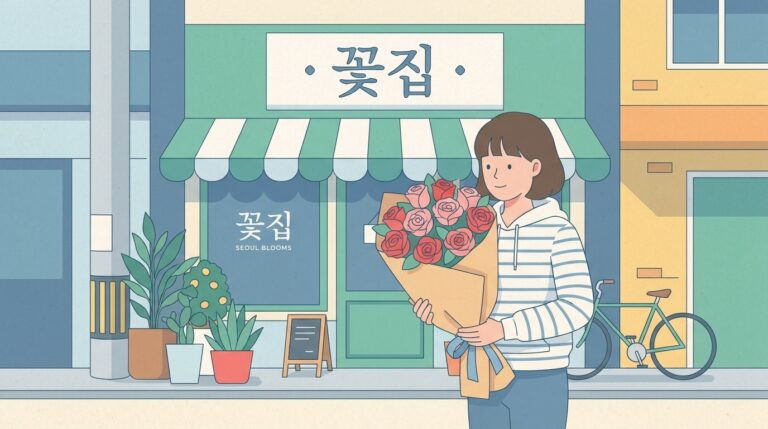
Picture this: It’s the third Monday of May in Sinchon, Seoul. The spring breeze is warm, the campus lawn is buzzing with laughter, and everywhere you look, college students are carrying single stems of crimson roses or lavish 20-stem bouquets wrapped in craft paper. Your Korean exchange buddy or language partner just turned 19 (which traditionally marks adulthood here!), and you want to join the celebration. You step into a cozy neighbourhood flower shop (꽃집 – kkotjip), heart pounding.
You want to ask for 20 fresh roses, congratulate them without sounding like a wedding proposal, and show respect for this huge life milestone. But sudden panic hits: Do I say ‘축하합니다’ or ‘축하해’? What if 20 roses looks too romantic? How do Koreans count flowers again?
You are not alone! Over the past ten years coaching international students in Seoul, this exact dilemma pops up every May. Today, we are breaking down everything you need to know about celebrating 성년의 날 (Coming of Age Day) with poise, warmth, and natural A2-level Korean. Let’s make sure your gift brings wide smiles and unforgettable memories!
Phase 2: Core Expressions Deep Dive
Here are three essential expressions you will need for this special day.
1. 성년의 날 축하해요! (Seongnyeonui nal chukahaeyo!)
- Pronunciation: Sung-nyun-ui nal choo-kah-hae-yo! (Sound analogy: Think of saying “sung” like a song you sung, “nyun” rhyming with ‘fun’, and “chukahaeyo” starting like “chew-car-hey-yo”).
- Meaning: Literal: “Coming of Age Day congratulations!” | Nuance: “Happy Coming of Age Day! Welcome to adulthood!”
- K-Culture Moment: You will hear this everywhere in campus dramas like Cheese in the Trap or Dear. M when juniors cross over into legal adulthood and receive cards from senior clubs (동아리 – dong-ari).
- Editor’s Insight: The ending
-해요(-haeyo) strikes the golden balance for A2 learners: polite, warm, and friendly without sounding like a corporate business letter.- Situation Spectrum: Casual: ⚠️ (Use ‘축하해’ for close friends) | Semi-formal: ✅ (Perfect for peers/classmates) | Formal: ⚠️ (For elders/speeches, use ‘축하드립니다’)
- 🤔 Think About It: In many Western cultures, turning 18 or 21 is celebrated individually on birthdays. In Korea, everyone who comes of age that year shares one collective holiday in May. How does celebrating adulthood as a communal group shift how people share gifts?
2. 장미 스무 송이 주세요. (Jangmi seumu song-i juseyo.)
- Pronunciation: Jahng-mee seu-moo song-ee joo-seh-yo.
- Meaning: Literal: “Rose twenty blossoms give please.” | Nuance: “Please give me twenty red roses.”
- K-Culture Moment: In almost every romantic slice-of-life K-Webtoon, the protagonist nervously counts individual stems in a glass jar at a boutique floral store.
- Editor’s Insight: Notice the counter 송이 (song-i). In Korean, individual flowers or grapes are counted with song-i, never with the generic item counter 개 (gae). Native counting numbers (열, 스물 -> 스무 송이) are used here!
- Situation Spectrum: Casual: 🚫 | Semi-formal: ✅ | Formal: ✅ (Polite enough for any shopkeeper).
- 🤔 Think About It: English says “twenty roses” directly, but Korean specifies the noun (장미), the number (스무), and the flower classifier (송이). How does counting things by their natural shape influence how we notice objects?
3. 멋진 어른이 된 걸 응원해요. (Meotjin eoreun-i doen geol eung-wonhaeyo.)
- Pronunciation: Muht-jeen uh-reun-ee dwen guhl oong-wun-hae-yo.
- Meaning: Literal: “I cheer on you becoming a cool adult.” | Nuance: “Rooting for you as you step into this wonderful new chapter as an adult!”
- K-Culture Moment: Seen frequently written inside handwritten pastel greeting cards exchanged between university club members or siblings.
- Editor’s Insight: The word 어른 (eoreun) carries deep respect in Korea. It does not just mean “someone above 19”; it implies emotional maturity, taking responsibility, and wisdom.
- Situation Spectrum: Casual: ⚠️ (Drop the
-요for best friends) | Semi-formal: ✅ | Formal: ⚠️- 🤔 Think About It: When does someone become a true adult in your home country? Is it defined by legal age, moving out, or starting a career?
Phase 3: Textbook Korean vs. Real Korean
Situation 1: Presenting the roses to your friend
- 📖 Textbook Korean: 이 꽃을 당신에게 선물로 드립니다. (I kkocheul dangsinege seonmullo deurimnida. – I present this flower to you as a gift.)
- 🗣️ Real Korean: 이거 성년의 날 선물이야! 받아! (Igeo seongnyeonui nal seonmuriya! Bada! – This is your Coming of Age gift! Here, take it!)
- 💡 Why the difference? Textbook phrases overuse formal pronouns like “당신” (dangsin), which sounds awkward or overly poetic in casual settings. Real peers use conversational demonstratives like 이거 (igeo – this).
Situation 2: Asking the florist to wrap the bouquet nicely
- 📖 Textbook Korean: 아름답게 포장하여 주시기 바랍니다. (Areumdapge pojanghayeo jusigi baramnida. – Please pack it beautifully.)
- 🗣️ Real Korean: 예쁘게 포장해 주세요! (Yeoppeuge pojanghae juseyo! – Please wrap it pretty!)
- 💡 Why the difference? In day-to-day shopping, short, soft requests ending in
-해 주세요(-hae juseyo) sound natural, polite, and comfortable.
Phase 4: K-Culture Deep Dive & Non-Verbal Manners
4-1. 눈치 (Nunchi) & Body Gestures
When handing over a bouquet in Korea:
1. Two-Handed Delivery (두 손으로 건네기): Even when giving flowers to a peer on a festive occasion, use both hands or support your right elbow with your left hand. It conveys sincerity and deliberate warmth.
2. Avoid Romantic Ambiguity: 20 roses are customary for Coming of Age Day, but giving red roses can sometimes trigger romantic flutter (심쿵 – simkung). If your recipient is purely a platonic friend, hand them over while smiling warmly and mentioning the occasion immediately: “성년의 날 축하해!”
4-2. The Holy Trinity of 성년의 날 Gifts
Why 20 roses? In Korea, Coming of Age Day comes with three traditional gifts:
* 장미 (Roses): Represents youthful passion and blooming potential.
* 향수 (Perfume): Represents leaving behind a pleasant scent/memory with others in society.
* 키스 (Kiss): Symbolizes responsible, mature romantic love (given strictly by partners!).
As friends or classmates, roses or sweet-smelling hand creams/scented candles are the most popular and welcome gestures!
Phase 5: Real-Life Roleplay Scenario
Setting: A florist shop near Hongik University Station. Mid-May, late afternoon.
Characters: You (Language Student) & Florist Boss (꽃집 사장님 – warm, helpful woman in her 50s).
- You: 안녕하세요! 성년의 날 꽃다발 보러 왔어요. (Annyeonghaseyo! Seongnyeonui nal kkotdabal boreo wasseoyo.)
- 🎭 Action: Bow lightly at a 15-degree angle as you enter.
- English: Hello! I came to look for a Coming of Age Day bouquet.
- Florist: 어서 와요! 친구 줄 거예요? (Eoseo wayo! Chingu jul geoyeyo?)
- 🎭 Action: Wiping garden shears and smiling warmly.
- English: Welcome! Is it for a friend?
- You: 네! 빨간 장미 스무 송이 포장해 주세요. (Ne! Ppalgan jangmi seumu song-i pojanghae juseyo.)
- 🎭 Action: Pointing gently towards the bucket of fresh red roses.
- English: Yes! Please wrap twenty red roses.
- Florist: 스무 살 축하구나! 메시지 카드도 써 줄까요? (Seumu sal chukaguna! Mesiji kadeodo sseo julkkayo?)
- 🎭 Action: Taking out a fresh bunch of roses and selecting a small card.
- English: Celebrating 20 years old! Shall I give you a message card too?
- You: 네, 좋아요! 카드에 뭐라고 쓰면 좋을까요? (Ne, joayo! Kadeue mworago sseumyeon joeulkkayo?)
- 🎭 Action: Leaning in with an inquisitive, grateful smile.
- English: Yes, please! What would be good to write on the card?
- Florist: ‘멋진 어른이 된 걸 축하해’라고 써 봐요! (Meotjin eoreun-i doen geol chukahae-rago sseo bwayo!)
- 🎭 Action: Handing over a pastel pink mini card and a pen.
- English: Try writing: ‘Congratulations on becoming a wonderful adult!’
- You: 정말 감사합니다. 예쁘게 적어 볼게요. (Jeongmal gamsahamnida. Yeoppeuge jeogeo bolgeyo.)
- 🎭 Action: Receiving the card with two hands.
- English: Thank you so much. I will write it nicely.
- Florist: 다 됐어요. 친구가 참 좋아하겠네! (Da dwaesseoyo. Chinguga cham joahagenne!)
- 🎭 Action: Handing over the wrapped bouquet with ribbon tie.
- English: All finished. Your friend will really love this!
🔀 Interactive Choice Point
The florist finishes wrapping the flowers and sets them on the counter. How do you accept them and pay?
- Choice A: Take the bouquet with one hand while tossing your card on the desk, saying “고마워!”
- Choice B: Receive the bouquet with both hands, bow, and say “감사합니다! 카드로 결제할게요.”
- Choice C: Look alarmed, whisper “너무 비싸요!” and ask for a 50% discount right before paying.
Choice A Feedback: [Bad] 🚫 '고마워' is informal반말 (banmal) and one-handed grabbing looks rude to elder shop owners.
Choice B Feedback: [Best] ✅ Holding the bouquet with two hands and politely offering your payment card shows stellar Korean etiquette!
Choice C Feedback: [Risk] ⚠️ Custom floral arrangements take time and labor; aggressively haggling on national holidays is frowned upon.
Phase 6: 10-Second Emotional Shadowing Drill
Practice these lines out loud! Follow the slashes (/) for natural breath pauses and adopt the emotional mindset in brackets.
[😊 기쁘고 활기차게 - Cheerful and Bright]
성년의 날 / 축하해요! / 장미꽃 받으세요!
(Seongnyeonui nal / chukahaeyo! / Jangmikkot badeuseyo!)
Happy Coming of Age Day! / Please receive these roses!-
[🌸 다정하고 따뜻하게 - Warm and Gentle]
스무 번째 생일이랑 / 성년의 날 / 둘 다 축하해!
(Seumu beonjjae saeng-irirang / seongnyeonui nal / dul da chukahae!)
Your 20th birthday / and Coming of Age Day / congratulations on both! -
[🤝 든든하고 진심 어린 - Supportive and Sincere]
멋진 어른이 된 걸 / 진심으로 / 응원해요!
(Meotjin eoreun-i doen geol / jinsimeuro / eung-wonhaeyo!)
Becoming a wonderful adult / from my heart / I am rooting for you!
Phase 7: K-Culture Mini Dictionary
- 성년의 날 (Seongnyeonui nal) | Coming of Age Day
Celebrated on the third Monday of May each year in South Korea to congratulate young people entering civil adulthood. - 송이 (Song-i) | Blossom / Stem counter
The mandatory noun counter for individual flowers or grape bunches (e.g., 장미 한 송이 = one rose; 장미 스무 송이 = twenty roses). - 어른 (Eoreun) | Adult / Grown-up
A culturally revered term implying not just chronological age, but mental poise, social dignity, and ethical responsibility. - 꽃다발 (Kkotdabal) | Bouquet / Bunch of flowers
Everyday compound word combining 꽃 (kkot – flower) and 다발 (dabal – bundle/sheaf).
Phase 8: Traveler’s Survival Kit
Top 3 Survival Phrases at the Flower Shop
- 이 장미 얼마예요? (I jangmi eolmayeyo?)
How much is this rose?
Pro Tip: Use this when picking single stems before committing to a full 20-stem wrap. - 리본 달아 주세요. (Ribon dara juseyo.)
Please add a ribbon to it.
Pro Tip: Korean florists create breathtaking ribbons with printed or hand-written greetings on request. - 영수증 버려 주세요. (Yeongsujeung beoryeo juseyo.)
Please dispose of the receipt for me.
Pro Tip: A frequent, practical counter phrase used across Korean cafes and shops.
Editor’s Travel Note
Planning to buy fresh flowers without spending a fortune? Visit the wholesale underground flower market near Express Bus Terminal or Yangjae Flower Market. If you are exploring central Seoul, download the 네이버 지도 앱 to search for nearby 꽃집 (kkotjip) with verified user reviews and real-time photos. In Korea, card payments are welcomed everywhere, even for a single stem!
Phase 9: “One Step Deeper” (Cultural Reflection)
In many global societies, growing up is seen as gaining personal autonomy: driving cars, living alone, and doing whatever you want. In South Korea, stepping into adulthood (어른이 됨) is traditionally viewed as taking up your place within the larger collective fabric. Becoming an adult means your words hold civic weight, your decisions protect younger peers, and your actions reflect on family and community. Gifting 20 roses is a shared communal affirmation that says: “We see your hard work growing up, and we welcome you warmly to the circle of responsible adults.”
💬 Your Turn: What was the single most symbolic gift or ritual you received when you reached adulthood in your home country? Share your stories below!
Phase 10: FAQ & Common Mistakes
Q: Does legal adulthood in Korea begin on Coming of Age Day or on the person’s birthday?
A: Legally, civil rights like voting take effect precisely on your birth date at age 19. However, the cultural and symbolic festival of adulthood is celebrated collectively on Coming of Age Day across universities and families in May.
Q: If I am just a classmate, is giving 20 roses seen as a romantic confession?
A: Not at all, as long as it happens around Coming of Age Day! It is standard practice among fellow club members, classmates, and study buddies. Just include a friendly message card to keep intentions transparent.
Q: Can I give artificial or preserved roses instead of real roses?
A: Yes! Preserved dried roses (드라이플라워 – deuraip-peullawo) or soap roses (비누꽃 – binukkot) are very trendy among Korean youth because they last for years without wilting.
🚨 Common Mistakes Alert Board
- Mistake 1: Counting flowers with ‘개’ (gae) -> “장미 스무 개 주세요” (Sounds unnatural).
Correct Action: Always use 송이 (song-i) -> “장미 스무 송이 주세요.” - Mistake 2: Using overly stiff formal endings with friends -> “성년이 되심을 진심으로 축하드립니다.”
Correct Action: Keep it natural for peers -> “성년의 날 축하해!” or “축하해요!” - Mistake 3: Forgetting to remove the price sticker on the packaging before presenting the gift.
Correct Action: Ask the clerk: “가격표 떼어 주세요” (Gagyeokpyo tteeo juseyo – Please remove the price tag).
Phase 11: Action Missions
- 🥉 Bronze Mission: Stand in front of your mirror, hold a pen as if it’s a flower, and practice saying “장미 스무 송이 주세요!” with confident pronunciation three times.
- 🥈 Silver Mission: Write a mock congratulatory mini-card in Korean for your favorite K-Pop idol or actor when they turn 20, using “멋진 어른이 된 걸 응원해요!”
- 🥇 Gold Mission: Walk into a local florist in Korea (or order online) and ask in Korean for a ribbon-wrapped flower bouquet using the polite phrase “예쁘게 포장해 주세요!”
- 🎮 K-Culture Quest: Watch an episode of a youth K-Drama set in university (like Weightlifting Fairy Kim Bok-joo) and spot how characters celebrate coming-of-age milestones with gifts.
Phase 12: Interactive Quiz Challenge
1. Situation Judgment: You are ordering flowers for your language partner. Which phrase correctly asks for 20 rose blossoms?
– (A) 장미 스무 명 주세요
– (B) 장미 스무 송이 주세요
– (C) 장미 스무 권 주세요
2. Fill in the Blank: Complete this friendly greeting:
“성년의 날 ________! (Congratulations on Coming of Age Day!)”
3. True or False: On Korean Coming of Age Day, young adults traditionally receive roses, perfume, and a kiss.
– [ ] True
– [ ] False
👉 Click to view answers and explanations!
- Answer: (B) 장미 스무 송이 주세요.
Explanation: Flowers are counted with 송이 (song-i). 명 (myeong) is for people, and 권 (gwon) is for books! - Answer: 축하해요! (or 축하해!)
Explanation: “성년의 날 축하해요!” is the quintessential A2 congratulatory phrase. - Answer: True.
Explanation: Roses (passion), perfume (lasting sweet influence), and a kiss (pure romance) make up the famous trio of Coming of Age Day symbols.







