

Phase 1: Empathy (Storytelling Opening)
안녕하세요! 매일한글 에디터입니다.
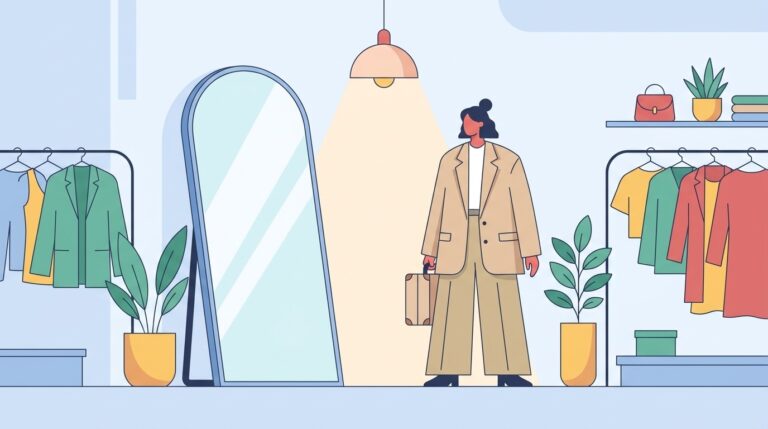
Picture this: You are walking along the trendy, tree-lined streets of Seongsu-dong or diving into the vibrant indie boutiques of Hongdae. Through the glass window, a tailored oversized blazer catches your eye. You step inside, gently slide it off the hanger, and slip it on. You step out in front of the full-length mirror. Your Korean friend—or the fashionable store clerk—is standing right nearby.
You want to ask: “Does this look good on me? Does this suit my style?”
Suddenly, your mind goes blank. You remember a stiff word from your textbook like “적합합니까?” (Is this suitable?), but you hesitate because you know it sounds like a civil engineer inspecting a bridge permit, not a shopper asking about fashion! You end up nervously smiling, pointing at your jacket, and mumbling in English.
We hear this exact frustration every single week from our A2-level learners at Daily Hangul. When shopping in Seoul, fashion isn’t just about size—it’s about vibe, tone, and harmony. Today, you’ll learn 3 genuine, everyday Korean phrases to ask whether an outfit looks flattering on you, read between the lines of Korean store etiquette, and shop with pure confidence like a local friend.
Phase 2: Core 3 Expressions In-Depth
1. 잘 어울려요? (Jal eoullyeoyo?)
- Pronunciation: Jal eoullyeoyo (Sounds like: Jahl uh-ool-lyuh-yo. Think of ‘Jal’ as ‘jalapeño’ without the ‘-apeño’, followed by a smooth liquid transition into ‘eoul-lyuh-yo’.)
- Meaning: Literal: “Does it harmonize well?” | Real Nuance: “Does this look good / flattering on me?”
- K-Culture Moment: Think of classic makeover montages in K-dramas like Business Proposal or Crash Landing on You. The main character steps out from behind the fitting room curtain, nervously twirls, and asks: “저… 잘 어울려요?” (Does this suit me?)
- Editor’s Insight: The root verb “어울리다” (eoullida) is one of the most culturally loaded words in the Korean language. It does not just mean “to fit physically”; it means to harmonize with your aura, your face, and your existing style.
- Situation Spectrum:
- Casual (Friends): ⚠️ (Drop ‘-요’: 잘 어울려?)
- Semi-formal (Clerk/Acquaintance): ✅ (잘 어울려요?)
- Formal (Official setting): ⚠️ (잘 어울립니까?)
- 🤔 Think About It: In English, we usually ask “Do I look good in this?” placing I as the subject. In Korean, the clothes and the person are viewed as a union harmonizing together. How does this subtle shift reflect community harmony over pure individualism?
2. 저한테 어때요? (Jeohante eottaeyo?)
- Pronunciation: Jeohante eottaeyo (Sounds like: Juh-hahn-teh uh-tteh-yo. The double ‘tt’ has a crisp, sharp pop like the ‘t’ in ‘stop’.)
- Meaning: Literal: “How is it toward me?” | Real Nuance: “What do you think of this on me?”
- K-Culture Moment: K-pop idols filming “Get Ready With Me” (GRWM) or Paris Fashion Week vlogs holding up two different scarves to the camera lens and asking fans: “여러분, 저한테 어때요?” (Guys, what do you think of this on me?)
- Editor’s Insight: While “잘 어울려요?” slightly invites a reassuring “Yes, it suits you!”, “저한테 어때요?” is an open-ended inquiry. It invites the listener to give you genuine style feedback, such as whether a different color or size might look better.
- Situation Spectrum:
- Casual (Friends): ⚠️ (Use ‘나’: 나한테 어때?)
- Semi-formal (Clerk/Acquaintance): ✅ (저한테 어때요?)
- Formal (Official setting): 🚫
- 🤔 Think About It: Notice the particle “한테” (hante, to/toward a person). Why do you think Korean often specifies the recipient of an action or state even in simple aesthetic questions?
3. 괜찮아요? (Gwaenchanhayo?)
- Pronunciation: Gwaenchanhayo (Sounds like: Gwen-chahn-nah-yo. The final ‘h’ in ‘chanh’ is silent and softly glides directly into ‘a’.)
- Meaning: Literal: “Is it fine / all right?” | Real Nuance: “Does this look okay, or is it a bit awkward?”
- K-Culture Moment: In variety shows like I Live Alone, when a celebrity tries on an unconventional or bold avant-garde piece and sheepishly glances at the crew asking: “이거… 진짜 괜찮아요?” (Is this really okay on me?)
- Editor’s Insight: This is the ultimate comfort phrase for A2 learners! When trying on clothes, raising your tone at the end of “괜찮아요?” signals: “I like it, but please let me know if it looks odd.”
- Situation Spectrum:
- Casual (Friends): ⚠️ (괜찮아?)
- Semi-formal (Clerk/Acquaintance): ✅ (괜찮아요?)
- Formal (Official setting): ✅ (괜찮습니까?)
- 🤔 Think About It: Asking “Is it fine?” in English can sometimes sound indifferent. In Korean, however, asking “괜찮아요?” demonstrates politeness and modesty by not assuming you look stunning right away.
Phase 3: Textbook Korean vs. Real Korean
Situation 1: Asking if an outfit fits your overall style
- 📖 교과서 한국어 (Textbook): 이 의복이 제 체형에 적합합니까? (I uibog-i je chehyeong-e jeokhaphambnikka? / Is this garment suitable for my body type?)
- 🗣️ 진짜 한국어 (Real-World): 이거 저한테 핏 괜찮아요? (Igeo jeohante pit gwaenchanhayo? / Does the fit look good on me?)
- 💡 왜 다를까?: Textbooks often overuse heavy Sino-Korean terms like ‘의복’ (garment) and ‘적합’ (suitable). Real Koreans naturally use modern conversational words like ‘옷’ (clothes) and the borrowed fashion term ‘핏’ (fit).
Situation 2: Asking if a color compliments your complexion
- 📖 교과서 한국어 (Textbook): 이 색상이 저의 안색과 조화를 이룹니까? (I saeksang-i jeo-ui ansaek-gwa johwa-reul irumnikka? / Does this color achieve harmony with my complexion?)
- 🗣️ 진짜 한국어 (Real-World): 이 색깔 저한테 잘 받아요? (I saekkkal jeohante jal badayo? / Does this color flatter my skin tone?)
- 💡 왜 다를까?: Native speakers use the dynamic verb “받다” (literally: to receive) to express that your skin catches and reflects the clothing’s color brightly. It is the signature phrase of modern Korean personal color analysis!
Phase 4: K-Culture Deep Dive & Non-Verbal Manners
4-1. 눈치 (Nunchi) & Fitting Room Gestures
When you emerge from a dressing room in a Korean boutique, paying attention to body language is just as important as the words:
* The Mirror Turn: Turn gently sideways or look over your shoulder into the mirror while lightly smoothing down the jacket or skirt waistline. This signals to the staff that you are assessing the silhouette and open to a dialogue.
* Reading the Clerk’s Nunchi:
* If they immediately exclaim: “어머, 완전 찰떡이에요!” (Oh my, it’s an absolute match!) with wide eyes, they genuinely think it flatters you.
* If they pause, gently touch their chin, and say: “고객님, 다른 색상도 한번 보실래요?” (Customer, would you like to see another color as well?), that is their polite, indirect Korean way of hinting: “This specific shade or cut isn’t doing you justice.”
4-2. The “Personal Color” (퍼스널 컬러) Phenomenon
In South Korea’s fashion capitals like Hannam-dong and Seongsu, the concept of Personal Color divides style into ‘Warm Tone’ (웜톤) and ‘Cool Tone’ (쿨톤). Asking if something suits you isn’t just about vanity; it is an aesthetic art form. Shop clerks take genuine pride in guiding you toward garments that make your face look bright, refreshed, and clear.
Phase 5: Real-World Roleplay Scenario
- Setting: A minimalist lifestyle boutique in Seongsu-dong. Soft indie R&B plays in the background, and industrial concrete racks display crisp linen shirts and oversized blazers.
- Characters:
- You: An eager traveler testing your Korean.
- Min-ji: A trendy, warm 20-something boutique stylist wearing chic horn-rimmed glasses.
Dialogue:
1. You: (거울 앞에서 자켓을 걸쳐보며) 저기요, 이거 저한테 잘 어울려요? (Geoul ap-eseo jaket-eul geolchyeobomyeo / Jeogiyo, igeo jeohante jal eoullyeoyo?)
🎭 (Trying on the blazer in front of the mirror) Excuse me, does this suit me well?
2. Min-ji: (미소를 지으며 다가와 옷깃을 정돈해준다) 와, 고객님! 어깨 라인이 딱 예쁘게 떨어지네요. (Miso-reul jieumyeo dagawa otgit-eul jeongdonhae-junda / Wa, gogaeknim! Eokkae rain-i ttak yeppeuge tteoreojineyo.)
🎭 (Approaches with a warm smile and straightens the lapels) Wow, customer! The shoulder line drapes so nicely on you.
3. You: (소매 끝을 만지작거리며) 진짜요? 근데 소매가 조금 길지 않아요? (Somae kkeut-eul manjijakgeorimyeo / Jinjjayo? Geunde somae-ga jogeum gilji anhayo?)
🎭 (Fiddling with the cuff) Really? But aren’t the sleeves a little bit long?
4. Min-ji: (소매를 자연스럽게 한 단 롤업해주며) 오버핏이라 이렇게 살짝 접으면 훨씬 힙해요! (Somae-reul jayeonseureopge han dan rol-eophae-jumyeo / Obeopit-ira ireohge saljjak jeob-eumyeon hwolssin hiphaeyo!)
🎭 (Naturally rolling up the cuff once) It’s an oversized fit, so folding it up slightly like this makes it look way more stylish!
5. You: (거울을 보며 고개를 끄덕인다) 아, 그렇네요! 바지랑도 색깔 괜찮아요? (Geoul-eul bomyeo gogae-reul kkeodeog-inda / A, geureohneyo! Baji-rangdo saekkkal gwaenchanhayo?)
🎭 (Nodding while checking the reflection) Ah, you’re right! Does the color go well with my pants too?
6. Min-ji: (두 손을 모으고 감탄하며) 네! 오늘 입고 오신 크림색 팬츠랑 완전 찰떡이에요. (Du son-eul moeugo gamtanhamyeo / Ne! Oneul ibgo osin keurimsaek paencheurang wanjeon chaltteog-ieyo.)
🎭 (Clasping hands in admiration) Yes! It matches like sticky rice with the cream-colored pants you wore today.
7. You: (환하게 웃으며 지갑을 꺼낸다) 마음에 쏙 들어요. 이걸로 할게요! (Hwanhage useumyeo jigap-eul kkeonaenda / Maeum-e ssok deureoyo. Igeollo halgeyo!)
🎭 (Smiling brightly and reaching for your wallet) I completely love it. I’ll take this one!
8. Min-ji: (카운터로 옷을 가져가며) 탁월한 선택이세요! 예쁘게 포장해 드릴게요. (Kaunteo-ro ot-eul gajyeogamyeo / Tag-wolhan seontaeg-iseyo! Yeppeuge pojanghae deurilgeyo.)
🎭 (Guiding the blazer to the counter) Excellent choice! I’ll wrap it up beautifully for you.
🔀 Interactive Choice Point
You step out in a pair of neon green trousers. You feel uncertain. What do you say to Min-ji?
* Choice A: “이거 저한테 어때요? 솔직하게 말해주세요!” (How does this look on me? Please be honest!)
* Choice B: “이 바지 이상해요. 다른 손님도 이거 사요?” (These pants are weird. Do other customers even buy this?)
* Choice C: “이 의류가 적합합니까?” (Is this apparel suitable?)
Feedback:
* Choice A [Best]: Native, engaging, and friendly! Asking for honesty with a smile invites real styling advice without putting the store down.
* Choice B [Bad]: Direct and blunt! Calling the store’s inventory ‘이상해요’ (weird) can make the shopkeeper feel defensive or embarrassed.
* Choice C [Risk]: Far too mechanical. The clerk will understand what you mean, but it feels like a formal inspection questionnaire.
Phase 6: 10-Second Emotion Shadowing Drill
Read these aloud while mimicking the emotion tag. Pauses are indicated by /.
[😊 기쁘고 설레며 - Excited & Cheerful]
“저기요, / 이거 / 저한테 / 잘 어울려요?”
(Jeogiyo, / igeo / jeohante / jal eoullyeoyo?)
“Excuse me, does this suit me well?”-
[🥺 살짝 망설이며 - Hesitant & Seeking Advice]
“혹시 / 색깔이 / 저한테 / 너무 튀지 않아요?”
(Hoksi / saekkkari / jeohante / neomu twiji anhayo?)
“By any chance, does this color stand out too much on me?” -
[✨ 확신과 감탄으로 - Amazed & Confident]
“와, / 핏이 / 저한테 / 진짜 찰떡이에요!”
(Wa, / pit-i / jeohante / jinjja chaltteog-ieyo!)
“Wow, the fit matches me like sticky rice!”
Phase 7: K-Culture Mini Dictionary
-
찰떡 (Chaltteok)
Meaning: Sticky glutinous rice cake.
Usage: Used metaphorically in fashion and makeup (찰떡이다 / 찰떡궁합) to describe an outfit or lipstick shade that sticks to you perfectly, looking like it was custom-made for you. -
오버핏 (Obeopit)
Meaning: Oversized fit.
Usage: The dominant aesthetic across Korean street fashion. Clerks will frequently say: “오버핏으로 나와서 편해요” (It was designed with an oversized fit, so it’s super comfy). -
톤다운 (Tonda-un)
Meaning: Toned-down / Muted colors.
Usage: In Korean seasonal styling, autumn and winter palettes favor muted, earthy shades over glaring bright colors. -
핏 (Pit)
Meaning: The silhouette/drape of clothing.
Usage: Rather than just saying “사이즈” (size), Koreans evaluate whether the “핏” looks slim, boxy, or tailored.
Phase 8: Survival Kit for Travelers
Top 3 Survival Phrases
-
이거 입어봐도 돼요? (Igeo ib-eobwado dwaeyo?)
Romanization: Igeo ib-eobwado dwaeyo?
Pro Tip: Always ask this before taking clothes into a fitting room! Some delicate knitwear or white tops cannot be tried on. -
다른 색상도 있어요? (Dareun saeksangdo isseoyo?)
Romanization: Dareun saeksangdo isseoyo?
Pro Tip: If the design suits your body but the color washes you out, use this to see the remaining inventory. -
이걸로 할게요. (Igeollo halgeyo.)
Romanization: Igeollo halgeyo.
Pro Tip: The cleanest, most natural way to say “I will take this item” when approaching the checkout counter.
Editor’s Travel Note
- Fitting Room Manners: In Korea, fitting rooms usually have a small raised wooden deck or mat. Take off your outdoor shoes before stepping on the platform. Female shoppers are often handed a disposable non-woven Face Cover (페이스 커버) to prevent makeup stains when slipping clothes over the head.
- Location Navigation: To discover hidden underground boutiques and Seongsu pop-up showrooms, check our recommended spots directly on the [Naver Map App Download and Seoul Shopping Guide] rather than relying on Google Maps, which lacks real-time walking routes in Korea.
Phase 9: Deep Dive (A Humanities Thought)
In Western individualist aesthetics, fashion is frequently viewed as a statement of self-distinction: “Does this make me stand out?” In Korean culture, however, the central term for matching—어울림 (Eoullim)—stems from ancient roots signifying harmony, fellowship, and balance with the surrounding world. When you ask “잘 어울려요?”, you are asking whether the clothing respects your authentic self while harmonizing pleasantly with the environment you move through. It reflects a worldview where beauty is not solitary, but relational.
💬 Your Turn: What is your favorite piece of clothing, and does it prioritize standing out or harmonizing with your surroundings? Share your thoughts below in Korean or English!
Phase 10: FAQ & Common Mistakes
Q: What if a store clerk says something looks good, but I feel they are just trying to make a sale?
A: Use your Nunchi! If you want a more nuanced opinion, ask: “이 색이랑 저 색 중에 어떤 게 더 나아요?” (Between this color and that color, which one is better?). This forces the clerk to compare two items rather than giving a generic compliment.
Q: Can I take photos of myself in the fitting room to check with my friends?
A: In most modern independent boutiques, mirror selfies are not only allowed but celebrated! However, high-end department stores or designer runway sections may have a “No Photography” sticker near the mirror. Always look for signage first.
Q: What should I say if I try something on and it definitely doesn’t suit me?
A: You don’t need an elaborate excuse. Just hand it back politely and say: “조금 더 둘러볼게요. 감사합니다!” (I will look around a little more. Thank you!). It is graceful and universally understood.
🚨 Common Mistakes Alert!
- Mistake: Saying “저 예뻐요?” (Am I pretty?) to the clerk instead of “옷이 잘 어울려요?”.
Correct Action: Asking “저 예뻐요?” sounds like you are directly fishing for compliments on your face! Always anchor the compliment to the clothes: “잘 어울려요?”. - Mistake: Dropping “-요” and saying “어때?” (How is it?) to staff.
Correct Action: Even if the clerk looks younger than you, always maintain polite language (Jon-daet-mal): “어때요?”. - Mistake: Walking into the fitting room with your outdoor shoes on.
Correct Action: Look down at the entrance. If you see slippers or a raised wooden floor, leave your shoes on the tiled floor outside.
Phase 11: Action Mission & Engagement
- 🥉 Bronze Mission (Solo): Stand in front of your bedroom mirror wearing your favorite outfit. Say out loud three times with natural rising intonation: “이거 저한테 잘 어울려요?”
- 🥈 Silver Mission (Social): Take a quick mirror selfie in your favorite jacket. Post it on your Instagram Story with the sticker text: “저한테 잘 어울려요? (Does this suit me?)” and tag
@DailyHangul! - 🥇 Gold Mission (Real World): The next time you visit a Korean clothing shop or thrift store, ask the staff: “저기요, 이거 저한테 어때요?” and pay attention to their reply!
- 🎮 K-Culture Mission: Watch an episode of a modern K-drama makeover scene. Listen carefully for the moment someone says “어울려요” or “찰떡”. Comment the drama title below!
Phase 12: Interactive Quiz Challenge
Q1. You are trying on a sweater in a Hongdae shop. You want to ask the friendly clerk if the color looks flattering on your skin tone. What is the most natural Korean phrase?
a) 이 색깔 제 얼굴에 적합합니까?
b) 이 색깔 저한테 잘 받아요?
c) 저 얼굴 예뻐요?
d) 이거 다른 손님한테 팔았어요?
Click to view Answer & Explanation
Correct Answer: b) 이 색깔 저한테 잘 받아요?
Explanation: Using “잘 받아요” is the authentic, native way to ask if a garment’s color compliments your natural complexion and personal color tone. Option (a) is overly stiff and formal, option (c) asks if your face is pretty, and option (d) asks if they sold it to someone else!
Q2. Fill in the blank with the trendy Korean expression meaning “It matches you like sticky rice”:
“와, 고객님! 이 바지 고객님한테 완전 _________이에요!”
Click to view Answer & Explanation
Correct Answer: 찰떡 (Chaltteok)
Explanation: “찰떡” refers to glutinous rice cakes that stick firmly. In fashion slang, “완전 찰떡이에요” means the piece is an absolute match made in heaven for your style.
Q3. [True / False] In Korean boutiques, it is polite to keep your shoes on inside the fitting room unless someone yells at you.
Click to view Answer & Explanation
Correct Answer: False
Explanation: Korean fitting rooms almost always feature a raised floor, mat, or indoor slippers. Taking off your street shoes before stepping onto the platform is a core cultural etiquette rule to keep clothes clean!







