

안녕하세요! 매일한글 에디터입니다.
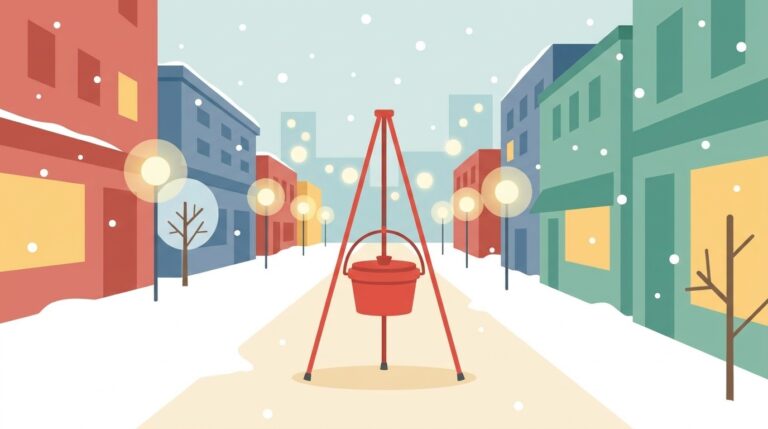
Imagine this: It is mid-December in downtown Seoul. The biting Siberian wind (Kkot-saem-chu-ui or year-end freeze) is biting your cheeks as twinkling holiday lights drape the trees around Myeongdong and Gwanghwamun. Through the ambient chatter and holiday tunes, you hear a rhythmic, crystal-clear chime: Clang-clang-clang. Ahead stands a volunteer in a bright red padded coat beside a tripod hanging a scarlet kettle—the iconic Salvation Army pot (Gusegun Jaseon-naembi).
You reach into your pocket, pull out a warm cup of coffee or a donation envelope, and step forward. But suddenly, your mind freezes. What do you actually say? If you say “돈 받으세요!” (Take this money!), you sound like a haughty drama villain tossing cash across a table. If you say “불우이웃을 돕고 싶습니다” (I want to help the underprivileged), you sound like a robotic 1980s public broadcast announcer.
Many of our B2-level learners tell us that while they can comfortably order barbecue and book train tickets, participating in civic life—like charity, fundraising, and year-end community warmth—leaves them feeling socially tongue-tied. Giving back in Korea is steeped in a delicate balance of humility, communal solidarity (Jeong), and subtle linguistic politeness. In this lesson, built on real feedback from seasoned expats and volunteers in Seoul, you will master authentic, heartwarming phrases so you can share warmth like a true local.
1. 작은 정성이지만 보탬이 되었으면 좋겠어요. (한글)
- Pronunciation: [Jageun jeongseong-ijiman botaemi doeeosseumyeon jokgesseoyo.] (Pronounce bo-taem like “boh-tame”, evoking the image of gently adding a small layer of support.)
- Meaning:
- Literal: It is small sincerity, but I hope it becomes an addition.
- Real Nuance: “It’s not much, but I hope this little gesture can help out.”
- K-Culture Moment: Seen frequently in slice-of-life K-dramas like Hospital Playlist or Reply 1988, where a humble neighbor hands an envelope or warm side-dish (banchan) to another, downplaying their own generosity to keep the recipient comfortable.
- Editor’s Insight: The word 정성 (jeongseong) translates to genuine care, devotion, or heartfelt effort, while 보탬 (botaem) comes from the verb 보태다 (to supplement/add). In Korean culture, minimizing your own contribution is the highest form of grace. Saying “I am giving you a lot” feels arrogant; framing it as “a small addition” shows emotional intelligence (Nunchi).
- Situation Spectrum:
- Casual (with close peers): ⚠️ (작지만 보탬이 됐으면 해)
- Semi-formal (street fundraisers, NGOs): ✅ (작은 정성이지만 보탬이 되었으면 좋겠어요)
- Formal (official speeches/press): ✅ (작은 정성이지만 큰 보탬이 되기를 바랍니다)
- 🤔 Think About It: In your home country, is it customary to state the value of a donation or to downplay it? How does verbal modesty change how the receiver feels?
2. 좋은 곳에 써 주세요. (한글)
- Pronunciation: [Joeun gose sseo juseyo.] (Pronounce sseo with a tight, crisp “ss” sound, like the sharp s in “sun”.)
- Meaning:
- Literal: Please use [this] in a good place.
- Real Nuance: “Please make sure this goes to a worthy cause / those who need it most.”
- K-Culture Moment: When celebrities or ordinary citizens donate to relief organizations during flood or winter relief campaigns on KBS or MBC news specials, this phrase is invariably spoken as they hand over the ceremonial funds.
- Editor’s Insight: In English, you might say “Put this toward a good cause.” In Korean, 좋은 곳 (a good place) is a metaphor for vulnerable communities, warm meals, winter briquettes (yeontan), or children’s medical care. It entrusts the volunteer or organization with moral integrity while expressing pure philanthropic intent.
- Situation Spectrum:
- Casual: 🚫 (Too transactional/impersonal for private friends)
- Semi-formal: ✅ (좋은 곳에 써 주세요)
- Formal: ✅ (부디 뜻깊고 좋은 곳에 쓰이길 바랍니다)
- 🤔 Think About It: Notice the passive and indirect nature of 좋은 곳. Why do you think Korean uses spatial metaphors (place) rather than naming specific individuals (people) in charitable speech?
3. 추운 날씨에 고생이 많으십니다. (한글)
- Pronunciation: [Chuun nalssie gosaengi maneusimnida.] (Flow gosaeng-i smoothly: go-seng-ee, emphasizing empathy.)
- Meaning:
- Literal: In this cold weather, your hardships are plentiful.
- Real Nuance: “Thank you so much for your hard work out here in the freezing cold.”
- K-Culture Moment: Characters walking past community workers in dramas like My Mister, bowing slightly and offering a canned warm drink while acknowledging their physical dedication.
- Editor’s Insight: Year-end fundraising in Korea happens outdoors in sub-zero winds. Koreans place immense cultural value on acknowledging someone’s 고생 (toil / physical hardship). Validating a street volunteer’s discomfort before making your donation bridges the gap from a mere monetary transaction to genuine human connection (Jeong).
- Situation Spectrum:
- Casual: ⚠️ (추운데 고생 많아 – only to younger folks or very close friends)
- Semi-formal: ✅ (추운 날씨에 수고 많으세요)
- Formal: ✅ (추운 날씨에 고생이 참 많으십니다)
- 🤔 Think About It: Does your language have a direct equivalent for acknowledging another person’s labor (gosaeng), or do you usually just say “Thank you”?
Phase 3: 교과서 한국어 vs 진짜 한국어
Situation 1: Offering your donation at the charity kettle
- 📖 교과서 한국어 (Textbook):
- 저는 불우이웃을 위해 기부하고 싶습니다. (Jeoneun buruiuiseul wihae gibuhago sipseumnida. / “I want to donate for underprivileged neighbors.”)
- 🗣️ 진짜 한국어 (Real Native Talk):
- 얼마 안 되지만 좋은 일에 보태 주세요. (Eolma an doejiman joeun ire botae juseyo. / “It’s not much, but please put this toward the good work.”)
- 💡 왜 다를까? (Why the difference?):
- Modern Korean speakers avoid labeling people directly as 불우이웃 (underprivileged neighbors) in casual speech because it can feel patronizing. Instead, native speakers focus on the positive action (좋은 일) and modesty (얼마 안 되지만).
Situation 2: Expressing why you joined a volunteer activity
- 📖 교과서 한국어 (Textbook):
- 저는 사회에 봉사활동을 하려고 왔습니다. (Jeoneun sahoe-e bongsahwaldongeul haryeogo watseumnida. / “I came to do volunteer activities for society.”)
- 🗣️ 진짜 한국어 (Real Native Talk):
- 연말에 작은 온정이라도 나누고 싶어서 참여했어요. (Yeonmare jageun onjeong-irado nanugo sipeoseo chamyeohaesseoyo. / “I joined because I wanted to share a little warmth this holiday season.”)
- 💡 왜 다를까? (Why the difference?):
- 사회에 봉사 sounds like an application essay for civil service. In natural spoken Korean at the B2 level, evocative seasonal vocabulary like 온정을 나누다 (to share warm affection) paints a much warmer, community-minded picture.
Phase 4: K-Culture 딥다이브 & 비언어적 매너
4-1. 눈치 (Nunchi) & Body Language: The Art of Humble Giving
- Two-Handed Delivery (Du Son): When dropping money into the Salvation Army kettle (자선냄비) or handing a donation envelope to an NGO worker, never toss it with one hand. Place both hands lightly on the bill or envelope, or support your right wrist/forearm with your left hand. This physicalizes respect.
- The Sincere 15-Degree Bow: Don’t just drop money and walk away abruptly. Make brief, gentle eye contact, drop the donation, and bow your head slightly around 15 degrees.
- Pocket Warmer Gesture (Hot-pack Jeong): It is a beloved winter tradition in Korea to hand an unopened, shakeable heat pack (핫팩) or a warm canned honey-citron tea (꿀유자) from the convenience store to the outdoor volunteer along with your donation. It speaks louder than words.
4-2. Cultural Code Analysis: The Iconic Red Kettle & “Fruit of Love”
If you visit Korea between December 1st and 31st, you will encounter two omnipresent charity symbols:
1. 구세군 자선냄비 (Salvation Army Kettle): Established in Korea in 1928, the ringing brass bell (종소리) and red metal pot are considered the definitive acoustic herald of winter. Today, almost all kettles feature cashless QR-code terminals alongside cash slots, demonstrating Korea’s high-tech philanthropy.
2. 사랑의 열매 (Fruit of Love): This three-cherry red badge worn on lapels by news anchors, celebrities, and subway riders represents Community Chest of Korea (사회복지공동모금회). The three red fruits symbolize myself, my family, and my neighbors, united by a stem of community love. Wearing or supporting it reflects 품앗이 (pum-asi)—Korea’s historical agrarian philosophy of mutual community resilience.
Phase 5: 실전 롤플레이 시나리오
Setting: Gwanghwamun Square, Seoul. Snowflakes are beginning to fall. Volunteer Min-ji stands beside a red Salvation Army kettle, ringing a small brass bell while wearing padded red gloves.
- 민지 (Min-ji): 따뜻한 손길을 기다립니다! 이웃들에게 희망을 전해 주세요! (Ttatteuthan songireul gidarimnida! Iutdeurege huimang-eul jeonhae juseyo!)
🎭 Clanging bell rhythmically with a welcoming smile.
“Waiting for warm hands! Please deliver hope to our neighbors!” - You: 안녕하세요! 날씨가 진짜 춥죠? (Annyeonghaseyo! Nalssiga jinjja chupjyo?)
🎭 Approaching gently, holding a warm can of tea and a donation.
“Hello! The weather is really cold, isn’t it?” - 민지 (Min-ji): 아, 네! 발이 조금 시렵긴 하지만 괜찮습니다! (A, ne! Bari jogeum siryeopgin hajiman gwaenchansseumnida!)
🎭 Smiling warmly through her earmuffs.
“Ah, yes! My feet are a bit chilly, but I’m completely fine!” - You: 추운 날씨에 수고가 너무 많으세요. 이거 따뜻할 때 드세요. (Chuun nalssie sugoga neomu maneuseyo. Igeo ttatteushal ttae deuseyo.)
🎭 Handing over the warm canned drink with both hands.
“You’re working so hard in this cold weather. Please drink this while it’s hot.” - 민지 (Min-ji): 어머나, 정말 감사합니다! 따뜻하게 잘 마실게요! (Eomeona, jeongmal gamsahamnida! Ttatteuthage jal masilgeyo!)
🎭 Bowing deeply, visibly touched.
“Oh my goodness, thank you so much! I will enjoy it warmly!” - You: 그리고 작은 정성이지만 좋은 곳에 쓰였으면 좋겠습니다. (Geurigo jageun jeongseong-ijiman joeun gose sseuyeosseumyeon jokgesseumnida.)
🎭 Slipping an envelope into the red kettle using both hands.
“And though it’s a small token, I hope it will be used for a good cause.” - 민지 (Min-ji): 소중한 후원금 감사드립니다. 꼭 필요한 이웃들에게 잘 전달할게요! (Sojunghan huwongeum gamsadeurimnida. Kkok piryohan iutdeurege jal jeondalhalgeyo!)
🎭 Clasping hands together in gratitude.
“Thank you so much for this precious donation. We will deliver it faithfully to neighbors in need!” - You: 네, 감기 조심하시고 따뜻한 연말 보내세요! (Ne, gamgi josimhasigo ttatteuthan yeonmal bonaeseyo!)
🎭 Bowing 15 degrees and stepping back with a friendly wave.
“Yes, stay safe from the cold and have a warm holiday season!”
🔀 인터랙티브 분기점 (Interactive Branching Point)
Right after Min-ji thanks you for your drink, how will you hand over your donation? Choose your line:
- Option A: “얼마 안 되지만 겨울철 난방비 지원에 작은 보탬이라도 되면 좋겠어요.” (Eolma an doejiman gyeoulcheol nanbangbi jiwone jageun botaemirado doemyeon jokgesseoyo. / It’s not much, but I hope it serves as a small help toward winter heating costs.)
- Option B: “자, 여기 돈 받으세요! 제가 기부 많이 하죠?” (Ja, yeogi don badeuseyo! Jega gibu mani hajyo? / Here, take this money! I donate a lot, right?)
- Option C: “이 돈으로 불우이웃을 꼭 구원해 주시길 바랍니다.” (I doneuro buruiuiseul kkok guwonhae jusigil baramnida. / With this money, I hope you strictly save the pitiful neighbors.)
Feedback:
* Option A (Best! ⭐⭐⭐): Flawless B2-level natural Korean! Mentioning 겨울철 난방비 (winter heating assistance) and softening it with 작은 보탬 demonstrates profound cultural understanding and empathy.
* Option B (Bad! ❌): Major social blunder. Bragging about money violates the foundational Korean virtue of humility (겸양). You will make the volunteer cringe.
* Option C (Risk! ⚠️): Overly theatrical and unintentionally patronizing. The word 구원 (salvation/rescue) sounds like a historical religious crusade or fantasy film dialogue, rather than modern street philanthropy.
Phase 6: 10초 감정 섀도잉 드릴 (10-Second Shadowing Drills)
Practice these lines out loud with the designated cadence and emotional tone. The slashes / indicate brief pauses for breath and rhythm.
[😊 온화하고 겸손하게 - Warm & Modest]- “작은 정성이지만 / 꼭 필요한 곳에 / 보탬이 되었으면 좋겠어요.”
(Jageun jeongseong-ijiman / kkok piryohan gose / botaemi doeeosseumyeon jokgesseoyo.)
- “작은 정성이지만 / 꼭 필요한 곳에 / 보탬이 되었으면 좋겠어요.”
[🥺 진심 어린 배려와 걱정 - Sincere Empathy]- “날씨가 많이 추운데 / 감기 조심하시고 / 수고하세요!”
(Nalssiga mani chuunde / gamgi josimhasigo / sugohaseyo!)
- “날씨가 많이 추운데 / 감기 조심하시고 / 수고하세요!”
[🤝 밝고 활기찬 연대의식 - Bright & Cheerful Community Spirit]- “모두가 따뜻한 겨울을 / 보낼 수 있으면 / 참 좋겠습니다.”
(Moduga ttatteuthan gyeoureul / bonael su isseumyeon / cham jokgesseumnida.)
- “모두가 따뜻한 겨울을 / 보낼 수 있으면 / 참 좋겠습니다.”
Phase 7: K-Culture 미니 사전
- 십시일반 (Sipsiilban / 十匙一飯)
- Meaning: “Ten spoons make one bowl of rice.”
- Usage: The definitive Korean idiom for crowdfunding and grassroots charity. Used when individuals pool small amounts of money or effort to create a substantial life-changing fund for someone in crisis.
- 성금 (Seonggeum / 誠金)
- Meaning: Sincere money / Charitable contribution.
- Usage: Unlike standard 기부금 (donation fund), 성금 specifically emphasizes the heartfelt sincerity behind the contribution. You will see terms like 이웃돕기 성금 on TV and bank transfer options.
- 온정 (Onjeong / 溫情)
- Meaning: Warmhearted affection / Compassion.
- Usage: Often paired with 나누다 (to share) or 베풀다 (to bestow). Used in corporate or community headlines: 연말을 맞아 온정의 손길을 전하다 (Extending a hand of warm compassion for the year-end).
- 재능기부 (Jaeneunggibu / 才能寄付)
- Meaning: Talent donation / Pro bono service.
- Usage: Very popular among young Koreans. If a designer creates free posters for a local shelter, or a bilingual speaker translates for non-profit cultural events, they call it 재능기부.
Phase 8: 여행자를 위한 생존 키트
Survival Expressions TOP 3
- 혹시 카드 결제나 제로페이도 되나요?
(Hoksi kadeu gyeoljena jeropeido doenayo? / “Excuse me, do you accept card payment or ZeroPay as well?”)
Pro Tip: Modern Korean red kettles and donation boxes have NFC touch pads and QR codes! Ask this if you aren’t carrying physical paper currency. - 영수증 발급도 가능한가요?
(Yeongsujeung balgeupdo ganeunghangayo? / “Is it possible to receive a donation receipt?”)
Pro Tip: For long-term residents and foreign workers in Korea, donations qualify for year-end tax settlements (연말정산). - 날씨가 너무 춥죠? 따뜻한 거 드시고 힘내세요.
(Nalssiga neomu chupjyo? Ttatteuthan geo deusigo himnaeseyo. / “It’s freezing, isn’t it? Please have something warm and keep your spirits up.”)
Pro Tip: The ultimate phrase to pair with a hot drink for street volunteers outside subway exits.
Editor’s Travel Note
- Cashless Korea Reality: Most Koreans carry zero physical banknotes. If you want to donate to street kettles, ensure your banking app supports camera scanning for Toss, KakaoPay, or ZeroPay. Check out our guide on how to complete the 네이버 지도 앱 다운로드 to locate major charity spots and community centers in Seoul.
- Subway Stations to Experience Festive Philanthropy: Visit Myeongdong Station (Line 4, Exit 6), Jonggak Station (Line 1), or Sinchon Station (Line 2) around 5 PM to 7 PM in December. The atmosphere of chime bells, roasted sweet potatoes (gun-goguma), and festive charity is an unforgettable winter memory.
Phase 9: “한 발 더 깊이” (생각 질문)
In Korean history, community aid was never considered a top-down condescension from the wealthy to the destitute; rather, it was framed as horizontal survival. From historical village pacts like Hyangyak (향약) and cooperative labor arrangements like Pumasi (품앗이), Koreans internalized that one family’s misfortune affects the entire collective ecosystem. When the financial crisis hit in 1997, millions of everyday citizens stood in line for hours to donate their personal gold rings and wedding jewelry (Geum-mo-a-gi Undong) to pay off national debt. Giving in Korea is rooted in Jeong (정)—an unspoken, reciprocal cord of human warmth. When you say “작은 정성이지만 보탬이 되었으면 좋겠어요”, you are not merely giving cash; you are weaving yourself into that ancient tapestry of mutual endurance.
💬 Your Turn: In your home culture, what is the core philosophy behind donating? Is it treated as a private personal duty, a religious obligation, or a collective community ritual? Share your thoughts below in Korean or English!
Phase 10: FAQ & 오해 방지 (FAQ Schema)
Q: Can non-Koreans or tourists donate to the Salvation Army kettle or street funds?
A: Absolutely yes! Anyone can drop cash, use domestic QR payment codes, or offer warm drinks. Volunteers will be delighted and deeply appreciative of your kindness.
Q: Is it considered offensive if I can only donate a very small amount, like 1,000 KRW ($0.75)?
A: Not at all! The proverb 십시일반 (every single spoon counts) is deeply respected in Korea. Koreans genuinely value the act and heart (정성) far more than the figure. Dropping a single 1,000 won bill with two hands and a bow is far more esteemed than carelessly tossing a 50,000 won bill.
Q: What should I avoid saying when making a donation in Korea?
A: Never use blunt commands like “이거 받으세요” (Take this) or condescending phrases like “불쌍해서 드립니다” (I’m giving this because I pity you). Keep your speech centered around mutual warmth and modesty.
🚨 흔한 실수 (Common Mistakes TOP 3)
- Mistake: Handing cash or an envelope with only one hand while looking away.
Correct Action: Use both hands (두 손), make warm eye contact, and offer a light head nod. - Mistake: Loudly announcing how much money you put in to bystanders.
Correct Action: Keep your donation private and discreet. Modesty is celebrated as true virtue. - Mistake: Addressing the volunteer as “아줌마” (middle-aged woman) or “저기요” (Hey there).
Correct Action: Use polite, respectful callouts like “봉사자님” (Respected volunteer) or simply open with “안녕하세요! 날씨 추운데 고생 많으세요.”
Phase 11: 액션 미션 & 참여 유도
- 🥉 Bronze Level (Solo Drill): Stand in front of your mirror. Hold a warm mug with both hands, bow 15 degrees, and practice saying: “작은 정성이지만 좋은 곳에 써 주세요” smoothly 5 times.
- 🥈 Silver Level (Social Share): The next time you spot a year-end donation box or kettle in Korea or on a K-Drama screen, snap a photo (respecting privacy) or screenshot, and share it on Instagram with the caption: “추운 날씨에 수고 많으십니다! 따뜻한 온정을 나눠요.”
- 🥇 Gold Level (Real-Life Champion): Visit an actual outdoor kettle or community volunteer booth in Korea this December. Hand over a donation or a warm 1,000 KRW canned beverage using our Phase 5 roleplay lines!
- 🎮 K-Culture Media Mission: Watch the classic winter episodes of variety shows like Infinite Challenge (무한도전) or Hangout with Yoo (놀면 뭐하니?) during their “Briquet Delivery Volunteer” (연탄 나르기 봉사) specials. Listen carefully for how cast members use the verb 보태다 and the noun 온정!
Phase 12: 인터랙티브 퀴즈 챌린지
Quiz 1. Situation Judgment
You are passing by a Salvation Army kettle in front of Sinchon Station on a freezing night. Which of the following is the most natural, polite way to hand your donation to the shivering volunteer?
* A) “여기 돈 넣을 테니까 잘 쓰세요.”
* B) “추운데 고생 많으십니다. 작은 보탬이 되었으면 좋겠어요.”
* C) “불우한 사람들을 내가 많이 도와줄게요.”
👉 Click to reveal Answer & Explanation
Answer: B
Explanation: Option B pairs the empathetic recognition of physical labor (고생 많으십니다) with modest phrasing (작은 보탬이 되었으면 좋겠어요). Option A sounds curt and commanding, while Option C sounds self-aggrandizing and patronizing.
Quiz 2. Fill-in-the-Blank
Complete the four-character idiom that means “ten spoons come together to make one bowl of rice” (crowdfunding mutual aid):
* [ ][ ]일반 (Romanization: [ ][ ]-il-ban)
👉 Click to reveal Answer & Explanation
Answer: 십시 (Sipsi) -> 십시일반 (Sipsiilban)
Explanation: 십시일반 (十匙一飯) embodies the collective spirit of pooling small resources to achieve a meaningful, warm impact for neighbors in need.
Quiz 3. Cultural True or False
True or False: In contemporary Korea, street donation pots like the Salvation Army kettles only accept cash paper bills, so you cannot participate if you only have a credit card or smartphone.
👉 Click to reveal Answer & Explanation
Answer: False
Explanation: Virtually all major Salvation Army kettles and year-end charity booths across Korean metropolitan hubs are equipped with digital QR codes (ZeroPay, KakaoPay, Toss) and NFC card readers for tap-and-go contactless donations!







