

Phase 1: Empathy (Story Opening)
안녕하세요! 매일한글 에디터입니다. (Hello! This is your Daily Hangul editor.)
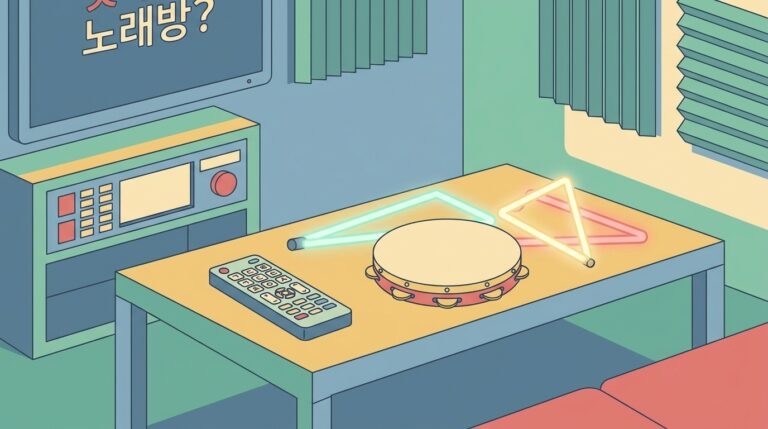
Picture this: you are sitting in a dazzling Hongdae karaoke room surrounded by new Korean friends. The neon lights pulse, tambourines jingle, and the party is at its peak. You grab the massive, textbook-sized remote control to queue your favorite K-pop song. But panic strikes! You accidentally punch in the wrong number and queue a tear-jerking 7-minute 1990s folk ballad right in the middle of an upbeat dance medley. The somber piano intro begins, everyone pauses in confusion, and you frantically scan dozens of colorful buttons wondering how to cancel it before the mood deflates. Every learner has faced this exact Noraebang emergency! Learning how to say ‘취소하기’ (cancelling) smoothly saves the vibe and makes you look like a seasoned Seoulite. Based on real student feedback and a decade of Seoul nightlife survival, this guide will make you a karaoke pro.
Phase 2: Core 3 Expressions
1. 취소해 주세요 (Chwiso-hae juseyo)
- Pronunciation: [Chwi-so-hae ju-se-yo] (Sounds like Chwee-so-heh joo-seh-yo — imagine saying “chewy soap” quickly!)
- Meaning: Literal: “Please do cancellation” | Actual nuance: “Please cancel this song (or track) for me.”
- K-Culture Moment: Seen in countless office K-dramas during a hoesik (company dinner) afterparty, when an awkward rookie queues the CEO’s rival company jingle by mistake and colleagues scramble to cancel it.
- Editor’s Insight: At the A2 level, attaching -해 주세요 (-hae juseyo) turns any verb into a polite, natural request. On the remote control, look for the big yellow or red button labeled 취소 (Chwiso).
- Situation Spectrum:
- Casual (with close friends): ✅ (취소해 줘 / Chwiso-hae jwo)
- Semi-formal (colleagues, polite tone): ✅ (취소해 주세요 / Chwiso-hae juseyo)
- Formal (business strict): ⚠️ (취소해 주십시오 is too stiff for karaoke)
- 🤔 Think About It: In English, you might shout “Kill the track!” or “Skip it!” Why does Korean frame this as a polite favor with “주세요” even in a lively party setting?
2. 이거 잘못 눌렀어요 (Igeo jalmot nulleosseoyo)
- Pronunciation: [I-geo jal-mot nul-leot-seo-yo] (Sounds like Ee-guh jahl-moht nool-lut-suh-yo — nulleot rhymes with “sun-lit” without the ‘t’)
- Meaning: Literal: “I pressed this wrongly” | Actual nuance: “Oops, I hit the wrong button!”
- K-Culture Moment: In youth dramas like Twenty-Five Twenty-One, when someone types a song number one digit off and a military marching song starts blaring instead of hip-hop.
- Editor’s Insight: ‘잘못’ (jalmot) means “incorrectly” or “by mistake.” Using this phrase immediately excuses your goof-up because Koreans appreciate quick, humble self-acknowledgment.
- Situation Spectrum:
- Casual: ✅ (잘못 눌렀어 / Jalmot nulleosseo)
- Semi-formal: ✅ (잘못 눌렀어요 / Jalmot nulleosseoyo)
- Formal: ✅ (잘못 눌렀습니다 / Jalmot nulleotseumnida)
- 🤔 Think About It: Notice how Korean describes the concrete action (“I pressed incorrectly”) rather than self-deprecating labels like “I am so clumsy.”
3. 다음 곡으로 넘겨요 (Daeum gogeuro neomgyeoyo)
- Pronunciation: [Da-eum go-geu-ro neom-gyeo-yo] (Sounds like Dah-eum go-geu-roh num-gyuh-yoh)
- Meaning: Literal: “Let’s pass over to the next song” | Actual nuance: “Let’s skip ahead to the next track!”
- K-Culture Moment: Used by K-pop idols on variety shows like Running Man when a timed game requires cutting songs early to hit high scores.
- Editor’s Insight: ‘넘기다’ (neomgida) means to flip a page or pass something over. In karaoke, skipping to the next song keeps the room’s energy rolling when someone gets tired midway.
- Situation Spectrum:
- Casual: ✅ (다음 곡 넘기자 / Daeum gok neomgija)
- Semi-formal: ✅ (다음 곡으로 넘겨요 / Daeum gogeuro neomgyeoyo)
- Formal: ⚠️ (다음 곡으로 넘기겠습니다 is rarely used in social singing)
- 🤔 Think About It: Phrasing this as a suggestion (“Let’s move on”) rather than a command protects the singer’s pride and maintains harmony.
Phase 3: Textbook Korean vs Real Korean
Situation 1: Stopping the current song playing on screen
- 📖 교과서 한국어: 노래 재생을 중단해 주십시오. (Norae jaesaeng-eul jungdanhae jusipsio. – Please cease the playback of the song.)
- 🗣️ 진짜 한국어: 이거 취소하고 다음 거 틀자! (Igeo chwisohago daeum geo teulja! – Let’s cancel this and turn on the next one!)
- 💡 왜 다를까? Textbooks teach Sino-Korean formal vocabulary like ‘중단’ (cessation), but real Koreans speak dynamically with everyday action verbs like ‘틀다’ (to turn on/play) and quick verbal connectors.
Situation 2: Removing a song from the waiting queue
- 📖 교과서 한국어: 예약 목록에서 해당 곡을 삭제해 주세요. (Yeyak mongnong-eseo haedang gogeul sakjehae juseyo. – Please delete that song from the reservation list.)
- 🗣️ 진짜 한국어: 예약 취소 버튼 눌러 줘! (Yeyak chwiso beoteun nulleo jwo! – Hit the reserve cancel button!)
- 💡 왜 다를까? Inside a dark, loud room, referencing the physical button (‘버튼 눌러 줘’) gets instant results compared to abstract terms like ‘삭제’ (deletion).
Phase 4: K-Culture Deep Dive & Non-verbal Manners
4-1. 눈치 (Nunchi) & Gestures
Cancelling someone else’s song without permission is the ultimate karaoke taboo in Korea! Always follow these unspoken rules:
* The ‘X’ Sign: If you want your own song cancelled because you lost your voice or keyed the wrong number, make an “X” shape with your forearms or fingers toward the person holding the remote while bowing your head with an apologetic smile.
* Two-Hand Remote Aiming: If you hold the remote, aim it with both hands at the sensor near the top of the TV monitor. Pressing the button with two hands looks polite and intentional.
* The 1-Minute Nunchi: When only 2 minutes remain on the pay clock, use rapid eye contact (nunchi). If a song has 4 minutes left, singers often voluntarily hit cancel after the 1st chorus so their friend can fit in one last anthem!
4-2. Cultural Code: 서비스 (Service) & The Song Economy
In Korean noraebangs, “Service” (서비스) refers to free bonus minutes gifted by the generous owner (sajangnim). You might be singing your heart out when the timer suddenly resets from 01:00 to +30:00! Because room time is valuable, cancelling instrumental breaks (간주) or moving past awkward song selections promptly is considered good manners, ensuring everyone gets equal mic time.
Phase 5: Real-world Roleplay Scenario
Setting: 10:30 PM at a lively Hongdae Coin Noraebang (코인노래방). Minji (민지), your bubbly Korean language exchange partner, is holding a tambourine while the disco ball spins.
- 민지: “이제 너 부를 차례야! 무슨 노래 골랐어?” (Ije neo bureul charyeya! Museun norae gollasseo? – Now it’s your turn! What song did you pick?)
🎭 마이크를 건네며 신나게 탬버린을 흔든다. - 나: “어? 이상하다… 저기 나오는 노래 내 노래 아니에요.” (Eo? Isanghada… jeogi naoneun norae nae norae anieyo. – Huh? That’s weird… the song coming up isn’t mine.)
🎭 화면에 뜬 트로트 곡목을 보고 당황하며 두 눈이 커진다. - 민지: “어머, 번호 잘못 눌렀나 봐! 리모컨 줘 봐.” (Eomeo, beonho jalmot nulleonna bwa! Rimokeon jwo bwa. – Oh dear, you must have pressed the wrong number! Give me the remote.)
🎭 소파에서 몸을 일으키며 테이블 위 리모컨을 찾는다. - 나: “미안해요, 이거 잘못 눌렀어요. 얼른 취소해 주세요!” (Mianhaeyo, igeo jalmot nulleosseoyo. Eolleun chwisohae juseyo! – Sorry, I pressed this wrong. Please cancel it quickly!)
🎭 두 손을 모아 미안한 표정으로 싹싹 빈다. - 민지: “괜찮아, 그럴 수 있지! 빨간색 취소 버튼 누르면 돼.” (Gwaenchana, geureol su itji! Ppalgansaek chwiso beoteun nureumyeon dwae. – It’s totally fine, that happens! Just press the red cancel button.)
🎭 리모컨의 큰 빨간색 버튼을 능숙하게 꾹 누른다. - 나: “휴, 고마워요! 다음 곡으로 넘겨요.” (Hyu, gomawoyo! Daeum gogeuro neomgyeoyo. – Phew, thank you! Let’s skip to the next song.)
🎭 안도의 한숨을 쉬며 가슴을 쓸어내린다. - 민지: “좋아! 다음 노래는 네가 좋아하는 뉴진스 노래야, 준비해!” (Joha! Daeum noraeneun nega johahaneun Nyujinseu noraeya, junbihae! – Great! The next track is the NewJeans song you love, get ready!)
🎭 마이크 볼륨을 조절하며 함께 박수를 친다. - 나: “네, 이번엔 진짜 신나게 불러 볼게요!” (Ne, ibonen jinjja sinnagedallyeo bolgeyo! – Yes, I will sing with all my energy this time!)
🎭 마이크를 쥐고 비트에 맞춰 가볍게 점프한다.
🔀 Interactive Branching Choice
Your friend selected a high-pitched ballad, but suddenly feels too shy to sing and looks at you awkwardly as the intro blares. What do you do?
- Option A: Grab the remote immediately and shout “재미없으니까 취소할게!” (This is boring, I’ll cancel it!) before cutting the track.
- Feedback [Bad]: This hurts your friend’s feelings and creates awkward silence. Never insult someone’s song choice!
- Option B: Pick up the second microphone, smile, and say: “취소하지 말고 같이 부를래요?” (Shall we sing together instead of cancelling?)
- Feedback [Best]: True nunchi mastery! Sharing the mic rescues their confidence and turns nervous energy into fun teamwork.
- Option C: Stand up and yank the power cord out of the karaoke wall outlet to silence the music.
- Feedback [Risk]: You might damage the expensive machine and be charged a fine by the owner!
Phase 6: 10-Second Emotion Shadowing Drill
- Drill 1:
[🥺 당황하고 미안하게]“어떡하지… / 번호 잘못 눌렀어요! / 얼른 취소해 주세요.” (Eotteokhaji… / beonho jalmot nulleosseoyo! / eolleun chwisohae juseyo. – What should I do… / I pressed the wrong number! / Please cancel it quickly.) - Drill 2:
[😄 밝고 신나게]“이 노래 말고 / 다음 곡으로 / 바로 넘겨요!” (I norae malgo / daeum gogeuro / baro neomgyeoyo! – Not this song / to the next song / let’s jump right away!) - Drill 3:
[😌 다정하고 편안하게]“괜찮아요, / 예약 취소 버튼만 / 누르면 돼요!” (Gwaenchanayo, / yeyak chwiso beoteunman / nureumyeon dwaeyo! – It’s alright, / just the reserve cancel button / you only need to press!)
Phase 7: K-Culture Mini Dictionary
- 취소 (Chwiso) | Cancellation | The primary label found on the red or yellow button of any TJ or Geumyoung karaoke remote. Essential for stopping songs or reversing selections.
- 예약 취소 (Yeyak Chwiso) | Cancel Reservation | The secondary button used to delete upcoming songs from the waiting list without stopping the track currently playing.
- 간주점프 (Ganju-jeompeu) | Interlude Jump | The savior button that fast-forwards through lengthy guitar solos or pauses between verses to save precious paid minutes.
- 우선예약 (Useon-yeyak) | Priority Reservation | The cheeky button that cuts your song to the very front of the queue, right after the current singer finishes.
Phase 8: Survival Kit for Travelers
TOP 3 Survival Expressions
- 취소 버튼 어디 있어요? (Chwiso beoteun eodi isseoyo? – Where is the cancel button?)
- Pro Tip: The button is almost always near the top right, colored vibrant red or bright yellow.
- 노래 꺼 주세요. (Norae kkeo juseyo. – Please turn off the song.)
- Pro Tip: Use this if the machine produces an ear-piercing feedback screech.
- 잘못 예약했어요. (Jalmot yeyakhaesseoyo. – I reserved this by mistake.)
- Pro Tip: Say this right after an accidental queue to notify the group before they start reading the lyrics.
Editor’s Travel Note
When hunting for karaoke in Seoul, search for 코인노래방 (Coin Noraebang) on your map. These budget-friendly spots let you pay per song (typically 500 to 1,000 KRW for 2 songs) without committing to a full hour! To locate the highest-rated spots near you in Hongdae, Gangnam, or Myeongdong, check the Naver Map app download and search “코인노래방”. Most modern booths accept credit cards via English-supported touchscreen kiosks right outside the room.
Phase 9: One Step Deeper (Reflection)
A Korean Noraebang is not merely a venue for amateur performance; it is an intimate social arena designed to dissolve social hierarchy (pyeongdeung). When superiors, friends, or strangers share the microphone, the rigid formalities of everyday Korean society temporarily melt away. Cancelling a song gracefully—whether your own mistake or adapting to keep the group’s energy elevated—embodies the communal mindset where group mood (heung) always supersedes personal spotlight.
💬 Your Turn: What is your absolute go-to song at karaoke, and have you ever accidentally played the wrong song in front of your friends? Share your funny story in the comments below!
Phase 10: FAQ & Common Mistakes
Q: What happens if I press 취소 (Cancel) while someone else is singing?
A: In Korean social etiquette, pressing cancel during another person’s song without their explicit permission is considered extremely rude. Always confirm by asking “취소할까요?” (Shall I cancel?) first.
Q: Does cancelling a song refund my coin or time?
A: No. Once a song begins playing, the coin or credit is consumed immediately. However, cancelling a song you dislike saves your group’s remaining minutes for songs you actually want to sing!
Q: How do I cancel a song in the queue without stopping the currently playing track?
A: Do not press the main big ‘취소’ button! Instead, find the smaller button labeled 예약 취소 (Cancel Reservation) or press the reservation list button, select the song, and delete it.
🚨 Common Mistakes Warning Board
- Mistake: Shouting “No, no, cancel!” in English.
- Correct Action: Say “이거 취소해 주세요!” (Igeo chwisohae juseyo!) while pointing at the screen.
- Mistake: Pressing 취소 (Cancel) when you only meant to skip the guitar solo.
- Correct Action: Press 간주점프 (Ganju-jeompeu / Skip Interlude) instead of the main cancel button.
- Mistake: Using formal “취소하십시오” with close friends.
- Correct Action: Keep it casual and friendly with “취소해 줘!” (Chwiso-hae jwo!).
Phase 11: Action Missions
- 🥉 Bronze Mission (Solo Practice): Look at an image of a Korean karaoke remote online and locate the buttons for 취소, 시작, and 간주점프 within 5 seconds.
- 🥈 Silver Mission (Social Connection): Record yourself shadowing the phrase “이거 잘못 눌렀어요, 취소해 주세요!” with dramatic apologetic facial expressions and save it to your voice notes.
- 🥇 Gold Mission (Real Life Application): Visit a local coin noraebang or Korean karaoke venue, purposefully pick a random track, and successfully cancel it using the remote commands learned today!
- 🎮 K-Culture Mission: Watch any Noraebang scene in a K-drama (like Hospital Playlist or Business Proposal) and listen for when someone says “취소” or “넘겨”.
Phase 12: Interactive Quiz Challenge
1. Situation Judgment: You accidentally selected track #48291 instead of #48219, and an unfamiliar song starts playing. What is the most natural phrase to say to your friend holding the remote?
* A) 노래를 삭제하십시오.
* B) 죄송하지만 집에 가겠습니다.
* C) 잘못 눌렀어요, 얼른 취소해 주세요!
2. Fill-in-the-Blank: Complete the sentence to suggest moving to the next track:
“이 노래 말고 다음 곡으로 ________! (Let’s skip to the next track!)”
* A) 넘겨요 (neomgyeoyo)
* B) 먹어요 (meogeoyo)
* C) 자요 (jayo)
3. True or False Culture Quiz: In a Korean coin karaoke, pressing the main ‘취소’ (Cancel) button will automatically return your 500-won coin.
* (True / False)
👉 Click here to reveal the answers and explanations!
- Answer: C — “잘못 눌렀어요, 얼른 취소해 주세요!” is natural, polite, and clearly communicates what happened.
- Answer: A (넘겨요) — ‘다음 곡으로 넘겨요’ means “let’s skip/pass over to the next song.” ‘먹어요’ means eat, and ‘자요’ means sleep!
- Answer: False — Once a song begins playing, the credit is spent. Cancelling simply stops the music to save your time, but does not refund coins.







