

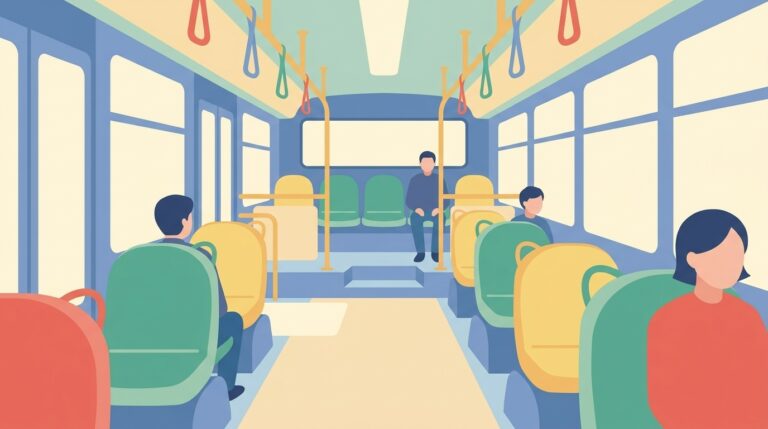
Offering Your Seat on a Korean Bus: The Ultimate Honorifics & Etiquette Guide
Phase 1: 공감 (Story-Driven Empathy Opening)
안녕하세요! 매일한글 에디터입니다. (Hello! This is your Daily Hangul editor.)
Picture this: You are riding the blue bus 143 during Seoul’s bustling evening commute, swaying past the neon lights of Jongno. The bus jerks forward abruptly, and your knuckles whiten as you clutch the yellow handrail. At the next stop, an elderly grandmother—a classic halmeoni with a floral sunhat and a heavy wheeled grocery basket—steps aboard. She slowly reaches for an overhead handle, her arm trembling slightly with the motion of the bus.
You are sitting right there. Your heart immediately hammers against your ribs: “I must give up my seat!” But sudden panic strikes your mind. What was that textbook sentence again? Je jarie anjeusipsio? Does that sound too military and robotic? What if I use banmal (informal speech) by mistake and offend her? Or worse, what if she refuses and the entire bus stares at me in awkward silence?
If you have ever felt frozen in place by Korean honorifics (jondaetmal), take a deep breath. You are definitely not alone! This exact dilemma is one of the top cultural hurdles our intermediate learners share with us. Today, we will transform that awkward dread into warm confidence. You’ll master the natural, colloquial phrases that show respect, preserve everyone’s dignity, and earn you the sweetest, warmest Korean grandma smile you will ever experience. Let’s dive in together!
Phase 2: 핵심 표현 3선 심층 분석 (Top 3 Core Expressions)
Here are the 3 essential expressions you need when offering your seat on public transit.
1. 여기 앉으세요 (Yeogi anjeuseyo)
- Pronunciation: [Yeo-gi an-jeu-se-yo] (Sounds like “YAW-gee ahn-joo-say-yo” with a gentle falling lilt on the final syllable)
- Meaning: Literal: “Sit here.” | Nuance: “Please, take this seat (it’s yours).”
- K-Culture Moment: You hear this line constantly in wholesome slice-of-life K-Dramas like Our Blues or Hospital Playlist, where characters look out for vulnerable neighbors without creating grand drama.
- Editor’s Insight: The polite ending -(으)세요 strikes the golden balance between warm friendliness and respectful deference. It avoids the stiff rigidity of military honorifics while maintaining perfect decorum.
- Situation Spectrum: Casual: ⚠️ (too formal for close peers) | Semi-formal: ✅ (Perfect for elders on transit) | Formal: ✅
- 🤔 Think About It: In English, we might ask, “Would you like to sit?” Why do you think Korean directly suggests an action (“Please sit here”) rather than asking a hypothetical question?
2. 저 곧 내려요 (Jeo got naeryeoyo)
- Pronunciation: [Jeo got nae-ryeo-yo] (Sounds like “Juh goat neh-ryuh-yo”—keep the ‘t’ in ‘got’ unreleased)
- Meaning: Literal: “I get off soon.” | Nuance: “Don’t feel burdened; I’m getting off shortly anyway!”
- K-Culture Moment: The iconic “Korean polite white lie.” Even if you still have 14 bus stops remaining before Hongdae, saying this relieves the elder’s psychological burden (budam) of displacing a young person.
- Editor’s Insight: Korean elders often feel protective of hard-working students and young professionals. If you just say “Sit down,” they might decline out of courtesy. Adding 저 곧 내려요 gives them the social permission to accept your seat without guilt.
- Situation Spectrum: Casual: ⚠️ | Semi-formal: ✅ | Formal: ✅
- 🤔 Think About It: How does your native culture balance personal convenience against offering practical hospitality to strangers?
3. 어르신, 이쪽으로 오세요 (Eoreusin, ijjogeuro oseyo)
- Pronunciation: [Eo-reu-sin, i-jjo-geu-ro o-se-yo] (Sounds like “Uh-roo-shin, ee-tjo-geu-roh oh-say-yo”)
- Meaning: Literal: “Respected elder, please come toward this side.” | Nuance: “Excuse me sir/ma’am, please come take this spot.”
- K-Culture Moment: Often uttered by polite protagonists in family dramas when gently clearing a path on a crowded subway carriage.
- Editor’s Insight: Calling an older stranger halmeoni (grandmother) or harabeoji (grandfather) can occasionally be sensitive if they feel young at heart. 어르신 (Eoreusin) is the ultimate respectful, non-offensive term of honor for seniors.
- Situation Spectrum: Casual: 🚫 | Semi-formal: ✅ | Formal: ✅
- 🤔 Think About It: Why does Korean have distinct status-respecting nouns for strangers instead of using generic pronouns like “you”?
Phase 3: 교과서 한국어 vs 진짜 한국어 (Textbook vs. Real Korean)
Situation 1: Inviting an Elder to Sit
- 📖 교과서 한국어 (Textbook): 제 자리에 앉으십시오. (Je jarie anjeusipsio.) — “Please sit down in my seat.”
- 🗣️ 진짜 한국어 (Real-Life): 여기 앉으세요! (Yeogi anjeuseyo!) — “Please take this seat!”
- 💡 왜 다를까? (Why is it different?): The high-formal ending
-십시오sounds like an official public announcement or a military command. On a moving city bus, it can feel intimidating or overly solemn. 여기 앉으세요 delivers sincere warmth with crisp naturalness.
Situation 2: Overcoming Their Hesitation
- 📖 교과서 한국어 (Textbook): 사양하지 마십시오. (Sayanghaji masipsio.) — “Do not refuse my offer.”
- 🗣️ 진짜 한국어 (Real-Life): 괜찮아요, 저 서서 가도 돼요! (Gwaenchanayo, jeo seoseo gado dwaeyo!) — “It’s completely fine, I can stand!”
- 💡 왜 다를까? (Why is it different?): Directly telling someone not to refuse (사양하지 마십시오) puts conversational pressure on the elder. Stating your own comfort (“I’m fine standing!”) smooths away any awkward social friction.
Phase 4: K-Culture 딥다이브 & 비언어적 매너 (Non-Verbal Manners)
4-1. 눈치 (Nunchi) & Body Gestures
- The Stand-First Rule: Do not sit back comfortably and verbally call an elder over. Stand up on your feet first, step out into the aisle, and then gesture. If you remain seated, you create a public debate where the elder feels obligated to tell you to stay seated.
- The Open Palm Gesture: Never point a single index finger to the empty seat. Instead, hold your hand out with fingers together, palm facing upward toward the seat, accompanied by a polite 15-degree nod.
- The Discrete Exit: If you are feeling shy about your Korean accent, stand up calmly, say “여기 앉으세요”, and walk toward the rear exit doors. This eliminates any lingering awkwardness immediately!
4-2. Cultural Code: The Color of Seats
- 노약자석 (Noyakjaseok – Priority Seating): Usually located at the front of city buses or the ends of subway cars, these seats are reserved exclusively for the elderly, disabled, and injured. Even on empty late-night routes, many Koreans leave them vacant out of social principle.
- 임산부 배려석 (Imsanbu Baeryeoseok – Pink Seats for Expectant Mothers): In Korean public transit, the glowing pink seats are designated for pregnant women. Steer clear of these seats whenever possible to avoid uncomfortable social glances (nunchi).
Phase 5: 실전 롤플레이 시나리오 (Real-Life Roleplay Scenario)
Setting: Seoul Bus 272 during a rainy evening commute. The bus is swaying along the curves of Sajik Tunnel. You are sitting in an aisle seat. An elderly woman boards carrying two heavy grocery bags.
- Turn 1 (Halmeoni): 아이고, 비가 와서 그런지 다리가 쑤시네… (Aigo, biga waseo geureonji dariga ssusine…)
🎭 Sighs softly while grabbing the overhead strap, shifting weight uneasily.
(Oh my, my legs are aching because of the rain…) - Turn 2 (You): 어르신, 여기 앉으세요. (Eoreusin, yeogi anjeuseyo.)
🎭 You stand up promptly and guide her toward the seat with an open palm.
(Ma’am, please take this seat.) - Turn 3 (Halmeoni): 아이구 학생, 아니야. 나 금방 가니까 그냥 앉아 있어. (Aigu haksaeng, aniya. Na geumbang ganikka geunyang anja isseo.)
🎭 Waves her hand in gentle polite refusal, looking at your backpack.
(Oh dear student, no need. I’m going a short distance, you keep sitting.) - Turn 4 (You): 아니에요, 할머니. 저 진짜 곧 내려요! (Anieyo, halmeoni. Jeo jinjja got naeryeoyo!)
🎭 You smile warmly and shake your head slightly.
(No, really grandmother. I’m getting off very soon!) - Turn 5 (Halmeoni): 정말로? 젊은 사람도 하루 종일 일하느라 힘들 텐데… (Jeongmallo? Jeolmeun saramdo haru jong-il ilhaneura himdeul tende…)
🎭 Hesitates, looking appreciatively at the vacated seat.
(Are you sure? Young folks must be so tired after working all day…) - Turn 6 (You): 괜찮습니다. 이 짐도 여기 무릎 위에 올려두세요. (Gwaenchanseumnida. I jimdo yeogi mureup wie ollyeoduseyo.)
🎭 You lightly point to her shopping bags and secure your balance on a rail.
(It is completely fine. You can place your bags on your lap here too.) - Turn 7 (Halmeoni): 에구, 고마워요. 복 많이 받을 거야, 학생! (Egu, gomaweoyo. Bok mani badeul geoya, haksaeng!)
🎭 Sits down carefully with a sigh of relief, patting your forearm gently.
(Oh, thank you so much. You will receive bountiful blessings, dear student!) - Turn 8 (You): 편하게 가세요, 어르신! (Pyeonhage gaseyo, eoreusin!)
🎭 Nods with a respectful slight bow.
(Have a comfortable ride, ma’am!)
🔀 Interactive Choice Point: When she initially refuses your seat, what do you do?
- Option A: Sit back down immediately and say: “네, 그럼 제가 앉을게요.” (Ne, geureom jega anjeulgeyo. / Okay, then I’ll sit.)
- Feedback: 🚫 Bad: This makes the elder’s initial polite refusal uncomfortable, creating lingering awkwardness for the rest of the journey.
- Option B: Remain standing, take two steps away, and say: “괜찮아요, 저 서서 가는 게 편해요!” (Gwaenchanayo, jeo seoseo ganeun ge pyeonhaeyo. / It’s fine, I feel more comfortable standing!)
- Feedback: 🌟 Best: Brilliant! You remove the elder’s psychological guilt by framing your standing as your own personal preference.
- Option C: Shout loudly across the bus: “어르신 빨리 앉으셔야 버스 출발합니다!” (Eoreusin ppalli anjeusyeoya beoseu chulbalhamnida. / You need to sit quickly so the bus can move!)
- Feedback: ⚠️ Risk: While practical, it draws everyone’s attention and puts the senior on the spot socially.
Phase 6: 10초 감정 섀도잉 드릴 (10-Second Emotional Shadowing Drill)
Practice these lines with the indicated emotional tempo and pauses (/ marks a natural breath pause).
- [😊 Warm and Respectful]
어르신, / 여기 / 앉으세요.
(Eoreusin, / yeogi / anjeuseyo.)
Editor’s tip: Drop your pitch slightly on ‘어르신’ and let ‘앉으세요’ float up softly like a comforting melody. -
[🏃 Lighthearted and Reassuring]
괜찮아요, / 저 / 곧 내려요!
(Gwaenchanayo, / jeo / got naeryeoyo!)
Editor’s tip: Deliver ‘괜찮아요’ swiftly with a smile so the listener feels zero burden. -
[🤝 Cheerful and Solid]
저 / 서서 가도 / 정말 괜찮습니다!
(Jeo / seoseo gado / jeongmal gwaenchanseumnida!)
Editor’s tip: Emphasize ‘정말’ firmly to signal absolute confidence in your courtesy.
Phase 7: K-Culture 미니 사전 (Mini Dictionary)
- 노약자석 (No-yak-ja-seok) | Priority seating for the elderly, disabled, and pregnant.
Essential transit vocabulary. Found at designated colored seat areas in Korean buses and subways. - 눈치 (Nun-chi) | The art of gauging situational vibes and others’ unspoken feelings.
Crucial on public transport: noticing someone struggling before they have to ask for help. - 어르신 (Eo-reu-sin) | Respected senior citizen / elder.
The highest, most courteous everyday address for elderly individuals without assuming marital or family status. - 배려 (Bae-ryeo) | Thoughtful consideration for others.
A cornerstone of modern Korean civic behavior, seen on official public transit safety and etiquette signs.
Phase 8: 여행자를 위한 생존 키트 (Traveler’s Survival Kit)
Top 3 Transit Survival Phrases
- 먼저 타세요 (Meonjeo taseyo) — “Please go ahead and board first.”
Pro Tip: Use this at busy bus stops when an elder is behind you. - 잠시만 지나가겠습니다 (Jamsiman jinagagessumnida) — “Excuse me, passing through for a moment.”
Pro Tip: Indispensable when disembarking through a packed crowd toward the exit door. - 손잡이 잡으세요 (Sonjabi jabeuseyo) — “Please hold onto the handrail.”
Pro Tip: Great to say gently if the bus starts lurching before someone takes a seat.
Editor’s Travel Note: App Navigation & Transit Etiquette
To navigate Seoul’s intricate routes like an absolute local, bookmark our KakaoBus public transit guide for real-time bus arrival counts and seat availability. Remember to tag your T-Money transport card on the card reader right before stepping off through the rear exit to maintain your transfer discount window!
Phase 9: “한 발 더 깊이” (Cultural Reflection Essay)
In many Western cultures, personal independence is valued above all else. Consequently, offering an elder a seat can occasionally be misconstrued as highlighting their physical weakness or age. In Korea, however, public courtesy is deeply anchored in communal responsibility and Confucian filial piety (hyo, 효). When you offer a seat on a Korean bus, you are not pitying someone’s fragility; you are honoring the collective generation that built the modern infrastructure under your feet. It is a shared covenant of mutual protection that keeps rapid metropolitan life profoundly human.
💬 Your Turn: Have you ever hesitated to offer your seat on public transit while traveling abroad? How would an elder react in your home country compared to Korea? Share your story in the comments below!
Phase 10: FAQ & 오해 방지 (FAQ Schema)
Q: What should I do if an elderly person firmly declines my seat offer?
A: Do not argue or insist multiple times. Simply bow your head respectfully, say “네, 편히 가세요” (Ne, pyeonhi gaseyo / Understood, have a comfortable trip), and remain standing or move slightly away. In Korean transit etiquette, forcing an act of courtesy can make the other person feel self-conscious.
Q: Can I sit in the pink ‘Pregnant Women Only’ seat if the bus is completely empty?
A: Technically, the law does not penalize you. However, culturally, most locals strongly advise against sitting there. The purpose of keeping it vacant is to allow an expectant mother—who might not visibly appear pregnant in the early stages—to sit down instantly without having to explain herself to a stranger.
Q: Is it disrespectful to use ‘할머니’ (Halmeoni) to address an older woman on the bus?
A: It is generally acceptable and affectionate, but 어르신 (Eoreusin) is much safer and significantly more sophisticated. Many active seniors in their 60s feel that halmeoni sounds too old, whereas 어르신 conveys unconditional social dignity.
🚨 흔한 실수 (Common Mistakes) 경고판
| Mistake | Why It’s Risky | Correct Action |
|---|---|---|
| 1. Saying “앉아!” (Anja!) | This is pure banmal (informal talk). Using it with an elder is a severe social faux pas. | Say “여기 앉으세요” (Yeogi anjeuseyo) with a polite head nod. |
| 2. Tapping their shoulder firmly | Physical contact with unfamiliar seniors can startle them on a moving vehicle. | Catch eye contact gently or say “저기요, 어르신” before offering. |
| 3. Staying seated while offering | Creates an awkward psychological power dynamic where they must loom over you. | Stand up completely out of the seat before gesturing toward it. |
Phase 11: 액션 미션 & 참여 유도 (Action Missions)
- 🥉 Bronze Mission (Solo): Stand in front of a mirror and practice saying “여기 앉으세요, 저 곧 내려요!” three times with an open-palm gesture and a warm smile.
- 🥈 Silver Mission (Social): Screenshot Phase 6’s Shadowing Drill, post it to your Instagram story, tag
@DailyHangul, and tell us your favorite Korean transit phrase. - 🥇 Gold Mission (Real Life): The next time you board public transit in Korea, offer your seat using “어르신, 여기 앉으세요” and enjoy the delightful conversation that unfolds!
- 🎮 K-Culture Detective Mission: Watch Episode 1 of any slice-of-life K-drama (like Reply 1988 or My Liberation Notes) and spot the moment a character negotiates seating on a bus or train. Note what honorific endings they choose!
Phase 12: 인터랙티브 퀴즈 챌린지 (Interactive Quiz Challenge)
Test your knowledge before you tap your transport card!
1. [Situation Judgment]
You are sitting on a packed bus. An elderly man carrying a heavy grocery box stands right near you. What is the most natural, courteous initial sentence to say?
(A) 야, 여기 앉아!
(B) 어르신, 여기 앉으세요.
(C) 제 자리에 앉으십시오!
2. [Fill in the Blank]
Complete the classic Korean polite white lie used to ease an elder’s mind:
“괜찮아요, 저 ( ) 내려요!”
(A) 곧 (got)
(B) 안 (an)
(C) 늦게 (neutge)
3. [True or False Culture Check]
True or False: In Korea, pointing with a single index finger to show an elder where to sit is considered standard polite body language.
👉 Click here to reveal answers and explanations!
- Answer: (B) 어르신, 여기 앉으세요.
Explanation: (A) uses rude informal banmal, while (C) is unnaturally formal and stiff. (B) achieves the exact intermediate sweet spot of natural warmth and honorific etiquette. -
Answer: (A) 곧 (got)
Explanation: 곧 means “soon.” Saying 저 곧 내려요 (“I get off soon”) graciously relieves the senior citizen of any guilt. -
Answer: False!
Explanation: Pointing with an index finger is considered sharp and impolite. Always present your hand with fingers closed together, palm facing upward toward the seat.







