

Phase 1: Empathy (Real-World Opening)
안녕하세요! 매일한글 에디터입니다.
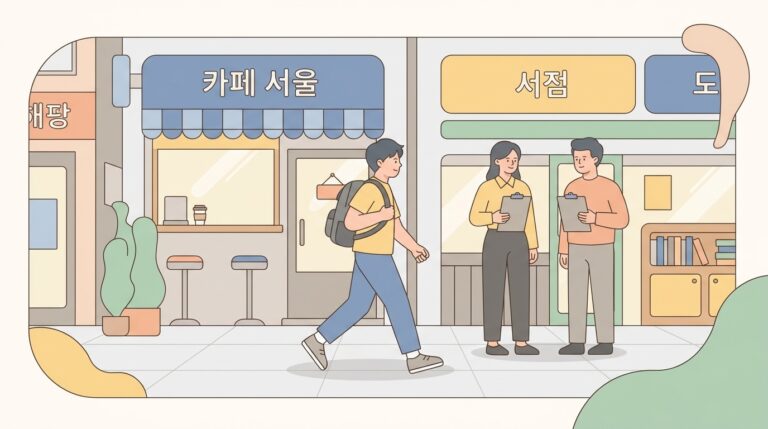
You are strolling out of Hongik University Station Exit 9 on a crisp Friday afternoon. The energy is infectious, buskers are unpacking guitar cases, and neon signage is flickering to life. Suddenly, two neatly dressed young Koreans with extraordinarily kind eyes and pleasant smiles approach you. One speaks in a gentle, warm tone: “인상이 너무 맑으셔서 그런데요, 혹시 시간 잠깐 있으세요?” (Insangi neomu malgeusyeoseo geureondeyo, hoksi sigan jamkkan isseuseyo? / You have such a pure and bright aura; do you happen to have a brief moment?).
If you have lived in Korea or studied Korean diligently, your first instinct might be pure joy: “A local is talking to me! My Korean practice is finally happening!” But within thirty seconds, the conversation shifts from friendly banter to questions about your ancestors, bad spiritual energy, or an invitation to a “traditional cultural tea house” nearby. Congratulations—you have just encountered one of Korea’s notorious pseudo-religious street recruiters (사이비 종교 포교단).
Many of our advanced C1 learners reach out with acute frustration: “I know how to speak polite Korean (존댓말), but whenever I try to reject street cultists politely, they follow me for blocks! How do native Koreans shut them down instantly without feeling endangered or appearing completely uncultured?”
Today, we are moving past textbook politeness. As a C1 speaker, mastering the spectrum between respectful dialogue and assertive boundary-setting is essential for survival and genuine cultural fluency. This guide compiles real-world strategies and sharp, native expressions that will instantly protect your time and emotional space in Korea.
Phase 2: Core Expressions Deep Dive
1. 관심 없으니까 말 걸지 마세요. (한글)
- Pronunciation: Gwansim eopseunikka mal geolji maseyo. (Intuitive: Gwan-shim up-seu-ni-kka mal gull-ji ma-seh-yo — pronounce “gwan” like the “quan” in quantum, “eop” like up cut short).
- Meaning: Literal: “Because I have no interest, do not talk to me.” / Actual Nuance: “Drop the act; I know exactly what you are doing, and you have zero chance of manipulating me.”
- K-Culture Moment: Seen frequently in urban K-dramas when a sharp protagonist brushes off persistent street vendors or pushy solicitors without even pausing their stride.
- Editor’s Insight: Korean conversation relies heavily on indirect softening particles (e.g., ~같은데요, ~좀). However, against cult recruiters, softening forms invite aggressive pushback. Dropping the cushion and using the causal connector “-으니까” establishes an airtight boundary.
- Situation Spectrum: Casual 🚫 | Semi-formal ✅ | Formal ⚠️
- 🤔 Think About It: In Western interpersonal boundaries, a polite “No thank you” usually ends an interaction. Why do predatory recruiters in Korea interpret politeness as an open door for persuasion?
2. 사이비 포교 활동 같은데, 신고할게요. (한글)
- Pronunciation: Saibi pogyo hwaldong gateunde, singohalgeyo. (Intuitive: Sah-ee-bee po-gyo hwal-dong gah-teun-deh, shin-go-hal-geh-yo).
- Meaning: Literal: “This seems like cult proselytization, I will report you.” / Actual Nuance: “I am legally and culturally informed. Step away right now before I involve the police.”
- K-Culture Moment: The iconic confrontational tone heard in investigative docuseries like In the Name of God: A Holy Betrayal (나는 신이다), where authority and legal deterrence counter gaslighting.
- Editor’s Insight: The word 사이비 (saibi – pseudo/sham) carries immediate stigma and exposure. Recruiters rely on remaining semi-clandestine. Naming the act out loud in a public space instantly flips the psychological leverage.
- Situation Spectrum: Casual 🚫 | Semi-formal ✅ | Formal ✅
- 🤔 Think About It: How does invoking institutional intervention (신고) function as a linguistic defense mechanism in modern Korean civil society?
3. 도를 아십니까 같은 거 안 믿어요. (한글)
- Pronunciation: Doreul asimnikka gateun geo an mideoyo. (Intuitive: Doh-reul ah-shim-nee-kka gah-teun guh an mee-duh-yo).
- Meaning: Literal: “I do not believe in things like ‘Do you know the Tao/Way?'” / Actual Nuance: “I am culturally native-level; you cannot fool me with 1990s street recruitment tropes.”
- K-Culture Moment: Parodied endlessly on Korean variety shows like Infinite Challenge and Knowing Bros, referencing Korea’s infamous 90s cult opening line.
- Editor’s Insight: Pseudo-religious solicitors frequently target foreigners assuming they lack cultural context. Quoting their classic slogan back to them proves you possess deep cultural literacy, making them realize they are wasting their effort.
- Situation Spectrum: Casual ⚠️ | Semi-formal ✅ | Formal 🚫
- 🤔 Think About It: Why does demonstrating local idiom awareness instantly dismantle an opponent’s perception of vulnerability?
Phase 3: Textbook Korean vs. Real Korean
Situation 1: Rejecting a Fake “Street Survey” (길거리 설문조사)
- 📖 교과서 한국어: “죄송하지만 제가 지금 약속 시간이 촉박하여 바쁩니다.” (Joesonghajiman jega jigeum yaksok sigani chokbak-hayeo bappeumnida. / “I am sorry, but my appointment time is urgent and I am busy.”)
- 🗣️ 진짜 한국어: “바빠서 그냥 갈게요. 됐습니다.” (Bappaseo geunyang galgeyo. Dwaesseumnida. / “I’m in a rush, leaving now. No thanks.”)
- 💡 왜 다를까?: Saying “죄송합니다” (I am sorry) gives recruiters emotional permission to persist (e.g., “It will only take 30 seconds!”). A firm “됐습니다” combined with forward momentum terminates the interaction.
Situation 2: When They Try to Block Your Way or Touch Your Sleeve
- 📖 교과서 한국어: “이러한 행동은 무례하오니 제 앞을 가로막지 마십시오.” (Ireohan haengdongeun muryehaoni je apeul garomakji masipsio. / “This behavior is rude, so please do not block my path.”)
- 🗣️ 진짜 한국어: “손대지 마시고 길 비키세요. 경찰 부릅니다.” (Sondaeji masigo gil bikiseyo. Gyeongchal bureumnida. / “Don’t touch me, move aside. Calling the cops.”)
- 💡 왜 다를까?: Archaic formal complaints sound academic and weak in high-stress confrontations. Direct sensory verbs like “손대지 마세요” (Don’t lay a finger on me) set a legal, non-negotiable line.
Phase 4: K-Culture Deep Dive & Non-Verbal Manners
4-1. 눈치 (Nunchi) & Iron-Wall Body Language (철벽 방어)
When approached by street solicitors in crowded districts (such as Sinchon, Hyehwa, or Gangnam Exit 11), your physical posture matters more than your vocabulary:
* Zero Eye Contact: Do not lock eyes. If you make eye contact, recruiters sense hesitation or empathy. Keep your gaze fixed on your destination.
* The Palm Halt Gesture: Lift your hand halfway to chest height with your palm facing outward (resembling a quiet “stop”), shake your head slightly once, and say “됐습니다” without slowing your footwork.
* Never Stop Moving: The second your feet stop, their odds of roping you into a conversation triple. Maintain your pace.
4-2. Cultural Code Analysis: The Evolution of Pseudo-Religions in Korea
Korea’s rapid post-war modernization led to hyper-competitive social pressures, creating deep emotional vulnerabilities that controversial cult groups exploit. As depicted in the critically acclaimed thriller drama Save Me (구해줘), recruitment is not always aggressive; it often begins with predatory warmth.
In recent years, cult recruitment rarely appears under overt religious banners. Instead, recruiters disguise themselves as:
1. University Culture Clubs: Offering free Korean language exchange, calligraphy, or Hanbok tryouts.
2. Psychological Profiles: Administering fake MBTI or Enneagram tests on clipboards.
3. Ancestral Blessings (제사/천도재): Claiming that a shadow hangs over your family lineage and offering a ceremony to clear bad fortune.
Recognizing these camouflages is the hallmark of true C1 cultural fluency.
Phase 5: Real-World Roleplay Scenario
Setting: A bustling sidewalk near Hongik University Station Exit 8. Two individuals carrying clipboards and wearing university badges approach.
Characters: Cult Solicitor Ji-hwan (지환) & You (C1 Advanced Speaker).
- Ji-hwan: “저기요! 인상이 너무 선하고 복이 많아 보이셔서 그런데, 1분만 시간 되실까요?” (Jeogiyo! Insangi neomu seonhago bogi mana boisyeoseo geureonde, il-bunman sigan doesilkkayo? / [🎭 Approaches with an overly enthusiastic bow and radiant smile])
- You: “아, 됐습니다. 갈 길 갈게요.” (A, dwaesseumnida. Gal gil galgeyo. / [🎭 Keeps stride, raising one palm briefly without looking directly])
- Ji-hwan: “잠깐만요! 이상한 사람 아니고요, 홍대 심리학과 학생들인데 성격 유형 무료 분석 설문 중이에요!” (Jamkkanmanyo! Isanghan saram anigoyo, Hongdae simnihakkwa haksaengdeurinde seonggyeok yu-hyeong muryo bunseok seolmun jung-ieyo! / [🎭 Steps alongside you, matching your walking pace])
- You: “심리학과 빙자해서 포교하시는 거 다 알아요.” (Simnihakkwa bingjahae-seo pogyohasineun geo da arayo. / [🎭 Turns head slightly, voice dropping into a dry, cold pitch])
- Ji-hwan: “어머, 사이비 아니에요! 진짜 순수한 학술 동아리예요. 근처 카페에서 차 한잔하면서 결과만 알려드려요.” (Eomeo, saibi anieyo! Jinjja sunsuhan haksul dong-arieyo. Geuncheo kape-eseo cha hanjanhamyeonseo gyeolgwaman allyeodeuryeoyo. / [🎭 Gestures persuasively toward a quiet alley cafe])
- You: “수법 뻔하니까 그만하시죠. 계속 붙잡으시면 112 누릅니다.” (Subeop ppeonhanikka geumanhasijyo. Gyesok butjabeusimyeon il-il-i nureumnida. / [🎭 Takes out smartphone decisively, unlocking the home screen])
- Ji-hwan: “아이참… 사람이 호의를 베풀어도 참 삭막하시네.” (Aicham… sarami houireul bepureodo cham sangmakhasine. / [🎭 Frowns, retreating a step with a sour expression])
- You: “더 말 걸지 말고 비키세요.” (Deo mal geolji malgo bikiseyo. / [🎭 Walks straight ahead without turning around again])
🔀 Interactive Decision Branch
- Option A: “죄송해요, 제가 한국어 잘 못하고 친구 만나러 가야 해서요…” (Soft voice, slowing down)
- Feedback: [Bad] Apologizing and lingering signals compliance. They will follow you speaking English or offer to walk with you.
- Option B: “수법 다 아니까 그만하세요. 따라오면 바로 경찰 부릅니다.” (Firm, unyielding, eye contact breaking away)
- Feedback: [Best] Exposes their playbook instantly and introduces tangible consequences. They will pivot to another target.
- Option C: “그런데 어느 종교예요? 교리가 어떻게 되는데요?” (Inquiring about their religious philosophy)
- Feedback: [Risk] Exactly what they want. Trained recruiters thrive on debate and will isolate you for hours with circular logic.
Phase 6: 10-Second Emotion Shadowing Drill
Master the rhythm, breath breaks (/), and vocal weight for crisis deterrence:
[🧊 단호하고 차갑게 - Cold & Flat]
관심 없으니까 / 더 이상 말 걸지 마세요.
(Gwansim eopseunikka / deo isang mal geolji maseyo.)-
[🚨 날카롭고 단호하게 - Sharp & Warning]
설문조사 빙자해서 / 포교 활동 하시는 거 다 압니다.
(Seolmunjosa bingjahae-seo / pogyo hwaldong hasineun geo da amnida.) -
[🛑 거침없이 강력하게 - Decisive & Unshakeable]
따라오지 마세요. / 지금 당장 112 신고합니다.
(Ttara-oji maseyo. / Jigeum dangjang il-il-i singohamnida.)
Phase 7: K-Culture Mini Dictionary
- 사이비 (Sa-i-bi) | Pseudo / Cult: Originating from the classical idiom 사이비등 (似而非) meaning “resembling the real thing, but totally false.” Universally used to designate manipulative cults.
- 포교 (Po-gyo) | Proselytization: Originally an orthodox religious term for spreading faith, but in colloquial urban parlance, it predominantly refers to pushy street evangelism.
- 도를 아십니까 (Do-reul a-sim-ni-kka) | “Do you know the Tao/Truth?”: The archetypal recruitment opening line of the 1990s and 2000s; now a cultural meme for any dubious street approach.
- 길거리 설문조사 (Gil-geo-ri seol-mun-jo-sa) | Street surveys: The modern disguise used by predatory groups to extract private contact details and psychological vulnerability profiles from youths and expats.
Phase 8: Traveler’s Survival Kit
Top 3 Survival Phrases
- 됐습니다. (Dwaesseumnida.) — “No thanks / I’m good.” (Short, curt, native street shield).
- 경찰 부를게요. (Gyeongchal bureulgeyo.) — “I will call the police.” (Immediate legal threat for physical blockers).
- 아는 사람 있어요. (Aneun saram isseoyo.) — “I have someone waiting right there.” (Breaks isolation tactics).
Editor’s Travel Note
Always keep the 112 Police Emergency Reporting System accessible on your phone speed-dial while exploring major nightlife hubs. If solicitors attempt to lead you toward secluded secondary-floor tea rooms or basements, navigate immediately toward open transit hubs using the Naver Map navigation app guide. Stay vigilant around major transit exits: Gangnam Station (Exits 10 & 11), Hongdae (Exits 8 & 9), and Hyehwa Daehangno.
Phase 9: A Step Deeper (Reflection)
In Korean society, warm social connection (정, Jeong) and communal hospitality are celebrated virtues. Tragically, pseudo-religions weaponize this cultural instinct. They prey on the inherent isolation of big-city living and the desire of foreigners to integrate and make local friends. Understanding how to set ruthless conversational boundaries is not an act of rudeness; it is an essential layer of self-protection that preserves the authentic warmth you encounter everywhere else in Korea.
💬 Your Turn: Have you ever experienced an uncomfortably pushy street approach in Korea or your home country? What words did you use to escape? Let us know in the comments below!
Phase 10: FAQ & Common Mistakes
Q: How can I tell whether an invitation to a “Korean cultural club” is legitimate or a cult?
A: Legitimate clubs operate through recognized university student unions with transparent public boards and verified university domains. If an individual refuses to share their official student council affiliation or insists on meeting at a private, secluded off-campus studio rather than public student lounges, disengage immediately.
Q: What should I do if I already entered a cafe or building with them?
A: Stand up immediately, place your phone in your hand, and state clearly: “약속이 있어서 지금 나가겠습니다” (I have an appointment and am leaving now). Do not drink open beverages provided by them. If anyone blocks the door, dial 112 directly.
Q: Isn’t walking away without saying a single word considered impolite in Korea?
A: Under normal social etiquette, yes; against street recruiters, silence and zero eye contact (무시) are the exact standard behaviors utilized by born-and-raised Seoulites.
🚨 흔한 실수 (Common Mistakes) Warning Board
- Mistake: Smiling politely while stammering “한국어 못해요” (I can’t speak Korean).
Correct Action: Many cults maintain dedicated English, Japanese, and Chinese recruitment branches. An awkward smile signals vulnerability. Say “됐습니다” and maintain forward motion. - Mistake: Giving out a fake KakaoTalk ID to escape the moment.
Correct Action: They will test-message you on the spot before letting you go. Direct rejection is far safer than deceptive delay. - Mistake: Agreeing to a “free traditional ancestral purification ceremony” (제사/천도재).
Correct Action: Once inside their ritual space, they routinely intimidate victims into paying hundreds of thousands of won as “sincerity fees” (정성비). Never follow solicitors to secondary locations.
Phase 11: Action Missions & Engagement
- 🥉 Bronze Mission: Stand before a mirror and practice delivering “관심 없으니까 비키세요” with a flat vocal tone and zero smile 5 times.
- 🥈 Silver Mission: Share your experience or these boundary-setting phrases on your social feeds or language exchange forums to protect fellow learners.
- 🥇 Gold Mission: Identify pushy street solicitors in Korea (or analyze dialogue scenes in realistic K-dramas) and mentally rehearse your non-verbal, iron-wall dismissal.
- 🎮 K-Culture Mission: Watch the opening episodes of OCN’s thriller drama Save Me (구해줘) and observe how recruiters slowly lower victims’ psychological defenses through calculated emotional intimacy.
Phase 12: Interactive Quiz Challenge
1. Situational Judgment
You are walking through Sinchon when someone shows you a survey board asking: “인상이 참 좋아 보이시는데 조상님의 기운에 대해 이야기해 보셨나요?” What is the most culturally savvy C1 response?
* A) “네, 저희 조상님은 외국인이라 잘 모르겠습니다.” (Politely answering the premise)
* B) “도를 아십니까 수법 안 통하니까 비키세요.” (Calling out the trope assertively)
* C) “죄송하지만 커피 한 잔 사주시면 들을게요.” (Negotiating for a drink)
2. Fill-in-the-Blank
“자꾸 길 막고 귀찮게 하시면 바로 경찰에 [ ______ ]할게요.”
* A) 예약 (Reserve)
* B) 신고 (Report/Notify authority)
* C) 건의 (Suggest)
3. True / False Cultural Insight
True or False: In Korea, pseudo-religious recruiters only approach older, superstitious people and never target international students or trendy university campuses.
🔍 Click here for answers & in-depth explanations
- Answer: B — Acknowledging the spiritual premise (Option A) or negotiating (Option C) traps you into their script. Option B proves you recognize the exact Do-reul asimnikka mechanism.
- Answer: B (신고) — The standard legal phrase for alerting law enforcement to illicit street solicitation is “신고하다”.
- Answer: False — Modern Korean cults intensely target international students and young adults via language exchanges, fake dance troupes, and campus psychology surveys.







