

Never Carry a Wallet in Seoul: How to Master Samsung Pay and Explain Its Magic in Korean
Phase 1: Empathy (Story-Driven Opening)
안녕하세요! 매일한글 에디터입니다. (Hello! It’s your Daily Hangul editor here!)
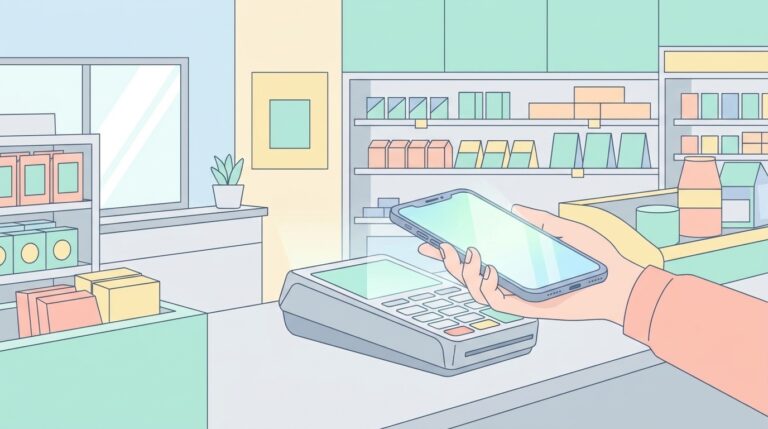
Picture this: You are standing in line at a bustling, ultra-hip cafe in Seongsu-dong during peak lunchtime. The espresso machine is hissing, indie-pop music is echoing, and there is a queue of five stylish office workers behind you. When your turn arrives, you panic, unzipping three compartments of your backpack just to unearth a bulky leather wallet. Meanwhile, the stylish local right before you didn’t even break eye contact with their iced Americano—they simply flicked up their Galaxy phone from the bottom edge, hovered it near the vintage payment terminal, heard a crisp “삑!”, and strolled away in under two seconds.
Living or traveling in South Korea quickly reveals that physical wallets have basically become museum relics. Samsung Pay (삼성페이) isn’t just a convenient gimmick here; it is the national lifeblood of daily commerce. Thanks to MST (Magnetic Secure Transmission) tech that mimics physical card swipes, it works everywhere from high-end department stores in Gangnam to a grandmother’s spicy tteokbokki stall at Gwangjang Market.
As a B2 intermediate learner, saying simply “삼성페이 좋아요” (Samsung Pay is good) feels frustratingly elementary. You want to articulate why it is revolutionary, join the endless office banter debating phone convenience, and sound like a savvy insider who truly understands modern Korean life. Drawing from real classroom hurdles and feedback from dozens of our intermediate students living in Seoul, this guide equips you with the exact conversational tools to explain the pure wizardry of Samsung Pay with authentic local flair.
Phase 2: Deep Dive into 3 Core Expressions
1. 지갑 두고 다녀도 전혀 문제없어 (Jigap dugo danyeodo jeonhyeo munjeeopseo)
- Pronunciation: [Jee-gap doo-goh dah-nyuh-doh juhn-hyuh moon-jeh-eop-suh] (Think of it like saying: “Jig-up do-go dan-yo-dough…”)
- Meaning: Literal: Even if I leave my wallet behind and walk around, there is completely no problem. / Actual Nuance: “I can totally go completely wallet-less without sweating it at all.”
- K-Culture Moment: Seen in contemporary office K-Dramas where a junior employee dashes out for team coffee carrying absolutely nothing in their pockets except a Galaxy phone tucked into their palm.
- Editor’s Insight: This sentence combines the intermediate concession grammar
-아/어도 되다(even if / it’s okay to) with the emphatic adverb전혀(not at all). It signals effortless confidence in Korea’s cashless infrastructure.- Situation Spectrum: Casual: ✅ | Semi-formal: ✅ | Formal: ⚠️ (Switch to: 지갑을 두고 다녀도 전혀 문제없습니다)
- 🤔 Think About It: Does your home country support payments everywhere without cash or physical chip cards, or would leaving your wallet at home trigger a mini panic attack?
2. 신세계가 따로 없다니까 (Sinsegyega ttaro eopdanikka)
- Pronunciation: [Shin-seh-gyeh-gah ttah-roh eop-dah-nee-kkah] (Sounds like: “Shin-say-gay-ga tah-row…”)
- Meaning: Literal: There is no other ‘New World’ apart from this. / Actual Nuance: “It’s an absolute game-changer! It’s like stepping into a whole new dimension!”
- K-Culture Moment: A classic reaction line on reality shows like I Live Alone (나 혼자 산다) when a guest showcases a hyper-efficient modern lifestyle gadget to amazed studio MCs.
- Editor’s Insight:
신세계literally translates to ‘new world’. When Koreans say “~가 따로 없다,” they mean “This right here is the very definition of that concept.” The ending-다니까adds an affectionate, persuasive tone: “Trust me on this!”- Situation Spectrum: Casual: ✅ | Semi-formal: ✅ | Formal: 🚫
- 🤔 Think About It: Notice how Korean uses grand geographical and existential metaphors (
신세계) to describe digital convenience. How does your native language describe tech epiphanies?3. 한 번 맛들이면 절대 못 빠져나와 (Han beon matdeurimyeon jeoldae mot ppajyeonawa)
- Pronunciation: [Hahn buhn maht-deul-ee-myuhn juhl-dae moht ppah-jyuh-nah-wah]
- Meaning: Literal: Once you get a taste of it, you can absolutely never escape. / Actual Nuance: “Once you get used to it, there’s no turning back. It’s dangerously addictive.”
- K-Culture Moment: Friends sitting on a rooftop terrace in Euljiro, playfully teasing an iPhone devotee friend who still carries three loose credit cards in their back pocket.
- Editor’s Insight: The verb
맛들이다stems from food culture (developing an appetite for a flavor), but native speakers fluidly apply it to convenient habits, binge-watching shows, or tech perks. Paired with빠져나오다(to escape/climb out), it dramatizes tech addiction humorously.- Situation Spectrum: Casual: ✅ | Semi-formal: ✅ | Formal: ⚠️ (Best reserved for friendly, informal networking)
- 🤔 Think About It: Why do you think Korean frequently borrows culinary vocabulary to describe sensory and lifestyle habits?
Phase 3: Textbook Korean vs. Real Korean
Situation 1: Explaining that you only need your phone to go out
- 📖 교과서 한국어 (Textbook): “휴대전화 결제 기능은 매우 편리합니다.” (Hyudaejeonhwa gyeolje gineungeun maeu pyeonrihamnida. / “Mobile phone payment functions are very convenient.”)
- 🗣️ 진짜 한국어 (Real Korean): “폰 하나만 달랑 들고 나가도 다 되잖아.” (Pon hanaman dallang deulgo nagado da doejana. / “You can literally step out with nothing but your phone, and it does everything!”)
- 💡 왜 다를까? (Why the difference?): Native speakers rarely speak in dry noun-combinations like
결제 기능(payment function). Instead, they use the vivid mimetic adverb달랑(indicating solitary lightness) and the bonding suffix-잖아(inviting consensus).
Situation 2: Mentioning that you haven’t touched a physical plastic card in months
- 📖 교과서 한국어 (Textbook): “저는 실물 플라스틱 카드를 소지할 필요가 없습니다.” (Jeoneun silmul peullaseutik kadeureul sojihal piryoga eopseumnida. / “I have no need to possess a physical plastic card.”)
- 🗣️ 진짜 한국어 (Real Korean): “실물 카드 들고 다닌 게 언젠지 기억도 안 나.” (Silmul kadeu deulgo danin ge eonjenji gieokdo an na. / “I honestly can’t even remember the last time I carried a physical card.”)
- 💡 왜 다를까? (Why the difference?): Real intermediate conversationalists avoid passive statements like
필요가 없다(there is no need) and express practicality through everyday experiential benchmarks like forgetting when you last touched one.
Phase 4: K-Culture Deep Dive & Non-Verbal Manners
4-1. 눈치 (Nunchi) & Gestures: The Etiquette of the Digital Tap
When paying with Samsung Pay in Korea, physical posture matters just as much as your words:
* Pre-Swiping in Line: Never wait until the cashier announces the total to wake up your phone, unlock your biometric lock, and fumble with your thumb. Good Nunchi (social radar) means swiping up your card from your lock screen while standing second in line so your device is blinking and ready.
* Two-Handed Courtesy: If the terminal is behind a counter partition and the clerk asks to hold your phone, hand it over with both hands (두 손으로 건네기). If tapping it yourself on a counter POS, lightly support your phone with both hands or rest one hand gently near your wrist as a subtle nod of respect.
4-2. Cultural Code Analysis: The ‘Palli-Palli’ Ecosystem
Why did Samsung Pay achieve almost 100% ubiquity in Korea compared to other countries? It boils down to two cultural pillars: Korea’s rapid-fire 빨리빨리 (hurry, hurry) lifestyle and legacy infrastructure. While standard NFC payment required shops worldwide to replace expensive hardware, Samsung purchased MST technology, allowing Galaxy devices to broadcast magnetic card signals to almost any standard 1990s card swipe reader. To Koreans, saving 4 seconds at the register isn’t a minor tweak—it is a collective social virtue.
Phase 5: Real-World Roleplay Scenario
- Setting: A trendy bakery cafe in Yeonnam-dong. The line is moving quickly.
- Character: Min-ji (민지), your Korean coworker who suddenly pats her coat pockets in sheer panic.
민지: 헐, 어떡하지? 나 지갑 회사 책상에 두고 온 것 같아! (Heol, eotteokhaji? Na jigap hoesa chaeksange dugo on geot gata!)
🎭 Frantically patting her tote bag and staring wide-eyed at the counter.
(Oh no, what do I do? I think I left my wallet on my office desk!)
You: 괜찮아, 침착해! 삼성페이 있잖아. (Gwaenchana, chimchakae! Samseongpei itjana.)
🎭 Smiling calmly and tapping the side of your Galaxy phone.
(It’s okay, stay calm! You’ve got Samsung Pay, don’t you?)
민지: 아, 나 사실 아이폰만 쓰다가 지난주에 갤럭시로 바꿨거든. 이거 어떻게 써? (A, na sasil aiponman sseudaga jinanjue gaelleoksiro bakkweotgeodeun. Igeo eotteoke sseo?)
🎭 Shrugging sheepishly while unlocking her new phone.
(Ah, to be honest, I only ever used iPhones and just switched to a Galaxy last week. How do you even use this?)
You: 화면 맨 밑에서 위로 쓱 올리면 카드가 바로 떠. (Hwamyeon maen mit-eseo wiro sseuk ollimyeon kadeuga baro tteo.)
🎭 Demonstrating the upward thumb flick on your screen.
(Just swipe up smoothly from the very bottom of the screen, and your card pops right up.)
민지: 우와, 진짜네? 지문 인식하니까 바로 결제 대기 상태로 바뀌었어! (Uwa, jinjjane? Jimun insikhannikka baro gyeolje daegi sangtaero bakkwieosseo!)
🎭 Looking fascinated as her screen starts the 30-second pulse timer.
(Whoa, seriously? Once I scanned my fingerprint, it immediately switched to payment standby!)
You: 이제 저 단말기 옆에 폰 뒤쪽을 살짝 대기만 하면 돼. (Ije jeo danmalgi yeope pon dwijjogeul saljjak daegiman hamyeon dwae.)
🎭 Pointing courteously toward the side reader of the POS station.
(Now, all you have to do is lightly tap the back of your phone against the side of that terminal.)
민지: [삑- 결제 완료] 대박… 이거 진짜 신세계다! 지갑 안 들고 다녀도 되겠네! ([Ppik- gyeolje wanryo] Daebak… Igeo jinjja sinsegyeda! Jigap an deulgo danyeodo doegenne!)
🎭 Eyes lighting up with pure joy as the paper receipt prints out.
([Beep- payment complete] Incredible… This is a whole new world! I really don’t even need to carry a wallet anymore!)
You: 거봐, 내가 말했잖아. 한 번 맛들이면 절대 못 빠져나온다니까. (Geobwa, naega malhaetjana. Han beon matdeurimyeon jeoldae mot ppajyeonaondanikka.)
🎭 Chuckling playfully while picking up your tray of coffees.
(See? I told you. Once you get a taste of this convenience, there’s no way you can ever go back.)
🔀 Interactive Choice Point
Imagine Min-ji looks back at you and asks: “너는 한국 와서 삼성페이 써보고 제일 좋았던 게 뭐야?” (What was the best thing about using Samsung Pay after coming to Korea?)
- Choice A (Best – Natural & Culturally Savvy):
“지갑 없이 폰 하나만 달랑 들고 동네 산책 나갈 수 있는 게 진짜 최고야.”
(Feedback: Superb! You used the authentic native adverb ‘달랑’ and grounded the tech in a daily lifestyle experience.) - Choice B (Bad – Overly Formal Textbook Stiff):
“무선 통신 기술을 통해 금융 거래의 신속성이 극대화되는 점이 매우 유익합니다.”
(Feedback: Too robotic! This sounds like an excerpt from a 2012 IT engineering master’s thesis. You will make Min-ji burst out laughing at the cafe counter.) - Choice C (Risk – Slightly Inappropriate Tone):
“지갑 들고 다니는 사람들은 진짜 미련한 것 같아.”
(Feedback: Caution! Calling people who carry physical wallets ‘foolish/dull’ (미련하다) comes off as unnecessarily aggressive and judgmental.)
Phase 6: 10-Second Emotional Shadowing Drill
Practice reading these out loud at intermediate speed! Follow the rhythm pauses (/) and embody the bracketed emotions.
[😎 여유롭고 자신만만하게 - Relaxed & confident]
“걱정하지 마! / 지갑 두고 다녀도 / 폰만 있으면 / 전혀 문제없어.”
(Geokjeonghaji ma! / Jigap dugo danyeodo / ponman isseumyeon / jeonhyeo munjeeopseo.)-
[🤩 눈을 동그랗게 뜨고 감탄하며 - Starry-eyed & amazed]
“와, / 버스랑 지하철까지 / 폰 하나로 다 찍히니까 / 신세계가 따로 없다니까!”
(Wa, / beoseurang jihacheolkaji / pon hanaro da jjikhinikka / sinsegyega ttaro eopdanikka!) -
[😏 장난스럽게 설득하듯이 - Playfully persuasive]
“너 갤럭시 쓰면서 / 아직도 카드 꺼내? / 이거 한 번 맛들이면 / 절대 못 빠져나와.”
(Neo gaelleoksi sseumyeonseo / ajikdo kadeu kkeonae? / Igeo han beon matdeurimyeon / jeoldae mot ppajyeonawa.)
Phase 7: K-Culture Mini Dictionary
-
지갑리스 (Jigap-riseu) [Noun]
- Meaning: “Wallet-less” lifestyle.
- Usage: A trendy buzzword in Korean lifestyle vlogs and tech reviews depicting minimalist daily routines where folks navigate Seoul with only a smartphone and a keyless passcode lock.
- 삑 (Ppik) [Onomatopoeia]
- Meaning: The distinct high-pitched beep of a digital POS terminal or subway turnstile.
- Usage: Widely used colloquially as a verb form: “교통카드 삑 찍고 타다” (to tap ‘beep’ and board transit).
- 단말기 (Danmalgi) [Noun]
- Meaning: Card reader / POS payment terminal.
- Usage: Essential when asking cashiers where to place your device: “단말기 어디에 대면 돼요?” (Where should I tap my phone on the terminal?).
- 교통카드 연동 (Gyotong-kadeu yeondong) [Noun Phrase]
- Meaning: T-money or transit card integration with mobile payment apps.
- Usage: The ultimate convenience milestone in Korea—tapping through subway gates without opening any app, even when your phone screen is completely blacked out.
Phase 8: Traveler’s Survival Kit
Top 3 Survival Phrases
- “삼성페이 돼요?” (Samseongpei dwaeyo?)
- Pronunciation: [Sahm-seong-pay dway-yo?]
- Pro Tip: Keep it short! In 99.9% of places, the cashier will just nod and point directly at the card terminal.
- “단말기 여기에 대면 되나요?” (Danmalgi yeogie daemyeon doenayo?)
- Pronunciation: [Dahn-mahl-gee yuh-gee-eh day-myun day-nah-yo?]
- Pro Tip: Say this while holding your phone near the screen or side reader when the terminal layout looks unusual.
- “영수증은 버려주세요.” (Yeongsujeungeun beoryeojuseyo.)
- Pronunciation: [Young-soo-jeung-eun buh-ryuh-joo-seh-yo.]
- Pro Tip: Because Samsung Pay logs digital receipts instantly on your device, saying “Please discard the paper receipt” saves paper and keeps cashiers moving quickly.
Editor’s Travel Note: Essential Tech Setup
- Overseas Galaxy vs. Korean Galaxy: Keep in mind that Samsung Pay is hardware-region-locked. If you brought your Galaxy phone from North America or Europe, domestic Korean Samsung Pay will generally not activate with local Korean debit/credit cards unless your phone was manufactured for the Korean market (or unless your overseas card company has specific international NFC roaming permissions). Explore our detailed Korea mobile payment setup and digital lifestyle guide before your trip to review pre-paid mobile card options like WOWPASS or Namane cards.
- Navigating Like a Pro: For seamless local travel, make sure to read our walkthrough for the Naver Map navigation app download so you can bookmark cashless payment cafes across Mapo and Gangnam.
Phase 9: “One Step Deeper” (Reflective Thought)
South Korea’s radical embrace of wallet-free life offers a fascinating window into the nation’s profound social trust and high-density connectivity. When you witness cafe patrons leaving their phones and laptops unattended on tables while stepping out to grab a pastry, combined with lightning-speed contactless transactions, you realize that Korea’s tech isn’t just about speed; it reflects a communal environment built around friction-free movement. Technology adapts to the culture’s mutual expectation that daily life should flow uninterrupted.
💬 Your Turn: Have you ever experienced a moment in Korea where tech made you go “신세계다!”? Leave a comment below sharing your favorite everyday Korean tech perk!
Phase 10: FAQ & Common Mistakes
Q: Can I use Samsung Pay on Korean city buses and subways?
A: Yes, but only if you have registered a Korean transportation card (T-Money or Cashbee) inside the Samsung Pay transit menu. You cannot simply tap your standard credit card screen at the subway gate unless it has been explicitly mapped as a mobile transit card (후불교통카드).
Q: How do I tell if a street cart or small market vendor accepts Samsung Pay?
A: Look for a standard card terminal (단말기). If they have any machine where a regular plastic card can be swiped or inserted, Samsung Pay’s MST feature will almost certainly work! If they only have an account number pinned to cardboard, you will need to perform an instant bank transfer (계좌이체) or pay in cash.
Q: Why do cashiers sometimes touch my phone with both hands?
A: In traditional Korean manners, receiving or handing an item of value (money, cards, or phones) with both hands demonstrates deep personal respect and attentiveness. It is a sign of high customer service etiquette, not an invasion of personal space.
🚨 Common Mistakes Warning Board
- Mistake: Tapping the phone screen face-down onto the terminal screen.
- Correct Action: The MST/NFC magnetic coils are housed in the back casing of your smartphone. Place the rear center of your phone against the card swipe channel or terminal flank.
- Mistake: Translating “Does your store accept this?” literally as “당신의 상점은 이것을 수락합니까?”
- Correct Action: Never translate word-for-word from English! Simply ask: “삼성페이 돼요?” (Does Samsung Pay work here?).
- Mistake: Confusing
신세계(Shinsegye – a whole new world) with새로운 세상in casual idioms.- Correct Action: While both mean ‘new world’, only “신세계가 따로 없다” works as the set idiomatic expression for a life-changing convenience.
Phase 11: Action Missions & Engagement
- 🥉 Bronze Level: Stand in front of your mirror and practice the phrase “지갑 두고 다녀도 전혀 문제없어!” three times with a confident grin and relaxed shoulders.
- 🥈 Silver Level: Share a story or photo of your everyday tech setup on Instagram or Threads using the caption: “삼성페이 써보니까 신세계가 따로 없네! #매일한글 #DailyHangul”.
- 🥇 Gold Level: Next time you visit a Korean mart, cafe, or restaurant, ask the staff “삼성페이 돼요?” and complete the payment without pulling out a single physical card or cash note!
🎮 K-Culture Mission: Next time you watch an episode of an urban K-Drama (like King the Land or Business Proposal), look closely whenever characters dine at a convenience store or grab takeout. Can you spot whether they use cash, a card, or a quick phone tap?
Phase 12: Interactive Quiz Challenge
Test your B2 intermediate fluency and cultural instincts! Guess the answers before revealing the solution.
1. Fill-in-the-Blank:
“처음엔 불편할 줄 알았는데, 한 번 ( ) 절대 이전으로 못 돌아가.”
(A) 눈치채면
(B) 맛들이면
(C) 손꼽으면
2. Context Judgement:
You are conversing with an elder executive at your Korean company during a formal business dinner. Which expression is most socially appropriate to describe mobile payments?
(A) “폰 하나만 달랑 들고 튀어도 장땡입니다.”
(B) “신세계가 따로 없어서 미치겠어요.”
(C) “지갑을 따로 챙기지 않아도 결제가 가능해서 참 편리한 것 같습니다.”
3. True or False:
Because Samsung Pay uses MST technology in Korea, it can work even on older terminals that do not have modern Apple Pay or contactless NFC logos.
(True / False)
👉 Click here to reveal the answers and explanations!
- Answer: (B) 맛들이면
- Explanation:
맛들이다is the natural idiom meaning to become accustomed to or develop a fond taste for a habit or convenience.
- Explanation:
- Answer: (C)
- Explanation: In front of corporate elders and executives, avoid playful slang (
장땡,미치겠어요) and speak with polished polite verb endings (-한 것 같습니다,편리합니다).
- Explanation: In front of corporate elders and executives, avoid playful slang (
- Answer: True
- Explanation: Samsung Pay’s built-in MST hardware sends magnetic pulses directly to the physical magnetic card slot, making it functional on virtually all legacy terminals throughout Korea!
- Explanation: Samsung Pay’s built-in MST hardware sends magnetic pulses directly to the physical magnetic card slot, making it functional on virtually all legacy terminals throughout Korea!







