

Beyond ‘Mianhae’: How to Express Real Guilt and Regret in Korean
Phase 1: Empathy (A Story of Regret at the Mapo Pojangmacha)
안녕하세요! 매일한글 에디터입니다. (Hello! It’s your Daily Hangul editor.)
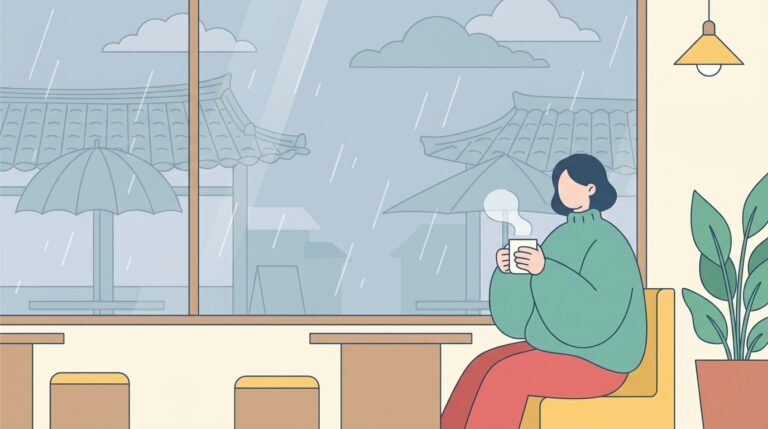
Picture this: You are sitting beneath the orange plastic tarp of a bustling pojangmacha (street food tent) in Mapo on a chilly Friday evening. The rain is drizzling softly onto the asphalt, and steam rises from a fresh bowl of spicy fish cake soup. Across from you sits Minho, your close Korean study partner. He looks deflated. Earlier that afternoon, you accidentally spilled iced Americano all over his hand-annotated, one-of-a-kind Korean history notes right before midterms.
You panic. You want to convey that your stomach has been in knots all afternoon, that you feel terrible, and that you wish you could turn back time. But what comes out of your mouth?
“죄송합니다. (Joesonghamnida.)”
Minho blinks, offers a polite but distant smile, and mutters, “아니에요, 괜찮아요. (Anieyo, gwaenchanayo – It’s fine).” The air instantly freezes into awkward formality. Why? Because “죄송합니다” is what you say to a stranger whose toe you stepped on in the Line 2 subway crush. It sounds transactional, stiff, and emotionally detached between friends.
When foreign learners enter intermediate (B2) Korean, one of the biggest emotional hurdles is escaping the “Robot Apology Trap.” In Korean culture, taking responsibility is not just about saying sorry; it is about sharing the emotional burden of the mistake. Through hundreds of coaching sessions at Daily Hangul, we have seen learners unlock genuinely deep relationships simply by swapping textbook apologies for nuanced expressions of self-reproach, remorse, and regret. Today, let’s look at how native speakers actually express guilt and regret so your sincere feelings are never lost in translation again.
Phase 2: Core Expressions Deep Dive
Here are the top three expressions you need when “미안해요” just doesn’t carry the emotional weight you need.
1. 괜히 그랬어요 (Gwaenhi geuraesseoyo)
- Pronunciation: [Gwaen-hi geu-rae-sseo-yo] (Think of ‘Gwaen’ sounding like ‘gwen’ in Gwen Stacy, followed by ‘he’ and ‘grr-eh-so-yo’)
- Meaning: Literal: “I did that for no reason” | Real Nuance: “I shouldn’t have done that; now I feel awful and regret it entirely.”
- K-Culture Moment: In episode 11 of almost every romance K-Drama, the protagonist blurts out a harsh truth, walks home in the dark kicking pebbles, clutches their chest, and groans to themselves: “아, 괜히 말했어… (Ah, I shouldn’t have said that…).”
- Editor’s Insight: The magical adverb here is 괜히 (gwaenhi). It implies that your action served zero positive purpose and only produced regret or damage. Saying 괜히 그랬어요 acknowledges: “I brought this trouble upon us without thinking, and I take the blame.”
- Situation Spectrum:
- Casual (to friends): 괜히 그랬어 (✅)
- Semi-formal (to colleagues/elders): 괜히 그랬어요 (✅)
- Strictly Formal (boardroom/press): 🚫 (Use 공식 사과 phrases instead)
- 🤔 Think About It: In English, we often say “I shouldn’t have done that.” Notice how Korean focuses on the uselessness/pointlessness of the act (괜히). How does admitting something was ‘pointless’ change the level of humility in your apology?
2. ~(으)ㄹ 걸 그랬어요 (-(eu)l geol geuraesseoyo)
- Pronunciation: [-(eu)l geol geu-rae-sseo-yo] (Soft rolling ‘l’, followed by ‘gul’ as in gull, and ‘geuraesseoyo’)
- Meaning: Literal: “I should have thought to do [Action]” | Real Nuance: “Hindsight is 20/20, and I deeply regret choosing the other path.”
- K-Culture Moment: In Reply 1988, characters constantly utter this while sharing ramyeon: “진작 물어볼 걸 그랬어… (I should have asked you much sooner…).”
- Editor’s Insight: This is the quintessential B2 grammar pattern for counterfactual regret. You use verb stems + -(으)ㄹ 걸 그랬어요 when you wish you had acted differently. Pair it with 진작 (jinjak – much earlier / in advance) to show maximum emotional remorse: 진작 사과할 걸 그랬어요 (I should have apologized way earlier).
- Situation Spectrum:
- Casual: ~ㄹ 걸 그랬어 (✅)
- Semi-formal: ~(으)ㄹ 걸 그랬어요 (✅)
- Formal: ~(으)ㄹ 것을 그랬습니다 (⚠️ – a bit archaic; use ~했어야 했는데 죄송합니다 instead)
- 🤔 Think About It: Why does Korean grammar allow you to drop the main verb and just trail off with “~ㄹ걸…”? What does leaving a sentence unfinished say about Korean emotional communication?
3. 마음이 너무 무거워요 (Maeumi neomu mugeowoyo)
- Pronunciation: [Ma-eu-mi neo-mu mu-geo-wo-yo] (Pronounce ‘Maeum’ like ‘mah-oom’, smooth and resonant)
- Meaning: Literal: “My heart is too heavy” | Real Nuance: “I am weighed down with guilt towards you; it’s eating away at my conscience.”
- K-Culture Moment: Used frequently in family dramas when a daughter or son couldn’t be there for a parent’s milestone or when a mentor fails to protect their mentee: “도와주지 못해서 마음이 너무 무거워 (My heart is so heavy because I couldn’t help you).”
- Editor’s Insight: In Korean emotional psychology, the 마음 (mind/heart/spirit) is treated like a physical container. When you cause someone distress or fail an obligation, your 마음 physically sinks. Saying this shows that your apology isn’t just words—it is a visceral burden you are carrying.
- Situation Spectrum:
- Casual: 마음이 너무 무거워 (✅)
- Semi-formal: 마음이 너무 무겁네요 / 무거워요 (✅)
- Formal: 마음이 몹시 무겁습니다 (✅ – highly dignified sincerity)
- 🤔 Think About It: Western apologies often focus on verbal accountability (“I apologize for my mistake”), whereas Korean focuses on shared emotional status (“My heart is weighed down”). Which one feels more vulnerable to you?
Phase 3: Textbook Korean vs. Real Korean
Let’s upgrade your textbook Korean into natural, emotionally resonant speech.
Situation 1: Expressing that you regret a past decision
- 📖 교과서 한국어 (Textbook): 저는 그 결정을 후회하고 있습니다. (Jeoneun geu gyeoljeongeul huhoehago itseumnida – I am regretting that decision.)
- 🗣️ 진짜 한국어 (Real Native): 아, 진작 그렇게 할 걸… 너무 후회돼요. (A, jinjak geureohge hal geol… neomu huhoedwaeyo – Ah, I should have done that from the start… I regret it so much.)
- 💡 왜 다를까?: Native Koreans rarely say “I am doing regret” (후회하고 있다) in conversational settings. Instead, they use the passive-feeling 후회되다 (regret comes over me) or trail off with the emotive ~할 걸 그랬어요.
Situation 2: Admitting you made a complete mess of things
- 📖 교과서 한국어 (Textbook): 제 부주의로 인해 문제가 발생하여 죄송합니다. (Je buju-ui-ro inhae munjega balsaenghayeo joesonghamnida – I apologize because a problem occurred due to my carelessness.)
- 🗣️ 진짜 한국어 (Real Native): 제가 다 망쳤네요. 괜한 짓을 해서 진짜 면목이 없어요. (Jega da mangchyeotneyo. Gwaenhan jiseul haeseo jinjja myeonmogi eopseoyo – I ruined it all. I did something so unnecessary; I truly have no face to show you.)
- 💡 왜 다를까?: The textbook version sounds like an automated subway delay announcement. Real native speakers own up to emotional vulnerability using colorful idioms like 망치다 (to ruin) and 면목이 없다 (to have no face/shamelessness).
Phase 4: K-Culture Deep Dive & Non-Verbal Manners
4-1. 눈치 (Nunchi) & Body Language: How to Look Truly Remorseful
In Korean communication, more than 50% of the apology is communicated before words leave your lips. If you deliver a regretful phrase while maintaining wide, unbroken eye contact and standing with your hands on your hips, your Korean counterpart will perceive you as defensive or defiant.
- The Gaze (시선 처리): Cast your eyes slightly downward at a 45-degree angle. Do not stare blankly into their eyes when expressing guilt; soften your gaze to show humility.
- The Hands (손 위치): Clasp both hands together in front of your lower torso (navel height), fingers interlaced or one hand cupping the other. This body language is called 공수 (gongsu) and signals non-aggression and sincere deference.
- The Subtle Sigh (한숨과 고개 끄덕임): A subtle, quiet intake of breath followed by a slight downward nod shows that you are actively processing your remorse.
4-2. Cultural Code: The Culture of 염치 (Yeomchi – Sense of Shame) and Pojangmacha Soju
In Korean society, a person who feels guilt easily is seen as possessing 염치 (yeomchi)—a moral compass and sense of social shame. Someone without guilt is critiqued as 파렴치한 (a shameless person).
When Korean adults experience heavy regret that they cannot undo, you will often find them sitting over a green bottle of soju. Rather than sweeping the mistake under the rug with a quick “forget about it,” friends will pour drinks for one another. Offering to pour a drink with two hands (두 손으로 따르기) while saying, “내가 그때 너무 생각이 짧았어 (I was too shallow-minded back then)” is how real Korean friendships are repaired and deepened.
Phase 5: Real-Life Roleplay Scenario
Setting: A quiet rooftop lounge near Hongdae. Evening breeze, city lights twinkling below.
Characters:
* Minjun (민준): Your Korean friend who reserved a sold-out indie band concert ticket for you two months ago.
* You: You completely mixed up the dates on your calendar and missed the concert today.
The Dialogue (8 Turns)
- 민준 (Minjun):
너 오늘 공연 시간 다 끝날 때까지 전화도 안 받고… 대체 어떻게 된 거야?
(Neo oneul gong-yeon sigan da kkeutnal ttaekkaji jeonhwado an batgo… daeche eotteohge doen geoya?)
“You didn’t answer your phone until the whole concert ended… What on earth happened?”
🎭 서운함이 가득 묻어나는 표정으로 팔짱을 끼며 (Crossing arms with a face full of hurt and disappointment) -
You:
민준아, 진짜 할 말이 없어. 내가 날짜를 완전히 착각했어… 정말 미안해.
(Minjuna, jinjja hal mari eopseo. Naega naljjareul wanjeonhi chakgakhaesseo… jeongmal mianhae.)
“Minjun, I truly have no excuse. I completely mixed up the dates… I am so sorry.”
🎭 고개를 푹 숙이고 양손을 모은 채 (Bowing head deeply with hands clasped together) -
민준 (Minjun):
내가 이 티켓 구하려고 두 달 전부터 광클했던 거 알잖아. 솔직히 좀 허탈하다.
(Naega i tiket guharyeogo du dal jeonbuteo gwangkeulhaetdeon geo aljana. Soljikhi jom heotalhada.)
“You know I clicked like crazy two months ago to get these tickets. Honestly, I feel so empty and let down.”
🎭 깊은 한숨을 쉬며 고개를 가로젓는다 (Sighing deeply and shaking his head) -
You:
네가 얼마나 고생해서 구했는지 아는데… 괜히 나 때문에 너까지 공연 못 보고… 마음이 너무 무거워.
(Nega eolmana gosaenghaeseo guhaetneunji aneunde… gwaenhi na ttaemune neokkaji gong-yeon mot bogo… maeumi neomu mugeowo.)
“I know how hard you worked to get them… You couldn’t even enjoy the concert because of me… My heart feels so heavy.”
🎭 진심 어린 떨리는 목소리로 민준을 바라보며 (Looking at Minjun with a genuinely shaken, sincere voice) -
민준 (Minjun):
…너 요즘 바쁘고 정신없는 건 알았지만, 미리 연락 한 번만 해줬어도 혼자라도 들어갔을 텐데.
(…Neo yojeum bappeugo jeongshineomneun geon arajjiman, miri yeollak han beonman haejwosseodo honjarado deureogasseul tende.)
“…I knew you were busy and overwhelmed lately, but if you’d just contacted me in advance, I could have gone in alone.”
🎭 서운함이 조금 누그러졌지만 여전히 씁쓸해하며 (Bitterness slightly softened, but still speaking wistfully) -
You:
맞아, 캘린더 확인을 진작 두 번 세 번 할 걸 그랬어. 다 내 불찰이야.
(Maja, kaellindeo hwagineul jinjak du beon se beon hal geol geuraesseo. Da nae bulchariya.)
“You’re right. I should have checked my calendar two, three times earlier. It’s entirely my fault.”
🎭 가슴에 손을 얹으며 자책하는 눈빛으로 (Placing a hand over chest with self-reproach in eyes) -
민준 (Minjun):
휴, 이미 지나간 일인데 어쩌겠냐. 네가 그렇게 자책하니까 내가 더 뭐라 하기도 그렇네.
(Hyu, imi jinagan irinde eojjeogennya. Nega geureohge jachaekhanikka naega deo mwora hagido geurne.)
“Phew, it’s already in the past, what can we do? Since you’re blaming yourself so hard, I can’t even stay mad.”
🎭 표정을 풀고 피식 웃으며 어깨를 툭 친다 (Relaxing his expression, letting out a soft chuckle, and tapping your shoulder) -
You:
티켓값은 내가 당연히 다 보낼 거고, 오늘 저녁 맛있는 거 내가 살게. 진짜 미안해, 민준아.
(Tiketgapseun naega dang-yeonhi da bonael geogo, oneul jeonyeok masinneun geo naega salge. Jinjja mianhae, Minjuna.)
“I’m obviously sending you the ticket refund right now, and dinner tonight is 100% on me. I’m truly sorry, Minjun.”
🎭 안도하며 두 손으로 민준의 팔을 살짝 잡는다 (Gently holding Minjun's arm in relief)
🔀 Interactive Choice Point
What if, at Turn 2, Minjun expressed his hurt, and you responded differently? Choose your path:
- Choice A: “야, 근데 나도 오늘 회사에서 진짜 힘든 일 있었어. 이해 좀 해주라.” (Hey, but I had a super rough day at work too. Cut me some slack.)
- 👉 Feedback [BAD]: Immediate disaster! In Korean conflict resolution, bringing up your own excuses when someone is hurt invalidates their feelings. Minjun will view you as self-centered (이기적).
- Choice B: “죄송합니다. 다음부터는 주의하도록 하겠습니다.” (I apologize. I will be careful from next time.)
- 👉 Feedback [RISK]: Far too robotic. Speaking in ultra-formal 하십시오체 to a friend who worked hard for you creates an emotional wall. Minjun will feel like you are treating him like a stranger.
- Choice C: “진짜 할 말이 없어. 다 내 잘못이야… 네 얼굴 보기가 너무 부끄럽다.” (I truly have no words. It’s all my fault… I feel too ashamed to look at your face.)
- 👉 Feedback [BEST]: Perfect emotional attunement! You validate his effort, take complete ownership, and show authentic remorse. This allows him to cool down quickly.
Phase 6: 10-Second Emotional Shadowing Drill
Practice these three sentences aloud. Pay attention to the rhythm pauses marked by / and absorb the emotional stage cues.
[😔 자책하며 낮고 조용하게 - Self-blaming, low and quiet]
아… / 괜히 그 말을 꺼냈나 봐요. / 마음이 너무 안 좋아요.
(A… / gwaenhi geu mareul kkeonaenna bwayo. / maeumi neomu an jo-ayo.)
“Ah… / I guess I shouldn’t have brought that up. / I feel so bad inside.”-
[🥺 안타까움과 진심을 가득 담아서 - Full of remorse and earnest longing]
진작 / 한 번 더 확인해 볼 걸 그랬어요… / 다 제 불찰이에요.
(Jinjak / han beon deo hwaginhae bol geol geuraesseoyo… / da je bulchari-eyo.)
“I should have / checked it just one more time in advance… / It’s entirely my negligence.” -
[🙏 간절하게 용서를 구하며 - Earnestly seeking forgiveness with humility]
정말 면목이 없습니다. / 실망시켜 드려서 / 죄송해요.
(Jeongmal myeonmogi eopseumnida. / silmangsikyeo deuryeoseo / joesonghaeyo.)
“I truly have no excuse to face you. / For letting you down, / I am so sorry.”
Phase 7: K-Culture Mini Dictionary
Expand your intermediate emotional lexicon with these four culturally rich terms:
- 자책 (Jachaek) | Self-reproach / Self-blame
- Usage: When someone tells you, “너무 자책하지 마세요 (Don’t blame yourself too much).” It represents the internal spiral of guilt after making a mistake.
- 후폭풍 (Hupokpung) | The aftermath / Emotional backlash (Lit. ‘After-storm’)
- Usage: Used when a regrettable decision creates prolonged regret or drama later on: “충동구매 하고 나서 카드값 후폭풍 때문에 죽겠어요 (After impulse shopping, the credit card aftermath is killing me).”
- 면목 (Myeonmok) | Face / Honor / Dignity (Lit. ‘Face and eyes’)
- Usage: Used in the famous idiom 면목이 없다 (To have no face to face someone). Use this when your guilt is so profound you feel unworthy of their eye contact.
- 흑역사 (Heug-yeoksa) | Dark history / Cringe past you wish to erase
- Usage: When looking back on drunk texting an ex or wearing terrible fashion years ago: “그 일은 내 인생 최고의 흑역사야 (That incident is the biggest dark history of my life).”
Phase 8: Survival Kit for Travelers
Made a major mistake while navigating South Korea? Here is your real-life traveler survival guide.
Top 3 Traveler Guilt & Regret Expressions
- 예약을 미리 취소했어야 했는데, 정말 죄송합니다.
(Yeyageul miri chwisohaesseoya haenneunde, jeongmal joesonghamnida.)
“I should have canceled the reservation in advance, I am deeply sorry.”- Pro Tip: Use this at a guest house, hair salon, or boutique restaurant if you miss a reservation window. It shows you know the inconvenience caused to a small business.
- 제가 길을 잘못 들어서 너무 늦었어요. 많이 기다리셨죠?
(Jega gireul jalmot deureoseo neomu neojeosseoyo. Mani gidarisyeotjyo?)
“I took the wrong path and arrived so late. You’ve been waiting long, right?”- Pro Tip: Immediately acknowledging their wait time cushions the blow of being late for tours or meetup guides.
- 물건을 떨어뜨렸어요. 제가 변상해 드릴게요.
(Mulgeoneul tteoreotteuryeosseoyo. Jega byeonsanghae deurilgeyo.)
“I dropped the item. I will reimburse/pay for the damage.”- Pro Tip: If you accidentally break pottery or merchandise in an Insa-dong souvenir shop, offering reimbursement (변상) alongside your apology shows peak etiquette.
Editor’s Travel Note
When traveling, missing subway transfers or getting stranded because of poor timing can cause massive regret. Avoid travel blunders by downloading and bookmarking the official 네이버 지도 길찾기 앱 가이드 before riding Seoul’s complex transit network. If you tap your T-Money card on the wrong subway turnstile, do not panic! Press the red “Help” (도움) intercom button on the barrier gate, bow slightly, and tell the station agent: “반대 방향으로 잘못 찍고 들어왔어요. 죄송합니다 (I accidentally tapped in the opposite direction. I’m sorry).” They will open the emergency gate for free 99% of the time!
Phase 9: “한 발 더 깊이” (One Step Deeper)
In Western individualist philosophies, apologies are often transactional agreements: “I violated rule X, so I offer apology Y to square the debt.”
In Korea’s communal tapestry, however, harmony (화합) and shared relational bonds (정, Jung) take center stage. When you say 괜히 그랬어요 or 마음이 무거워요, you aren’t just filing a formal apology—you are telling the other person that their emotional discomfort has directly punctured your own peace of mind. By acknowledging that you feel the weight of their sadness, you invite them to console you, which ironically heals the rift between you both. Korean forgiveness is not an exchange of words; it is a collaborative emotional repair.
💬 Your Turn: Have you ever made a mistake with a friend and felt that a simple “I’m sorry” wasn’t enough? How would expressing “my heart is heavy” change the vibe in your home country? Drop your thoughts in the comments below!
Phase 10: FAQ & Avoiding Misunderstandings
Q: Can I use “미안합니다” (Mianhamnida) instead of “죄송합니다” (Joesonghamnida) in professional situations?
A: Avoid it. In professional or public business settings, “죄송합니다” is the gold standard of formal responsibility. “미안합니다” is spoken by someone of equal or higher social status to someone beneath them. If you tell your Korean boss “미안합니다,” it sounds strangely condescending, as if you are patting them on the shoulder.
Q: What is the exact difference between “후회돼요” and “후회해요”?
A: 후회해요 (huhoehaeyo) is an active verb: “I do the action of regretting.” 후회돼요 (huhoedwaeyo) uses the passive suffix -되다, implying: “Regret naturally wells up inside my heart; I can’t stop the feeling of regret.” Native speakers overwhelmingly prefer 후회돼요 because it sounds more poignant, emotional, and authentic.
Q: If I break something at a friend’s house, should I immediately offer money?
A: Don’t just throw cash down—that can feel cold and insulting in Korean culture. First, deliver a heartfelt apology of regret: “어떡해, 내가 진짜 조심할 걸 그랬어… 정말 미안해.” Then, follow up with a thoughtful replacement gesture, such as purchasing the exact same item online or offering to buy dinner to make amends.
🚨 Common Mistakes Alert Board
- Mistake: Saying “내 잘못이야” (Nae jalmotiya) with an upright, smiling posture.
- Correct Action: Even if your words take blame, a casual posture makes you look sarcastic. Soften your shoulders, look down, and say it with genuine remorse.
- Mistake: Using “괜히 그랬어요” when a serious legal or formal violation occurred.
- Correct Action: 괜히 그랬어요 is for personal and interpersonal regret. In formal legal or business crises, use standard institutional language: “머리 숙여 깊이 사죄드립니다 (We bow our heads and offer our deepest apologies).”
- Mistake: Over-apologizing with endless “죄송합니다” like a skipping record.
- Correct Action: Saying 죄송합니다 ten times in a row creates social fatigue. State it once clearly, explain that your 마음이 무겁다 (heart is heavy), and state what proactive action you will take to resolve it.
Phase 11: Action Mission & Engagement
Ready to put these nuanced regret expressions into your active Korean vocabulary? Complete these missions!
- 🥉 Bronze Mission (Solo Shadowing): Stand in front of a mirror. Deliver “진작 말씀드릴 걸 그랬어요, 마음이 너무 무겁네요” three times with the correct downward gaze and clasped hands (공수 posture).
- 🥈 Silver Mission (Social Learning): Write a one-sentence faux K-drama scenario in the comments below using either 괜히 ~했다 or -(으)ㄹ 걸 그랬어요. Our editorial team will review your nuance!
- 🥇 Gold Mission (Real Life Application): Next time you are late for a meetup or miss a message from a Korean tandem partner, skip the flat 미안 and send: “연락을 진작 했어야 했는데 깜빡했어, 진짜 미안해!”
🎮 K-Culture Mission: Watch any Korean variety show (like Running Man) or romance drama this week. Keep an ear out for whenever a cast member makes a bad move in a game and yells: “아! 괜히 했다!” Celebrate when you catch it in the wild!
Phase 12: Interactive Quiz Challenge
Test your mastery of Korean guilt and regret! Pick your answers, then tap the toggle below to check.
1. Situation Judgment
You accidentally forgot your close coworker’s work anniversary party after promising you would bring the cake. Which expression is the most natural and empathetic to say to them the next morning?
* A) 죄송합니다. 케이크 비용을 입금해 드리겠습니다.
* B) 진작 알람을 맞춰둘 걸 그랬어요… 괜히 저 때문에 분위기 망친 것 같아서 마음이 너무 무거워요.
* C) 저는 지금 깊은 후회를 진행하고 있습니다.
2. Fill-in-the-Blank
Complete the phrase to express self-reproach:
“그 사람한테 그런 심한 말은 ( ) 말걸 그랬어요. 너무 후회돼요.”
(Hint: The adverb meaning ‘pointlessly / for no good reason’)
3. True or False Cultural Quiz
True or False: In Korea, when apologizing for a deep personal mistake to a close friend, making intense, unblinking eye contact is considered the best way to prove honesty and respect.
👉 Click here to reveal answers & explanations!
1. Answer: B
* Explanation: Option B uses -(으)ㄹ 걸 그랬어요 (regret of inaction) and 마음이 너무 무겁다 (empathy for the ruined mood), striking the ideal balance of warmth and accountability. Option A is cold and overly transactional, while Option C is awkward, ungrammatical textbook Korean.
2. Answer: 괜히 (Gwaenhi)
* Explanation: 괜히 pairs naturally with ~하지 말걸 그랬다 to emphasize that speaking those harsh words was completely unnecessary and regretful.
3. Answer: False
* Explanation: In traditional and intermediate Korean non-verbal etiquette, unblinking, direct eye contact during an apology can be perceived as defiant or aggressive (눈을 치켜뜨다). Looking slightly downward shows modesty and sincere remorse.







