

Phase 1: Empathy & Storytelling Opening
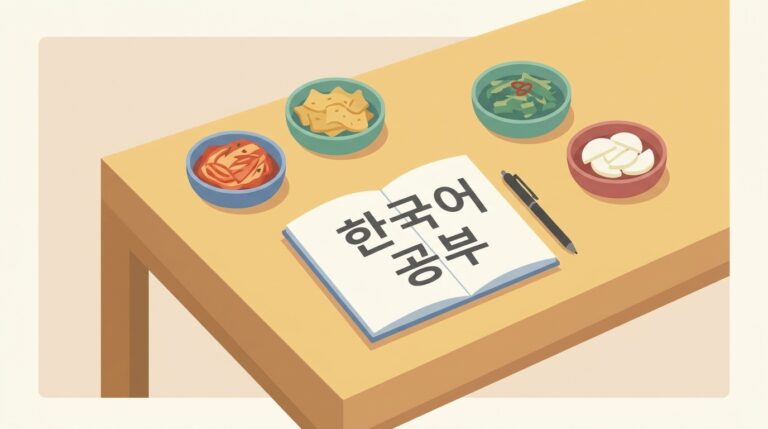
Hello! I am your Daily Hangul editor and your personal Korean culture navigator! Have you ever had this exact experience while traveling in Seoul or watching a K-Drama? You sit down at a lively Korean barbecue joint or a cozy neighborhood restaurant (baekban-jip). Before your main dish even hits the table, the server sets down a dozen gorgeous little side dishes—crispy pickled radish, savory rolled omelet, and sweet-and-spicy stir-fried fish cakes.
You pick up your metal chopsticks, take a bite, and before you know it… the tiny ceramic bowl is completely empty! You crave more, but anxiety freezes you in your seat. Is it free to get more? What if they charge me extra? How do I get the busy server’s attention without sounding rude or demanding?
Take a deep breath: you are not alone! Over 90% of beginner Korean learners experience this exact hesitation. In Korea, asking for side dish refills is not only 100% acceptable—it is an intrinsic part of Korean hospitality and culinary tradition known as Jeong (정). With just a few simple, polite A2-level phrases, you can unlock endless refills with zero awkwardness and earn beaming smiles from local restaurant owners.
Phase 2: Top 3 Core Expressions for Refills
1. 이거 더 주세요. (Igeo deo juseyo.)
- Pronunciation: [ee-guh duh joo-seh-yo] (Think of ‘ee-guh’ like ‘eager’ without the ‘r’, ‘duh’ like ‘the’, and ‘juseyo’ like ‘juice-say-yo’)
- Meaning: Literal: “Please give more of this.” / Real Nuance: “Could we please get a refill on this side dish?”
- K-Culture Moment: You see this constantly in reality shows like Jinny’s Kitchen or food K-Dramas like Let’s Eat. A customer taps an empty dish gently, smiles, and says this magic phrase to ask for a top-up.
- Editor’s Insight: This is the absolute MVP phrase of Korean dining. Short, polite, and universally understood. You do not even need to know the specific name of the dish—just gently gesture toward the bowl.
- Situation Spectrum: Casual (with friends): ⚠️ (Need to drop ‘-yo’) | Semi-formal (Restaurants/Cafes): ✅ (Perfect) | Formal (Fine Dining): ⚠️ (Use honorific forms)
- 🤔 Think About It: In English, asking “Give me more of this” might sound blunt, but in Korean, the polite imperative ending -seyo adds respect and warmth. Why do you think Korean restaurant culture values speed and directness over long pleasantries?
2. 김치 좀 더 주실 수 있으세요? (Kimchi jom deo jusil su isseuseyo?)
- Pronunciation: [gim-chee jom duh joo-shil soo ees-seu-seh-yo] (Soft ‘jom’ sounds like ‘chom(p)’)
- Meaning: Literal: “Could you possibly give a little more kimchi?” / Real Nuance: “Would it be okay to get a little extra kimchi, please?”
- K-Culture Moment: When dining at a traditional stew restaurant (gukbap-jip) where the grandmother chef serves artisan aged kimchi, diners use this gentler, humble request.
- Editor’s Insight: Adding 좀 (jom)—meaning ‘a little’—acts as an essential emotional buffer. It softens requests so you sound extra polite and considerate, preventing any impression of being entitled.
- Situation Spectrum: Casual: ⚠️ | Semi-formal (Restaurants): ✅ | Formal: ✅
- 🤔 Think About It: How does softening a request with “a little bit” reflect the Korean social value of modesty and mutual respect?
3. 반찬 셀프예요? (Banchan selpeuyeyo?)
- Pronunciation: [bahn-chahn sell-peu-yeh-yo] (Sounds just like the English word ‘self’ with an added ‘eu’ syllable: sell-peuh)
- Meaning: Literal: “Are side dishes self?” / Real Nuance: “Are the side dishes self-service?”
- K-Culture Moment: You walk into a trendy K-BBQ spot or a university diner in Sinchon, and you notice a stainless steel salad bar near the kitchen. Customers glance over and ask the staff this question before walking up.
- Editor’s Insight: “셀프 (sel-peu)” is iconic Konglish (Korean-style English). Many modern and casual Korean eateries have a self-service refill bar to keep prices low and service quick. Asking this before calling staff saves everyone time!
- Situation Spectrum: Casual: ✅ | Semi-formal: ✅ | Formal: 🚫 (High-end places will serve everything to your table)
- 🤔 Think About It: Why has self-service culture spread so rapidly in modern Korean casual dining compared to traditional table-service values?
Phase 3: Textbook Korean vs. Real Korean
Situation 1: Calling the Server for a Refill
- 📖 교과서 한국어 (Textbook Korean): 저기 계신 종업원님, 반찬을 다시 주시겠습니까? (Jeogi gyesin jongeobwonnim, banchaneul dasi jusigesseumnikka? / Server over there, would you kindly re-serve the side dishes?)
- 🗣️ 진짜 한국어 (Real Korean): 저기요, 이모님! 이거 좀 더 주세요~ (Jeogiyo, imonim! Igeo jom deo juseyo~ / Excuse me, auntie! Could we have a bit more of this, please?)
- 💡 왜 다를까? (Why is it different?): Nobody calls servers “종업원님 (jong-eob-won-nim)” in real life—it sounds cold and like a legal contract! Calling a middle-aged female restaurant worker 이모님 (imonim) (maternal aunt) creates instant warmth and familial affection.
Situation 2: Asking if Refills Are Free
- 📖 교과서 한국어 (Textbook Korean): 이 반찬은 추가 요금이 발생합니까? (I banchaneun chuga yogeumi balsaenghamnikka? / Does this side dish incur an additional fee?)
- 🗣️ 진짜 한국어 (Real Korean): 이거 리필 무료예요? (Igeo ripil muryo-yeyo? / Is this refill free?)
- 💡 왜 다를까? (Why is it different?): In daily life, Koreans borrow the loanword 리필 (ripil) and keep the sentence breezy and straightforward rather than using heavy Sino-Korean terms.
Phase 4: K-Culture Deep Dive & Non-Verbal Manners
4-1. 눈치 (Nunchi) & Table Gestures
Getting service in Korea is a dance of Nunchi (social intuition and situational awareness):
* The Hand Raise: When saying 저기요 (Jeogiyo), raise your hand gently with your fingers lightly held together, keeping your elbow near chest or shoulder level. Never wave your arm frantically over your head or snap your fingers—that is considered extremely rude.
* The Two-Handed Hand-off: When the server brings your freshly refilled bowl, receive it or place your empty bowl toward them using both hands, or support your right wrist/forearm with your left hand. This non-verbal gesture shows immense respect.
* The Bell Check: Look around your table edge or wall before shouting! Most casual Korean diners have a call button (호출벨 / hochul-bel) attached to the table edge or tissue box. If there is a button, press it once instead of calling out.
4-2. Cultural Code: The Spirit of Banchan & Jeong
In many Western cultures, every extra piece of bread, sauce, or salad costs money. In Korea, Banchan (반찬) is an extension of 정 (Jeong)—deep emotional bonding, hospitality, and communal care. Historically, Korean meals centered around steamed rice (bap), and side dishes were provided generously by hosts to ensure guests never left hungry. Free refills are an unspoken pact of hospitality. While a few premium specialty items (like raw marinated crab or expensive meats) might have an extra charge, everyday sides like kimchi, beansprouts, fish cakes, and shredded cabbage are cheerfully refilled.
Phase 5: Real-Life Roleplay Scenario
Setting: A buzzing pork belly (Samgyeopsal) diner in Hongdae during Friday dinner rush. Sizzling meat sounds fill the room.
Characters:
* Alex (An enthusiastic international student who loves spicy fish cakes)
* Imo-nim (The energetic, motherly restaurant owner wearing a floral apron)
- Alex: 저기요, 이모님! (Jeogiyo, imonim! / Excuse me, auntie!) 🎭 [Politely raises one hand at shoulder height, making friendly eye contact]
- Imo-nim: 네, 갑니다! 뭐 필요한 거 있어요? (Ne, gamnida! Mwo pil-yohan geo isseoyo? / Yes, coming! Do you need something?) 🎭 [Wipes hands quickly and walks over with a warm grin]
- Alex: 이 어묵볶음 너무 맛있어요. 이거 좀 더 주세요! (I eomukbokkeum neomu masisseoyo. Igeo jom deo juseyo! / This stir-fried fish cake is so delicious. Could we get a little more of this?) 🎭 [Gently gestures toward the empty ceramic bowl with both hands]
- Imo-nim: 아이고, 잘 먹네! 바로 더 갖다줄게요. (Aigo, jal meongne! Baro deo gatdajulgeyo. / Oh my, you eat so well! I’ll bring some right away.) 🎭 [Takes the empty bowl happily]
- Alex: 감사합니다! 혹시 쌈채소도 더 먹을 수 있어요? (Gamsahamnida! Hoksi ssamchaesodo deo meogeul su isseoyo? / Thank you! By any chance, can we have more wrapping lettuce too?) 🎭 [Tilts head with an appreciative smile]
- Imo-nim: 쌈채소는 저기 셀프바에서 마음껏 가져다 먹어요! (Ssamchaesoneun jeogi selpeuba-eseo maeumkkeot gajyeoda meogeoyo! / For wrapping greens, feel free to take as much as you want from the self-bar over there!) 🎭 [Points toward the stainless steel counter near the kitchen]
- Alex: 아, 저기 셀프 코너요? 알겠습니다! (A, jeogi selpeu koneoyo? Algesseumnida! / Ah, the self-service corner over there? Understood!) 🎭 [Nods with understanding and prepares to stand up with a plate]
- Imo-nim: 맛있게 많이 먹어요! (Mas-itge mani meogeoyo! / Eat a lot and enjoy your meal!) 🎭 [Pats Alex gently on the shoulder before bustling back]
🔀 Interactive Choice: What should Alex do next?
- Option A: Pick up three large plates, walk directly inside the kitchen cooking zone, and start opening food bins yourself.
- Option B: Walk over to the clearly designated self-bar, take only as much lettuce as needed, and return to the table.
- Option C: Loudly yell across the dining room: “야! 상추 더 가져와! (Ya! Sangchu deo gajyeowa! / Hey! Bring more lettuce!)”
-
Option A Feedback (Risk): Stepping inside the actual kitchen prep line is dangerous and violates restaurant hygiene rules. Always stick to the customer-facing self-bar area!
- Option B Feedback (Best): Perfect! Taking reasonable portions from the self-bar respects food waste concerns and shows great restaurant etiquette.
- Option C Feedback (Bad): Calling an elder or server Ya! and using harsh informal language will immediately offend everyone in the restaurant.
Phase 6: 10-Second Emotion Shadowing Drill
Practice these lines out loud! Pay attention to the rhythm pauses marked by /.
[😊 밝고 공손하게 - Cheerful & Polite]
저기요~ / 이거 좀 더 주세요!
(Jeogiyo~ / igeo jom deo juseyo!)-
[🥺 조심스럽고 애교 있게 - Mildly Hesitant & Friendly]
이모님, / 반찬 셀프예요?
(Imonim, / banchan selpeuyeyo?) -
[😋 감탄하며 진심 어린 칭찬 - Delighted & Full of Praise]
이거 진짜 맛있어요! / 조금만 더 주실 수 있으세요?
(Igeo jinjja masisseoyo! / jogeumman deo jusil su isseuseyo?)
Phase 7: K-Culture Mini Dictionary
- 반찬 (Banchan): Traditional Korean side dishes served alongside rice and soup. Ranging from seasoned greens to fermented stews, they are meant to balance nutrition and flavor.
- 리필 (Ripil): Loanword from the English “refill.” Commonly used in Korean dining contexts: “리필 돼요?” (Can this be refilled?).
- 셀프 (Selpeu): Konglish meaning “self-service.” If you see a sign saying “물/반찬은 셀프”, head over to the counter to grab your own water or side dishes.
- 이모님 (Imonim): Literally “maternal aunt.” A widely accepted, endearing honorific used by customers to address female restaurant staff warmly.
Phase 8: Traveler’s Survival Kit
Top 3 Survival Phrases
- 저기요, 이거 더 주세요. (Jeogiyo, igeo deo juseyo.)
- Pro Tip: Point directly at the empty bowl while smiling. Works 100% of the time.
- 반찬 셀프인가요? (Banchan selpeuingayo?)
- Pro Tip: Use this when you see other guests walking around with small dishes.
- 잘 먹었습니다! (Jal meogeotseumnida! / I ate very well!)
- Pro Tip: Say this to the owner as you head to the register to pay. It brings immense joy to restaurant owners.
Editor’s Travel Note
When hunting for authentic neighborhood restaurants with generous refills, avoid relying solely on global travel apps. Download and search on the Naver Map navigation app using keywords like 백반 맛집 (home-style meal spots). Also note that tap water is not served by default in pitchers at budget restaurants; look for the metal water purifier marked 물은 셀프 (Water is self-service) and grab a stainless cup yourself!
Phase 9: A Step Deeper (Reflection)
Korean side dish culture is a living window into collective dining (Gongdongche Munhwa). Unlike individual plated courses common in Western fine dining, Korean meals place banchan in the center of the table for everyone to share. Sharing side dishes and noticing when someone else’s favorite bowl is empty creates a shared rhythm of care. Asking for a refill is not an imposition; it is viewed by cooks as the ultimate compliment to their culinary skill.
💬 Your Turn: What is your absolute favorite Korean side dish that you could refill ten times? Is it sweetened fish cakes, sweet potato salad, or classic fermented kimchi? Share your pick in the comments below!
Phase 10: FAQ & Common Mistakes
Q: Do all Korean restaurants provide unlimited free side dish refills?
A: Almost all everyday restaurants, barbecue houses, and soup diners offer free, unlimited refills on standard side dishes. However, very expensive items (such as whole salted fish, braised short ribs, or raw marinated crab served as sides) may carry a nominal re-order fee, typically stated on the menu as 추가 (chuga / addition).
Q: Is it rude to ask for a refill if I haven’t finished my main food?
A: Not at all! In fact, Koreans often refill their favorite sides halfway through the meal so they can enjoy pairing them with their main stew or barbecue. Just make sure to eat what you take so food does not go to waste.
Q: How do I call male servers if I cannot call them ‘이모님’ (auntie)?
A: For male staff or younger staff in general, use the neutral and polite 저기요 (Jeogiyo) or address younger male servers casually as 사장님 (Sajangnim / owner/boss). Avoid calling them Samchon (uncle) unless you are a regular customer.
🚨 3 Common Foreigner Mistakes & Correct Actions
- Mistake: Snapping fingers or waving both arms high in the air to summon staff.
- Correct Action: Press the table call button, or gently raise one hand with eye contact and say “저기요~”.
- Mistake: Piling up food mountains at the self-bar and leaving half of it behind.
- Correct Action: Take small portions frequently. Korean restaurants often display signs requesting no food waste (“드실 만큼만 적당히”).
- Mistake: Hesitating to speak because you don’t know the Korean name of the vegetable.
- Correct Action: Don’t stress! Simply say “이거 더 주세요” (Igeo deo juseyo) while gesturing toward the bowl.
Phase 11: Action Missions
- 🥉 Bronze Mission (Solo Practice): Practice saying “저기요, 이거 좀 더 주세요!” in front of your mirror three times using two-handed polite gestures.
- 🥈 Silver Mission (Social Share): Next time you visit a Korean restaurant or cook Korean food at home, take a photo of your banchan spread, tag @DailyHangul, and caption it with #반찬리필완료 (#BanchanRefillDone)!
- 🥇 Gold Mission (Real-Life Mastery): At your next Korean dining experience, identify whether the restaurant has a 셀프바 (Self-bar) or requires ordering from staff, and successfully execute a refill request entirely in Korean!
🎮 K-Culture Mission: Watch one episode of a food-centric K-Drama (like Let’s Eat or Weightlifting Fairy Kim Bok-joo) and spot how many times characters ask for more side dishes or shout “이모님!”.
Phase 12: Interactive Quiz Challenge
Test your dining street smarts! Tap each question below to reveal the answer and cultural explanation.
Q1. Situational Judgment: You finished a tasty plate of pickled onions at a BBQ restaurant. What is the most natural way to ask for more?
Answer: “이거 좀 더 주세요!” (Igeo jom deo juseyo!)
Explanation: Pointing to the dish and asking with polite -seyo and the softening word jom is natural, clear, and perfectly polite for A2 learners.
Q2. Fill-in-the-Blank: You spot a buffet-style side dish station. Fill in the missing word: “반찬 _____예요?”
Answer: 셀프 (sel-peu)
Explanation: The complete phrase is “반찬 셀프예요?” (Are side dishes self-service?), which is universally used across Korea.
Q3. True or False: Calling a friendly middle-aged female restaurant server ‘이모님’ (Imonim) is considered offensive because you are not related by blood.
Answer: False
Explanation: It is actually a deeply affectionate term that bridges social distance and shows warmth, making servers happy to provide generous service!







