

안녕하세요! 매일한글 에디터입니다.
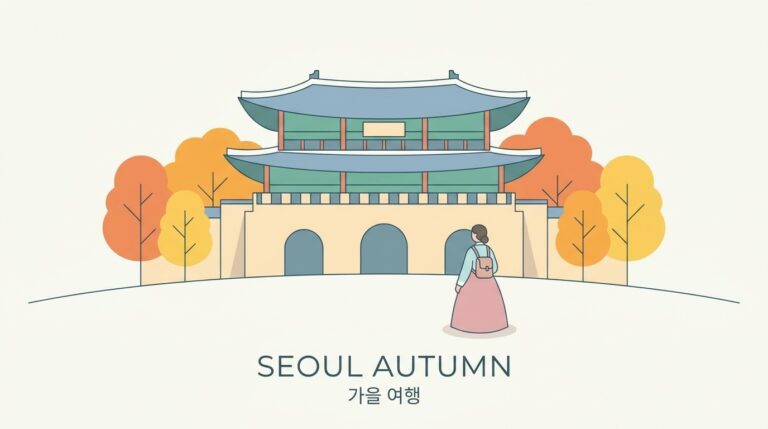
Imagine stepping out of Gyeongbokgung Station into the crisp morning air of central Seoul. Towering modern glass skyscrapers frame your view, but just ahead stands Gwanghwamun, the majestic main gate of Joseon’s royal heart. You see travelers swirling by in vivid silk hanbok, their skirts billowing in the breeze. Your heart races with excitement, but as you approach the grand ticket booth, panic sets in. Your phone screen dims, you are unsure which subway exit leads straight to the ticket plaza, and you wonder: Do I have to buy a ticket, or is it truly free if I wear this Hanbok? How do I ask someone politely without freezing up?
Over the past decade coaching hundreds of beginning Korean learners, I have heard this exact story time and again. Travelers often worry that historical sites require stiff, archaic language or complex grammar. The good news? You only need simple, warm A2-level Korean to unlock warm smiles, skip confusion, and experience royal Seoul like a confident insider. Let’s make this historic journey your most memorable adventure yet!
Phase 2: Core Expressions In-Depth
1. 경복궁 가려면 어디로 가요? (Gyeongbokgung garyeomyeon eodiro gayo?)
- Pronunciation: [Gyeongbokgung garyeomyeon eodiro gayo?] (Sound analogy: Pronounce ‘ga-ryeo-myeon’ smoothly, like ‘got-a-menu’ said quickly with a soft ‘r’.)
- Meaning:
- Literal: “If intending to go to Gyeongbokgung, where do I go?”
- Real Nuance: “Excuse me, which way should I go to reach Gyeongbokgung?”
- K-Culture Moment: You will often hear travelers and friendly locals in K-dramas ask this right after exiting crowded subway stations when looking for landmarks.
- Editor’s Insight: The grammar pattern
-(으)려면(-(eu)ryeomyeon) means “if you intend to do something.” At the A2 level, pairing this with어디로 가요?(eodiro gayo?) is your magic formula for asking directions anywhere in Korea. - Situation Spectrum:
- Casual (Friends): ⚠️ (Use 경복궁 가려면 어디로 가? / Gyeongbokgung garyeomyeon eodiro ga?)
- Semi-formal (Polite everyday): ✅
- Formal (Official announcements): ⚠️ (Use 어디로 가야 합니까? / eodiro gaya hamnikka?)
- 🤔 Think About It: In English, we often ask “Can you tell me how to get to…?” focusing on the listener’s ability. Korean directions focus directly on the shared path: “If intending to reach X, toward where?”
2. 한복 입으면 무료 입장이에요? (Hanbok ibeumyeon muryo ipjang-ieyo?)
- Pronunciation: [Hanbok ibeumyeon muryo ipjang-ieyo?] (Sound analogy: ‘muryo’ sounds like ‘moo-ree-oh’, rhyming with ‘studio’.)
- Meaning:
- Literal: “If wearing Hanbok, is it free admission?”
- Real Nuance: “Can I get in for free if I’m wearing a Hanbok?”
- K-Culture Moment: A staple scene in travel variety shows like 2 Days & 1 Night where cast members verify cultural discount perks at royal heritage gates.
- Editor’s Insight: Korea encourages cultural appreciation by offering 100% free admission to anyone dressed in traditional Hanbok (both tops and bottoms required). Asking this politely confirms your ticket exemption at the gate staff booth with zero awkwardness.
- Situation Spectrum:
- Casual: 🚫
- Semi-formal (Gate staff, ticket sellers): ✅
- Formal: ⚠️
- 🤔 Think About It: Notice the conditional
-으면(eumyeon, “if/when”). It shows how Korean uses gentle conditions to ask for confirmation rather than demanding rules.
3. 여기서 사진 한 장만 찍어 주실 수 있나요? (Yeogiseo sajin han jangman jjigeo jusil su innayo?)
- Pronunciation: [Yeogiseo sajin han jangman jjigeo jusil su innayo?] (Sound analogy: ‘han jang-man’ sounds like ‘hahn jahng mahn’ with a crisp, soft finish.)
- Meaning:
- Literal: “Here, could you take just one sheet of photo for me?”
- Real Nuance: “Could you please take a quick photo of me here?”
- K-Culture Moment: In romance dramas like Extraordinary Attorney Woo, characters shyly approach helpful strangers in scenic spots using this exact cadence.
- Editor’s Insight: Adding
한 장만(han jang-man, “just one single shot”) softens your request enormously. It shows you respect the other person’s time, making Koreans far more eager to snap three or four angles for you! - Situation Spectrum:
- Casual: 🚫
- Semi-formal (Helpful strangers): ✅
- Formal: ⚠️
- 🤔 Think About It: Why say “one sheet” (
한 장)? Korean uses specific counting classifiers for flat items, showing how objects are visualized in everyday speech.
Phase 3: Textbook Korean vs. Real Korean
Situation 1: Asking for the Palace Exit at the Subway
- 📖 Textbook Korean:
- 경복궁으로 가려면 몇 번 출구로 나가야 합니까? (Gyeongbokgung-euro garyeomyeon myeot beon chulgu-ro nagaya hamnikka?)
- Translation: “Through which number exit must I depart if I intend to go toward Gyeongbokgung?”
- 🗣️ Real Korean:
- 저기요, 경복궁 몇 번 출구예요? (Jeogiyo, Gyeongbokgung myeot beon chulguyeyo?)
- Translation: “Excuse me, which exit is Gyeongbokgung?”
- 💡 Why the Difference?: Real-life Seoul moves fast! Rather than building a textbook compound sentence with heavy formal endings (
-합니까), native speakers simply say “Excuse me” (저기요), name the destination, and ask for the exit number.
Situation 2: Inquiring About Royal Guard Changing Times
- 📖 Textbook Korean:
- 수문장 교대의식은 몇 시에 거행됩니까? (Sumunjang gyodae-uisik-eun myeot si-e geohaengdoemnikka?)
- Translation: “At what hour is the Changing of the Royal Guards ceremony conducted?”
- 🗣️ Real Korean:
- 교대의식 몇 시에 시작해요? (Gyodae-uisik myeot si-e sijakhaeyo?)
- Translation: “What time does the changing ceremony start?”
- 💡 Why the Difference?: Words like
거행되다(geohaengdoeda, “to be held/conducted”) are meant for formal documents. In spoken Korean, the friendly verb시작해요?(sijakhaeyo?, “does it start?”) is natural and perfectly polite.
Phase 4: K-Culture Deep Dive & Non-Verbal Manners
4-1. Nunchi & Physical Etiquette at Historic Sites
- Mind the Wooden Threshold (Munteok): When passing through historic pavilion gates like Geunjeongmun, never step directly on top of the raised wooden door threshold (문턱, munteok). In Joseon culture, stepping on the threshold was believed to bring bad luck and damages the ancient timber. Step cleanly over it.
- The Two-Handed Ticket Exchange: Whenever handing your physical ticket or credit card to palace gatekeepers, hold the card or ticket with both hands, or support your right wrist lightly with your left hand. This classic gesture signals deep respect.
- Photo Queue Etiquette (Nunchi): Spot a stunning photo angle under the eaves of Gyeonghoeru Pavilion? Look around. If others are waiting, take three or four photos quickly and step aside with a slight nod of appreciation.
4-2. The Hanbok Phenomenon & Sageuk Magic
- Walking into Gyeongbokgung in a traditional gown isn’t cosplay; it is a celebrated national tradition. The palace administration offers free entry to anyone wearing Hanbok to encourage cultural heritage preservation.
- When selecting your rental, you will recognize royal color schemes from historical K-dramas (Sageuk) like Under the Queen’s Umbrella and The King’s Affection. Wearing Hanbok transforms your walk into living history—locals will frequently smile and say,
한복 정말 잘 어울려요!(Hanbok jeongmal jal eoullyeoyo! / “The Hanbok suits you so well!”).
Phase 5: Real-Life Roleplay Scenario
Setting: In front of the Gyeongbokgung ticket office near Heungnyemun Gate.
Characters:
* You (A curious traveler wearing modern Hanbok)
* Minho (A friendly, red-jacketed Palace Youth Volunteer guide)
- You: 저기요, 실례합니다! (Jeogiyo, sillyehamnida!)
🎭 [Bowing your head slightly with a warm, polite smile]
“Excuse me, pardon me!” -
Minho: 네, 안녕하세요! 무엇을 도와드릴까요? (Ne, annyeonghaseyo! Mueos-eul dowadeurilkkayo?)
🎭 [Holding a park map and welcoming you warmly]
“Yes, hello! How may I help you?” -
You: 경복궁 가려면 표를 사야 해요? (Gyeongbokgung garyeomyeon pyo-reul saya haeyo?)
🎭 [Pointing toward the ticket booth line]
“Do I need to buy a ticket to enter Gyeongbokgung?” -
Minho: 지금 예쁜 한복을 입고 계시네요! (Jigeum yeppeun hanbok-eul ipgo gyesineyo!)
🎭 [Looking at your traditional attire with an encouraging grin]
“You are wearing a pretty Hanbok right now!” -
You: 한복 입으면 무료 입장 맞아요? (Hanbok ibeumyeon muryo ipjang majayo?)
🎭 [Touching your Hanbok sleeve gently]
“Is it correct that admission is free if wearing Hanbok?” -
Minho: 네, 맞아요! 표 없이 바로 저기 입구로 들어가시면 돼요. (Ne, majayo! Pyo eopsi baro jeogi ipgu-ro deureogasimyeon dwaeyo.)
🎭 [Gesturing toward the main gate with open palms]
“Yes, that’s right! You can enter straight through that gate over there without a ticket.” -
You: 와, 다행이에요! 정말 감사합니다. (Wa, dahaeng-ieyo! Jeongmal gamsahamnida.)
🎭 [Clapping hands softly in relief]
“Wow, what a relief! Thank you so much.” -
Minho: 즐거운 시간 보내세요! 사진도 많이 찍으세요. (Jeulgeoun sigan bonaeseyo! Sajin-do mani jjigeuseyo.)
🎭 [Giving a cheerful nod]
“Have a wonderful time! Take lots of photos too.”
🔀 Interactive Choice Point
You walk into the grand courtyard, and the sunlight hitting Geunjeongjeon Hall is breathtaking. You want to ask a nearby traveler to take your photo. What do you say?
- Choice A:
저기요, 사진 한 장만 찍어 주실 수 있나요?(Jeogiyo, sajin han jangman jjigeo jusil su innayo?) - Choice B:
야, 내 사진 찍어!(Ya, nae sajin jjigeo!) - Choice C:
사진 찍으십시오!(Sajin jjigeusipsio!)
▶ Decision Feedback:
- Choice A (BEST): Polite, natural, and gentle! The phrase "한 장만" (just one shot) makes anyone happy to assist you.
- Choice B (BAD): "Hey, take my picture!" This is impolite banmal (informal speech). Strangers will be shocked or walk away!
- Choice C (RISK): Grammatically formal, but sounds like a strict royal military command from a Joseon general! Too rigid for modern travelers.
Phase 6: 10-Second Emotion Shadowing Drill
Speak these aloud using natural pauses (/) and adopt the indicated emotion:
[😊 Bright and curious]
저기요, / 경복궁 가려면 / 어디로 가요?
(Jeogiyo, / Gyeongbokgung garyeomyeon / eodiro gayo?)-
[✨ Hopeful and delighted]
한복 입으면 / 정말 / 무료 입장이에요?
(Hanbok ibeumyeon / jeongmal / muryo ipjang-ieyo?) -
[🥺 Friendly and polite]
실례지만, / 사진 한 장만 / 찍어 주실 수 있나요?
(Sillyejiman, / sajin han jangman / jjigeo jusil su innayo?)
Phase 7: K-Culture Mini Dictionary
-
궁 (Gung) | Palace
Usage: Found in all royal names: 경복궁 (Gyeongbokgung), 창덕궁 (Changdeokgung). You will hear taxi drivers ask:어느 궁으로 가세요?(Eoneu gung-euro gaseyo? / “Which palace are you going to?”). -
한복 (Hanbok) | Traditional Korean Clothing
Usage: Rental shops around Insadong and Bukchon announce한복 대여(Hanbok daeyeo / Hanbok Rental). Saying한복 빌리고 싶어요(Hanbok billigo sipeoyo / “I’d like to rent Hanbok”) works everywhere. -
수문장 교대의식 (Sumunjang gyodae-uisik) | Royal Guard Changing Ceremony
Usage: The famous colorful reenactment held outside Heungnyemun Gate daily at 10:00 AM and 2:00 PM (except Tuesdays). -
입장권 (Ipjanggwon) | Admission Ticket
Usage: At the ticket counter, you will see입장권 사는 곳(Ticket Booth). Standard adult tickets cost 3,000 KRW unless you wear Hanbok.
Phase 8: Survival Kit for Travelers
Top 3 Survival Phrases
화장실이 어디에 있어요?(Hwajangsir-i eodie isseoyo?)- Meaning: Where is the restroom?
- Pro Tip: Historical palaces are vast! Restrooms are tucked near exterior walls, so ask before heading deep into the royal pavilions.
영어 지도 있어요?(Yeong-eo jido isseoyo?)- Meaning: Do you have an English map?
- Pro Tip: Information booths right inside the entrance offer free physical walking maps with secret walking trails.
몇 시에 문 닫아요?(Myeot si-e mun dadayo?)- Meaning: What time do you close?
- Pro Tip: Last palace entry is strictly one hour before closing time.
Editor’s Travel Note
- Transit Route: Take Seoul Subway Line 3 directly to Gyeongbokgung Station (경복궁역) and use Exit 5. The corridor itself is designed like a royal stone palace and leads right into the courtyard!
- Apps to Install: Google Maps often lacks walking path accuracy in South Korea. Be sure to complete your Naver Map app download for iOS and Android to search subway exits and Hanbok rental reviews effortlessly.
- Palace Closed Day: Remember that Gyeongbokgung is closed every Tuesday. (Changdeokgung is closed on Mondays).
Phase 9: A Step Deeper (Reflective Insight)
When you stand in front of Gyeongbokgung, look behind the throne hall toward Mount Bugaksan, then turn around toward the bustling boulevards of Gwanghwamun. In traditional Korean architecture, buildings were never built to overpower their natural surroundings; they were positioned to sit in harmony (조화, johwa) with mountain ridges and winds. Even our language reflects this harmony. When you add polite endings like -(으)실 수 있나요?, you aren’t just following grammar rules—you are honoring the person in front of you and maintaining mutual peace in shared spaces.
💬 Your Turn: If you could wear any color of Hanbok to explore Gyeongbokgung, which would you pick—royal deep blue, pastel blossom pink, or emerald green? Tell us in the comments below!
Phase 10: FAQ & Avoiding Misunderstandings
Q: Can anyone enter Gyeongbokgung for free simply by renting any Hanbok?
A: Yes! Both domestic and international visitors receive free admission regardless of nationality, as long as you wear a traditional two-piece Hanbok (jeogori top + chima skirt for women; jeogori top + baji trousers for men). Simply bypass the ticket line and show yourself to the gatekeeper.
Q: What if I don’t wear Hanbok? How do I pay for admission?
A: Tickets are 3,000 KRW for adults (ages 19–64). You can pay with standard international credit cards or cash at automated ticket kiosks or manned counters right beside Heungnyemun Gate.
Q: Can I take photos anywhere inside the palace grounds?
A: Personal photography is welcome everywhere outdoors! However, commercial photography equipment (huge reflectors, tripods blocking walkways) and filming inside fragile historic rooms without prior permits are restricted.
🚨 Common Mistakes Warning Board
- Calling gate staff “아저씨” (Ajeossi)
- Risk: Can sound overly blunt or dismissive to on-duty staff.
- Correct Action: Use
저기요(Jeogiyo / “Excuse me”) or선생님(Seonsaengnim / “Honored guide/teacher”).
- Asking “사진 찍어줘” (Sajin jjigeojwo) to strangers
- Risk: This is informal speech (banmal).
- Correct Action: Always use
사진 한 장만 찍어 주실 수 있나요?(Sajin han jangman jjigeo jusil su innayo?).
- Assuming the palace is open 7 days a week
- Risk: Arriving on Tuesday only to find locked gates!
- Correct Action: Check the calendar in advance; Gyeongbokgung rests every Tuesday.
Phase 11: Action Missions & Community Engagement
- 🥉 Bronze Mission (Solo Practice): Stand in front of your mirror and practice saying
경복궁 가려면 어디로 가요?three times using the shadowing rhythm from Phase 6. - 🥈 Silver Mission (Social Share): Share your favorite photo of Seoul or a K-drama palace screenshot on social media with the Korean caption:
한복 입고 경복궁 가고 싶어요!(I want to wear Hanbok and go to Gyeongbokgung!). - 🥇 Gold Mission (Real Life / Classroom): Next time you meet a Korean speaker, exchange student, or tutor, ask them:
사진 한 장만 찍어 주실 수 있나요?while handing them a prop! - 🎮 K-Culture Mission: Watch an episode of a royal drama (such as 100 Days My Prince or The King’s Affection). Spot the main throne hall (
근정전, Geunjeongjeon) and write down the word궁(gung) whenever you hear it.
Phase 12: Interactive Quiz Challenge
1. Situational Judgment Quiz
You are lost inside Gyeongbokgung Station and see a station attendant. Which sentence is the most polite and natural way for an A2 learner to ask the way to the palace?
* (A) 야! 경복궁 어디야? (Ya! Gyeongbokgung eodiya?)
* (B) 저기요, 경복궁 몇 번 출구예요? (Jeogiyo, Gyeongbokgung myeot beon chulguyeyo?)
* (C) 경복궁에 즉시 데려다주십시오. (Gyeongbokgung-e jeuksi deryeodajusipsio.)
2. Fill-in-the-Blank Quiz
Complete the polite request for a photo:
“여기서 사진 한 장만 찍어 ______ 수 있나요?”
* (A) 갈 (gal)
* (B) 먹을 (meogeul)
* (C) 주실 (jusil)
3. Cultural True or False
- Q: You must purchase a regular paper ticket even if you are fully dressed in authentic Hanbok. [True / False]
👉 Click here to reveal answers & explanations!
- Answer: (B)
- Explanation: (B) is polite, friendly, and practical. (A) uses rude informal speech, and (C) commands them to escort you immediately!
- Answer: (C) 주실 (jusil)
- Explanation:
찍어 주실 수 있나요?comes from주다(to give) with honorific-(으)시-, meaning “Could you do the favor of taking a photo for me?”
- Explanation:
- Answer: False
- Explanation: Visitors wearing proper traditional Hanbok receive free admission and can enter directly through the gate check without buying a ticket!
- Explanation: Visitors wearing proper traditional Hanbok receive free admission and can enter directly through the gate check without buying a ticket!







