

Phase 1: Empathy (Story-Driven Opening)
안녕하세요! 매일한글 에디터입니다.
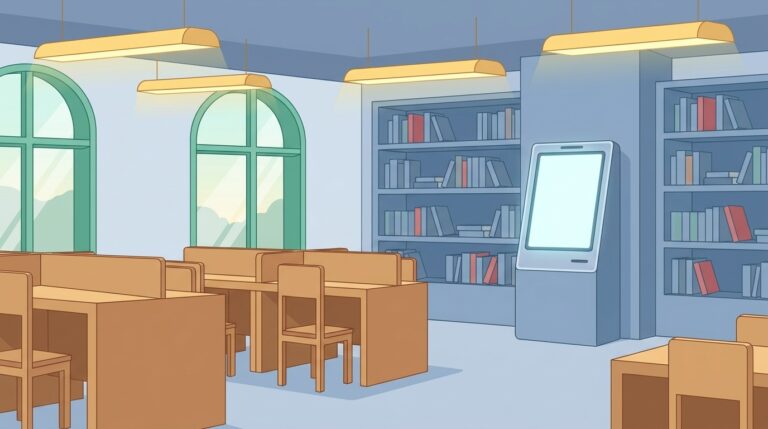
Imagine this scenario: You just arrived in Seoul, inspired by your favorite campus K-dramas like Cheese in the Trap or Law School. You are eager to soak up that focused, aesthetic Korean study atmosphere—what locals proudly call yeol-gong (열공, fierce studying). You walk into a stunning district public library like Mapo Central Library or the Seoul Metropolitan Library. The air smells of crisp paper and quiet determination.
You spot an empty wooden carrel desk by a sunlit window. You stride toward it, ready to set down your notebook, only to be stopped in your tracks: every desk has a little digital number tag, and there’s a towering electronic kiosk (무인 발권기) at the entrance surrounded by students tapping screens at lightning speed.
Suddenly, your heart races. “Wait, can’t I just sit down? Do I need a Korean ID card? What if the machine eats my pass or cancels my seat? What if I accidentally book the wrong quiet room and get shushed?”
Take a deep breath! Over the past decade of coaching international students and travelers, I have seen hundreds of bright learners freeze right in front of these kiosks. Korean public amenities are among the most technologically advanced and efficient in the world, but their high-tech nature can feel intimidating if you don’t know the exact vocabulary. Today, we are breaking down the mystery of the Korean library reading room seat booking system (도서관 열람실 좌석 발권). By the end of this guide, you will walk up to any library terminal in Korea, claim your spot with total poise, and study comfortably alongside the locals!
Phase 2: Core Expressions Deep Dive
Here are the three foundational expressions you need to conquer any library kiosk:
1. 좌석 발권기 어디에 있어요? (Jwaseok balgwon-gi eodie isseoyo?)
- Pronunciation: Jwah-seok bal-gwon-gee uh-dee-eh ee-ssuh-yo? (Think of ‘balgwon’ as saying “ball” quickly merged into “Gwen”).
- Meaning: “Where is the seat ticketing kiosk?”
- Literal breakdown: 좌석 (Seat) + 발권기 (Issuing machine) + 어디에 (Where) + 있어요 (Is there / Exists)?
- Nuance: Polite and direct. Use this when you enter a large library and cannot locate the reservation screen among book-lending kiosks.
- K-Culture Moment: In university slice-of-life dramas, bewildered freshmen often whisper this to seniors near the main lobby entrance during midterms.
- Editor’s Insight: Libraries have two kinds of machines: 도서 대출/반납기 (Book check-out/return machines) and 좌석 발권기 (Seat ticketing kiosks). Asking specifically for 좌석 발권기 saves you from being pointed toward the book scanners!
- Situation Spectrum: Casual: ⚠️ | Semi-formal: ✅ | Formal: ✅
- 🤔 Think About It: Notice how Korean creates compound nouns using Sino-Korean roots: 座 (좌 – seat) + 席 (석 – place) + 發 (발 – emit) + 券 (권 – ticket) + 機 (기 – machine). How does your native language build technical compound words?
2. 열람실 자리 배정받으려면 카드 찍어야 하나요? (Yeollamsil jari baejeong-badeuryeomyeon kadeu jjigeoya hanayo?)
- Pronunciation: Yeol-lam-shil jah-ree bae-jeong-bah-deu-ryuh-myeon kah-deu jjee-guh-yah hah-nah-yo? (The verb ‘jjik’ sounds crisp and sharp, like the snap of a camera).
- Meaning: “Do I need to scan my card to get assigned a reading room seat?”
- Literal breakdown: 열람실 (Reading room) + 자리 (Seat) + 배정받으려면 (If I want to be assigned) + 카드 (Card) + 찍어야 하나요 (Must I tap/stamp)?
- Nuance: Perfectly natural, intermediate-level Korean. It clarifies the ticketing procedure at the information desk.
- K-Culture Moment: When a character in a drama visits an elite city library and nervously clutches their temporary barcode or mobile pass at the reception counter.
- Editor’s Insight: The verb 찍다 (to stamp/imprint) is the golden everyday verb Koreans use for tapping RFID transit cards, scanning mobile barcodes, or checking badges. Saying “카드를 스캔해야 하나요?” is understandable, but 카드 찍다 marks you as an authentic speaker.
- Situation Spectrum: Casual: ⚠️ | Semi-formal: ✅ | Formal: ✅
- 🤔 Think About It: English uses abstract verbs like “scan” or “tap,” whereas Korean frequently adapts the tactile, physical action verb 찍다 (stamp). What mental image does this create for everyday technology in Korea?
3. 외출할 때 퇴실 처리 해야 돼요? (Oechulhal ttae toesil cheori haeya dwaeyo?)
- Pronunciation: We-chul-hal ttae twe-shil chuh-ree hae-yah dwae-yo? (‘Toesil’ rhymes with “way-sheel”).
- Meaning: “Do I need to check out when going out briefly?”
- Literal breakdown: 외출할 때 (When going out temporarily) + 퇴실 처리 (Leaving-room processing) + 해야 돼요 (Do I have to do)?
- Nuance: Inquires about whether leaving your seat for lunch or a coffee break requires a temporary pass or full cancellation.
- K-Culture Moment: Exam season in a Korean web drama where students rush out for a convenience store triangular kimbap run and ask each other about the kiosk timer.
- Editor’s Insight: Crucial survival phrase! If you tap 퇴실 (Check-out), your seat is permanently released to the next person. If you intend to return, you must select 외출 (Temporary Leave), which grants you a 60- to 90-minute grace period.
- Situation Spectrum: Casual: ⚠️ | Semi-formal: ✅ | Formal: ✅
- 🤔 Think About It: Korean public facilities balance high communal trust with strict digital automation to prevent “seat hogging.” How does your culture handle fair rotation of limited public resources?
Phase 3: Textbook Korean vs. Real Korean
Textbooks teach grammatically rigid phrases, but here is what you will actually hear inside a modern Korean library.
Situation 1: Checking if a desk inside the study room is occupied
- 📖 교과서 한국어: “여기 사람이 앉아 있습니까?” (Yeogi sarami anja isseumnikka? / Is a person sitting here?)
- 🗣️ 진짜 한국어: “여기 혹시 자리 있어요?” (Yeogi hoksi jari isseoyo? / Is this seat taken by any chance?) or simply “여기 비어 있나요?” (Yeogi bieo innayo? / Is this free?)
- 💡 왜 다를까?: Native speakers avoid the robotic “사람이 앉아 있다” formulation. Asking about the 자리 (seat/space) with the softening adverb 혹시 (by chance) sounds infinitely more polite and natural in quiet spaces.
Situation 2: Inquiring about a 1-day guest pass at the front counter
- 📖 교과서 한국어: “임시 도서 열람증을 만들어 주십시오.” (Imsi doseo yeollamjeung-eul mandeureo jusipsio. / Please make me a temporary library reading certificate.)
- 🗣️ 진짜 한국어: “오늘 하루만 이용하려는데, 일일 이용권 어떻게 발급받아요?” (Oneul haruman iyongharyeoneunde, iril iyong-gwon eotteoke balgeupbadayo? / I’m just using it for today; how can I get a 1-day pass?)
- 💡 왜 다를까?: The phrase ~하려는데 (I intend to do X, so…) sets a gentle background context, which softens your request and invites the staff member to guide you step-by-step.
Phase 4: K-Culture Deep Dive & Non-Verbal Manners
4-1. 눈치 (Nunchi) & Gestures: Mastering Library Etiquette
- The 15-Degree Silent Bow (목례): In Korean reading rooms, silence is absolute. If you accidentally bump someone’s chair or make a desk creak, do not whisper apologies out loud. Instead, make brief, apologetic eye contact and offer a quick nod (목례, silent head bow). It shows deep respect without breaking room silence.
- Two-Handed Device Holding: When presenting your passport or mobile barcode to the library staff at the information counter, hold your phone or document with both hands, or support your right forearm lightly with your left hand. This classic Korean etiquette instantly marks you as well-mannered.
- The Keyboard Zone Rule: Korean libraries categorize reading rooms strictly into 일반열람실 (General Silent Reading Room) and 디지털/노트북열람실 (Digital/Laptop Room). Typing on a laptop keyboard or clicking a mouse in a general reading room will earn you cold glares (눈치) or an anonymous sticky note on your laptop!
4-2. Cultural Code: The Psychology of “자리 맡기” (Seat Hogging)
In Korea, academic and certification competition (chwi-jun, 취준) is notoriously rigorous. Public library seats are subsidized, quiet sanctuaries. Leaving a pencil case and an empty iced Americano cup on a desk for two hours while hanging out in a cafe—known as 자리 맡기 (seat hogging)—is seen as a major civic offense. That is why automated kiosks enforce automatic cancellation if your ticket isn’t rescanned within 90 minutes. Understanding this cultural pressure helps you appreciate why library kiosk rules are enforced with algorithmic precision.
Phase 5: Real-Life Roleplay Scenario
Setting: The 3rd-floor lobby of a modern Seoul district library. Soft chime sounds echo from digital turnstiles. You stand before a glowing touchscreen kiosk looking puzzled. Minjun, a helpful student library attendant wearing a green lanyard, notices your hesitation and steps forward.
- Turn 1 (민준): 무엇을 도와드릴까요? (Mueoseul dowadeurilkkayo? / How may I help you?)
🎭 미소를 지으며 발권기 옆으로 한 걸음 다가온다. - Turn 2 (You): 저, 열람실에서 공부하고 싶은데 좌석 발권 어떻게 해요? (Jeo, yeollamsireseo gongbuhago sipeunde jwaseok balgwon eotteoke haeyo? / Um, I want to study in the reading room. How do I get a seat ticket?)
🎭 발권기 터치스크린을 조심스럽게 가리키며 묻는다. - Turn 3 (민준): 혹시 도서관 회원증이나 모바일 바코드 있으세요? (Hoksi doseogwan hoewonjeung-ina mobail bakodeu isseuseyo? / Do you happen to have a library membership card or mobile barcode?)
🎭 바코드 스캐너 센서를 톡톡 가리키며 묻는다. - Turn 4 (You): 아니요, 외국인이라 아직 없는데 일일 이용도 되나요? (Aniyo, oegugin-ira ajik eomneunde iril iyongdo doenayo? / No, I’m a foreigner so I don’t have one yet. Can I use a one-day pass?)
🎭 가방에서 여권을 꺼내 보여주며 멋쩍게 웃는다. - Turn 5 (민준): 네, 화면에서 ‘비회원 일일권’ 누르고 휴대폰 번호 입력하시면 돼요. (Ne, hwamyeon-eseo ‘bihoewon irilgwon’ nureugo hyudaepon beonho imnyeokhasimyeon dwaeyo. / Yes, tap ‘Non-member Day Pass’ on the screen and enter your phone number.)
🎭 화면 왼쪽 하단의 파란색 메뉴 버튼을 대신 짚어준다. - Turn 6 (You): 아, 번호 입력했더니 좌석표가 나왔네요! 노트북 쓸 수 있는 자리는 어디예요? (A, beonho imnyeokhaetdeoni jwaseokpyoga nawanneyo! Notebuk sseul su inneun jarineun eodiyeyo? / Ah, after entering the number, the seating map popped up! Where are the seats where I can use a laptop?)
🎭 화면에 뜬 좌석 배치도를 유심히 들여다보며 묻는다. - Turn 7 (민준): 파란색으로 표시된 ‘노트북 열람석’을 누르셔야 타이핑이 가능해요. 흰색은 일반석이에요. (Paransaeg-euro pyosidoen ‘notebuk yeollamseok’-eul nureusyeoya taiping-i ganeunghaeyo. Hinsaeg-eun ilbanseog-ieyo. / You must choose the seats marked in blue as ‘Laptop Seats’ to type. The white ones are standard silent seats.)
🎭 화면 우측 범례를 짚어주며 친절하게 설명한다. - Turn 8 (You): 그렇군요! 친절하게 알려주셔서 정말 감사해요! (Geureokgunyo! Chinjeolhage allyeojusyeoseo jeongmal gamsahaeyo! / I see! Thank you so much for explaining it so kindly!)
🎭 발권기 아래 배출구에서 출력된 영수증 좌석표를 챙기며 가볍게 고개 숙여 인사한다.
🔀 Interactive Choice Point
You have printed your seat ticket for desk #42. The ticket shows a 4-hour base allotment. Two hours later, you want to step out for a quick lunch at a nearby noodle shop. What should you do at the exit gate?
- Choice A: Just walk out through the turnstile; your laptop is at the desk anyway.
- Choice B: Approach the kiosk screen, tap 외출 (Temporary Leave), and scan your ticket barcode.
- Choice C: Tap 퇴실 (Check-Out) at the kiosk so your timer stops running.
Feedback:
* If you chose A (Bad): High risk! If you leave without scanning for “외출”, the automated gate or system will flag your desk. If you are gone past the allotted buffer, your seat will be automatically forfeited and your belongings moved to the lost-and-found desk.
* If you chose B (Best!): Perfect! Tapping “외출” triggers a countdown (usually 90 minutes for meal times). As long as you scan back in before that timer hits zero, your desk remains safely yours.
* If you chose C (Risk): Careful! Tapping “퇴실” permanently terminates your reservation. You will lose desk #42 immediately and will have to wait in line to book a new one after lunch!
Phase 6: 10-Second Emotion Shadowing Drill
Practice these lines out loud with the emotional cue and pauses (/) marked below:
[🤔 살짝 망설이며 조심스럽게 / Hesitant & polite]
저기요, / 발권기 화면이 / 멈췄는데 / 도와주실 수 있나요?
(Jeogiyo, / balgwon-gi hwamyeoni / meomchwonneunde / dowajusil su innayo?)
“Excuse me, / the kiosk screen / froze, / could you help me?”-
[💡 번뜩 깨달으며 반갑게 / Enlightened & relieved]
아, / 영수증 바코드를 / 입구 게이트에 / 찍고 들어가면 되는군요!
(A, / yeongsujeung bakodeureul / ipgu geiteue / jjiggo deureogamyeon doeneungunyo!)
“Ah, / I just tap the receipt barcode / against the entrance gate / to enter!” -
[🏃♂️ 다급하지만 조용하게 속삭이며 / Hurried yet whispered]
밥 먹고 올 건데, / 외출 시간 연장도 / 발권기에서 하나요?
(Bap meokgo ol geonde, / oechul sigan yeonjangdo / balgwon-gieseo hanayo?)
“I’m going out for food, / do I also extend my temporary leave / at the kiosk?”
Phase 7: K-Culture Mini Dictionary
- 열람실 (Yeollamsil) | Noun: Reading Room / Study Hall
- The dedicated quiet zone in public facilities where patrons read or study personal materials in individual cubicles.
- 좌석 발권기 (Jwaseok Balgwon-gi) | Noun: Seat Ticketing Kiosk
- The automated terminal stationed at the library entrance that displays floor maps, available desks, and issues barcode access slips.
- 퇴실 처리 (Toesil Cheori) | Noun: Room Check-Out Processing
- The official act of rescanning your ticket to release your seat back to the public pool upon finishing your study session.
- 자리 맡기 (Jari Matgi) | Noun: Seat Hogging / Preemptive Claiming
- The frowned-upon practice of reserving or holding desks with personal belongings while remaining absent for extended periods.
Phase 8: Survival Kit for Travelers
Top 3 Survival Phrases
- 좌석 시간 연장하고 싶어요. (Jwaseok sigan yeonjanghago sipeoyo. / I would like to extend my seat time.)
- Pro Tip: Most library systems permit extensions (연장) starting 1 to 2 hours before your slot expires. Don’t wait until the final minute!
- 와이파이 비밀번호 어디에 적혀 있어요? (Wa-i-pa-i bimilbeonho eodie jeokhyeo isseoyo? / Where is the Wi-Fi password written?)
- Pro Tip: The Wi-Fi network and password are often printed directly on the thermal paper receipt issued by the kiosk.
- 노트북 타이핑해도 되는 자리인가요? (Notebuk taipinghaedo doeneun jari-in-gayo? / Is this a seat where laptop typing is allowed?)
- Pro Tip: If you are unsure whether a seat permits keyboard use, always ask a nearby student this phrase before setting up your workstation.
Editor’s Travel Note
- App Recommendation: Download the official Seoul Metropolitan Library Mobile App or your local ward’s library app (구립도서관 앱) for real-time seat availability maps before leaving your hotel.
- Access Tip: You do not always need a resident ARC (Alien Registration Card). Simply present your physical passport at the main information desk on the 1st floor to obtain an authorized guest barcode.
Phase 9: “한 발 더 깊이” (One Step Deeper)
Korea’s automated library seat system offers a window into the country’s collective civic contract. In a bustling, hyper-dense metropolis where personal space is at a premium, technology functions as the ultimate neutral arbiter. The kiosk treats everyone identically—high school exam-taker, university senior, foreign traveler, or retired neighborhood elder. By converting courtesy into clear digital rules (외출 limits, 퇴실 accountability), Korean society balances individual ambition with mutual civic respect.
💬 Your Turn: Have you ever visited a public library, study cafe, or reading room in Korea? How does this automated digital queue compare to study spaces in your home country? Share your stories in the comments below!
Phase 10: FAQ & Avoiding Mistakes
Q: Can short-term foreign tourists use Korean library reading rooms without an Alien Registration Card?
A: Yes! While borrowing physical books usually requires proof of residency, using reading room study desks (열람실) is widely open to the public. Head to the main information desk with your passport; the librarians will issue a temporary one-day barcode (일일 이용권) or help you register as a visitor.
Q: What happens if I accidentally forget to check out (퇴실) when heading home?
A: Failing to check out (미퇴실) blocks someone else from using that desk. Most public libraries operate a strike system: if you fail to check out two or three times, your phone number or guest ID will be banned from reserving seats for 1 to 7 days.
Q: Can I bring iced coffee or snacks to my desk?
A: Drinks in spill-proof tumblers or bottles with secure twist caps are widely permitted. However, paper takeaway cups with open straws, canned sodas, and crunchy or aromatic food items are strictly prohibited inside study halls. Enjoy snacks in the designated lounge (휴게실).
🚨 Common Mistakes Warning Board
- The Walk-in Squat: Never just pick an unoccupied desk and sit down. Even if a chair looks deserted, it might be assigned on the kiosk map. Always book at the kiosk first.
- The Mouse-Clicking Faux Pas: Standard reading rooms are dead-silent. Even continuous mouse clicks can bother neighbors. If you need to click or type, book the 노트북 전용석 (Laptop Zone).
- Missing the Extension Window: Kiosks do not let you extend expired seats retroactively. If your 4 hours run out while you are deep in thought, someone else can book your seat right out from under you. Set a timer on your phone for 30 minutes before your slot ends!
Phase 11: Action Mission & Community Engagement
- 🥉 Bronze Mission: Read the 3 Core Expressions from Phase 2 out loud 3 times using the phonetic guides.
- 🥈 Silver Mission: Screenshot Phase 6’s Shadowing Drill, practice whispering the lines, and share your favorite Korean study phrase on your social story tagging
#DailyHangul. - 🥇 Gold Mission: On your next trip to Korea, visit a district library (구립도서관), switch the kiosk interface to Korean, and book a seat completely unassisted!
- 🎮 K-Culture Mission: Watch an episode of Twenty-Five Twenty-One or Crash Course in Romance and spot the study room (독서실) scenes. Notice how students manage their quiet focus!
Phase 12: Interactive Quiz Challenge
Test your knowledge before you face the kiosk!
1. Situational Judgment
You have your laptop open to write an essay. Which seat type must you select on the kiosk map?
* A) 일반열람석 (General Silent Seat)
* B) 디지털/노트북 열람석 (Digital / Laptop Seat)
* C) 유아열람석 (Toddler / Infant Seat)
2. Fill-in-the-Blank
To take a 45-minute lunch break without forfeiting your assigned seat, you must tap the ( ) button on the kiosk.
* A) 퇴실 (Check-Out)
* B) 반납 (Return)
* C) 외출 (Temporary Leave)
3. Cultural True or False
True or False: It is polite to leave your backpack, laptop, and notebook on a desk for three hours while you shop outside, as long as you leave a note.
👉 Click here to reveal the answers and explanations!
- Answer: B (디지털/노트북 열람석)
- Explanation: Typing on mechanical keyboards or clicking mice is prohibited in general quiet rooms (일반열람석). Always choose the digital/laptop zone!
- Answer: C (외출)
- Explanation: 외출 temporarily reserves your seat while you step out for a meal (usually up to 60–90 minutes). 퇴실 would cancel your booking.
- Answer: False
- Explanation: This is 자리 맡기 (seat hogging). Doing this for hours violates community etiquette and will result in staff clearing your desk!
- Explanation: This is 자리 맡기 (seat hogging). Doing this for hours violates community etiquette and will result in staff clearing your desk!







