

Phase 1: 공감 (Story Immersion Opening)
안녕하세요! 매일한글 에디터입니다.
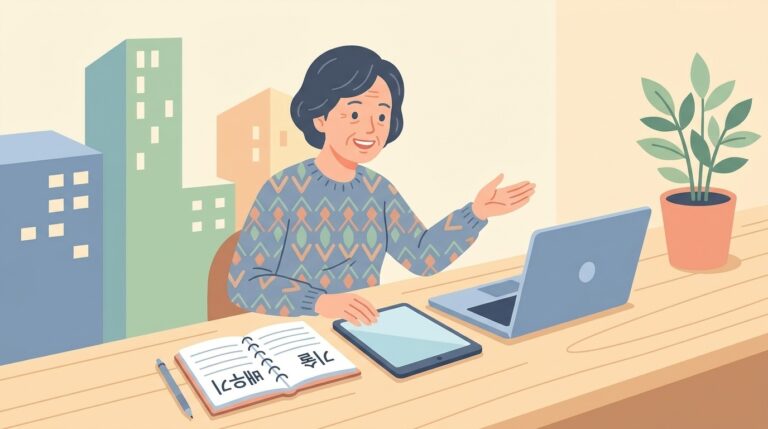
Picture this scene straight out of a bittersweet slice-of-life K-drama: Kim Seong-sik, a 58-year-old retired managing director who spent thirty-five years barking commands in a glass-walled Yeouido boardroom, now finds himself sitting in an ergonomic swivel chair at the Mapo 50-Plus Center (마포50플러스센터). In front of him sits not an executive briefing file, but a high-end espresso machine, accompanied by a syllabus for “Smart Farm Technology & Drone Operations.” Next to him, a retired high school chemistry teacher is practicing latte art, laughing sheepishly as the foam collapses. Seong-sik takes a deep breath, clears his throat, and glances around—instinctively wondering whether to bow with formal boardroom deference or adopt the humble curiosity of a rookie intern.
Welcome to South Korea’s surging “Silver Economy” (실버 이코노미). As the country crosses the demographic threshold into a super-aged society, post-retirement vocational training is no longer merely a hobbyist diversion; it is an economic frontier where seasoned veterans forge what Koreans call their “Second Act of Life” (인생 2막). Yet, for advanced foreign observers, consultants, or corporate analysts operating at a C2 proficiency level, speaking about this space requires an exquisite linguistic balance. How do you honor decades of accumulated organizational seniority (yeonryun, 연륜) while articulating the radical humility needed to retrain alongside digital natives? Based on real fieldwork interviews with career transition counselors in Seoul, this guide unpacks the high-stakes lexicon, non-verbal subtleties, and social codes that define vocational re-skilling in contemporary Korea.
Phase 2: 핵심 표현 3선 심층 분석
1. 인생 2막을 설계하다 (Insaeng imakeul seolgyehada)
- Pronunciation: [In-saeng ee-ma-geul seol-gye-ha-da] (Think of ‘In-sang’ like ‘insight’, ‘ee-mahk’ like ‘remake’ without the r, and ‘seol-gye’ like ‘soul-gear’ spoken briskly.)
- Meaning: Literal: “To design the second act of life.” | Real Nuance: Moving beyond passive retirement into purposeful, strategic vocational reinvention.
- K-Culture Moment: Echoing the resilient spirit of the beloved drama Navillera (나빌레라), where an elderly man pursues ballet late in life, this expression frequently headlines government campaigns and retraining documentaries to frame senior employment not as a financial tragedy, but as self-actualization.
- Editor’s Insight: The theatrical metaphor (mak, 막, meaning ‘theatrical act’) implies that your corporate career was merely Act One. Using this phrase demonstrates profound emotional intelligence and respect toward older interlocutors.
- Situation Spectrum: Casual: ⚠️ | Semi-formal: ✅ | Formal: ✅
- 🤔 Think About It: Does your native culture view retirement as absolute disengagement from work, or as a stage requiring structured educational redesign?
2. 신중년 맞춤형 직무 교육 (Sinjungnyeon matchumhyeong jingmu gyoyuk)
- Pronunciation: [Shin-jung-nyeon mat-chum-hyeong jing-mu gyo-yuk] (Flow the ‘n’ sound from ‘shin’ smoothly into ‘jung-nyeon’; pronounce ‘jing-mu’ smoothly where the ‘k’ assimilates into ‘ng’ before ‘m’.)
- Meaning: Literal: “New-middle-aged tailored job-duty training.” | Real Nuance: Public or private vocational retraining programs intentionally calibrated for experienced adults aged 50–69.
- K-Culture Moment: Seen on giant promotional banners outside public polytechnics (한국폴리텍대학) and Seoul City welfare centers, replacing the paternalistic term “senior welfare” (no-in bok-ji) with an empowered economic identity.
- Editor’s Insight: The neologism Sinjungnyeon (신중년) was deliberately crafted by policymakers to banish the stigmatized label of “elderly dependent.” In an executive meeting or socio-economic policy audit, employing this exact term establishes immediate insider credibility.
- Situation Spectrum: Casual: 🚫 | Semi-formal: ✅ | Formal: ✅
- 🤔 Think About It: Why does modern administrative Korean constantly invent euphemisms to renegotiate social hierarchies and age perceptions?
3. 현장 실무 감각을 되살리다 (Hyeonjang silmu gamgageul doesallida)
- Pronunciation: [Hyeon-jang shil-mu gam-ga-geul doe-sal-li-da] (Pronounce ‘hyeon-jang’ with a wide open throat, and roll the doubled ‘l’ in ‘doesallida’ smoothly like ‘delighted’.)
- Meaning: Literal: “To revive one’s on-site practical working senses.” | Real Nuance: Shaking off desk-bound executive rust to rebuild sharp, tactile, day-to-day operational competence in a completely new industry.
- K-Culture Moment: Often uttered in post-training TV interviews by former corporate executives who have successfully certified as craft beer brewers, smart-greenhouse technicians, or urban tour curators.
- Editor’s Insight: Silmu (실무) denotes hands-on operational work, distinguishing a worker who executes tasks from a managerial supervisor who merely signs approvals (gyeoljae). To “revive” it conveys active humility and adaptability.
- Situation Spectrum: Casual: ✅ | Semi-formal: ✅ | Formal: ✅
- 🤔 Think About It: How does executive status transition into manual or specialized artisan craftsmanship in your culture’s corporate landscape?
Phase 3: 교과서 한국어 vs 진짜 한국어
Situation 1: Explaining your re-employment goals during a program interview
- 📖 교과서 한국어: 저는 은퇴 후 일자리를 얻기 위해 직업 훈련을 성실히 받고 있습니다. (Jeoneun euntoe hu iljarireul eotgi wihae jigeop hullyeoneul seongsilhi batgo itsseumnida.)
- “I am faithfully receiving vocational training in order to gain a job after retirement.”
- 🗣️ 진짜 한국어: 제2의 커리어를 위해 직무 전환 특화 과정에 과감히 올인하고 있습니다. (Je-i-ui keorieoreul wihae jingmu jeonhwan teukhwa gwajeonge gwagamhi orinhago itsseumnida.)
- “I have boldly gone all-in on this specialized career-pivot curriculum to build my second professional chapter.”
- 💡 왜 다를까? Textbook Korean leans on repetitive, passive expressions like iljarireul eotda (get a job). Advanced native professionals use proactive industry terms such as jingmu jeonhwan (job-pivot/transition) paired with vivid loan-word idioms like orinhada (all-in) to demonstrate entrepreneurial drive.
Situation 2: Emphasizing the competitive edge of older job candidates
- 📖 교과서 한국어: 나이가 많은 사람도 열심히 하면 새로운 기술을 잘 배울 수 있습니다. (Naiga maneun saramdo yeolsimhi hamyeon saeroun gisureul jal baeul su itsseumnida.)
- “Even people who are old can learn new skills well if they work hard.”
- 🗣️ 진짜 한국어: 오랜 관록에 디지털 직무 역량만 제대로 얹으면 충분히 승산이 있습니다. (Oraen gwanroge dijiteol jingmu yeongnyangman jedaero eonjeumyeon chungbunhi seungsani itsseumnida.)
- “As long as seasoned executive acumen is properly augmented with digital competencies, there is a clear winning edge.”
- 💡 왜 다를까? C2-level discourse discards blunt age descriptions (naiga maneun saram) in favor of high-register nouns like gwanrok (관록, profound professional presence/seasoned prestige) and strategic business vocabulary like seungsani itda (승산이 있다, to hold a competitive chance of victory).
Phase 4: K-Culture 딥다이브 & 비언어적 매너
4-1. 눈치(Nunchi) & Non-Verbal Manners: The “Unlearning Authority” Paradox
When you step into a South Korean vocational center for senior re-employment—such as a barista lab, a 3D-printing suite, or an elderly care credentialing class—the non-verbal tension is palpable. Many participants were once top-tier company directors, headmasters, or high-ranking civil servants. In Korean culture, social rank traditionally dictates gaze, posture, and tone.
- The Two-Handed Handover (양손 매너): When receiving simple training equipment (a soldering iron, an apron, or a course booklet) from an instructor who might be 25 years your junior, always receive it with both hands (yangson), bowing the head slightly at approximately 15 degrees. Refusing to let your hands drop indicates that you have successfully stripped off your past corporate mantle.
- De-weaponizing Speech Tone: Avoid the authoritative ending -geonae (-게나) or short declarative tones (hae-che). Instead, lean into collaborative deferential phrasing: “제가 부족한 부분이 많으니 잘 부탁드립니다” (Jega bujokan bubuni maneuni jal butakdeurimnida – “I have many areas to improve, so please guide me well”). It is the supreme display of intellectual humility (gyeomyang, 겸양).
4-2. Cultural Codes: The Rise of “Active Seniors” and the 50-Plus Phenomenon
South Korea’s demographic transformation is accelerating faster than almost any other OECD nation. The generation now entering retirement is the cohort that spearheaded Korea’s rapid industrialization and democratization. Unlike previous generations, they are educated, tech-literate, and culturally conscious—they refuse to be sidelined.
This sociological pivot gave birth to municipal powerhouses like the Seoul 50 Plus Foundation (서울시50플러스재단). These centers serve as social incubators, offering tracks ranging from “YouTube Creator for Seniors” to “Shared Housing Community Coordinators.” In contemporary K-Media, this shift is mirrored everywhere—from reality programs showcasing veteran artists taking on entry-level culinary gigs to K-Dramas like Navillera, celebrating the emotional release of shedding lifelong patriarchal obligations to discover one’s unfulfilled vocational calling.
Phase 5: 실전 롤플레이 시나리오
Setting: The counseling office at the Seoul Gangnam 50-Plus Center. Soft jazz plays in the background, contrasting with the clinical rows of job listing boards.
Characters:
* 강 팀장 (Kang Timjang – Vocational Counseling Team Lead): A sharp, empathetic 42-year-old career consultant specializing in corporate executive outplacement.
* 박민수 (Park Min-soo – Senior Trainee): A 57-year-old former logistics director determined to launch an encore career in green logistics consultancy.
- Turn 1 (강 팀장):
- 한글: 박 이사님, 대기업 물류 총괄로 수십 년을 헌신하셨는데, 이번 신중년 스마트 유통 재취업 과정에 지원하신 특별한 계기가 있으신가요?
- Romanization: Bak isanim, daegieop mullyu chonggwallo susip nyeoneul heonsinhasyeonneunde, ibeon sinjungnyeon seumateu yutong jaechwieop gwajeonge jiwonhasin teukbyeolhan gyegiga itsseusingayo?
- English Translation: Director Park, you dedicated decades to overseeing logistics at a major conglomerate; what particular motivation led you to apply for this New-Middle-Aged Smart Logistics Retraining Program?
- 🎭 행동 지문: [안경을 살짝 고쳐 쓰며, 민수의 두툼한 경력 기술서를 정중한 두 손으로 훑어본다.]
- Turn 2 (박민수):
- 한글: 솔직히 처음엔 명예퇴직 후 공허함이 컸습니다. 하지만 과거의 직함에 갇혀 있기보다, 제 현장 경험에 최신 AI 물류 시스템을 접목해 인생 2막을 새롭게 설계하고 싶었습니다.
- Romanization: Soljikhi cheoeumen myeong-yetoejik hu gongheohami keotseumnida. Hajiman gwageoui jikhame gachyeo itgiboda, je hyeonjang gyeongheome choesin AI mullyu sisteumeul jeopmoke hae insaeng imakeul saeropge seolgye hago sipeotseumnida.
- English Translation: To be candid, right after voluntary retirement, the sense of emptiness was overwhelming. However, rather than remaining trapped in my past title, I wanted to combine my practical field experience with cutting-edge AI logistics systems to systematically design the second act of my life.
- 🎭 행동 지문: [허리를 곧게 펴고 앉아 잔잔하지만 확신에 찬 눈빛으로 강 팀장의 시선을 응시한다.]
- Turn 3 (강 팀장):
- 한글: 그 결단이 결코 쉽지 않으셨을 텐데 정말 존경스럽습니다. 다만 본 과정은 실무 중심이라, 30대 강사들에게 기초 코딩부터 혹독하게 피드백을 받으셔야 합니다. 심리적 저항감은 없으실까요?
- Romanization: Geu gyeoldani gyeolko swipji aneusyeosseul tende jeongmal jongyeongseoreopseumnida. Daman bon gwajeongeun silmu jungsimira, samsipdae gangsadeurege gicho kodingbuteo hokdokhage pideubaegeul badeusyeoya hamnida. Simnijeok jeohanggameun eopseusilkkayo?
- English Translation: That decision could not have been easy, and I truly respect it. However, this program is intensely hands-on, meaning you will receive rigorous feedback on foundational coding from instructors in their thirties. Will you encounter any psychological discomfort?
- 🎭 행동 지문: [고개를 부드럽게 끄덕이며, 조심스러우면서도 핵심을 찌르는 어조로 묻는다.]
- Turn 4 (박민수):
- 한글: 제가 예전 직책을 내려놓지 못했다면 이곳 문을 두드리지도 않았을 겁니다. ‘나이 든 선배’가 아니라, 백지 상태의 훈련생으로 돌아가 배울 각오가 되어 있습니다.
- Romanization: Jega yejeon jikchaegeul naeryeonotji mothaetdamyeon igot muneul dudeurijido anatseul geomnida. ‘Nai deun seonbae’ga aneera, baekji sangtaeui hullyeonsaengeuro doraga baeul gak-oga doe-eo itsseumnida.
- English Translation: If I were incapable of laying down my former title, I wouldn’t have knocked on this door in the first place. I am fully prepared to return as a blank-slate trainee rather than an ‘aged veteran’.
- 🎭 행동 지문: [손바닥을 가볍게 펴 보이며 단호하고 겸손한 미소를 짓는다.]
- Turn 5 (강 팀장):
- 한글: 아주 든든한 다짐이십니다. 그렇다면 수료 후 목표는 일반 기업체 재취업인가요, 아니면 사회적 기업이나 공공 자문단 쪽 창직을 염두에 두고 계신가요?
- Romanization: Aju deundeunhan dajimisipnida. Geureotdamyeon suryo hu mokpyoneun ilban gieopche jaechwieopingayo, animyeon sahoejeok gieobina gonggong jamundan jjok changjigeul yeomdue dugo gyesingayo?
- English Translation: That is a very reassuring resolve. In that case, after graduation, is your objective conventional re-employment, or are you considering job-creation within social enterprises or public advisory boards?
- 🎭 행동 지문: [평가 서류 체크리스트의 ‘수강 태도’ 항목에 신속하게 만점 동그라미를 표기한다.]
- Turn 6 (박민수):
- 한글: 저는 중소 유통 기업의 디지털 전환을 돕는 실무형 시니어 컨설턴트로의 창직을 그리고 있습니다. 제 연륜과 교육으로 채운 역량이 상생의 모델을 만들 수 있다고 믿습니다.
- Romanization: Jeoneun jungso yutong gieobui dijiteol jeonhwaneul domneun silmuhyeong sinieo keonseolteonteuro-ui changjigeul geurigo itsseumnida. Je yeonryungwa gyoyugeuro chae-un yeongnyangi sangsaeng-ui modeureul mandeul su itdago mitseumnida.
- English Translation: I envision creating a career as a hands-on senior consultant helping small-and-medium distribution enterprises achieve digital transformation. I believe my decades of accrued wisdom combined with this curriculum can establish a win-win model.
- 🎭 행동 지문: [자신의 태블릿 화면을 켜서 직접 정리한 3개년 로드맵 초안을 살며시 보여준다.]
- Turn 7 (강 팀장):
- 한글: 철저한 준비성에 소름이 돋네요! 이 정도 포부시라면 저희 센터의 ‘신중년 앙코르 펠로우십’ 연계 장학생으로 강력히 추천해 드릴 수 있습니다.
- Romanization: Cheoljeohan junbiseonge soreumi donne-yo! I jeongdo pobusiramyeon jeohui senteoui ‘sinjungnyeon angkoreu pellousip’ yeongye jangsaeng-euro gangnyeokhi chucheonhae deuril su itsseumnida.
- English Translation: Your meticulous preparation gives me goosebumps! With an ambition of this caliber, I can strongly recommend you as a fellowship candidate for our center’s ‘New-Middle-Aged Encore Fellowship’.
- 🎭 행동 지문: [양손을 맞잡으며 감탄 섞인 미소를 활짝 피워 올린다.]
- Turn 8 (박민수):
- 한글: 기대에 어긋나지 않게 기초 과정부터 묵묵히 정진하겠습니다. 길을 열어주셔서 진심으로 감사드립니다.
- Romanization: Gidaee eogeunnaji anke gicho gwajeongbuteo mungmuki jeongjin-hagetseumnida. Gireul yeoreojusyeoseo jinsimeuro gamsadeurimnida.
- English Translation: I will dedicate myself silently from the very fundamentals so as not to betray your expectations. Thank you sincerely for opening this path for me.
- 🎭 행동 지문: [의자에서 일어나 단정한 각도로 정중히 90도 허리를 숙여 감사를 표한다.]
🔀 인터랙티브 분기점: If Kang Timjang asked about your previous management habit of delegating tasks, how would you respond?
- Option A: “솔직히 실무를 직접 치는 건 까마득해서 두렵지만, 젊은 동기들에게 밥 사주면서 도움을 청할 생각입니다.” (Soljikhi silmureul jikjeop chineun geon kkamadeukaeseo duryeopjiman, jeolmeun dong-gideurege bap sajumyeonseo doumeul cheonghal saenggagimnida. – “Frankly, doing ground-level work myself is a distant memory so I’m scared, but I plan to buy meals for my younger peers and ask for help.”)
- Feedback (Risk): While honest and socially charming, leaning immediately on the “buying meals” (bap sajugi) tactic can make you look reliant on paternalistic Korean senior-culture rather than developing individual technical self-reliance.
- Option B: “제가 임원 출신이라 디테일한 작업보다는 팀원들의 역량을 조율하고 프로젝트 전체를 총괄하는 역할이 더 맞습니다.” (Jega im-won chulsin-ira diteilhan jak-eobbodaneun tim-wondeurui yeongnyangeul joyulhago peurojekteu jeonchereul chonggwalhaneun yeokhali deo matseumnida. – “Since I am a former executive, orchestrating team members and supervising the project is a better fit than detailed technical tasks.”)
- Feedback (Bad): Disastrous. This exhibits textbook Kkondae (꼰대, rigid/condescending older person) behavior. Vocational centers will flag you as uncoachable.
- Option C: “예전의 지휘관 마인드를 완전히 리셋했습니다. 키보드를 직접 두드리고 에러를 해결하는 전술가로 다시 태어나는 과정이라 여기고 있습니다.” (Yejeonui jihwigwan maindeureul wanjeonhi risethaetseumnida. Kibodeureul jikjeop dudeurigo ereoreul haegyeolhaneun jeonsulgaro dasi tae-eonaneun gwajeong-ira yeogigo itsseumnida. – “I have completely reset my former commanding mindset. I consider this a rebirth into a tactical operator who types on the keyboard and troubleshoots errors directly.”)
- Feedback (Best!): Flawless C2 nuance. It shows profound psychological readiness, linguistic elegance, and active commitment to operational mastery.
Phase 6: 10초 감정 섀도잉 드릴
Sharpen your cadence and rhythm. Pause at each /, and adopt the emotional milestone indicated in the brackets.
[💼 당당하면서도 겸손하게 - Confidently yet with poised humility]- “과거의 직함에 / 연연하기보다는, / 백지 상태의 훈련생으로 / 다시 시작하고자 합니다.”
- (Gwageoui jikhame / yeon-yeonhagi-bodaneun, / baekji sangtaeui hullyeonsaeng-euro / dasi sijakhagoja hamnida.)
[🔥 열정적으로 눈을 반짝이며 - Driven, with sparkling intellectual determination]- “오랜 세월 축적된 현장 연륜에 / 최신 스마트 기술을 접목해, / 반드시 / 차별화된 가치를 증명하겠습니다!”
- (Oren sewol chukjeokdoen hyeonjang yeonryune / choesin seumateu gisureul jeopmokhae, / bandeusi / chabyeolhwadoen gachireul jeungmyeong-hagetseumnida!)
[🤝 깊은 울림과 신뢰를 주는 톤으로 - Reassuring, resonant, and dependable]- “단순한 생계형 구직이 아니라, / 지역 사회와 지속 가능하게 상생하는 / 앙코르 커리어를 개척 중입니다.”
- (Dansunhan saenggye-hyeong gujigi anira, / ji-yeok sahoewa jisok ganeunghage sangsaenghaneun / angkoreu keorieoreul gaecheok jung-imnida.)
Phase 7: K-Culture 미니 사전
- 신중년 (Sin-jung-nyeon) | The New-Middle-Aged (50–69 Demographic)
- A progressive socio-economic demographic classification created to define South Koreans who are between traditional primary retirement age and true senility. Energetic, experienced, and economically vital.
- 앙코르 커리어 (Ang-ko-reu Keo-ri-eo) | Encore Career
- Adapted from the global sociological concept, this refers to a vocation pursued in the latter half of life that combines personal passion, income generation, and substantial social impact.
- 창직 (Chang-jik) | Job Creation / Self-Devised Profession
- Distinct from simply seeking existing employment (chwi-eop, 취업) or opening a franchise restaurant (chang-eop, 창업). It means inventing an entirely new niche specialization leveraging one’s unique cumulative lifelong skill set.
- 자격증 열풍 (Ja-gyeok-jeung Yeol-pung) | Credentialing Craze / Certification Fever
- The national obsession with obtaining government-recognized technical licenses (e.g., Electrician, Drone Operator, Culinary Craftsman, Horticulturalist) as the baseline passport for senior re-employment.
Phase 8: 여행자를 위한 생존 키트
If you are visiting South Korea or exploring senior-run social enterprises, modern cultural tea houses, and municipal hubs, keep these survival phrases at your fingertips:
- Top 1: “이곳 시니어 바리스타분들이 내리신 커피가 정말 일품이네요!”
- Romanization: I-got sinieo bariseuta-bundeuri naerisin keopiga jeongmal ilpumineyo!
- Pro Tip: Use il-pum (일품, top-tier/masterpiece) to flatter veteran seniors running community cafes. It sparks radiant smiles instantly!
- Top 2: “어르신, 혹시 이 복지관 디지털 배움터 접수는 어디서 하나요?”
- Romanization: Eoreusin, hoksi i bokjigwan dijiteol bae-umteo jeopsuneun eodiseo hanayo?
- Pro Tip: Always address older men and women in educational/community centers as Eoreusin (어르신, honorable elder), never as Ajeossi or Ajumma.
- Top 3: “인생 2막 프로그램 관련 안내 책자를 하나 얻을 수 있을까요?”
- Romanization: Insaeng imak peurogeuraem gwanryeon annae chaekjareul hana eodeul su isseulkkayo?
- Pro Tip: Hand this sentence to the concierge desk at any district office (Gucheong) to gather high-level regional program schedules.
Editor’s Travel Note: Practical Digital Tools
Navigating Seoul’s vocational networks is vastly easier when using official portals. Download the HRD-Net 직업훈련포털 앱 다운로드 for nationwide government-funded occupational programs. To examine civic senior initiatives, visit the 서울시50플러스포털 바로가기. When riding public transit to regional centers, note that passengers aged 65 and older use a specialized senior welfare metro card (우대권); as a visitor, keep your Climate Card or T-Money card pre-loaded, and observe the strict custom of leaving priority seats (노약자석) vacant at all times, even in crowded train cars.
Phase 9: “한 발 더 깊이” (생각 질문)
In traditional Korean Confucian sociology, an individual’s personal identity was nearly inseparable from their institutional title (jikhwal, 직함). One was not merely “Min-soo”; one was “Park Sang-mu” (Executive Director Park). When retirement strips away that institutional armor, the psychological void can be agonizing. South Korea’s contemporary re-employment training programs are therefore not merely pedagogical sites for teaching digital literacy or manual trades; they serve as profound emotional decontamination chambers. Here, citizens engage in the painful, liberating task of disassembling decades of hierarchical socialization to rediscover personal worth unmediated by corporate stature.
💬 Your Turn: How does your home society assist corporate retirees in negotiating this loss of identity, and what linguistic adjustments signify respect without reinforcing outdated workplace hierarchies? Let’s discuss in the comments below!
Phase 10: FAQ & 오해 방지 (FAQ Schema)
Q: Can foreigners participate in South Korea’s public 50-Plus vocational training programs?
A: Yes, provided you hold an eligible long-term visa status (such as F-2, F-4, F-5, or F-6). Most municipal centers welcome permanent and ethnic Korean residents into their short-term lectures, although specific state-subsidized employment stipends (Naeil Baeum Card) may carry strict national insurance qualification criteria.
Q: Is calling an older trainee “선배님” (Senior/Sunbae) polite in a vocational academy?
A: It depends on context. If you are learning the same craft together in a classroom, calling them Seonbaenim can feel confusing if you both just started. Calling them [Name] + 선생님 (Teacher / Respected Colleague, e.g., “민수 선생님”) is universally the safest, most refined C2-level honorific in adult education.
Q: Why do Korean senior retraining programs emphasize national certifications (jayeokjeung) so obsessively?
A: In South Korea’s high-context, fast-moving hiring market, objective state certification serves as transparent proof that an older applicant has overcome the “digital/technical deficit” and is willing to submit to standardized evaluation.
🚨 흔한 실수 (Common Mistakes) 경고판
| Mistake | Why It Fails | Correct Action (C2 Level) |
|---|---|---|
| 1. Addressing an older classmate as “할아버지/할머니” (Grandfather/Grandmother) | Highly offensive in a vocational setting; reduces an active professional to a frail dependent. | Address them as [Name] 선생님 (e.g., 성식 선생님) or by their functional student title. |
| 2. Saying “나이가 많으셔서 힘드시겠어요” (It must be exhausting because you’re old) | Patrolling their age under the guise of sympathy undermines their stamina and pride. | Say: “새로운 도전을 해내시는 열정이 정말 본받을 만합니다!” (Your passion for this new challenge is truly inspiring!) |
| 3. Using formal downward imperative endings (해라/하게) based on past corporate rank | Violates adult peer equity in public retraining spaces. | Maintain 해요체 or polished 하십시오체 across all classroom discussions regardless of past corporate ranks. |
Phase 11: 액션 미션 & 참여 유도
- 🥉 Bronze Level: Read the three Phase 6 shadowing sentences out loud 5 times, focusing on natural pauses at every
/mark. - 🥈 Silver Level: Craft your own two-sentence introduction imagining your own “Encore Career” using the phrase 인생 2막을 설계하다 and post it in the comments below for direct feedback!
- 🥇 Gold Level: Search YouTube for “신중년 직업훈련” (New-Middle-Aged Vocational Training) or “50플러스센터 현장”, watch a 3-minute news feature or documentary clip, and transcribe three real-world job roles you hear mentioned.
🎮 K-Culture Mission: Watch the opening episode of the drama Navillera (나빌레라) or search for clips of veteran Korean actors working part-time in reality shows (e.g., Unexpected Business / 어쩌다 사장). Notice how their speech softens when they receive feedback from clients or younger mentors!
Phase 12: 인터랙티브 퀴즈 챌린지
1. 상황 판단 (Situational Judgment)
You are attending an open-floor networking session at a senior re-employment seminar in Gangnam. An accomplished 62-year-old former construction executive mentions that he is having trouble memorizing architectural 3D modeling software shortcuts. Which response best demonstrates C2-level empathy and linguistic tact?
* (A) “나이가 드시면 원래 암기가 잘 안 되니 그냥 포기하고 쉬운 걸 배우세요.”
* (B) “선생님의 풍부한 시공 관록에 디지털 툴만 손에 익으시면, 그 누구보다 강력한 경쟁력을 갖추실 겁니다.”
* (C) “저희 회사 젊은 신입사원들에게 물어보면 5분 만에 다 해결할 수 있는 문제입니다.”
👉 Click here for Answer & Explanation
Correct Answer: (B)
* Why: (B) combines deep socio-linguistic respect (gwanrok, 관록) with uplifting tactical encouragement (gyeong-jaeng-ryeok, 경쟁력). Option (A) is ageist and humiliating, while Option (C) belittles the trainee’s dignity by holding up junior employees as superiors.
2. 빈칸 채우기 (Fill in the Blank)
- 은퇴 후 기존의 직함을 내려놓고 새로운 전문성을 개발하여 사회에 기여하는 직업을 찾는 과정을 일컬어 ‘________ 커리어’라고 부른다.
- (The process of finding a profession that contributes to society by laying down former titles and cultivating new expertise after retirement is referred to as an ‘________ Career’.)
👉 Click here for Answer & Explanation
Correct Answer: 앙코르 (Encore)
* Explanation: 앙코르 커리어 (Encore Career) is the primary socio-economic buzzword applied across Korean government agencies and retraining institutes to signify meaningful, sustainable post-retirement work.
3. True or False 문화 퀴즈
- In South Korea’s modern public retraining facilities, former corporate executives are formally permitted to address junior instructors using informal language (ban-mal, 반말) out of deference to their real-world biological seniority. (True / False?)
👉 Click here for Answer & Explanation
Correct Answer: False!
* Explanation: In adult vocational learning spaces, professional respect for instructional authority (gyosu-gwon, 교수권) completely supersedes biological age. Addressing an instructor or younger peer in ban-mal is considered an egregious breach of etiquette.







