

Don’t Clap Just Yet: The Ultimate Insider Guide to Korean Classical Concert Etiquette
Phase 1: Empathy (Story-Immersive Opening)
안녕하세요! 매일한글 에디터입니다. (Annyeonghaseyo! Maeil Hangul editeo-imnida.)
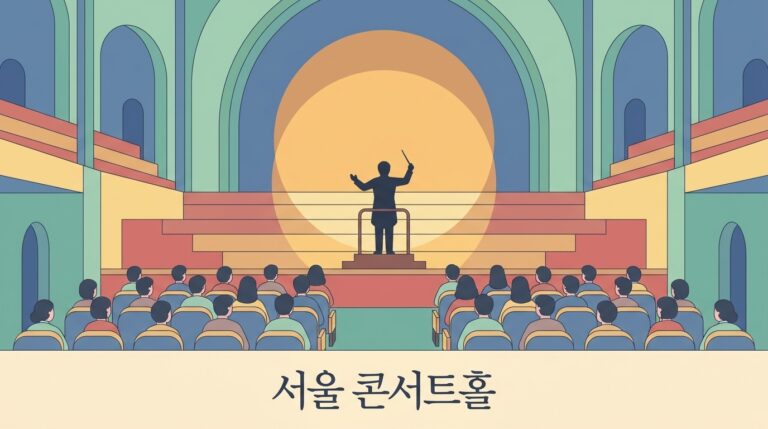
Picture this: You are seated in the magnificent, cedar-lined auditorium of the Seoul Arts Center (예술의전당) on a brisk autumn evening. The Seoul Philharmonic Orchestra has just delivered a transcendent rendition of Tchaikovsky’s Symphony No. 6 (Pathétique). As the mournful, fading double bass pizzicatos of the final movement dwindle into utter nothingness, the hall is engulfed in a breath-suspending, electrifying vacuum of silence. You are so moved, your adrenaline is rushing, and your hands twitch instinctively to break into fervent applause.
Suddenly, from the second tier, someone prematurely lets out a solitary, deafening CLAP-CLAP-CLAP.
Instantly, the ethereal atmosphere evaporates. An icy, collective wince ripples through the two thousand patrons. Heads snap back with palpable frustration; someone in the row ahead exhales a distressed “아이고…” (Aigo…). That sublime, sacred void—what Koreans revere as 여운 (yeo-un, lingering emotional resonance)—has been brutally punctured.
At a C2 mastery level, navigating Korean cultural spaces goes far beyond parsing syntax; it demands an intuitive grasp of communal rhythm and high-context atmospheric nuance (눈치, nunchi). In South Korea’s vibrant performing arts ecosystem, applause is not merely an involuntary physical reaction to sound—it is a calibrated, communal ritual. Drawing on years of backstage observations, discussions with veteran Seoul concertgoers, and real feedback from our advanced learners, this guide is your blueprint to navigating the grandest halls of Korea with effortless cultural grace.
Phase 2: Core Expressions Deep Dive
1. 악장 사이에는 박수를 치지 않는 법이에요 (Akjang saieneun baksureul chiji anneun beobieyo)
- Pronunciation: [Ak-jang sa-i-e-neun bak-su-reul chi-ji an-neun beo-bi-e-yo] (Think: “Ak” like an abrupt stop, “sa-i” rhyming with “sigh”, and “beobieyo” rolling smoothly like “bubble-yo” with a soft b)
- Meaning: Literal: “It is the rule/custom not to clap between movements.” | Pragmatic nuance: An authoritative yet polite reminder invoking shared cultural norms rather than personal irritation.
- K-Culture Moment: In the classical music melodrama Do You Like Brahms? (브람스를 좋아하세요?), a tense exchange backstage unpacks whether a newcomer audience’s untimed clap disrupted the violinist’s fragile emotional continuity.
- Editor’s Insight: The nominalizer
-는 법이다(-neun beob-ida) elevates this sentence from a mere prohibition to an immutable universal maxim or artistic etiquette. It signals seasoned sophistication. - Situation Spectrum: Casual: ⚠️ | Semi-formal: ✅ | Formal: ✅
- 🤔 Think About It: In your culture, is etiquette governed by explicit venue notices, or expected to be implicitly understood through communal vigilance like Korea’s 눈치 (nunchi)?
2. 마지막 여운까지 온전히 음미해 주세요 (Majimak yeo-unkkaji onjeonhi eummihae juseyo)
- Pronunciation: [Ma-ji-mak yeo-un-kka-ji on-jeon-hi eum-mi-hae ju-se-yo] (Pronounce “yeo-un” as a gentle “yaw-oon”, letting the final “n” dissolve softly)
- Meaning: Literal: “Please savor fully until the final lingering aftertaste/resonance.” | Pragmatic nuance: A poetic plea to hold one’s breath and allow the post-music silence to blossom completely.
- K-Culture Moment: Heard frequently among high-end culture podcasters and classical radio hosts on KBS Classic FM when prepping listeners for delicate avant-garde pieces.
- Editor’s Insight: 음미하다 (eummihada) literally means to taste and appreciate fine wine or food slowly, but when applied to acoustic spaces, it denotes an elite aesthetic appreciation of lingering overtones.
- Situation Spectrum: Casual: ⚠️ | Semi-formal: ✅ | Formal: ✅
- 🤔 Think About It: Why does Korean aesthetic tradition assign just as much artistic weight to the silence after sound as to the sound itself?
3. 지휘자의 손이 완전히 내려올 때까지 기다려야 해요 (Jihwijaui soni wanjeonhi naeryeool ttaekkaji gidaryeoya haeyo)
- Pronunciation: [Ji-hwi-ja-ui so-ni wan-jeon-hi nae-ryeo-ol ttae-kka-ji gi-da-ryeo-ya hae-yo] (Rhythmically accent “wan-jeon-hi” like “one-jeon-hee” to emphasize total completion)
- Meaning: Literal: “You must wait until the conductor’s hands have completely come down.” | Pragmatic nuance: The definitive, foolproof visual cue for initiating safe, thunderous applause.
- K-Culture Moment: An iconic scene in the classic drama Beethoven Virus (베토벤 바이러스) where the merciless Maestro Kang Ma-e turns around to glare intensely at an amateur who clapped before his baton dropped.
- Editor’s Insight: In Korean performance spaces, physical gestures dictate acoustic boundaries. Until the conductor’s spine relaxes and hands rest at their sides, the performance is legally still underway.
- Situation Spectrum: Casual: ✅ | Semi-formal: ✅ | Formal: ✅
- 🤔 Think About It: How do physical hierarchies and gestures in performance spaces mirror everyday interpersonal respect in Korean society?
Phase 3: Textbook Korean vs. Real Native Korean
Situation 1: Calling out someone who clapped at the wrong time
- 📖 Textbook Korean: 공연 중에는 조용히 해야 합니다. (Gong-yeon jung-eneun joyonghi haeya hamnida.) — “One must be quiet during the performance.”
- 🗣️ Real Native Korean: 악장 끝나자마자 박수가 터져 나와서 다들 얼어붙었잖아요. (Akjang kkeutnajamaja baksuga teojyeo nawaseo dadeul eorobuteotjanayo.) — “Applause burst out the second the movement ended, and everyone froze in sheer second-hand embarrassment.”
- 💡 Why the Difference?: High-level native conversation abandons sterile moralizing in favor of evocative narrative imagery (터져 나오다, 얼어붙다) that conveys collective physiological shock.
Situation 2: Praising the breathtaking stillness before the applause
- 📖 Textbook Korean: 마지막 연주가 끝나고 매우 감동적이었습니다. (Majimak yeonjuga kkeutnago maeu gamdongjeogieotseumnida.) — “After the final piece ended, it was very touching.”
- 🗣️ Real Native Korean: 마지막 음이 사그라들고 지휘봉이 내려올 때까지 숨죽인 찰나의 전율이 진짜 압권이었어요. (Majimak eumi sageuradeulgo jihwibongi naeryeool ttaekkaji sumjugin chalnaui jeonyuri jinjja ap-gwonieosseoyo.) — “The suspenseful, breathless thrill while the final note faded until the baton dropped was unequivocally the highlight.”
- 💡 Why the Difference?: Advanced Korean speakers utilize literary verbs such as 사그라들다 (to smolder down/fade away) and the high-tier idiom 압권 (ap-gwon, crowning masterpiece/highlight) to articulate heightened aesthetic experiences.
Phase 4: K-Culture Deep Dive & Non-Verbal Manners
4-1. 눈치 (Nunchi) & The Art of Physical Stillness
In a prestigious Korean concert venue such as Lotte Concert Hall or the Tongyeong International Music Hall, your non-verbal manners serve as your cultural passport. The core metric here is collective breath control (호흡).
* The Visual Horizon: Keep your eyes glued to the conductor’s shoulder line. Even if a thunderous cadence has just rattled the rafters, if the maestro’s shoulders remain tense and the baton stays suspended in mid-air, you must remain as immobile as a stone statue.
* The Anticipatory Hover: Never bring your palms together in advance. Seasoned Korean classical aficionados (클덕, classical music geeks) practice the “silent hover”—palms facing each other a few inches apart, waiting for the baton to cross the conductor’s waistline.
* Coughing Etiquette (기침 예절): Koreans go to extraordinary lengths to suppress coughing during movements. The transition between movements is the designated “cough window” (기침 타임). You will hear a synchronized, hall-wide clearing of throats during those twenty seconds. Join then, never during the delicate pianissimo.
4-2. Cultural Codes: The Phenomenon of “클덕 (Deokhu) Culture”
South Korea’s classical music fandom is uniquely dynamic, driven largely by millennial and Gen Z connoisseurs who organize online communities on DC Inside’s Classical Music Gallery or specialized Naver cafes. Following the historic Chopin Competition win of Seong-Jin Cho (조성진) and Van Cliburn victory of Yunchan Lim (임윤찬), classical performance in Korea took on the fiery devotion of K-Pop fandom, but with ultra-strict conservatory decorum. Fans hold each other to stringent codes of conduct: anyone breaking the 여운 (yeo-un) with an untimely clap is colloquially labeled an “anhamuin” (안하무인, someone devoid of manners) and dissected in post-concert forum reviews.
Phase 5: Real-Life Roleplay Scenario
Setting: The foyer and auditorium of Lotte Concert Hall, 15 minutes before the Korean National Symphony Orchestra performs Mahler’s Symphony No. 9.
Characters:
* Min-ho (민호): A hyper-discerning classical vinyl collector and season ticket holder.
* Learner (You): An advanced music lover experiencing their first premier symphony hall concert in Seoul.
[1] 민호 (Min-ho): 드디어 말러 9번 실황이네요! 좌석 시야도 완벽하고 음향 밸런스도 기대 이상이에요.
(Deudieo Malleo gubeon silhwang-ineyo! Jwaseok siyado wanbyeokhago eumhyang baelleonseudo gidae isang-ieyo.)
"Finally, Mahler 9 live! The view from our seats is pristine, and the acoustic balance promises to exceed expectations."
🎭 Min-ho opens his program book with reverent care, eyes sparkling.

[2] You: 그러게요. 특히 4악장 마지막 아다지오는 소리가 거의 사라질 때까지 이어진다면서요?
(Geureogeyo. Teukhi sa-akjang majimak adaji-oneun soriga geoui sarajil ttaekkaji ieojindamyeonseo-yo?)
"Indeed. Especially the final Adagio in the fourth movement—I heard the sound lingers until it practically dematerializes?"
🎭 Adjusting your posture, speaking in an hushed, respectful cadence.

[3] 민호 (Min-ho): 맞아요. 악보상으로 '천천히, 그리고 사라지듯이' 끝나거든요. 그 찰나의 침묵이 이 곡의 클라이맥스예요.
(Majayo. Akbosang-euro 'cheoncheonhi, geurigo sarajideusi' kkeutnageodeunyo. Geu chalnaui chimmugi i gogui keullaimakseu-yeyo.)
"Precisely. The score specifies 'slowly, and dying away.' That fleeting silence is the true climax of the work."
🎭 Leaning in to whisper conspiratorially so neighboring patrons aren't disturbed.

[4] You: 한국 관객들이 워낙 열정적이라 혹시 악장 사이나 끝나자마자 박수가 터져 나오진 않을까요?
(Hanguk gwan-gaekdeuri wonak yeoljeongjeogira hoksi akjang saina kkeutnajamaja baksuga teojyeo naojin aneulkkayo?)
"Korean audiences are famously passionate; might applause accidentally burst out between movements or right at the end?"
🎭 Showing keen intercultural awareness with an inquisitive look.

[5] 민호 (Min-ho): 가끔 눈치 없는 관객이 분위기를 깨기도 하죠. 하지만 오늘은 워낙 마니아층이 두터운 지휘자라 다들 숨죽이고 기다릴 겁니다.
(Gakkeum nunchi eomneun gwan-gaegi bun-wigireul kkaegido hajyo. Hajiman oneureun wonak man-i-acheung-i duteo-un jihwijara dadeul sumjugigo gidaril geomnida.)
"Occasionally someone lacking nunchi ruins the vibe. But today this maestro has such a loyal fanbase, everyone will hold their breath."
🎭 Nodding knowingly toward the seasoned patrons seated around.

[6] You: 그럼 제가 언제 박수를 쳐야 할지 신호를 주시겠어요? 실수하고 싶지 않거든요.
(Geureom jega eonje baksureul chyeoya halji sinhoreul jusigesseoyo? Silsuhago sipji ankeodeunyo.)
"In that case, could you give me a signal when it's safe to clap? I'd hate to make a faux pas."
🎭 Smiling with humble humility.

[7] 민호 (Min-ho): 지휘봉 끝만 보세요. 그가 손을 떨구고 뒤를 돌아 목례를 건네기 전까지는 절대 손바닥을 부딪치면 안 됩니다.
(Jihwibong kkeutman boseyo. Geuga soneul tteolgugo dwireul dora mongnyereul geonnegi jeonkkajineun jeoldae sonbadag-eul buditchimyeon an doemnida.)
"Keep your eyes strictly on the tip of the baton. Never let your palms collide until he lowers his arms, turns, and offers a bow."
🎭 Demonstrating a calm, stationary posture with hands folded on knees.

[8] You: 명심할게요. 소리가 완전히 침잠한 뒤에 터져 나오는 우레와 같은 환호야말로 진짜 예술이니까요.
(Myeongsimhalgeyo. Soriga wanjeonhi chimjamhan dwie teojyeo naoneun urewa gateun hwanhoyamaallo jinjja yesurinikkayo.)
"I'll keep that firmly in mind. The thunderous roar that breaks only after the sound has thoroughly settled is the true art form."
🎭 Settling in as the house lights dim into total theatrical darkness.
🔀 Interactive Decision Point
The 4th movement reaches its terminal whisper. The sound fades into total stillness. The maestro freezes, baton high in the air, his back arched. The silence lasts 5 seconds… 10 seconds… 15 seconds. What do you do?
- Option A: Assume the performance is over and start slow, encouraging applause to show the soloist appreciation.
- Option B: Keep your hands locked on your lap, eyes fixed on the baton, syncing your breath with the collective stillness.
- Option C: Stand up immediately for a standing ovation (기립박수) to demonstrate your supreme international enthusiasm.
Feedback & Outcome Analysis
- Option A (Bad – Severe Faux Pas): You become the infamous “concerthall villain” (관크, short for 관객 크리티컬). The entire auditorium will glare at you with silent daggers. The transcendent spiritual catharsis of Mahler is shattered, and Min-ho will look deeply mortified.
- Option B (Best – Supreme Cultural Mastery): Absolute perfection. By honoring the silence, you permit the 여운 to expand to its zenith. When the baton finally drops after 20 breathtaking seconds and the hall detonates into applause, you share an incomparable high-art communion with everyone in the room.
- Option C (Risk – Premature Theatrics): Standing ovations are warmly welcomed in Korea, but only after the conductor has acknowledged the room and returned for the curtain call. Jumping up during the quiet phase disrupts the sightlines of patrons behind you and betrays a lack of classical literacy.
Phase 6: 10-Second Emotion Shadowing Drill
Practice these high-level cultural utterances aloud. Mimic the tone, pauses (/), and emotional marks.
[🤫 조심스럽고 단호하게 — Hush, firm caution]
악장 사이에는 / 숨소리조차 조심해야 해요. / 박수는 / 모든 연주가 끝난 뒤에 치는 겁니다.
(Akjang saieneun / sumsorijocha josimhaeya haeyo. / Baksuneun / modeun yeonjuga kkeutnan dwie chineun geomnida.)
“Between movements, / one must be careful even with one’s breathing. / Applause / is to be rendered only after all playing concludes.”-
[✨ 경외감에 젖어 속삭이듯 — In awe-struck, breathless reverence]
지휘자의 손끝에서 / 마지막 잔향이 사라질 때까지 / 우리 모두 / 침묵으로 동참해야 해요.
(Jihwijaui sonkkeuteseo / majimak janhyang-i sarajil ttaekkaji / uri modu / chimmug-euro dongchamhaeya haeyo.)
“Until the final resonance / dissolves from the conductor’s fingertips, / all of us / must participate through our silence.” -
[👏 벅찬 환희와 격찬 — Uplifted, explosive admiration]
완벽한 여운 뒤에 터져 나온 기립박수라서 / 그 감동이 / 몇 배로 진하게 남네요!
(Wanbyeokhan yeo-un dwie teojyeo naon girip-baksuraseo / geu gamdong-i / myeot baero jinhage namneyo!)
“Because the standing ovation erupted after an impeccable silence, / the emotional impact / lingers with tenfold intensity!”
Phase 7: K-Culture Mini Dictionary
-
여운 (Yeo-un)
Literal: Lingering resonance or aftertaste.
Usage: The cornerstone concept of Korean fine art appreciation. It refers to the emotional, philosophical echo that vibrates in the human spirit after a song, movie, or conversation has ceased. -
관크 (Gwan-keu)
Literal: Portmanteau of 관객 (gwan-gaek, audience member) and 크리티컬 (critical hit from gaming).
Usage: An umbrella term for disruptive audience behaviors—untimely clapping, phone ringing, whisperers, or extreme seat-shifting that damages another person’s viewing experience. -
커튼콜 (Keoteun-kol / Curtain Call)
Literal: Curtain Call.
Usage: The exact phase when photography is often permitted in musical theatre and classical concerts in Korea. Once the artist steps out for their third bow, people often check if the “사진 촬영 가능” (photography allowed) lights switch on. -
기립박수 (Girip-baksu)
Literal: Standing applause.
Usage: Reserved for genuinely staggering, world-class performances. In Seoul, an orchestra must truly ignite the room for the audience to rise—making it a deeply respected honor for visiting global philharmonics.
Phase 8: Traveler’s Survival Kit
Survival TOP 3 Phrases
-
프로그램 북 한 권 구매할 수 있을까요?
(Peurogeuraem buk han gwon gumaehal su isseulkkayo?)
Pro Tip: Always purchase the physical booklet at major venues. It maps out precisely how many movements exist in each piece, protecting you from clapping mid-symphony. -
공연 중 인터미션은 몇 분 동안 진행되나요?
(Gong-yeon jung inteomisyeoneun myeot bun dong-an jinhaengdoenayo?)
Pro Tip: Korean concert intermissions are typically strictly 15 or 20 minutes. Restroom queues for women get notoriously long; knowing the exact duration keeps you from being locked out. -
오페라글라스 대여는 어디서 신청하나요?
(Opera-geullaseu daeyeoneun eodiseo sincheonghanayo?)
Pro Tip: If you sit on the 3rd tier of Seoul Arts Center or National Theater of Korea, opera glasses are essential. They sell out within 15 minutes of booth opening!
Editor’s Travel Note: Venue Logistics & Protocol
- Venue Booking Apps: Book your tickets well in advance via the 인터파크 티켓 모바일 예매 페이지 or directly through the venue site such as the 예술의전당 공식 홈페이지.
- Arrival Etiquette: Arrive at least 30 minutes prior to curtain. Korean concert halls enforce strict 지각자 입장 제한 (latecomer entry restrictions). If you miss the opening bell, house ushers (어셔) will hold you at the doors until a predetermined movement break, often making you miss up to 25 minutes of the concert!
- Transit Strategy: For Seoul Arts Center, alight at Nambu Bus Terminal Station (Line 3, Exit 5) and hop on green shuttle bus Seocho 22, or take a brisk 10-minute walk up the hill.
Phase 9: One Step Deeper (Reflective Essay)
In Western performance history, the inter-movement silence was historically fluid; in Mozart’s day, audiences routinely applauded sensational cadenzas mid-movement. Yet in modern South Korea, the concert hall acts as a sacred microcosm of the nation’s relational ethos. The suppression of individual applause until the collective threshold is reached exemplifies the high-context Korean ideal of 배려 (baeryeo, anticipatory consideration for others). Silence in this space is not an absence of sound, but an active, architectural presence—a shared canvas upon which the community sculpts collective respect. When you withhold your clap, you are yielding your individual voice so that the collective resonance (여운) can belong to everyone simultaneously.
💬 Your Turn: Have you ever witnessed a performance where the silence after the final note felt even more profound than the music itself? How does your home country view clapping between movements? Share your thoughts below in Korean or English!
Phase 10: FAQ & Common Pitfalls
Q: What should I do if someone else starts clapping between movements?
A: Resist the urge to join in! Simply keep your hands still on your lap and look forward neutrally. In Korea, an untimely clap will usually die out in awkward isolation within two seconds if the rest of the hall refrains from echoing it.
Q: Is it ever permissible to take photos during the encore (앵콜)?
A: Only if the ushers or venue staff specifically lower their warning signs or you see other veteran patrons openly taking their phones out without being reprimanded by the ushers. Most classical venues strictly enforce a “no camera whatsoever until the stage lights come fully on” rule.
Q: Can I yell “브라보 (Bravo)” after the performance?
A: Absolutely, but only after the silence has broken into thunderous applause! In Korean concert halls, shouting “브라보!” (for male soloists), “브라바!” (Brava, for female soloists), or “브라비!” (Bravi, for the ensemble) at the apex of the curtain call is celebrated as the ultimate badge of connoisseurship.
🚨 흔한 실수 (Common Mistakes) Warning Board
- The Smartwatch Screen Flare (스마트워치 불빛): Raising your wrist to check notifications illuminates the dark hall like a flashlight. Correct Action: Enable Theater Mode (영화관 모드) before passing ticket validation.
- Unwrapping Cough Drops Mid-Adagio (사탕 포장지 바스락거림): Plastic candy wrappers produce high-frequency crinkles that carry cleanly across world-class acoustic halls. Correct Action: Unwrap all lozenges during the intermission and keep them ready on a tissue.
- Clapping when the Soloist enters to Tune (조율 시 박수): When the concertmaster (악장) walks out to give the tuning pitch ‘A’, clapping is customary; however, when the orchestra tunes, remain totally silent.
Phase 11: Action Mission & Engagement
- 🥉 Bronze Level (Solo Master): Read Phase 6’s 3 shadowing drills aloud three times, focusing on drawing out the final vowel of 여운 (yeo-un) with an emotional, breathy decay.
- 🥈 Silver Level (Community Share): Write a two-sentence reflection on your favorite piece of classical music using the advanced words 여운 and 압권 on your social channels or our comments section.
- 🥇 Gold Level (Real-World Test): Attend an orchestral concert, theatre show, or traditional Korean Gugak (국악) recital. Consciously practice the “5-second pause” after the final note, observing the conductor’s fingertips before your hands meet.
🎮 K-Culture Media Mission: Watch Episode 1 of the drama Do You Like Brahms? and spot how the characters monitor each other’s body language and the stage silence during the violin recitals!
Phase 12: Interactive Quiz Challenge
Test your mastery of Korean classical hall decorum! Read the scenarios and deduce the correct cultural responses.
1. Situation Judgment
You are attending a performance of Beethoven’s Symphony No. 5 at the Seoul Arts Center. The vibrant, triumphant 1st movement concludes with its iconic, punchy cadence. An overwhelming urge to clap sweeps over you. What is the most culturally adept move?
* (A) Clap softly with two fingers to show moderate appreciation.
* (B) Check your program booklet, confirm 3 movements remain, and keep your hands still.
* (C) Turn around and shush anyone who looks like they might clap.
2. Fill-in-the-Blank
연주가 끝난 후 마지막 음이 사라지고 지휘봉이 내려올 때까지의 고요한 순간을 가리켜 한국에서는 깊은 ( )을/를 음미하는 시간이라고 부릅니다.
3. True / False Cultural Check
In Korean classical concert halls, it is acceptable to whisper commentary to your seatmate as long as your volume is below 20 decibels during slow movements. (T / F)
👉 Click here to reveal the answers and explanations!
Answers & Explanations
- Correct Answer: (B)
Explanation: Applauding between movements violates the architectural integrity of multi-movement classical suites. (A) is still audible, and (C) constitutes aggressive 관크 (audience nuisance) in itself! Always wait for the complete piece to end. - Correct Answer: 여운 (Yeo-un)
Explanation: 여운 is the foundational aesthetic keyword for lingering emotional aftertaste in Korean artistic philosophy. - Correct Answer: False (F)
Explanation: Any vocalization, regardless of decibel level, cuts through the refined acoustics of venues like Lotte Concert Hall. Whispering is strictly frowned upon until the intermission or curtain call!







